


JINYUAN
JINYUAN
JINYUAN
JINYUAN
JINYUAN
JINYUAN
JINYUAN
JINYUAN
JINYUAN
JINYUAN
JINYUAN
JINYUAN
JINYUAN
JINYUAN
JINYUAN
JINYUAN
Content
- 1 Designed for Large-Scale Road Illumination
- 2 Key Product Advantages
- 3 Technical Specifications
- 4 Advantages Compared with Conventional Road Lighting
- 5 Manufacturing Process and Quality Strengths
- 6 Engineering Design and Project Support
- 7 Application Scenarios
- 8 Lighting Control and Smart Maintenance
- 9 Installation and Maintenance Considerations
- 10 Company Manufacturing and Delivery Capability
- 11 Why the Product Is Suitable for Infrastructure Projects
- 12 Recommended Project Selection Process
- 13 Questions and Answers
- 13.1 What type of roads are suitable for this large-span street light?
- 13.2 What is the main benefit of the single-arm large-span design?
- 13.3 What input voltage does the luminaire support?
- 13.4 Is the luminaire suitable for cold and hot climates?
- 13.5 Does the product support dimming?
- 13.6 Can the pole support cameras or sensors?
- 13.7 What materials are available for the pole?
- 13.8 What pole heights are available?
- 13.9 How is heat managed in the LED lamp head?
- 13.10 What is the protection rating?
- 13.11 What warranty is provided?
- 13.12 Can the product be customized?
- 13.13 Does the manufacturer provide design support?
- 13.14 Why is foundation calculation important for a large-span pole?
- 13.15 How can buyers evaluate production quality?
- 14 Conclusion
- 15 References
- 16 Product: Large-Span High-Pole LED Single-arm Street Light
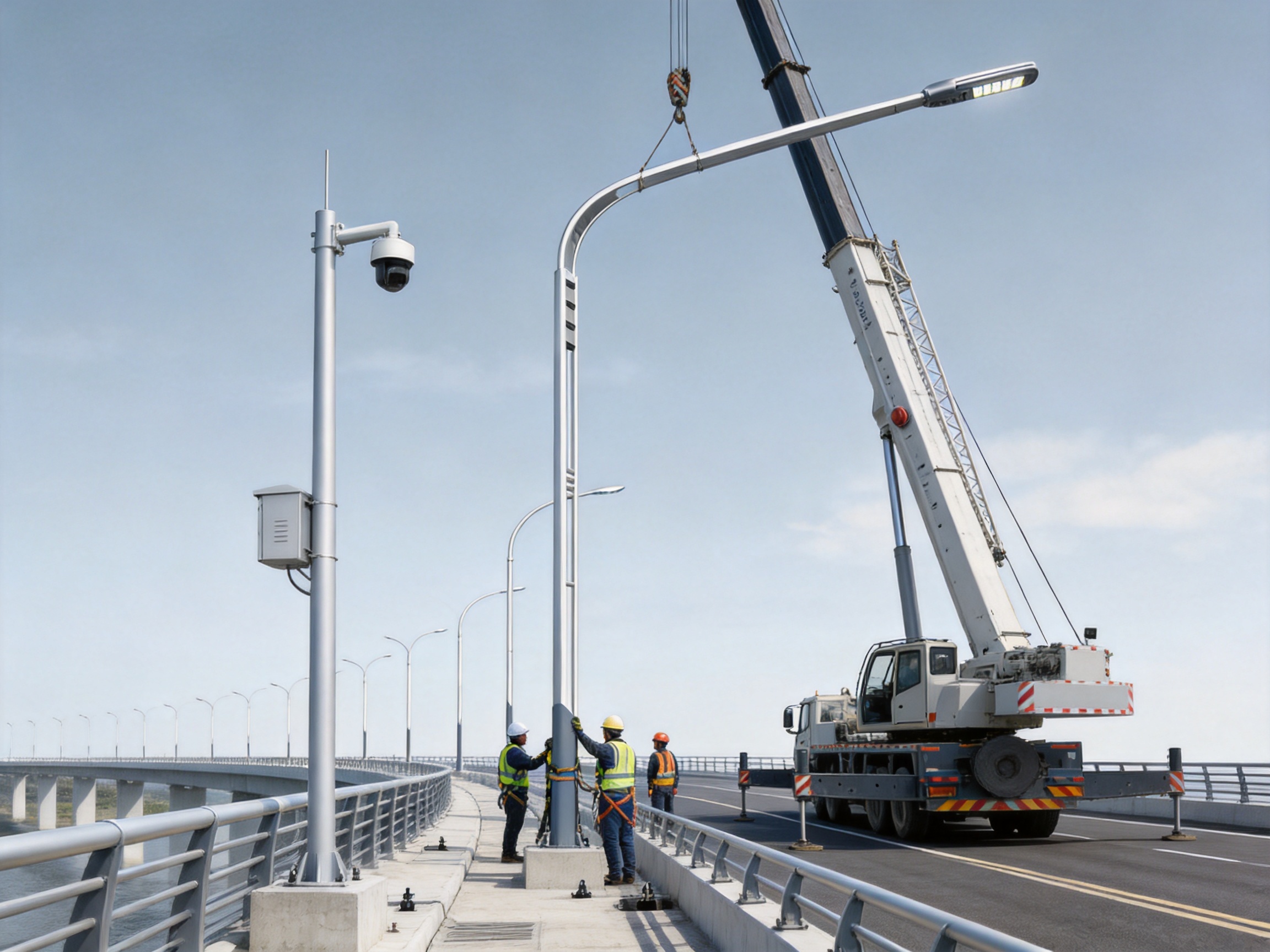
Modern transport infrastructure requires lighting systems that do much more than illuminate a road surface. Urban expressways, large bridges, elevated interchanges, and highway connection lines demand dependable lighting with a long reach, stable structural performance, precise optical distribution, and a service life suitable for demanding outdoor conditions. The Large-Span High-Pole LED Single-Arm Street Light is designed specifically for these applications, combining a high-strength cantilever structure with efficient LED technology, durable materials, intelligent-control readiness, and professional engineering support.
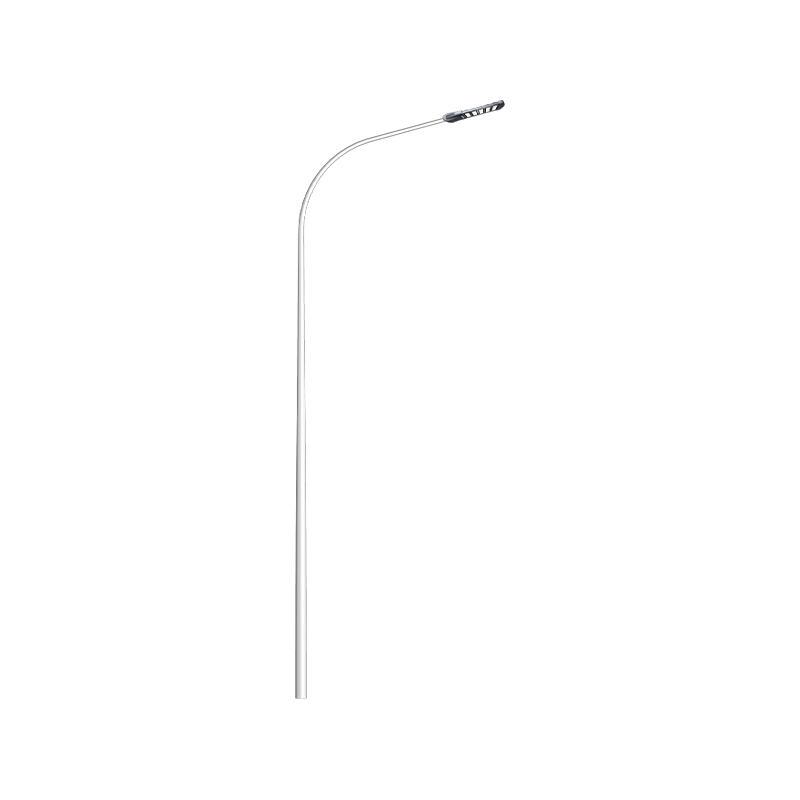
Unlike conventional short-arm street lights that may leave distant lanes insufficiently illuminated, this large-span configuration is engineered to position the lamp head above or close to the required lighting zone. Its specially shaped cantilever arm provides an extended overhang while maintaining structural integrity. This makes it suitable for broad roadways, multi-lane traffic corridors, bridge decks, interchange ramps, and other locations where the lighting point must extend beyond the pole foundation.
The product is manufactured by Yangzhou Jinyuan Lamps Co., Ltd., a professional road illumination enterprise established in 2002. The company provides lighting poles, LED street lights, solar street lights, light fixtures, and related engineering products for customers in domestic and international markets. Its production capabilities, engineering services, and quality-management systems support projects that require both customized design and consistent large-scale delivery.
Designed for Large-Scale Road Illumination
The primary purpose of this series is to deliver broad and uniform lighting from an elevated mounting position. Urban arterial roads and expressways often have multiple lanes, central dividers, wide shoulders, complex curves, and high traffic volumes. A standard light pole with a short arm may not provide an ideal mounting position, resulting in uneven brightness, excessive shadow areas, or unnecessary increases in pole quantity.
The large-span single-arm design addresses this challenge by extending the luminaire over the roadway. By positioning the LED light source closer to the center of the intended lighting area, the system can support a more effective optical layout. The result is a lighting arrangement that can help improve road visibility, reduce dark zones, and create a more coherent visual environment for drivers and pedestrians.
The structure is particularly useful where pole foundations must remain outside the main traffic path. Bridge railings, roadside barriers, drainage channels, embankments, and safety zones may limit the available installation area. In these situations, a long cantilever arm can provide the necessary lateral reach without placing the foundation directly beneath the lane or within a restricted road zone.
Because each project has different lane widths, pole spacing, wind conditions, and illumination requirements, the product can be integrated into a broader engineering design process. CAD design, three-dimensional product simulation, three-dimensional scene simulation, mechanical calculations, foundation analysis, and color or specification customization are available as part of the project-support approach.
Key Product Advantages
Extended Cantilever Reach
The defining feature of this street light is its high-strength, specially shaped cantilever arm. The arm is designed to support a significant overhang distance while keeping the lamp head accurately positioned over the road. This configuration helps lighting designers work with wide road sections without automatically increasing the number of poles.
Compared with a basic straight-arm luminaire, the shaped cantilever can offer a more purposeful transition between the vertical pole and the horizontal mounting point. The geometry can be adapted to project requirements, visual preferences, and structural calculations. It also gives the product a distinctive appearance suitable for major urban infrastructure projects.
Large-span illumination can provide practical benefits in locations where installation space is limited. A single foundation may serve a wider lighting zone, reducing visual clutter along the roadside and simplifying the overall arrangement. The final spacing and reach must always be confirmed through project-specific photometric and structural calculations, but the product platform is well suited to this type of engineering application.
High-Strength Pole Construction
The pole uses integrated thickened metal piping and is manufactured from structural materials such as Q235, Q355, SS400, GR65, and other equivalent options according to project requirements. These materials are widely used in outdoor structural applications because they offer a practical balance of strength, weldability, availability, and cost efficiency.
The integrated construction reduces the need for unnecessary joints along the main pole body. Precision welding supports continuity between structural components and helps produce a stable assembly capable of withstanding regular outdoor loading. For open traffic environments, where wind pressure, vibration, temperature variation, and vehicle-generated airflow may occur repeatedly, structural consistency is essential.
The final pole design should be selected according to local wind speed, exposure category, arm length, luminaire weight, foundation condition, and applicable design standards. The manufacturer supports mechanical calculation for wind and foundation requirements, allowing the pole and foundation system to be evaluated as part of a complete installation rather than as isolated components.
Uniform LED Illumination
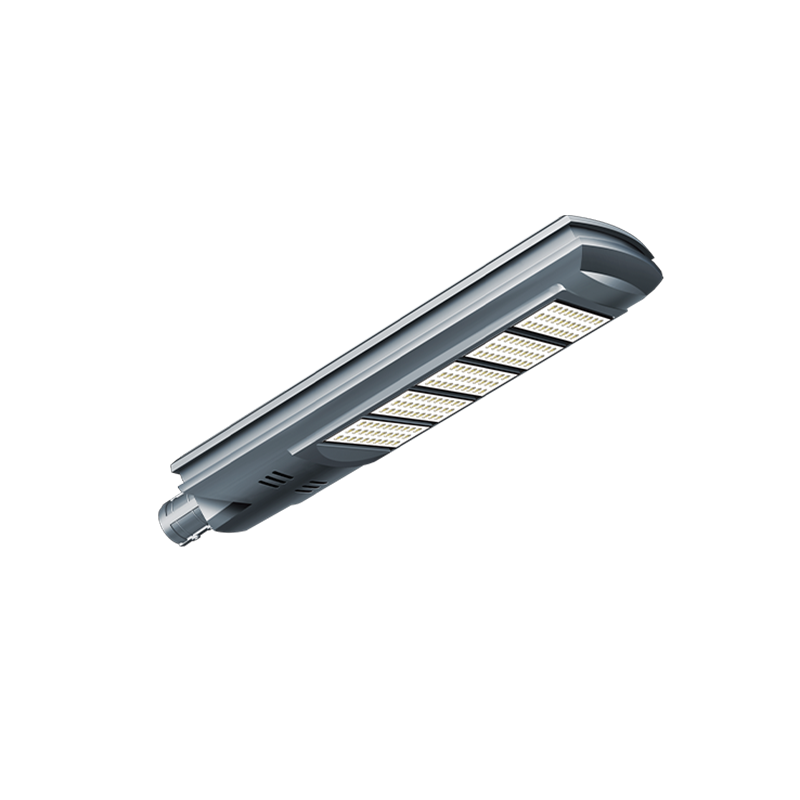
The luminaire uses LED technology with a stated luminous efficiency of up to 140 lm/W. High luminous efficiency allows a greater quantity of useful light to be produced from a given electrical input compared with less efficient lighting technologies. This can support energy-conscious road-lighting designs and may help reduce operating costs over the service life of the installation.
For expressways and bridges, efficiency alone is not enough. Light must also be distributed in a controlled manner. The elevated mounting height and extended arm are intended to help place the luminaire in a position where its optical output can cover the required lanes more effectively. The final optical result depends on LED configuration, lens selection, mounting height, pole spacing, road width, and installation angle.
Appropriate lighting design can help reduce abrupt changes between bright and dark areas. More consistent illumination supports driver visual comfort and contributes to better recognition of road edges, lane markings, barriers, signs, and other traffic-related features. Photometric simulation should be used during project planning to confirm average illuminance, uniformity, glare control, and other local requirements.
Thermal Management for Long-Term Operation
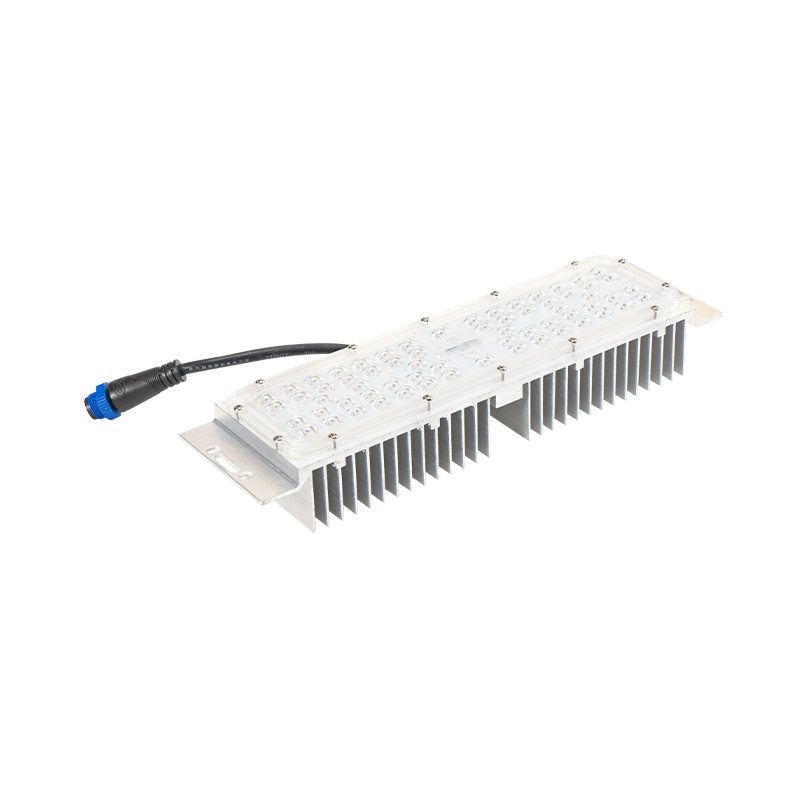
LED performance is closely connected to temperature management. Excessive heat can accelerate component aging, reduce light output, and shorten the useful life of electronic parts. For this reason, the lamp head casing incorporates heat-dissipation geometry and air-convection channels to help transfer heat away from internal components.
The housing is made from aluminum alloy, a material commonly selected for lighting equipment because of its low weight, corrosion resistance when properly finished, and favorable thermal conductivity. The casing design provides a protective enclosure while supporting the dissipation of heat generated during operation.
The thermal structure is especially important for high-load road applications. Expressway and bridge lighting may operate for long periods every night, often under hot summer conditions or in locations with limited natural cooling. The stated operating temperature range of -35°C to 65°C provides a broad environmental reference for project selection, although local installation conditions and electrical design should still be reviewed before approval.
Reliable Driver Performance
The LED driver modules are configured to support stable brightness output and help suppress light decay during long-term operation. Driver quality influences electrical stability, system efficiency, dimming compatibility, start-up behavior, and long-term reliability. A suitable driver also helps ensure that the LED modules operate within their intended electrical range.
The product supports DC 0–10V and DALI dimming methods. This provides flexibility for projects that require scheduled dimming, central management, adaptive lighting, or integration with a wider smart-city control platform. Dimming can be used to reduce energy consumption during periods of lower traffic, subject to local safety requirements and the approved lighting-control strategy.
Protection for Outdoor Environments
The luminaire has an IP65 rating. This level of enclosure protection is intended to help protect the internal components against dust ingress and water jets from different directions. It is appropriate for many outdoor road-lighting environments where luminaires are exposed to rain, airborne particles, and changing weather conditions.
Protection performance depends not only on the enclosure design but also on proper assembly, cable entry, gasket condition, maintenance, and installation. During project execution, connectors, cable glands, access covers, and mounting interfaces should be installed according to the manufacturer’s instructions. Regular inspection can help identify damage caused by impact, corrosion, vibration, or unauthorized access.
The aluminum alloy housing, protective finishing, sealed construction, and carefully produced pole structure work together to create a durable outdoor lighting system. The product is intended for infrastructure locations where reliability and maintenance access are important considerations.
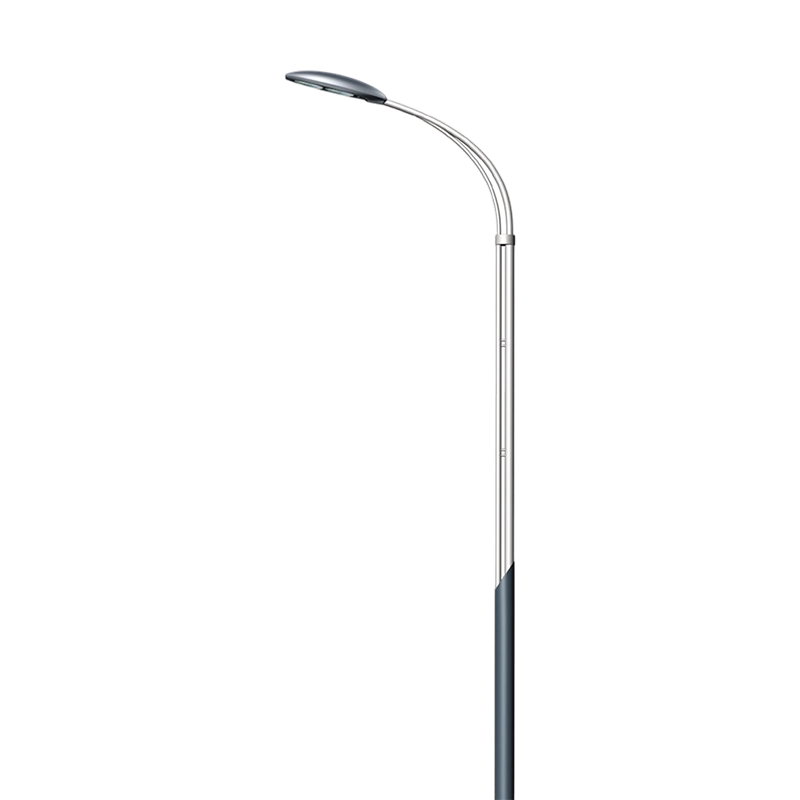
Large-Span High-Pole LED Single-arm Street Light
Technical Specifications
The following table summarizes the principal information available for the Large-Span High-Pole LED Single-Arm Street Light. Project-specific specifications may be adjusted according to road design, environmental conditions, lighting calculations, and customer requirements.
| Specification | Provided Information | Engineering Significance |
|---|---|---|
| Product type | Large-Span High-Pole LED Single-Arm Street Light | Suitable for elevated and extended-reach road illumination |
| Application | Road | Designed for urban roads, expressways, bridges, and related traffic infrastructure |
| Light source | LED | Efficient solid-state lighting with long operating potential |
| Input voltage | AC85–265V | Broad input range for compatible AC power systems |
| Luminous efficiency | 140 lm/W | Supports energy-conscious lighting design |
| Operating temperature | -35°C to 65°C | Suitable for a broad range of outdoor climates |
| Lamp housing material | Aluminum alloy | Combines low weight, heat dissipation, and outdoor suitability |
| Ingress protection | IP65 | Protection against dust and water jets |
| Color temperature | 3000K–6000K | Allows selection for different visual and environmental requirements |
| Color rendering index | Ra 70 | Provides practical color recognition for general road lighting |
| Dimming | DC 0–10V / DALI | Supports planned dimming and intelligent lighting integration |
| Warranty | 5 years | Provides a defined period of product support |
| Pole materials | Q235, Q355, SS400, GR65, and others | Material options can be selected for structural and project requirements |
| Pole height | 6 m–10 m | Suitable for medium- and high-position road-lighting layouts |
Advantages Compared with Conventional Road Lighting
Better Positioning for Wide Roadways
A conventional short-arm street light may place the light source too close to the roadside or too far from the center of a wide carriageway. This can create an uneven distribution in which the area nearest the pole receives excessive brightness while the outer lanes receive less useful light. The large-span arm is designed to move the lamp head outward, improving the relationship between the pole position and the target area.
This does not mean that a single luminaire is automatically suitable for every road width. Instead, the large-span design gives lighting engineers greater flexibility when planning pole positions and spacing. It is especially valuable on roads where the foundation location is determined by safety barriers, bridge structures, drainage systems, or restricted construction zones.
Potentially Fewer Visual Obstacles
Where the lighting plan permits wider pole spacing, the number of roadside poles may be optimized. Fewer poles can contribute to a cleaner visual corridor and reduce the number of foundations, cable routes, access points, and maintenance locations. This advantage must be assessed together with illumination calculations, structural requirements, and local standards.
On major bridges and landmark roads, visual design is often as important as functional lighting. A well-proportioned cantilever structure can provide a strong, coordinated appearance that complements the bridge or urban skyline. Optional decorative lighting units on certain models may further enhance the landscape effect during the day and create additional visual depth at night.
Improved Readiness for Smart-City Systems
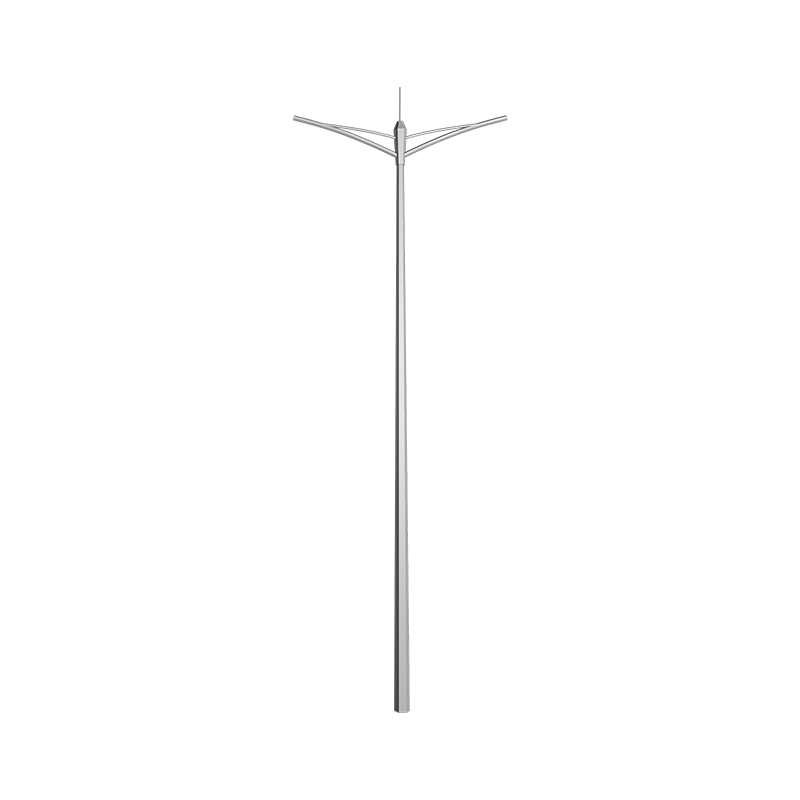
Modern road-lighting poles increasingly serve as infrastructure platforms for more than luminaires. Traffic-monitoring cameras, environmental sensors, communication devices, wireless equipment, and 5G micro-base stations may need to be installed along transport corridors. The pole structure reserves internal space to help accommodate future support facilities.
This reserved space can simplify later upgrades by reducing the need for separate support structures or exposed cable arrangements. It also allows project owners to treat the lighting system as part of a broader smart-city network. The specific equipment, weight, power requirements, communication protocols, and mounting arrangements must be confirmed during engineering design, but the product is prepared for this type of expansion.
More Flexible Control Options
Support for DC 0–10V and DALI gives the lighting system compatibility with different control architectures. A basic dimming installation may use a 0–10V signal, while a more advanced networked system may use DALI-based addressing, monitoring, and control. This flexibility helps the product serve both conventional public-lighting projects and intelligent infrastructure programs.
Control strategies can include fixed schedules, seasonal adjustments, traffic-responsive operation, fault reporting, and coordinated dimming. Appropriate control can reduce unnecessary energy use while maintaining the required safety level. For roads with variable traffic patterns, such as urban expressways and interchange ramps, the ability to adjust output can be particularly useful.
Manufacturing Process and Quality Strengths
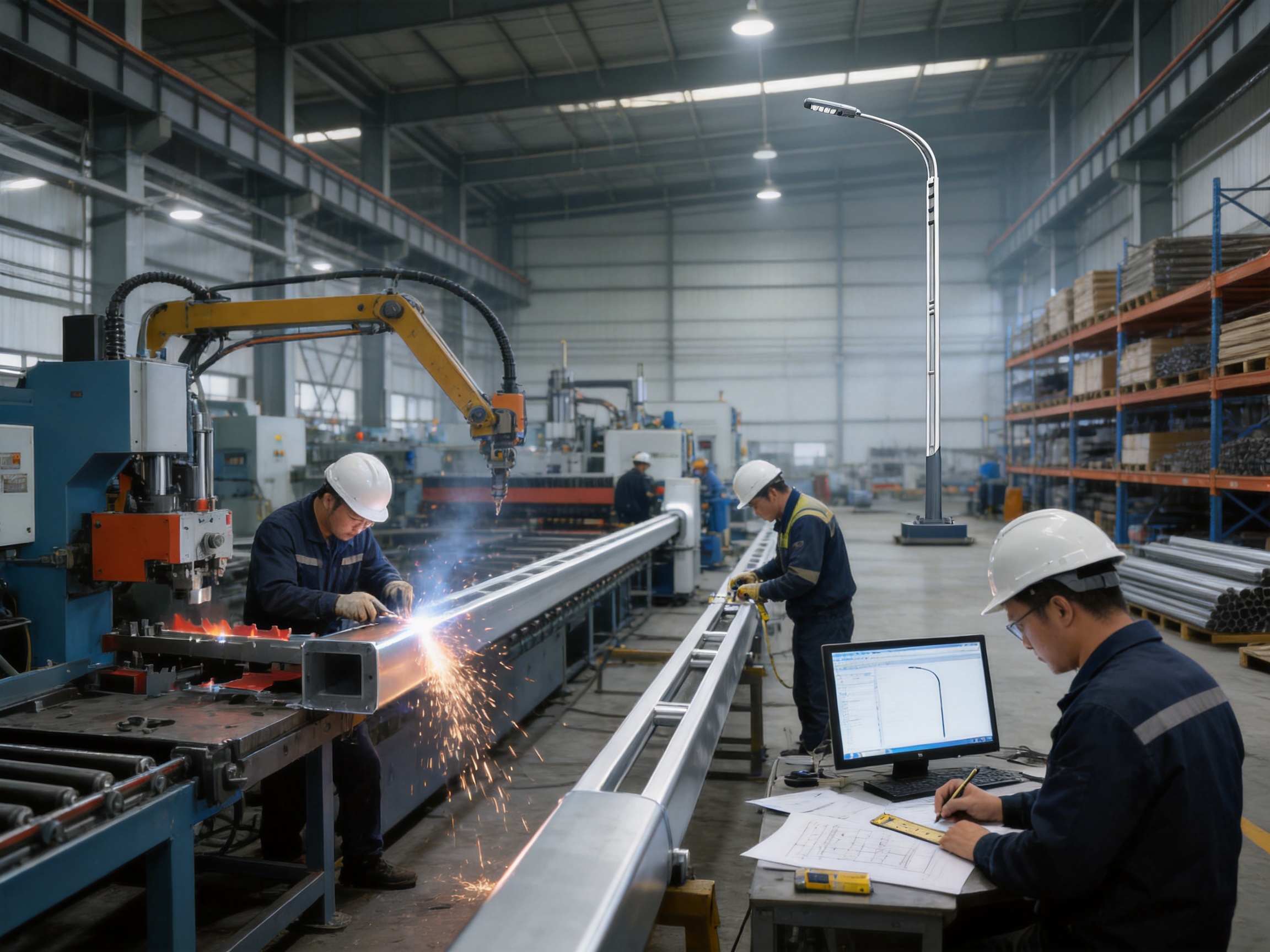
Material Preparation and Stock Availability
Manufacturing quality begins with suitable raw materials. The production program supports material options including Q235B, Q345B, S275JR, S355JR, Q460, A36, A572, GR56, GR50, and other grades according to the project specification. Maintaining extensive material stock can help reduce procurement delays and support faster production scheduling.
Material selection influences tensile strength, yield strength, weldability, corrosion protection, weight, and cost. By offering several structural material options, the manufacturer can coordinate the pole design with local standards, environmental conditions, customer specifications, and structural calculations. The correct grade should be confirmed through approved technical documentation before production begins.
Precision CNC Bending
The large-span arm requires controlled forming to achieve the intended shape and alignment. CNC bending equipment provides repeatable production parameters, helping maintain consistency from one unit to the next. Accurate bending supports structural integrity and reduces the need for extensive post-production correction.
Consistent bending is important for more than appearance. Variations in arm geometry can influence load distribution, lamp-head angle, overall alignment, and installation fit. CNC processing helps ensure that production units match approved drawings and that the cantilever performs as expected within the design assumptions.
High-Accuracy Cutting
The manufacturing process uses cutting equipment with stated accuracy of up to 0.01 mm. Precise cutting supports accurate dimensions, clean edges, and reliable assembly. It also helps improve the fit between pole sections, brackets, access components, and other fabricated parts.
Clean cutting reduces the amount of additional grinding and correction required before welding or finishing. This can contribute to faster production cycles and a more consistent surface condition. Accurate dimensions are especially important for large-span structures because small deviations may become more noticeable over a long arm length.
Automated Welding and Skilled Inspection
Welding is a critical part of pole and arm production. The manufacturer operates automatic welding and cutting equipment while also employing certified welders with extensive experience. Automated processes improve repeatability, while skilled personnel remain essential for setup, monitoring, inspection, and the treatment of complex joints.
Well-controlled welding supports load transfer between the pole body, cantilever arm, brackets, and reinforcement components. Weld quality can affect fatigue resistance, deformation behavior, and long-term durability. Welding procedures should be matched to the selected steel grade and verified through the applicable inspection requirements for the project.
Experienced welders also help manage large-scale production where delivery time and quality consistency must be balanced. For infrastructure projects involving many poles, consistent welding standards are necessary to avoid differences between early and later production batches.
Surface Treatment and Corrosion Protection
Outdoor poles and luminaires are exposed to humidity, rain, salt, dust, ultraviolet radiation, and temperature changes. Surface treatment is therefore an important part of service-life planning. The company operates powder electrostatic painting equipment and related production systems to support protective finishing.
A properly prepared and coated surface can help protect the steel substrate from corrosion and preserve the appearance of the pole. The final coating system should be selected according to the local environment, including coastal exposure, industrial pollution, high humidity, or severe winter conditions. Surface preparation, coating thickness, curing, edge coverage, and handling after coating should all be controlled.
The manufacturer states that its production methods are intended to enhance the anti-corrosion lifespan of finished products. Actual durability depends on the specified coating system, environmental exposure, installation quality, inspection schedule, and maintenance practices.
Die Casting and Component Production
A 1250-ton die-casting machine supports the production of selected lighting components. Die casting can provide repeatable shapes, efficient material use, and controlled dimensional quality for suitable aluminum parts. It is particularly useful when a component requires integrated ribs, mounting features, or a complex housing geometry.
In lighting products, component precision affects heat transfer, sealing, assembly, and visual consistency. The use of advanced forming equipment helps the manufacturer control these elements while supporting larger production quantities.
Engineering Design and Project Support
CAD Design
CAD design provides the foundation for accurate communication between the customer, lighting designer, structural engineer, and manufacturer. Drawings can define pole height, arm length, flange dimensions, access doors, cable routing, luminaire mounting, decorative features, and foundation interfaces.
A clear CAD package reduces ambiguity before fabrication begins. It also makes it easier to review installation clearances, transportation limitations, maintenance access, and compatibility with existing road infrastructure. Customized drawings can be prepared for projects with unusual lane arrangements, bridge geometry, or aesthetic requirements.
Three-Dimensional Product Simulation
Three-dimensional product simulation allows stakeholders to examine the proposed pole and luminaire from multiple viewpoints. This can help verify proportions, cantilever geometry, access-panel positions, decorative elements, and the relationship between the lamp head and the road structure.
Simulation is useful when the lighting system will be installed in a prominent urban location. It allows design teams to identify visual conflicts before production, such as interference with bridge railings, signs, guardrails, overhead equipment, or architectural features.
Three-Dimensional Scene Simulation
A scene simulation places the product into a representative road, bridge, interchange, or urban environment. This helps customers evaluate the appearance of the complete installation rather than reviewing the pole as an isolated object.
Scene visualization can support public presentations, design approvals, tender submissions, and coordination between civil, electrical, architectural, and traffic-engineering teams. It may also help determine whether optional decorative lighting is appropriate for the project’s visual language.
Wind and Foundation Calculations
Large-span poles must be evaluated carefully because the extended arm creates additional wind exposure and bending effects. The manufacturer provides mechanical calculation support for wind and foundation requirements. These calculations may consider pole height, arm projection, luminaire area, material grade, wind speed, terrain category, safety factors, anchor bolts, foundation dimensions, and soil conditions.
Foundation design is not a minor accessory to a high-pole lighting system. A correctly designed foundation transfers structural loads into the ground and maintains the intended pole alignment. Poorly matched foundations can lead to tilting, vibration, cracking, or long-term instability. For this reason, the pole, anchor cage, base plate, and civil foundation should be reviewed as one coordinated system.
Specification and Color Customization
Road infrastructure projects often require a coordinated appearance. The product can support specification and color customization for projects that need a particular finish, visual identity, or compatibility with existing street furniture.
Customization may include pole height, arm geometry, luminaire configuration, decorative lighting, coating color, access arrangements, and smart-device provisions. Any modification should be reviewed for its effect on weight, wind area, electrical load, heat management, structural performance, and maintenance access.
Overseas On-Site Installation Guidance
International projects can face additional challenges involving local construction practices, foundation tolerances, lifting equipment, electrical codes, customs documentation, and language differences. Overseas on-site installation guidance can help installation teams understand the recommended sequence and the relationship between the pole, anchor cage, luminaire, wiring, and control equipment.
Professional guidance is particularly valuable for large-span structures because lifting and assembly require careful coordination. The installation plan should address transportation, temporary storage, crane capacity, lifting points, traffic management, electrical isolation, grounding, bolt tightening, and post-installation inspection.
Application Scenarios
Urban Expressways
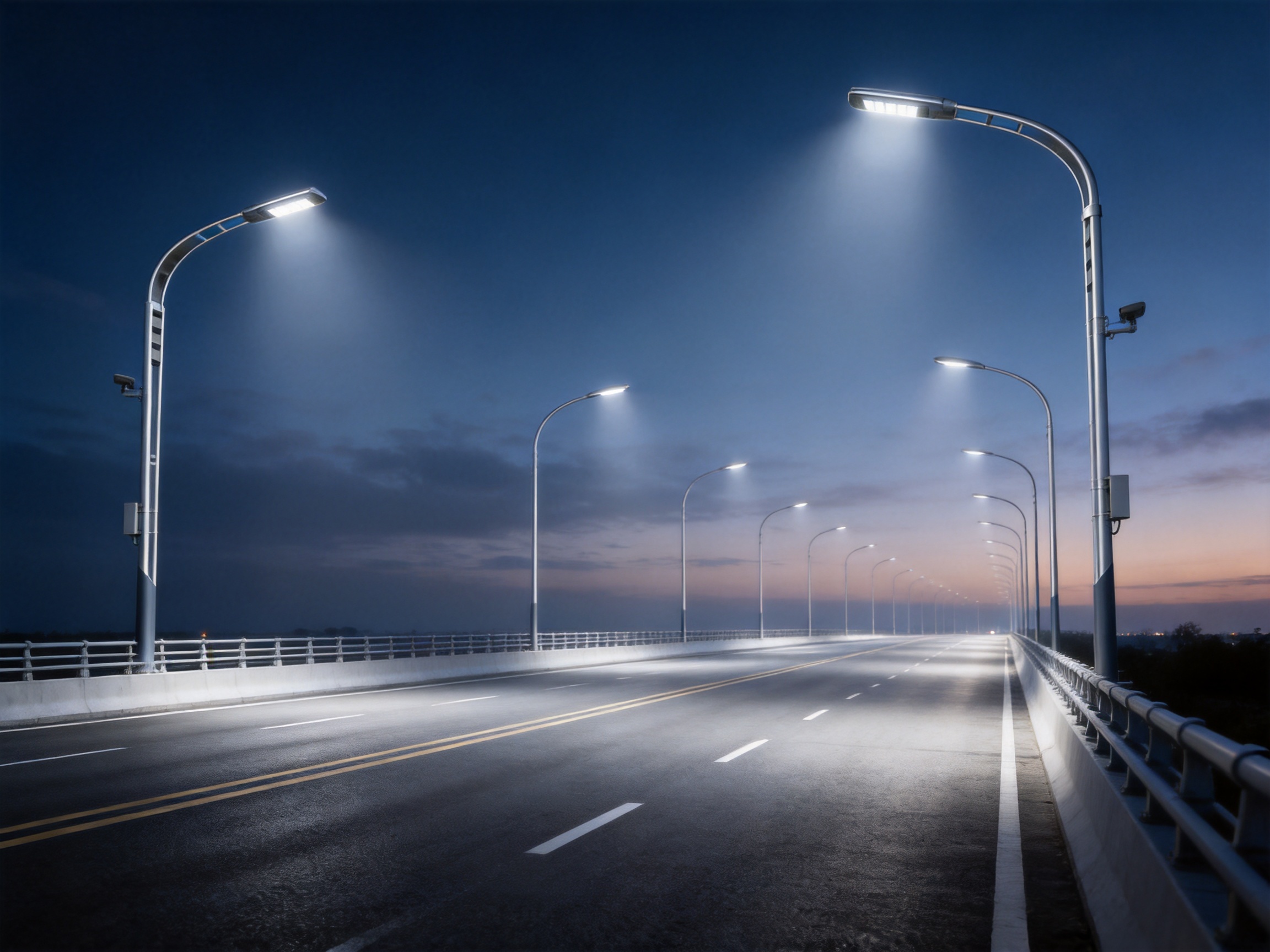
Urban expressways need lighting that supports high traffic volumes and frequent transitions between interchanges, ramps, tunnels, bridges, and open road segments. The large-span single-arm design can help position the luminaire over multiple lanes while keeping the foundation in a controlled roadside location.
In these environments, lighting design should address lane continuity, merging areas, directional signs, acceleration and deceleration zones, barriers, and changes in road elevation. The product’s dimming capability can also support centralized management where the expressway operator uses a wider traffic-control or energy-management platform.
Large Bridges
Bridge decks are exposed to wind, moisture, vibration, and sometimes salt-laden air. Lighting poles installed on bridges must therefore be carefully engineered for structural loading and corrosion protection. The integrated thickened metal pole and precision-welded cantilever provide a platform for this demanding application.
The visual character of a bridge is also important. A coordinated row of large-span single-arm lights can contribute to a balanced architectural appearance. Optional decorative lighting elements may be selected where the bridge forms part of a city landmark or night-time landscape program.
Elevated Interchanges
Elevated interchanges contain multiple levels, curves, ramps, retaining walls, and restricted roadside spaces. Conventional poles may not always provide a clear line of sight to the required lighting area. The extended arm can help project the lamp head around barriers and toward the active traffic lane.
Because interchange geometry is complex, three-dimensional scene simulation and photometric modeling are strongly recommended. These tools help coordinate lighting positions with signage, guardrails, drainage, expansion joints, and maintenance access.
Highway Connection Lines
Highway connection lines often link urban road networks to larger regional routes. They may pass through industrial areas, residential districts, bridge approaches, and open terrain. The product’s broad operating-temperature range, outdoor protection, and structural options make it suitable for a variety of climatic and environmental conditions.
Project planners should consider the spacing between poles, road curvature, traffic speed, access for maintenance vehicles, and the availability of electrical distribution points. The AC85–265V input range can support compatible power systems, but the complete electrical design must be checked against local voltage, surge, grounding, and protection requirements.
Smart-City Corridors
Smart-city corridors use connected infrastructure to improve transportation, public safety, environmental monitoring, and urban services. A lighting pole can provide a convenient location for cameras, sensors, communications equipment, and other devices.
The reserved internal space in this product supports future integration planning. When smart devices are anticipated, the pole design should include cable pathways, access panels, power capacity, equipment weight, heat generation, and maintenance procedures from the beginning. Early coordination avoids costly retrofits and helps preserve the clean appearance of the completed installation.
Lighting Control and Smart Maintenance
Lighting control is becoming increasingly important as cities seek to improve energy performance and manage infrastructure more intelligently. The support for DC 0–10V and DALI enables the luminaire to participate in different levels of control, from simple scheduled dimming to more advanced networked operation.
A scheduled system may reduce light output during low-traffic periods while maintaining a minimum approved level. A networked system may provide individual or group control, status monitoring, fault identification, and operational data. When connected to traffic or environmental sensors, the lighting system may respond to traffic density, weather, visibility, or special events.
Smart maintenance can also improve the efficiency of service operations. Rather than inspecting every luminaire at fixed intervals, operators may use status information to prioritize units with suspected driver faults, communication failures, abnormal power consumption, or reduced output. This can reduce unnecessary travel and improve response times.
Any smart-control strategy must preserve road safety and comply with local lighting standards. Dimming schedules should be tested under actual traffic conditions, and emergency or high-risk zones may require different operating rules. System security, data protection, network reliability, and manual override functions should also be considered in the overall design.
Installation and Maintenance Considerations
Pre-Installation Inspection
Before installation, the delivery should be checked against approved drawings, packing lists, and project specifications. Inspect the pole sections, cantilever arm, base plate, anchor bolts, luminaire, driver, cables, gaskets, fasteners, and coating surfaces for damage or missing parts.
The foundation should be inspected for position, level, concrete strength, anchor-bolt projection, thread condition, and compatibility with the pole base. Any deviation should be corrected or formally approved before lifting the pole. Installing a large-span structure on an unsuitable foundation can create unnecessary safety risks and alignment problems.
Lifting and Assembly
Lifting operations should be carried out by qualified personnel using equipment with adequate capacity. The lifting plan should consider the total weight, center of gravity, arm projection, wind conditions, traffic restrictions, and nearby overhead services.
After the pole is positioned, anchor nuts should be tightened according to the approved procedure. The pole should be checked for vertical alignment, and the cantilever should be inspected for orientation. The luminaire must be securely mounted, correctly aimed, and connected with suitable waterproof cable entries.
Electrical Connection
Electrical installation should follow local regulations and the approved project schematic. The input voltage, protective devices, grounding arrangement, surge protection, dimming wires, and communication lines should be verified before energization.
Because the product supports a broad AC85–265V input range, compatibility with the project’s actual power supply should still be confirmed. Electrical testing may include insulation resistance, grounding continuity, polarity, driver operation, dimming response, and functional illumination checks.
Routine Maintenance
Routine maintenance may include visual inspection of the pole, arm, flange, fasteners, coating, access door, luminaire cover, cable entry, and foundation. Operators should look for corrosion, deformation, loose bolts, water ingress, cracks, unusual vibration, or damage caused by vehicles and weather.
The luminaire lens and housing should be cleaned when dust, pollution, insects, or other deposits reduce light output. Cleaning methods should be compatible with the housing finish, lens material, and sealing components. Abrasive tools and aggressive chemicals should be avoided unless specifically approved.
Dimming and communication functions should be tested as part of a planned maintenance program. Fault records can help identify recurring issues and support decisions about driver replacement, surge protection upgrades, or changes to operating schedules.
Company Manufacturing and Delivery Capability
Yangzhou Jinyuan Lamps Co., Ltd. is affiliated with Jinshang Electric Group and operates as a large-scale production, design, and engineering company in the road illumination sector. Established in 2002, the company has developed capabilities covering street light poles, LED street lights, solar street lights, light fixtures, and associated lighting products.
The company reports a site area of more than 70,000 square meters and a team of more than 300 professional technicians. Its products are exported to more than 200 countries, providing experience with different market expectations, project scales, documentation requirements, and environmental conditions.
Quality and environmental management are supported by certifications and standards including ISO9001, ISO14001, and OHSAS18001 as stated in the supplied company information. These systems provide a framework for process control, environmental responsibility, occupational safety, documentation, and continual improvement.
Production equipment includes CNC bending machines, powder electrostatic painting equipment, automatic welding and cutting machines, and a 1250-ton die-casting machine. This combination of equipment supports the production of both structural poles and detailed lighting components under one coordinated manufacturing program.
For customers, this integrated capability can simplify communication. Instead of coordinating separate suppliers for the pole, arm, luminaire housing, finish, engineering calculations, and installation support, a more unified production arrangement can help maintain consistency between components and reduce coordination delays.
Why the Product Is Suitable for Infrastructure Projects
Infrastructure buyers typically evaluate more than the initial purchase price. They consider structural reliability, expected operating life, installation complexity, maintenance requirements, energy consumption, customization capacity, delivery consistency, and technical support. The Large-Span High-Pole LED Single-Arm Street Light addresses these factors through a combination of structural design, LED performance, control compatibility, manufacturing equipment, and engineering services.
The product’s strongest advantage is its ability to combine long-reach illumination with a robust pole structure. Many projects need the lamp head to extend beyond the foundation, but they cannot compromise on wind resistance, alignment, appearance, or maintenance access. The shaped cantilever and integrated thickened pole are intended to meet these requirements as part of a coordinated system.
Its second major advantage is adaptability. Material grades, pole heights, colors, specifications, control methods, decorative options, and smart-city provisions can be considered during project design. This adaptability helps the product serve different road geometries and aesthetic contexts without limiting the buyer to a single standard configuration.
The third advantage is manufacturing control. CNC forming, precision cutting, automated production lines, skilled welding, surface-treatment equipment, and die-casting capability support repeatable quality and efficient production. For large orders, consistent manufacturing is essential because variations between units can cause installation delays and affect the visual continuity of the road corridor.
The fourth advantage is lifecycle readiness. LED efficiency, thermal management, dimming support, internal space for smart devices, and a five-year warranty provide a foundation for long-term operation. The final service life will depend on project conditions and maintenance, but the product is designed with long-term infrastructure use in mind.
Recommended Project Selection Process
The first step is to define the application conditions. Project teams should provide road width, lane count, median arrangement, bridge or roadside restrictions, mounting height, target illumination, local wind speed, environmental exposure, power supply, control requirements, and expected installation schedule.
The second step is to complete photometric planning. The selected LED power, optics, mounting height, pole spacing, arm projection, tilt angle, and color temperature should be evaluated through lighting calculations. The goal is to confirm that the proposed arrangement satisfies the relevant road-lighting requirements without excessive overlighting.
The third step is structural verification. Wind calculations should consider the full assembly, including pole, cantilever, luminaire, decorative parts, sensors, cameras, communication equipment, and any future accessories. The foundation and anchor cage should be checked against the actual soil and civil conditions.
The fourth step is design coordination. CAD drawings and three-dimensional simulations should be reviewed by the civil, electrical, traffic, architectural, and maintenance teams. This coordination can identify conflicts before fabrication and reduce changes during installation.
The fifth step is production approval. Materials, coating systems, welding procedures, electrical components, luminaire configuration, packaging, inspection methods, and documentation should be approved before mass production. A sample or first-article inspection may be used to confirm the final configuration.
The final step is installation and commissioning. The supplier and contractor should coordinate delivery, lifting, electrical testing, aiming, dimming setup, network connection, and acceptance inspection. Proper commissioning ensures that the completed lighting system performs as designed.
Questions and Answers
What type of roads are suitable for this large-span street light?
The product is intended for urban expressways, large bridges, arterial roads, highway connection lines, elevated interchanges, and other broad traffic corridors where the lamp head must extend from a roadside or bridge-side foundation toward the lanes.
What is the main benefit of the single-arm large-span design?
The main benefit is the ability to position the luminaire farther from the pole foundation. This can improve lighting coverage over wide roadways and help installation teams work around barriers, bridge structures, drainage areas, and restricted roadside spaces.
What input voltage does the luminaire support?
The stated input voltage range is AC85–265V. The actual project power supply, protective equipment, grounding, surge protection, and local electrical requirements should be verified before installation.
Is the luminaire suitable for cold and hot climates?
The stated operating temperature range is -35°C to 65°C. Local environmental conditions should still be reviewed, including humidity, coastal salt, dust, snow, icing, ultraviolet exposure, and industrial pollution.
Does the product support dimming?
Yes. The product supports DC 0–10V and DALI dimming. These options can support scheduled operation, centralized management, adaptive lighting, and smart-city integration when the complete control system is properly designed.
Can the pole support cameras or sensors?
The pole reserves internal space for potential smart-city support facilities such as traffic-monitoring equipment, environmental sensors, and 5G micro-base stations. The weight, wind area, power supply, cable routing, and mounting method for each additional device must be verified through engineering calculations.
What materials are available for the pole?
Available material options include Q235, Q355, SS400, GR65, and other project-specified materials. The appropriate grade should be selected according to structural calculations, local standards, environmental conditions, and customer requirements.
What pole heights are available?
The provided information lists pole heights from 6 meters to 10 meters. The final height should be selected according to the photometric design, road width, pole spacing, structural loading, and installation restrictions.
How is heat managed in the LED lamp head?
The aluminum alloy housing uses heat-dissipation geometry and air-convection channels to help transfer heat away from internal components. Good thermal management helps support stable LED and driver performance during extended operation.
What is the protection rating?
The luminaire has an IP65 rating, which is intended to protect against dust ingress and water jets. Proper installation, sealing, cable entry, and maintenance are necessary to preserve this protection in service.
What warranty is provided?
The stated warranty period is five years. Warranty conditions should be confirmed in the commercial and technical documentation, including installation requirements, operating conditions, maintenance responsibilities, and excluded circumstances.
Can the product be customized?
Customization may include pole materials, height, arm geometry, colors, specifications, decorative lighting, control arrangements, and provisions for smart-city equipment. All customizations should be reviewed for structural, electrical, thermal, and maintenance effects.
Does the manufacturer provide design support?
Yes. The supplied services include CAD design, three-dimensional product simulation, three-dimensional scene simulation, wind and foundation mechanical calculations, specification and color customization, and overseas on-site installation guidance.
Why is foundation calculation important for a large-span pole?
The extended arm creates additional wind exposure and bending effects. A foundation calculation helps confirm that the soil, concrete foundation, anchor cage, base plate, and pole can safely transfer the expected loads while maintaining alignment.
How can buyers evaluate production quality?
Buyers can review material certificates, approved drawings, welding procedures, coating specifications, dimensional inspection records, electrical test results, photometric data, factory inspection reports, and applicable quality-management documentation. A sample inspection or factory acceptance test may also be arranged.
Conclusion
The Large-Span High-Pole LED Single-Arm Street Light is a purpose-built solution for road and bridge projects that require extended reach, reliable structural performance, efficient LED illumination, and future-ready control capability. Its specially shaped cantilever helps place the lamp head over wide traffic lanes, while the integrated thickened pole and precision manufacturing processes support long-term outdoor use.
With LED luminous efficiency of up to 140 lm/W, an aluminum alloy housing, IP65 protection, a broad operating-temperature range, DC 0–10V and DALI dimming, multiple pole-material options, and a five-year warranty, the product provides a strong technical foundation for major transportation infrastructure.
The manufacturer’s capabilities add further value. Extensive material preparation, CNC bending, precision cutting, automated welding, skilled fabrication, powder electrostatic painting, die casting, CAD design, three-dimensional simulation, structural calculations, and installation guidance create a complete project-support chain. This combination can help customers control quality, reduce coordination risks, and achieve a consistent installation across large road corridors.
For urban expressways, large bridges, elevated interchanges, highway connection lines, and smart-city corridors, this product offers a practical balance of reach, strength, efficiency, appearance, customization, and maintainability. Proper photometric design, structural verification, installation, and maintenance remain essential, but the platform is well suited to projects where lighting quality and structural reliability are equally important.
References
1. Product technical information supplied for the Large-Span High-Pole LED Single-Arm Street Light.
2. Manufacturer-provided company profile and production capability information for Yangzhou Jinyuan Lamps Co., Ltd.
3. ISO 9001, Quality Management Systems: Requirements.
4. ISO 14001, Environmental Management Systems: Requirements with Guidance for Use.
5. OHSAS 18001, Occupational Health and Safety Management Systems guidance.
6. General principles of road-lighting photometric design and uniformity evaluation.
7. General engineering practices for steel lighting poles, cantilever structures, wind-load assessment, anchor cages, and concrete foundations.
8. General LED luminaire engineering practices covering thermal management, driver performance, ingress protection, dimming, and maintenance.