


JINYUAN
JINYUAN
JINYUAN
JINYUAN
JINYUAN
JINYUAN
JINYUAN
JINYUAN
JINYUAN
JINYUAN
JINYUAN
JINYUAN
JINYUAN
JINYUAN
JINYUAN
JINYUAN
Content
- 1 1. Product Overview
- 2 2. Integrated Curved-Arm Design
- 3 3. Structural Materials and Mechanical Reliability
- 4 4. Hot-Dip Galvanizing and Powder Coating
- 5 5. LED Lighting Compatibility and Optical Performance
- 6 6. Advantages Compared with Conventional Pole Designs
- 7 7. Manufacturing Process and Quality Control
- 8 8. Engineering and Customization Services
- 9 9. Application Environments
- 10 10. Installation and Maintenance Recommendations
- 11 11. Lifecycle and Cost Advantages
- 12 12. Manufacturer Capabilities
- 13 13. Product Selection Checklist
- 14 14. Frequently Asked Questions
- 14.1 What is a curved-arm LED street light pole?
- 14.2 What pole heights are available?
- 14.3 Which materials can be used for the pole?
- 14.4 How does the curved arm improve the product?
- 14.5 Is the pole suitable for high-wind locations?
- 14.6 What corrosion protection is provided?
- 14.7 What is the LED luminaire’s protection rating?
- 14.8 Can the lighting system be dimmed?
- 14.9 What color temperatures are available?
- 14.10 What is the operating temperature range?
- 14.11 Can the pole and luminaire be customized?
- 14.12 Does the manufacturer provide design assistance?
- 14.13 How should the foundation be designed?
- 14.14 What warranty is listed for the lighting system?
- 14.15 Why is manufacturing equipment important for this product?
- 15 15. Conclusion
- 16 References
- 17 Product: Curved-Arm LED Street Light Pole
Urban lighting infrastructure must do far more than support a luminaire. A modern street light pole must withstand wind, rain, sunlight, temperature changes, humidity, vibration, and the daily demands of public roads while contributing to the appearance, safety, and efficiency of the surrounding environment. For this reason, pole design, material selection, manufacturing accuracy, corrosion protection, and luminaire positioning are all essential considerations when selecting a lighting structure.
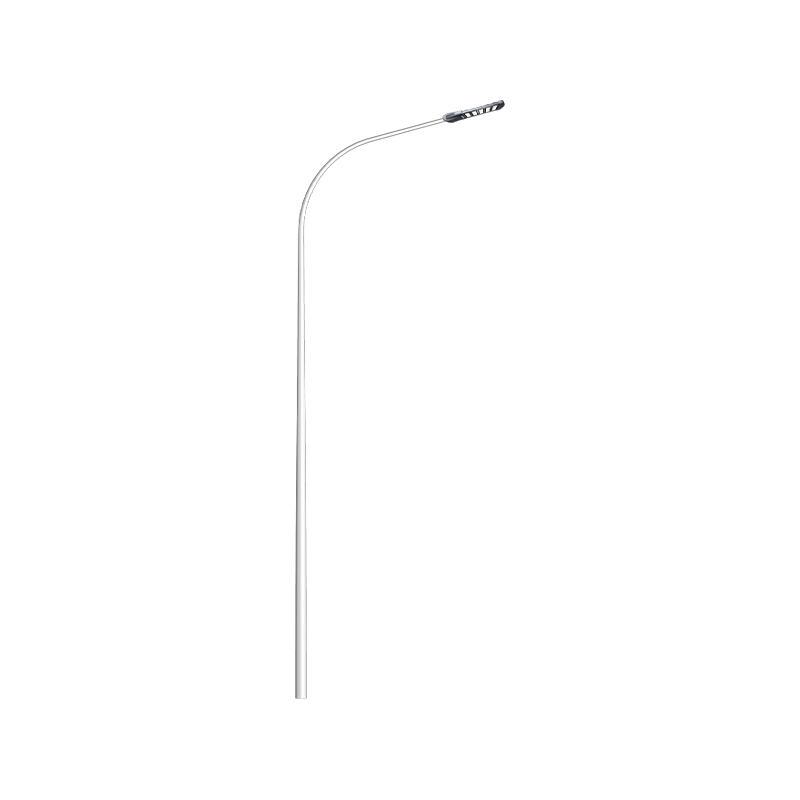
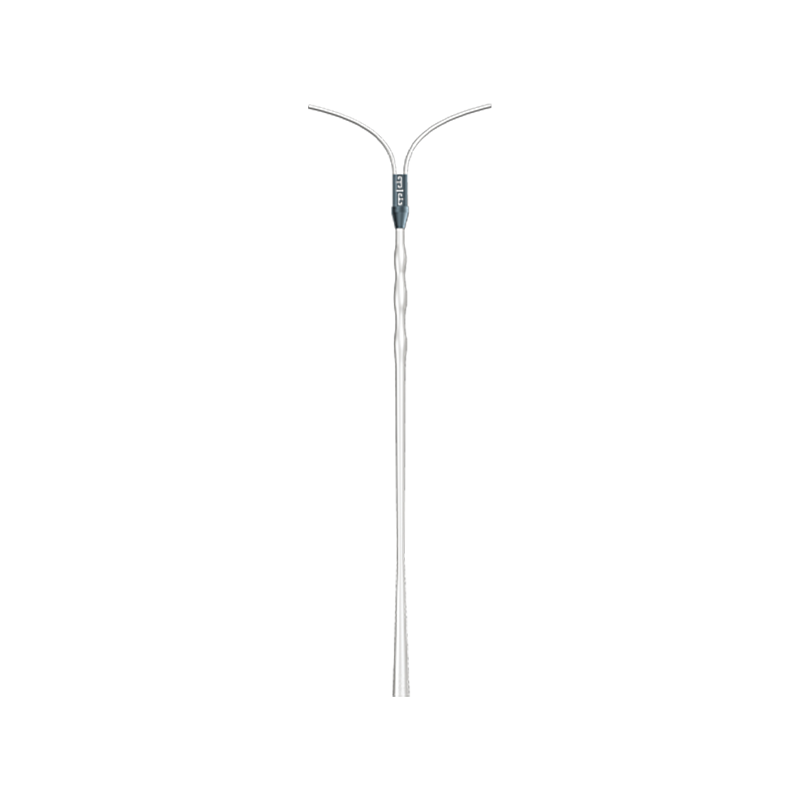
The curved-arm LED street light pole is designed to combine structural reliability with a refined architectural appearance. Its integrated curved arm creates a smooth transition from the vertical shaft to the luminaire mounting position. Compared with conventional poles assembled from several straight sections, the streamlined configuration reduces visible joints, minimizes potential weak points, and creates a cleaner appearance for roads, parks, scenic areas, campuses, industrial facilities, and public spaces.
Beyond its visual appeal, the curved-arm configuration is engineered to support stable operation in demanding outdoor conditions. Its graceful arc helps reduce abrupt changes in the structure and can improve the way wind loads are distributed along the pole. When combined with high-strength carbon steel, precision forming, professional welding, hot-dip galvanizing, and outdoor powder coating, the result is a durable lighting support system intended for long-term service.
This article examines the product’s design characteristics, performance advantages, manufacturing process, customization capabilities, installation value, maintenance benefits, and suitability for different projects. It also explains how the manufacturing capabilities of Yangzhou Jinyuan Lamps Co., Ltd. support consistent quality and competitive project delivery.
1. Product Overview
The curved-arm LED street light pole is a road lighting support structure with a vertical pole body and a smoothly formed arm that extends outward and upward or downward according to the selected design. The arm provides the mounting position for an LED street light, allowing the luminaire to be placed over or beside the roadway at an optimized angle.
The product is suitable for LED street lighting systems that require a balance of structural strength, lighting coverage, visual harmony, and long-term outdoor durability. Typical applications include municipal roads, residential streets, highways, pedestrian routes, scenic paths, public squares, commercial developments, industrial parks, campuses, transportation areas, and other open spaces.
Standard product information includes a lamp pole height range of approximately 6 to 10 meters, with material options such as Q235, Q355, SS400, GR65, and comparable grades. The associated LED lighting system can use AC85-265V input, an aluminum alloy lamp housing, IP65 protection, luminous efficacy up to 140 lm/W, color temperatures from 3000K to 6000K, and a five-year warranty period. Dimming support includes DC 0-10V and DALI control options.
| Item | Available Specification or Feature |
|---|---|
| Product type | Curved-arm LED street light pole |
| Primary application | Road, street, pedestrian route, public and open-space lighting |
| Typical pole height | 6 m to 10 m |
| Pole material options | Q235, Q355, SS400, GR65 and other project-specific grades |
| Light source | LED |
| Input voltage | AC85-265V |
| Lamp housing | Aluminum alloy |
| Protection rating | IP65 |
| Luminous efficacy | Up to 140 lm/W |
| Color temperature | 3000K to 6000K |
| Color rendering index | Ra 70 |
| Dimming options | DC 0-10V and DALI |
| Operating temperature | -35°C to 65°C |
| Warranty | Five years |
Actual dimensions, wall thickness, flange design, anchor bolt pattern, arm projection, wind-load rating, foundation requirements, coating color, and luminaire wattage should be confirmed according to the specific project design. These factors depend on local wind conditions, road classification, lighting calculations, soil conditions, and applicable construction standards.
2. Integrated Curved-Arm Design
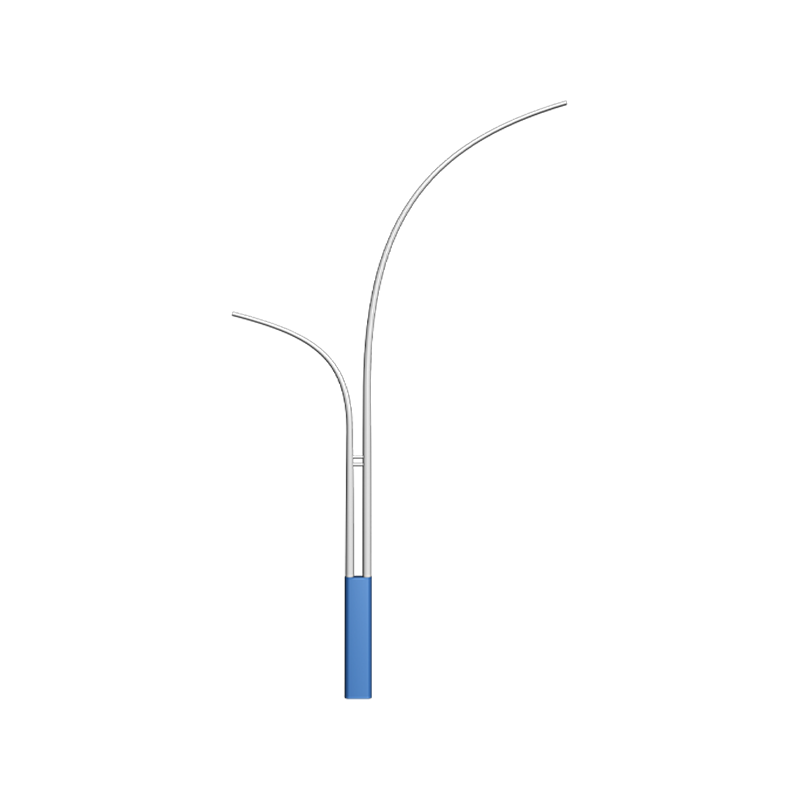
The most recognizable feature of the product is its integrated flexible arm. Rather than relying on multiple separately manufactured pieces joined together at visible connection points, the pole uses a continuous curved form. This design creates a gradual transition between the shaft and the luminaire support arm.
A continuous arm can provide several practical benefits. First, it reduces the number of mechanical joints exposed to the weather. Traditional spliced structures may include brackets, bolts, sleeves, or welded connection areas that require inspection and may become vulnerable to loosening, corrosion, or water accumulation over time. Reducing unnecessary joints simplifies the external structure and supports a more consistent protective coating.
Second, the integrated profile improves visual continuity. Urban lighting is increasingly viewed as part of the public realm rather than as a purely functional utility. A pole with a smooth arc can complement contemporary buildings, landscaped streets, scenic walkways, and public plazas more effectively than a bulky or heavily segmented structure.
Third, the curved arm allows the luminaire to be positioned with greater design flexibility. The mounting angle can be selected to support the desired light distribution across a roadway, pathway, parking area, or open space. Correct positioning can help reduce dark areas, improve visual comfort, and make better use of the LED luminaire’s optical output.
The integrated design does not mean that the pole is limited to one appearance. Arm projection, curvature, shaft taper, mounting interface, top diameter, base plate, coating color, and access-door configuration can be adjusted to meet project requirements. A qualified manufacturer can develop drawings and simulations before production to confirm the final structure.
Wind-Resistance Considerations
Wind is one of the most important environmental loads affecting outdoor lighting poles. A pole must resist pressure on the shaft, arm, luminaire, cables, and any additional equipment mounted on the structure. The curved-arm profile is intended to reduce abrupt geometric changes and create a more streamlined silhouette than a structure with several angular attachments.
The smooth arc may help reduce local wind resistance and improve the continuity of the load path from the luminaire through the arm and into the vertical shaft. However, wind performance is not determined by appearance alone. It also depends on the pole height, steel grade, wall thickness, taper, arm length, luminaire area, mounting accessories, foundation, anchor bolts, and local design wind speed.
For this reason, wind and foundation calculations should be completed for the specific installation environment. The supplier’s support services include mechanical calculations for wind and foundation conditions, helping project owners and engineering teams verify the suitability of the proposed design before manufacturing.
3. Structural Materials and Mechanical Reliability
The pole is manufactured from carbon steel options commonly used for outdoor infrastructure. Materials such as Q235, Q355, SS400, and GR65 can be selected according to structural calculations, local standards, procurement requirements, and project budget. Higher-strength material may be considered where the design requires improved load capacity or reduced material weight, while standard structural steel can provide an economical solution for ordinary road lighting conditions.
Carbon steel remains widely used in lighting pole production because it offers a practical combination of strength, formability, weldability, availability, and cost efficiency. The steel can be cut, rolled, bent, welded, inspected, galvanized, and coated using established industrial processes. This makes it suitable for both standard orders and customized engineering projects.
The curved-arm structure requires careful control of forming and welding. Any deviation in the bend can affect the luminaire angle, overall alignment, load distribution, and visual uniformity of a completed installation. Automated rolling and CNC bending equipment help control the profile and reduce variations between production batches.
Structural rigidity is also influenced by the pole’s cross-sectional shape and taper. A tapered pole can distribute material efficiently, placing greater structural capacity where bending moments are higher while maintaining a relatively streamlined appearance. The final wall thickness and taper should be determined through engineering calculations rather than selected solely on visual preference.
Weld quality is another important factor. Welds must provide sufficient strength and continuity without introducing excessive distortion. Experienced and certified welders, supported by automated production equipment, can help maintain reliable seams while improving production efficiency. The manufacturer’s welding team has extensive experience supporting large-scale projects, where consistent quality and on-time delivery are both essential.
Base and Foundation Interface
The connection between the pole and the foundation transfers the structural load into the ground. A typical installation may use a base flange, anchor bolts, nuts, washers, and a reinforced concrete foundation. The dimensions and bolt pattern should be matched to the pole design and the project’s civil engineering drawings.
Correct positioning of anchor bolts is essential. Even a well-manufactured pole can be difficult to install if the foundation template is inaccurate. For this reason, foundation drawings, mechanical calculations, and installation guidance should be coordinated before concrete placement.
The base area should also be protected from standing water and long-term contact with corrosive substances. Drainage, concrete quality, cable entry design, and the condition of the flange coating all influence service life. A complete lighting project should therefore consider the pole, foundation, electrical system, and surrounding drainage as one integrated installation.
4. Hot-Dip Galvanizing and Powder Coating
Outdoor lighting poles face continuous exposure to moisture, oxygen, ultraviolet radiation, acid rain, dust, road salt, and temperature changes. Without effective surface protection, carbon steel can develop rust that gradually reduces appearance and may eventually affect structural integrity. The product uses a deep hot-dip galvanizing process followed by professional outdoor powder coating to create a multi-layer corrosion protection system.
Hot-dip galvanizing protects steel by immersing the prepared structure in molten zinc. The resulting zinc coating provides both a physical barrier and a sacrificial protection mechanism. If minor damage exposes a small area of steel, the surrounding zinc can provide a degree of electrochemical protection. This makes galvanizing particularly valuable for infrastructure installed in exposed outdoor environments.
Before galvanizing, steel surfaces must be properly prepared. Oil, grease, mill scale, rust, and other contaminants need to be removed so that the zinc can form a reliable bond with the substrate. Vent and drain openings may also be necessary for hollow structures to support safe and complete galvanizing. Process control at this stage contributes significantly to the consistency of the finished coating.
Powder coating adds an additional protective and decorative layer. Dry powder is electrostatically applied to the galvanized surface and then cured under controlled heat. The coating can provide resistance to ultraviolet exposure, moisture, abrasion, and ordinary atmospheric contaminants while allowing the pole color to be matched to a project’s architectural or landscape design.
The combination of galvanizing and powder coating offers several advantages over paint-only systems. Conventional paint may provide an attractive initial appearance but can become vulnerable if the surface is scratched, poorly prepared, or repeatedly exposed to moisture. The zinc layer beneath the powder coating provides an additional level of protection and can extend the interval between major maintenance operations.
Coating performance still depends on correct handling and installation. Poles should be protected during transportation, lifted using suitable methods, and inspected after installation. Any field damage should be repaired using an approved system compatible with the original galvanizing and powder coating.
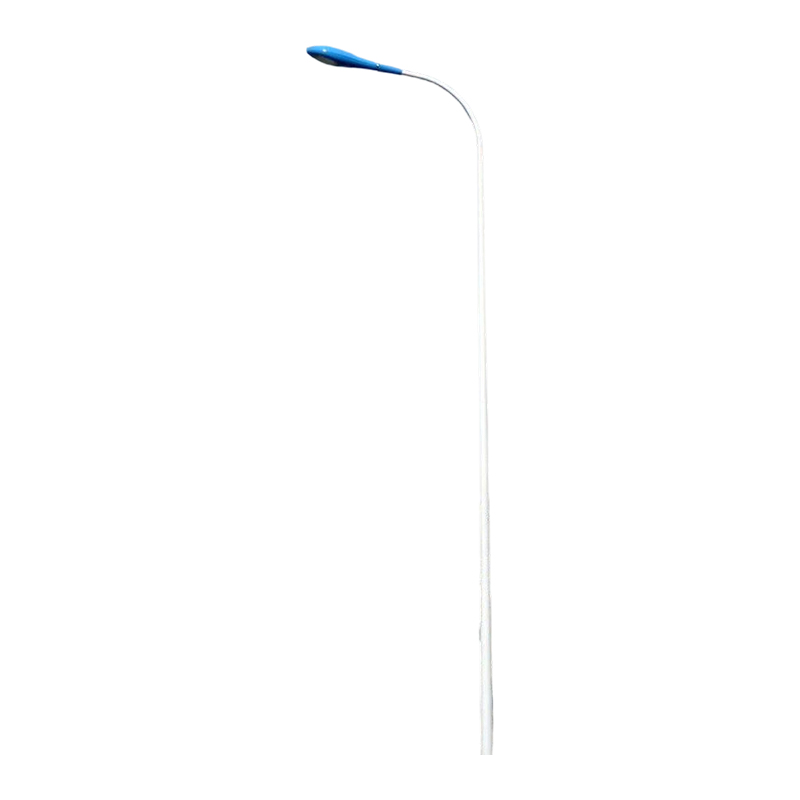
Curved-Arm LED Street Light Pole
5. LED Lighting Compatibility and Optical Performance
The pole is intended for use with LED street lighting systems. LED technology has become the preferred solution for many new road and public-space projects because it can provide high luminous efficacy, long operating life, controllable output, and reduced energy consumption compared with older conventional light sources.
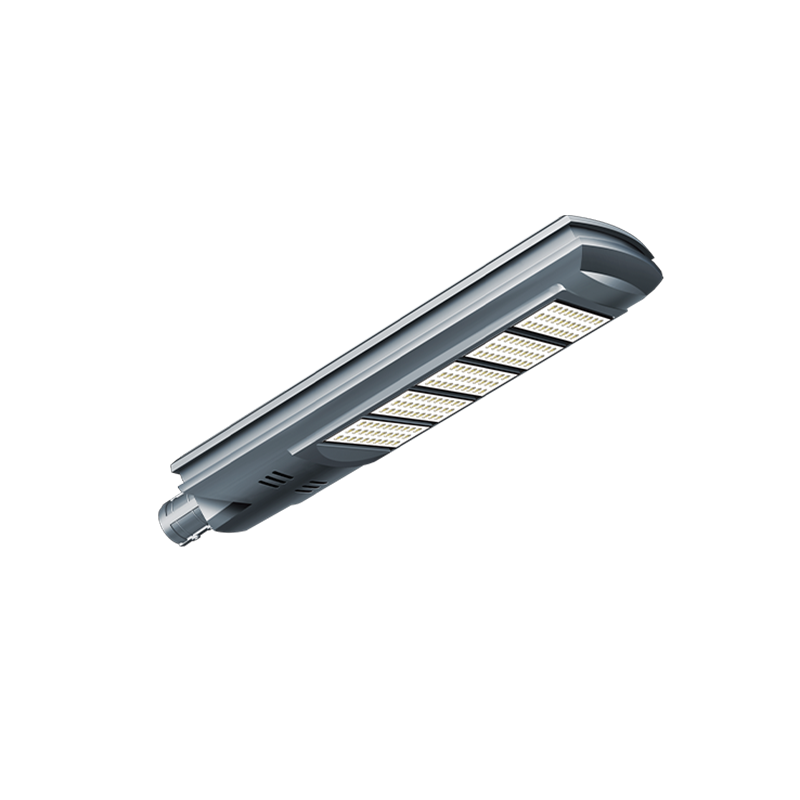
The associated LED luminaire uses an aluminum alloy housing and provides an IP65 protection rating. This enclosure rating is suitable for protecting the lighting unit against dust ingress and water jets from typical outdoor directions. The actual suitability of the system should always be verified against the project’s environmental conditions, maintenance plan, and applicable electrical standards.
A listed luminous efficacy of up to 140 lm/W indicates efficient conversion of electrical power into visible light under the specified product configuration. Higher efficacy can help reduce installed power or support improved illumination with the same electrical load. However, roadway performance depends on more than luminaire efficacy. Optical distribution, mounting height, pole spacing, road width, surface reflectance, maintenance factor, glare control, and required illuminance must all be included in the lighting design.
The curved arm supports optimized luminaire orientation. The mounting angle can be set to direct light toward the traffic lane, pedestrian route, or target area rather than allowing unnecessary spill into adjacent properties or the sky. Proper alignment improves uniformity and can reduce glare for drivers, cyclists, and pedestrians.
Color Temperature and Visual Comfort
The available color temperature range of 3000K to 6000K allows the lighting system to be adapted to different applications. Warmer color temperatures may be appropriate for residential streets, historic districts, parks, and scenic environments where a comfortable and welcoming atmosphere is important. Neutral or cooler color temperatures may be selected for highways, industrial areas, intersections, and locations where visual clarity is prioritized.
Color temperature should be selected together with local regulations, ecological considerations, surrounding architecture, and community expectations. Excessively cool light may create a harsh appearance in some environments, while warmer light may not suit every high-speed road or security-sensitive area.
The stated color rendering index is Ra 70. This level is commonly suitable for general roadway and outdoor infrastructure lighting. For locations where the accurate recognition of colors is especially important, such as commercial streets, public transport areas, pedestrian districts, or architectural spaces, project designers may wish to review the color-rendering requirements in greater detail.
Smart Dimming and Control Compatibility
The lighting system supports DC 0-10V and DALI dimming. These interfaces allow the luminaire output to be adjusted according to time, traffic volume, occupancy, environmental conditions, or a broader smart-city management strategy.
Dimming can reduce energy consumption during periods of low traffic while maintaining appropriate safety levels. It may also support gradual light transitions, scheduled operation, fault monitoring, and centralized management when integrated with compatible control equipment. The pole can therefore serve as part of a wider intelligent lighting system rather than functioning only as a passive support structure.
Control compatibility should be confirmed at the design stage. The controller, driver, wiring, communication protocol, photocell, surge protection, and management software must be selected as a coordinated system. Proper commissioning is necessary to verify that each luminaire responds correctly to commands and that default operating behavior remains safe if communication is interrupted.
6. Advantages Compared with Conventional Pole Designs
Many conventional street lighting poles use straight shafts with separate brackets, welded arms, or bolted extensions. These designs can be effective and economical, but they may also create additional connection points, a more segmented appearance, and greater exposure to localized corrosion or loosening. The curved-arm pole addresses these concerns through its integrated profile.
Fewer Visible Joints
Fewer joints create a cleaner external appearance and reduce the number of areas requiring mechanical inspection. Bolted or spliced connections can loosen under vibration, thermal cycling, or repeated wind loading if they are not correctly assembled and maintained. An integrated arm eliminates many of these potential issues.
Improved Architectural Appearance
The smooth arc creates a modern and visually consistent form. This can be especially valuable in projects where lighting equipment is located in prominent public areas. The pole can complement landscaped boulevards, entrance roads, commercial developments, campuses, and scenic routes without appearing excessively industrial.
Streamlined Wind Profile
The curved shape avoids some abrupt transitions associated with angular bracket arrangements. A smoother profile can help reduce wind resistance and distribute forces more gradually. Structural performance must still be verified through engineering calculations, but the geometry provides a strong basis for wind-conscious design.
Reduced Corrosion Risk at Connections
Every joint, fastener, and attachment can create a potential location for water retention, coating damage, or galvanic interaction between different materials. By reducing the number of exposed connections, an integrated arm can simplify corrosion protection and reduce the number of vulnerable details.
Efficient Luminaire Positioning
The curved arm supports accurate placement of the LED luminaire over the target area. The result can be better roadway coverage, improved uniformity, and more comfortable nighttime visibility when the pole spacing and optical distribution are correctly designed.
Lower Lifecycle Maintenance Demand
A durable surface treatment, robust steel structure, and reduced number of mechanical joints can help lower routine maintenance requirements. Maintenance teams may spend less time retightening brackets or addressing early corrosion at connection points. The five-year warranty further supports project confidence, subject to the applicable warranty terms and installation conditions.
7. Manufacturing Process and Quality Control
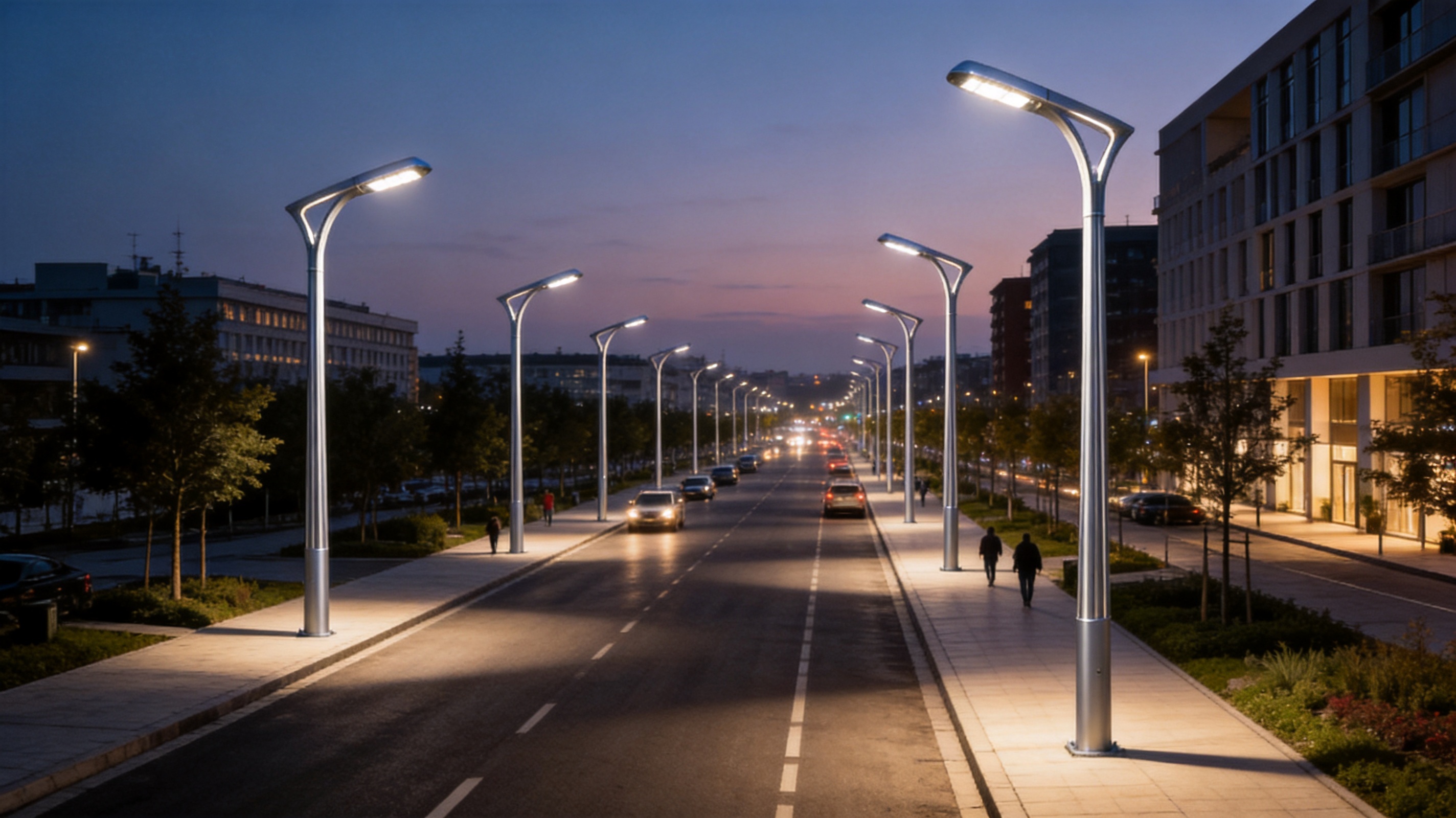
The performance of a lighting pole depends heavily on manufacturing consistency. A well-designed product can fail to meet expectations if cutting, bending, welding, galvanizing, coating, or inspection is poorly controlled. Yangzhou Jinyuan Lamps Co., Ltd. uses a combination of material management, automated equipment, skilled personnel, and quality procedures to support large-scale production.
Material Selection and Inventory
Available material options include Q235B, Q345B, S275JR, S355JR, Q460, A36, A572, GR56, GR50, and other equivalent grades, subject to project requirements. Maintaining an extensive stock of materials can shorten procurement time and reduce the risk of production delays caused by material shortages.
Material control begins with confirming the required grade, thickness, dimensions, and relevant certificates. The material must be traceable through production so that the finished pole can be associated with the correct raw material and manufacturing records when required by the project.
CNC Cutting
Computer numerical control cutting equipment provides accurate dimensions and clean edges. The stated cutting accuracy can reach 0.01 mm under controlled production conditions. Accurate cutting helps ensure proper fit-up during rolling, bending, welding, flange assembly, access-door fabrication, and luminaire mounting.
Clean edges also reduce the amount of post-production adjustment. Consistent edge quality supports more uniform weld preparation and can improve the appearance of the finished structure.
CNC Bending and Rolling
Precision CNC bending and automated rolling are particularly important for curved-arm poles. The equipment controls the forming path and helps maintain consistent curvature throughout a production batch. This supports the structural integrity of the pole while reducing the need for manual correction.
Controlled bending can also reduce material deformation and improve the alignment between the pole shaft and arm. For projects involving many poles, consistency is essential because variations in arm angle or projection would be immediately visible after installation.
Automated Welding
After forming, the components are fitted and welded. Automated welding lines can improve repeatability, reduce production variation, and support efficient output. Certified welders remain important for setup, inspection, complex details, corrective work, and quality verification.
Welding quality is evaluated through factors such as continuity, penetration, profile, cleanliness, distortion, and the absence of unacceptable defects. The appropriate inspection method depends on the project specification and applicable standard.
Surface Treatment
After welding and inspection, the pole undergoes surface preparation, hot-dip galvanizing, and outdoor powder coating. The process is designed to improve resistance against rust, acid rain, humidity, sunlight, and other outdoor stresses.
Automated production lines support faster cycles and more consistent quality control. They can also improve the efficiency of material use and reduce unnecessary rework. The company highlights environmental sustainability as one benefit of modern automated production equipment.
8. Engineering and Customization Services
Lighting projects often differ in road width, pole spacing, mounting height, wind exposure, foundation type, color scheme, electrical requirements, and local standards. A product supplier that provides design assistance can help reduce coordination problems between the lighting, civil, architectural, and electrical teams.
CAD Design
CAD drawings can define the pole height, shaft taper, arm projection, mounting plate, access door, flange, cable opening, anchor bolt arrangement, and other important details. A clear drawing provides a common reference for approval, quotation, manufacturing, and installation.
Three-Dimensional Product Simulation
Three-dimensional product simulation allows the engineering team and customer to review the physical proportions of the pole before production. This is useful when the structure has a distinctive curved arm or when the pole must coordinate with a particular luminaire, building façade, landscape feature, or road geometry.
Three-Dimensional Scene Simulation
Scene simulation places the proposed pole in a representative urban, industrial, landscape, or roadway environment. This helps stakeholders evaluate the visual relationship between the lighting structure and nearby elements. It can also support discussions about pole height, spacing, coating color, arm shape, and the overall character of the project.
Specification and Color Customization
Customization may include steel grade, pole dimensions, arm geometry, luminaire power, color temperature, coating color, flange design, access-door position, wiring configuration, and control interface. The final specification should be documented clearly so that the manufactured product matches the approved design.
Mechanical Calculation
Mechanical calculations for wind and foundation conditions help verify that the pole is suitable for the intended location. These calculations may consider basic wind speed, exposure category, terrain, pole height, luminaire size, additional accessories, soil conditions, foundation dimensions, and anchor bolt forces.
Overseas Installation Guidance
For international projects, installation guidance can help local contractors understand unloading, storage, foundation preparation, cable routing, pole erection, luminaire mounting, grounding, tightening, and inspection requirements. Remote technical support can improve installation consistency and reduce avoidable site delays.
9. Application Environments
Urban Roads and Boulevards
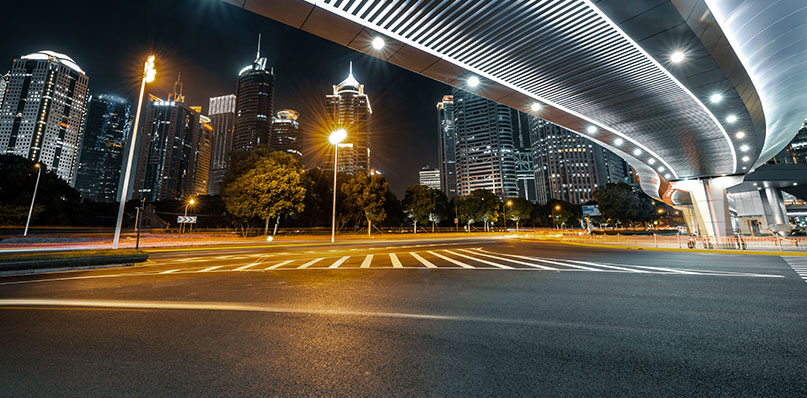
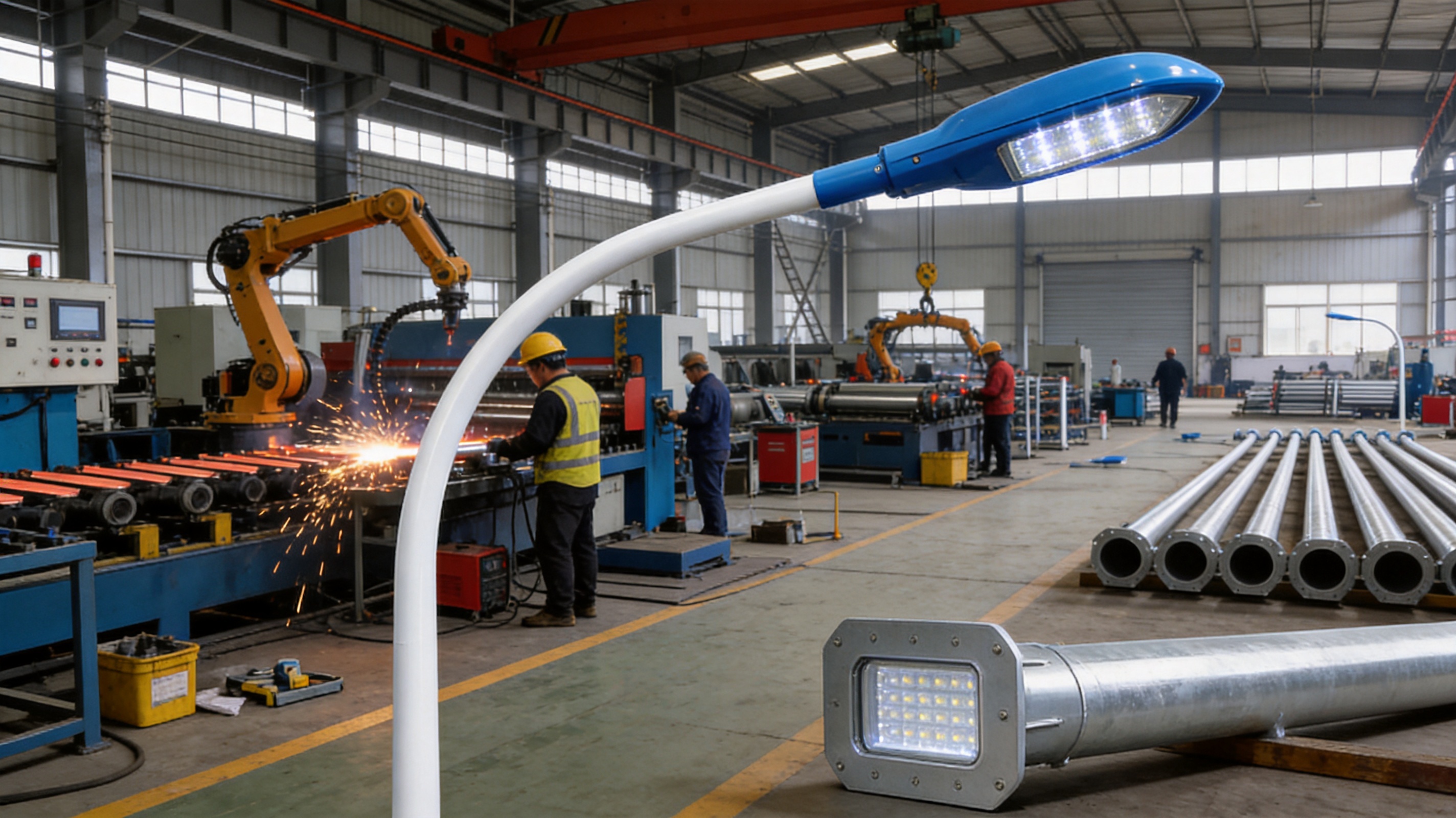
Urban roads require dependable illumination, clear visibility, and a pole design that fits the city’s visual identity. The curved-arm structure can support a refined streetscape while positioning the LED luminaire over the traffic lanes. It is appropriate for main roads, secondary roads, residential streets, and landscaped boulevards when the height and optical distribution are correctly selected.
Residential and Community Streets
Residential areas often benefit from comfortable, uniform light with controlled glare. A 3000K to 4000K color temperature may be considered where a warmer visual environment is desired, subject to local requirements. The streamlined pole can reduce the visual clutter associated with multiple brackets and attachments.
Scenic Paths and Parks
In parks, waterfronts, and scenic areas, lighting equipment must function effectively without overpowering the landscape. The smooth curved arm can complement pedestrian paths, planted areas, recreational spaces, and architectural features. Color customization may allow the pole to blend with surrounding street furniture or landscape elements.
Commercial Developments
Commercial streets and business parks commonly require lighting that supports safety while reinforcing a contemporary visual image. The pole’s modern form and dimming compatibility can support a coordinated lighting strategy for roadways, parking areas, entrances, and pedestrian zones.
Industrial Parks and Logistics Areas
Industrial facilities may face dust, vibration, high operating hours, and demanding weather exposure. The carbon steel structure, galvanized protection, powder coating, IP65 luminaire housing, and broad operating temperature range can provide a suitable foundation for these environments, subject to site-specific engineering review.
Campuses and Public Facilities
Schools, universities, hospitals, government facilities, and transportation campuses often need consistent lighting across roads and walkways. A standardized pole design can make the campus environment more coherent while allowing different luminaire outputs or control schedules for different zones.
10. Installation and Maintenance Recommendations
Proper installation is essential to achieving the expected service life of a curved-arm LED street light pole. Before delivery, the project team should verify the approved drawings, pole quantities, luminaire specifications, foundation details, anchor bolt templates, cable requirements, and coating finish.
During transportation and storage, poles should be supported to prevent bending or impact damage. Coated surfaces should be protected from abrasion, and poles should not be dragged across rough ground. Long-term storage should be carried out in a clean, dry, and well-drained location.
Before erection, the foundation should be inspected for concrete strength, bolt position, bolt projection, level, cable opening, and alignment. The foundation must be sufficiently cured before the pole is installed. Any discrepancy should be addressed before lifting the structure.
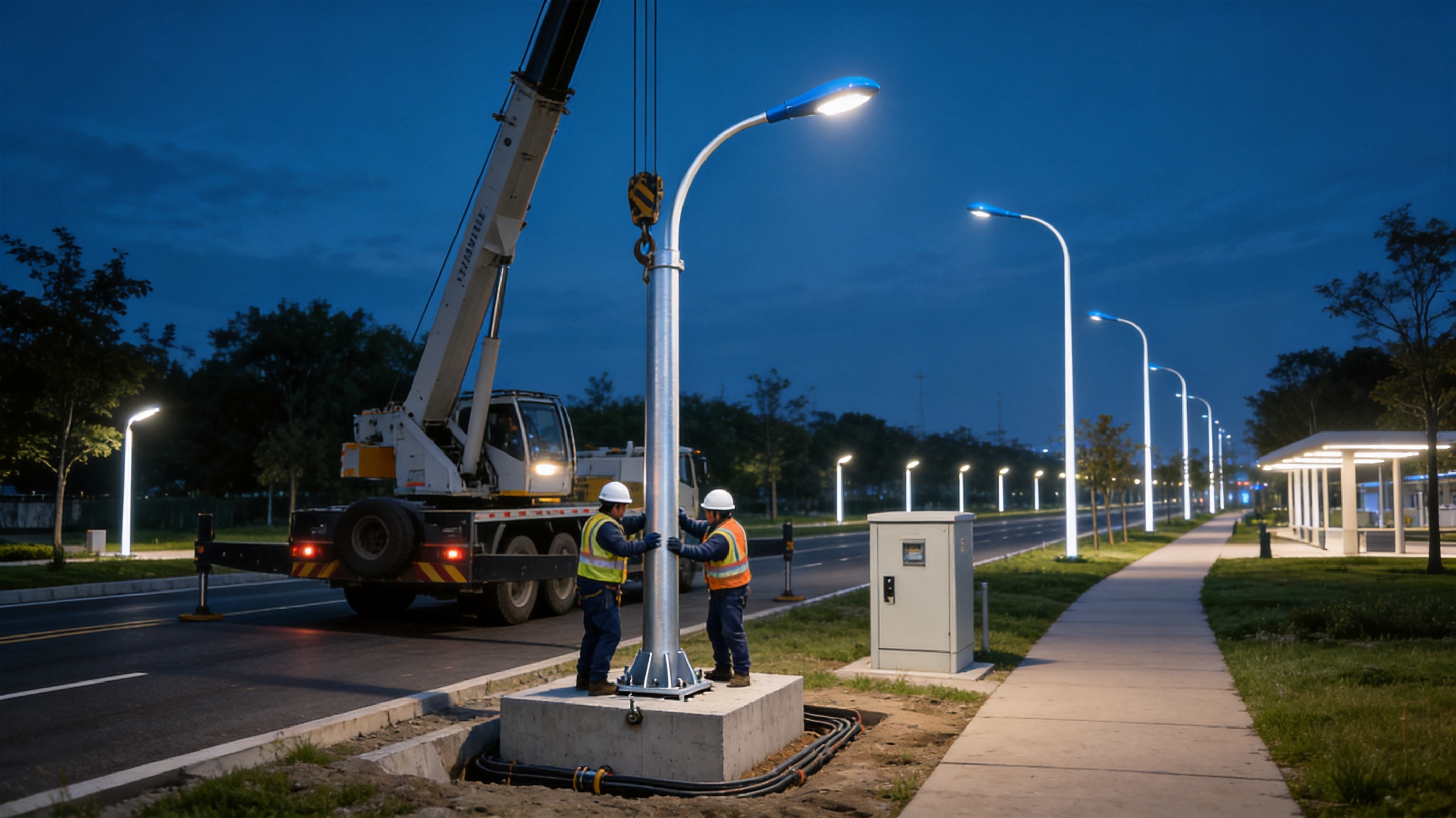
During installation, suitable lifting equipment and approved slings should be used. The arm and luminaire mounting area should not be used as an uncontrolled lifting point. The pole should be aligned carefully, and flange nuts should be tightened according to the project’s specified procedure.
Electrical connections should be completed by qualified personnel. The luminaire, driver, cable, protective device, grounding conductor, control system, and surge protection should be checked before energization. All access doors and seals should be closed correctly to maintain the intended environmental protection.
Routine maintenance should include visual inspection of the pole, flange, anchor bolts, access door, coating, luminaire, cables, and foundation area. Particular attention should be paid to signs of impact, water accumulation, coating damage, unusual movement, corrosion, or loose hardware.
LED luminaires generally require less maintenance than older light sources, but lenses and heat-dissipation surfaces may accumulate dust or pollutants. Cleaning intervals should be determined by local environmental conditions. Dimming and control systems should also be checked periodically to ensure that scheduled operation and communication remain reliable.
11. Lifecycle and Cost Advantages
The purchase price of a lighting pole is only one part of the total project cost. A meaningful comparison should include manufacturing consistency, installation time, coating durability, maintenance frequency, energy use, replacement requirements, and expected service life.
The curved-arm pole can support lifecycle value in several ways. Its integrated structure may reduce the number of connection-related maintenance tasks. Hot-dip galvanizing and powder coating can reduce the frequency of repainting and corrosion repair. LED technology can reduce electrical consumption and replacement labor. Dimming capability can further lower operating costs during low-demand periods.
Efficient manufacturing also contributes to competitive pricing. Material stock reduces waiting time, CNC processing reduces manual adjustment, automated welding supports repeatable production, and modern coating lines improve throughput. These advantages are particularly important for municipal and infrastructure projects involving large quantities and strict delivery schedules.
Lower cost should not be achieved by reducing structural safety or coating quality. The most reliable procurement approach evaluates the complete specification, including steel grade, wall thickness, welding, galvanizing, powder coating, inspection, packaging, documentation, warranty, and technical support.
12. Manufacturer Capabilities
Yangzhou Jinyuan Lamps Co., Ltd. is affiliated with Jinshang Electric Group and specializes in the design, production, and engineering support of road illumination products. Its product range includes street light poles, LED street lights, solar street lights, light fixtures, and related outdoor lighting systems.
The company was established in 2002 and operates on a site exceeding 70,000 square meters. Its team includes more than 300 professional technicians, and its products are exported to customers in more than 200 countries. This international project experience can be valuable when customers require documentation, customization, export coordination, or support for different regional practices.
The company’s quality and environmental management credentials include ISO9001, ISO14001, and OHSAS18001-related standards. Such systems are intended to support controlled production, documented procedures, environmental awareness, and occupational safety. Certification alone does not replace product inspection, but it demonstrates an organized framework for managing manufacturing activities.
Production equipment includes bending machines, powder electrostatic painting equipment, automatic welding and cutting machines, and a 1250-ton die casting machine. This equipment supports the manufacture of both lighting poles and associated LED lighting components.
The combination of engineering resources, production equipment, material availability, automated processing, skilled welders, surface-treatment capability, and international delivery experience enables the company to support standard products as well as customized road lighting projects.
13. Product Selection Checklist
Before ordering a curved-arm LED street light pole, the project owner or contractor should define the basic application and performance requirements. Important questions include the required mounting height, road width, pole spacing, luminaire wattage, optical distribution, wind speed, soil condition, coating system, color, control method, and applicable standards.
The pole height should be selected according to the lighting layout rather than appearance alone. A taller pole may cover a larger area but may require greater structural capacity and foundation size. A shorter pole may create a more human-scale environment but may require closer spacing.
The arm projection should correspond to the roadway geometry and luminaire optical center. Incorrect projection may place the light source too far from the target area or create undesirable glare. The mounting interface should also match the selected luminaire diameter and fastening arrangement.
The environmental conditions should be reviewed carefully. Coastal regions, industrial zones, areas with heavy road salt, and locations with high humidity may require additional coating controls or special material considerations. The hot-dip galvanized and powder-coated system provides strong general protection, but local exposure should always be discussed during design.
Control requirements should be confirmed before production. If the project will use centralized dimming, DALI, 0-10V control, photocells, motion sensors, or smart-city communication, all components must be compatible. Cable entry, driver location, access-door size, grounding, and surge protection should be included in the approved drawings.
14. Frequently Asked Questions
What is a curved-arm LED street light pole?
It is a steel lighting pole with an integrated curved arm designed to support an LED street light over a roadway, path, or open area. The continuous arc provides a streamlined appearance and reduces the number of visible joints compared with many conventional bracketed designs.
What pole heights are available?
The listed height range is approximately 6 to 10 meters. Other dimensions may be considered for special projects, subject to structural calculations, manufacturing capability, transport limitations, and local requirements.
Which materials can be used for the pole?
Material options include Q235, Q355, SS400, GR65, and other equivalent structural steel grades. The correct grade depends on design loads, local standards, procurement requirements, and project budget.
How does the curved arm improve the product?
The integrated arm reduces visible joints, creates a smoother appearance, supports streamlined wind behavior, and provides a flexible position for the LED luminaire. It may also reduce the maintenance concerns associated with multiple exposed brackets or spliced connections.
Is the pole suitable for high-wind locations?
The design is intended to improve stability in outdoor conditions, but suitability for a specific high-wind location must be confirmed through mechanical calculations. Wind speed, pole height, luminaire size, arm projection, steel grade, foundation, anchor bolts, and site exposure all affect the final result.
What corrosion protection is provided?
The pole uses deep hot-dip galvanizing followed by outdoor powder coating. This combination provides a zinc protection layer and a decorative external coating designed to resist rust, humidity, sunlight, acid rain, and common atmospheric exposure.
What is the LED luminaire’s protection rating?
The listed protection rating is IP65. This generally indicates protection against dust ingress and water jets from typical outdoor directions. The complete luminaire and electrical installation should still be evaluated according to the project environment.
Can the lighting system be dimmed?
Yes. The listed dimming interfaces are DC 0-10V and DALI. The controller, driver, wiring, communication system, and commissioning procedure should be coordinated to ensure compatibility.
What color temperatures are available?
The listed range is 3000K to 6000K. Warmer light may be selected for residential, scenic, or pedestrian environments, while neutral or cooler options may be appropriate for certain roads, industrial areas, and security applications.
What is the operating temperature range?
The listed operating temperature range is -35°C to 65°C. Actual suitability should be evaluated alongside humidity, solar exposure, electrical conditions, and the environmental requirements of the selected luminaire and driver.
Can the pole and luminaire be customized?
Customization may include height, arm geometry, steel grade, mounting interface, coating color, luminaire power, color temperature, dimming method, cable configuration, and foundation interface. CAD drawings and three-dimensional simulations can support the approval process.
Does the manufacturer provide design assistance?
Available support includes CAD design, three-dimensional product simulation, three-dimensional scene simulation, specification and color customization, mechanical calculations for wind and foundations, and overseas installation guidance.
How should the foundation be designed?
The foundation must be designed according to pole height, wind load, soil conditions, anchor bolt forces, concrete properties, and local construction standards. A project-specific foundation drawing and mechanical calculation should be completed before construction.
What warranty is listed for the lighting system?
The listed warranty period is five years. The exact coverage, exclusions, operating conditions, installation requirements, and claim procedures should be confirmed in the formal quotation or contract.
Why is manufacturing equipment important for this product?
Precision cutting, CNC bending, automated rolling, consistent welding, galvanizing, and powder coating help control the pole’s dimensions, alignment, structural quality, and corrosion resistance. Advanced equipment also supports repeatability for large projects.
15. Conclusion
The curved-arm LED street light pole combines a modern integrated form with the practical requirements of outdoor infrastructure. Its continuous arc reduces visible joints, supports a clean architectural appearance, and provides a stable mounting position for LED luminaires. When engineered correctly, the streamlined structure can also contribute to improved wind behavior and reduced connection-related maintenance.
Its carbon steel construction provides a dependable structural foundation, while CNC bending, automated rolling, precision cutting, experienced welding, hot-dip galvanizing, and outdoor powder coating support long-term performance. The available LED system adds efficient illumination, IP65 protection, multiple color temperatures, dimming compatibility, and operation across a broad temperature range.
The product is suitable for urban roads, residential streets, scenic paths, parks, campuses, commercial developments, industrial parks, and public facilities. Its flexibility is further increased through CAD design, three-dimensional simulation, mechanical calculations, customization, and overseas installation guidance.
For customers seeking a street lighting structure that combines visual refinement, structural reliability, corrosion resistance, manufacturing consistency, and smart lighting compatibility, the curved-arm LED street light pole offers a strong solution. Careful project-specific engineering remains essential, but the product’s integrated design and comprehensive manufacturing support provide a solid basis for safe, attractive, and durable outdoor lighting installations.
References
1. Product technical information for curved-arm LED street light poles, including material, height, electrical, optical, environmental, and warranty specifications.
2. General principles of structural steel design for outdoor lighting poles and cantilevered support structures.
3. Technical guidance on hot-dip galvanizing of fabricated steel structures.
4. Technical guidance on powder coating systems for outdoor steel products.
5. General roadway lighting design principles covering illuminance, uniformity, glare, mounting height, spacing, and optical distribution.
6. International quality management principles for manufacturing and product inspection.
7. Environmental management and occupational safety practices for industrial production facilities.
8. General installation and maintenance practices for steel lighting poles, LED luminaires, electrical controls, foundations, and anchor bolt systems.