


JINYUAN
JINYUAN
JINYUAN
JINYUAN
JINYUAN
JINYUAN
JINYUAN
JINYUAN
JINYUAN
JINYUAN
JINYUAN
JINYUAN
JINYUAN
JINYUAN
JINYUAN
JINYUAN
Content
- 1 Designed for High-Value Road and Urban Applications
- 2 Product Configuration and Technical Characteristics
- 3 Wide and Uniform Illumination
- 4 Durable Materials for Difficult Outdoor Conditions
- 5 Structural Engineering for Reliable Pole Performance
- 6 Advanced Manufacturing Capabilities
- 7 Quality Control from Material to Finished Product
- 8 Modular Design for Lower Maintenance Costs
- 9 Advantages over Conventional Street Lighting
- 10 Design Customization for Different Environments
- 11 Energy Efficiency and Smart Lighting Readiness
- 12 Service from Concept to Installation
- 13 Installation Considerations
- 14 Applications in Different Project Types
- 15 Why Manufacturing Integration Matters
- 16 Recommended Selection Process
- 17 Long-Term Value for Project Owners
- 18 Q&A
- 18.1 What is a double-arm LED street light?
- 18.2 Where is this product most suitable?
- 18.3 What makes the system different from a basic LED street light?
- 18.4 Can the pole design be customized?
- 18.5 What pole materials are available?
- 18.6 What pole heights are available?
- 18.7 Can the lighting level be adjusted?
- 18.8 How does the modular design reduce maintenance effort?
- 18.9 Can the system operate in cold and hot climates?
- 18.10 What does the IP65 rating mean?
- 18.11 Does the manufacturer provide foundation calculations?
- 18.12 Is installation support available for overseas projects?
- 18.13 What quality systems support production?
- 18.14 What warranty is offered?
- 19 Conclusion
- 20 References
- 21 Product: High-Performance Double-Arm LED Street Light
Modern road infrastructure requires lighting systems that deliver more than basic illumination. Urban arterial roads, industrial park routes, commercial districts, transportation corridors, and large public spaces all demand dependable lighting with strong optical performance, durable construction, efficient operation, and manageable maintenance requirements. The High-Performance Double-Arm LED Street Light is designed to meet these demanding expectations through a combination of high-efficiency LED technology, robust pole construction, precision light distribution, flexible controls, and professional engineering support.
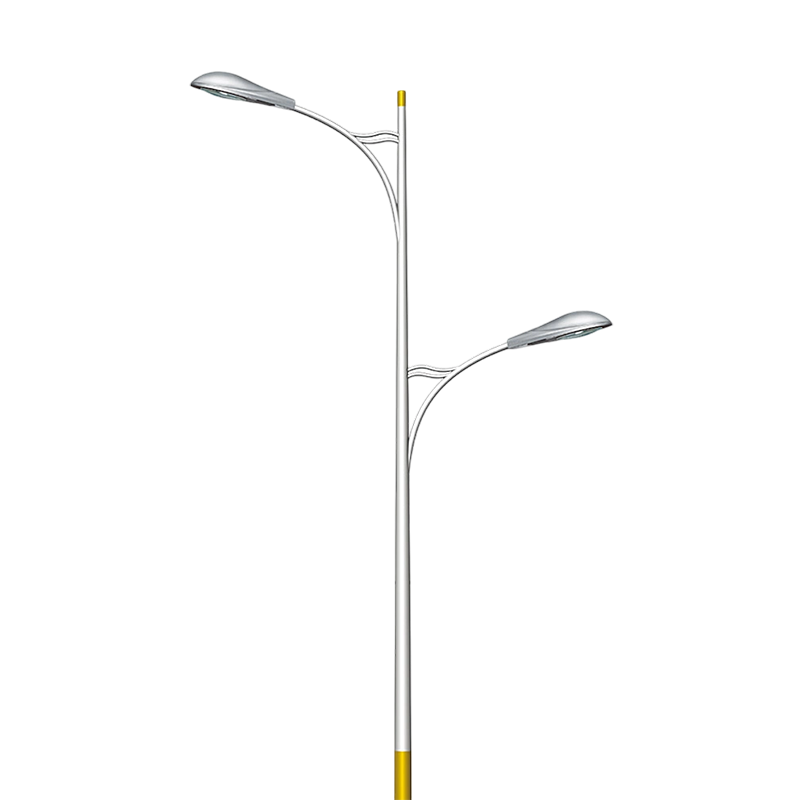
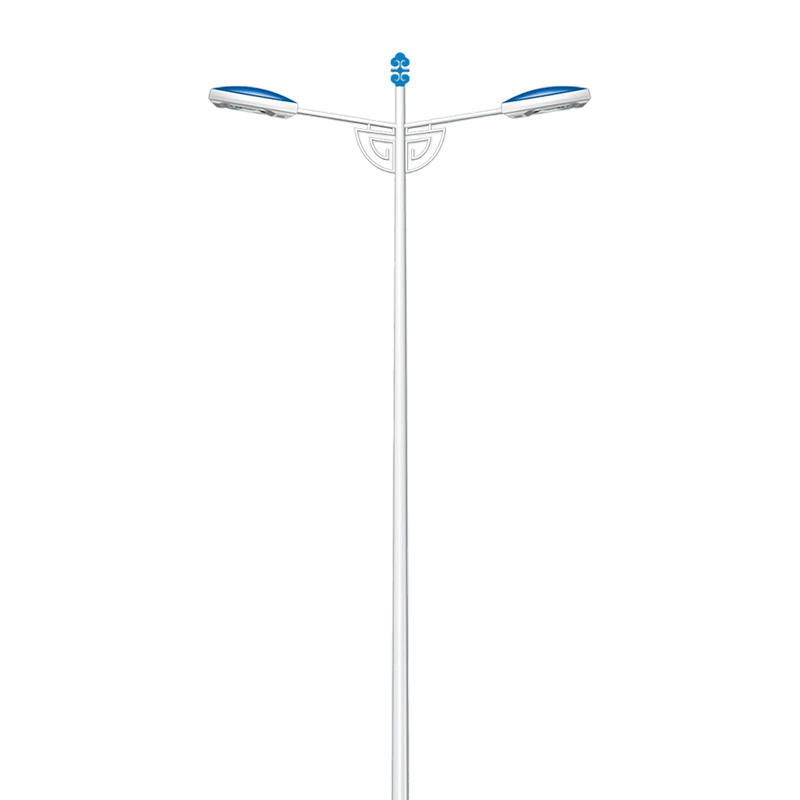
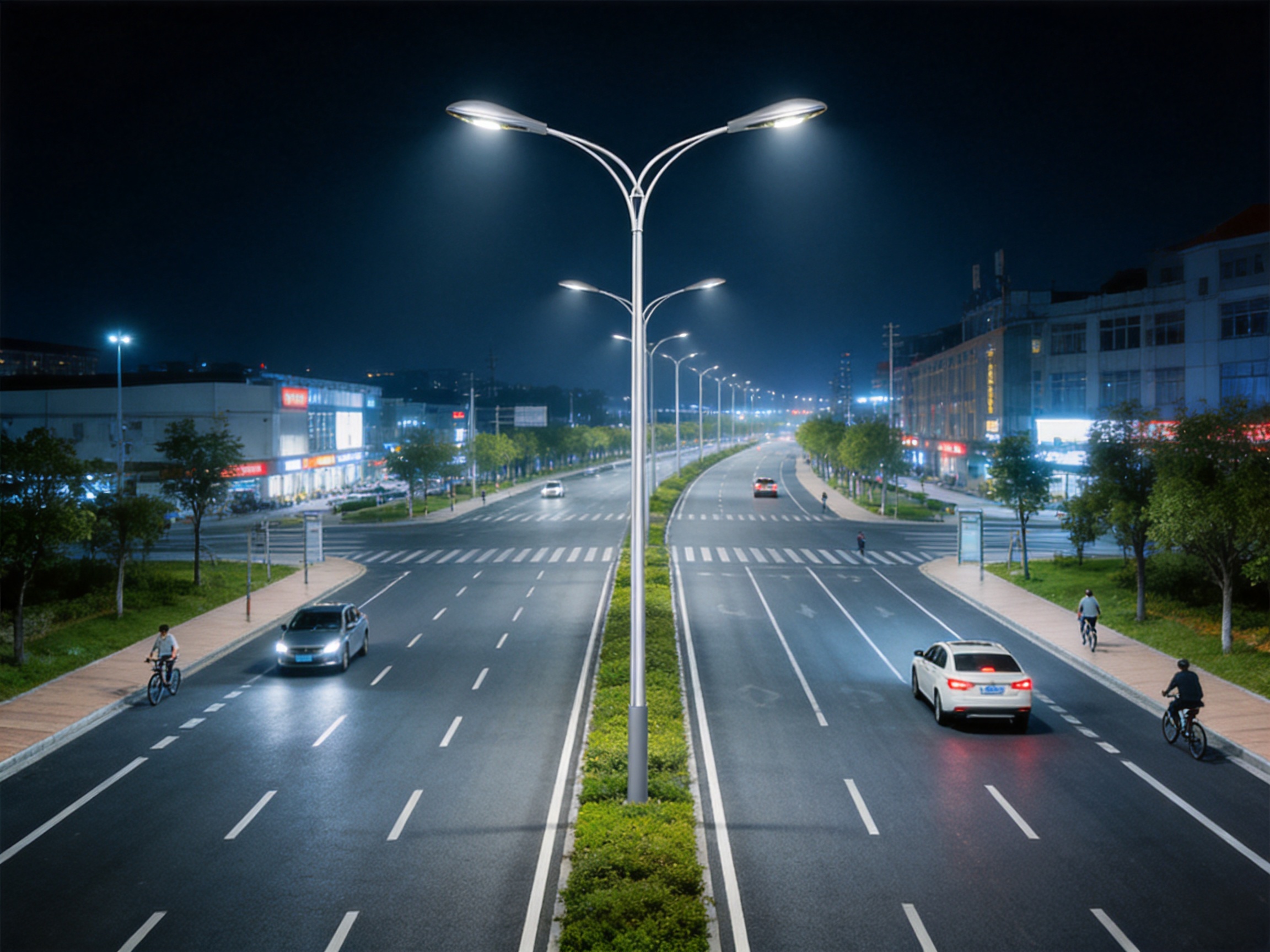
Double-arm street lighting is particularly valuable where a single luminaire cannot provide sufficient road coverage. By positioning lighting fixtures on opposite sides or extending them in coordinated directions, the system can illuminate broader carriageways, medians, intersections, pedestrian zones, service roads, parking areas, and large commercial approaches. This arrangement helps reduce dark zones and supports more consistent visual conditions for drivers, cyclists, and pedestrians.
The product is manufactured for long-term outdoor infrastructure use. Its aluminum-alloy lamp housing, weather-resistant protection, high-efficiency LED modules, and carefully designed optical lenses create a lighting solution suitable for demanding climates. The associated pole can be manufactured from several structural steel grades and configured for heights from 6 to 10 meters, allowing the system to be adapted to different roadway widths, mounting requirements, and project specifications.
Beyond the product itself, the manufacturing organization behind this lighting system provides an integrated service covering consultation, design, fabrication, quality control, customization, and installation guidance. This complete approach gives project owners a more dependable way to manage road-lighting programs from initial concept through final deployment.
Designed for High-Value Road and Urban Applications
The High-Performance Double-Arm LED Street Light is engineered for applications where illumination quality, visual appearance, and structural reliability must work together. It is suitable for major roads, arterial routes, industrial parks, commercial landscapes, public complexes, transportation areas, and other locations that require broad and uniform lighting.
On wide roads, double-arm lighting can reduce the number of poles required while maintaining practical mounting geometry. Two lighting arms may be arranged to direct light toward opposite traffic lanes, both sides of a divided road, or separate areas of a large site. This configuration can help simplify layout planning and create a more balanced streetscape than a series of isolated single-arm fixtures.
For industrial parks, reliable nighttime lighting is essential for worker safety, vehicle movement, logistics operations, and security. Industrial roads often experience heavy vehicle traffic, large turning movements, and variable operating conditions. A lighting system with wide optical distribution and a strong pole structure can improve visibility at loading zones, access roads, intersections, and internal circulation routes.
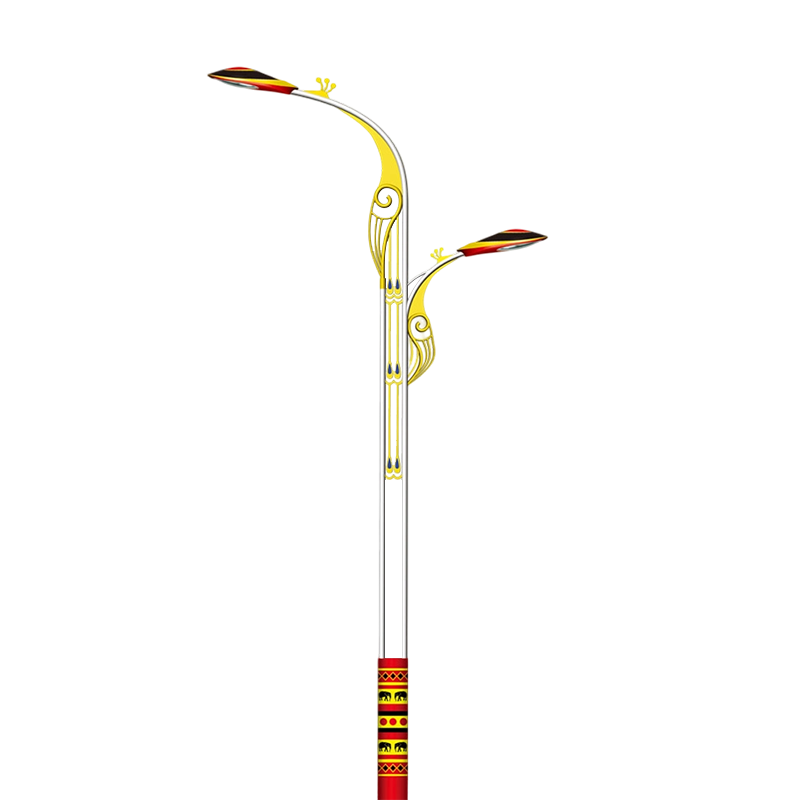
Commercial landscapes place additional emphasis on appearance. Street furniture must complement buildings, entrances, pedestrian areas, and landscaped environments. The product can be developed in forms ranging from minimalist geometric designs to streamlined artistic structures. This flexibility enables project designers to select a visual style that supports the identity of a modern commercial or civic development.
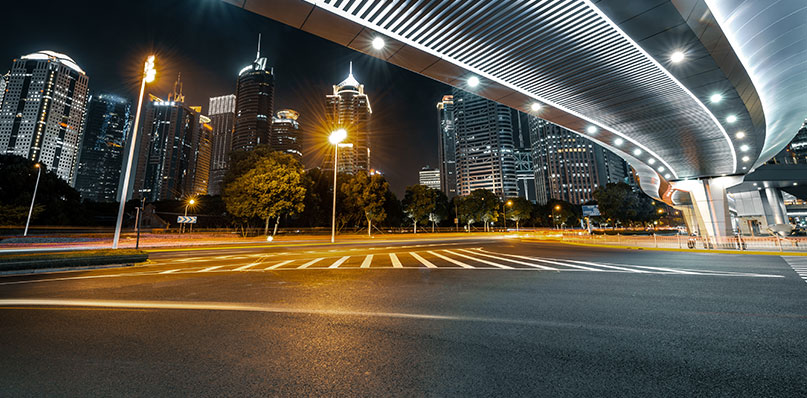
In urban arterial applications, the system supports safer road use by reducing uneven lighting, sharp contrasts, and poorly illuminated zones. Consistent illumination helps drivers recognize road geometry, identify obstacles, judge distances, and respond to other road users. For pedestrians and cyclists, improved visibility can also support safer movement near crossings, sidewalks, entrances, and shared traffic areas.
Product Configuration and Technical Characteristics
| Item | Specification | Project Benefit |
|---|---|---|
| Product type | Double-arm LED street light | Supports broad-area and two-direction illumination |
| Brand | Jinyuan | Commercially supported product platform |
| Application | Road | Suitable for urban, industrial, and commercial roadways |
| Input voltage | AC85-265V | Compatible with a wide range of electrical networks |
| Light source | LED | Efficient, long-life solid-state lighting |
| Operating temperature | -35°C to 65°C | Suitable for cold and hot outdoor environments |
| Lamp housing material | Aluminum alloy | Supports heat dissipation and corrosion resistance |
| Ingress protection | IP65 | Protects internal components from dust and water jets |
| Luminous efficiency | 140 lm/W | Provides high light output with controlled energy use |
| Color temperature | 3000K-6000K | Allows warm, neutral, or cool lighting selection |
| Color rendering index | Ra 70 | Provides practical color recognition for road environments |
| Dimming support | DC 0-10V / DALI | Enables energy management and lighting control integration |
| Warranty | 5 years | Provides long-term product assurance |
| Pole material | Q235, Q355, SS400, GR65, and other options | Allows structural selection according to project requirements |
| Pole height | 6m-10m | Supports different roadway widths and mounting conditions |
The wide AC85-265V input range makes the system suitable for many standard municipal and commercial power networks. This flexibility reduces the need for specialized electrical adaptation and supports deployment in different regions. Electrical compatibility is especially important for international projects, where local grid conditions and voltage stability may vary.
The LED modules are specified with a luminous efficiency of up to 140 lumens per watt. This performance allows project planners to obtain substantial illumination while controlling installed power. Energy efficiency is valuable not only because it reduces operating costs, but also because it can support sustainability targets, lower demand on electrical infrastructure, and reduce the total environmental impact of a roadway project.
The available color temperature range of 3000K to 6000K allows the lighting character to be selected according to the application. Warmer color temperatures can create a more comfortable atmosphere in commercial or landscaped areas, while cooler color temperatures may be preferred for certain arterial roads, industrial facilities, or security-oriented locations. The selection should be based on local regulations, visual comfort, traffic conditions, and the desired architectural environment.
With DC 0-10V and DALI dimming support, the product can be incorporated into modern lighting management strategies. Dimming may be scheduled according to traffic volume, time of night, occupancy, or special events. When correctly planned, adaptive lighting can reduce energy consumption while preserving appropriate safety levels during periods of lower activity.
Wide and Uniform Illumination
A principal advantage of the double-arm configuration is its ability to address a wider lighting area than many conventional single-arm arrangements. However, physical reach alone does not guarantee good road lighting. The optical system must distribute light in a controlled manner so that the road surface receives useful illumination across the required width and length.
The product uses precision-engineered light distribution lenses to spread LED output across the target area. This helps minimize excessive brightness directly below the luminaire and improves the delivery of light to more distant portions of the carriageway. The result is a more balanced visual environment in which drivers can observe the road ahead without moving repeatedly between bright and dark zones.
Uniformity is a critical consideration in road lighting. Bright spots may cause discomfort glare or visual adaptation problems, while dark patches can conceal pedestrians, vehicles, obstacles, changes in road direction, or surface defects. By reducing these contrasts, a well-designed optical system contributes to better visibility and more predictable nighttime driving conditions.
The double-arm design can also be used to coordinate illumination on divided roads. One fixture may serve one traffic direction while the second fixture serves the opposite side, creating a symmetrical installation that supports a clean visual rhythm. Alternatively, both arms may be arranged to cover a broad roadway, central area, or adjoining pedestrian and vehicle zones, depending on the lighting plan.
Actual photometric performance depends on mounting height, arm length, pole spacing, road width, luminaire tilt, lane arrangement, pavement reflectance, and local lighting standards. For this reason, the manufacturer provides design assistance and simulation services to help customers select the appropriate configuration. A professional lighting plan can identify potential dark areas before installation and reduce the risk of costly field modifications.

High-Performance Double-Arm LED Street Light
Durable Materials for Difficult Outdoor Conditions
Roadside lighting equipment is exposed to rain, dust, ultraviolet radiation, temperature changes, vibration, wind, pollution, and occasional impact. Coastal environments may add salt spray and high humidity, while industrial areas may contain airborne chemicals or particulates. A street-lighting system must therefore be designed as infrastructure rather than as a short-term electrical accessory.
The lamp housing is made from aluminum alloy. This material provides a useful balance of low weight, mechanical strength, corrosion resistance, and thermal conductivity. Effective heat dissipation is essential for LED systems because excessive operating temperature can accelerate component aging and reduce long-term performance. The aluminum housing helps transfer heat away from the LED modules and driver area, supporting more stable operation.
The pole is protected with a multi-layer anti-corrosion coating system. Proper surface preparation, coating application, curing, and inspection are essential to achieving durable protection. A high-quality coating system helps shield the steel substrate from moisture and oxygen, reducing the likelihood of rust formation and extending the service life of the installation.
For projects with elevated structural or environmental requirements, several pole materials are available. Q235, Q355, SS400, GR65, and comparable grades can be considered according to design loads, local standards, project budget, and environmental conditions. Selecting the correct steel grade helps ensure that the pole can withstand expected wind loads, fixture weight, arm geometry, and foundation interactions.
The stated operating temperature range of -35°C to 65°C supports deployment in a broad variety of climates. This range is relevant to both cold winter conditions and hot summer exposure. Component selection, sealing, thermal design, coating performance, and electrical protection must all work together to maintain dependable operation across these temperature extremes.
With an IP65 rating, the luminaire enclosure is protected against dust ingress and water jets from various directions. This level of protection is appropriate for many outdoor road applications, although the complete installation must also be designed correctly. Cable glands, connectors, access doors, drainage arrangements, and installation procedures all influence the real-world environmental performance of the system.
Structural Engineering for Reliable Pole Performance
Double-arm poles may experience greater combined wind loads than simple single-arm poles because they support additional fixtures and extended mounting structures. The pole, arm, base plate, anchor bolts, foundation, and luminaire connection must therefore be evaluated as one integrated system.
The manufacturer provides mechanical calculation services covering wind and foundation considerations. This support is valuable for projects in areas with high wind speeds, exposed coastal conditions, large open sites, or unusual soil characteristics. Engineering calculations help determine suitable pole dimensions, plate thickness, reinforcement details, foundation size, and anchoring arrangements.
Proper structural calculation also helps prevent overdesign. A pole that is unnecessarily heavy may increase material costs, transportation expenses, installation time, and foundation requirements. Conversely, insufficient structural capacity can create safety risks and premature failure. A project-specific design balances strength, durability, appearance, manufacturability, and cost.
The available pole height range of 6 to 10 meters allows the system to serve many road and site conditions. Lower poles may be appropriate for local roads, pedestrian areas, and compact commercial spaces, while taller poles can provide broader coverage on arterial roads or large industrial routes. The final height should be selected according to photometric calculations, traffic requirements, maintenance access, wind conditions, and local authority standards.
Manufacturing consistency is equally important. Accurate cutting, controlled bending, stable welding, and proper coating processes help ensure that each pole is produced according to the approved design. Consistent geometry supports easier installation, predictable fixture orientation, and a more uniform appearance across large projects.
Advanced Manufacturing Capabilities
The company operates as a professional production, design, and engineering organization serving the road illumination sector. Its manufacturing capability includes street-light poles, LED street lights, solar street lights, light fixtures, and related infrastructure products. This broad product scope allows customers to coordinate multiple elements of a lighting project through one experienced production partner.
The manufacturing site covers more than 70,000 square meters and is supported by more than 300 professional technicians. A large production base provides space for material storage, fabrication, surface treatment, assembly, inspection, packaging, and project coordination. It also supports the production of both standard products and customized systems for large infrastructure programs.
Extensive material inventory is one of the practical strengths of the manufacturing process. Available material options include Q235B, Q345B, S275JR, S355JR, Q460, A36, A572, GR56, GR50, and other grades. Maintaining suitable stock helps reduce procurement delays and supports faster production scheduling. It also gives engineers greater flexibility when matching structural materials to project specifications.
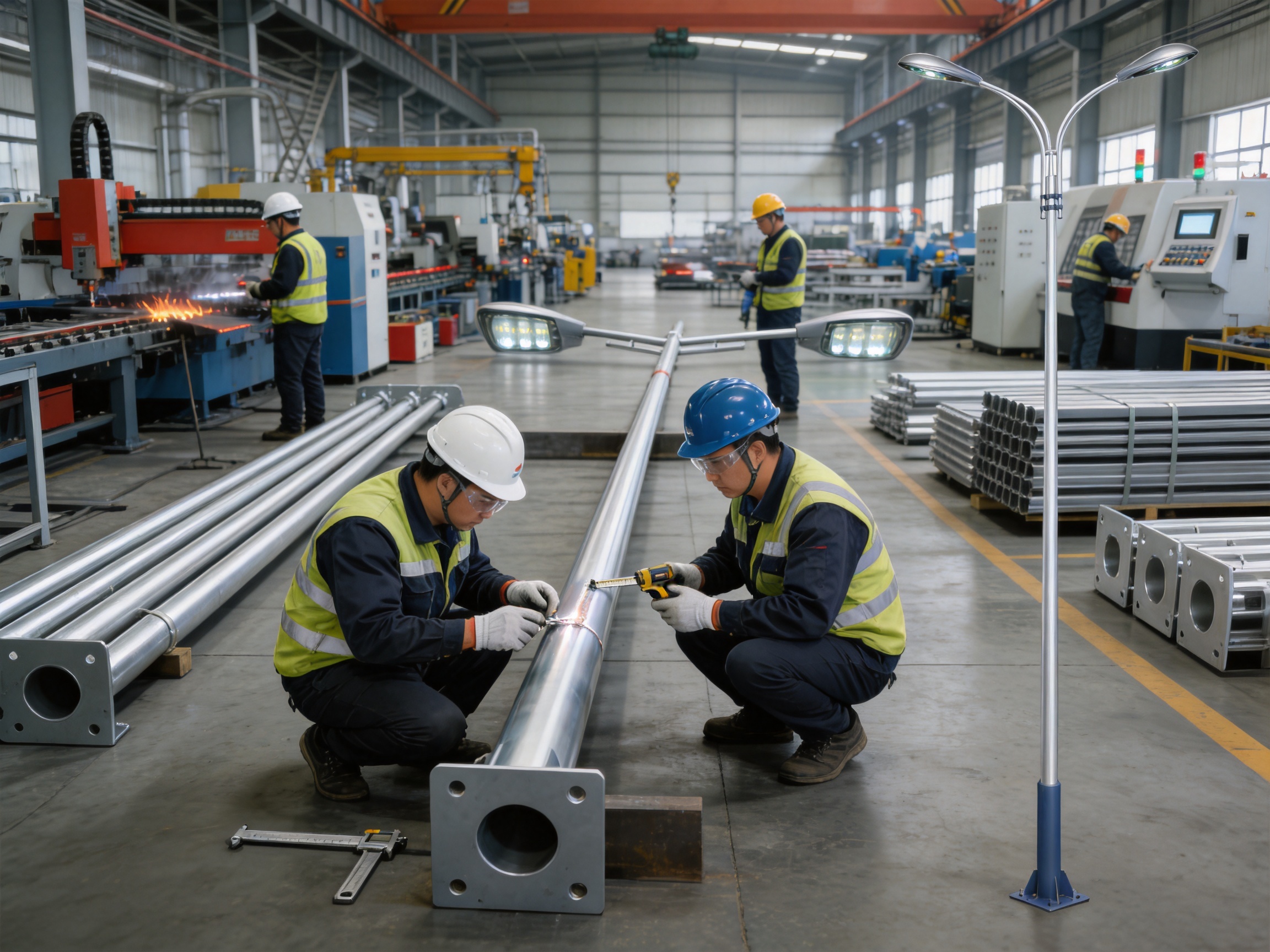
CNC bending equipment is used to form pole sections with precise and repeatable geometry. Accurate bending improves structural integrity and reduces the need for post-production adjustment. Consistent bending is especially important for tapered poles, curved arms, decorative profiles, and assemblies requiring precise alignment between the pole and luminaire.
Precision cutting equipment provides dimensional accuracy and clean edges. The manufacturing information identifies cutting accuracy of up to 0.01 millimeters. While the practical tolerance for a particular pole depends on its design and material thickness, high-precision cutting supports reliable fit-up, accurate component assembly, and reduced material waste.
Automated welding and cutting equipment increases production efficiency while supporting consistent quality. Welding quality affects both structural safety and long-term corrosion performance. Clean, stable welds reduce stress concentrations, improve joint strength, and make surface preparation and coating more reliable.
The company’s certified welders have many years of experience in the fabrication of lighting poles and related steel structures. Skilled welding personnel remain important even in an automated production environment because complex assemblies, customized components, repair work, and quality verification require technical judgment. Their experience helps the production team manage large-scale orders while maintaining schedule and quality expectations.
Electrostatic powder painting equipment is used to apply protective finishes. Powder coating can provide a durable and visually consistent surface when the steel is correctly cleaned, treated, coated, and cured. The process also supports a wide selection of colors and finishes, which is useful when lighting poles must match architectural materials, municipal color systems, or a project’s visual identity.
A 1250-ton die-casting machine supports the production of high-quality aluminum components. Die casting allows manufacturers to produce complex housing shapes with repeatable dimensions and integrated structural features. For LED luminaires, this capability can support improved heat management, cleaner appearance, reduced assembly complexity, and stable mounting interfaces.
Quality Control from Material to Finished Product
Infrastructure lighting must perform reliably after installation, often in locations where repair access is difficult or traffic disruption is costly. Quality assurance therefore needs to begin before fabrication and continue through final inspection and packing.
Material verification is the first stage. Steel grades, aluminum alloys, fasteners, electrical components, coating materials, and other inputs should be checked against approved specifications. Traceability helps the manufacturer confirm that the correct material has been used for each order and supports documentation requirements for engineering projects.
Dimensional inspection follows cutting, bending, welding, and assembly. Key dimensions include pole height, taper, arm projection, base plate geometry, bolt-hole arrangement, luminaire mounting position, and access-door alignment. Accurate dimensions simplify field installation and reduce the need for drilling, grinding, or modification at the project site.
Welded areas should be reviewed for continuity, penetration, surface condition, and visible defects. Appropriate inspection methods may be selected according to the structural importance of the joint and project requirements. Attention to weld quality is particularly important because exposed welds must also receive effective corrosion protection.
Surface preparation and coating thickness are critical to corrosion resistance. The substrate must be free from oil, scale, rust, and contaminants before protective coating is applied. Coating coverage should be checked at edges, welds, corners, base sections, and other areas that may be more vulnerable to environmental exposure.
For the luminaire, inspection may include electrical safety, LED output, driver performance, dimming response, ingress protection, thermal behavior, optical distribution, and mechanical assembly. Testing and verification help ensure that the delivered product corresponds with the approved design and stated technical requirements.
The company’s quality management approach is supported by certifications and standards including ISO9001, ISO14001, and OHSAS18001. ISO9001 relates to quality management, ISO14001 addresses environmental management, and OHSAS18001 represents an occupational health and safety management framework. Together, these systems reflect an organized approach to production control, environmental responsibility, and workplace safety.
Modular Design for Lower Maintenance Costs
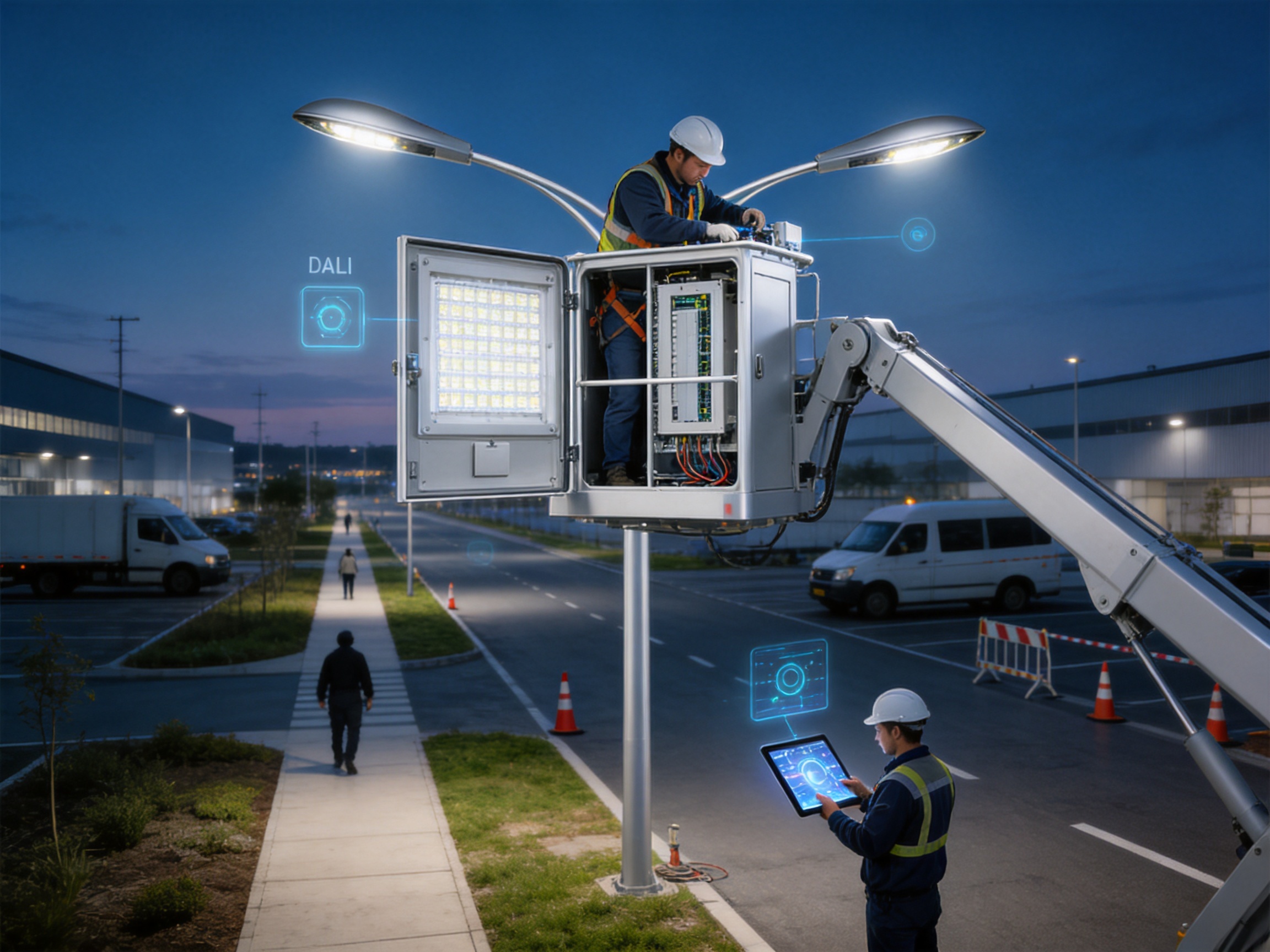
One of the product’s important advantages is its modular, tool-free maintenance design. LED street lights are often installed at height, and maintenance activities can require traffic management equipment, lifting platforms, lane closures, and additional labor. Reducing the time needed for each service operation can therefore produce significant savings over the life of a roadway project.
The modular arrangement allows LED driver units and light boards to be replaced rapidly. Instead of removing an entire luminaire or discarding a complete assembly when a serviceable component reaches the end of its useful life, maintenance teams can replace the relevant module. This approach can reduce spare-part consumption, shorten repair time, and limit disruption to road users.
A tool-free or simplified-access design also reduces the number of specialized tools required in the field. Maintenance personnel can follow standardized procedures and complete routine replacement work more efficiently. Fewer tools and fewer steps may also reduce the risk of accidental damage during servicing.
Modularity supports sustainability as well as economics. Replacing only the failed driver or light board can keep functioning housing, optical components, mounting hardware, and other parts in service. This reduces material waste and can extend the productive life of the complete lighting system.
Maintenance planning should still include periodic inspection of pole foundations, anchor bolts, coating condition, cable connections, seals, and luminaire orientation. A modular luminaire simplifies electrical and optical component replacement, but overall infrastructure performance depends on the condition of the entire installation.
Advantages over Conventional Street Lighting
Compared with conventional high-intensity discharge lighting, LED technology generally offers higher energy efficiency, faster startup, improved controllability, longer service life, and better compatibility with digital lighting management. The High-Performance Double-Arm LED Street Light builds on these benefits with a wide input-voltage range, dimming support, modular construction, and precision optical distribution.
Traditional lamps may require frequent replacement of bulbs, ignitors, ballasts, or other consumable components. LED systems typically reduce the frequency of such interventions, especially when they are designed with effective heat management and quality drivers. The modular structure further improves serviceability by allowing key components to be replaced separately.
Compared with basic low-cost LED fixtures, this system provides a more comprehensive infrastructure solution. The value is not limited to the luminaire’s initial purchase price. Structural material options, engineering calculations, coating technology, manufacturing precision, quality control, customization, and after-sales guidance all contribute to total project performance.
Some competing products may use a fixed design with limited pole options, narrow color-temperature choices, or no support for advanced dimming. This product offers DC 0-10V and DALI control compatibility, multiple pole materials, several height options, and customizable appearance. These features give project owners more flexibility during design and future upgrades.
A further advantage is the combination of product manufacturing and professional engineering support. Customers can obtain CAD design, three-dimensional product simulation, three-dimensional scene simulation, specification and color customization, mechanical calculations, foundation analysis, and overseas installation guidance. This reduces the gap between a catalog product and a project-ready lighting system.
Design Customization for Different Environments
Street-lighting projects rarely have identical requirements. Road widths, traffic volumes, mounting restrictions, architectural styles, climate conditions, local regulations, and maintenance practices vary from one location to another. Customization allows the lighting system to respond to these differences without compromising its basic performance objectives.
CAD design can be used to define pole geometry, arm reach, fixture orientation, base plate dimensions, access doors, decorative elements, and installation interfaces. Clear technical drawings support communication between the lighting supplier, civil contractor, electrical engineer, and project owner.
Three-dimensional product simulation helps customers review the shape and proportions of the proposed pole and luminaire before manufacturing begins. This is particularly useful for decorative double-arm designs, complex arms, tapered poles, and projects where the lighting equipment is a visible part of the urban landscape.
Three-dimensional scene simulation places the product into a representative road or development environment. Customers can evaluate scale, visual balance, pole spacing, arm orientation, and relationship to buildings, landscaping, medians, and pedestrian facilities. Early visual review can prevent expensive changes after production.
Color and specification customization offers additional control over the finished appearance. The pole and luminaire can be coordinated with a municipal color palette, commercial development guidelines, architectural materials, or a specific project identity. Appearance should not replace technical performance, but an attractive and coherent streetscape can improve public acceptance and reinforce the character of a development.
Energy Efficiency and Smart Lighting Readiness
Energy consumption is one of the largest long-term expenses associated with public lighting. High luminous efficiency helps reduce the installed wattage required to achieve the target illumination level. When combined with accurate photometric planning, the system can deliver useful light where it is needed while limiting unnecessary upward, lateral, or off-road spill.
Dimming capability provides another route to energy savings. A road may require full output during peak evening traffic but less light during low-traffic periods. With suitable controls and authority approval, the lighting level can be adjusted according to time schedules, traffic patterns, weather conditions, or special operational requirements.
DALI control can support more detailed communication and monitoring within compatible lighting management systems. DC 0-10V control provides a widely used analog dimming method. The choice between control methods depends on the project’s central management platform, wiring design, commissioning procedures, and desired level of monitoring.
Smart lighting readiness does not mean that every installation must immediately include a complex control network. The product can be deployed as a reliable stand-alone LED system or integrated into a wider smart-city strategy when the project requires it. This scalability helps customers avoid unnecessary initial complexity while preserving future upgrade possibilities.
Energy performance should be evaluated across the full system. Pole spacing, mounting height, lens selection, dimming schedules, maintenance practices, and electrical losses all influence actual consumption. Professional design assistance helps ensure that efficiency claims translate into measurable project results.
Service from Concept to Installation
A successful road-lighting project depends on more than factory production. It requires accurate interpretation of the customer’s objectives, correct technical selection, coordinated documentation, careful packaging, and practical field support. The manufacturer provides a service process intended to connect these stages.
During consultation, the project team can review the road layout, lighting objectives, pole arrangement, environmental conditions, power supply, control requirements, local standards, and preferred appearance. Early communication helps identify the information needed for accurate product selection and quotation.
In the design stage, CAD drawings and simulations can be developed to confirm dimensions and appearance. Mechanical calculations address wind and foundation requirements, while lighting calculations support the selection of mounting height, arm configuration, optical distribution, spacing, and fixture orientation.
During production, the approved design is translated into material preparation, cutting, bending, welding, coating, component assembly, and inspection. A clear approval process helps prevent unauthorized changes and ensures that production teams are working from the latest technical information.
Before shipment, products can be checked for dimensions, surface quality, electrical condition, accessories, packaging, and order completeness. Proper packaging is especially important for long poles and assembled lighting fixtures because transportation may expose them to vibration, impact, moisture, and repeated handling.
For international projects, overseas installation guidance can help local contractors understand foundation preparation, anchor-bolt positioning, pole erection, cable routing, luminaire mounting, electrical connection, grounding, aiming, and commissioning. Clear guidance reduces installation errors and supports consistent performance across different project locations.
Installation Considerations
Before installation, the project team should confirm the approved drawings, foundation dimensions, anchor-bolt layout, cable routes, lifting plan, traffic-control measures, and electrical isolation procedures. The foundation must achieve the required strength before the pole is erected, and anchor bolts should be positioned accurately to match the pole base plate.
During pole erection, lifting equipment should be selected according to the pole’s weight, length, center of gravity, and site conditions. Care should be taken to avoid damaging the protective coating or deforming the arms. Any damage identified during installation should be repaired according to the approved coating procedure.
Electrical connections should be completed by qualified personnel in compliance with local regulations. The installation should include appropriate grounding, overcurrent protection, cable management, and sealing of access points. Cable bends should respect minimum bend radii, and connectors should be protected from moisture and mechanical stress.
After the luminaires are installed, the arms and fixtures should be aligned according to the lighting design. Incorrect tilt angles can shift the distribution pattern and create glare or dark areas. Final aiming should be checked at night or verified through appropriate commissioning procedures.
Commissioning may include functional testing, dimming verification, control-system integration, circuit testing, visual inspection, and nighttime confirmation of road coverage. Any deviations from the design should be recorded and corrected before final handover.
Applications in Different Project Types
Urban Arterial Roads
Urban arterial roads require dependable illumination over multiple lanes, intersections, medians, and turning areas. The double-arm system can support symmetrical road coverage and a consistent streetscape. High uniformity is particularly valuable where traffic volumes are high and drivers must process information quickly.
Industrial Parks
Industrial parks often operate beyond normal business hours. Lighting must support trucks, forklifts, employees, security teams, and visitors. The product’s robust construction, broad operating-temperature range, high efficiency, and customizable pole height make it suitable for internal roads and access routes exposed to demanding conditions.
Commercial Landscapes
Shopping districts, business parks, hotel approaches, and mixed-use developments need lighting that is both functional and visually compatible with the built environment. Custom pole designs, color options, selected color temperatures, and coordinated double-arm arrangements can create an attractive and organized nighttime appearance.
Road Intersections and Large Entrances
Intersections and entrances often require broader illumination than straight road segments. A double-arm system can direct light toward separate approaches, turning lanes, pedestrian areas, or security checkpoints. Detailed simulation is recommended to ensure that the arrangement supports visibility without creating excessive glare.
Public and Civic Facilities
Hospitals, campuses, stadiums, exhibition centers, transport facilities, and government complexes often combine road traffic with pedestrian movement. A configurable system can provide practical illumination while supporting the architectural character and security requirements of the site.
Why Manufacturing Integration Matters
When the pole, luminaire, structural components, and engineering services are supplied through an integrated manufacturing organization, project coordination can become more efficient. Design information can move more directly between engineering and production teams, reducing misunderstandings about mounting interfaces, arm geometry, load requirements, and appearance.
Integrated production also supports better responsibility management. Customers have a clearer point of contact for technical questions, production scheduling, quality documentation, customization, and after-sales assistance. This can be especially valuable for large projects involving multiple shipment batches or different installation locations.
The company’s experience in road illumination extends across street-light poles, LED street lights, solar street lights, light fixtures, and associated products. This broad understanding helps engineers consider the relationship between luminaires, poles, power systems, foundations, controls, and site conditions rather than treating each component in isolation.
With products exported to more than 200 countries, the organization has experience supporting international customers and adapting to different project expectations. International capability includes communication across time zones, export coordination, documentation, packaging, technical clarification, and installation support.
Recommended Selection Process
The first step is to define the application. The project team should identify the road classification, number of lanes, carriageway width, median arrangement, pedestrian areas, traffic level, and required lighting standard. This information establishes the foundation for choosing the pole height, arm configuration, luminaire output, and optical distribution.
The second step is to evaluate the environment. Wind speed, coastal exposure, humidity, temperature, pollution, soil conditions, and potential impact risks influence material and coating decisions. Structural calculations should be completed when conditions are demanding or when the pole design includes long arms, decorative features, or unusual fixture loads.
The third step is to select electrical and control parameters. The input voltage, circuit arrangement, surge protection, dimming method, control system, emergency requirements, and maintenance strategy should be reviewed together. Future smart-lighting plans should be considered before cable routes and control infrastructure are finalized.
The fourth step is to confirm appearance and customization. Customers can review CAD drawings, product simulations, scene simulations, colors, arm shapes, pole profiles, and fixture arrangements. Approval at this stage helps ensure that the finished product meets both engineering and visual expectations.
The fifth step is to establish inspection and delivery requirements. Project owners may specify documentation, material certificates, dimensional reports, coating inspections, electrical testing, sample approvals, packaging standards, or phased delivery schedules. Early agreement helps align production and project management activities.
Long-Term Value for Project Owners
The value of a road-lighting system should be measured over its complete service life rather than by purchase price alone. Energy use, maintenance labor, spare parts, traffic disruption, replacement frequency, structural durability, corrosion performance, and future control capability all influence total cost of ownership.
The High-Performance Double-Arm LED Street Light addresses these factors through efficient LED modules, wide voltage compatibility, modular maintenance, durable materials, protective coatings, high-quality manufacturing, and dimming support. The product is designed to provide useful light consistently while reducing avoidable operational burdens.
A five-year warranty provides additional assurance for project owners and contractors. Warranty terms should be reviewed together with installation conditions, operating requirements, maintenance procedures, and local electrical practices. Correct installation and appropriate use remain important to achieving the intended service life.
The system also supports long-term planning. A project may begin with conventional scheduled operation and later introduce dimming or centralized control. Similarly, modular drivers and light boards can simplify future service. These capabilities help the lighting system remain practical as operational priorities and technology expectations change.
Q&A
What is a double-arm LED street light?
A double-arm LED street light is a pole-mounted lighting system with two extending arms or mounting directions. The two luminaires can illuminate opposite sides of a divided road, both directions of a wide roadway, or separate areas within a large site. The arrangement is useful when broad, balanced coverage is required.
Where is this product most suitable?
The system is suitable for urban arterial roads, industrial parks, commercial landscapes, public facilities, transportation routes, large entrances, intersections, and other outdoor areas requiring wide and uniform illumination.
What makes the system different from a basic LED street light?
Its value comes from the combination of double-arm coverage, precision optical lenses, 140 lm/W luminous efficiency, AC85-265V input compatibility, IP65 protection, modular maintenance, DC 0-10V and DALI dimming support, multiple pole materials, customizable designs, and professional engineering services.
Can the pole design be customized?
Yes. CAD design, three-dimensional product simulation, scene simulation, specification customization, color selection, arm configuration, pole height, and structural material options can be reviewed according to project requirements.
What pole materials are available?
Available options include Q235, Q355, SS400, GR65, and other comparable structural materials. The final selection should be based on wind loads, local standards, environmental conditions, fixture configuration, and project engineering requirements.
What pole heights are available?
The standard stated height range is 6 to 10 meters. The correct height depends on road width, pole spacing, optical distribution, traffic requirements, foundation conditions, and local regulations.
Can the lighting level be adjusted?
Yes. The system supports DC 0-10V and DALI dimming. These options can support scheduled operation, energy management, and integration with compatible lighting-control systems.
How does the modular design reduce maintenance effort?
The modular design allows LED driver units and light boards to be replaced rapidly without necessarily replacing the complete luminaire. This can reduce service time, spare-part use, labor requirements, and traffic disruption.
Can the system operate in cold and hot climates?
The stated operating-temperature range is -35°C to 65°C. Proper electrical installation, sealing, coating, thermal management, and environmental evaluation are still necessary for reliable performance in a specific location.
What does the IP65 rating mean?
IP65 indicates that the luminaire enclosure is protected against dust ingress and water jets from various directions. The complete installation must also use suitable cable glands, connectors, access covers, and installation procedures.
Does the manufacturer provide foundation calculations?
Yes. Mechanical calculation services covering wind and foundation requirements are available. These calculations help determine suitable pole dimensions, foundation design, anchoring, and structural details.
Is installation support available for overseas projects?
Yes. Overseas onsite installation guidance is included among the available professional services. Support can address pole erection, foundation coordination, luminaire mounting, electrical connections, aiming, and commissioning procedures.
What quality systems support production?
The company reports quality and management systems associated with ISO9001, ISO14001, and OHSAS18001. Its manufacturing resources include CNC bending, precision cutting, automated welding and cutting, electrostatic powder painting, and a 1250-ton die-casting machine.
What warranty is offered?
The stated warranty period is five years. Customers should confirm the complete warranty scope, operating conditions, installation requirements, and claim procedures before ordering.
Conclusion
The High-Performance Double-Arm LED Street Light is a comprehensive road-lighting solution developed for demanding urban, industrial, and commercial applications. Its double-arm configuration supports broad coverage, while high-efficiency LED modules and precision lenses help create a more uniform nighttime environment. The aluminum-alloy housing, IP65 protection, wide operating-temperature range, and multi-layer anti-corrosion treatment support reliable outdoor operation.
Its advantages extend beyond illumination. Modular, tool-free servicing helps reduce maintenance time and long-term labor costs. Dimming compatibility supports energy management and future smart-lighting integration. Multiple pole materials, 6-to-10-meter height options, customizable forms, and professional mechanical calculations allow the system to be adapted to project-specific requirements.
The manufacturing process adds further value through extensive material inventory, CNC bending, precision cutting, automated welding, electrostatic powder painting, skilled fabrication, and advanced aluminum die casting. Supported by design simulation, quality systems, overseas installation guidance, and international project experience, the product offers project owners a practical combination of performance, durability, appearance, and service support.
For road authorities, developers, contractors, and engineering consultants seeking a dependable double-arm LED lighting system, this product provides a strong foundation for safer roads, more attractive public spaces, controlled operating costs, and long-term infrastructure performance.
References
1. International Electrotechnical Commission. Degrees of Protection Provided by Enclosures, IEC 60529.
2. International Organization for Standardization. Quality Management Systems—Requirements, ISO 9001.
3. International Organization for Standardization. Environmental Management Systems—Requirements with Guidance for Use, ISO 14001.
4. Commission Internationale de l’Éclairage. Road Lighting Standards and Recommendations.
5. Illuminating Engineering Society. Recommended Practice for Design and Maintenance of Roadway and Parking Facility Lighting.
6. International Dark-Sky Association. Principles for Responsible Outdoor Lighting.
7. Manufacturer-provided product specifications and engineering service information for the High-Performance Double-Arm LED Street Light.