


JINYUAN
JINYUAN
JINYUAN
JINYUAN
JINYUAN
JINYUAN
JINYUAN
JINYUAN
JINYUAN
JINYUAN
JINYUAN
JINYUAN
JINYUAN
JINYUAN
JINYUAN
JINYUAN
Content
- 1 Why Solar Street Lighting Needs a Smarter Design
- 2 Integrated Architecture for Faster Deployment
- 3 Self-Cleaning Solar Panel Technology
- 4 Intelligent Energy Management and Adaptive Lighting
- 5 LED Performance for Roadway Applications
- 6 Weather-Resistant Aluminum Alloy Construction
- 7 Core Technical Specifications
- 8 Advantages Compared with Conventional Outdoor Lighting Options
- 9 Manufacturing Strength and Quality Control
- 10 Design, Engineering, and Project Support
- 11 Recommended Applications
- 12 Installation and Commissioning Considerations
- 13 Maintenance and Lifecycle Benefits
- 14 Quality Standards and Supplier Reliability
- 15 How to Select the Right Configuration
- 16 Frequently Asked Questions
- 16.1 What makes this solar street light different from a standard all-in-one model?
- 16.2 Does the self-cleaning feature eliminate all maintenance?
- 16.3 How does the light control function work?
- 16.4 How does time control improve energy use?
- 16.5 Can the light respond to movement?
- 16.6 What is the expected continuous lighting time?
- 16.7 What color temperatures are available?
- 16.8 Is the product suitable for cold climates?
- 16.9 What material is used for the lamp housing?
- 16.10 Can the product be customized?
- 16.11 Does the manufacturer provide engineering support?
- 16.12 What warranty period is listed?
- 16.13 Where can this product be used?
- 17 Conclusion
- 18 References
- 19 Product: Smart Self-Cleaning All-in-One Solar LED Street Light
Modern roadway lighting must do more than illuminate a street after sunset. It must operate reliably in changing weather, use energy responsibly, simplify installation, reduce maintenance requirements, and provide consistent performance throughout its service life. These requirements are especially important in remote roads, rural communities, industrial parks, urban expansion zones, highways, public facilities, and other locations where access to electrical infrastructure may be limited or expensive.
The Smart Self-Cleaning All-in-One Solar LED Street Light is designed to address these challenges through a compact, integrated lighting platform. It combines a photovoltaic panel, battery, smart controller, LED lighting module, sensors, and an automated cleaning mechanism within one coordinated system. Instead of relying on separate solar panels, external battery cabinets, underground cabling, and independent control equipment, the all-in-one structure brings the primary components together in a streamlined luminaire.
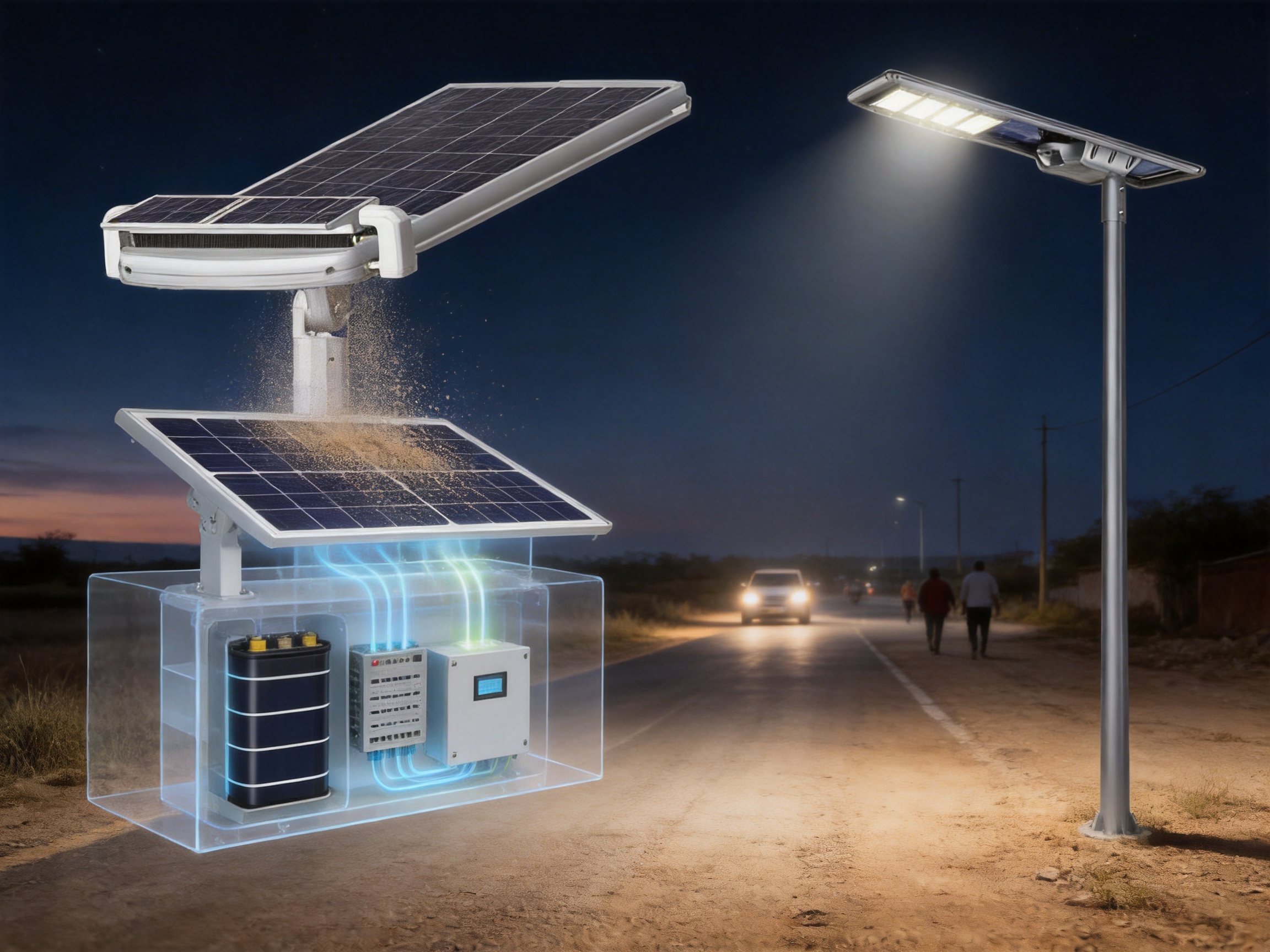
Its most distinctive feature is the built-in self-cleaning function. Outdoor solar panels gradually collect dust, sand, bird droppings, leaves, industrial residue, and other contaminants. When these deposits remain on the photovoltaic surface, they reduce the amount of sunlight reaching the solar cells and can cause a gradual decline in power generation. The automated cleaning system is engineered to remove this accumulated material at scheduled intervals, helping the panel maintain more stable energy collection without depending entirely on manual cleaning.
In addition to automated panel maintenance, the product uses intelligent energy management. Light-control and time-control functions work with smart sensors to adjust lighting behavior according to ambient conditions and movement. The luminaire can provide brighter illumination when activity is detected while reducing output during periods of low traffic. This approach helps balance visibility, safety, battery protection, and energy conservation.
Manufactured by Yangzhou Jinyuan Lamps Co., Ltd., a professional road illumination company established in 2002, the product benefits from extensive experience in lighting poles, LED luminaires, solar street lights, light fixtures, and related engineering services. The company operates a production site exceeding 70,000 square meters, employs more than 300 professional technicians, and supplies products to customers in more than 200 countries.
Why Solar Street Lighting Needs a Smarter Design
Traditional grid-connected street lighting depends on underground cables, distribution equipment, utility connections, and ongoing electricity purchases. These systems remain useful in many urban environments, but they can become costly or technically difficult in locations with weak grid access, long road distances, difficult terrain, or high trenching expenses.
Conventional solar street lights solve some of these challenges by generating power locally. However, many traditional solar designs use separate panels mounted above the luminaire, external battery boxes, independent controllers, and multiple wiring connections. Such arrangements may require more installation time and can increase the number of components exposed to weather, vandalism, corrosion, and mechanical stress.
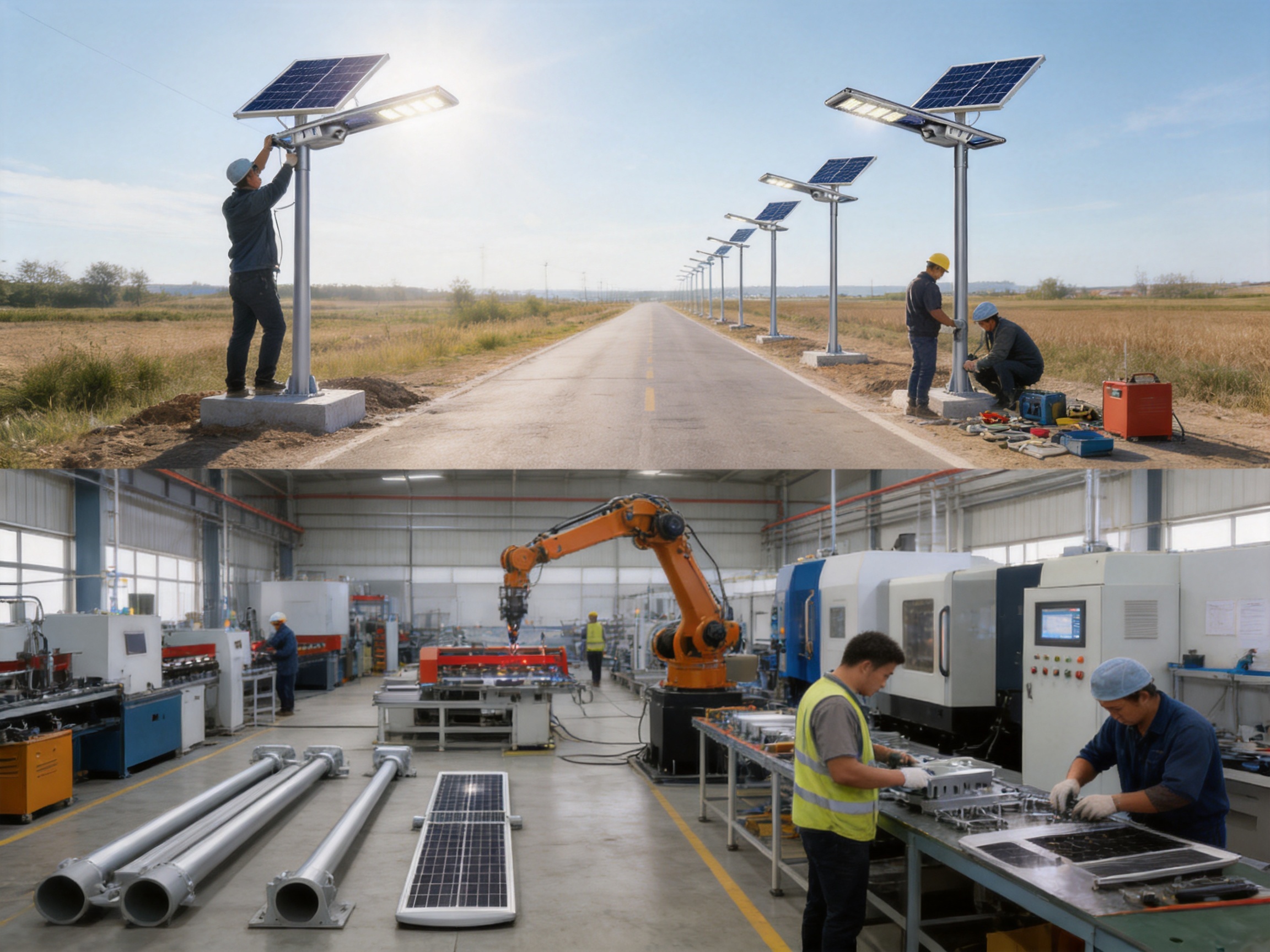
An integrated solar street light reduces the complexity of the installation. The solar panel, battery, controller, and LED module are assembled as one coordinated lighting unit. This arrangement can reduce wiring work, simplify pole-top installation, and create a cleaner visual appearance. It also makes the system easier to package, transport, and deploy in projects requiring many luminaires.
Nevertheless, solar lighting performance depends on more than the nominal size of the photovoltaic panel or battery. The panel must be able to receive sunlight effectively over time. Dust accumulation is a major concern in areas with dry climates, construction activity, agricultural operations, road traffic, smog, or airborne sand. A panel that is clean during initial commissioning may produce considerably less energy after weeks or months of exposure if maintenance is not performed.
The self-cleaning mechanism directly targets this long-term performance issue. By automatically removing common contaminants from the photovoltaic surface, the system is designed to preserve the panel’s ability to absorb sunlight. This provides a practical advantage over solar lights that depend entirely on periodic manual washing or brushing.
Integrated Architecture for Faster Deployment
The all-in-one construction unifies several essential subsystems in one luminaire. The photovoltaic panel collects solar energy during the day. The battery stores that energy for nighttime operation. The smart controller manages charging, discharge, lighting schedules, sensor signals, and energy-saving modes. The LED module converts stored electricity into roadway illumination.
Because these components are integrated, the product can reduce the need for extensive external wiring. Installers generally benefit from a more straightforward mounting process compared with systems that require separate solar panels, battery cabinets, controller enclosures, and cable connections. Fewer exposed connections can also reduce potential failure points caused by loose terminals, water ingress, cable damage, or incorrect field wiring.
The integrated structure provides aesthetic benefits as well. A compact luminaire can produce a neater appearance on residential roads, campuses, parks, industrial areas, and public spaces. The design avoids the visual clutter associated with multiple external boxes and long cable runs. For projects where the streetscape and architectural appearance matter, this streamlined profile can be an important consideration.
Integration also supports more coordinated factory testing. Rather than testing each component separately and leaving the final system assembly entirely to field personnel, the manufacturer can inspect the relationship between the panel, battery, controller, LED module, and sensors before shipment. This makes it easier to verify basic system behavior and identify assembly issues earlier in the supply chain.
For large projects, simplified installation can influence the total project cost. The purchase price is only one part of a lighting investment. Labor, lifting equipment, cable preparation, commissioning time, transport, maintenance access, and future replacement work all contribute to the life-cycle cost. A system that requires fewer installation steps can offer practical savings even when the initial unit price is not the only deciding factor.
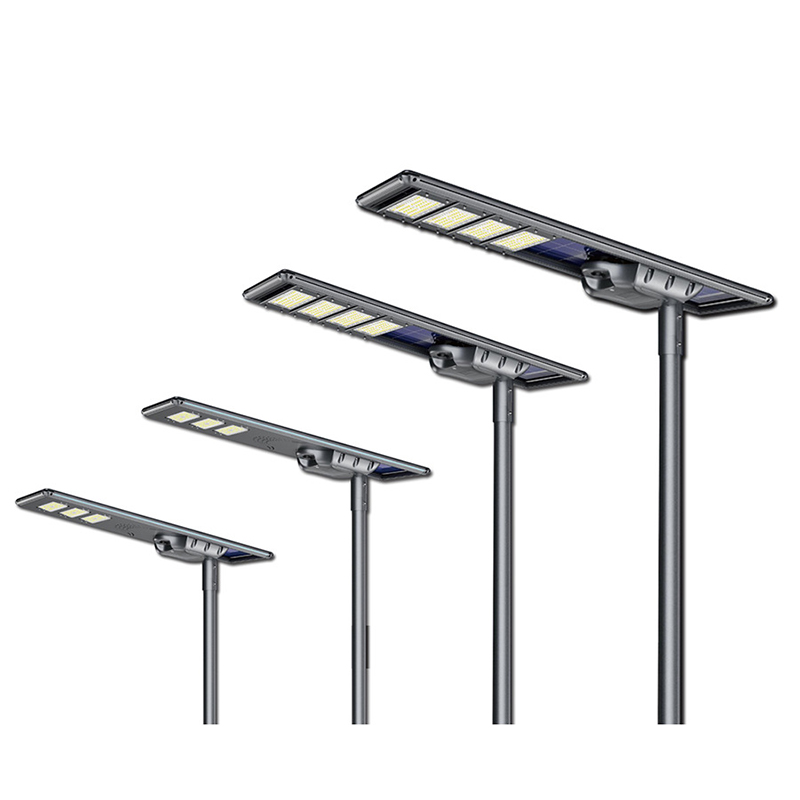
Smart Self-Cleaning All-in-One Solar LED Street Light
Self-Cleaning Solar Panel Technology
The central innovation of this product is the automated cleaning system built into the solar street light. Solar photovoltaic panels are exposed to the same environmental contaminants as any outdoor surface. Fine dust can form a thin film over the panel. Sand can accumulate along edges and corners. Bird droppings may create localized opaque areas. Leaves, pollen, smoke residue, and industrial particles can further reduce the amount of usable sunlight.
Even when contamination does not completely block the panel, it can reduce light transmission and create uneven conditions across the photovoltaic cells. Over time, this may affect daily energy harvesting and reduce the amount of stored energy available for nighttime illumination. In a solar street light, reduced charging capacity can lead to shorter lighting duration, lower brightness, or greater dependence on energy-saving modes during periods of poor weather.
The self-cleaning mechanism is intended to reduce this performance decay. It operates according to an automated schedule or programmed cleaning logic, allowing the luminaire to remove deposits without requiring routine manual access to the pole-mounted panel. This is particularly valuable where streetlights are installed along long roads, in remote areas, or in locations where maintenance vehicles and lifting equipment are expensive to mobilize.
Automated cleaning does not eliminate the need for all inspections. Severe weather, unusual debris, mechanical damage, and long-term environmental exposure may still require professional maintenance. However, it can reduce the frequency of ordinary cleaning tasks and help keep the panel in a more productive condition between service visits.
The benefit is especially relevant in sandy, dusty, and smoggy environments. In such locations, a fixed solar panel may lose energy-harvesting performance quickly if manual cleaning is irregular. A self-cleaning function provides a more proactive approach by incorporating panel maintenance into the lighting system itself rather than treating it as an occasional external task.
Compared with basic solar street lights that have no automated cleaning capability, this design is differentiated by its focus on long-term photovoltaic productivity. The objective is not simply to install a solar lamp but to help preserve its energy-generation performance throughout outdoor operation.
How Cleaning Supports Energy Stability
Solar street lights must collect enough energy during daylight hours to support their planned nighttime operating cycle. The available energy is influenced by solar radiation, weather, panel orientation, temperature, battery condition, lighting power, operating schedule, and surface cleanliness.
Clean panels can absorb more available sunlight than panels covered by a heavy layer of dust or other deposits. By maintaining a clearer photovoltaic surface, the self-cleaning system supports more consistent daily charging. This does not guarantee identical performance under every weather condition, because cloudy days and seasonal sunlight variation remain unavoidable. It does, however, address one controllable source of energy loss.
For project planners, this distinction is important. Solar system performance should be evaluated as a complete operating system rather than by looking only at the rated panel capacity. The condition of the panel during actual field use matters. A cleaning system can contribute to better alignment between laboratory expectations and real-world operation, particularly in challenging environments.
Intelligent Energy Management and Adaptive Lighting
The product uses light control and time control as part of its operating strategy. A light sensor can identify changing ambient conditions, helping the luminaire determine when nighttime operation should begin and when daylight conditions are sufficient for shutdown. Time-based control can support scheduled brightness profiles, operating windows, and energy-saving periods.
Movement-sensitive operation adds another layer of efficiency. When people, vehicles, or other activity are detected, the lighting system can increase brightness to support visibility and road safety. During periods of low activity, the luminaire can reduce output rather than operating continuously at maximum brightness. This helps lower energy consumption and may extend the useful nighttime operating period.
Adaptive lighting is particularly suitable for roads and areas with changing traffic patterns. Residential streets may be busy in the early evening but quiet after midnight. Industrial parks may experience concentrated activity during shift changes. Paths, parking areas, and rural roads may require full illumination only when pedestrians or vehicles are present. A sensor-based lighting profile can respond more efficiently than a fixed full-power schedule.
The smart controller also coordinates battery charging and discharge. A well-managed battery cycle is important because unnecessary deep discharge, inefficient charging, and poorly timed lighting can reduce system reliability. By regulating energy flow between the photovoltaic panel, battery, and LED module, the controller helps the integrated system operate within its intended parameters.
Intelligent operation offers advantages over basic solar lights with fixed brightness and simple dusk-to-dawn switching. Fixed-output products may consume more stored energy than necessary during periods of low activity. The smart design uses available energy more selectively, which can be beneficial during winter, rainy periods, or other conditions when solar collection is reduced.
LED Performance for Roadway Applications
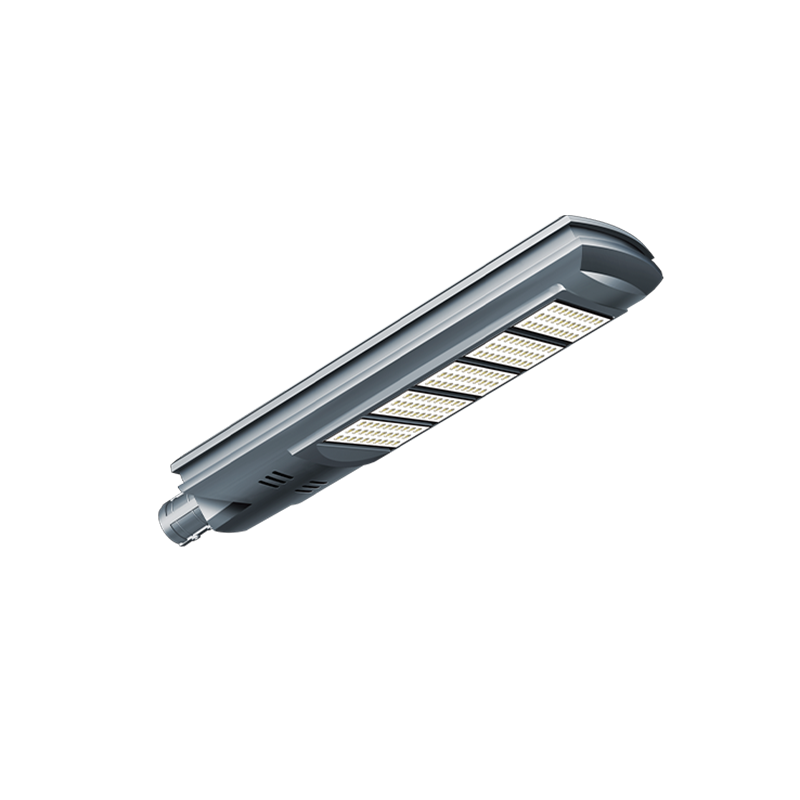
The luminaire uses LED as its light source and provides a stated luminous efficiency of 140 lumens per watt. High luminous efficiency allows the product to produce useful illumination while consuming less electrical power than less efficient lighting technologies. Lower power demand is especially valuable in a solar application because every watt saved at night reduces the amount of energy that must be generated and stored during the day.
LED technology also supports directional optical design. Instead of distributing light in all directions, a roadway luminaire can be configured to direct illumination toward the road surface, pedestrian area, or target zone. Effective optical control helps reduce wasted light and supports more useful illumination where it is needed.
The available color temperature range is 3000K to 6000K. Warmer color temperatures can create a softer visual environment and may be suitable for residential districts, parks, and architectural settings. Cooler color temperatures can provide a brighter, more neutral appearance for roadways, industrial zones, and security-sensitive locations. The appropriate selection depends on project requirements, local regulations, glare considerations, surrounding land use, and desired visual comfort.
The stated color rendering index is Ra 70. This indicates a practical level of color recognition for general roadway and outdoor lighting applications. Color rendering can influence how clearly people identify vehicles, objects, clothing, signs, and surrounding features at night. Project designers should still confirm the required performance against local standards and the specific visual needs of the installation site.
LED modules generally offer long operating life when they are correctly designed, thermally managed, electrically controlled, and protected from environmental exposure. The aluminum alloy lamp material supports heat dissipation and contributes to structural durability. Good thermal management is essential because excessive heat can accelerate LED degradation and affect driver and electronic component performance.
Weather-Resistant Aluminum Alloy Construction
The luminaire uses aluminum alloy for its lamp material. Aluminum alloy provides a balance of low weight, structural strength, corrosion resistance, and thermal conductivity. Lower weight can simplify handling during installation, while good thermal conductivity can help transfer heat away from the LED module and other heat-producing components.
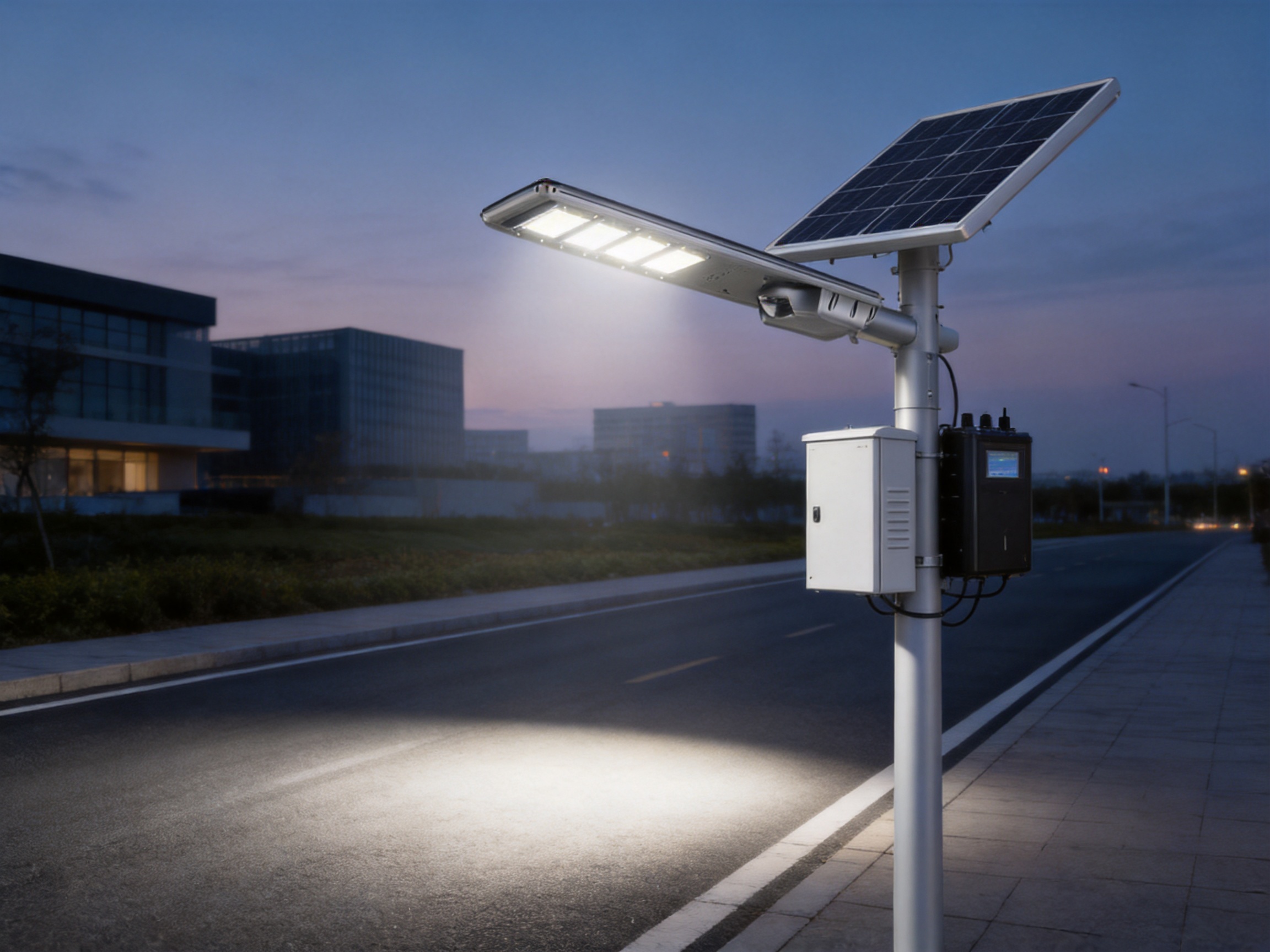
The product is engineered with a high-strength industrial-grade housing intended to provide waterproof and anti-corrosive performance. Outdoor street lights must withstand rain, humidity, temperature changes, sunlight, dust, wind, and airborne pollutants. Protection against these conditions helps preserve the performance of the optical, electrical, and mechanical components.
The stated operating temperature range is -35°C to 65°C. This broad range makes the product suitable for many cold, hot, and seasonally variable environments. Final project selection should still account for local solar conditions, installation altitude, humidity, wind exposure, battery specifications, and the actual microclimate around the pole.
Corrosion resistance is especially important for coastal areas, industrial sites, roads exposed to de-icing materials, and regions with high humidity. Surface treatment, sealing, fastener selection, drainage design, and coating quality all contribute to long-term protection. A durable housing reduces the risk that water, salt, or pollutants will compromise the internal components.
The combination of aluminum alloy construction and industrial-grade protection supports a longer service life than a lightly protected outdoor fitting. It also makes the luminaire suitable for demanding applications where frequent replacement would be disruptive or expensive.
Core Technical Specifications
The following information summarizes the principal specifications supplied for the Smart Self-Cleaning All-in-One Solar LED Street Light. Project designers should confirm the final configuration, battery capacity, solar panel rating, pole height, optical distribution, and installation requirements before placing a project order.
| Specification | Provided Information | Project Relevance |
|---|---|---|
| Product category | All-in-one solar street light | Integrates major solar lighting components into one luminaire |
| Brand | Jinyuan | Manufacturer product identification |
| Application | Road | Designed for roadway and outdoor circulation areas |
| Voltage options | 3.2V / 12V / 24V | Supports different system and battery configurations |
| Light source | LED | Efficient solid-state illumination |
| Lamp material | Aluminum alloy | Supports durability, heat dissipation, and reduced weight |
| Operating temperature | -35°C to 65°C | Suitable for a broad range of outdoor climates |
| Continuous lighting time | 5–12 hours | Supports different operating schedules and energy profiles |
| Luminous efficiency | 140 lm/W | Helps reduce energy demand for a given light output |
| Color temperature | 3000K–6000K | Allows warmer or cooler visual appearance |
| Color rendering index | Ra 70 | Provides practical general-purpose color recognition |
| Control mode | Light control plus time control | Supports automatic switching and scheduled energy management |
| Warranty period | 3 years | Provides a defined period of manufacturer support |
Advantages Compared with Conventional Outdoor Lighting Options
The product’s strongest advantage is its combination of several functions in one system. Many lighting products offer LED efficiency, while others offer solar power or motion sensing. This design combines solar generation, battery storage, LED illumination, smart control, and automated panel cleaning within one integrated platform.
Compared with grid-connected lighting, the system can reduce dependence on utility infrastructure. This can be valuable for rural roads, new developments, temporary construction zones, remote public facilities, parks, and locations where trenching or electrical connection is not economical. Local energy generation also supports more flexible deployment.
Compared with conventional solar street lights, the product offers a more compact architecture and a built-in cleaning function. Separate-component systems may provide flexibility, but they can also involve more wiring, more housings, more mounting work, and more exposure points. The integrated design can make installation and maintenance more straightforward.
Compared with basic all-in-one solar lights, the self-cleaning capability provides a meaningful differentiation. Many compact solar luminaires still require workers to climb poles or use lifting equipment to remove dust and bird droppings. Automated cleaning reduces the frequency of these interventions and helps preserve photovoltaic performance.
Compared with fixed-output lighting, the intelligent sensor and time-control functions can reduce unnecessary energy use. By adapting brightness to ambient conditions and movement, the system can allocate stored energy more effectively. This may support longer operating time, improve battery management, and reduce energy waste.
Compared with lower-efficiency lighting technologies, the 140 lm/W LED performance supports a more favorable relationship between light output and power consumption. This is especially important when the available energy is limited by the size of the solar panel, battery, or seasonal sunlight conditions.
It is important to evaluate these advantages as part of a complete project design. No solar light can overcome every combination of insufficient sunlight, incorrect installation angle, poor battery sizing, extreme weather, or excessive lighting demand. Proper engineering remains essential. However, the product’s integrated cleaning, control, and lighting functions address several common causes of solar street light underperformance.
Manufacturing Strength and Quality Control
The performance of a street light depends not only on its design but also on the quality and consistency of its manufacturing process. Yangzhou Jinyuan Lamps Co., Ltd. operates as a production, design, and engineering company serving the road illumination sector. Its product scope includes street light poles, LED street lights, solar street lights, light fixtures, and related lighting products.
The company has been established since 2002 and operates a production site exceeding 70,000 square meters. More than 300 professional technicians support manufacturing, design, engineering, and quality-related activities. The company also reports exports to more than 200 countries, demonstrating experience with different project conditions, customer requirements, and international markets.
Its manufacturing capabilities include material processing, CNC bending, precision cutting, welding, surface treatment, automated production, and die casting. These processes are important for producing reliable poles, brackets, housings, frames, and structural components.
Material Selection and Structural Reliability
The company supports material options including Q235B, Q345B, S275JR, S355JR, Q460, A36, A572, GR56, and GR50, among others. Material selection should be based on structural calculations, local wind conditions, corrosion exposure, pole height, luminaire weight, foundation design, and project specifications.
Maintaining a broad stock of materials can shorten production lead times and help the manufacturer respond to customized requirements. It also reduces the risk that a project will be delayed because a specific grade or thickness is unavailable. For large infrastructure projects, supply continuity can be as important as the basic product specification.
CNC Bending and Dimensional Consistency
Precise CNC bending supports consistent angles, repeatable shapes, and improved structural integrity. Accurate bending is important for light poles, mounting arms, brackets, and other formed components. Consistency reduces the need for post-production correction and helps ensure that parts fit together properly during assembly.
For projects involving many poles or luminaires, repeatability is particularly valuable. Small variations in angle or alignment can become noticeable across a long roadway. Controlled CNC forming helps maintain a consistent appearance and supports predictable installation results.
Precision Cutting
The manufacturing process is described as providing cutting accuracy down to 0.01 mm. Precise cutting can produce clean edges and accurate dimensions, supporting better component fit and reducing unnecessary finishing work. Accurate parts also help improve assembly efficiency and may reduce the risk of gaps, misalignment, or excessive adjustment during installation.
Precision cutting is relevant to both structural components and luminaire-related parts. When parts are produced consistently, quality inspection becomes more effective because the manufacturing team can compare them against clear dimensional requirements.
Welding Capability
Certified welders with many years of experience contribute to the strength and consistency of welded components. Welding quality influences the reliability of poles, brackets, frames, doors, supports, and other structural elements. Proper preparation, welding technique, inspection, and finishing help reduce the risk of defects that could affect service life.
For large-scale projects, welding capacity also influences delivery performance. A company with experienced welding personnel and suitable production resources is better positioned to manage large orders while maintaining consistent workmanship.
Surface Treatment and Corrosion Protection
Surface treatment is a critical part of outdoor lighting manufacturing. A properly prepared and coated surface helps protect steel and aluminum components against moisture, oxidation, pollutants, and other corrosive influences. Powder electrostatic painting equipment can support uniform coating application and consistent appearance.
Corrosion protection is not only a cosmetic issue. Corrosion can reduce wall thickness, damage fasteners, weaken joints, affect door seals, and compromise the structural or electrical protection of a component. For lighting installed outdoors for many years, coating preparation and quality control have a direct relationship with maintenance requirements and service life.
Automated Production and Die Casting
Automated lines can improve production consistency, increase throughput, and reduce repetitive manual operations. Automation also supports more predictable quality control when the same process is repeated across a large quantity of products. The company’s equipment includes automatic welding and cutting machines as well as a 1250-ton die casting machine.
Die casting can produce complex aluminum components with repeatable dimensions and integrated structural features. This is valuable for luminaire housings, heat-dissipation structures, covers, brackets, and other parts requiring a combination of strength, shape precision, and efficient production.
Automation may also contribute to cost control. More efficient production cycles can reduce waste, shorten processing time, and support competitive pricing while maintaining defined quality requirements. For buyers, this can be important when comparing suppliers for large road lighting programs.
Design, Engineering, and Project Support
A successful street lighting project requires more than the delivery of luminaires. The product must be matched to the road width, pole spacing, mounting height, traffic conditions, solar resource, wind load, foundation, battery requirements, and local lighting standards. The manufacturer provides design and engineering support intended to help customers move from initial consultation to project completion.
CAD design can be used to prepare accurate drawings for the luminaire, pole, bracket, foundation, and related components. Technical drawings help project teams review dimensions, mounting interfaces, cable paths, maintenance access, and installation requirements before production.
Three-dimensional product simulation design can assist with visualizing how the luminaire and pole assembly will appear and fit together. This is useful when a project requires customized dimensions, special finishes, non-standard mounting arrangements, or coordination with existing architectural features.
Three-dimensional scene simulation design can show how the lighting system may appear in a road, campus, park, industrial site, residential development, or public area. Such visualization can support customer approval, stakeholder communication, and early identification of potential installation issues.
Specification and color customization allow the product to be adapted to project requirements. Customers may request different color temperatures, finishes, dimensions, control settings, mounting arrangements, or other product parameters, subject to technical feasibility and final confirmation.
Mechanical calculations for wind and foundation design are also important. Poles and luminaires must be evaluated against local wind conditions, exposed surface area, pole height, arm configuration, soil conditions, and foundation geometry. Engineering support in this area helps improve the safety and reliability of the complete installation.
Overseas on-site installation guidance can assist international customers with installation sequencing, mounting procedures, commissioning, troubleshooting, and project coordination. Local conditions vary considerably, so professional guidance can help ensure that the supplied equipment is installed according to its intended design.
Recommended Applications
The Smart Self-Cleaning All-in-One Solar LED Street Light is suitable for roads and outdoor circulation areas where independent energy generation, reduced wiring, and low maintenance are priorities.
Rural roads can benefit from solar lighting when grid extension is expensive or unavailable. The integrated structure reduces the need for electrical infrastructure, while the self-cleaning feature can help maintain performance in agricultural and dusty environments.
Industrial parks and logistics areas may experience dust, vehicle emissions, and extended road networks. The product’s weather-resistant construction and automated panel cleaning are relevant in such conditions. Smart brightness control can also help adapt lighting to shift schedules and changing activity levels.
Residential developments and urban expansion zones can use all-in-one solar lighting before permanent grid infrastructure is completed. The luminaires can support interim road safety while reducing the need for temporary underground cabling.
Parks, pathways, campuses, and public facilities may benefit from motion-responsive lighting. Full brightness can be provided when pedestrians are present, while lower output can be used during quiet periods to preserve energy and reduce unnecessary light exposure.
Remote roads, tourism areas, agricultural communities, and mountainous locations may also be suitable. In these locations, reducing the frequency of maintenance visits can have a significant operational benefit.
Installation and Commissioning Considerations
Although the all-in-one design simplifies installation, the project should still be carefully engineered. The pole location must provide sufficient exposure to sunlight throughout the day. Nearby buildings, trees, overhead structures, signs, and terrain can cast shadows on the photovoltaic panel and reduce energy generation.
The luminaire should be mounted at the recommended orientation and angle for the project location. Solar exposure varies by latitude and season, so installers should follow the manufacturer’s technical guidance rather than relying on visual estimation alone.
Pole foundations must be designed for local soil and wind conditions. The pole, bracket, and luminaire create a combined structure that is exposed to wind pressure. Proper anchoring, bolt tightening, vertical alignment, and foundation curing are essential for safe operation.
Before commissioning, installers should verify the physical condition of the luminaire, panel, housing, mounting hardware, and cleaning mechanism. The controller should be checked for correct time settings, lighting schedules, sensor response, and battery operation. The self-cleaning function should be tested to confirm that it moves or operates correctly and that no packaging material or installation debris interferes with the mechanism.
Where motion sensors are included, their detection range and orientation should be adjusted for the road or pathway. Poor positioning may cause unwanted triggering or fail to detect approaching pedestrians and vehicles. A suitable commissioning procedure should include nighttime observation and, where possible, several operating scenarios.
Project documentation should record pole positions, system settings, installation dates, maintenance procedures, and warranty information. This information helps future technicians diagnose problems and manage the lighting system throughout its service life.
Maintenance and Lifecycle Benefits
The automated cleaning function reduces one of the most common routine maintenance tasks associated with solar street lights. Instead of relying exclusively on periodic manual cleaning, the system performs scheduled surface maintenance as part of its normal operation.
Reduced manual cleaning can lower labor costs, limit the need for lifting equipment, and reduce safety risks associated with working at height. This is especially valuable on roads with heavy traffic, in remote areas, or in locations where maintenance teams must travel long distances.
Regular visual inspections should still be scheduled. Maintenance personnel should check the luminaire housing, mounting bolts, pole condition, electrical seals, battery behavior, controller operation, sensor response, and cleaning mechanism. The panel should be inspected for scratches, cracks, heavy deposits, or obstructions that the automated system cannot remove.
Battery performance should also be monitored. A gradual reduction in nighttime operating time may result from battery aging, insufficient solar exposure, persistent cloud cover, controller issues, or increased lighting demand. Early diagnosis can prevent a small problem from becoming a complete lighting failure.
The aluminum alloy housing and anti-corrosive construction can support longer service life, but environmental exposure should still be considered. Coastal salt, chemical pollutants, extreme humidity, and industrial dust may require more frequent inspection than ordinary inland conditions.
From a lifecycle perspective, the product aims to reduce the total burden of ownership. Its value comes from the combined effect of efficient LED output, intelligent energy management, reduced wiring, automated panel cleaning, durable materials, and manufacturer support.
Quality Standards and Supplier Reliability
Infrastructure buyers often need evidence that a supplier can provide consistent products, documented processes, and dependable support. The company reports compliance with international quality and management standards including ISO9001, ISO14001, and OHSAS18001.
ISO9001 is associated with quality management systems and process consistency. ISO14001 relates to environmental management practices. OHSAS18001, historically used for occupational health and safety management, reflects attention to workplace safety systems. Customers should confirm the current validity, scope, and applicability of any certification during the procurement process.
A supplier’s manufacturing depth can also be evaluated through its equipment, technical personnel, inspection procedures, production capacity, export experience, and ability to provide project documentation. A company capable of handling poles, luminaires, solar lighting systems, structural components, and engineering support can offer a more coordinated supply solution than a supplier focused on only one isolated component.
For international projects, communication and after-sales support are equally important. Clear technical drawings, packing lists, installation instructions, warranty terms, spare-part availability, and response procedures can help reduce project risk.
How to Select the Right Configuration
The correct product configuration depends on several site-specific variables. The road classification, pole spacing, mounting height, desired illumination level, traffic volume, solar radiation, seasonal weather, and required nighttime duration should all be evaluated before final selection.
Continuous lighting time is listed as 5–12 hours, but the actual result depends on battery capacity, LED power, brightness settings, movement detection, solar charging conditions, and local weather. Buyers should define whether the project requires fixed full-power lighting, dimming during quiet periods, or adaptive brightness based on movement.
Color temperature should be selected according to the environment and lighting objectives. Warmer light may support visual comfort in residential and recreational areas, while cooler light may provide a more neutral appearance for roads and industrial applications. Glare control and local lighting regulations should be considered in all cases.
Voltage selection should match the final system architecture. The listed options of 3.2V, 12V, and 24V may correspond to different battery and control configurations. Buyers should request a complete electrical specification, including battery chemistry, rated capacity, photovoltaic power, controller type, protection functions, and recommended operating limits.
Wind and foundation calculations should be completed for the exact pole and luminaire combination. A high-quality luminaire cannot compensate for an undersized foundation or unsuitable pole design. Mechanical engineering should therefore be integrated into the procurement process from the beginning.
Frequently Asked Questions
What makes this solar street light different from a standard all-in-one model?
Its principal distinction is the built-in automated cleaning mechanism for the photovoltaic panel. Standard all-in-one models may integrate the panel, battery, controller, and LED module but still require frequent manual cleaning. This product is designed to reduce dust, bird droppings, and debris accumulation automatically, helping maintain more stable solar energy collection.
Does the self-cleaning feature eliminate all maintenance?
No. It is intended to reduce routine panel-cleaning requirements, not eliminate all inspections. Maintenance teams should still check the housing, pole, mounting hardware, battery, controller, sensor, seals, and cleaning mechanism. Severe contamination, physical damage, or unusual debris may require manual service.
How does the light control function work?
Light control uses ambient brightness conditions to determine when the luminaire should switch between daytime and nighttime states. This enables automatic operation without requiring a manual switch. The exact settings should be confirmed during commissioning.
How does time control improve energy use?
Time control allows the lighting schedule or brightness profile to be adjusted according to programmed periods. For example, the luminaire may use higher brightness during active evening hours and lower brightness during quiet late-night periods. This helps reserve battery energy for the most important operating times.
Can the light respond to movement?
The product is described as using smart sensors that adjust brightness according to movement and ambient light. When activity is detected, the luminaire can provide stronger illumination. When the area is inactive, it can reduce output to conserve energy. Final detection range and lighting behavior should be confirmed for the selected configuration.
What is the expected continuous lighting time?
The supplied specification lists a continuous lighting time of 5–12 hours. Actual performance depends on solar conditions, battery size, LED power, brightness settings, sensor operation, temperature, and the number of cloudy or rainy days.
What color temperatures are available?
The listed color temperature range is 3000K to 6000K. This allows project teams to choose a warmer or cooler appearance based on the road environment, visual comfort requirements, design objectives, and applicable regulations.
Is the product suitable for cold climates?
The stated operating temperature range is -35°C to 65°C, which covers many cold and hot outdoor environments. The complete project should still be evaluated for local winter sunlight, battery behavior, snow, ice, wind, and installation exposure.
What material is used for the lamp housing?
The lamp material is aluminum alloy. This material supports low weight, structural durability, corrosion resistance, and heat dissipation. The product also uses a high-strength industrial-grade housing intended for waterproof and anti-corrosive outdoor performance.
Can the product be customized?
Design and specification customization is available as part of the manufacturer’s project support capabilities. Potential customization may include dimensions, color, optical requirements, control settings, mounting arrangements, and other project parameters. Technical feasibility should be confirmed before production.
Does the manufacturer provide engineering support?
Yes. The supplied company information describes CAD design, three-dimensional product simulation, three-dimensional scene simulation, specification and color customization, mechanical calculations for wind and foundations, and overseas on-site installation guidance.
What warranty period is listed?
The listed warranty period is three years. Buyers should confirm the warranty scope, covered components, exclusions, claim process, transport responsibilities, and recommended maintenance procedures in the final contract.
Where can this product be used?
Typical applications include roads, rural streets, residential developments, industrial parks, campuses, parks, public facilities, remote areas, agricultural communities, and other outdoor locations where independent solar lighting and reduced maintenance are desirable.
Conclusion
The Smart Self-Cleaning All-in-One Solar LED Street Light responds to several practical problems that affect outdoor solar lighting: photovoltaic surface contamination, complex installation, unnecessary energy consumption, difficult maintenance access, and exposure to demanding weather conditions.
Its integrated structure combines solar generation, battery storage, smart control, LED illumination, and automated panel cleaning in one coordinated product. The self-cleaning system is the key differentiator, helping reduce dust and debris accumulation that can otherwise limit long-term solar energy generation. Intelligent light and time control further improves energy management by adapting brightness and operating behavior to ambient conditions and movement.
The product also benefits from high-efficiency LED technology, a stated luminous efficiency of 140 lm/W, a 3000K–6000K color temperature range, aluminum alloy construction, a broad operating temperature range, and a three-year listed warranty. These features make it suitable for a wide range of roadway and outdoor infrastructure applications.
Its manufacturer contributes additional value through established experience in road illumination, extensive production facilities, professional technicians, international export capability, structural fabrication, CNC processing, precision cutting, welding, powder coating, automated production, die casting, design assistance, mechanical calculations, and installation guidance.
For project owners and contractors, the most important advantage is the combination of technology and practical maintainability. A solar street light must perform not only when it is newly installed but also after months and years of exposure to dust, weather, traffic, and changing operating conditions. By addressing panel cleanliness, energy control, installation simplicity, and manufacturing quality together, this product provides a comprehensive solution for reliable, efficient, and lower-maintenance outdoor illumination.
References
1. Product technical information supplied for the Smart Self-Cleaning All-in-One Solar LED Street Light.
2. Manufacturer-provided company profile and production capability information for Yangzhou Jinyuan Lamps Co., Ltd.
3. General principles of photovoltaic system operation, solar panel surface cleanliness, and energy-yield management.
4. General LED lighting engineering principles concerning luminous efficacy, color temperature, color rendering, and thermal management.
5. General outdoor luminaire design principles concerning weather resistance, corrosion protection, electrical safety, and maintenance planning.
6. General roadway lighting planning principles concerning adaptive lighting, sensor-based control, visibility, and energy efficiency.
7. General manufacturing quality principles for CNC forming, precision cutting, welding, powder coating, automated production, and die casting.