


JINYUAN
JINYUAN
JINYUAN
JINYUAN
JINYUAN
JINYUAN
JINYUAN
JINYUAN
JINYUAN
JINYUAN
JINYUAN
JINYUAN
JINYUAN
JINYUAN
JINYUAN
JINYUAN
Content
- 1 1. A New Visual Language for Outdoor Landscape Lighting
- 2 2. Broad Curved Form for Soft and Uniform Illumination
- 3 3. Structural Design: Stability with a Distinctive Profile
- 4 4. Aluminum Alloy Construction for Outdoor Durability
- 5 5. Performance in Challenging Outdoor Temperatures
- 6 6. Dimming and Control Compatibility
- 7 7. Advantages Compared with Conventional Garden Lights
- 8 8. Advanced Manufacturing Processes Behind the Product
- 9 9. Quality Control and Production Reliability
- 10 10. Design and Engineering Services
- 11 11. Application Scenarios
- 12 12. Installation and Planning Considerations
- 13 13. Maintenance and Long-Term Value
- 14 14. Product Specification Summary
- 15 15. Why Manufacturing Capability Matters to Buyers
- 16 16. Procurement Guidance for Project Owners and Distributors
- 17 17. Q&A
- 17.1 Q1: What makes the Flying Saucer Series different from a standard garden light?
- 17.2 Q2: Where can this landscape light be used?
- 17.3 Q3: Does the fixture provide decorative or functional lighting?
- 17.4 Q4: What color temperatures are available?
- 17.5 Q5: Can the light be dimmed?
- 17.6 Q6: Is the product suitable for cold climates?
- 17.7 Q7: What does IP65 protection mean?
- 17.8 Q8: What material is used for the lamp body?
- 17.9 Q9: What is the stated luminous efficacy?
- 17.10 Q10: Does the product have a warranty?
- 17.11 Q11: Can the product be customized?
- 17.12 Q12: What design support is available?
- 17.13 Q13: Why is the manufacturing process important for a landscape lighting project?
- 17.14 Q14: Can the fixture be used in a smart lighting system?
- 17.15 Q15: What should be considered before installation?
- 18 18. Conclusion
- 19 References
- 20 Product: Flying Saucer Series Garden Landscape Light
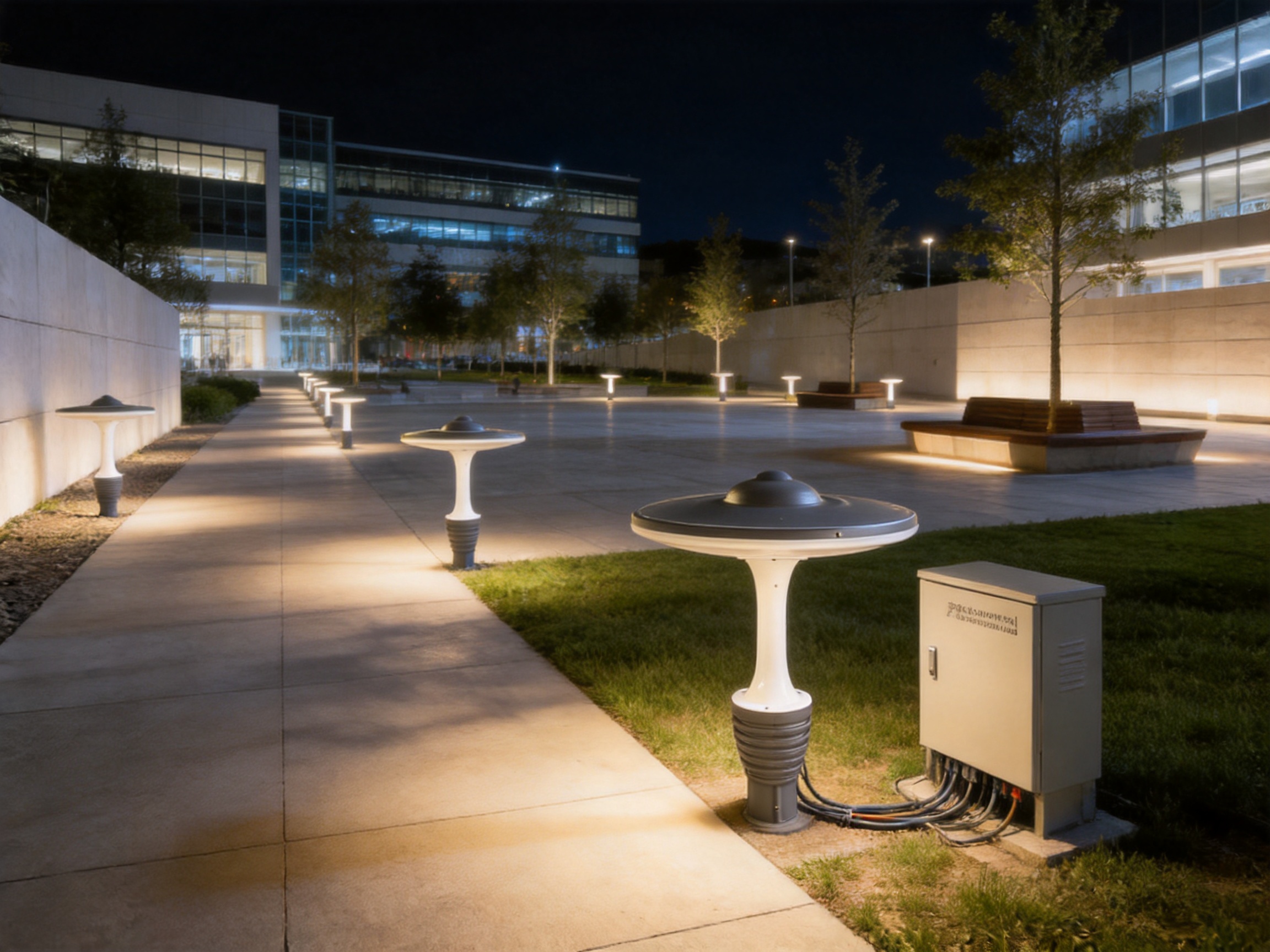
Outdoor lighting is no longer limited to the basic task of illuminating paths, entrances, and open spaces. In contemporary landscape architecture, a lighting fixture must also contribute to the identity, atmosphere, and visual rhythm of the environment. The Flying Saucer Series Garden Landscape Light responds to this changing demand with a distinctive futuristic appearance, efficient LED illumination, durable construction, and flexible application potential.
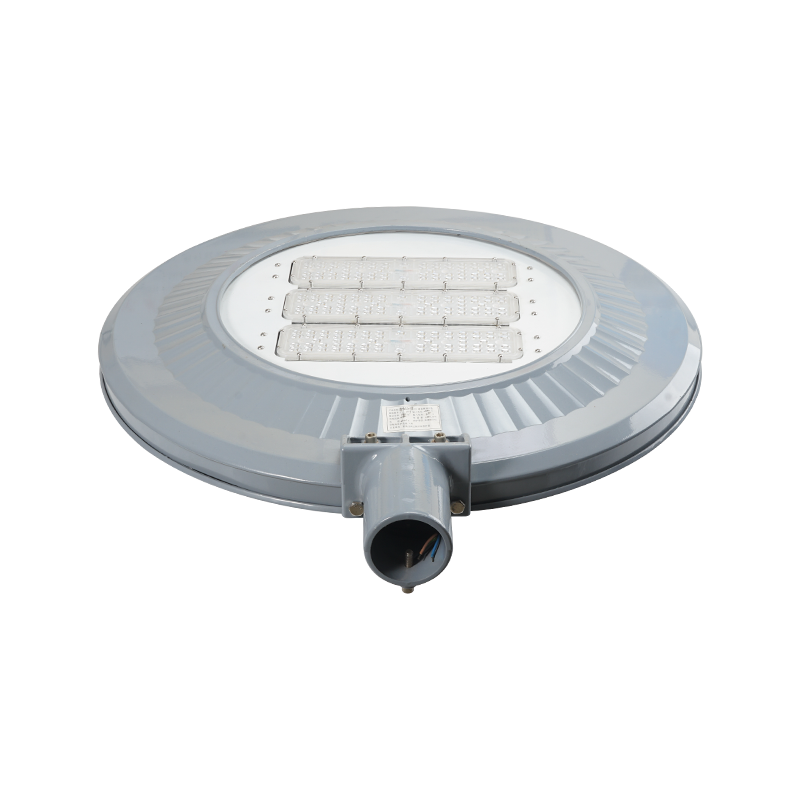
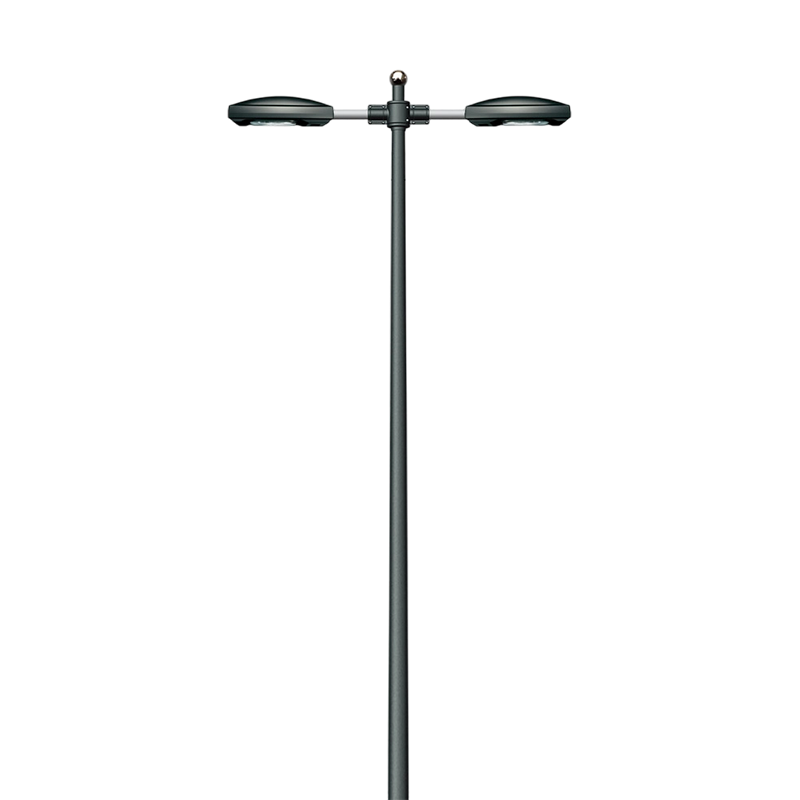
Featuring a flattened, disk-shaped lamp head, the fixture creates the impression of a floating object suspended above its streamlined support. This unusual profile gives parks, commercial landscapes, technology campuses, themed attractions, and modern public spaces a recognizable nighttime character. At the same time, the broad curved surface of the lamp head is designed to distribute light downward and outward, supporting soft, even illumination across paths, lawns, plazas, and other pedestrian areas.
The product combines visual innovation with practical engineering. Its high-strength aluminum alloy body, industrial-grade coating, IP65 protection, wide operating temperature range, high luminous efficacy, and dimming compatibility make it suitable for demanding outdoor environments. Behind the finished product is an integrated manufacturing and engineering capability that includes material preparation, CNC bending, high-precision cutting, automated welding, powder coating, die casting, assembly, inspection, design support, and project assistance.
Rather than treating appearance and performance as separate objectives, the Flying Saucer Series brings them together in one coordinated lighting solution. It is an option for customers seeking a landscape light that looks different from conventional garden fixtures while still meeting the fundamental expectations of durability, maintainability, light quality, and installation reliability.
1. A New Visual Language for Outdoor Landscape Lighting
Traditional garden lights often use vertical poles, rectangular heads, lantern-style housings, or simple cylindrical forms. These familiar configurations can be practical, but they may not provide a strong design statement in projects that require a more contemporary identity. The Flying Saucer Series takes a different approach by using a flattened, disk-like luminaire head.
The circular and aerodynamic silhouette produces a futuristic appearance without relying on excessive ornamentation. Its form is clean, recognizable, and visually light. During the day, the fixture can function as part of the landscape composition, contributing to the design language of a plaza, park, campus, or commercial frontage. At night, the illuminated surface becomes a soft visual focal point rather than an intrusive source of glare or visual clutter.
The floating-object impression is especially suitable for projects built around technology, innovation, entertainment, or modern urban design. Technology parks can use the fixture to reinforce a forward-looking environment. Avant-garde theme parks can integrate it into science-fiction or immersive settings. Commercial developments can use repeated installations to create a consistent visual identity along walkways and landscaped areas.
Unlike purely decorative fixtures, the Flying Saucer Series is designed to maintain a functional lighting role. The broad lamp head provides a suitable platform for controlled downward light distribution. This allows the fixture to serve as an architectural and landscape element while still contributing to nighttime visibility and pedestrian comfort.
2. Broad Curved Form for Soft and Uniform Illumination
The shape of a luminaire directly affects the way light is distributed. A narrow or poorly controlled light source may create concentrated bright spots, strong shadows, or uneven transitions between illuminated and dark areas. The Flying Saucer Series uses a large-area curved surface and an optimized light-projection angle to support a more balanced distribution across the ground.
When installed along a path or around a lawn, the fixture can create a broad circular or gently diffuse lighting effect. The visual result is more atmospheric than the sharp beam often associated with flood-type fixtures. This character is valuable in garden environments where the lighting should support comfort, orientation, and landscape appreciation rather than produce harsh contrast.
Uniformity is also important from a safety perspective. Evenly distributed light can help pedestrians recognize changes in surface level, path edges, planting zones, and nearby obstacles. In commercial or public spaces, a consistent lighting pattern can make the environment feel more orderly and welcoming.
The light source is LED, with a stated luminous efficacy of up to 140 lm/W. This specification indicates that the luminaire can produce a substantial amount of light relative to its electrical input, supporting energy-conscious project planning. Actual system performance will depend on the selected power configuration, optical arrangement, mounting height, spacing, control strategy, ambient conditions, and installation design.
The available color temperature range of 3000K to 6000K allows the fixture to be adapted to different project objectives. Warm white settings around 3000K can create a relaxed and intimate landscape atmosphere. Neutral or cooler settings can provide a cleaner, more contemporary appearance and may be preferred for technology campuses, commercial plazas, or areas requiring a brighter visual impression.
With a color rendering index of Ra 70, the fixture is positioned for general outdoor illumination. It can reveal the basic colors and forms of paths, paving, vegetation, walls, and architectural features while maintaining a practical balance between lighting performance and product efficiency.
3. Structural Design: Stability with a Distinctive Profile
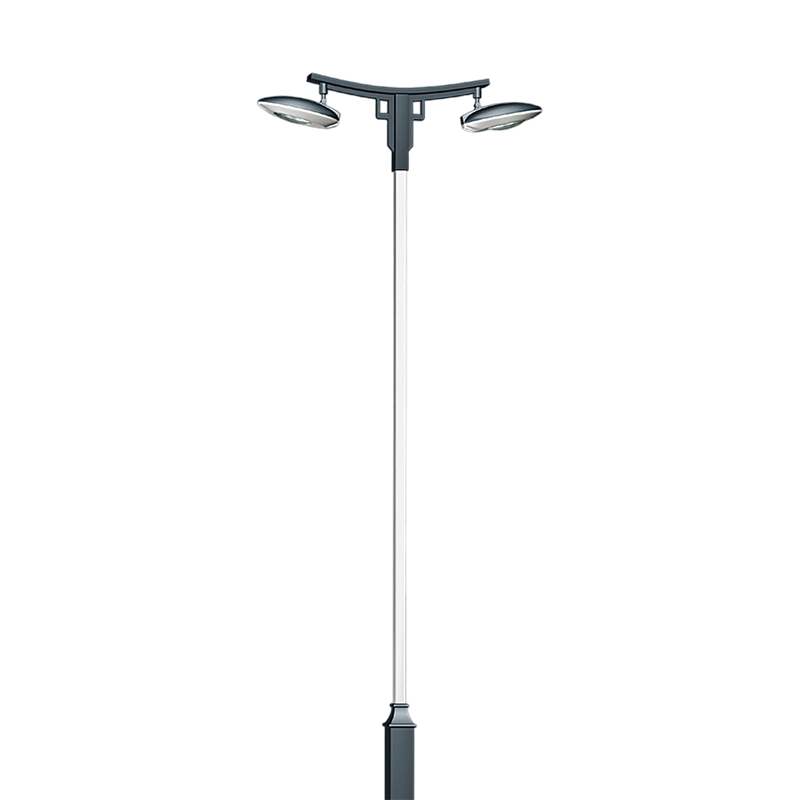
The Flying Saucer Series combines a streamlined pillar with a towered corrugated base. This structural arrangement is not only an aesthetic feature. It also contributes to the visual and physical balance of the fixture. The base creates a stronger visual foundation, while the pillar supports the elevated lamp head in a clean and controlled manner.
A well-proportioned base is particularly important for outdoor landscape fixtures. Garden lights may be exposed to wind, moisture, temperature changes, accidental contact, and long-term environmental stress. The supporting structure must therefore provide adequate stability for the intended installation conditions. The final foundation and anchoring design should be selected according to local regulations, soil conditions, wind loads, fixture dimensions, and project requirements.
The towered corrugated form adds visual texture without making the fixture appear heavy or industrial. It creates a balanced relationship between motion and stillness: the saucer-shaped head suggests movement and flight, while the base communicates support and permanence. This combination helps the product stand apart from ordinary straight-pole garden lights.
The streamlined pillar also supports a clean visual transition between the ground and the lamp head. In a repeated installation, this allows the fixtures to form a rhythm along a path or across a landscaped zone. They can be placed at regular intervals for uniform illumination or used selectively as visual accents around entrances, courtyards, seating areas, and architectural features.
4. Aluminum Alloy Construction for Outdoor Durability
The luminaire body is made from aluminum alloy, a material widely used in outdoor lighting because of its favorable combination of strength, weight, corrosion resistance, and thermal performance. Compared with heavier construction materials, aluminum alloy can reduce handling and installation burdens while maintaining a robust enclosure for the LED system and related components.
Aluminum also supports heat dissipation. LED components operate most effectively when heat is managed properly. The housing can help transfer heat away from internal components, supporting more stable operation and helping protect the long-term performance of the light source and driver. Thermal performance still depends on the complete luminaire design, ambient temperature, installation conditions, and electrical configuration.
The product is finished with industrial-grade baking paint. This creates a durable surface intended to resist normal outdoor wear, ultraviolet exposure, and corrosive environmental conditions. The coating can help protect the metal body from degradation caused by moisture, sunlight, and atmospheric pollutants, including conditions associated with acid rain.
Surface preparation and coating consistency are critical to the actual service life of a painted outdoor fixture. Inconsistent cleaning, insufficient pretreatment, uneven film thickness, or poor curing can weaken the protection system. For this reason, advanced manufacturing procedures and quality control are as important as the selected material itself.
The stated IP65 rating indicates protection against dust ingress and resistance to water projected from different directions. This makes the fixture suitable for many outdoor applications, including landscaped roads, pedestrian paths, gardens, plazas, and commercial outdoor areas. IP65 does not mean that the luminaire should be submerged or exposed to conditions outside its design specification. Correct installation, cable protection, drainage, and periodic inspection remain necessary.
5. Performance in Challenging Outdoor Temperatures
The Flying Saucer Series is specified for an operating temperature range of -35°C to 65°C. This broad range makes the fixture adaptable to many climates, from cold winter conditions to hot summer environments. It is particularly useful for project planners working across different geographic regions and seeking a standardized outdoor lighting platform.
Temperature resistance is relevant not only to the LED source but also to the driver, seals, wiring, coating, and mechanical connections. A complete lighting system must continue to operate reliably as materials expand and contract through repeated seasonal cycles. Components with different thermal expansion characteristics must be assembled carefully to reduce stress on seals and joints.
Cold environments can affect electrical components, material flexibility, and startup behavior. Hot environments can increase thermal stress and accelerate aging if heat is not managed effectively. The product’s wide stated operating range reflects an intention to support reliable use across demanding environmental conditions, although each project should still be evaluated according to its actual climate, installation position, and maintenance plan.
For coastal locations, industrial districts, or areas with high humidity, customers should consider the local corrosion environment when selecting material specifications, coating systems, fasteners, cable glands, and maintenance procedures. The aluminum alloy body and protective coating provide a strong foundation, but long-term performance depends on the entire installation system.
6. Dimming and Control Compatibility
Modern outdoor lighting projects increasingly require more than simple on-and-off operation. Municipalities, commercial property owners, campuses, and park operators may want to reduce energy use during low-traffic periods, create different lighting scenes, or integrate fixtures into a broader lighting management system.
The Flying Saucer Series supports DC 0-10V and DALI dimming options. These control methods provide flexibility for projects with different automation and lighting management requirements. Dimming can be used to adjust light levels according to time of night, pedestrian activity, events, seasonal patterns, or energy-saving targets.
For example, a park may operate at a higher output during evening peak hours and reduce illumination later at night. A commercial plaza may use different scenes for normal operation, special events, or cleaning periods. A technology campus may coordinate landscape lighting with building systems and security schedules.
Control compatibility can also improve the overall user experience. Instead of treating every fixture as a fixed-output device, operators can adapt the environment to changing needs. This helps reduce unnecessary energy consumption and can support responsible management of light in areas near residences, wildlife habitats, or sensitive neighboring properties.
Before installation, the control protocol, driver configuration, wiring method, dimming range, commissioning procedure, and compatibility with the central control system should be confirmed. A successful smart lighting installation depends on coordination between the luminaire, driver, controller, network architecture, and operating software.
7. Advantages Compared with Conventional Garden Lights
7.1 Stronger Design Identity
One of the most visible advantages of the Flying Saucer Series is its recognizable form. Conventional garden lights can blend into the background, which may be appropriate for some projects but less effective when the lighting itself is expected to reinforce a design theme. The disk-shaped head gives this series a stronger identity and can help an entire landscape project appear more intentional and contemporary.
7.2 More Integrated Decorative and Functional Value
Many decorative lights prioritize appearance but provide limited practical illumination. Conversely, some functional fixtures provide useful light but contribute little to the visual environment. The Flying Saucer Series is designed to combine both roles. Its futuristic silhouette creates an architectural feature, while its downward light distribution supports paths, lawns, and public areas.
7.3 Broad and Comfortable Lighting Effect
The large curved lamp surface supports a soft, expansive lighting pattern rather than a narrow point of brightness. This can help reduce the visual harshness associated with poorly controlled light sources. The result is suitable for environments where designers want to create an inviting atmosphere without sacrificing visibility.
7.4 Flexible Color and Control Options
The 3000K-6000K color temperature range and 0-10V or DALI dimming support provide more project flexibility than a fixed-output, fixed-color fixture. Designers and operators can select a suitable appearance and adapt the light level to different operating scenarios.
7.5 Materials and Protection for Outdoor Use
The aluminum alloy body, industrial baking paint, IP65 protection, and broad operating temperature specification provide a practical foundation for outdoor service. These characteristics are important when comparing products because a low initial purchase price does not necessarily represent the best value if a fixture has poor environmental resistance, unstable coating quality, or limited control compatibility.
7.6 Manufacturing Support for Large Projects
The product is backed by manufacturing resources that include large-scale material preparation, precision fabrication, automated processing, and professional engineering support. This is particularly valuable for projects requiring consistent appearance and performance across many fixtures. Reliable production capacity can reduce variation between batches and support more predictable delivery planning.
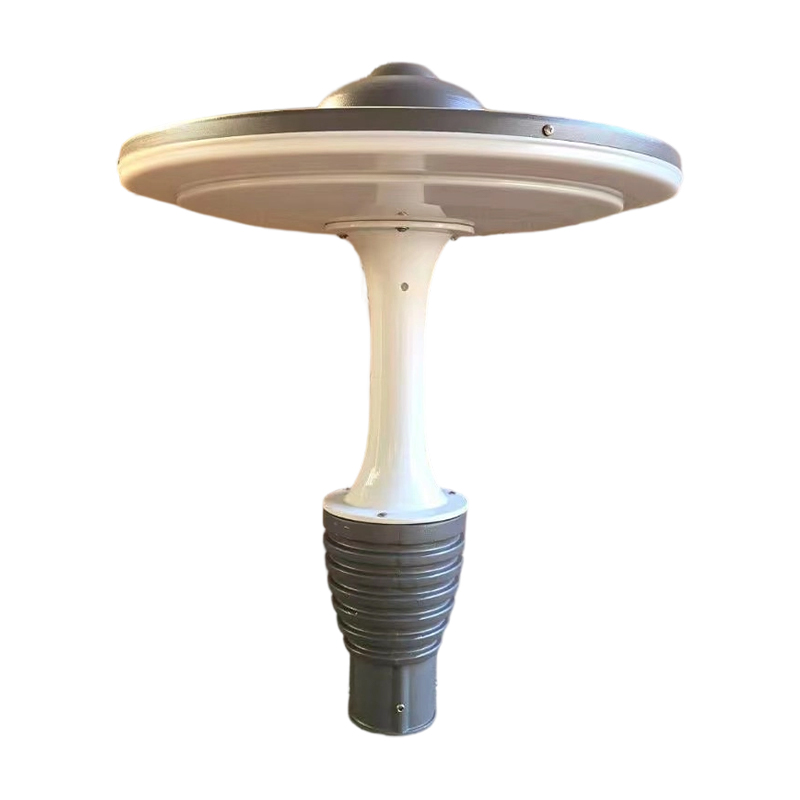
Flying Saucer Series Garden Landscape Light
8. Advanced Manufacturing Processes Behind the Product
A high-quality landscape light is the result of a complete manufacturing chain rather than a single production step. The Flying Saucer Series benefits from an industrial process that covers raw material selection, cutting, forming, welding, coating, die casting, assembly, testing, packaging, and engineering coordination.
8.1 Material Selection and Inventory Management
The company maintains experience with structural steel grades and other metal material options, including Q235B, Q345B, S275JR, S355JR, Q460, A36, A572, GR56, and GR50. Although the lamp body itself is specified as aluminum alloy, this broader material capability is relevant to complete lighting projects that may also include poles, brackets, foundations, support structures, cabinets, and related infrastructure.
Maintaining extensive material stock can help reduce procurement delays and provide a more reliable foundation for production scheduling. In large road lighting or landscape development projects, delays in one structural component can affect installation sequencing, civil works, electrical commissioning, and final acceptance. A stable supply system helps manufacturers respond more efficiently to project requirements.
8.2 Precision CNC Bending
CNC bending allows sheet and structural components to be formed with controlled angles and repeatable dimensions. Accurate bending contributes to structural integrity, visual consistency, and easier assembly. It also reduces the need for extensive post-production correction.
Consistent bending is especially important when a project includes multiple fixtures or supporting elements that must align visually. Small dimensional differences can become noticeable when products are installed in a straight line or repeated pattern. Computer-controlled bending helps improve repeatability from one component to the next.
8.3 High-Accuracy Cutting
The production capability includes cutting accuracy of up to 0.01 mm as stated in the supplied manufacturing information. High-precision cutting supports exact dimensions, cleaner edges, and more consistent component fit. It can also reduce material waste and limit the amount of manual adjustment required during fabrication.
Clean cutting edges are important for safety, coating quality, and assembly. Rough or irregular edges may create stress concentrations, interfere with fitting, or expose vulnerable areas to corrosion if not treated correctly. Precision cutting improves the foundation for subsequent welding, grinding, finishing, and coating procedures.
8.4 Automated Welding
Welding quality affects both the appearance and structural reliability of metal lighting products. The company uses automated welding equipment together with certified welders who have extensive practical experience. Automation can provide stable process parameters and repeatable weld patterns, while experienced technicians remain important for setup, inspection, adjustment, and special project requirements.
Consistent welding helps reduce distortion, improve joint strength, and create cleaner surfaces for finishing. This is particularly relevant for poles, bases, brackets, and other fabricated components that must withstand outdoor loads. Welding inspection should be incorporated into the quality process to identify visible defects, dimensional issues, and any concerns requiring correction.
8.5 Powder Electrostatic Painting and Curing
Powder electrostatic painting is used to create a durable surface finish. During this process, coating particles are electrically attracted to the prepared metal surface and then cured under controlled heat. The result can provide a uniform appearance and strong adhesion when pretreatment, application, and curing are correctly managed.
A controlled coating process helps improve resistance to ultraviolet exposure, moisture, wear, and ordinary outdoor contaminants. The coating also contributes to the product’s appearance, allowing the fixture to coordinate with a project’s architectural palette or landscape theme.
Coating quality should be assessed through process monitoring and finished-product inspection. Relevant checks may include surface cleanliness, film uniformity, adhesion, color consistency, curing condition, and the absence of visible defects. A durable finish is essential because the coating is the first line of defense between the metal body and the outdoor environment.
8.6 Die-Casting Capability
The company operates a 1250-ton die-casting machine. Large-capacity die casting can support the production of complex aluminum components with repeatable geometry and efficient cycle times. It is suitable for parts requiring integrated shapes, controlled wall thickness, mounting features, or refined external surfaces.
Die casting can reduce the number of separate pieces in a component, which may simplify assembly and improve dimensional consistency. It can also support smooth, modern forms that would be more difficult or expensive to produce using only conventional fabrication methods.
For an advanced landscape luminaire, die-cast components can contribute to the integration of the housing, heat-management features, mounting interfaces, and protective structure. The specific design must still be evaluated for thermal behavior, sealing, mechanical stress, and service access.
8.7 Automated Production Lines
Automated production lines can improve consistency and shorten production cycles while reducing avoidable process variation. Automation may be applied to cutting, welding, coating, assembly, or inspection-related operations. Its value is especially evident in repeat-order projects where many units must maintain the same dimensions, finish, optical configuration, and mechanical quality.
Automation can also support environmental objectives by improving material utilization, reducing rework, and controlling process consumption. However, equipment alone does not guarantee quality. Effective production still requires trained operators, documented procedures, preventive maintenance, calibrated tools, and inspection checkpoints.
9. Quality Control and Production Reliability
The quality of a landscape lighting project depends on more than the nominal specifications printed on a product sheet. It also depends on whether every unit is manufactured consistently, inspected properly, packaged securely, and delivered according to the required configuration.
A structured quality system should cover incoming materials, dimensions, welding, coating, electrical components, sealing, assembly, light output, controls, and final appearance. Inspection records help trace production conditions and support corrective action when a deviation is found.
International management and environmental standards, including ISO9001 and ISO14001, provide a framework for process control and environmental responsibility. The company also identifies OHSAS18001 among its quality and management credentials. Such systems are valuable because they encourage documented procedures, accountability, continuous improvement, and attention to workplace safety.
Quality control is particularly important for overseas projects. Products may travel long distances, pass through multiple logistics stages, and be installed by teams that were not involved in the original manufacturing process. Clear labeling, protected packaging, accurate documentation, and consistent product configuration reduce the likelihood of installation errors.
For large orders, customers may also benefit from pre-production confirmation, sample approval, batch inspection, packing-list verification, and technical documentation. These steps help ensure that the delivered products match the approved design and project schedule.
10. Design and Engineering Services
The company provides support from initial consultation through project completion. This service approach is important because landscape lighting is rarely a standalone purchase. A luminaire must be coordinated with site planning, pole or foundation design, electrical distribution, control systems, landscape features, pedestrian circulation, and local regulations.
10.1 CAD Design
CAD design can help customers review dimensions, mounting details, installation interfaces, and product proportions before production. Accurate drawings are useful for coordination with civil engineers, architects, electrical contractors, and landscape designers.
10.2 Three-Dimensional Product Simulation
Three-dimensional product simulation allows project teams to inspect the fixture from multiple angles and understand how the lamp head, pillar, base, and mounting elements work together. It can reveal conflicts or aesthetic concerns before physical production begins.
10.3 Three-Dimensional Scene Simulation
Scene simulation places the product within a representative landscape or architectural environment. This can help clients evaluate spacing, height, visual rhythm, apparent scale, and compatibility with surrounding elements. It is particularly useful for projects where the lighting fixture is intended to become part of the site’s identity.
10.4 Specification and Color Customization
Projects often have different requirements for color, finish, dimensions, lighting output, color temperature, control method, and installation details. Specification and color customization can help the product coordinate with a project’s architectural materials and brand-neutral design standards.
10.5 Mechanical Calculations for Wind and Foundations
Outdoor fixtures and poles must be considered in relation to wind loads, foundation conditions, soil properties, installation height, and local engineering rules. Mechanical calculation support can assist project teams in selecting an appropriate foundation and anchoring approach. Final calculations should be reviewed and approved by qualified professionals familiar with the project location.
10.6 Overseas Installation Guidance
For international projects, remote or on-site installation guidance can reduce uncertainty during assembly and commissioning. Clear instructions can cover foundation preparation, cable routing, fixture orientation, tightening procedures, sealing, electrical connection, dimming integration, and functional testing.
11. Application Scenarios
11.1 Technology Parks and Innovation Campuses
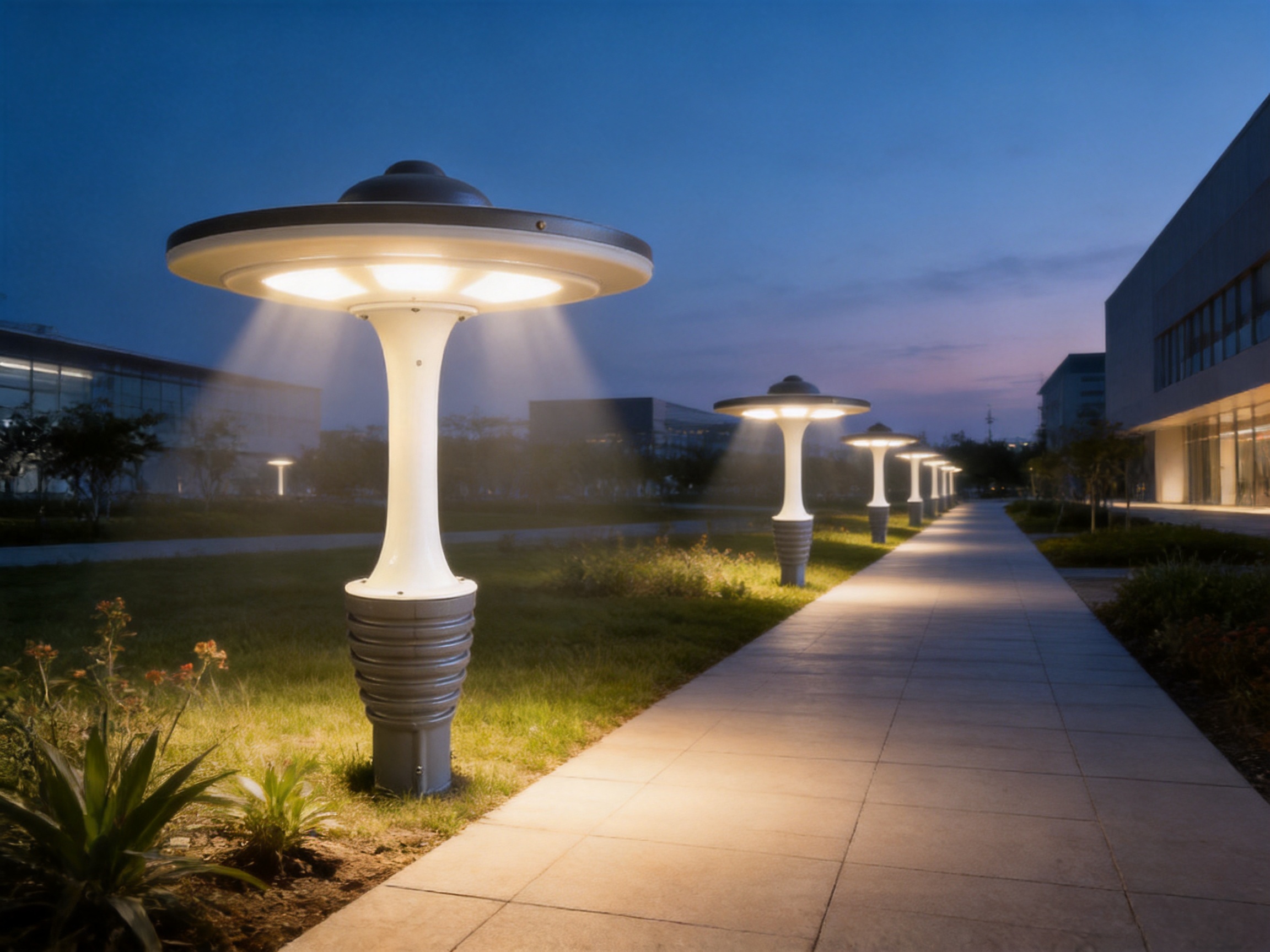
The futuristic form of the Flying Saucer Series is naturally suited to technology parks, research campuses, and innovation districts. Along pedestrian routes between buildings, the fixtures can reinforce a modern identity while providing practical nighttime guidance.
In these settings, DALI or 0-10V dimming can be integrated with campus management systems. Lighting levels may be adjusted according to building occupancy, security schedules, special events, or nighttime energy policies.
11.2 Avant-Garde Theme Parks
Theme parks and entertainment venues often use lighting to create emotional and visual experiences. The disk-shaped lamp head can support science-fiction, space, digital, or futuristic themes. Repeated units can form a continuous visual story along entrance corridors, attraction zones, plazas, or landscaped rest areas.
The product can also be used selectively as an accent element. A small number of fixtures placed near sculptures, interactive installations, or architectural landmarks can help create visual continuity without overwhelming the broader lighting design.
11.3 Modern Commercial Landscapes
Shopping centers, mixed-use developments, hotels, restaurants, and office complexes require outdoor lighting that is both attractive and reliable. The Flying Saucer Series can help create a recognizable appearance around entrances, parking approaches, courtyards, outdoor dining zones, and connecting walkways.
The available color temperature range enables designers to choose a warmer atmosphere for hospitality areas or a cleaner appearance for commercial and office environments. Dimming can support different operating modes during business hours, late-night periods, and special events.
11.4 Parks and Garden Paths
In public parks and private gardens, the fixture can provide soft illumination along paths and open lawns. Its broad distribution can help reduce abrupt dark zones while preserving a calm landscape atmosphere.
Placement should be planned carefully to avoid direct view of bright LED elements from nearby residences or seating areas. The objective should be comfortable, controlled lighting that supports circulation and landscape appreciation.
11.5 Plazas and Public Open Spaces
Urban plazas often serve multiple functions, including pedestrian movement, social gatherings, ceremonies, seasonal markets, and public events. A flexible landscape light can support these changing uses by combining a strong visual identity with adjustable output.
The product’s durable construction and weather protection make it appropriate for exposed public environments, while its distinctive appearance can contribute to the overall public-realm design.
11.6 Resort and Hospitality Environments
Hotels, resorts, and destination properties use outdoor lighting to influence first impressions and evening atmosphere. The Flying Saucer Series can provide a contemporary visual feature along arrival roads, garden paths, poolside approaches, and outdoor gathering areas.
Warm color temperatures can support a relaxed hospitality setting, while careful spacing and dimming can help maintain a comfortable atmosphere without excessive brightness.
12. Installation and Planning Considerations
Correct planning is essential to obtain the intended appearance and lighting performance. Fixture spacing should be determined through photometric analysis, mounting height, path width, required illuminance, surrounding surfaces, and local standards. The product should not be installed solely according to visual spacing without evaluating actual light distribution.
Foundation design must consider soil conditions, wind exposure, fixture dimensions, anchoring requirements, and local structural codes. The corrugated base and pillar provide the visible structure, but the underground foundation and anchor system are equally important to long-term stability.
Electrical design should account for input voltage, circuit loading, surge protection, cable sizing, grounding, control wiring, and maintenance access. The specified input voltage is AC85-265V, which provides compatibility with a broad range of electrical supply conditions. The project electrical engineer should still verify voltage quality, protection devices, and local requirements.
Although the IP65 rating provides protection against dust and water jets, cable entries and connections must be installed correctly. Water can enter through poorly sealed glands, damaged cables, open junction boxes, or incorrectly oriented components. Proper drainage and cable management should be included in the installation method.
During commissioning, each fixture should be checked for mechanical alignment, electrical operation, light output, color consistency, dimming response, grounding, and control-system communication. Testing before final handover can identify issues while access equipment and installation teams are still available.
13. Maintenance and Long-Term Value
Outdoor lighting should be treated as an operating asset rather than a one-time installation. A planned maintenance program can preserve appearance, light output, control performance, and structural safety over the product’s service life.
Routine inspections may include cleaning the lamp surface, checking coating condition, examining bolts and anchor points, inspecting cable entries, confirming drainage, and testing dimming or control functions. In dusty, coastal, industrial, or heavily polluted environments, cleaning intervals may need to be shorter.
Vegetation should also be managed around the fixtures. Overgrown plants can block light distribution, trap moisture, interfere with access, or create unwanted shadows. Landscape maintenance teams and lighting maintenance teams should coordinate their schedules.
The five-year warranty period stated for the product provides an additional level of purchasing confidence. Warranty terms should be reviewed together with installation requirements, electrical conditions, maintenance responsibilities, exclusions, and the procedure for handling service claims.
The high luminous efficacy, dimming support, durable enclosure, and standardized LED platform can contribute to long-term value. Energy savings may be improved by matching output to actual operating needs rather than running every fixture at maximum intensity throughout the night.
14. Product Specification Summary
| Specification | Product Information | Project Relevance |
|---|---|---|
| Product series | Flying Saucer Series Garden Landscape Light | Futuristic landscape and outdoor area illumination |
| Product category | LED Garden Lights | Suitable for paths, lawns, plazas, parks, and commercial landscapes |
| Brand | Jinyuan | Manufacturer identification for product sourcing |
| Application | Road and outdoor landscape areas | Supports pedestrian and public-space lighting applications |
| Input voltage | AC85-265V | Compatible with a broad range of supply conditions |
| Light source | LED | Efficient and controllable solid-state lighting |
| Lamp material | Aluminum alloy | Supports low weight, strength, and thermal management |
| Operating temperature | -35°C to 65°C | Suitable for many cold and hot outdoor climates |
| IP rating | IP65 | Protection against dust and water jets |
| Luminous efficacy | Up to 140 lm/W | Supports energy-conscious lighting design |
| Color temperature | 3000K-6000K | Allows warm, neutral, or cooler lighting appearances |
| Color rendering index | Ra 70 | Suitable for general outdoor visibility and landscape illumination |
| Dimming | DC 0-10V / DALI | Enables integration with lighting control systems |
| Warranty | 5 years | Provides defined warranty support for qualifying installations |
15. Why Manufacturing Capability Matters to Buyers
When evaluating a landscape lighting supplier, buyers should look beyond the appearance of a single sample. The ability to produce consistent products at scale is crucial for public, commercial, and international projects. A fixture may look attractive in a catalog, but the project outcome depends on whether hundreds of units can maintain matching dimensions, finishes, optical properties, and electrical performance.
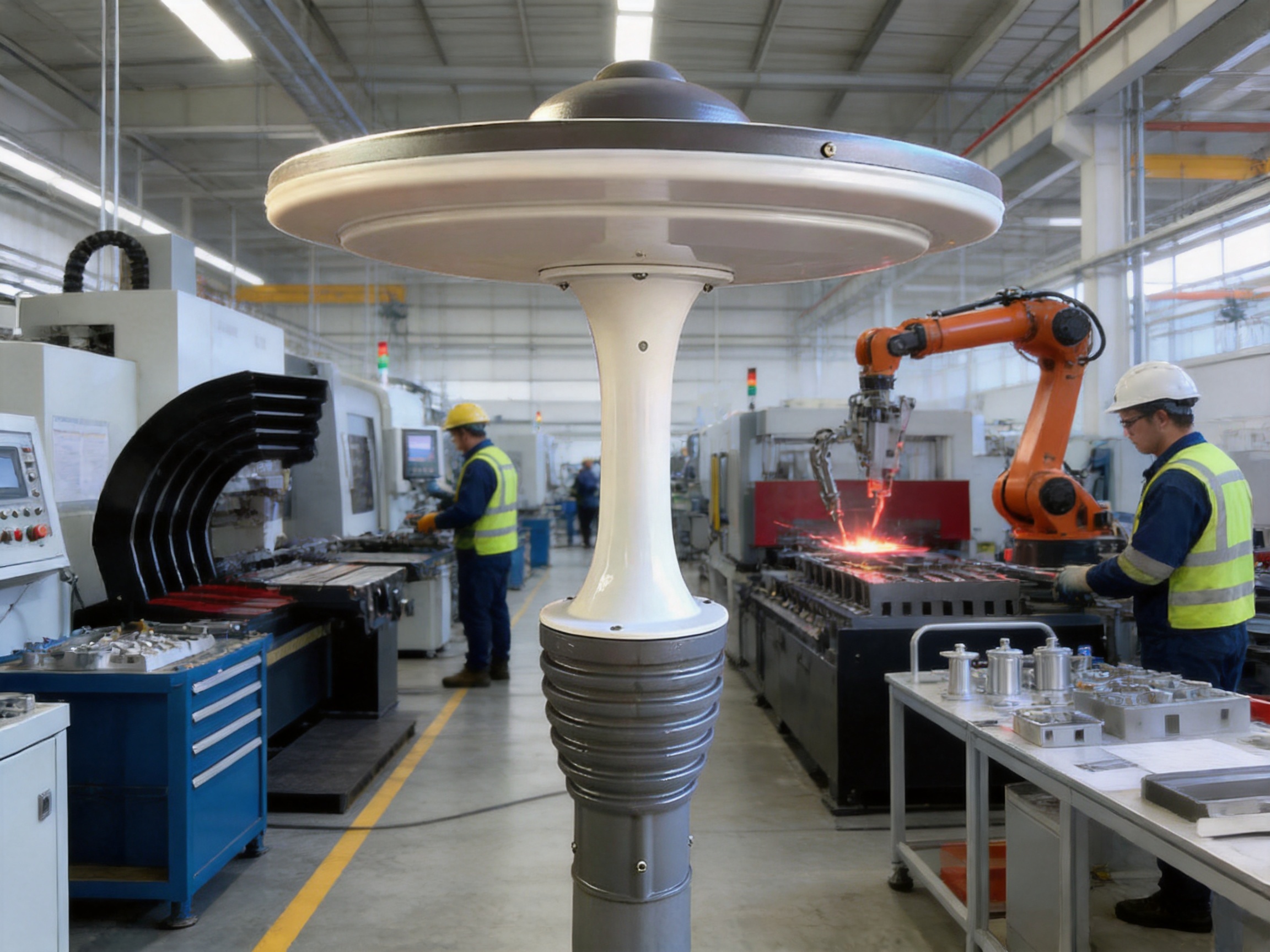
Advanced equipment such as CNC bending systems, high-accuracy cutting machines, automated welding lines, electrostatic coating equipment, and large-capacity die-casting machinery provides a stronger production foundation. These capabilities can improve repeatability, reduce production variation, and support more efficient project delivery.
Manufacturing scale also supports customization. Customers may require a particular color, mounting arrangement, output level, control protocol, or structural interface. A supplier with in-house engineering and production resources can often coordinate these changes more effectively than a supplier dependent entirely on external subcontractors.
Engineering support is equally important. Lighting projects involve technical questions about foundation design, wind resistance, electrical systems, controls, installation, and maintenance. A supplier able to support CAD drawings, 3D simulations, mechanical calculations, and installation guidance can help reduce coordination problems throughout the project.
The company’s stated operating history, production area, technical team, international market experience, and quality management credentials indicate a manufacturing organization prepared to serve large and diverse lighting requirements. Its product portfolio includes street light poles, LED street lights, solar street lights, light fixtures, and related road illumination products, providing broader experience in outdoor lighting infrastructure.
16. Procurement Guidance for Project Owners and Distributors
Project owners and distributors should define the intended application before ordering. Important questions include the required mounting height, spacing, light level, color temperature, dimming method, input voltage, environmental exposure, foundation type, and maintenance access.
For projects with a strong architectural identity, visual approval should be completed before mass production. A sample or three-dimensional simulation can help confirm proportions, finish, color, and the relationship between the fixture and surrounding landscape features.
For projects in harsh climates, buyers should request confirmation of coating specifications, corrosion protection, sealing details, driver characteristics, surge protection, and local installation requirements. Coastal or industrial environments may require additional protective measures beyond the standard product configuration.
For large orders, delivery planning should include production lead time, sample approval, packaging, shipping method, customs documentation, spare parts, installation instructions, and after-sales support. Consistent communication between the manufacturer, distributor, contractor, and end user helps prevent avoidable delays.
Distributors can also benefit from the product’s broad application range. Its distinctive design can appeal to landscape architects, commercial developers, municipal projects, resort operators, and technology-campus planners. The combination of appearance, performance, and engineering support gives sales teams several practical value points beyond price alone.
17. Q&A
Q1: What makes the Flying Saucer Series different from a standard garden light?
The most obvious difference is its flattened, disk-shaped lamp head, which creates a futuristic floating-object appearance. It also combines this distinctive design with a broad curved light surface, aluminum alloy construction, IP65 protection, LED efficiency, and dimming compatibility.
Q2: Where can this landscape light be used?
It can be used in technology parks, theme parks, commercial landscapes, plazas, gardens, pedestrian paths, resort environments, campuses, and other modern outdoor areas. The final application should be confirmed through lighting calculations and site-specific engineering review.
Q3: Does the fixture provide decorative or functional lighting?
It is designed to provide both. The futuristic silhouette contributes to the visual identity of the landscape, while the downward and outward light distribution supports visibility across paths, lawns, and open areas.
Q4: What color temperatures are available?
The stated color temperature range is 3000K to 6000K. Warm settings can create a relaxed atmosphere, while cooler settings can support a cleaner and more contemporary appearance.
Q5: Can the light be dimmed?
Yes. The product supports DC 0-10V and DALI dimming options. Compatibility should be confirmed with the selected driver, control equipment, wiring design, and commissioning procedure.
Q6: Is the product suitable for cold climates?
The stated operating temperature range is -35°C to 65°C. This indicates suitability for many cold and hot outdoor climates, although the complete installation should be evaluated for local weather, electrical, foundation, and maintenance conditions.
Q7: What does IP65 protection mean?
IP65 indicates protection against dust ingress and water projected from different directions. It is suitable for many outdoor applications, but it does not mean the fixture is designed for submersion. Correct installation and cable sealing remain important.
Q8: What material is used for the lamp body?
The lamp material is aluminum alloy. This material supports a useful combination of strength, relatively low weight, corrosion resistance, and heat dissipation capability.
Q9: What is the stated luminous efficacy?
The stated lamp luminous efficacy is up to 140 lm/W. Actual installed performance can vary depending on the electrical configuration, optical design, operating temperature, control level, and installation conditions.
Q10: Does the product have a warranty?
The stated warranty period is five years. Buyers should review the warranty terms, installation requirements, electrical conditions, maintenance responsibilities, and claim procedures before purchase.
Q11: Can the product be customized?
The company provides specification and color customization services. Customers can discuss project requirements such as finish, color temperature, control method, dimensions, mounting details, and other technical parameters.
Q12: What design support is available?
Available support includes CAD design, three-dimensional product simulation, three-dimensional scene simulation, mechanical calculations for wind and foundations, specification and color customization, and overseas on-site installation guidance.
Q13: Why is the manufacturing process important for a landscape lighting project?
Manufacturing quality affects dimensional consistency, coating durability, structural reliability, thermal performance, electrical safety, and delivery consistency. Advanced equipment and documented quality procedures are especially valuable when a project requires many visually matching fixtures.
Q14: Can the fixture be used in a smart lighting system?
Its support for DC 0-10V and DALI dimming makes it compatible with many controlled lighting applications. A complete smart system may also require compatible drivers, controllers, wiring, communication equipment, software, and commissioning.
Q15: What should be considered before installation?
Important considerations include photometric spacing, mounting height, foundation design, wind loads, electrical supply, grounding, surge protection, cable sealing, control wiring, maintenance access, local codes, and the relationship between the light distribution and surrounding landscape.
18. Conclusion
The Flying Saucer Series Garden Landscape Light offers a distinctive alternative to conventional outdoor fixtures. Its flattened disk-shaped head creates a memorable futuristic identity, while the broad curved surface supports soft and uniform downward illumination. The streamlined pillar and towered corrugated base provide a balanced structural appearance, helping the product function as both a lighting device and a landscape design element.
Its technical characteristics further strengthen its value. LED technology, up to 140 lm/W luminous efficacy, a 3000K-6000K color temperature range, IP65 protection, aluminum alloy construction, a -35°C to 65°C operating range, DC 0-10V and DALI dimming, and a five-year warranty provide a practical specification platform for many outdoor projects.
The product is also supported by advanced manufacturing resources. Precision CNC bending, high-accuracy cutting, automated welding, electrostatic powder coating, large-capacity die casting, automated production lines, professional engineering, and quality management systems help create a reliable foundation for consistent production. These capabilities are important advantages for customers requiring large quantities, customized specifications, international delivery, and coordinated technical support.
For technology parks, avant-garde theme parks, modern commercial landscapes, campuses, plazas, resorts, and garden paths, the Flying Saucer Series can provide a combination of visual originality and practical outdoor performance. When properly selected, installed, controlled, and maintained, it can help transform ordinary nighttime circulation areas into coherent, comfortable, and visually engaging environments.
References
1. Product technical information supplied for the Flying Saucer Series Garden Landscape Light.
2. Manufacturer-provided information on aluminum alloy construction, IP65 protection, LED performance, dimming methods, warranty, and operating temperature.
3. Manufacturer-provided information on CNC bending, precision cutting, automated welding, electrostatic powder coating, die casting, and automated production systems.
4. General principles of outdoor lighting design, pedestrian-area illumination, glare control, and landscape lighting integration.
5. General guidance on LED luminaire thermal management, ingress protection, corrosion-resistant finishes, electrical control systems, and outdoor installation practice.
6. General quality-management and environmental-management principles associated with ISO9001 and ISO14001 systems.