


JINYUAN
JINYUAN
JINYUAN
JINYUAN
JINYUAN
JINYUAN
JINYUAN
JINYUAN
JINYUAN
JINYUAN
JINYUAN
JINYUAN
JINYUAN
JINYUAN
JINYUAN
JINYUAN
Content
- 1 Why Large Outdoor Areas Need Specialized High Mast Lighting
- 2 Product Overview
- 3 Structural Strength and Long-Term Outdoor Reliability
- 4 Modular Floodlight Arrangement for Broad and Uniform Coverage
- 5 Advanced LED Performance and Optical Control
- 6 Electric Lowering System: A Safer Approach to Maintenance
- 7 Protection Against Dust, Rain, and Harsh Conditions
- 8 Dimming and Smart Control Compatibility
- 9 Applications in Airports and Transportation Hubs
- 10 Applications in Ports, Logistics Parks, and Warehousing
- 11 Applications in Construction and Industrial Sites
- 12 Manufacturing Capabilities Behind the Product
- 13 Engineering and Project Support
- 14 Advantages Over Conventional Alternatives
- 15 Energy Efficiency and Lifecycle Value
- 16 Installation and Commissioning Considerations
- 17 Maintenance Recommendations
- 18 How to Select the Correct Configuration
- 19 Q&A
- 19.1 What is an industrial high mast floodlight used for?
- 19.2 How many floodlights can be installed on the lighting head?
- 19.3 What is the main maintenance advantage of this system?
- 19.4 Is the floodlight suitable for coastal environments?
- 19.5 What does the IP65 rating mean?
- 19.6 Can the lighting level be adjusted?
- 19.7 What input voltage does the product support?
- 19.8 What operating temperatures are supported?
- 19.9 What pole materials are available?
- 19.10 What is the listed pole height?
- 19.11 Can the product be customized?
- 19.12 What quality standards support the manufacturer’s operations?
- 19.13 What is the warranty period?
- 20 Conclusion
- 21 References
- 22 Product: Industrial High Mast Floodlight
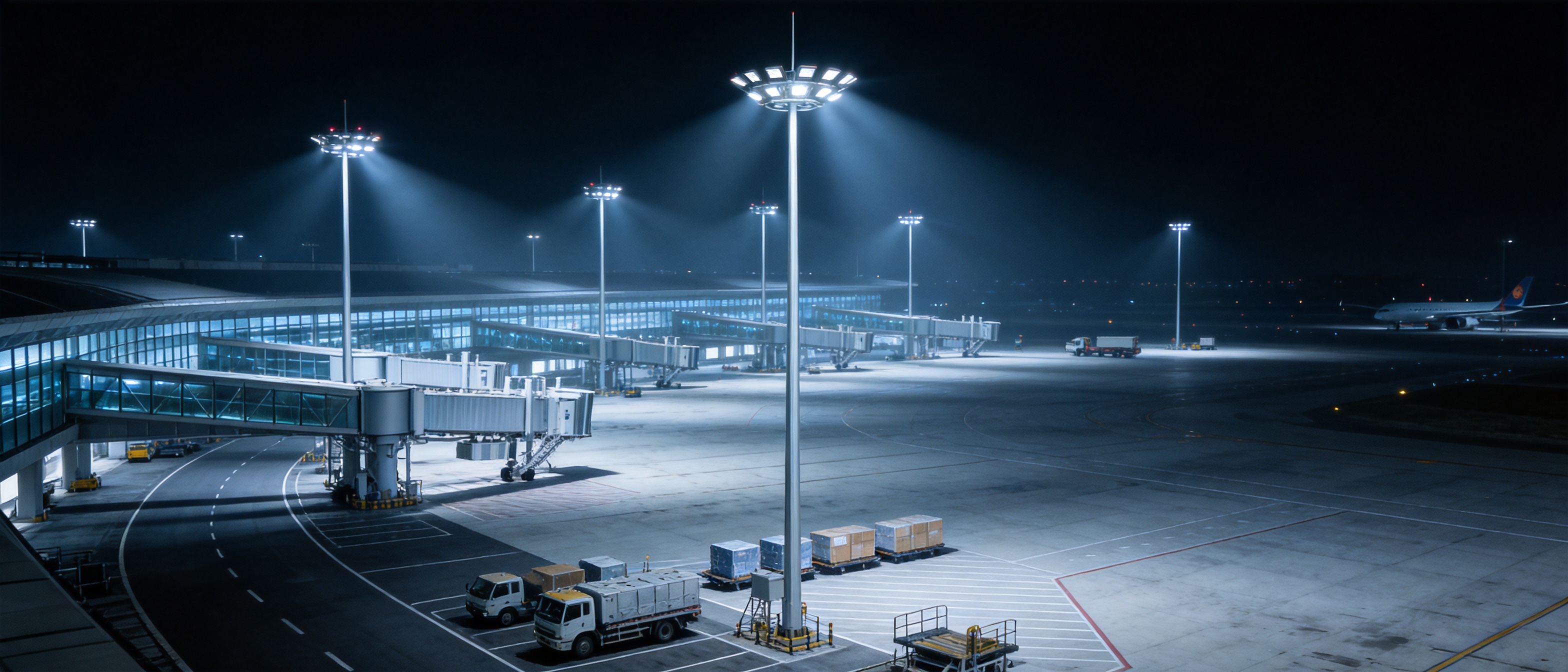
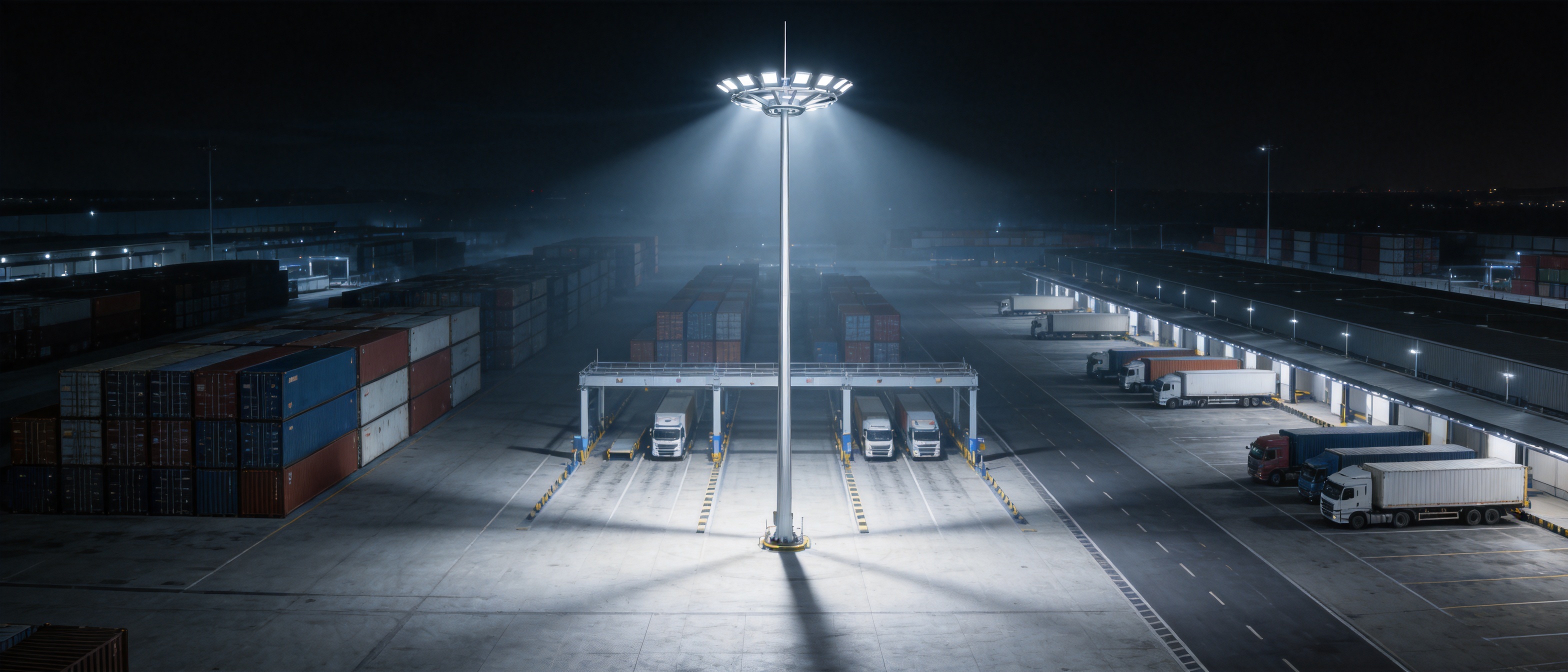
Large outdoor facilities require a lighting solution that can do much more than provide basic brightness. Airports, seaports, logistics parks, construction sites, transportation hubs, industrial warehouses, and open storage yards all depend on dependable illumination for safety, productivity, surveillance, and continuous operation. In these environments, lighting equipment must cover broad areas, withstand demanding weather conditions, simplify maintenance, and deliver consistent performance over many years.
The Industrial High Mast Floodlight is engineered for precisely these requirements. It combines a robust high-mast structure, high-output LED luminaires, modular floodlight mounting, professional optical control, electric lowering equipment, efficient thermal management, and industrial-grade environmental protection. The result is a comprehensive lighting system designed for large-scale outdoor applications where ordinary streetlights or isolated floodlights may leave dark areas, create uneven illumination, or require costly maintenance at height.
Its value extends beyond the luminaire itself. The system is supported by a manufacturing process that includes material selection, CNC bending, precision cutting, automated welding, corrosion-resistant treatment, professional engineering, and project-oriented technical services. This integrated approach helps customers obtain a lighting solution that is structurally reliable, optically effective, and adaptable to site-specific requirements.
Why Large Outdoor Areas Need Specialized High Mast Lighting
Large industrial and infrastructure sites present lighting challenges that are fundamentally different from those found on ordinary roads. A typical streetlight is designed to illuminate a defined roadway, sidewalk, or intersection. A large yard, loading terminal, runway approach area, or open construction site needs a broader and more carefully distributed light pattern.
High mast lighting places multiple high-power luminaires at an elevated position. From this location, the luminaires can project light across a wide area while reducing the number of poles required. The elevation also helps minimize obstructions caused by vehicles, containers, equipment, buildings, and temporary structures. When the optical distribution is correctly designed, a single high mast can provide broad coverage with controlled uniformity.
Uniformity is especially important in facilities where workers, drivers, operators, and security personnel must identify objects quickly. Bright spots surrounded by dark areas can cause visual discomfort, conceal hazards, and reduce the effectiveness of cameras. A professionally designed high mast system helps reduce these problems by distributing light more evenly across the working zone.
High mast lighting also supports operational continuity. Ports may need to load and unload cargo at night. Logistics parks may operate around the clock. Airports and transportation hubs require clear visibility for aircraft, vehicles, personnel, and ground-support equipment. Industrial yards may contain moving cranes, forklifts, trucks, and heavy machinery. In each application, dependable illumination contributes directly to productivity and risk control.
Product Overview
The Industrial High Mast Floodlight is a professional outdoor lighting system intended for expansive and demanding environments. Its main structural components are manufactured from high-strength steel options and protected through hot-dip galvanizing or other professional anti-corrosion treatments. The lighting head supports multiple floodlights, allowing the system to be configured according to the required area, mounting arrangement, light level, and beam distribution.
The floodlight uses LED technology with a listed luminous efficiency of up to 140 lumens per watt. This high efficacy helps produce substantial illumination while controlling electricity consumption compared with conventional high-intensity discharge lighting. LED sources also provide immediate startup, stable operation, long service life, and easier integration with dimming and control systems.
The system accepts a broad AC input range of 85–265 volts and is specified with an IP65 protection rating. It is designed for an operating temperature range of approximately -35°C to 65°C, allowing it to serve outdoor locations exposed to cold winters, hot summers, dust, rain, and changing weather conditions.
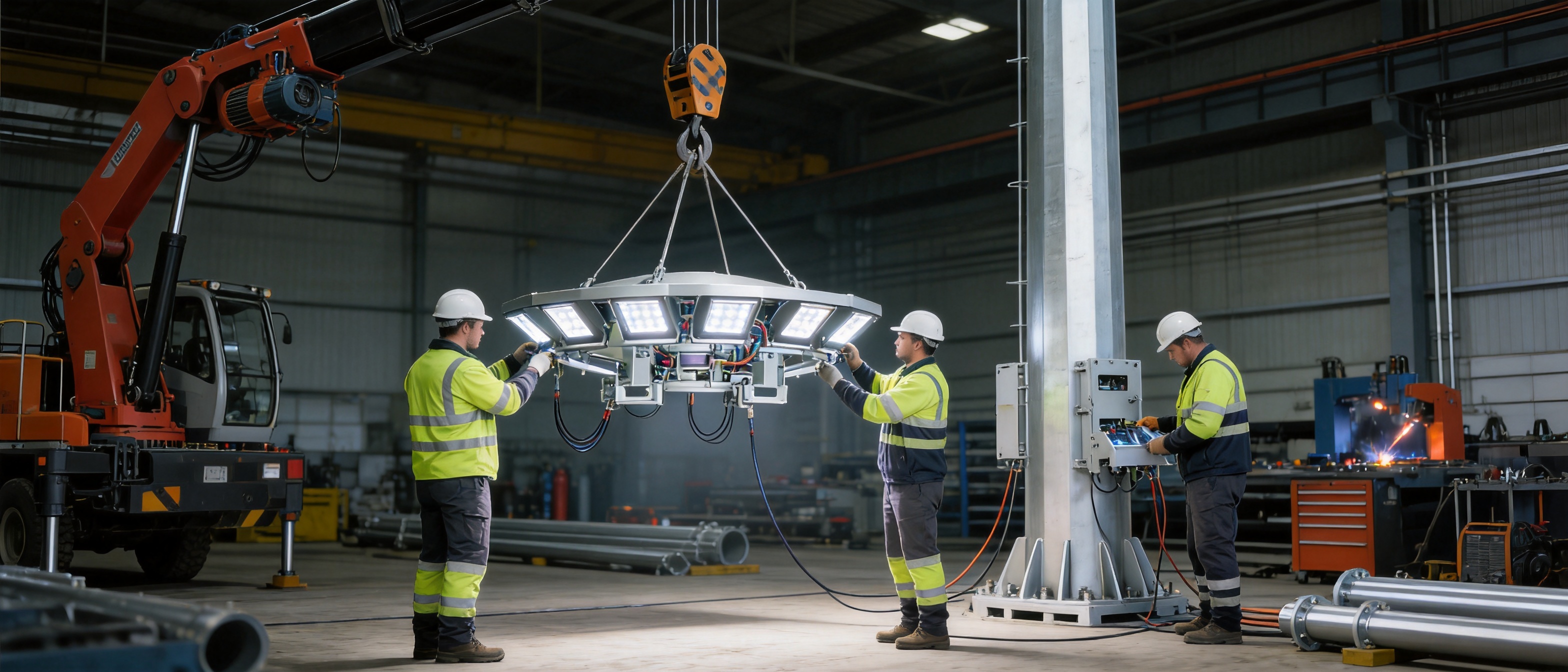
A major feature is the electric hoist control mechanism. Instead of requiring maintenance personnel to climb the mast or use specialized aerial equipment for every inspection, the lighting assembly can be lowered toward ground level. Technicians can then clean lenses, inspect electrical connections, replace components, and conduct routine servicing from a safer and more accessible position.
| Item | Specification | Practical Benefit |
|---|---|---|
| Light source | LED | Efficient, fast-starting, and suitable for continuous operation |
| Input voltage | AC85–265V | Adaptable to a wide range of electrical supply conditions |
| Luminous efficiency | Up to 140 lm/W | High light output with controlled energy consumption |
| Operating temperature | -35°C to 65°C | Suitable for demanding outdoor climates |
| Protection rating | IP65 | Protection against dust and water jets from typical outdoor exposure |
| Color temperature | 3000K–6000K | Flexible visual appearance for different applications |
| Color rendering index | Ra 70 | Clear recognition of general objects and work areas |
| Dimming | DC 0–10V / DALI | Supports energy management and intelligent control strategies |
| Pole materials | Q235, Q355, SS400, GR65, and others | Material flexibility for different structural and project requirements |
| Listed pole height | 6m–10m | Suitable for medium-height high-mast applications and customized projects |
| Warranty | 5 years | Long-term support for project owners and operators |
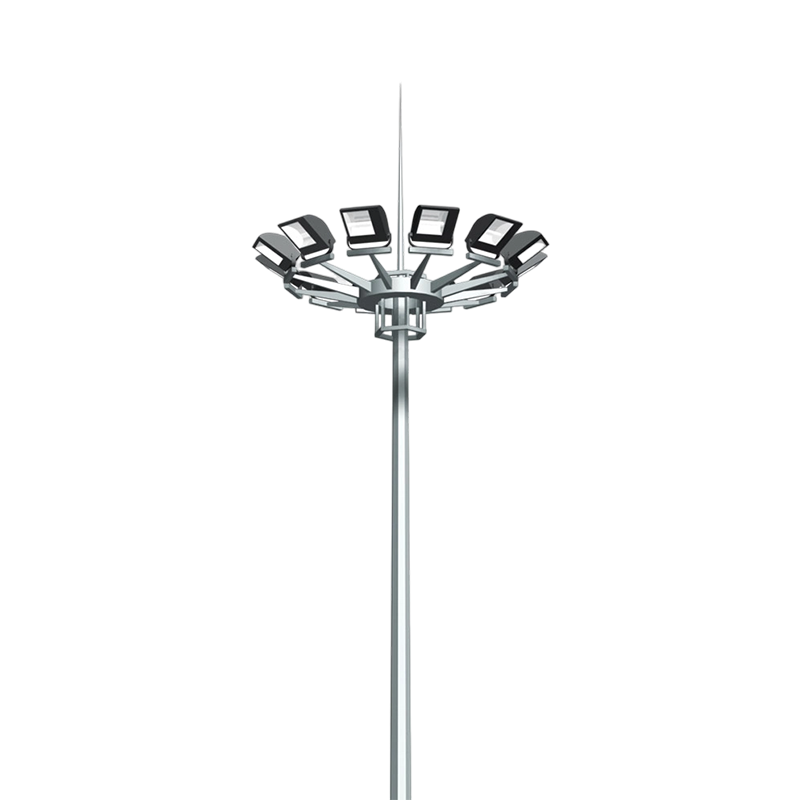
Industrial High Mast Floodlight
Structural Strength and Long-Term Outdoor Reliability
Outdoor lighting structures are exposed to wind pressure, rain, humidity, dust, temperature changes, vibration, and, in coastal locations, salt-laden air. A lighting system that performs well indoors may not provide adequate service life in a port, airport, warehouse yard, or exposed industrial site. Structural design and surface protection are therefore as important as LED performance.
The high mast system uses structural steel grades such as Q235, Q355, SS400, GR65, and other project-specific alternatives. These materials provide flexibility for engineering calculations, local standards, procurement requirements, and different load conditions. The appropriate grade can be selected according to pole height, luminaire quantity, wind speed, foundation design, and installation environment.
Hot-dip galvanizing provides a protective zinc coating over steel surfaces, including areas that may be difficult to protect with ordinary paint alone. The coating helps isolate the steel from moisture and oxygen, reducing the risk of corrosion during outdoor service. In aggressive environments, additional surface treatments, coating systems, or project-specific protection can be considered according to the customer’s requirements.
Structural reliability is also influenced by fabrication accuracy. A pole that is not correctly formed, aligned, welded, or inspected may suffer from installation difficulties or uneven loading. Consistent bending and cutting help the sections fit together correctly, while qualified welding helps maintain joint strength and dimensional stability.
For airport and port applications, wind resistance deserves particular attention. High mast structures present a large surface area to wind, especially when several floodlights, brackets, cables, and maintenance assemblies are installed at the top. The system can be supported by mechanical calculations covering wind loading and foundation requirements. This engineering process helps ensure that the final configuration is matched to the site rather than selected as a one-size-fits-all product.
Modular Floodlight Arrangement for Broad and Uniform Coverage
The lighting head is designed with a flexible modular structure that can support multiple high-power floodlights. This arrangement allows the customer or project engineer to select the number of luminaires and their orientation according to the shape of the site.
A rectangular logistics yard may require different aiming directions from a narrow port apron. An airport service area may require carefully controlled beams to avoid unnecessary glare. A construction site may need broad illumination for material storage, access roads, cranes, and work zones. A sports or public event area may require a different balance between horizontal illumination, vertical illumination, and visual comfort.
With a modular mounting arrangement, the system can be configured to address these differences. Individual luminaires may be aimed toward separate work areas, while optical lenses help control the spread and concentration of light. This approach can reduce dark corners and improve the visual continuity of the site.
Modularity also helps with future maintenance and upgrades. If one luminaire or driver requires replacement, the entire lighting structure does not necessarily need to be removed. Components can be serviced individually, reducing downtime and improving the long-term practicality of the installation.
The selection of optical distribution should be based on a photometric design rather than on wattage alone. The required mounting height, pole spacing, target illuminance, uniformity ratio, glare limitations, surface reflectance, and nearby sensitive areas should all be considered. Professional project support can use CAD design, three-dimensional product simulation, and three-dimensional scene simulation to evaluate the proposed arrangement before manufacturing.
Advanced LED Performance and Optical Control
The LED light source provides several advantages over older lighting technologies. It reaches operating brightness rapidly, making it suitable for sites where lights are activated by schedules, sensors, or emergency procedures. It also permits precise optical control through dedicated lenses and compact light-emitting modules.
The listed luminous efficiency of 140 lm/W indicates that a high amount of light can be generated from each watt of electrical input. Actual system performance depends on the selected power, optical lens, ambient temperature, driver efficiency, installation angle, and operating conditions. Nevertheless, high-efficacy LED technology provides an important foundation for reducing energy use in facilities that operate lighting for long hours.
Color temperature options from 3000K to 6000K allow the lighting appearance to be adapted to the application. Warmer light can provide a more comfortable visual environment in selected public or architectural settings, while cooler white light is often preferred for industrial work areas where strong visual contrast is important. The appropriate choice should take account of safety requirements, local regulations, worker comfort, camera performance, and the surrounding environment.
A color rendering index of Ra 70 supports general outdoor visibility and object recognition. In an industrial yard, this can help personnel distinguish vehicles, equipment, packages, containers, markings, and work surfaces. Where more demanding color recognition is required, the lighting specification should be reviewed during the project design stage.
The floodlights are also designed with heat dissipation modules. Thermal management is essential because excessive heat can reduce LED output, shorten component life, and affect driver reliability. Efficient heat transfer from the LED modules into the housing and surrounding air helps maintain stable operation during long periods of high-intensity use.
Electric Lowering System: A Safer Approach to Maintenance
Maintenance at height is one of the most important operational challenges associated with conventional high mast lighting. Accessing a lighting head may require a crane, an aerial work platform, rope-access personnel, or temporary road closures. These procedures increase labor costs, require additional safety planning, and may interrupt traffic or industrial activity.
The electric hoist mechanism addresses this challenge by allowing the lighting assembly to descend toward ground level. Once lowered, technicians can perform inspections and servicing from a more accessible working position. Common maintenance activities include checking LED modules, cleaning optical lenses, examining cable connections, inspecting brackets, testing drivers, and replacing damaged parts.
This design can reduce exposure to fall hazards and simplify work planning. It may also reduce the time required to return the system to service after a fault. For facilities that operate continuously, shorter maintenance periods can translate into better lighting availability and less disruption to loading, transportation, manufacturing, or construction operations.
Lowering equipment does not eliminate the need for proper maintenance procedures. Operators should follow the manufacturer’s instructions, isolate electrical power where necessary, inspect the hoist and cable system, verify mechanical locking arrangements, and ensure that personnel remain clear of moving components. A planned inspection schedule helps preserve both safety and equipment performance.
Compared with fixed high-mast assemblies that always require aerial access, an integrated lowering mechanism can provide a significant lifecycle advantage. The initial system design may include more mechanical components, but the improved accessibility can reduce recurring service complexity and help control long-term operating expenditure.
Protection Against Dust, Rain, and Harsh Conditions
The IP65 rating indicates that the luminaire enclosure is designed to resist dust ingress and water jets from typical outdoor directions. This level of protection is suitable for many industrial and infrastructure applications where equipment may be exposed to rain, airborne dust, cleaning activities, and changing weather.
Protection performance depends on the complete product assembly, including seals, cable glands, covers, connectors, and installation practices. For this reason, correct installation is essential. Damaged gaskets, poorly tightened cable entries, or unauthorized housing modifications can reduce the effective protection level.
The specified operating range of -35°C to 65°C provides flexibility for installations in cold northern climates, hot industrial regions, and areas with significant seasonal variation. Actual performance should always be evaluated in relation to solar radiation, enclosure temperature, mounting arrangement, driver loading, and local environmental conditions.
Coastal installations require additional attention because salt spray and humid air can accelerate corrosion. The use of galvanized steel, suitable fasteners, appropriate surface treatments, and regular inspections can help protect the pole and mounting structure. In ports and waterfront logistics facilities, a project-specific corrosion strategy is recommended.
Dimming and Smart Control Compatibility
The system supports DC 0–10V and DALI dimming interfaces. These options allow the floodlights to be integrated into broader lighting management strategies. Instead of operating at full output throughout the night, the facility may reduce light levels during periods of low activity and increase illumination when vehicles, workers, or security events are detected.
Dimming can help reduce energy consumption and extend the useful operating life of lighting components. It can also support different lighting scenes, such as normal operation, reduced overnight lighting, maintenance mode, emergency response, and event mode.
In a logistics park, for example, illumination may remain at a lower level during quiet hours and increase when loading operations begin. At an industrial site, lighting near a rarely used storage area may be reduced while access roads and security zones remain brighter. In a port, the control system can be coordinated with operating schedules and activity zones.
Integration requires compatibility between drivers, controllers, sensors, software, and communication infrastructure. The control method should therefore be confirmed during project planning. The availability of 0–10V and DALI support gives designers a practical foundation for incorporating the high mast system into intelligent lighting or facility management systems.
Applications in Airports and Transportation Hubs
Airports require dependable lighting in areas such as service roads, aircraft maintenance zones, cargo terminals, parking areas, ground-support equipment zones, and logistics aprons. The exact lighting requirements vary by location, and some areas may be subject to strict glare, spill-light, and operational safety controls.
The modular floodlight arrangement allows the lighting direction to be planned according to the site layout. Optical control can help place illumination on service areas while limiting unnecessary light beyond the operational boundary. The system’s wide temperature range and IP65 enclosure support outdoor use in changing weather conditions.
Transportation hubs also benefit from high mast illumination. Bus terminals, rail freight yards, vehicle depots, and intermodal facilities often contain large open areas with continuous vehicle movement. Good uniformity helps drivers identify lanes, barriers, loading points, pedestrians, and equipment. The high mounting position can cover broad zones while reducing interference from moving vehicles.
At these sites, maintenance efficiency is especially valuable. Closing a traffic lane or dispatching a crane for every lamp repair can affect schedules and increase operational expense. The electric lowering mechanism can make routine servicing more manageable and reduce the need for extensive access equipment.
Applications in Ports, Logistics Parks, and Warehousing
Seaports and inland logistics facilities commonly use large paved yards for containers, trailers, cargo handling, and vehicle circulation. These spaces may be exposed to strong winds, rain, salt air, dust, and heavy mechanical activity. Lighting must provide enough visibility for operators while supporting security and efficient movement.
A high mast with multiple floodlights can illuminate a large container or loading yard from a strategically selected location. By distributing light from above, the system can help reduce shadows created by stacked goods and large vehicles. Careful aiming and photometric planning remain essential because containers, cranes, and trailers can create significant obstructions.
Warehousing facilities may also use the system in outdoor storage yards, loading docks, truck staging areas, and emergency access routes. Stable illumination improves the visibility of dock edges, vehicle movements, packaging, and pedestrian paths. Dimming capability can help the operator match lighting output to working schedules.
In coastal areas, the galvanized structure and corrosion-conscious manufacturing approach are important advantages. Customers can also discuss pole material, coating, fasteners, and maintenance requirements with the engineering team to develop a solution suitable for local environmental conditions.
Applications in Construction and Industrial Sites
Construction projects often operate after sunset to meet deadlines, coordinate deliveries, or maintain continuous activity. Temporary or semi-permanent work areas require lighting that can cover excavation zones, material yards, access roads, lifting areas, and equipment storage.
The high mast floodlight can provide broad illumination from a limited number of locations, helping reduce cables, scattered portable lamps, and areas of poor visibility. The robust structure and weather-resistant luminaire are suitable for demanding outdoor conditions, although construction managers should still protect the equipment from impact, unauthorized adjustment, and accidental damage.
Industrial plants may use high mast lighting around production buildings, open storage areas, raw material yards, vehicle routes, and emergency assembly zones. The system can operate for extended periods and can be coordinated with plant schedules through dimming or control interfaces.
For heavy industrial environments, the lighting layout should account for cranes, stacks, pipelines, conveyors, buildings, and other structures that may block light. A three-dimensional scene simulation can help identify potential shadows and determine the best mounting positions and aiming directions before installation.
Manufacturing Capabilities Behind the Product
The performance of a high mast system depends not only on its design but also on the consistency of its manufacturing. Yangzhou Jinyuan Lamps Co., Ltd. operates as a professional production, design, and engineering company serving the road illumination and outdoor lighting industry. Its product range includes street light poles, LED streetlights, solar streetlights, light fixtures, and related lighting systems.
The company’s manufacturing base covers more than 70,000 square meters and is supported by more than 300 professional technicians. Its export experience extends to more than 200 countries, giving the organization exposure to different climate conditions, project standards, installation practices, and customer expectations.
Its quality and environmental management framework includes ISO9001, ISO14001, and OHSAS18001-related standards and practices as stated in the supplied company information. These systems support documented procedures, quality control, environmental responsibility, occupational safety, and continual improvement.
The production facility includes equipment for steel forming, surface treatment, welding, cutting, and lighting component manufacturing. Such equipment enables a greater degree of process control than a supply model based entirely on external subcontracting. Integrated production can help coordinate structural components, electrical assemblies, surface finishing, and project-specific requirements.
Material Selection and Inventory Planning
The company identifies material options including Q235B, Q345B, S275JR, S355JR, Q460, A36, A572, GR56, GR50, and related grades. Availability of multiple material choices allows the structural design to be adapted to project specifications, local standards, mechanical calculations, and customer procurement requirements.
Maintaining an extensive material stock can also support shorter production cycles. When appropriate materials are already available, projects may experience fewer delays caused by repeated purchasing or uncertain supply. Material traceability and inspection remain important to ensure that the selected steel meets the agreed specification.
CNC Bending for Structural Accuracy
High mast poles and related structural sections must be formed consistently to achieve correct geometry and reliable assembly. CNC bending helps control angles, radii, and repeatability. Consistent bending can improve structural integrity, reduce dimensional variation, and limit the need for post-production adjustments.
Accurate forming is especially useful when a project contains multiple poles or when sections must match a common foundation and mounting arrangement. Uniform components simplify installation and help maintain a professional finished appearance.
Precision Cutting
The production process is described as providing cutting accuracy of approximately 0.01 millimeters for suitable cutting operations. Precise cutting helps create clean edges, accurate dimensions, and better alignment between components. It can also reduce fitting work during assembly and improve the consistency of joints and openings.
Cutting accuracy should be understood in relation to the specific material thickness, equipment, process, and tolerance requirements of each component. Even so, precision cutting represents an important part of a controlled manufacturing process for poles, brackets, plates, covers, and structural accessories.
Automated Welding and Qualified Welders
Welding quality directly affects the strength, durability, and appearance of a pole or luminaire support. Automated welding lines can improve repeatability and production efficiency, while certified and experienced welders provide valuable oversight for complex assemblies, special configurations, and quality verification.
The supplied company information emphasizes a team of certified welders with many years of experience. This combination of automation and skilled labor helps support large-scale production without abandoning the craftsmanship required for nonstandard or project-specific structures.
Corrosion Protection and Surface Finishing
After forming and welding, steel components require suitable corrosion protection. Hot-dip galvanizing is a central option for outdoor pole structures, while powder electrostatic painting and other finishing processes may be used for selected components or appearance requirements.
Effective surface treatment depends on preparation, coating thickness, coverage, drainage design, handling, and inspection. A controlled production environment helps reduce surface defects and supports more consistent anti-corrosion performance. This is particularly important for outdoor lighting installed in coastal, humid, industrial, or high-rainfall locations.
Die Casting and Lighting Component Production
The company also operates a 1250-ton die casting machine, according to the supplied information. Die casting can support the production of aluminum alloy housings and other components requiring repeatable shape, dimensional stability, and efficient heat transfer.
For LED luminaires, the housing serves several purposes. It protects internal components, supports optical and electrical assemblies, and helps transfer heat away from LED modules and drivers. Consistent casting quality contributes to reliable assembly and stable thermal performance.
Engineering and Project Support
A high mast lighting project should be designed as a complete system rather than purchased as an isolated lamp. The required lighting level, pole location, foundation, wind load, cable route, control strategy, maintenance access, and local regulations must all be coordinated.
The company provides support services including CAD design, three-dimensional product simulation, three-dimensional scene simulation, specification and color customization, mechanical calculations for wind and foundations, and overseas on-site installation guidance.
CAD design helps convert the customer’s requirements into accurate drawings. Three-dimensional product simulation can show the structure, floodlight arrangement, brackets, lowering assembly, and finishing details. Three-dimensional scene simulation can help visualize how the system fits into an airport, port, logistics yard, road, or industrial environment.
Mechanical calculations for wind and foundations are particularly important for exposed high mast installations. The result should consider the selected pole material, height, luminaire quantity, projected area, local wind speed, soil conditions, foundation dimensions, anchor bolts, and installation method.
Specification and color customization allow the product to align with project identity, local preferences, visibility requirements, or existing infrastructure. While technical performance remains the priority, a coordinated finish can improve the appearance of transportation hubs, public facilities, and industrial campuses.
Overseas installation guidance can support customers and local contractors during assembly, electrical connection, commissioning, and maintenance training. Clear documentation and communication are essential when projects involve different languages, standards, time zones, and installation teams.
Advantages Over Conventional Alternatives
Compared with Traditional Discharge Floodlights
LED floodlights generally provide faster startup, improved controllability, higher efficacy, and more flexible optical design than many conventional discharge lamps. They also avoid the same warm-up behavior associated with certain older technologies. The Industrial High Mast Floodlight combines these LED advantages with a modular high-mast structure and a lowering system.
Compared with Numerous Low-Level Fixtures
Using many low-level fixtures may create a complex installation with more poles, cables, foundations, and maintenance points. A high mast arrangement can concentrate several floodlights at strategic positions, potentially reducing visual clutter and simplifying the overall site layout. The best choice depends on the photometric design and site conditions, but high mast lighting is often well suited to broad open areas.
Compared with Fixed High-Mast Assemblies
Some fixed high-mast systems require aerial access whenever a luminaire needs inspection or replacement. The electric lowering mechanism provides a significant maintenance advantage by bringing the lighting head closer to ground level. This can reduce the need for cranes or elevated work platforms and can improve maintenance safety.
Compared with Non-Engineered Standard Products
Standard products may not account for local wind, foundation conditions, corrosion exposure, floodlight quantity, or site-specific light distribution. A project-oriented system supported by mechanical calculations, CAD drawings, simulation, and customized specifications can provide a closer match to actual operating requirements.
Energy Efficiency and Lifecycle Value
Energy consumption is a major operating cost for large sites. Lighting may operate throughout the night, during shift changes, or continuously in high-security areas. High-efficacy LED technology can reduce the power required to achieve a specified light level, particularly when it replaces older, less efficient sources.
The ability to dim through 0–10V or DALI interfaces creates additional opportunities for savings. Lighting can be adjusted according to occupancy, traffic, work schedules, daylight conditions, or security requirements. Even partial reductions in output during low-activity periods may produce meaningful savings over the operating life of the facility.
Lifecycle value also includes maintenance labor, access equipment, replacement components, downtime, and safety management. The electric lowering mechanism can make these recurring costs easier to control. Durable structural materials and corrosion protection can further reduce the frequency of major repairs.
A complete economic evaluation should include the initial product cost, installation, foundation, wiring, controls, energy consumption, inspections, component replacement, and eventual disposal. The lowest purchase price does not always represent the lowest total cost of ownership. Reliable manufacturing, engineering support, and service access can make a substantial difference over the life of a large outdoor lighting project.
Installation and Commissioning Considerations
Before installation, the project team should verify the foundation design, anchor bolt layout, pole sections, lifting equipment, electrical supply, cable route, grounding method, floodlight arrangement, and control wiring. The installation area should be checked for underground utilities, vehicle access, overhead obstructions, drainage, and safe working space.
Pole sections should be inspected for transport damage, coating defects, deformation, and correct identification. The foundation must reach the required strength before the pole is erected. Bolted connections should be tightened according to the approved procedure, and the structure should be checked for vertical alignment.
After the floodlights are mounted, each luminaire should be aimed according to the lighting design. Incorrect aiming can create glare, excessive spill light, bright spots, or dark zones. Commissioning should include electrical tests, control-system tests, hoist operation tests, and nighttime verification of the actual lighting distribution.
The lowering assembly should be tested under controlled conditions. Operators should confirm that the lighting head moves smoothly, stops correctly, and can be secured safely for maintenance. Inspection records should be retained as part of the facility’s maintenance documentation.
Maintenance Recommendations
Routine maintenance should include cleaning optical surfaces, checking housing seals, inspecting cable glands, testing electrical connections, examining brackets, reviewing pole corrosion, and confirming the condition of the hoist and lowering mechanism.
Dust, salt deposits, industrial pollutants, and insects can gradually reduce light output if they accumulate on the lens. Cleaning frequency should reflect local environmental conditions. Coastal ports, dusty construction sites, and industrial facilities may require more frequent cleaning than clean urban environments.
The electrical system should be inspected for loose connections, overheating, damaged cables, water ingress, and abnormal driver behavior. Dimming and control interfaces should also be tested periodically to ensure that the system responds correctly to programmed commands.
The pole and foundation should be checked for corrosion, cracks, settlement, loose fasteners, and signs of unusual movement. Any change in alignment or structural condition should be investigated promptly, particularly after severe storms or accidental impact.
A five-year warranty is listed for the product. Warranty conditions should be reviewed before purchase, including coverage, exclusions, installation requirements, electrical protection, environmental limitations, and procedures for reporting a fault.
How to Select the Correct Configuration
Customers should begin by defining the application and the area to be illuminated. Important information includes site dimensions, operating hours, target illumination, required uniformity, mounting locations, existing structures, local wind speed, ambient temperature, corrosion exposure, electrical supply, and control preferences.
The number of floodlights and their power should be selected through photometric analysis. More power does not automatically produce a better result if the light is poorly distributed. Beam angles, aiming directions, pole spacing, mounting height, surface reflectance, and obstructions must be considered together.
The appropriate color temperature should be chosen based on visual comfort, operational needs, nearby residential areas, camera systems, and local lighting regulations. Warm white, neutral white, and cool white options may each be appropriate in different situations.
Material and coating requirements should reflect the environment. A port or waterfront location may need more comprehensive corrosion protection than an inland warehouse. The customer should also specify whether the pole requires a particular steel grade, galvanizing standard, paint color, flange arrangement, access door, cable configuration, or foundation design.
Finally, the maintenance strategy should be established at the design stage. The electric lowering system, access space, control method, spare parts, inspection schedule, and local service capabilities should all be included in the project plan.
Q&A
What is an industrial high mast floodlight used for?
It is used to illuminate large outdoor areas such as ports, airports, logistics parks, construction sites, industrial yards, warehouses, transportation hubs, vehicle depots, and open storage areas. Its elevated mounting position and multiple floodlights provide broad coverage across expansive sites.
How many floodlights can be installed on the lighting head?
The lighting head uses a modular design that supports multiple high-power floodlights. The exact number depends on the required illumination, pole configuration, structural calculation, optical distribution, and project layout.
What is the main maintenance advantage of this system?
The electric hoist mechanism can lower the lighting assembly toward ground level. This allows technicians to inspect, clean, and replace components without relying on dangerous routine climbing or heavy aerial equipment for every service task.
Is the floodlight suitable for coastal environments?
It is designed for demanding outdoor conditions and uses galvanized steel and corrosion-conscious manufacturing methods. Coastal projects should still receive a specific corrosion-protection review covering steel grade, galvanizing, coatings, fasteners, electrical enclosures, and inspection frequency.
What does the IP65 rating mean?
IP65 indicates protection against dust ingress and water jets from typical outdoor directions. Correct installation is necessary to preserve this level of protection, including proper seals, cable glands, covers, and connectors.
Can the lighting level be adjusted?
Yes. The product supports DC 0–10V and DALI dimming interfaces. These can be connected to suitable control systems for scheduling, energy management, occupancy response, or integration with broader facility automation.
What input voltage does the product support?
The listed input range is AC85–265V. The final electrical configuration should be confirmed according to the local power supply, driver selection, protection equipment, and project requirements.
What operating temperatures are supported?
The listed operating temperature range is approximately -35°C to 65°C. Actual performance should also consider direct solar exposure, enclosure temperature, driver loading, airflow, and the local installation environment.
What pole materials are available?
Listed material options include Q235, Q355, SS400, GR65, and other project-specific choices. The correct material should be selected through structural calculations and in accordance with local standards and customer specifications.
What is the listed pole height?
The supplied product information lists a pole height range of 6 to 10 meters. Larger or specially configured projects should be reviewed with the engineering team to confirm structural feasibility, floodlight quantity, foundation design, and required specifications.
Can the product be customized?
Yes. Project support includes CAD design, three-dimensional product and scene simulation, specification customization, color customization, wind and foundation calculations, and overseas installation guidance. Customization should be agreed before production.
What quality standards support the manufacturer’s operations?
The supplied company information identifies ISO9001, ISO14001, and OHSAS18001-related quality, environmental, and occupational safety systems. Customers should request current certification and project documentation when required for procurement or compliance.
What is the warranty period?
The listed warranty period is five years. Specific warranty conditions, exclusions, installation requirements, and service procedures should be confirmed in the formal quotation or supply contract.
Conclusion
The Industrial High Mast Floodlight is designed as a complete solution for large-area outdoor illumination rather than as a simple standalone lamp. Its combination of modular high-power LED floodlights, controlled optical distribution, high-efficiency performance, IP65 protection, broad operating temperature range, dimming compatibility, and electric lowering maintenance system makes it suitable for demanding industrial and infrastructure environments.
Its competitive value is reinforced by the manufacturing capabilities behind it. Material inventory, CNC bending, precision cutting, automated production lines, qualified welding, corrosion protection, die-casting equipment, and engineering services contribute to consistent product quality and project adaptability. The ability to support CAD drawings, simulations, mechanical calculations, customization, and overseas installation guidance further strengthens its suitability for large and technically complex projects.
For airports, ports, logistics parks, construction sites, industrial yards, warehouses, and transportation hubs, reliable lighting supports safety, visibility, productivity, and operational continuity. When correctly designed, installed, controlled, and maintained, this high mast floodlight system can provide stable illumination and practical lifecycle value for many years.
References
1. Product technical information for the Industrial High Mast Floodlight, including electrical, optical, structural, environmental, and control specifications.
2. Company manufacturing information concerning steel material options, CNC bending, precision cutting, automated welding, surface treatment, die casting, and production equipment.
3. Company service information concerning CAD design, three-dimensional product simulation, three-dimensional scene simulation, customization, wind and foundation calculations, and overseas installation guidance.
4. International Electrotechnical Commission, general principles for luminaire ingress protection and enclosure classification.
5. International Electrotechnical Commission, LED luminaire performance, safety, and testing principles.
6. International Organization for Standardization, quality management system principles for manufacturing organizations.
7. International Organization for Standardization, environmental management system principles for industrial production.
8. General engineering guidance for high mast structural design, wind loading, foundation calculation, outdoor lighting layout, and maintenance planning.