


JINYUAN
JINYUAN
JINYUAN
JINYUAN
JINYUAN
JINYUAN
JINYUAN
JINYUAN
JINYUAN
JINYUAN
JINYUAN
JINYUAN
JINYUAN
JINYUAN
JINYUAN
JINYUAN
Content
- 1 1. Product Overview
- 2 2. Why Bidirectional Lighting Is Valuable
- 3 3. Curved-Arm Structural Design
- 4 4. LED Lighting Performance
- 5 5. Protection Against Outdoor Conditions
- 6 6. Manufacturing Strengths Behind the Product
- 7 7. Quality and Certification Orientation
- 8 8. Competitive Advantages in Practical Applications
- 9 9. Typical Application Areas
- 10 10. Engineering and Installation Considerations
- 11 11. Maintenance and Lifecycle Management
- 12 12. Customization and Project Support
- 13 13. Technical Specification Summary
- 14 14. Sustainability and Operating Efficiency
- 15 15. Procurement Guidance for Buyers
- 16 16. Frequently Asked Questions
- 16.1 What is the main purpose of the Bidirectional Wide-Angle Curved-Arm Light?
- 16.2 What makes the product different from a conventional straight-arm streetlight?
- 16.3 What pole heights are available?
- 16.4 Can the LED fixtures be aimed after installation?
- 16.5 What voltage does the product support?
- 16.6 Does the light support dimming?
- 16.7 Is the product suitable for cold and hot climates?
- 16.8 What does the IP65 rating mean?
- 16.9 Which materials are available for the pole?
- 16.10 Can the color and finish be customized?
- 16.11 Does the company provide structural calculations?
- 16.12 What manufacturing equipment supports this product?
- 16.13 What warranty is provided?
- 16.14 Can the product be used in smart street-lighting systems?
- 16.15 Does one pole always replace two conventional poles?
- 17 17. Conclusion
- 18 References
- 19 Product: Bidirectional Wide-Angle Curved-Arm Light
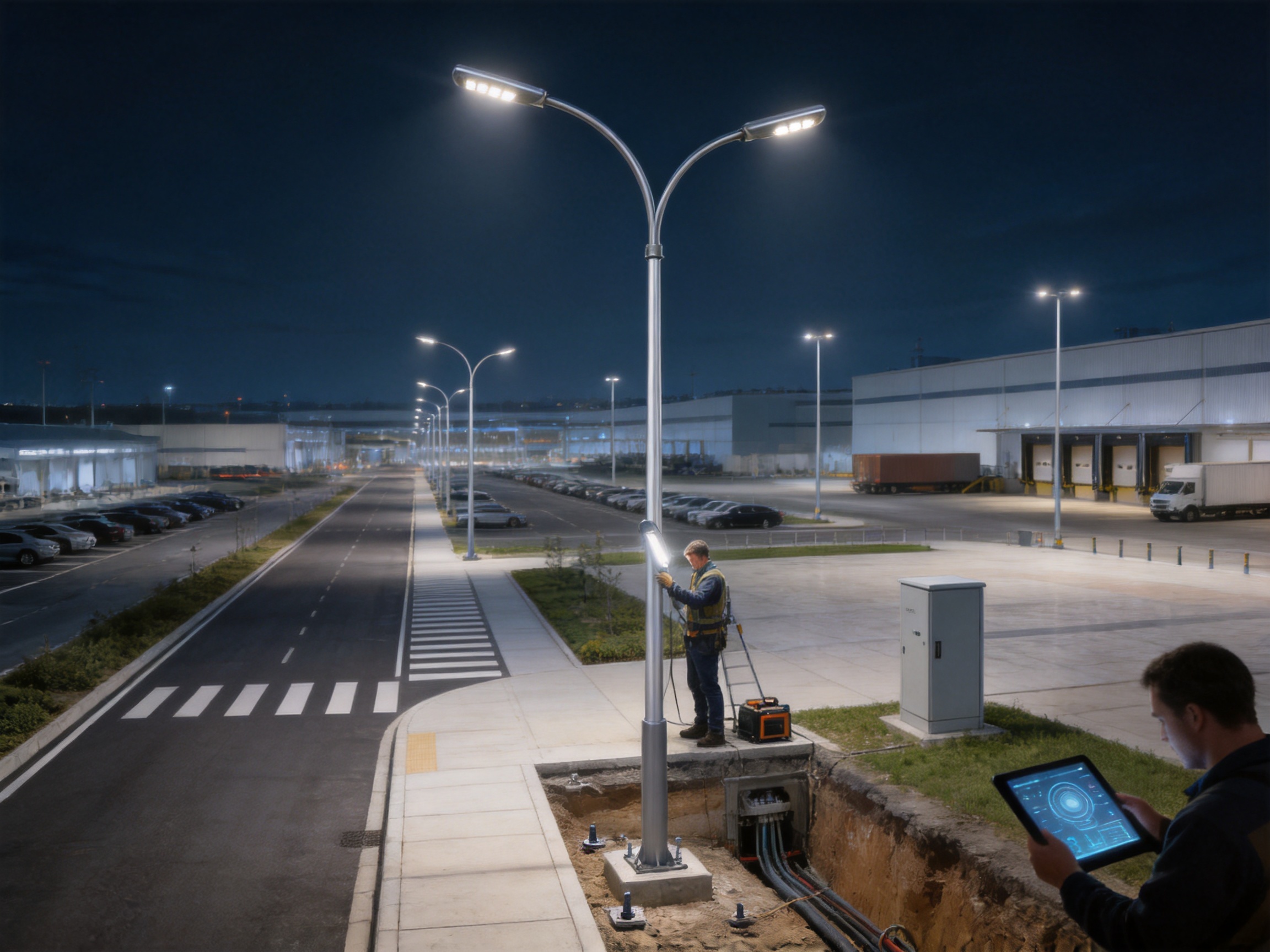
Modern urban infrastructure requires lighting systems that provide more than basic brightness. Roads, intersections, industrial parks, transport areas, and large public spaces all present different illumination challenges. A conventional single-arm streetlight may perform well along a straight road, but it may not provide balanced coverage at a crossroads, on a broad traffic island, or across an open area with multiple movement directions. The Bidirectional Wide-Angle Curved-Arm Light is designed to address these challenges through a distinctive dual-direction, asymmetric curved-arm structure and adjustable LED lighting units.
This product combines structural engineering, efficient LED technology, flexible installation, corrosion-resistant construction, and professional manufacturing capabilities. Its design supports targeted illumination over two directions while maintaining an attractive architectural appearance. The curved support arms are developed to balance functional coverage with mechanical stability, creating a lighting assembly that can serve demanding municipal, commercial, and industrial applications.
Produced by Yangzhou Jinyuan Lamps Co., Ltd., the product belongs to the LED High-low Arm Light category and is suitable for road lighting, urban arterial roads, industrial park roadways, large open public areas, and complex traffic sections. The company’s capabilities extend from raw-material selection and precision fabrication to engineering design, coating, welding, inspection, and project support. This integrated approach helps customers obtain a lighting solution that is practical, durable, customizable, and suitable for long-term infrastructure use.
1. Product Overview
The Bidirectional Wide-Angle Curved-Arm Light is a high-mast-style road lighting system designed to illuminate more than one direction from a coordinated pole structure. Its main feature is a bidirectional asymmetric curved-arm design. Instead of relying on two unrelated poles or simple straight arms, the product uses a carefully shaped support arrangement to position lighting units in complementary directions.
This configuration is particularly useful where road geometry is complicated or where a single lighting point must serve several traffic flows. Intersections, large squares, roundabout approaches, industrial access roads, and broad public spaces may require light distribution across multiple zones. The product can help create a more coherent lighting layout while reducing the visual and physical clutter that may result from installing several independent fixtures.
The support pole is manufactured from high-strength metal materials and can be specified in grades such as Q235, Q355, SS400, GR65, and other equivalent options according to project requirements. The lamp housing uses aluminum alloy, providing a practical balance between weight, corrosion resistance, heat dissipation, and structural performance.
The LED units support multi-directional angle adjustment. This feature allows the installation team or lighting designer to orient each fixture toward the required road lane, sidewalk, intersection approach, open area, or activity zone. Rather than treating every site as a standard straight-road application, the system can be adapted to the geometry and coverage objectives of the project.
With an input voltage range of AC85-265V, an IP65 protection rating, luminous efficiency of up to 140 lm/W, and a five-year warranty period, the product is configured for reliable outdoor operation. Its stated operating temperature range of -35°C to 65°C supports use in a wide variety of climates, subject to correct system design and installation conditions.
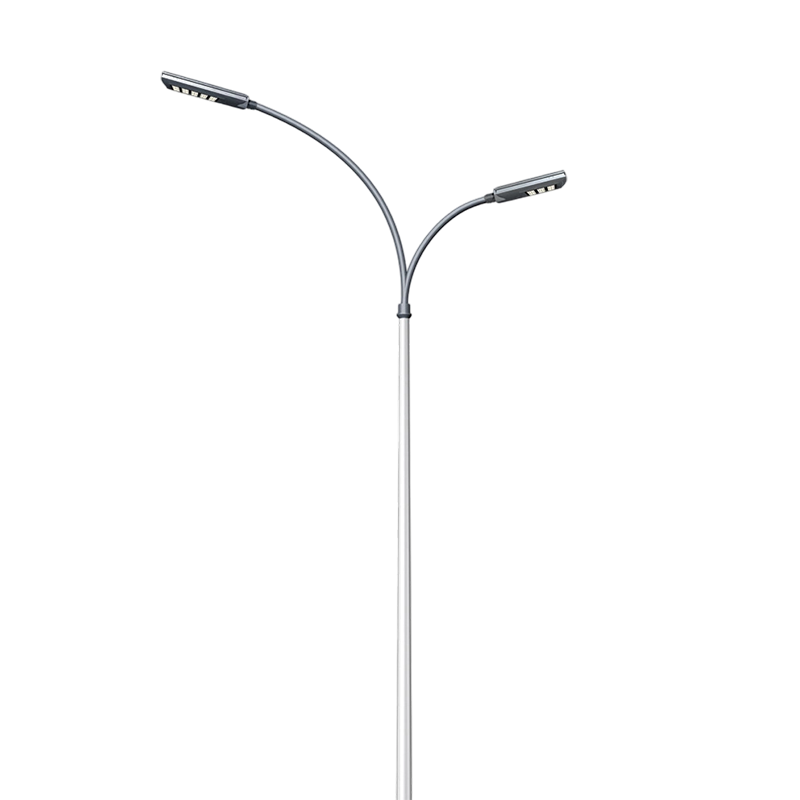
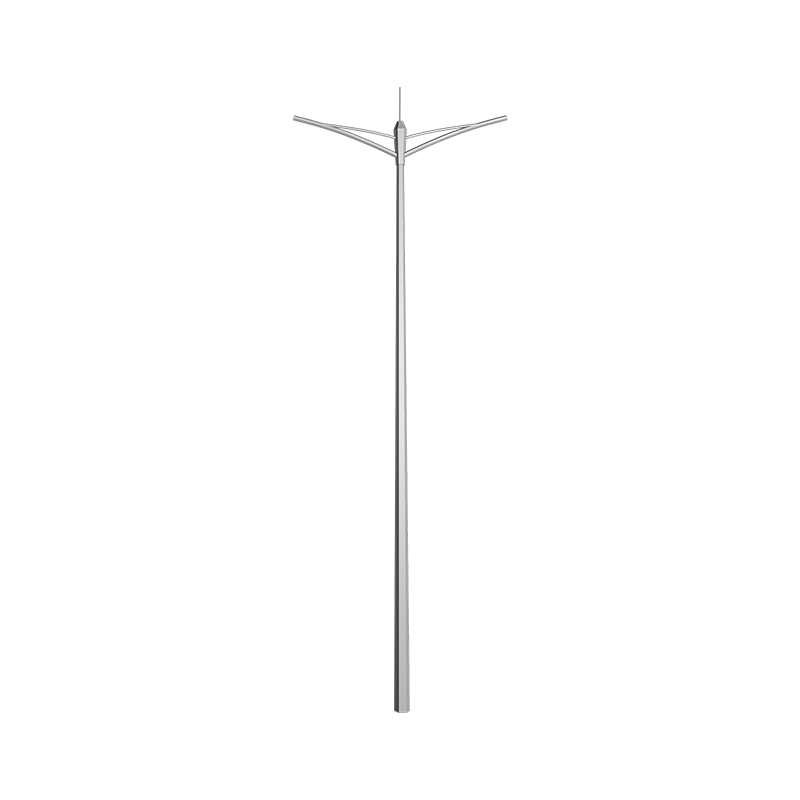
Bidirectional Wide-Angle Curved-Arm Light
2. Why Bidirectional Lighting Is Valuable
Many lighting projects are not simple linear roads. A road may divide into multiple lanes, intersect with another arterial route, or open into a large public square. In industrial areas, vehicles may approach from different directions, while pedestrians and service vehicles may move around loading yards and access roads. In these situations, the lighting system must distribute illumination intentionally instead of merely increasing wattage.
A bidirectional design offers several practical advantages. First, it allows one structural location to support lighting coverage in two directions. This can simplify the overall lighting arrangement and help designers coordinate pole locations with road boundaries, medians, traffic islands, and other site features.
Second, the asymmetric curved-arm configuration gives designers more freedom to place the lighting units at different angles and elevations. This can help address areas that would otherwise remain relatively dark, including turning zones, wide junction approaches, pedestrian crossings, and the edges of large open spaces.
Third, a coordinated dual-arm structure can create a more balanced visual appearance than a collection of independent fixtures installed without a unified design concept. For municipal streets and commercial developments, the appearance of the lighting infrastructure can contribute to the identity and perceived quality of the entire project.
Fourth, the product is suitable for situations in which the installation footprint must be carefully controlled. A single pole with two directed lighting arms may reduce the need for additional foundations and electrical connection points, although the final number of poles and foundations must always be confirmed through a professional lighting and structural design.
Improved Coverage at Intersections
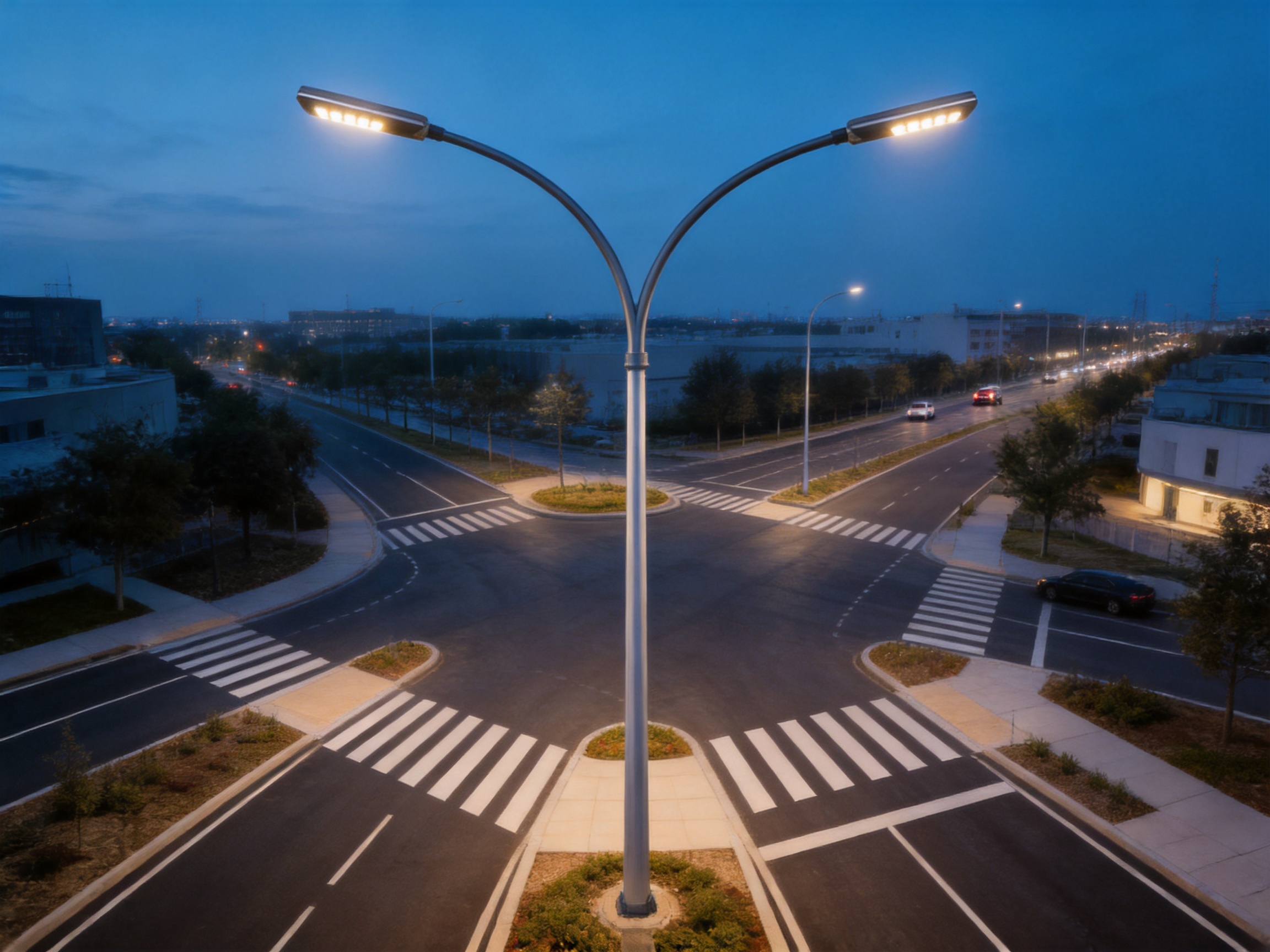
Intersections often include multiple approach roads, turning lanes, pedestrian areas, traffic signals, and roadside obstacles. A standard one-direction streetlight may illuminate only one approach effectively. The bidirectional curved-arm light can be configured to serve two road directions from one location, supporting a more balanced lighting plan.
The adjustable LED fixtures can be aimed to reduce excessive overlap in one area while improving illumination in another. This flexibility is valuable when the intersection has an unusual shape or when the roadway width changes between approaches.
Support for Large Open Areas
Large squares, industrial compounds, transport yards, and public activity areas require wide-area coverage rather than narrow linear illumination. The dual-direction structure provides an efficient starting point for distributing light across an open site. Depending on the application, several poles can be arranged in a planned grid or perimeter layout, with each fixture adjusted to support the required lighting zones.
Reduced Dark Spots
Uniformity is a central objective in outdoor lighting. Extremely bright areas beside dark areas can reduce visual comfort and may make it more difficult for drivers and pedestrians to identify obstacles. The product’s multi-directional adjustment capability helps the lighting designer direct light toward areas that need additional coverage. While final uniformity depends on fixture power, optics, pole spacing, mounting height, road width, and photometric design, the adjustable structure gives the project team a useful mechanical advantage.
3. Curved-Arm Structural Design
The curved-arm support is not only an aesthetic feature. Its shape is intended to support the practical requirements of a two-direction lighting assembly. A properly engineered curve can help position the fixtures beyond the central pole line, improving their relationship with the illuminated area. It can also distribute visual mass more smoothly than a sharp, angular bracket.
Structural performance depends on many factors, including material grade, wall thickness, pole height, arm projection, fixture weight, wind speed, foundation design, connection details, and local standards. For this reason, the curved arm must be treated as an engineered structural component rather than a decorative accessory.
The available pole height range is approximately 6 to 10 meters. This range covers many urban roads, industrial roadways, public squares, and site circulation applications. Projects with special height, reach, wind-load, or fixture requirements can be assessed through customized engineering and mechanical calculations.
The company provides mechanical calculation support for wind and foundation conditions. This service is important because the pole, arm, foundation, anchor bolts, and surrounding soil must work together as a complete system. A reliable lighting installation requires more than selecting a visually attractive pole; it requires verification that the complete assembly is suitable for the site environment.
Material Options
The product information lists Q235, Q355, SS400, GR65, and other steel options for the lamp pole. The company’s broader material options include Q235B, Q345B, S275JR, S355JR, Q460, A36, A572, GR56, and GR50, depending on project requirements and applicable standards.
Different steel grades may be selected according to strength, availability, structural calculations, local codes, and customer specifications. Material selection should be confirmed during the engineering stage rather than chosen solely by name. The appropriate grade, thickness, welding procedure, surface treatment, and foundation design should be coordinated as one technical package.
Connection and Maintenance Considerations
The product is designed with practical maintenance in mind. Simple connectors and accessible structural arrangements can make routine inspection, cleaning, and component replacement easier. Maintenance personnel may need to inspect fasteners, wiring, LED drivers, fixture seals, pole coatings, and foundation connections throughout the service life.
A design that allows these activities to be performed efficiently can reduce downtime and help facility owners manage long-term operating costs. Maintenance access must still follow safe working procedures, including electrical isolation, appropriate lifting equipment, fall protection, and compliance with local occupational safety requirements.
4. LED Lighting Performance
The system uses LED as its light source. LED technology is widely used in modern road lighting because it offers high efficiency, long operating life, controllable light distribution, fast start-up, and compatibility with smart control systems. The stated luminous efficiency of this product is up to 140 lm/W, providing a strong foundation for energy-conscious outdoor lighting design.
High luminous efficiency does not mean that every project should simply use the lowest possible electrical power. The correct solution depends on target illuminance, luminance, uniformity, glare control, mounting height, road classification, traffic volume, and local standards. A professional design should use photometric data to select the appropriate fixture power and optical distribution.
The available color temperature range is 3000K to 6000K. Warmer color temperatures, such as approximately 3000K, may be selected for areas where a softer visual atmosphere is preferred or where local environmental considerations apply. Neutral or cooler options may support visual clarity on roads and industrial sites. The appropriate selection should consider driver comfort, pedestrian needs, surrounding architecture, wildlife sensitivity, and municipal requirements.
The stated color rendering index is Ra 70. This provides a practical level of color recognition for many road and industrial applications. In locations where accurate identification of colors is especially important, the project team may evaluate whether a higher color-rendering configuration is necessary.
Multi-Directional Angle Adjustment
One of the product’s most important functional advantages is the ability to adjust the LED units in multiple directions. This makes it possible to adapt the lighting system to changing road widths, irregular junctions, traffic islands, and large areas with different illumination targets.
During installation, technicians can adjust the fixture orientation according to the approved photometric plan. Correct aiming can improve light distribution, reduce unnecessary spill light, and support better uniformity. It can also reduce the risk of directing excessive light toward nearby residences, offices, signs, or sensitive areas.
Angle adjustment is especially valuable when the same pole design is used across several project zones. Instead of requiring a completely different arm configuration for each location, the basic structure can often be adapted through fixture orientation and project-specific engineering.
Dimming and Control Compatibility
The product supports DC 0-10V and DALI dimming. These control options allow the lighting system to be integrated into a more advanced energy-management strategy. For example, lighting output may be adjusted according to traffic levels, operating hours, pedestrian activity, weather conditions, or centralized management policies.
Dimming can support energy savings when correctly designed and commissioned. It may also help reduce unnecessary light during periods of low activity. However, dimming schedules should preserve safety, visibility, and compliance with required lighting levels. The selected control system, driver, sensors, communication equipment, and software should be checked for compatibility before procurement.
Although the product is primarily a wired AC LED road light, its control compatibility can support future upgrades toward smart street lighting. A municipality or industrial park may initially install standard operation and later connect the lighting system to a central management platform, provided that the relevant drivers, controllers, cabinets, and communication architecture are included in the project design.
5. Protection Against Outdoor Conditions
Outdoor lighting equipment must withstand rain, dust, temperature changes, humidity, ultraviolet exposure, wind, pollution, and possible chemical contaminants. The product has an IP65 rating, indicating protection against dust ingress and water jets from common directions. This rating is suitable for many outdoor road and public-area applications when the fixture is correctly installed and maintained.
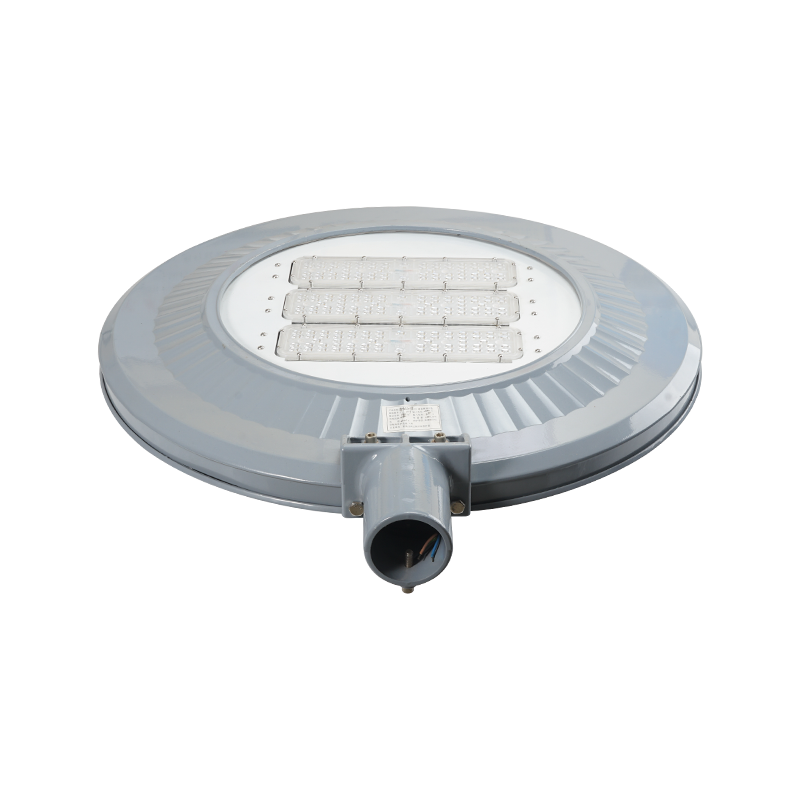
The lamp housing is made from aluminum alloy. Aluminum alloy can assist heat dissipation and reduce the weight of the fixture compared with some alternative metal constructions. It can also provide useful corrosion resistance when properly finished and maintained.
The pole and curved arm are treated through anti-corrosion processes. The manufacturing information refers to powder electrostatic painting equipment and processes intended to improve product durability. Depending on the project, the surface treatment system may be selected according to local environmental exposure, including normal urban conditions, coastal humidity, industrial pollution, or high-salinity environments.
Surface preparation is essential to coating performance. Cleaning, degreasing, removal of scale, pretreatment, coating thickness, curing temperature, and inspection all affect the final result. A high-quality coating cannot compensate for inadequate preparation. The company’s production process combines automated equipment with quality-control procedures to support consistent results across larger orders.
Customers should specify the required coating system, color, gloss, salt-spray expectations, and applicable standards during the technical confirmation stage. In highly corrosive locations, a more robust surface treatment may be required than in a normal inland urban environment.
6. Manufacturing Strengths Behind the Product
The performance of a curved-arm lighting pole depends heavily on manufacturing accuracy. Small deviations in cutting, bending, welding, or assembly can affect appearance, fixture orientation, structural alignment, and installation efficiency. Yangzhou Jinyuan Lamps Co., Ltd. supports the product with a large-scale manufacturing and engineering operation serving the road illumination industry.
The company was established in 2002 and is affiliated with Jinshang Electric Group. Its activities include product design, production, engineering support, and the manufacture of streetlight poles, LED streetlights, solar streetlights, light fixtures, and related lighting equipment. The company operates on a site of more than 70,000 square meters, employs more than 300 professional technicians, and exports products to more than 200 countries, according to the supplied company information.
Material Availability and Production Continuity
The company maintains extensive material options and stock to support production planning. Stable access to steel and other components can help reduce project delays, especially for municipal and infrastructure projects with fixed installation schedules.
Material availability also helps support different engineering requirements. A customer may need a specific steel grade, a particular arm projection, a customized pole height, or a special coating specification. A broad material base gives the manufacturer greater flexibility when aligning the design with local standards and structural calculations.
CNC Bending
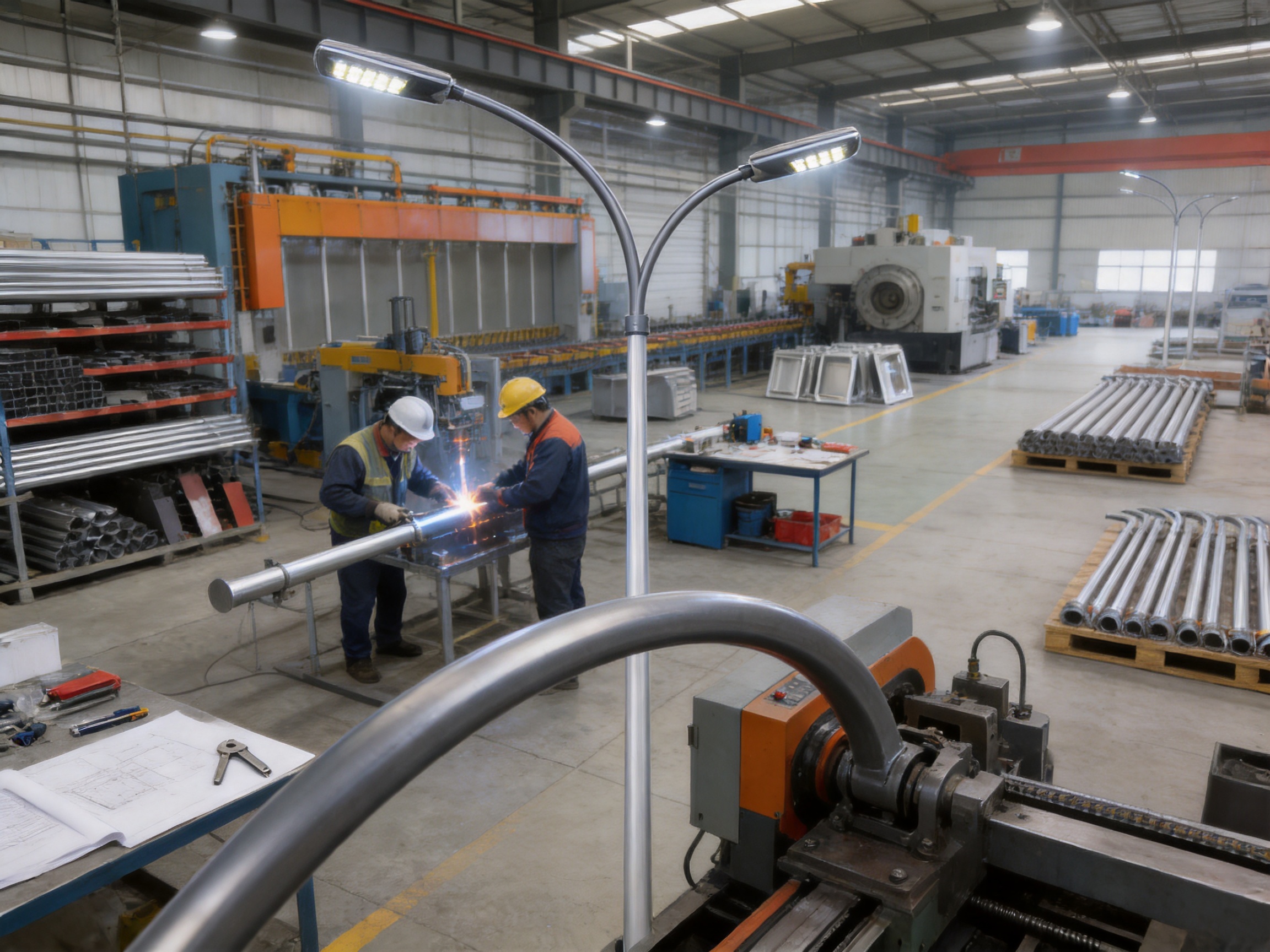
Curved-arm poles require controlled bending to achieve consistent geometry. The company uses precision CNC bending equipment to form structural components with repeatable dimensions. CNC bending can improve production consistency, reduce manual variation, and limit the need for post-production correction.
Consistent bending is important for both appearance and assembly. When multiple poles are installed along a road or across a public square, variations in arm curvature can become visually noticeable. More importantly, inaccurate bending may affect fixture alignment and connection fit. Controlled CNC processing helps the manufacturer produce repeatable curved profiles for larger project quantities.
Precision Cutting
The supplied manufacturing information states cutting accuracy of 0.01 mm. Such precision supports clean edges and accurate component dimensions within the capabilities of the relevant equipment and process. Accurate cutting can improve joint fit, reduce excessive grinding, and make downstream welding and assembly more predictable.
Clean and consistent edges also support surface preparation. Irregular burrs, rough cuts, and uncontrolled edges can create coating weaknesses or complicate assembly. By controlling cutting operations, the production team can improve the overall consistency of the fabricated pole and arm components.
Automated Welding and Skilled Welders
Welding quality is central to the structural integrity of streetlight poles and curved arms. The company uses automated welding lines together with certified welders who have many years of experience. Automation can improve repeatability for appropriate welds, while skilled operators remain important for complex joints, fit-up, inspection, and process control.
A reliable welding process includes correct joint preparation, suitable welding materials, controlled heat input, proper alignment, and inspection. Weld quality affects load transfer through the arm, pole, base plate, brackets, and other structural areas. The welding approach should be selected according to the component design, material grade, thickness, and applicable technical requirements.
Combining automated production with experienced welders provides a balance between efficiency and craftsmanship. This is particularly valuable for large-scale projects where customers require consistent quality across numerous poles while also expecting the manufacturer to manage customized structural details.
Powder Electrostatic Painting
Electrostatic powder coating is used to apply a controlled finish to suitable metal surfaces. The process can provide a uniform appearance and efficient material application when the parts are correctly prepared and the curing conditions are controlled.
The company’s production equipment includes powder electrostatic painting facilities. This supports large-volume manufacturing and helps maintain a consistent finish across poles, arms, brackets, and other components. The process can also contribute to environmental performance by reducing certain solvent-related emissions compared with some liquid coating methods, although the complete environmental profile depends on pretreatment, curing energy, powder recovery, packaging, and factory management.
Die-Casting Capability
The company also operates a 1250-ton die-casting machine. Die-casting capability can support the production of metal components requiring repeatable shapes, controlled dimensions, and efficient high-volume manufacturing. Depending on the final product configuration, die-cast components may be used in lighting-related assemblies or other associated equipment.
In-house or closely coordinated component manufacturing can help improve supply-chain control. It may also reduce the risk of inconsistent interfaces between separately sourced parts, particularly when the product requires coordinated housings, covers, brackets, or mounting components.
7. Quality and Certification Orientation
Infrastructure lighting projects require consistent documentation and quality management. The supplied company information identifies ISO9001, ISO14001, and OHSAS18001 among the company’s international quality and management standards.
ISO9001 is associated with quality-management systems and process control. ISO14001 relates to environmental-management systems. OHSAS18001 was an occupational health and safety management standard that has been superseded in many contexts by ISO 45001, so customers should confirm the current certification status and applicable certificate details during supplier qualification.
Certifications alone do not replace product inspection or project-specific verification. A responsible procurement process should review drawings, material certificates, coating specifications, electrical data, photometric files, inspection records, packing methods, and warranty terms. The manufacturer’s quality system provides a framework, while each project still requires technical confirmation.
For the Bidirectional Wide-Angle Curved-Arm Light, quality checks may include dimensional inspection, weld inspection, coating inspection, fixture function testing, IP-related verification, driver testing, electrical safety checks, and assembly verification. The exact inspection plan can be agreed upon before production.
8. Competitive Advantages in Practical Applications
The product’s advantages over simpler competing configurations are primarily related to adaptability, coverage, structural integration, and manufacturing support. It is not merely a standard straight-arm streetlight with a second fixture added. The bidirectional curved-arm design is developed for locations where road geometry and lighting objectives require more flexibility.
Advantage 1: Purpose-Built Dual-Direction Coverage
A conventional single-arm light generally focuses on one primary direction. The Bidirectional Wide-Angle Curved-Arm Light is designed from the beginning to support two directional lighting outputs. This may simplify planning for intersections and broad spaces while creating a more unified installation appearance.
Advantage 2: Flexible Adjustment
The multi-directional angle adjustment allows installers and lighting designers to fine-tune the fixture position. This is useful when the actual site differs slightly from preliminary drawings or when the road width varies across the project.
Advantage 3: Stronger Design Coordination
The pole, arm, fixture position, and foundation can be engineered as one system. This can be more effective than combining unrelated components from different suppliers, where connection details, proportions, and load assumptions may not be fully coordinated.
Advantage 4: Manufacturing Customization
The range of material options, pole heights, coating choices, and engineering services provides a basis for project customization. Customers can request design coordination, CAD drawings, 3D product simulation, 3D scene simulation, color customization, mechanical calculations, and overseas installation guidance.
Advantage 5: Long-Term Serviceability
The practical connector design and maintenance-oriented structure can help reduce the difficulty of cleaning, inspection, and component service. Long-term maintenance should be considered at the procurement stage because labor, access equipment, and traffic management can represent a substantial portion of lifecycle cost.
Advantage 6: Suitable Efficiency and Control Features
The LED system provides high luminous efficiency and supports DC 0-10V or DALI dimming. These features enable the product to participate in energy-management strategies and future smart-lighting upgrades when the complete control infrastructure is planned correctly.
9. Typical Application Areas
Urban Arterial Roads
Urban arterial roads often have multiple lanes, central medians, turning areas, sidewalks, and nearby buildings. The bidirectional curved-arm design can support coordinated illumination of opposing or intersecting directions. The selected pole spacing and fixture orientation should be based on road classification and photometric calculations.
Complex Intersections
At a major intersection, the lighting system may need to cover vehicle approaches, turning lanes, pedestrian crossings, traffic islands, and roadside waiting areas. A two-direction structure can serve as one element of a broader intersection lighting plan, supporting visibility without requiring a separate pole for every direction.
Industrial Parks
Industrial park roads may carry heavy vehicles, service trucks, forklifts, workers, and visitors. Lighting must support both traffic safety and operational visibility. The robust metal structure, broad operating temperature range, IP65-rated fixture, and adjustable illumination make the product suitable for many industrial-road layouts.
Large Squares and Public Areas
Public squares and open gathering areas require lighting that supports pedestrian movement, security, events, and architectural presentation. The curved-arm profile can provide a distinctive appearance while the adjustable LED units distribute light across different portions of the site.
Transport and Access Areas
Loading areas, parking approaches, logistics yards, and access roads may have unusual layouts with vehicles moving in several directions. The product can be integrated into a broader site-lighting plan, provided that glare, mounting height, traffic clearance, and maintenance access are carefully addressed.
10. Engineering and Installation Considerations
Successful installation begins with accurate site information. The project team should confirm road widths, pole positions, underground utilities, soil conditions, wind speed, elevation, traffic patterns, existing electrical infrastructure, and local lighting requirements.
Photometric planning should be completed before final production. The lighting designer should evaluate average illumination or luminance, uniformity, glare, spill light, pole spacing, fixture wattage, color temperature, and dimming schedules. Photometric simulation can help verify whether the two fixtures on each pole are aimed correctly.
Structural design should consider the total weight and projected area of the pole, curved arms, luminaires, cables, brackets, and any optional equipment. Wind loads can be significant, especially for high-mounted fixtures and curved arms. The foundation, anchor bolts, base plate, and soil bearing capacity should be designed as an integrated system.
Electrical installation should include suitable protection against overcurrent, surge, short circuit, and grounding faults. Cable sizing should account for voltage drop, operating current, ambient conditions, and installation length. DALI or 0-10V control wiring should be separated and installed according to the control-system requirements.
The pole should be installed on a properly prepared foundation with accurately positioned anchor bolts. Incorrect anchor-bolt placement can create alignment problems and place unnecessary stress on the base plate. After installation, all mechanical fasteners should be tightened according to approved procedures, and electrical connections should be inspected before energization.
For projects outside the manufacturer’s home market, local contractors should verify compliance with national electrical regulations, road-lighting standards, structural codes, lifting requirements, and occupational safety rules. The manufacturer’s overseas onsite installation guidance can support coordination but does not replace the responsibility of the local engineering and construction team.
11. Maintenance and Lifecycle Management
Regular maintenance helps preserve lighting performance, safety, and appearance. The maintenance schedule should include visual inspection of the pole, curved arms, weld zones, base plate, anchor bolts, coating, fixture housing, seals, cables, connectors, and control equipment.
Dust and pollution can reduce optical output and affect heat dissipation. Cleaning should be performed using methods compatible with the fixture housing, lens, coating, and electrical seals. Harsh chemicals or abrasive tools should not be used unless specifically approved by the manufacturer.
In corrosive environments, maintenance personnel should look for coating damage, rust initiation, blistering, peeling, and corrosion around joints or fasteners. Small coating defects should be addressed promptly according to the approved repair procedure. Coastal and industrial locations may require more frequent inspections than ordinary inland environments.
LED systems generally require less frequent light-source replacement than many traditional technologies, but drivers, surge-protection devices, control modules, and connectors may eventually require service. Keeping records of installation dates, operating hours, faults, repairs, and energy consumption can help facility managers plan preventive maintenance.
The five-year warranty period supplied for this product provides a defined support framework. Warranty conditions should be reviewed carefully, including exclusions, installation requirements, electrical protection, environmental limits, maintenance obligations, and procedures for reporting failures.
12. Customization and Project Support
Infrastructure customers often need more than a catalog product. Road widths, pole locations, local standards, color requirements, wind conditions, fixture power, control systems, and foundation designs can differ substantially from one project to another.
The company offers CAD design and 3D product simulation design to help customers review dimensions, interfaces, and visual proportions before production. Three-dimensional scene simulation can help stakeholders assess how the curved-arm light will appear in a real road, square, industrial park, or public environment.
Specification and color customization can support municipal identity, architectural coordination, and project-specific technical requirements. Customers may also request mechanical calculations for wind and foundation conditions. These services help connect the product design with the actual installation environment.
Overseas onsite installation guidance is another useful service for international projects. Coordination may cover assembly sequence, pole erection, fixture installation, cable routing, grounding, aiming, testing, and handover. The extent of support should be agreed before shipment, especially for large or technically complex projects.
13. Technical Specification Summary
| Item | Specification |
|---|---|
| Product title | Bidirectional Wide-Angle Curved-Arm Light |
| Product category | LED High-low Arm Light |
| Primary application | Roads, intersections, industrial parks, squares, and large public areas |
| Brand | Jinyuan |
| Input voltage | AC85-265V |
| Light source | LED |
| Lamp housing material | Aluminum alloy |
| Operating temperature | -35°C to 65°C |
| Ingress protection | IP65 |
| Luminous efficiency | Up to 140 lm/W |
| Color temperature | 3000K-6000K |
| Color rendering index | Ra 70 |
| Dimming support | DC 0-10V / DALI |
| Warranty | 5 years |
| Available pole materials | Q235, Q355, SS400, GR65, and other options |
| Typical pole height | 6 m-10 m |
| Structural design | Bidirectional asymmetric curved arm with adjustable LED fixture positioning |
14. Sustainability and Operating Efficiency
Street lighting operates for many hours and may represent a significant portion of a municipality’s or industrial facility’s electricity consumption. Efficient LED illumination can help reduce energy use when compared with less efficient conventional systems, especially when the fixture is correctly matched to the required lighting level.
Dimming support creates further opportunities for energy management. A lighting system may operate at full output during periods of heavy traffic and use lower output during quieter periods, provided that required visibility and safety levels are maintained. This approach can reduce energy consumption without requiring the system to remain at maximum output throughout the night.
Long service life and maintainable construction can also support sustainability. Replacing fewer components reduces material use, transportation, labor, and waste over the lifecycle. Durable surface treatment may extend the useful life of the pole and reduce the need for repainting or premature replacement.
The company’s ISO14001-related environmental-management orientation and automated production capabilities support a more organized approach to manufacturing efficiency. Customers seeking environmental documentation should request project-specific information about material content, coating processes, packaging, energy consumption, and end-of-life recycling.
15. Procurement Guidance for Buyers
Buyers should begin by defining the lighting objective rather than selecting a pole solely based on appearance. Important questions include the number of road directions to be illuminated, the width of each road, the desired mounting height, the required uniformity, the traffic category, the surrounding land use, and the local wind environment.
The product should be evaluated together with its LED fixture configuration. Fixture power, optical distribution, color temperature, driver type, control method, and surge protection can significantly affect performance. A curved arm alone does not determine the final lighting result; the complete optical and structural system must be reviewed.
Buyers should request drawings showing pole height, arm projection, fixture mounting position, base-plate dimensions, cable entry, access door, and connection details. They should also confirm the steel grade, wall thickness, coating system, coating color, weld requirements, and inspection procedures.
For international projects, buyers should verify whether the supplied electrical and structural specifications satisfy local requirements. They should also confirm packaging, shipping dimensions, container loading, spare parts, installation tools, documentation language, and after-sales support.
A factory audit or technical review can provide additional confidence for large projects. The review may cover raw-material storage, CNC bending, cutting, welding, coating, assembly, testing, warehouse management, and quality records. This is particularly useful when the order includes a large number of customized poles.
16. Frequently Asked Questions
What is the main purpose of the Bidirectional Wide-Angle Curved-Arm Light?
The product is designed to provide coordinated lighting in two directions from a curved-arm pole structure. It is intended for intersections, broad roads, industrial park roadways, large squares, and other areas where a single-direction streetlight may not provide sufficient coverage.
What makes the product different from a conventional straight-arm streetlight?
Its defining features are the asymmetric curved-arm structure, bidirectional fixture arrangement, and multi-directional angle adjustment. These features provide greater flexibility for complex road layouts and large open areas than a basic single-arm configuration.
What pole heights are available?
The listed pole height range is 6 to 10 meters. The final height should be selected according to road width, photometric calculations, fixture output, wind conditions, local standards, and foundation design.
Can the LED fixtures be aimed after installation?
The lighting system supports multi-directional angle adjustment. Final aiming should follow the approved lighting design and should be checked after installation to confirm coverage, uniformity, glare control, and spill-light performance.
What voltage does the product support?
The stated input voltage range is AC85-265V. The project electrical designer should still verify the local supply characteristics, driver configuration, protection requirements, and control-system compatibility.
Does the light support dimming?
Yes. The product supports DC 0-10V and DALI dimming. A complete dimming solution also requires compatible drivers, control devices, wiring, programming, and commissioning.
Is the product suitable for cold and hot climates?
The stated operating temperature range is -35°C to 65°C. Actual suitability also depends on solar exposure, humidity, altitude, electrical conditions, wind, installation quality, and the environmental limits of the complete system.
What does the IP65 rating mean?
IP65 indicates protection against dust ingress and water jets from common directions. It supports many outdoor applications, but the fixture must be correctly installed, sealed, maintained, and protected from conditions outside its design scope.
Which materials are available for the pole?
Listed options include Q235, Q355, SS400, and GR65, along with other material choices. The correct material should be selected through project-specific structural calculations and applicable standards.
Can the color and finish be customized?
Specification and color customization are available as part of the company’s project-support services. Customers should confirm the coating type, color reference, gloss, corrosion requirements, and inspection criteria before production.
Does the company provide structural calculations?
The company provides mechanical calculation support for wind and foundation conditions. The final engineering responsibility should be coordinated with the local project designer and the applicable building, road, and electrical codes.
What manufacturing equipment supports this product?
The supplied information identifies extensive material stock, CNC bending equipment, precision cutting equipment, automated welding and cutting lines, powder electrostatic painting equipment, certified welders, and a 1250-ton die-casting machine.
What warranty is provided?
The listed warranty period is five years. Buyers should review the full warranty terms, including installation requirements, operating conditions, maintenance responsibilities, electrical protection, and claim procedures.
Can the product be used in smart street-lighting systems?
The DC 0-10V and DALI dimming interfaces can support integration into suitable lighting-control systems. Additional communication equipment, controllers, sensors, cabinets, software, and network infrastructure may be required for a complete smart-lighting installation.
Does one pole always replace two conventional poles?
Not necessarily. The product may provide two-direction coverage from one structural location, but the final number of poles depends on photometric performance, road geometry, lighting standards, traffic safety requirements, and structural limitations. A professional lighting design is required.
17. Conclusion
The Bidirectional Wide-Angle Curved-Arm Light is designed for lighting projects that demand more flexibility than a standard single-arm streetlight can provide. Its asymmetric curved-arm structure supports two-direction coverage, while adjustable LED fixtures allow the lighting layout to respond to intersections, broad roads, industrial areas, and large public spaces.
The product combines an aluminum-alloy LED housing, IP65 protection, high luminous efficiency, a broad operating temperature range, adjustable color temperature, 0-10V and DALI dimming support, and a five-year warranty. Its available pole materials and 6 to 10 meter height range provide a practical foundation for many outdoor infrastructure applications.
Its competitive strength also comes from the manufacturing system behind it. CNC bending, precise cutting, automated production, experienced welders, powder electrostatic painting, die-casting capability, quality-management practices, engineering calculations, CAD design, 3D simulation, customization, and installation guidance create a complete project-support platform.
For municipalities, industrial developers, contractors, and lighting distributors, this product offers a combination of functional coverage, structural character, manufacturing consistency, and long-term serviceability. When supported by proper photometric planning, structural verification, electrical protection, and preventive maintenance, it can provide dependable illumination for complex roads and public spaces over many years.
References
1. Product technical information for the Bidirectional Wide-Angle Curved-Arm Light, including supplied electrical, optical, structural, and environmental specifications.
2. Manufacturer information concerning production equipment, material options, engineering support, quality systems, and project services.
3. International Electrotechnical Commission. IEC 60529, Degrees of Protection Provided by Enclosures, commonly known as IP Code.
4. International Organization for Standardization. ISO 9001, Quality Management Systems—Requirements.
5. International Organization for Standardization. ISO 14001, Environmental Management Systems—Requirements with Guidance for Use.
6. International Commission on Illumination. Road lighting guidance concerning visual performance, uniformity, glare, and lighting quality.
7. General principles of LED roadway lighting design, including photometric evaluation, thermal management, electrical protection, dimming, and lifecycle maintenance.