


JINYUAN
JINYUAN
JINYUAN
JINYUAN
JINYUAN
JINYUAN
JINYUAN
JINYUAN
JINYUAN
JINYUAN
JINYUAN
JINYUAN
JINYUAN
JINYUAN
JINYUAN
JINYUAN
Content
- 1 1. The Growing Need for Better-Looking Communication Infrastructure
- 2 2. Product Concept and Design Philosophy
- 3 3. Main Product Specifications
- 4 4. Functional Value as a Communication Carrier
- 5 5. Advantages Over Conventional Communication Towers
- 6 6. Engineering Balance Between Beauty and Safety
- 7 7. Advanced Manufacturing Capabilities
- 8 8. Design and Customization Services
- 9 9. Applications in Urban and Public Environments
- 10 10. How the Product Supports Project Efficiency
- 11 11. Quality, Standards, and International Project Support
- 12 12. Maintenance and Long-Term Appearance
- 13 13. Recommended Project Development Process
- 13.1 Step One: Define the Site and Application
- 13.2 Step Two: Establish Height and Crown Proportion
- 13.3 Step Three: Review Materials and Engineering Conditions
- 13.4 Step Four: Develop CAD and 3D Simulations
- 13.5 Step Five: Confirm Finish and Custom Details
- 13.6 Step Six: Manufacture and Inspect
- 13.7 Step Seven: Coordinate Delivery and Installation
- 13.8 Step Eight: Complete Commissioning and Maintenance Planning
- 14 14. Why Choose a Specialized Manufacturer
- 15 15. Environmental and Aesthetic Responsibility
- 16 16. Return on Infrastructure Investment
- 17 17. Frequently Asked Questions
- 17.1 Q1: What is the primary purpose of the Crown Style Landscape Ground-Mounted Communication Tower?
- 17.2 Q2: What are the available overall tower heights?
- 17.3 Q3: What is the size of the crown section?
- 17.4 Q4: Can the tower be customized?
- 17.5 Q5: Which materials can be used?
- 17.6 Q6: Is structural calculation available?
- 17.7 Q7: Where is this product most suitable?
- 17.8 Q8: How does it differ from an ordinary communication tower?
- 17.9 Q9: What manufacturing processes support product quality?
- 17.10 Q10: Is installation assistance available for international projects?
- 17.11 Q11: Can the tower be used in a smart-city project?
- 17.12 Q12: What should customers prepare before requesting a quotation?
- 18 18. Conclusion
- 19 References
- 20 Product: Crown Style Landscape Ground-Mounted Communication Tower
Modern cities require communication infrastructure that is reliable, adaptable, and visually compatible with the environments in which it is installed. Conventional communication towers are designed primarily for technical performance. Although they provide essential support for antennas, wireless equipment, transmission systems, and network expansion, their industrial appearance can be difficult to integrate into premium public spaces, historic districts, scenic areas, sports venues, and carefully planned urban landscapes.
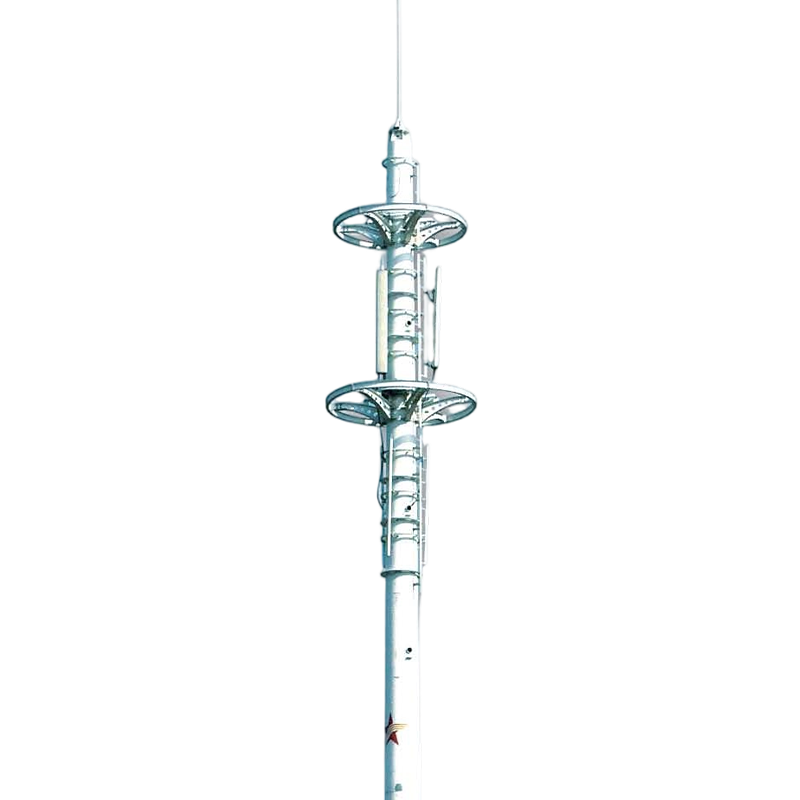
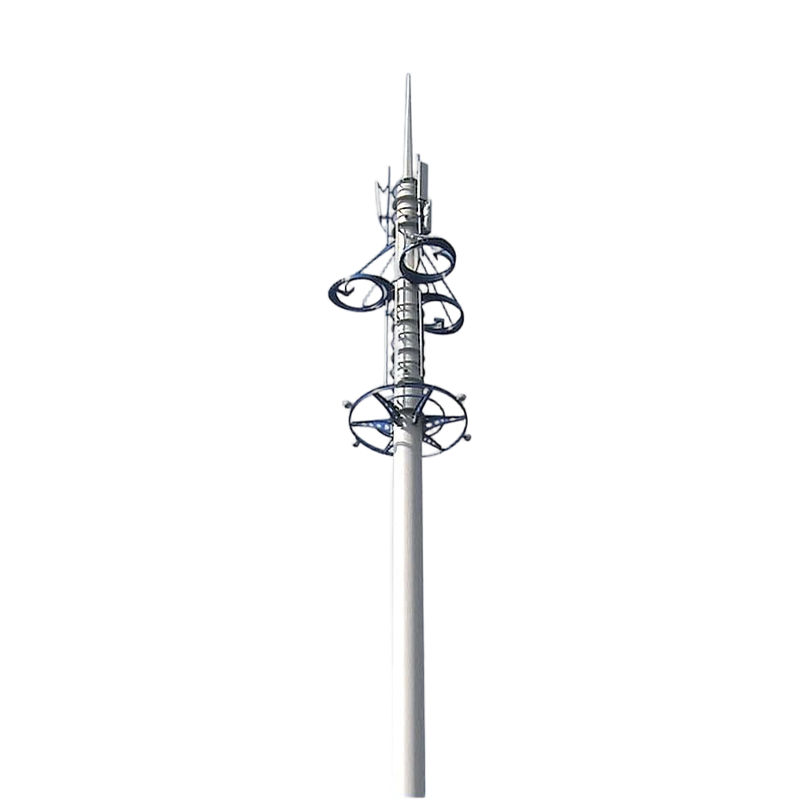
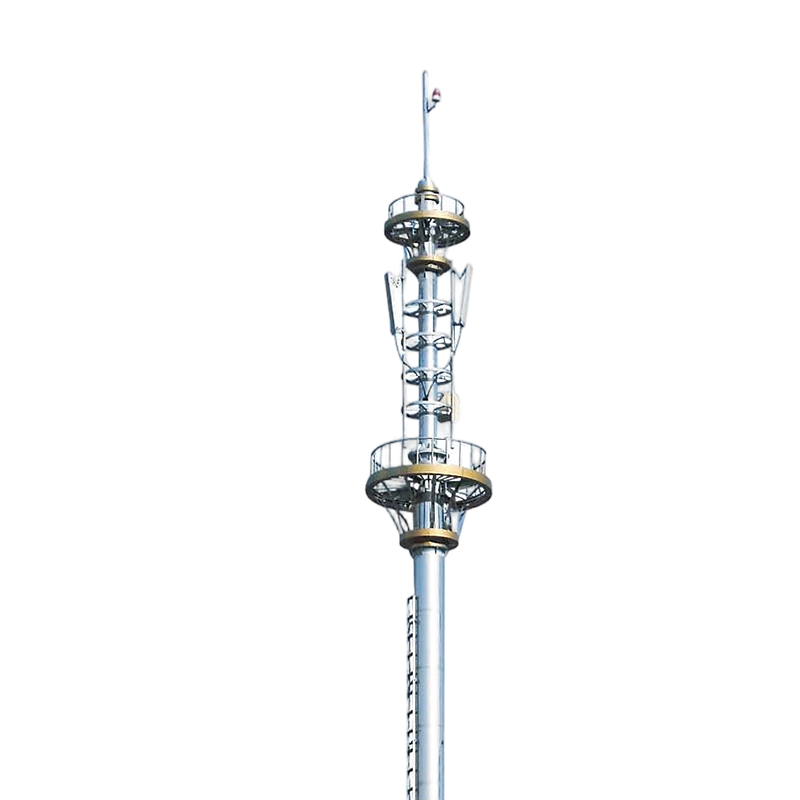
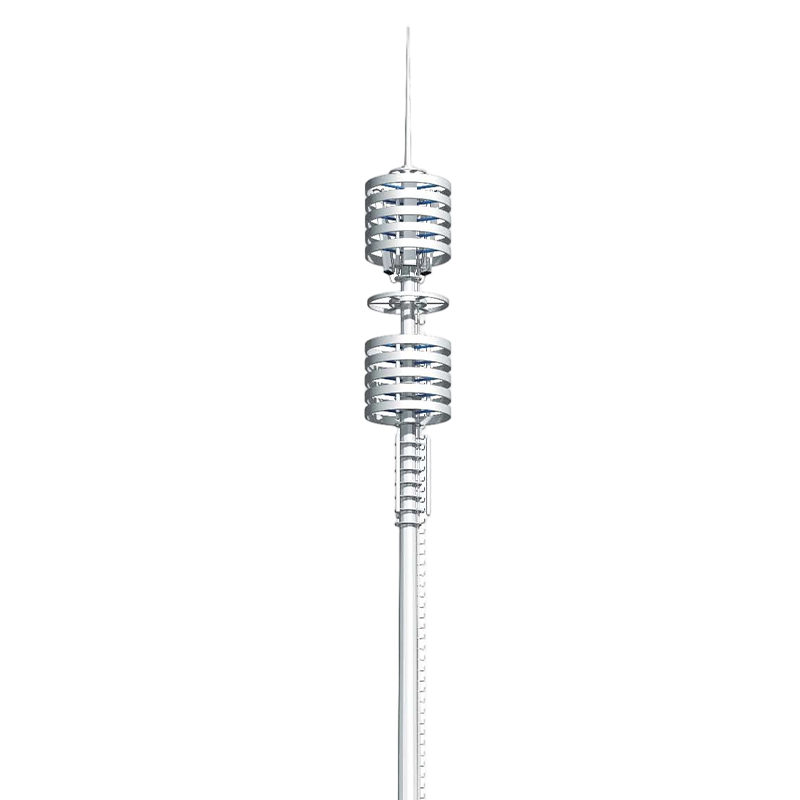
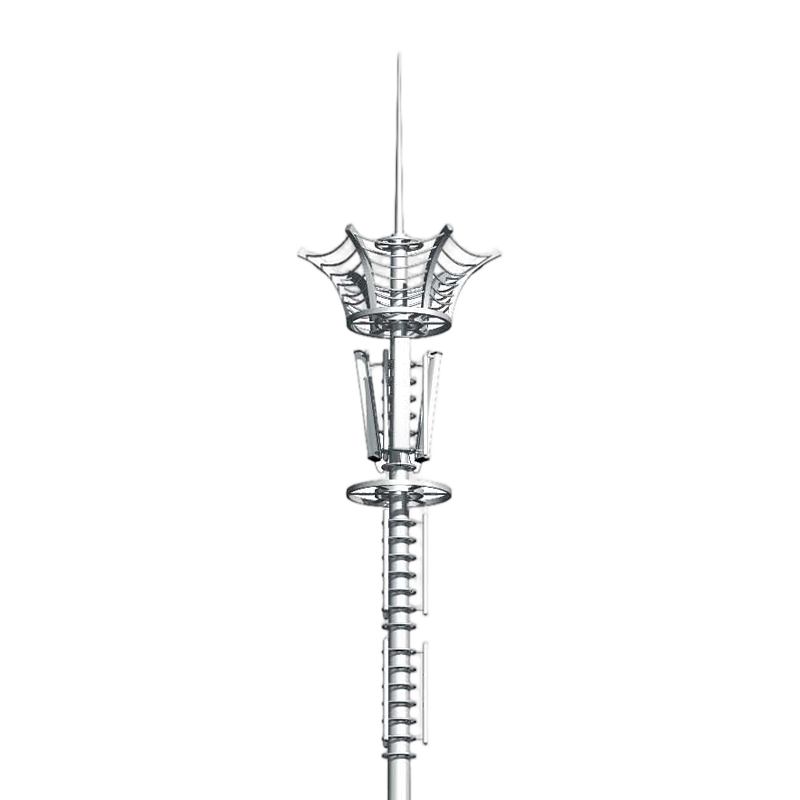
The Crown Style Landscape Ground-Mounted Communication Tower addresses this challenge by combining telecommunications functionality with architectural and artistic expression. Inspired by the form of a classic royal crown, the tower transforms a necessary communications facility into a recognizable urban feature. It is designed to carry communication equipment while contributing to the identity, visual quality, and cultural atmosphere of its surroundings.
With a crown diameter ranging from 2.4 meters to 3.6 meters, a consistent crown height of 4 meters, and a total tower height from 10 to 50 meters, the product can be adapted to different site conditions and coverage requirements. Its combination of structural strength, design flexibility, manufacturing precision, and project support makes it a strong alternative to ordinary lattice towers, monopoles, and visually basic decorative communication structures.
1. The Growing Need for Better-Looking Communication Infrastructure
Communication networks have become a basic part of urban life. Mobile connectivity, public safety systems, smart transportation, emergency communications, wireless broadband, surveillance networks, and data services all depend on a distributed infrastructure of towers and equipment. As cities expand and network usage increases, more communication facilities must be installed closer to residential, commercial, recreational, and transportation areas.
However, the placement of communication equipment often creates a design conflict. Network operators need height, stability, equipment capacity, and convenient maintenance access. Urban planners, property developers, landscape architects, and local communities also expect the facility to respect its surroundings. A standard steel tower may satisfy the first group of requirements but fail to address the second.
The Crown Style Landscape Ground-Mounted Communication Tower is developed for locations where technical infrastructure must coexist with visual quality. Instead of treating the tower as an object that should be hidden or tolerated, the crown design gives it a deliberate architectural identity. The tower can become a landmark, a gateway feature, a visual focal point, or an integrated element of a broader public-space concept.
This approach is especially valuable in premium scenic areas, city centers, large sports facilities, cultural districts, commercial developments, and high-traffic landscape nodes. In these locations, every visible structure influences the perception of the site. A well-designed communication tower can support the network without weakening the character of the environment.
2. Product Concept and Design Philosophy
The central design idea is based on the classic royal crown. Historically, the crown has represented dignity, authority, celebration, and distinction. In this product, those symbolic qualities are translated into a modern structural form. The upper crown section provides a visually memorable silhouette, while the tower body remains engineered to serve as a practical telecommunications carrier.
The design is not limited to decorative appearance. Its purpose is to create a deeper integration between infrastructure and landscape. The tower can be considered part of the built environment rather than an isolated industrial object. This helps designers address the visual rigidity commonly associated with communication facilities.
The crown form is also suitable for projects that require a signature feature. A sports venue may use the tower as part of its approach landscape. A tourism destination may incorporate it into a themed public area. A new urban district may repeat the design language across several strategically placed communication points. A landmark tower can support both practical network requirements and the visual storytelling of a site.
Unlike temporary decorative treatments that are applied after a conventional tower has already been designed, the crown concept is integrated into the overall product structure. The appearance, proportions, tower height, equipment arrangement, and foundation requirements can therefore be considered together during the design process.
3. Main Product Specifications
The series provides a broad range of dimensional options to support different applications. The crown section is available with a diameter from 2.4 meters to 3.6 meters. The crown height is 4 meters. The overall tower height can range from 10 meters to 50 meters, depending on the required communication coverage, surrounding buildings, site restrictions, wind conditions, and project aesthetics.
| Item | Available Specification or Feature | Project Benefit |
|---|---|---|
| Product type | Landscape ground-mounted communication tower | Combines communications support with architectural presentation |
| Design theme | Classic royal crown form | Creates a distinctive landmark appearance |
| Crown diameter | 2.4 to 3.6 meters | Allows visual scaling for different sites |
| Crown height | 4 meters | Maintains a recognizable and consistent design element |
| Total tower height | 10 to 50 meters | Supports different coverage and installation conditions |
| Material options | Q235B, Q345B, S275JR, S355JR, Q460, A36, A572, GR56, GR50, and others | Provides flexibility for regional standards and engineering requirements |
| Design support | CAD design, 3D simulation, mechanical calculation, and customization | Improves project coordination before production |
| Installation support | Overseas onsite installation guidance available | Helps customers manage field assembly and commissioning |
The dimensional range is important because communication infrastructure is rarely installed under identical conditions. A tower placed beside a low-rise recreational facility may require a different proportion from one installed within a dense urban district. Similarly, a tower in an open coastal or mountainous area may face different wind and foundation considerations from a tower in a protected city location.
Rather than forcing customers to select from a single standardized size, this product supports a project-oriented design process. The tower height and crown proportions can be selected in relation to coverage needs, visual scale, site boundaries, equipment requirements, and local planning expectations.
4. Functional Value as a Communication Carrier
The primary role of the product is to provide a stable elevated structure for communication systems. Its ground-mounted configuration makes it suitable for locations where a dedicated tower foundation can be planned and where reliable access is required for installation and maintenance.
A properly designed communication tower supports the positioning of antennas and related equipment at an effective elevation. This can help network planners address coverage gaps, improve service continuity, and create additional capacity in busy areas. In public venues and high-traffic districts, the tower may support communication requirements associated with mobile users, event operations, emergency response, security systems, and smart-city services.
The product can also be considered for communication network expansion in areas where rooftop installation is unsuitable. Rooftop sites may be limited by building structure, access, ownership, visual concerns, or insufficient height. A ground-mounted tower provides a dedicated location that can be coordinated with the landscape and planned for long-term service access.
Its visual design does not replace the need for engineering. On the contrary, the decorative form must be developed together with structural calculations, equipment loading, wind requirements, foundation design, access considerations, and maintenance planning. This balance between appearance and performance is one of the key characteristics of the product.
5. Advantages Over Conventional Communication Towers
5.1 Stronger Visual Integration
Many standard communication towers have a purely industrial appearance. Their lattice sections, exposed brackets, and basic silhouettes can appear out of place in carefully designed public environments. The crown design provides a more intentional visual language and makes it easier to present the structure as a planned component of the landscape.
This can be especially valuable where the tower is visible from roads, pedestrian paths, stadium entrances, scenic viewpoints, hotels, shopping districts, or public plazas. Instead of creating a visual interruption, the crown form can reinforce the identity of the site.
5.2 Distinctive Landmark Potential
A conventional tower is generally recognized only as infrastructure. The Crown Style Landscape Ground-Mounted Communication Tower can serve as both infrastructure and a landmark. Its recognizable shape gives a site a memorable visual reference point. This may assist wayfinding and contribute to the perceived uniqueness of a development.
For destinations seeking a premium or symbolic appearance, the crown theme can communicate celebration, prestige, and civic ambition. It can be adapted to a broader project concept without losing its communications function.
5.3 Flexible Height Selection
The total height range of 10 to 50 meters gives project planners substantial flexibility. Lower configurations can be used where visual scale and planning restrictions are important. Taller configurations can be considered where broader coverage or greater clearance is required.
This flexibility is an advantage over fixed decorative structures that may only be available in one or two predetermined dimensions. It also allows multiple towers within one development to be coordinated while responding to different site-specific requirements.
5.4 Customizable Crown Proportions
The available crown diameter range of 2.4 to 3.6 meters allows the upper decorative section to be matched to the total tower height and surrounding architectural scale. A larger crown may be appropriate for a broad public plaza or major venue, while a more compact crown may be better suited to a constrained urban location.
Customization of the crown size can help avoid a disproportionate appearance. A well-balanced structure should appear intentional from close viewpoints as well as from a distance.
5.5 Greater Planning Compatibility
Planning authorities and project owners increasingly consider the visual consequences of infrastructure. A structure that demonstrates clear design intent may be easier to discuss during landscape and architectural coordination than a generic industrial tower. While every project remains subject to applicable approvals, the decorative concept can support a more positive planning conversation.
5.6 More Value from a Single Structure
A standard tower primarily provides technical capacity. A landscape communication tower can provide technical capacity, visual identity, cultural expression, and public-space value at the same time. This broader value proposition can be important when project budgets must support both infrastructure and landscape improvements.
6. Engineering Balance Between Beauty and Safety
Decorative appearance must never compromise structural safety. The Crown Style Landscape Ground-Mounted Communication Tower is intended to balance artistic modeling with mechanical performance. The tower’s dimensions, material selection, connections, equipment loads, and foundation requirements should be reviewed as a unified engineering system.
Material options include Q235B, Q345B, S275JR, S355JR, Q460, A36, A572, GR56, GR50, and other grades selected according to project requirements. The availability of multiple material options allows the design team to consider local standards, structural calculations, supply conditions, welding requirements, and customer specifications.
Wind is a major design consideration for any elevated outdoor structure. The tower height, crown geometry, antenna loading, installation environment, and local wind conditions all influence structural calculations. The manufacturer provides mechanical calculation support for wind and foundation design, enabling the customer and project engineers to coordinate the tower with its intended site.
Foundation planning is equally important. A tower should be installed on a foundation designed for its specific height, loading, soil conditions, and local requirements. The foundation is not an afterthought; it is part of the complete tower system. Early coordination between the tower manufacturer, civil engineer, contractor, and project owner can reduce construction delays and prevent late-stage modifications.
Connection quality also affects structural reliability. Accurate cutting, controlled bending, and qualified welding help ensure that structural members fit properly and that assembly can be completed with fewer adjustments. These production factors are particularly important for custom-designed towers, where many components may be manufactured to project-specific dimensions.
7. Advanced Manufacturing Capabilities
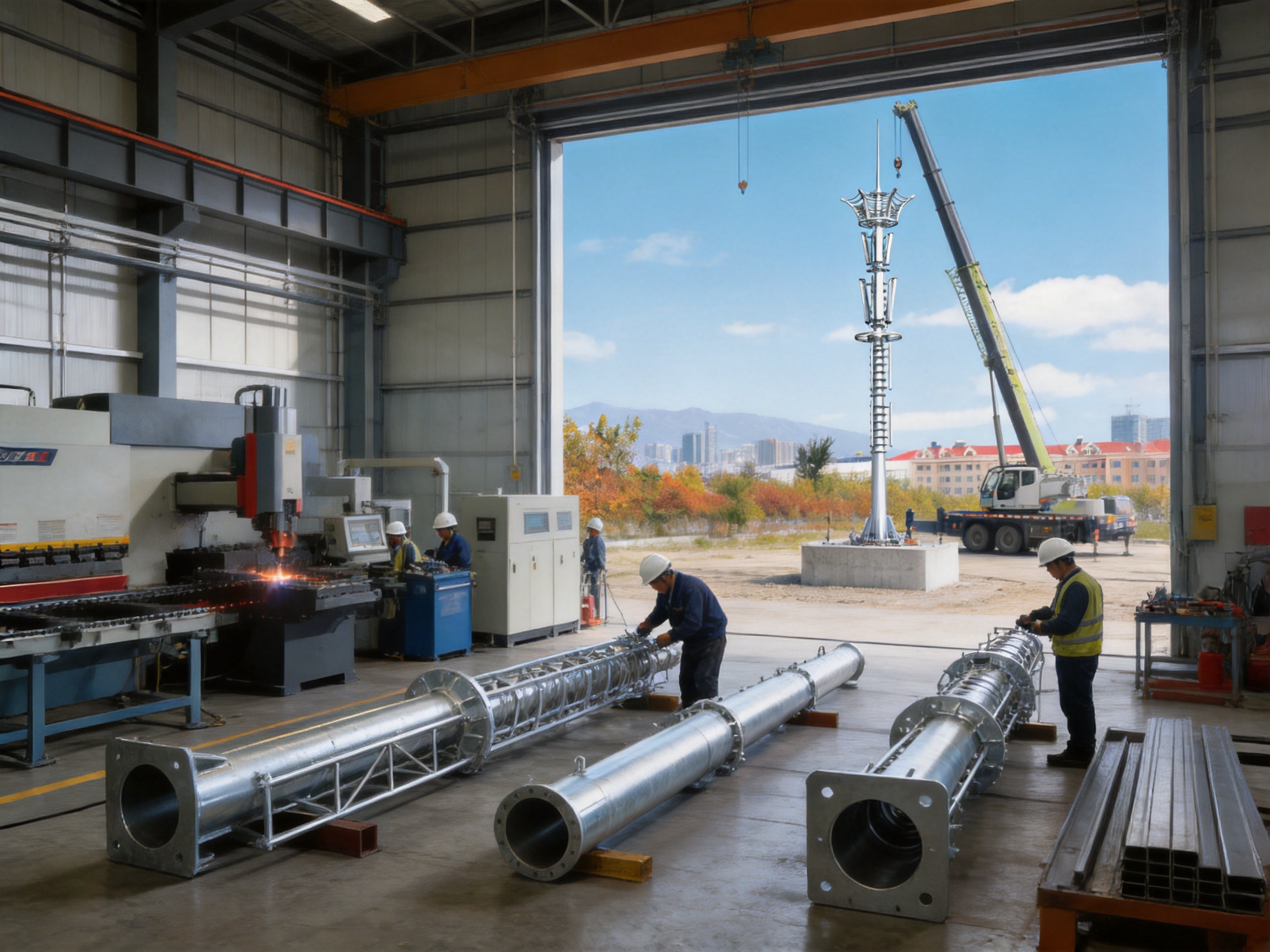
The product is supported by a manufacturing system developed for road illumination products, steel poles, communication structures, and related outdoor infrastructure. Manufacturing capability is a major factor in delivering a custom landscape tower because the product requires both visual precision and dependable structural execution.
7.1 Broad Material Availability
Maintaining extensive material stock supports more responsive production planning. The listed material options include Q235B, Q345B, S275JR, S355JR, Q460, A36, A572, GR56, and GR50. This range enables the production team to work with different engineering specifications and market requirements.
Material availability can also reduce the risk of project delays caused by long procurement cycles. When suitable materials are available for production, the manufacturer can organize cutting, forming, welding, surface treatment, and inspection more efficiently.
7.2 CNC Bending
Precise and consistent CNC bending is used to improve the dimensional control of structural components. Bending accuracy affects alignment, connection fit, appearance, and load transfer. In a landmark product, even small inconsistencies may become visible because the structure is intended to be viewed as an architectural object.
Controlled CNC bending can also reduce the need for post-production correction. Fewer adjustments during assembly help improve production efficiency and contribute to more consistent project results.
7.3 High-Accuracy Cutting
The manufacturing process provides cutting accuracy of up to 0.01 millimeters according to the supplied production information. Accurate cutting helps produce clean edges and exact component dimensions. This supports better fit-up during welding and assembly and helps maintain the intended geometry of the crown and tower sections.
Clean, precise edges can also reduce unnecessary finishing work. In a project involving numerous steel components, improved cutting accuracy can contribute to more predictable production cycles and a more orderly assembly process.
7.4 Anti-Corrosion Surface Treatment
Outdoor communication towers are exposed to rain, humidity, temperature changes, ultraviolet radiation, airborne contaminants, and other environmental conditions. The product information highlights production processes intended to enhance anti-corrosion service life and includes powder electrostatic painting equipment within the company’s manufacturing resources.
Surface treatment must be selected according to the environment, customer specifications, and applicable project standards. Proper preparation, coating control, curing, handling, and inspection are essential to achieving a durable finish. A well-maintained surface not only protects the steel but also preserves the visual quality of the landmark structure.
7.5 Automated Welding and Cutting
Automated production lines help improve repeatability and process control. Automated cutting and welding can support consistent quality across larger quantities of components while reducing avoidable variations. These systems may also improve production efficiency and help control costs.
Automation does not eliminate the importance of skilled personnel. Rather, it allows experienced engineers, technicians, and welders to focus on process supervision, quality verification, complex joints, and project-specific requirements.
7.6 Certified Welding Personnel
The company’s team of certified welders has extensive welding experience. Welding quality is central to the safety and service life of a steel tower. Proper welding procedure, joint preparation, heat control, visual inspection, and dimensional checking all contribute to a reliable final structure.
Experienced welding personnel are particularly important when producing customized crown assemblies, transition sections, connection plates, access features, and other components that may not be identical to standard products. Their expertise helps maintain both structural quality and the intended appearance.
7.7 Large-Scale Production Resources
The company operates a site of more than 70,000 square meters and employs more than 300 professional technicians, according to the supplied company information. Its facilities include bending machines, powder electrostatic painting equipment, automatic welding and cutting machines, and a 1,250-ton die-casting machine.
These resources indicate the ability to manage projects requiring a combination of design coordination, steel fabrication, surface treatment, lighting-related manufacturing, and engineering support. The company also reports exports to more than 200 countries, giving it experience with international customer requirements and project communication.
Crown Style Landscape Ground-Mounted Communication Tower
8. Design and Customization Services
A landmark communication tower should be developed through more than a basic product selection. Each project has its own visual context, technical requirements, access conditions, and approval process. The available design and customization services help customers move from an initial concept to a manufacturable structure.
8.1 CAD Design
CAD design provides a precise basis for discussing dimensions, interfaces, component relationships, and installation requirements. It allows project teams to review the crown diameter, total height, tower body, equipment locations, connection details, and foundation interface before fabrication begins.
Clear CAD documentation can also help coordinate the tower with civil works, electrical systems, landscape features, pedestrian circulation, and surrounding buildings. This early coordination reduces the likelihood of conflicts during construction.
8.2 Three-Dimensional Product Simulation
A 3D product simulation gives customers a more complete understanding of the proposed tower. Unlike two-dimensional drawings, a three-dimensional model can communicate proportion, silhouette, crown geometry, and the relationship between structural components more clearly.
For a product whose value includes visual identity, 3D review is particularly useful. Customers can evaluate whether the crown appears appropriately scaled, whether the tower complements nearby structures, and whether the overall form supports the desired landscape effect.
8.3 Three-Dimensional Scene Simulation
Three-dimensional scene simulation places the proposed tower within its intended environment. This may help stakeholders visualize the structure near a road, plaza, stadium, scenic area, commercial district, or other public space.
Scene simulation supports communication among owners, architects, landscape designers, network engineers, contractors, and approval authorities. It can also help compare alternative heights, crown diameters, finishes, and placement options before a final decision is made.
8.4 Specification and Color Customization
Color and finish influence how the tower relates to its surroundings. The company offers specification and color customization so that the final product can be coordinated with a project’s architectural palette or landscape concept.
Color selection should consider long-term outdoor exposure, maintenance requirements, visibility, local planning preferences, and the desired landmark effect. A restrained finish may help the tower blend with a historic or natural setting, while a more distinctive finish may be appropriate for an entertainment venue or contemporary urban district.
8.5 Mechanical Calculation for Wind and Foundation
Mechanical calculation support helps connect the visual design to structural requirements. The engineering review may consider tower height, crown geometry, equipment loads, local wind conditions, foundation design, material selection, and connection arrangements.
This service is valuable because decorative structures can involve unusual shapes or additional exposed areas. The crown must be considered within the overall wind and load path rather than treated as a separate ornamental attachment.
8.6 Overseas Onsite Installation Guidance
International customers may require assistance with assembly sequencing, component identification, connection procedures, foundation interfaces, and field coordination. Overseas onsite installation guidance can help reduce uncertainty during deployment and support more efficient project completion.
Installation guidance is particularly useful for custom towers because the assembly process may differ from standard monopoles or conventional lattice structures. Clear documentation and communication between the factory and installation team help maintain quality from production through commissioning.
9. Applications in Urban and Public Environments
9.1 Urban Centers
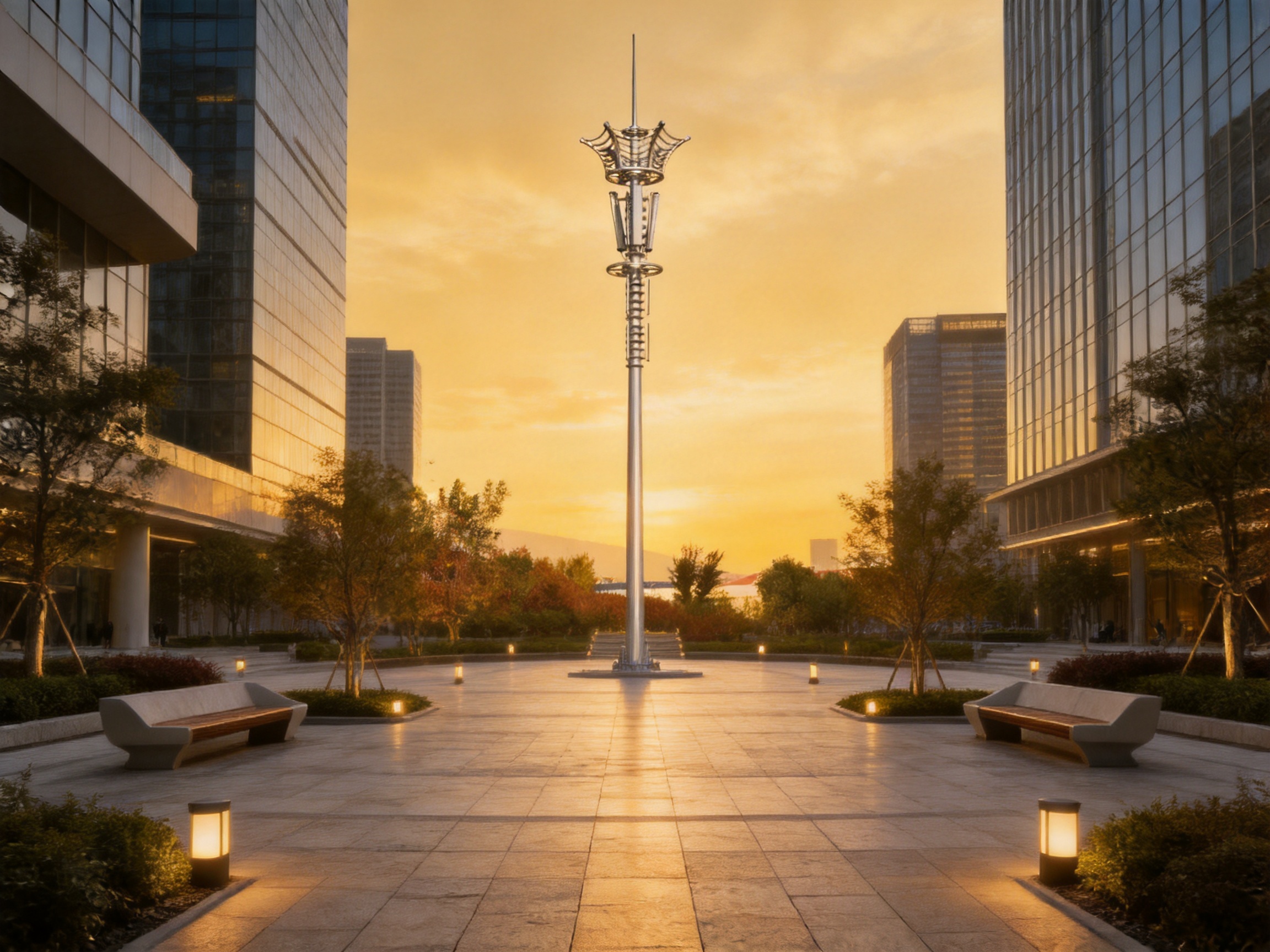
Dense urban centers often require additional communication capacity but have limited tolerance for visually intrusive structures. A crown-style tower can provide a dedicated communications location while contributing to the identity of a plaza, boulevard, redevelopment zone, or public-service district.
Its height can be selected according to surrounding buildings and coverage needs. The structure may be located within a landscaped setback, municipal space, transport area, or mixed-use development, subject to local approvals and engineering requirements.
9.2 Premium Scenic Areas
Scenic areas depend heavily on visual quality and visitor experience. A standard industrial tower may conflict with natural views, cultural themes, or carefully planned visitor routes. The crown design offers a more deliberate and potentially symbolic alternative.
In a scenic location, the structure can be coordinated with entrance architecture, viewing platforms, lighting schemes, cultural motifs, and landscape planting. Its role can extend beyond communications to become part of the destination’s visual memory.
9.3 Sports Venues
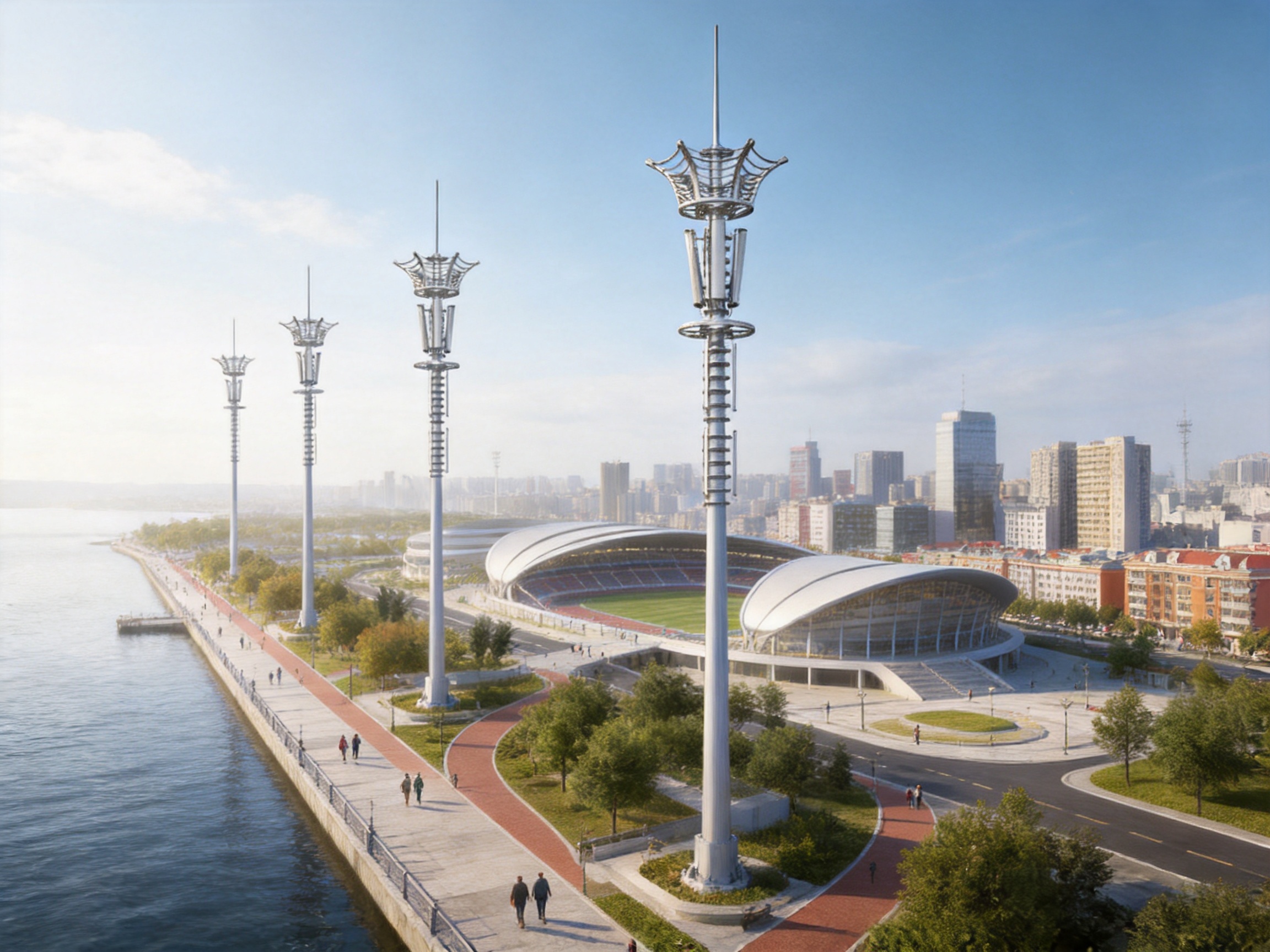
Large sports venues require reliable communications for spectators, event operators, security personnel, emergency services, media teams, and facility management. The Crown Style Landscape Ground-Mounted Communication Tower can support these requirements while complementing the ceremonial and energetic character of a stadium or sports complex.
Multiple towers may be coordinated around a venue if additional coverage points are needed. Consistent crown forms can create a unified visual language, while different heights may be selected for specific technical or site conditions.
9.4 High-Traffic Landscape Nodes
Road junctions, transit approaches, public squares, commercial entrances, and major pedestrian nodes often have high visibility. Infrastructure at these locations is seen by large numbers of people and can strongly influence the perceived quality of the surrounding development.
Using a landmark communication tower at an important node can turn a necessary facility into a recognizable orientation point. The tower may be integrated with lighting, paving, planting, signage, and other public-realm elements as permitted by the project design.
9.5 Smart-City Infrastructure
Smart-city systems depend on communication networks that support traffic management, environmental monitoring, public safety, data transmission, and connected services. As these systems expand, cities need more locations for communication equipment and network extension.
A visually integrated ground-mounted tower can support smart-city infrastructure without making every network point appear purely technical. Its decorative form may help cities establish a consistent visual standard for visible communication assets.
10. How the Product Supports Project Efficiency
Project efficiency begins before fabrication. When dimensions, material grades, crown proportions, equipment loads, color requirements, and foundation conditions are discussed early, the risk of redesign and delay is reduced. The company’s design support services help customers organize this information in a structured manner.
Manufacturing efficiency is also influenced by the availability of materials and equipment. Extensive material stock, CNC bending, high-accuracy cutting, automated lines, and experienced welding personnel create a production environment capable of supporting both customized and larger-scale requirements.
Quality control contributes directly to schedule reliability. A component that fits correctly the first time reduces rework, transport complications, and site adjustments. Consistent surface treatment reduces the chance of premature finishing problems. Clear drawings and installation guidance help the site team prepare the foundation and assembly process more effectively.
The product is therefore not only a decorative tower design. It is supported by a complete process that includes consultation, design, calculation, fabrication, finishing, quality control, delivery coordination, and installation guidance.
11. Quality, Standards, and International Project Support
The company reports that its products meet international quality standards including ISO9001, ISO14001, and OHSAS18001. These management systems relate to quality, environmental management, and occupational health and safety. For international projects, such systems can provide customers with greater confidence in production organization and documentation.
Quality management is especially important for a product that combines structural components with architectural appearance. Customers expect the tower to be safe, durable, dimensionally consistent, and visually aligned with approved drawings. A structured quality approach helps address these expectations throughout the production cycle.
Environmental management is also relevant to modern infrastructure projects. Automated production lines may improve efficiency and reduce avoidable waste, while organized material handling and surface-treatment procedures can support more responsible manufacturing operations.
International project experience can assist with communication across different technical expectations, documentation practices, delivery arrangements, and installation conditions. The company’s reported export experience in more than 200 countries reflects a broad international market presence.
12. Maintenance and Long-Term Appearance
As with any outdoor steel structure, long-term performance depends on appropriate design, surface protection, inspection, and maintenance. The tower should be reviewed periodically for coating condition, signs of corrosion, connection integrity, equipment attachments, access components, and environmental damage.
The crown section deserves particular attention because it is both visually prominent and exposed to outdoor conditions. Any damage to the surface finish should be addressed according to the applicable maintenance procedure. Keeping the crown clean and well maintained helps preserve the landmark quality of the installation.
Maintenance planning should be considered during the design stage. Access for inspection, equipment servicing, and potential replacement should be coordinated with the tower configuration. The communication equipment installed on the structure may also require periodic upgrades as network technology develops.
A durable tower is one that can accommodate operational change. The selected height, equipment arrangement, structural reserve, access method, and connection details should be reviewed with the intended network strategy and future maintenance needs in mind.
13. Recommended Project Development Process
Step One: Define the Site and Application
The customer should provide the proposed location, surrounding land use, desired communication function, approximate coverage objective, and any known planning restrictions. Photographs, site plans, nearby building information, and environmental data are useful during the initial review.
Step Two: Establish Height and Crown Proportion
The project team can then assess the appropriate total height between 10 and 50 meters and select a crown diameter between 2.4 and 3.6 meters. The objective is to balance technical coverage, visual scale, local regulations, and the relationship between the tower and its surroundings.
Step Three: Review Materials and Engineering Conditions
Material grades, wind conditions, equipment loads, foundation requirements, access needs, and applicable standards should be confirmed. Mechanical calculations for wind and foundation design can be coordinated at this stage.
Step Four: Develop CAD and 3D Simulations
CAD drawings and three-dimensional product models allow technical and visual review. Scene simulation can show the tower in its actual environment and support discussions among all project stakeholders.
Step Five: Confirm Finish and Custom Details
Customers can select the required color, surface finish, equipment arrangement, connection details, and other project-specific features. Confirmation at this stage helps prevent changes after fabrication begins.
Step Six: Manufacture and Inspect
Once the design is approved, material preparation, CNC bending, precision cutting, welding, surface treatment, and inspection are organized according to the production schedule. Quality checks should verify dimensions, welds, finish, component identification, and packaging readiness.
Step Seven: Coordinate Delivery and Installation
Transportation, foundation readiness, unloading, assembly, lifting, equipment installation, and site safety should be coordinated before shipment. Overseas installation guidance can assist contractors with the field process.
Step Eight: Complete Commissioning and Maintenance Planning
After installation, the tower and communications equipment should be inspected and commissioned. The owner should receive relevant drawings, maintenance information, and recommendations for periodic inspection.
14. Why Choose a Specialized Manufacturer
A specialized manufacturer offers more than fabrication capacity. It brings experience in materials, structural components, surface treatment, lighting infrastructure, communication structures, and project coordination. This broader knowledge can be valuable when the product must satisfy both technical and architectural expectations.
The company’s background in road illumination products and related outdoor infrastructure provides a foundation for manufacturing steel poles, lighting structures, decorative installations, and engineered components. Its large production site, professional technicians, automated equipment, and international export experience support the delivery of projects with varied requirements.
Another advantage is the ability to coordinate design and manufacturing under one organization. When CAD design, 3D simulation, mechanical calculation, material preparation, fabrication, finishing, and installation guidance are connected, communication gaps can be reduced. Customers can discuss the complete project rather than managing every part through unrelated suppliers.
The combination of manufacturing scale and customization is also important. Large facilities can support efficient production, while engineering and design resources make it possible to adapt the product to different environments. This balance helps customers obtain a landmark structure without accepting the limitations of a purely standard product.
15. Environmental and Aesthetic Responsibility
Infrastructure should be evaluated not only by what it does but also by how it affects the places where people live, work, travel, and gather. A communication tower that respects its environment can contribute to a more coherent public realm.
The crown design provides an opportunity to express local identity, project ambition, or cultural character. Although the product is based on a broadly recognizable royal crown form, its final color, surroundings, lighting integration, and landscape treatment can be selected to suit the local context.
Responsible design also means avoiding unnecessary visual conflict. The tower should be scaled correctly, placed carefully, and coordinated with nearby structures. Three-dimensional scene simulation can help identify potential issues before construction, including excessive visual dominance, poor sightline relationships, or conflicts with landscape elements.
Environmental responsibility extends to manufacturing. Efficient automated production, accurate material use, organized processes, and appropriate surface treatment can help reduce waste and improve resource use. The reported ISO14001 environmental management certification provides additional context for the company’s approach to environmental management.
16. Return on Infrastructure Investment
The economic value of a communication tower is normally measured through network coverage, capacity, service availability, and operational usefulness. A landscape communication tower adds another layer of value through visual enhancement and place identity.
In a premium development, the cost of a visible structure should be considered in relation to the overall value of the site. A generic tower may require additional screening, concealment, or landscape treatment. A crown-style tower can reduce the need to disguise the structure by making its appearance intentional from the beginning.
For public projects, a landmark tower may support civic identity and improve the presentation of an important urban space. For commercial or tourism projects, it may strengthen the distinctiveness of the destination. For sports venues, it may complement branding and event architecture while performing a necessary technical role.
The strongest value is achieved when the tower is planned as part of the complete site concept. Its communications function, landscape role, maintenance access, lighting integration, and visual relationship with surrounding buildings should be considered together.
17. Frequently Asked Questions
Q1: What is the primary purpose of the Crown Style Landscape Ground-Mounted Communication Tower?
Its primary purpose is to provide a stable elevated carrier for telecommunications equipment while presenting a more attractive and landmark-oriented appearance than a conventional industrial tower. It is designed for functional communication support and visual integration in urban and public environments.
Q2: What are the available overall tower heights?
The overall tower height can range from 10 meters to 50 meters. The final height should be selected according to communication requirements, site conditions, surrounding structures, wind conditions, planning considerations, and visual proportions.
Q3: What is the size of the crown section?
The crown diameter ranges from 2.4 meters to 3.6 meters, while the crown height is 4 meters. These dimensions provide flexibility for matching the crown to the total tower height and the scale of the installation site.
Q4: Can the tower be customized?
Yes. Customization may include overall height, crown diameter, material selection, color, finish, structural details, equipment arrangement, and other project specifications. CAD design, 3D product simulation, and 3D scene simulation are available to support the customization process.
Q5: Which materials can be used?
Available material options include Q235B, Q345B, S275JR, S355JR, Q460, A36, A572, GR56, GR50, and other grades according to project requirements. The final material should be confirmed through engineering calculations, local standards, and customer specifications.
Q6: Is structural calculation available?
Mechanical calculation support is available for wind and foundation conditions. The calculation should consider tower height, crown geometry, communication equipment, local environmental loads, soil conditions, and applicable design requirements.
Q7: Where is this product most suitable?
It is suitable for urban centers, premium scenic areas, sports venues, commercial developments, public plazas, smart-city locations, transportation areas, and other high-traffic landscape nodes where communication infrastructure must coexist with a high-quality visual environment.
Q8: How does it differ from an ordinary communication tower?
An ordinary communication tower generally focuses on structural and communications functions with limited emphasis on architectural appearance. The crown-style product combines those functions with a distinctive landmark design, customizable proportions, color options, 3D visualization, and landscape integration.
Q9: What manufacturing processes support product quality?
The manufacturing resources include stocked structural materials, CNC bending, high-accuracy cutting, automated welding and cutting lines, powder electrostatic painting equipment, experienced certified welders, and large-scale production facilities. These processes support dimensional accuracy, structural consistency, surface quality, and production efficiency.
Q10: Is installation assistance available for international projects?
Overseas onsite installation guidance is available. Customers can coordinate assembly, foundation interfaces, component identification, installation sequencing, and other field requirements with the manufacturer.
Q11: Can the tower be used in a smart-city project?
Yes. Its communication carrier function makes it suitable for network infrastructure supporting smart transportation, public safety, connected services, environmental monitoring, and other communication-dependent systems. The decorative form can also help smart-city infrastructure integrate more effectively into public spaces.
Q12: What should customers prepare before requesting a quotation?
Customers should ideally provide the installation location, required height, intended communication equipment, local wind information, preferred material or standard, finish requirements, site photographs, foundation information, delivery destination, and any design or approval requirements. The more complete the initial information, the more efficiently the manufacturer can prepare a suitable proposal.
18. Conclusion
The Crown Style Landscape Ground-Mounted Communication Tower represents a different approach to visible telecommunications infrastructure. It does not treat communication equipment as an isolated technical object. Instead, it combines network support, structural engineering, architectural form, landscape integration, and landmark value in one coordinated product.
Its crown-inspired design provides an expressive alternative to conventional towers. The available height range of 10 to 50 meters and crown diameter range of 2.4 to 3.6 meters allow the product to adapt to different sites. Material options, mechanical calculation support, CAD design, 3D visualization, color customization, and installation guidance further improve its suitability for customized projects.
The manufacturing foundation is equally important. Extensive material availability, CNC bending, precision cutting, automated production lines, powder electrostatic painting equipment, certified welders, professional technicians, and international project experience support reliable delivery from concept to installation.
For urban centers, scenic destinations, sports venues, smart-city developments, and other high-visibility environments, the product offers more than a place to mount communication equipment. It provides an opportunity to turn necessary infrastructure into a meaningful part of the public landscape. By balancing function, safety, manufacturing precision, and visual identity, the Crown Style Landscape Ground-Mounted Communication Tower offers a compelling solution for cities and developments that expect their infrastructure to perform well and look appropriate in the places it serves.
References
1. Product specification and application information for the Crown Style Landscape Ground-Mounted Communication Tower.
2. Manufacturer-provided information regarding material options, production equipment, design services, and installation guidance.
3. Manufacturer-provided company profile concerning production capacity, technical personnel, export experience, and quality management systems.
4. General principles of structural steel design, outdoor corrosion protection, tower engineering, and foundation coordination.
5. General principles of urban landscape integration and visual planning for telecommunications infrastructure.