


JINYUAN
JINYUAN
JINYUAN
JINYUAN
JINYUAN
JINYUAN
JINYUAN
JINYUAN
JINYUAN
JINYUAN
JINYUAN
JINYUAN
JINYUAN
JINYUAN
JINYUAN
JINYUAN
Content
- 1 Purpose-Built for Urban and Industrial Road Applications
- 2 Core Product Advantages
- 3 Engineering Design for Long-Term Reliability
- 4 Modular Maintenance and Reduced Lifecycle Cost
- 5 Advanced Manufacturing Capability
- 6 Design and Engineering Services for Project Customization
- 7 Why This System Can Outperform Conventional Alternatives
- 8 Recommended Project Selection Process
- 9 Technical Specification Overview
- 10 Quality Assurance and Company Strengths
- 11 Installation and Maintenance Recommendations
- 12 Q&A
- 12.1 What is a double-arm LED street light?
- 12.2 Where is this product most suitable?
- 12.3 What is the luminous efficiency of the luminaire?
- 12.4 Can the light be dimmed?
- 12.5 What color temperatures are available?
- 12.6 Can the product operate in extreme climates?
- 12.7 What pole heights are available?
- 12.8 What materials can be used for the pole?
- 12.9 How does the modular design simplify maintenance?
- 12.10 What protection rating does the luminaire have?
- 12.11 Does the manufacturer support customized designs?
- 12.12 What quality systems support production?
- 12.13 What warranty is provided?
- 12.14 Can the system be used in smart-city projects?
- 13 Conclusion
- 14 References
- 15 Product: High-Performance Double-Arm LED Street Light
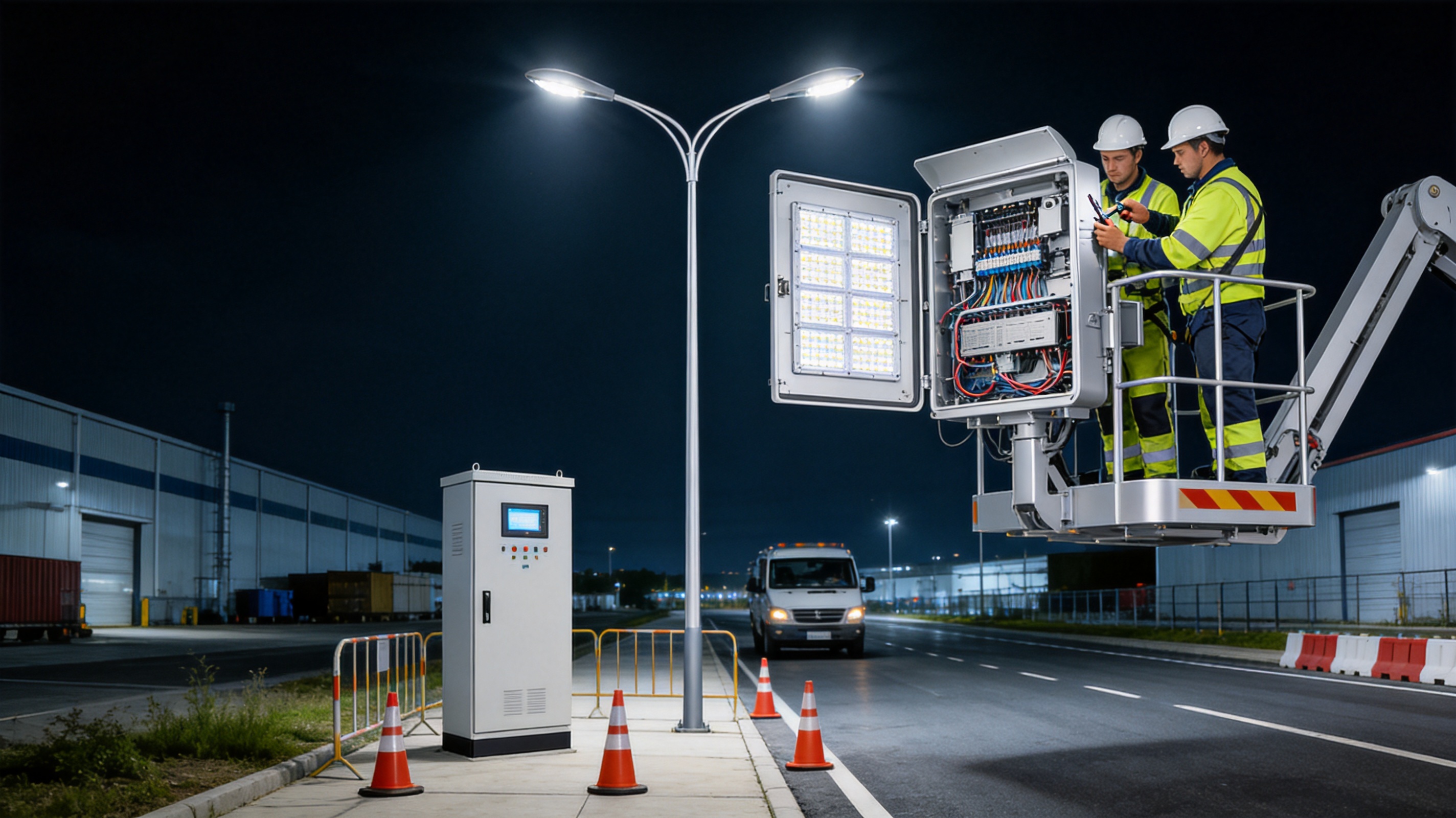
Modern road infrastructure requires lighting systems that do far more than provide basic visibility. Urban arterial roads, industrial park routes, commercial districts, transport corridors, and large intersections all demand lighting that is reliable, efficient, structurally sound, visually consistent, and practical to maintain. The High-Performance Double-Arm LED Street Light is designed to meet these requirements through a combination of high-efficiency LED technology, robust structural materials, precision light distribution, flexible configuration, and advanced manufacturing processes.
Double-arm street lighting is particularly valuable where a broad roadway, divided carriageway, central median, or large public space must be illuminated from a coordinated structure. Instead of treating each side of a road as an independent lighting problem, a double-arm system can provide balanced illumination across two directions or two adjacent areas. This approach may reduce visual clutter, support consistent pole spacing, and create a more unified streetscape.
The product is engineered for demanding outdoor conditions. Its aluminum alloy lamp housing, corrosion-resistant surface treatment, IP65 protection, wide operating temperature range, and high luminous efficiency allow it to perform in climates that range from severe cold to intense heat. The pole can be supplied in several structural steel grades and heights, enabling the lighting system to be adapted to different road widths, wind conditions, foundation designs, and project specifications.
More importantly, the product is not limited to a single standard configuration. Its modular architecture supports rapid replacement of driver units and LED light boards, while dimming compatibility enables integration with energy-management and smart-city systems. For public authorities, contractors, developers, and infrastructure owners, this combination of performance and serviceability can deliver stronger long-term value than conventional street lighting products that are difficult to repair or inefficient to operate.
Purpose-Built for Urban and Industrial Road Applications
The double-arm LED street light is intended for locations where illumination quality, structural durability, and visual presentation are equally important. Typical applications include urban arterial roads, industrial park avenues, commercial landscapes, broad intersections, divided highways within cities, logistics areas, municipal routes, and large-scale development projects.
On an arterial road, lighting must help drivers identify lane boundaries, vehicles, pedestrians, junctions, traffic islands, and roadside obstacles. Uneven illumination can create alternating bright and dark areas that make it harder for the human eye to adapt. Excessive glare can also reduce visual comfort and obscure hazards. The product addresses these concerns through LED modules paired with precision-engineered lenses that distribute light over a broad and controlled area.
Industrial parks often contain long roads with heavy vehicles, loading zones, access gates, warehouses, and turning areas. These environments require a lighting system capable of operating for extended periods under dust, vibration, weather changes, and frequent vehicle movement. A high-strength pole and protected luminaire help support reliable operation, while the double-arm configuration can illuminate both directions of a wide road or provide coverage for a central median arrangement.
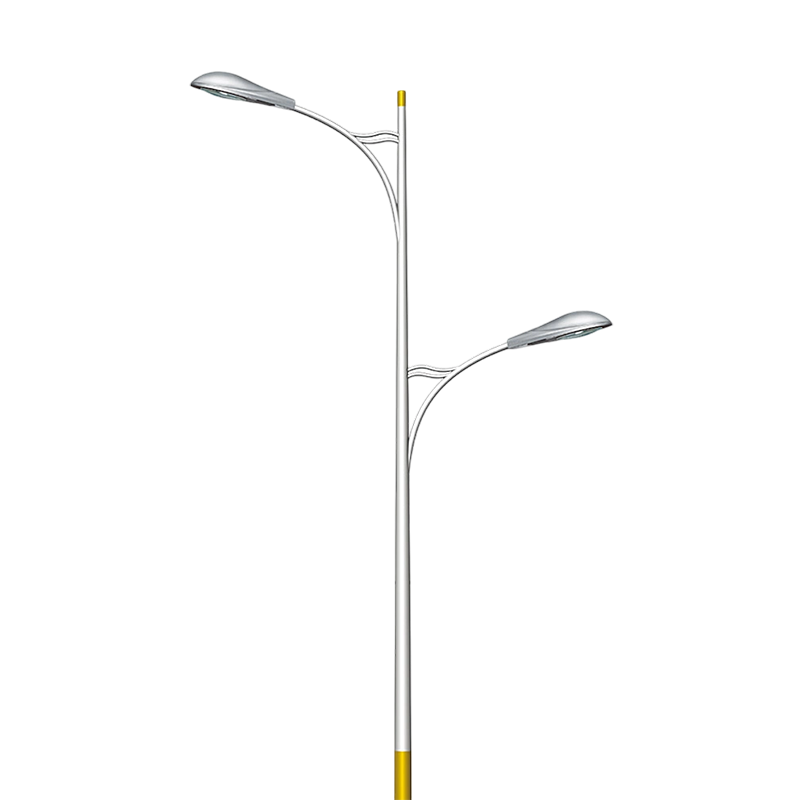
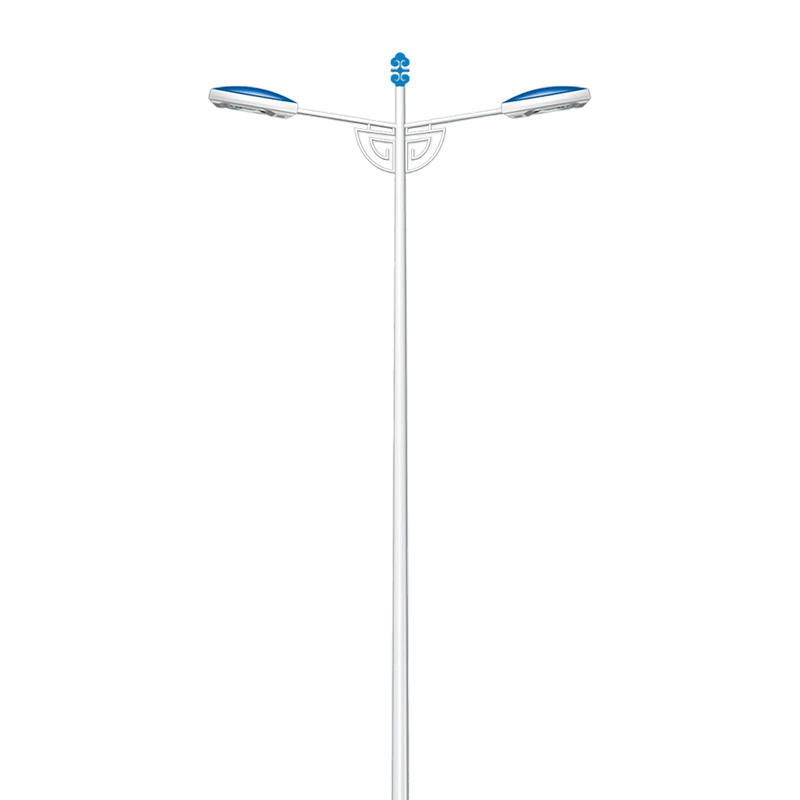
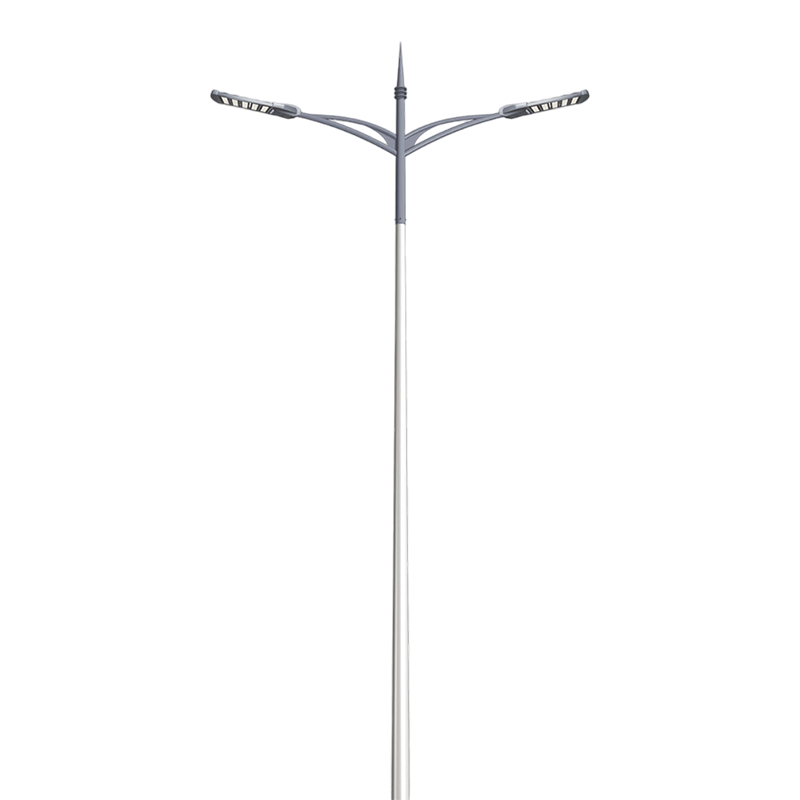
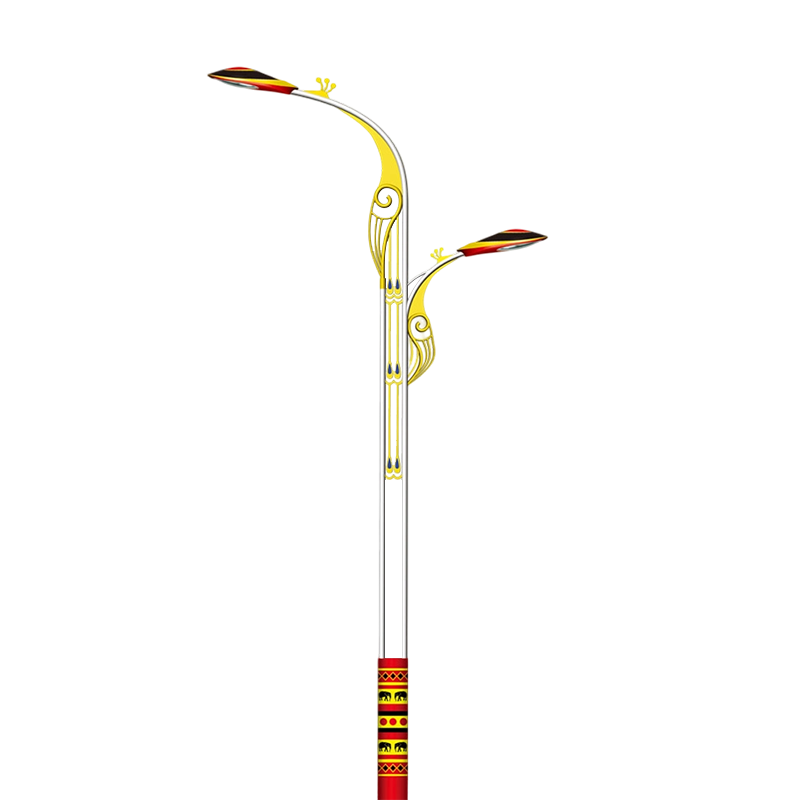
In commercial and civic landscapes, functionality must be combined with an attractive appearance. A street light may become a highly visible part of the public realm, especially along boulevards, entrances, pedestrian-oriented districts, and landmark developments. The system can be supplied in forms ranging from minimalist geometric designs to more streamlined and artistic structures, allowing the lighting installation to complement surrounding architecture rather than appear as an isolated utility asset.
Core Product Advantages
Balanced Illumination from a Double-Arm Configuration
The defining feature of this system is its double-arm structure. Two luminaires can be positioned to serve opposite sides of a road, two carriageways, a broad median, or a large open area. This arrangement supports a balanced visual rhythm and can help reduce the number of separate poles required for certain layouts.
Compared with single-arm products installed independently on both sides of a roadway, a double-arm system may provide a more coordinated appearance and simplify the design of a divided road. The final pole spacing and mounting arrangement should always be determined through a professional lighting simulation and structural calculation, but the basic configuration offers considerable flexibility for large-area road illumination.
Double-arm lighting can also be useful where the road reserve is limited or where the project owner wants to minimize obstacles near sidewalks, drainage channels, property boundaries, or roadside landscaping. By serving two directions from one structural position, the system can support efficient use of the available right-of-way.
High-Efficiency LED Performance
The luminaire is specified with a luminous efficiency of up to 140 lm/W. This high efficacy allows the system to produce substantial light output while using less electricity than older low-efficiency lighting technologies. Over a long operating life, energy savings can become a major part of the total economic benefit, particularly for municipalities and industrial operators that manage extensive road networks.
LED technology also provides important operational advantages. LED modules reach useful brightness immediately, support frequent switching, and can be controlled through dimming systems. Unlike traditional lamps that may require warm-up time or depend on consumable bulbs, LED light sources are designed as integrated, long-life modules. The result is more predictable illumination and fewer routine lamp replacement tasks.
The stated product specification includes a color temperature range from 3000K to 6000K. This allows project planners to select a warmer appearance for pedestrian-friendly commercial areas or a cooler appearance for roads where crisp visual definition is desired. The color rendering index is specified at Ra 70, supporting the recognition of common objects, vehicles, road markings, and environmental features.
Uniform Light Distribution
High output alone does not guarantee a good road-lighting result. The distribution of light across the pavement is equally important. The system uses precision-engineered lenses to spread illumination over the required area and reduce the formation of concentrated bright spots. A more uniform distribution can help limit dark patches between poles and improve the consistency of visual conditions for drivers and pedestrians.
Uniformity is especially important on roads with curves, junctions, merging lanes, bus stops, pedestrian crossings, and changing traffic patterns. A well-designed optical system can help maintain visibility across these locations while reducing unnecessary light spill toward nearby buildings or properties. The exact optical distribution should be selected according to road geometry, mounting height, pole spacing, lane width, and local lighting standards.
Compared with basic flood-style luminaires that distribute light without adequate roadway control, precision road-lighting optics can offer a more efficient use of every watt. Light is directed toward the task area instead of being wasted above the horizon or in locations where it provides little practical benefit.
Durable Materials and Corrosion Protection
The lamp housing is made from aluminum alloy, a material widely used in professional outdoor luminaires because it combines low weight, good thermal conductivity, and resistance to environmental exposure. Efficient heat dissipation is essential for LED performance because excessive internal temperature can shorten the service life of electronic components and reduce long-term reliability.
The product is designed with a multi-layer anti-corrosion coating system. This treatment provides an additional barrier against moisture, salt-laden air, industrial pollutants, and general outdoor weathering. It is especially relevant for coastal locations, ports, industrial parks, and regions with high humidity or large seasonal temperature changes.
The operating temperature range is specified from -35°C to 65°C. This broad range supports deployment in both cold and hot climates, provided the complete project design accounts for local environmental conditions, solar exposure, wind loading, and installation requirements. The IP65 rating provides protection against dust ingress and water jets from various directions, making the luminaire suitable for exposed road and outdoor applications.
The pole can be produced using materials such as Q235, Q355, SS400, GR65, and other grades according to project requirements. These options allow engineers to select an appropriate balance of strength, weight, availability, fabrication characteristics, and cost. The correct material and wall thickness should be confirmed through structural calculations rather than selected solely by appearance or nominal height.
Wide Compatibility with Power and Control Systems
The input voltage range of AC85-265V makes the product compatible with a broad range of grid conditions. This flexibility is useful for export projects and for regions where voltage stability may vary. Project engineers should still verify local electrical regulations, protection requirements, earthing arrangements, surge protection, and connection standards before installation.
The system supports DC 0-10V and DALI dimming. These control options allow the street light to be incorporated into projects that use scheduled dimming, central management, energy monitoring, or adaptive lighting strategies. For example, a roadway may operate at a higher output during peak traffic periods and reduce output during low-traffic hours, subject to local safety requirements and the approved lighting design.
Dimming can improve energy efficiency beyond the savings delivered by high-efficiency LEDs alone. It can also support more responsive municipal operations. When connected to suitable control equipment, the lighting network may be managed according to time, traffic volume, weather, special events, or maintenance status. The product therefore provides a practical foundation for future smart-lighting upgrades without requiring immediate adoption of the most complex control architecture.
Engineering Design for Long-Term Reliability
Structural Stability and Wind Considerations
A street light pole is a structural element exposed to wind, rain, temperature changes, vibration, and occasional impact risks. For this reason, product quality depends not only on the luminaire but also on the pole design, arm geometry, connection details, base plate, anchor bolts, foundation, and installation method.
The company provides mechanical calculation services covering wind and foundation considerations. These services can help project teams evaluate the relationship between pole height, luminaire area, arm length, local wind speed, soil conditions, and foundation dimensions. Such engineering support is particularly valuable for high-exposure sites, coastal areas, open industrial zones, and projects with unusual double-arm geometries.
Available pole heights range from 6 m to 10 m. This range covers many urban and industrial road applications, although the final height should be chosen according to the road width, required mounting arrangement, photometric performance, setback distance, and local regulations. A taller pole is not automatically better; the best solution is the one that achieves the required illumination and uniformity with a structurally appropriate and economically efficient design.
Thermal Management
LED performance depends heavily on thermal management. The LED chips, driver, circuit boards, seals, and internal connections must operate within suitable temperature limits. The aluminum alloy housing assists heat transfer from internal components to the surrounding air. A properly designed housing can reduce thermal stress and contribute to stable light output over time.
Thermal performance is also influenced by installation conditions. The luminaire should not be obstructed by nearby structures, excessive dirt, or unauthorized modifications that prevent heat from leaving the housing. Routine inspection should confirm that ventilation paths, mounting surfaces, and electrical connections remain in good condition.
Protection Against Outdoor Exposure
Road lights are exposed to rain, dust, airborne particles, ultraviolet radiation, insects, and pollutants. The IP65 rating indicates that the luminaire is designed for protection against dust and water jets, but proper installation remains essential. Cable glands, access covers, gaskets, connectors, and pole entry points must be correctly fitted to preserve the intended level of protection.
The anti-corrosion finish is another important part of the system. Surface preparation, coating thickness, curing, edge coverage, and inspection all influence how effectively the finish protects the underlying metal. A consistent coating process can reduce early deterioration and maintain the visual quality of the installation for a longer period.
For highly corrosive marine or chemical environments, the project should specify an appropriate coating system and inspection standard in advance. Material selection, fastener grade, drainage design, and maintenance planning should be considered together rather than treated as separate details.
Modular Maintenance and Reduced Lifecycle Cost
One of the system’s strongest advantages over many conventional street lights is its modular, tool-free maintenance concept. The LED driver unit and light board can be replaced rapidly, reducing the time required for field service. Maintenance personnel can avoid replacing the entire luminaire when only one serviceable module has reached the end of its useful life or has been affected by an electrical fault.
Fast replacement can reduce road occupation time and minimize disruption to traffic. This is especially important on busy arterial routes, where maintenance crews may need traffic management, temporary barriers, lane closures, or night work permits. A modular design helps make planned maintenance more predictable and may lower labor costs across the life of the installation.
Conventional systems often involve more extensive disassembly or require replacement of complete assemblies. In some cases, obsolete components may be difficult to obtain, creating long delays and unnecessary material waste. A modular approach gives project owners greater flexibility in stocking replacement drivers or LED boards and may help extend the useful life of the overall luminaire body.
Maintenance planning should still include regular inspection of pole foundations, anchor bolts, arm connections, wiring, surge protection, coatings, gaskets, and control equipment. Modular servicing is most effective when supported by accurate product records, accessible spare parts, clear maintenance procedures, and trained technicians.
The five-year warranty period provides additional assurance for project owners and contractors. Warranty conditions should be reviewed carefully, including requirements for installation, electrical protection, environmental limitations, maintenance, and documentation. A clear warranty framework supports better risk management during the early operating years of a major lighting project.
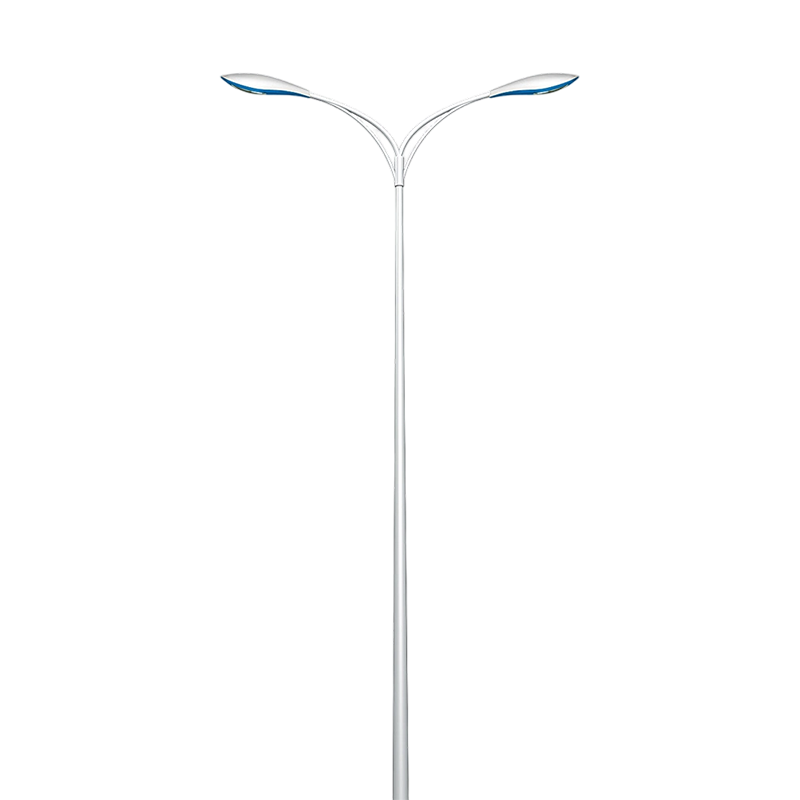
High-Performance Double-Arm LED Street Light
Advanced Manufacturing Capability
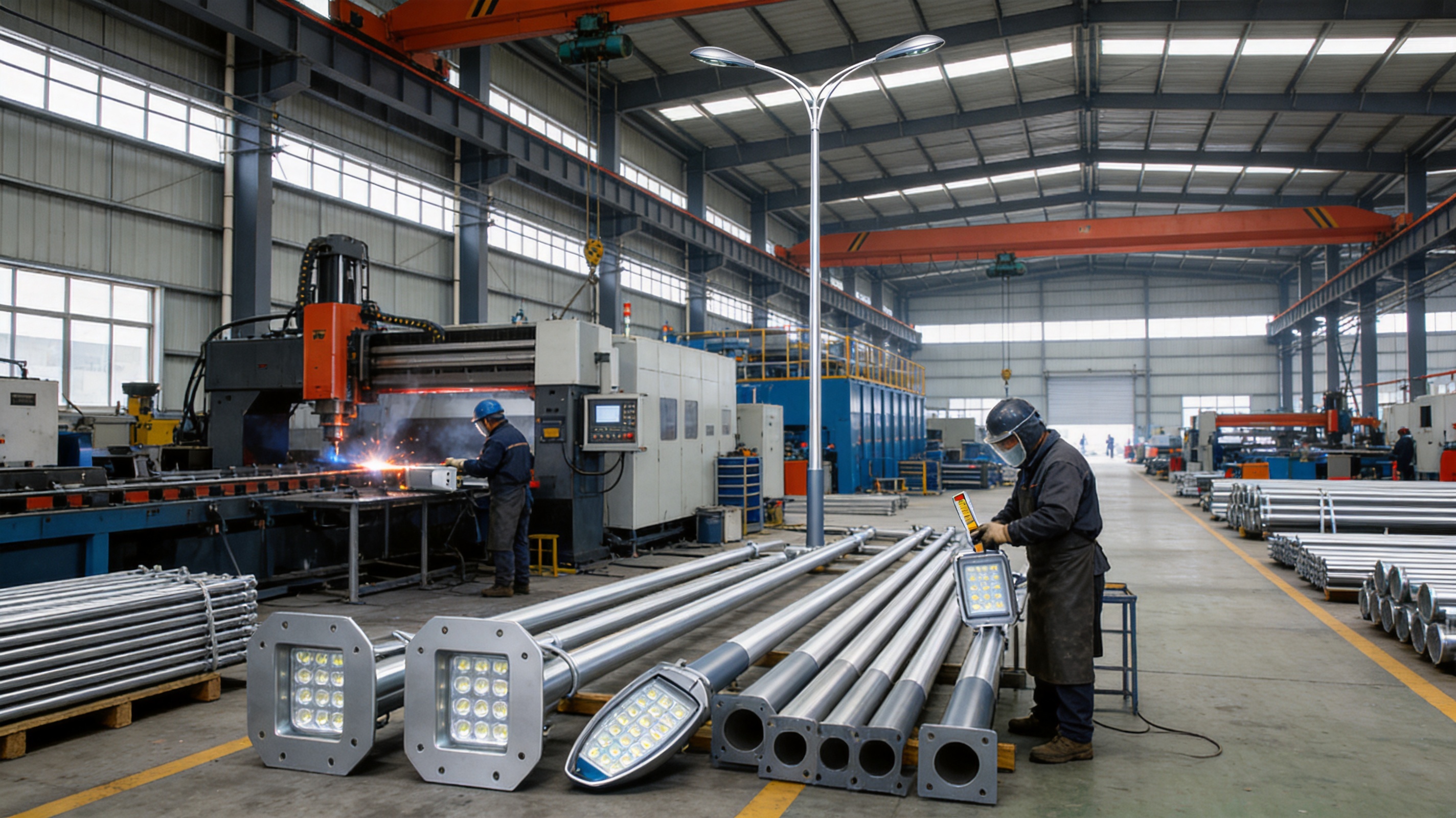
The quality of an outdoor lighting system is closely connected to the quality of the manufacturing process. Strong specifications can be undermined by inconsistent cutting, poor welding, inaccurate bending, uneven coating, weak component control, or inadequate final inspection. The manufacturer behind this product combines material availability, precision fabrication, automated equipment, experienced personnel, and project-oriented engineering support.
Material Selection and Inventory Control
The production operation can work with a broad range of structural materials, including Q235B, Q345B, S275JR, S355JR, Q460, A36, A572, GR56, and GR50, among others. This flexibility is useful for international projects because different regions and consultants may specify different material standards.
Maintaining an extensive material inventory can reduce procurement delays and support faster production scheduling. It also allows the factory to respond more effectively to customized pole designs, different wall thicknesses, arm configurations, and project-specific structural requirements. Material certificates and traceability records should be managed as part of the quality system so that the selected steel grades can be verified before fabrication.
Using suitable material from the beginning creates a stable foundation for the finished product. It supports predictable welding behavior, bending performance, load-bearing capacity, and coating adhesion. Material control is therefore not merely a purchasing function; it is an essential part of product reliability.
Precision CNC Bending
Street light poles and double-arm structures often include tapered sections, curved arms, offset components, and connection surfaces that must align accurately. CNC bending equipment provides repeatable forming results and helps maintain consistent geometry across production batches.
Precise bending improves structural integrity because it reduces unnecessary deformation, uneven stress concentration, and post-production correction. It also helps ensure that arms, brackets, access doors, base plates, and connected components fit correctly during assembly. For a project involving hundreds or thousands of poles, repeatability is particularly important because small dimensional variations can create significant installation problems when multiplied across the site.
High-Accuracy Cutting
The manufacturing process is described as providing cutting accuracy of up to 0.01 mm. Such precision supports exact dimensions and clean edges in the prepared components. Accurate cutting can improve the fit of plates, stiffeners, brackets, covers, and other structural parts while reducing the need for grinding, trimming, or adjustment after fabrication.
Clean edges also contribute to better coating quality. Sharp burrs and irregular edges can create weak points where corrosion begins or where workers may be exposed to avoidable handling risks. Controlled cutting and appropriate edge treatment help create a smoother surface for subsequent welding and finishing operations.
Automated Welding and Skilled Welders
Welding is a critical manufacturing stage for poles, arms, access structures, flanges, stiffeners, and other load-bearing parts. Automated welding lines can provide stable process parameters and consistent production speed, while certified and experienced welders contribute the judgment required for complex assemblies, transitions, repairs, and customized designs.
A combination of automation and skilled workmanship offers a practical balance. Automated systems are effective for repeatable welds and high-volume production. Experienced welders are essential when a product includes non-standard dimensions, special reinforcement, unusual arm geometry, or a customer-specific design. Together, these capabilities can support both efficiency and quality control.
Weld inspection should include visual checks and, where required by the project, additional non-destructive testing or dimensional verification. Proper welding procedures help reduce the risk of cracks, incomplete fusion, porosity, distortion, and premature structural failure. This is particularly important for double-arm poles because the arm connections experience combined wind and equipment loads.
Powder Electrostatic Painting and Corrosion Resistance
The company uses powder electrostatic painting equipment as part of its finishing capability. Electrostatic powder coating can provide a uniform and durable finish when the underlying surface has been properly cleaned, prepared, and treated. The process helps create a consistent appearance across large numbers of poles and luminaires.
Corrosion protection depends on the complete finishing sequence. Surface preparation removes contaminants and improves adhesion. Controlled application supports even coverage, while appropriate curing develops the required hardness and durability. Inspection should focus on coating thickness, adhesion, color consistency, edge coverage, and visible defects.
A durable coating extends the service interval and protects the appearance of the street-lighting installation. It may also reduce the frequency of repainting, roadside repair, and replacement caused by premature corrosion. This benefit becomes more significant in areas with high humidity, salt exposure, industrial emissions, or aggressive seasonal weather.
Die-Casting and Luminaire Production
A 1250-ton die-casting machine is included among the company’s advanced manufacturing equipment. Die-casting capability supports the production of accurate aluminum components with repeatable dimensions and complex shapes. For LED luminaires, this can assist in manufacturing housings, heat-dissipation structures, mounting interfaces, and other components that require controlled geometry.
Consistent die-cast parts can improve assembly accuracy and help maintain reliable contact between the housing, thermal surfaces, seals, and electrical modules. The process can also reduce the need for extensive secondary machining, supporting faster production and more consistent product quality.
High-capacity equipment is especially valuable for large-scale infrastructure projects. It enables the manufacturer to support substantial order volumes while maintaining controlled production procedures. The result is a stronger capacity to meet delivery schedules without sacrificing the repeatability expected from a professional lighting supplier.
Design and Engineering Services for Project Customization
Road-lighting projects rarely use a single universal specification. Road width, pole spacing, mounting height, wind speed, foundation conditions, architectural requirements, control systems, and local regulations can differ significantly from one project to another. The manufacturer therefore offers design and engineering support from initial consultation through project completion.
CAD Design
CAD design enables the project team to review pole dimensions, arm geometry, mounting positions, access doors, base plates, and connection details before production. This reduces ambiguity and makes it easier to identify potential installation or transportation issues at an early stage.
Two-dimensional drawings can also support tender documents, approval submissions, structural review, bill-of-material preparation, and coordination with civil and electrical contractors. When design changes are required, digital drawings allow them to be evaluated more efficiently than repeated physical prototypes.
Three-Dimensional Product Simulation
Three-dimensional product simulation provides a more complete view of the proposed lighting structure. Customers can review the relationship between the pole, double arms, luminaires, brackets, and surrounding equipment. This is useful for identifying clearance concerns, access requirements, proportions, and visual balance.
For architectural or commercial projects, a 3D model can help stakeholders understand how the selected design will appear in the built environment. It also supports communication between lighting designers, civil engineers, architects, procurement teams, and end users who may not work directly with technical drawings every day.
Scene Simulation and Lighting Presentation
Three-dimensional scene simulation can place the proposed product within a representative road, boulevard, industrial park, or commercial landscape. This allows the project owner to evaluate the visual relationship between the poles, road alignment, landscaping, buildings, and other street furniture.
Scene-based review is especially useful when aesthetics are a major consideration. The double-arm structure can be customized to create a contemporary, minimalist, or more decorative appearance. The final result should balance visual design with optical performance, wind resistance, maintenance access, manufacturing feasibility, and total cost.
Specification and Color Customization
Customization may include pole height, arm length, luminaire power, color temperature, coating color, bracket design, access-door arrangement, control interface, and material grade. This flexibility enables the product to meet the visual identity of a development or the technical requirements of a municipal standard.
Color selection is not merely decorative. A suitable coating color can help the pole integrate with surrounding architecture, reduce visual contrast, or reinforce a city’s streetscape guidelines. The selected finish should be documented clearly so that replacement components and future expansion areas maintain a consistent appearance.
Overseas Installation Guidance
International projects often involve different construction practices, electrical standards, transportation conditions, and local labor arrangements. Overseas onsite installation guidance can help contractors understand assembly procedures, foundation interfaces, arm mounting, luminaire orientation, wiring, control connections, and commissioning requirements.
Clear installation guidance reduces the risk of incorrect assembly and helps ensure that the finished system performs according to its design intent. It can also support coordination between the manufacturer, local distributor, supervising engineer, and installation contractor.
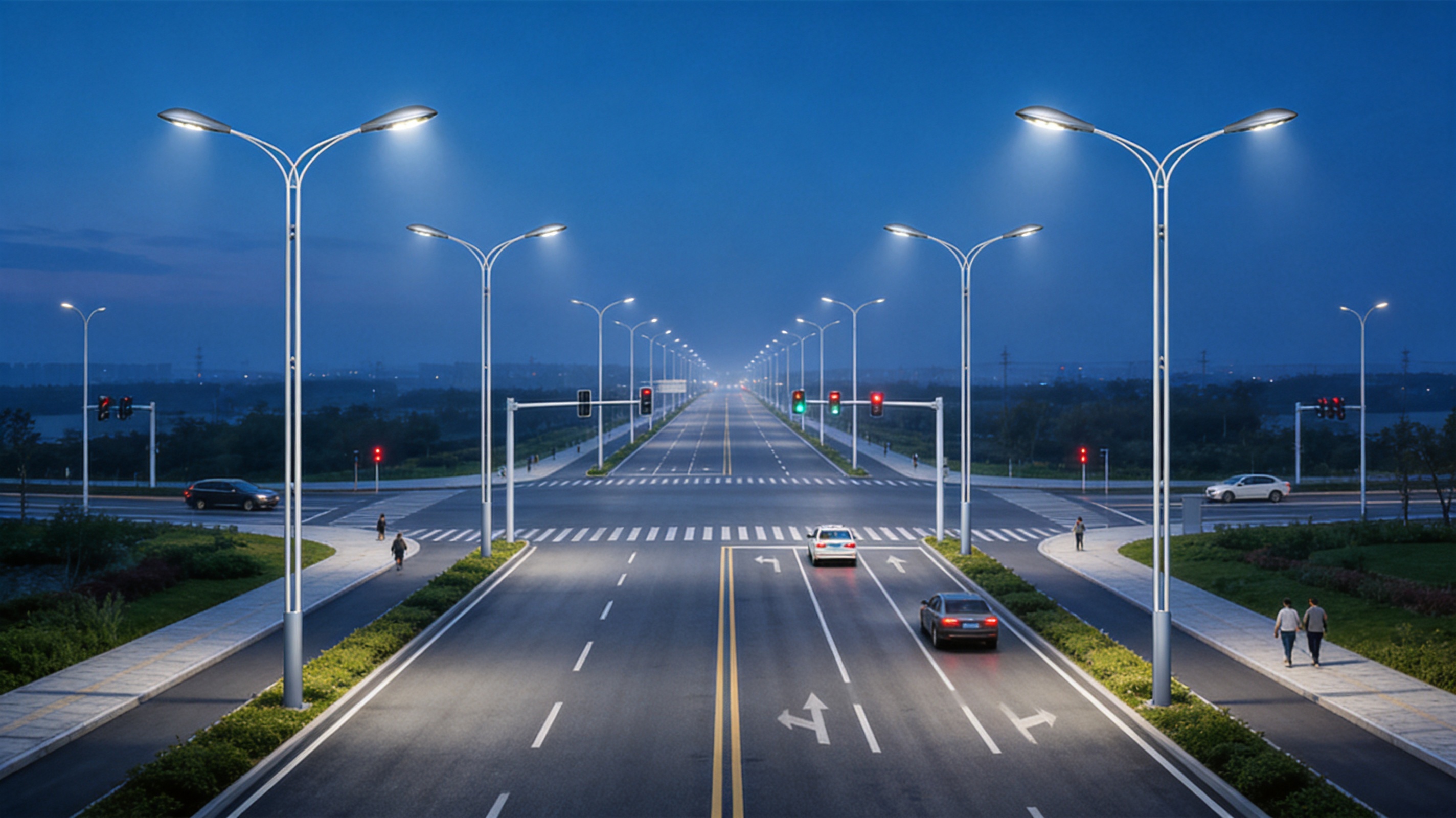
Why This System Can Outperform Conventional Alternatives
The product’s competitive advantages are most apparent when the entire lifecycle is considered rather than only the purchase price. Conventional street lights may offer a lower initial cost but require more energy, more frequent service, or more extensive replacement work. A high-performance LED system can provide a stronger balance between acquisition cost, operating cost, safety, appearance, and maintainability.
Compared with Traditional Discharge Lighting
Traditional high-intensity discharge lamps may consume more energy for a comparable practical lighting result, require periodic lamp replacement, and provide less flexible control. Their light output may also change over time, and their warm-up or restrike behavior can be less suitable for modern adaptive lighting strategies.
The LED system provides immediate operation, high luminous efficiency, dimming support, and modular serviceability. It also allows the optical system to be designed more precisely for roadway applications. These characteristics can improve both operating efficiency and maintenance planning.
Compared with Basic Single-Arm Solutions
Single-arm poles remain suitable for many roads, but they may require separate installations on opposite sides of a divided roadway or broad carriageway. A double-arm solution can create a more coordinated arrangement and may reduce the number of structural positions needed in specific layouts.
Using one pole for two lighting directions can also support a cleaner visual rhythm. It may simplify median planning and reduce the amount of roadside infrastructure, although final project economics depend on foundation design, pole spacing, road geometry, transportation, and installation conditions.
Compared with Non-Modular LED Fixtures
Some LED fixtures are designed as sealed or non-serviceable units that must be replaced completely if the driver or light board fails. This can increase spare-part costs and create unnecessary waste. The modular design of this product allows key components to be replaced more efficiently.
Tool-free access and replaceable modules can shorten maintenance operations. The fixture body, mounting structure, and other usable components can remain in service, reducing the need for complete unit disposal. This supports a more resource-efficient approach to infrastructure maintenance.
Compared with Poorly Controlled Manufacturing
Inconsistent fabrication can lead to misaligned arms, uneven pole dimensions, weak welds, poor coating coverage, and installation difficulties. The manufacturer’s combination of CNC bending, high-accuracy cutting, automated welding, skilled welders, powder coating equipment, and die-casting capability helps address these risks.
Production capability is particularly important for customized projects. A supplier that can design, fabricate, finish, inspect, and support installation within an integrated operation is better positioned to maintain consistency from the first drawing to the final delivered product.
Recommended Project Selection Process
A successful installation begins with an accurate understanding of the site. The project team should document road width, number of lanes, median dimensions, sidewalk locations, pole setbacks, intersections, pedestrian activity, nearby buildings, overhead obstructions, environmental exposure, and available electrical infrastructure.
Lighting engineers should then determine the required illumination level, uniformity, glare control, color temperature, operating schedule, and control strategy. Photometric calculations or simulation should confirm that the selected LED output, lens distribution, mounting height, and pole spacing meet the applicable design criteria.
Structural engineers should evaluate wind speed, terrain category, pole height, arm projection, luminaire dimensions, material grade, wall thickness, base plate, anchor bolts, and foundation. For coastal or high-wind locations, corrosion protection and structural loading deserve particular attention.
Electrical design should include input voltage, circuit protection, surge protection, grounding, cable sizing, control interfaces, dimming compatibility, and maintenance isolation. If the project will later use smart-city controls, the control architecture should be considered before installation rather than added without planning.
Finally, the project owner should review installation access, spare-part strategy, warranty conditions, inspection procedures, and long-term maintenance responsibilities. A complete decision process ensures that the selected lighting system is not evaluated only by catalog specifications but by its suitability for the actual site.
Technical Specification Overview
| Item | Specification | Project Significance |
|---|---|---|
| Product type | High-performance double-arm LED street light | Suitable for two-direction or broad-area road illumination |
| Application | Road | Designed for urban, industrial, commercial, and infrastructure routes |
| Light source | LED | High-efficiency, instant-on, controllable lighting performance |
| Input voltage | AC85-265V | Supports a broad range of grid conditions |
| Luminous efficiency | Up to 140 lm/W | Helps reduce energy consumption for required light output |
| Color temperature | 3000K-6000K | Provides flexibility for different road and landscape requirements |
| Color rendering index | Ra 70 | Supports recognition of common road and environmental features |
| Operating temperature | -35°C to 65°C | Suitable for a wide range of climate conditions |
| Lamp housing | Aluminum alloy | Supports durability and heat dissipation |
| Ingress protection | IP65 | Protects against dust and water jets in outdoor environments |
| Dimming | DC 0-10V / DALI | Enables energy management and smart-lighting integration |
| Pole materials | Q235, Q355, SS400, GR65, and others | Allows structural selection according to project needs |
| Pole height | 6 m-10 m | Covers many urban and industrial road layouts |
| Warranty | 5 years | Provides defined support during the initial operating period |
Quality Assurance and Company Strengths
Yangzhou Jinyuan Lamps Co., Ltd. is affiliated with Jinshang Electric Group and has specialized in road illumination products since 2002. Its product scope includes street light poles, LED street lights, solar street lights, light fixtures, and related infrastructure equipment.
The company operates on a site covering more than 70,000 square meters and employs more than 300 professional technicians. Its products are exported to more than 200 countries, demonstrating experience with international project requirements, varied environmental conditions, and overseas customer service.
Quality management is supported by standards and certifications including ISO9001, ISO14001, and OHSAS18001. ISO9001 reflects a structured approach to quality management, while ISO14001 relates to environmental management. OHSAS18001 is associated with occupational health and safety management and demonstrates attention to responsible production practices.
Manufacturing resources include bending machines, powder electrostatic painting equipment, automatic welding and cutting machines, and a 1250-ton die-casting machine. This equipment base supports a more integrated production model. Instead of depending entirely on external fabrication, the company can manage significant portions of material forming, structural assembly, finishing, and luminaire production within its own manufacturing system.
The company’s production philosophy combines competitive pricing with process control. Material stock supports timely production, CNC bending improves dimensional consistency, accurate cutting supports clean assembly, automated lines increase efficiency, and certified welders contribute skilled oversight. These strengths are relevant to large infrastructure projects where delivery reliability and batch consistency are as important as individual product performance.
Environmental responsibility is also considered through automated production lines and controlled finishing processes. Better process efficiency can reduce material waste, improve energy use during production, and support more consistent outcomes. The long operating life and modular serviceability of the finished LED system further contribute to reduced resource consumption over the product lifecycle.
Installation and Maintenance Recommendations
Before installation, each pole and luminaire should be checked for transport damage, coating defects, missing hardware, and dimensional conformity. Foundation locations should be verified against approved drawings, and anchor bolts should be correctly positioned and protected from damage during concrete work.
The pole should be lifted using suitable equipment and approved lifting points. Improper lifting can damage the coating or create hidden deformation. Double arms and luminaires should be installed according to the approved orientation, with attention to road direction, tilt angle, cable routing, and access for future maintenance.
Electrical connections should be completed by qualified personnel. The input voltage, grounding, circuit protection, surge protection, and dimming connections should be checked before energization. The system should be tested at full output and, where applicable, through its 0-10V or DALI control interface.
Initial commissioning should include an inspection of light direction, visible glare, dark areas, abnormal noise, loose connections, and control response. If the project includes a lighting management system, communication and scheduling functions should be tested under realistic operating conditions.
Routine maintenance may include cleaning the luminaire surface, checking seals and cable glands, inspecting the pole coating, tightening accessible mechanical connections, examining the foundation and anchor bolts, and verifying dimming performance. In coastal or industrial locations, inspections may need to be more frequent because pollutants and salt deposits can accelerate deterioration.
If a driver or LED light board requires replacement, the modular design allows the service team to replace the affected component rather than the complete fixture whenever the product and warranty procedures permit. Replacement parts should be installed according to the manufacturer’s instructions, and all covers, gaskets, connectors, and fasteners should be restored correctly to maintain weather protection.
Q&A
What is a double-arm LED street light?
A double-arm LED street light is a pole-mounted lighting system with two arms and two luminaires. It can illuminate opposite directions of a road, two carriageways, a median, or a broad outdoor area from one structural position. The final arrangement depends on the road layout and lighting design.
Where is this product most suitable?
It is suitable for urban arterial roads, industrial park roads, commercial districts, divided roads, large intersections, municipal routes, logistics areas, and high-standard landscape projects. It is especially useful where broad, balanced illumination and a coordinated streetscape appearance are required.
What is the luminous efficiency of the luminaire?
The specified luminous efficiency is up to 140 lm/W. Actual system performance depends on the selected LED power, optical distribution, ambient temperature, operating schedule, and project configuration.
Can the light be dimmed?
Yes. The system supports DC 0-10V and DALI dimming. These interfaces can be used for scheduled dimming, central control, energy management, and future smart-lighting integration, subject to compatible control equipment.
What color temperatures are available?
The specified color temperature range is 3000K to 6000K. Warmer color temperatures may be selected for pedestrian-oriented or architectural areas, while cooler temperatures may be suitable for certain roads and industrial environments.
Can the product operate in extreme climates?
The specified operating temperature range is -35°C to 65°C. The IP65 rating and anti-corrosion coating support outdoor use, but the complete project should also consider local wind, humidity, salt exposure, pollution, foundation conditions, and electrical protection.
What pole heights are available?
The listed pole height range is 6 m to 10 m. The correct height should be selected according to road width, luminaire output, optical distribution, pole spacing, required uniformity, wind loading, and local design standards.
What materials can be used for the pole?
Available options include Q235, Q355, SS400, GR65, and other materials. The final selection should be confirmed through project-specific structural calculations and customer requirements.
How does the modular design simplify maintenance?
The modular, tool-free design allows the driver unit and LED light board to be replaced rapidly. This can reduce service time, labor requirements, traffic disruption, and the need to replace the entire luminaire when only a specific module requires attention.
What protection rating does the luminaire have?
The luminaire is specified with an IP65 rating, which indicates protection against dust ingress and water jets. Correct installation of covers, gaskets, cable glands, and connectors is necessary to preserve this protection level.
Does the manufacturer support customized designs?
Yes. Support includes CAD design, 3D product simulation, 3D scene simulation, specification and color customization, mechanical calculations for wind and foundations, and overseas onsite installation guidance.
What quality systems support production?
The company’s quality and management framework includes ISO9001, ISO14001, and OHSAS18001-related standards. Its production resources include CNC bending, high-accuracy cutting, automated welding and cutting, powder electrostatic painting, skilled welding teams, automated lines, and a 1250-ton die-casting machine.
What warranty is provided?
The listed warranty period is five years. Customers should confirm the exact warranty terms, exclusions, installation requirements, electrical conditions, environmental limitations, and service procedures before placing an order.
Can the system be used in smart-city projects?
Its DC 0-10V and DALI dimming support provides a foundation for integration with suitable lighting-management systems. Additional communication hardware, sensors, network equipment, and software may be required depending on the smart-city architecture.
Conclusion
The High-Performance Double-Arm LED Street Light is a comprehensive infrastructure solution for projects that require more than basic illumination. Its double-arm configuration supports balanced coverage, while high-efficiency LED modules and precision optics improve energy use and lighting uniformity. Aluminum alloy construction, anti-corrosion treatment, IP65 protection, and a wide operating temperature range help the system withstand demanding outdoor conditions.
Its competitive value is strengthened by modular maintenance, 0-10V and DALI dimming compatibility, flexible pole materials, 6 m to 10 m height options, and a five-year warranty. These features help project owners address both immediate installation requirements and long-term operational concerns.
The company’s manufacturing capabilities further distinguish the product. Extensive material inventory, CNC bending, high-accuracy cutting, automated welding, certified welders, powder electrostatic painting, automated production lines, and die-casting equipment provide a strong foundation for repeatable quality and efficient delivery. Design customization, simulation, mechanical calculation, and overseas installation guidance allow the product to be adapted to different road geometries, architectural environments, climate conditions, and engineering standards.
For municipalities, contractors, industrial developers, commercial property owners, and international infrastructure partners, this double-arm LED street-lighting system offers a practical balance of performance, durability, appearance, energy efficiency, and serviceability. When selected through appropriate photometric and structural design, it can become a dependable part of a safer, more efficient, and better-integrated road environment.
References
1. Product technical information for the High-Performance Double-Arm LED Street Light, including electrical, optical, environmental, material, control, height, and warranty specifications.
2. Manufacturer-provided information regarding CNC bending, high-accuracy cutting, automated welding and cutting, powder electrostatic painting, die-casting, material inventory, and quality-control procedures.
3. Manufacturer-provided engineering service information covering CAD design, three-dimensional product simulation, three-dimensional scene simulation, customization, wind and foundation calculations, and overseas installation guidance.
4. ISO 9001 quality management principles for manufacturing and service organizations.
5. ISO 14001 environmental management principles for production and operational facilities.
6. General outdoor lighting engineering principles concerning illuminance, uniformity, glare control, road geometry, mounting height, and lighting maintenance.
7. General LED luminaire design principles concerning luminous efficacy, thermal management, optical control, ingress protection, modular maintenance, and dimming compatibility.