


JINYUAN
JINYUAN
JINYUAN
JINYUAN
JINYUAN
JINYUAN
JINYUAN
JINYUAN
JINYUAN
JINYUAN
JINYUAN
JINYUAN
JINYUAN
JINYUAN
JINYUAN
JINYUAN
Content
- 1 A Communication Tower Designed for the Landscape Era
- 2 Core Product Concept: Motion, Artistry, and Engineering Unity
- 3 Technical Characteristics and Customizable Specifications
- 4 Advantages Over Conventional Communication Towers
- 5 Advanced Manufacturing Processes That Support Product Quality
- 6 Engineering Design Services From Concept to Installation
- 7 Applications in High-Quality Urban and Environmental Spaces
- 8 Durability, Safety, and Long-Term Value
- 9 Company Strength Behind the Product
- 10 Why This Tower Is a Strong Choice for Competitive Projects
- 11 Q&A Section
- 11.1 Q1: What makes the Ribbon-Style Landscape Ground-Mounted Communication Tower different from a traditional communication tower?
- 11.2 Q2: What height range can the tower support?
- 11.3 Q3: Is the ribbon shape only decorative?
- 11.4 Q4: What materials are available?
- 11.5 Q5: How is corrosion resistance achieved?
- 11.6 Q6: Can the color and appearance be customized?
- 11.7 Q7: Where is this tower most suitable?
- 11.8 Q8: What manufacturing processes support product quality?
- 11.9 Q9: Can the manufacturer support design before production?
- 11.10 Q10: Why is this product valuable for telecom operators?
- 12 Conclusion
- 13 References
- 14 Product: Ribbon-Style Landscape Ground-Mounted Communication Tower
In modern cities, communication infrastructure is no longer judged only by signal coverage, structural strength, and installation efficiency. It is also judged by how well it fits into public space, how quietly it performs its technical function, and how respectfully it integrates with parks, waterfronts, plazas, residential communities, cultural districts, and scenic corridors. The Ribbon-Style Landscape Ground-Mounted Communication Tower is designed precisely for this new generation of urban requirements. It is a communication tower that does more than carry antennas and related equipment; it becomes part of the landscape, transforming necessary infrastructure into an expressive architectural feature.
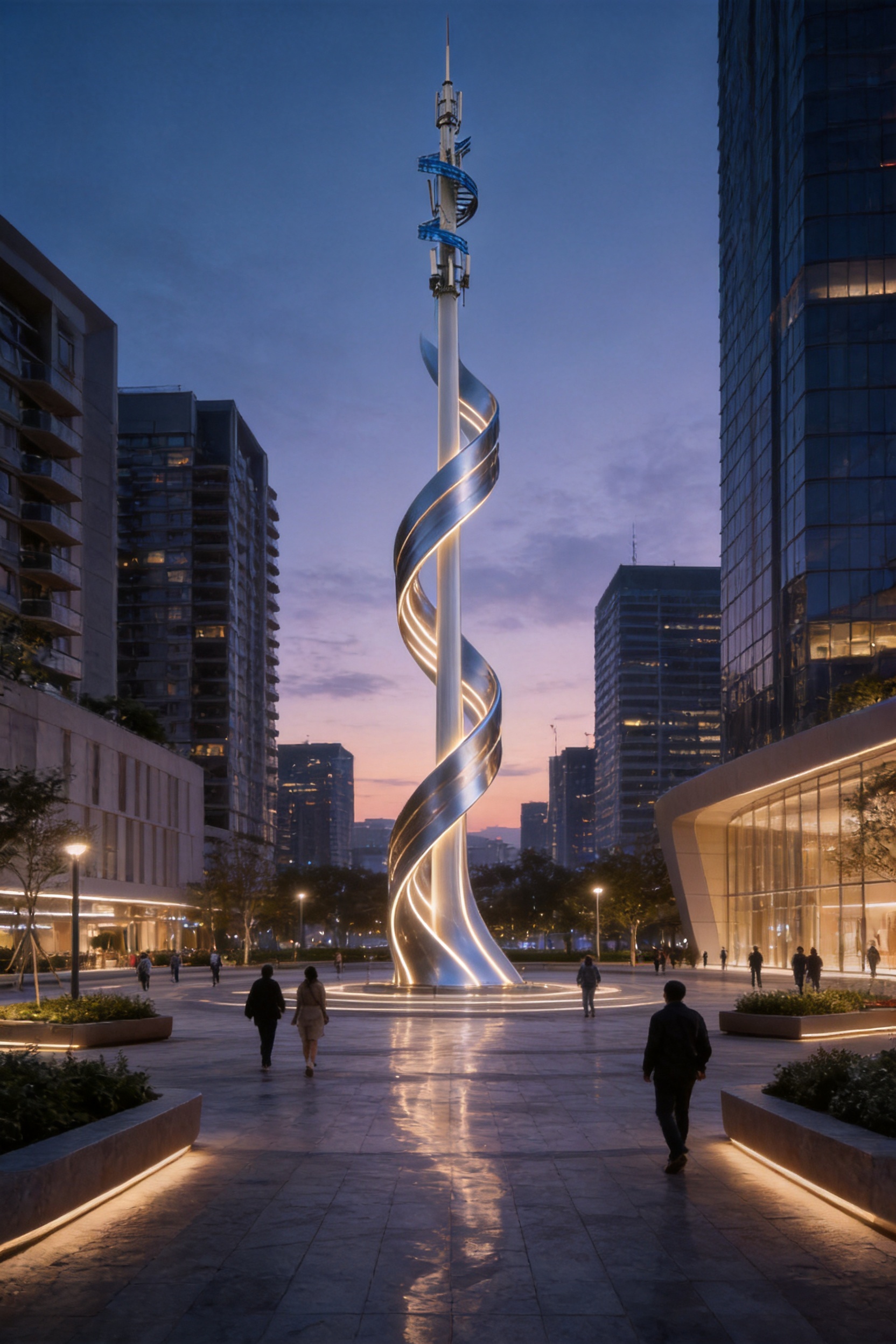
This ground-mounted communication tower adopts a ribbon-inspired visual language. Instead of relying on rigid, purely industrial forms, it uses flowing curves that evoke silk ribbons moving through the air. The result is a tower with a lighter visual presence, a more artistic profile, and a softer relationship with the surrounding environment. For telecommunications operators, municipal planners, real estate developers, and public-space designers, this product offers a highly practical solution to one of the most common challenges in modern infrastructure development: how to deploy reliable communication facilities without damaging the visual quality of valuable urban space.
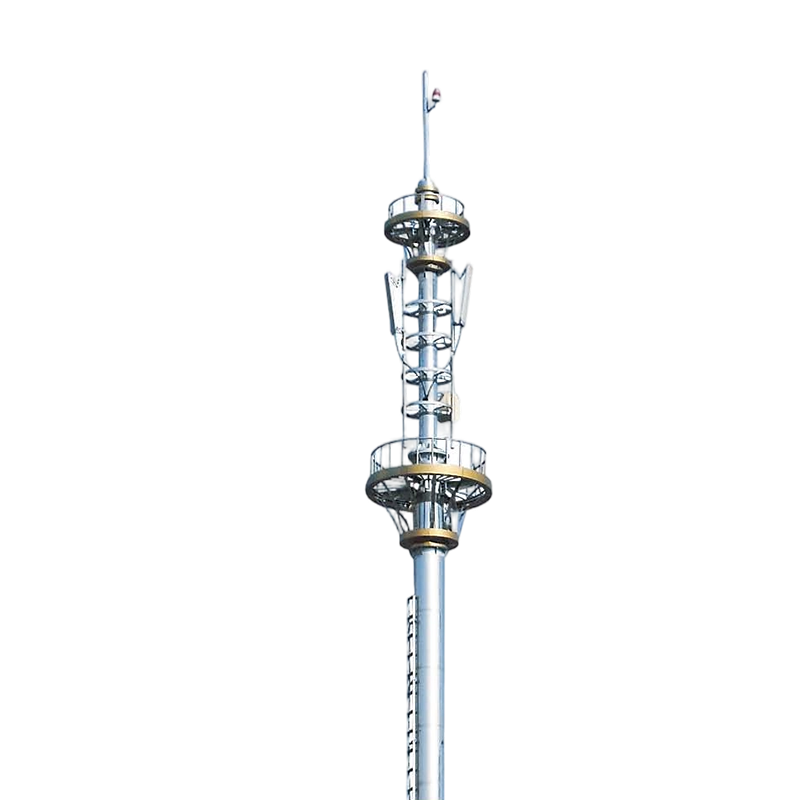
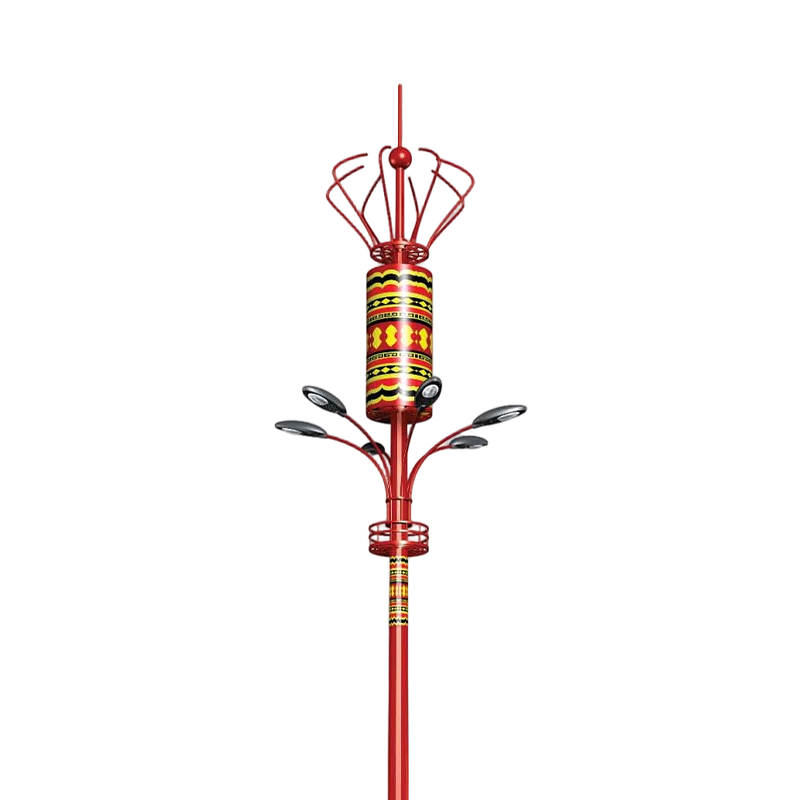
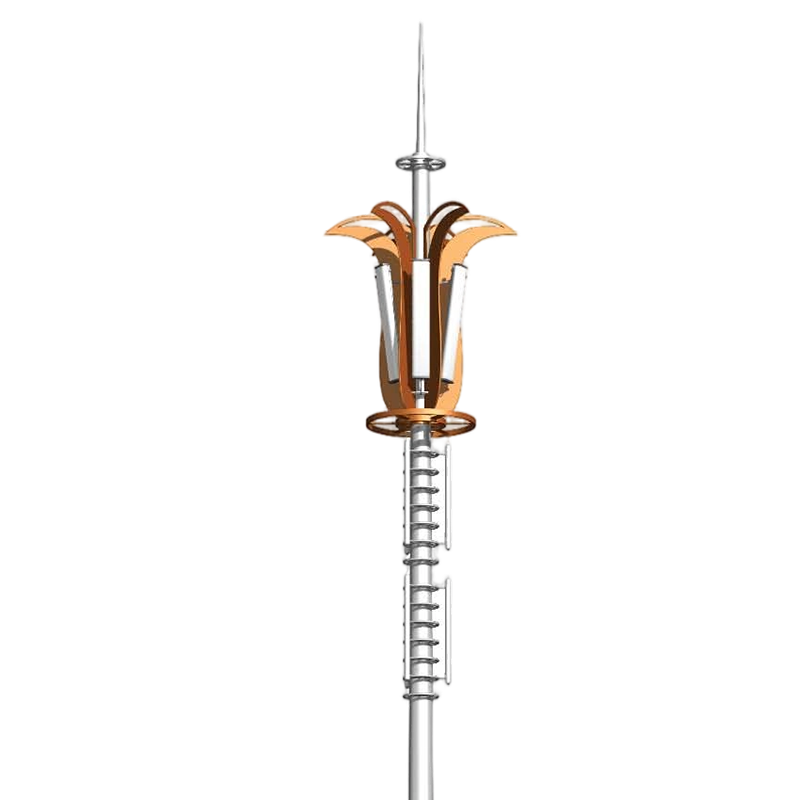
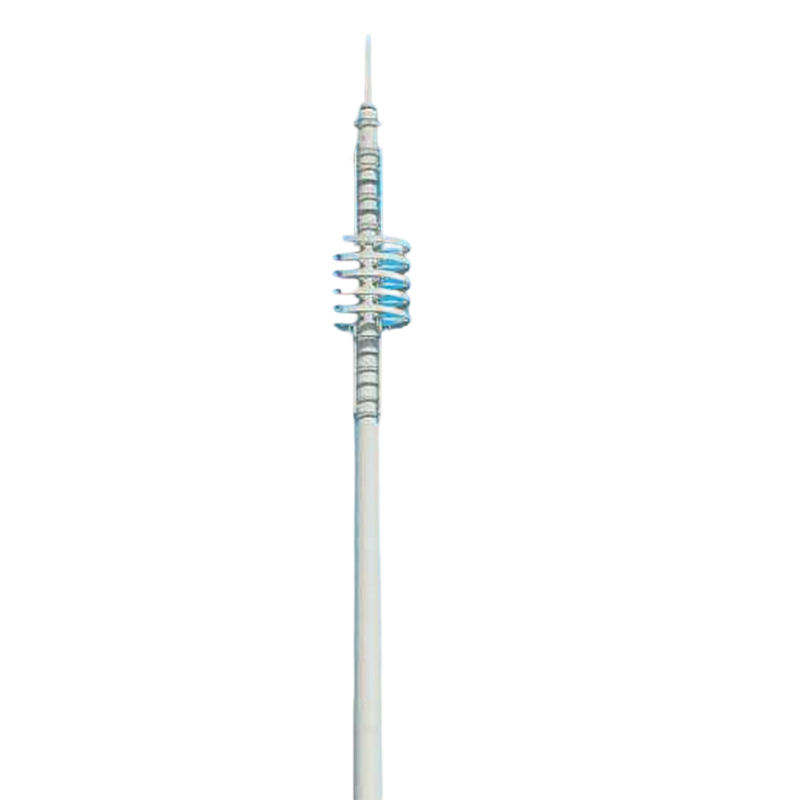
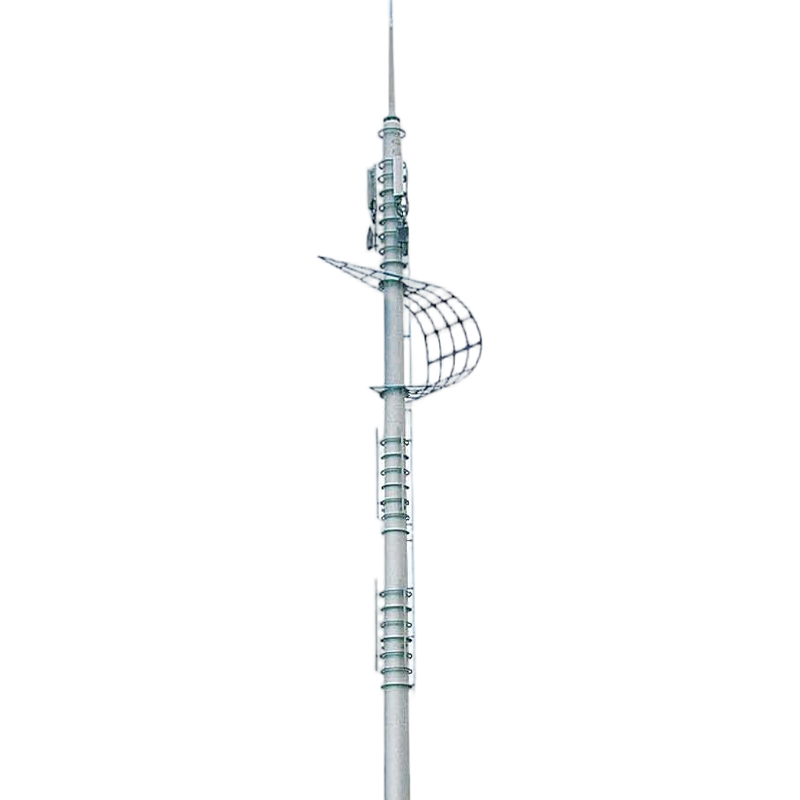
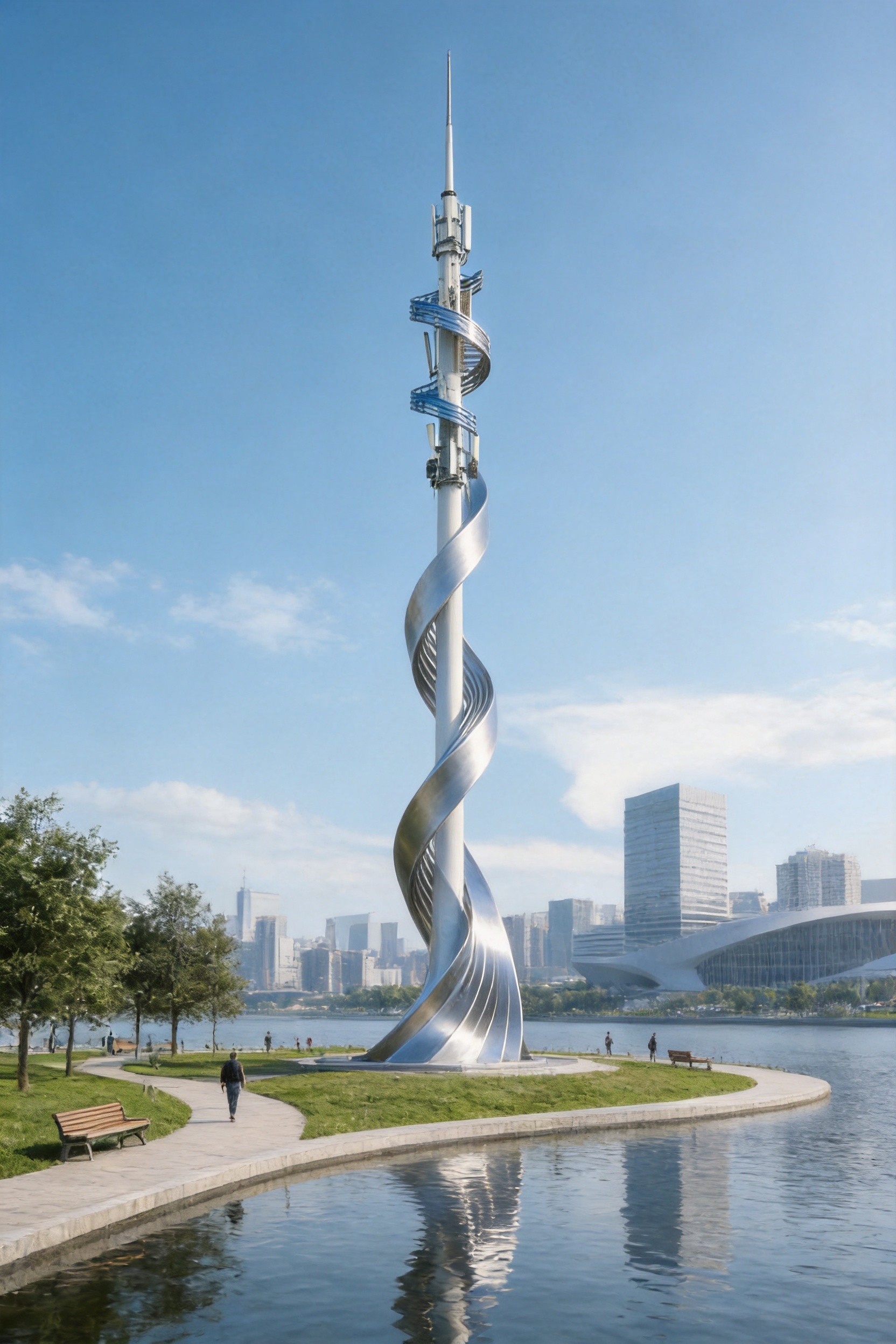
Ribbon-Style Landscape Ground-Mounted Communication Tower
The product belongs to the communication tower category, but its value extends beyond conventional tower performance. It combines engineering, mechanical calculation, steel fabrication, corrosion protection, surface finishing, customization, and aesthetic integration. Its overall height can generally cover a range from 10 meters to 50 meters, allowing it to meet different coverage requirements and site conditions. The ribbon-style decorative and structural concept typically uses a design diameter between 2.4 meters and 3.6 meters, with a characteristic design height of around 4 meters for the ribbon form, while the complete tower system can be engineered according to project needs. This flexibility makes it suitable for ecological parks, waterfront landscapes, cultural plazas, premium residential areas, commercial complexes, urban gateways, tourism zones, and other high-quality sites where ordinary steel towers may be visually unacceptable.
Yangzhou Jinyuan Lamps Co., Ltd. supports this product with advanced manufacturing capability, mature engineering experience, and a strong industrial foundation. Established in 2002 and affiliated with Jinshang Electric Group, the company has developed into a large-scale professional production, design, and engineering enterprise in China’s road illumination and outdoor infrastructure industry. With a production base covering more than 70,000 square meters, more than 300 professional technicians, exports to more than 200 countries, and manufacturing systems supported by international quality standards, the company is well positioned to deliver customized, durable, and visually refined communication tower solutions for demanding projects.
A Communication Tower Designed for the Landscape Era
Traditional communication towers were often treated as purely functional structures. Their main purpose was to provide height, support equipment, resist wind, and remain stable over years of outdoor exposure. While these requirements remain essential, the expectations of cities have changed. Dense urban development, improved public design standards, and greater public sensitivity toward visual pollution have created the need for communication towers that are both technically capable and aesthetically acceptable. The Ribbon-Style Landscape Ground-Mounted Communication Tower responds to this change by turning the tower into a design object rather than a visual obstacle.
The ribbon concept is not a superficial decoration added after engineering. It is integrated into the overall form and calculated through precision mechanical principles. The curves are designed to create a sense of movement and elegance, while also considering wind load distribution and structural efficiency. By avoiding a harsh, rigid appearance, the tower can blend into spaces where citizens expect beauty, openness, and comfort. In parks, the ribbon form can echo natural movement. Near waterfronts, it can harmonize with the flow of water and the rhythm of pedestrian space. In cultural plazas, it can serve as a sculptural landmark. In premium residential areas, it can reduce resistance to communication infrastructure by appearing less industrial and more architectural.
One of the strongest advantages of this product over ordinary lattice towers or plain monopoles is its ability to “camouflage” communication functionality without hiding performance. The structure remains a reliable base station facility, but its visible identity changes. It no longer announces itself as a technical installation; instead, it participates in the character of the site. This is especially valuable in projects where approval processes may be affected by visual impact, community acceptance, or municipal design requirements. A more beautiful tower can reduce conflict, accelerate project coordination, and improve long-term public acceptance.
The ground-mounted design also supports strong practicality. It can be installed where rooftop options are unavailable or unsuitable, and it can be positioned according to coverage planning, maintenance access, and site layout. Because the tower can be customized in height, color, finish, and specification, it can meet both technical and visual requirements in one coordinated solution. This combination of utility and landscape value creates a meaningful competitive advantage in communication infrastructure procurement.
Core Product Concept: Motion, Artistry, and Engineering Unity
The visual identity of the Ribbon-Style Landscape Ground-Mounted Communication Tower comes from the idea of a ribbon dancing in the air. A ribbon is light, continuous, graceful, and dynamic. When translated into steel structure design, this idea creates a tower that appears to extend upward with fluid energy. The tower breaks away from the straight, stiff stereotypes often associated with conventional towers and introduces a sense of artistic vitality into the base station facility.
This design approach matters because communication infrastructure often occupies visually sensitive locations. A conventional tower may be technically acceptable but aesthetically disruptive. It may draw complaints, reduce the perceived quality of a landscape, or conflict with architectural planning. The ribbon-style tower, by contrast, can support communication needs while reinforcing the site’s design identity. It can become a sculptural accent, a modern landmark, or a subtle vertical element integrated into broader landscape planning.
The product also reflects a practical understanding of outdoor public environments. A tower installed in an open park must resist wind, rain, temperature changes, and long-term exposure. A tower near water must be protected against humidity and corrosion. A tower in a public plaza must maintain visual freshness despite sunlight, dust, and environmental stress. For this reason, the tower is constructed from high-strength steel and treated with high-quality anti-corrosive coatings. These materials and processes help ensure that the structure maintains reliability and appearance throughout long-term use.
Unlike decorative products that sacrifice strength for appearance, this tower uses engineering to support artistry. The arc of the ribbon is calculated according to mechanical performance, not merely drawn for visual pleasure. The curves are intended to optimize wind load behavior and enhance resistance to environmental forces. In competitive terms, this is a key distinction. Some landscape-style towers may look attractive but lack sufficient structural refinement. Others may be strong but visually ordinary. This product aims to deliver both: artistic movement and engineering confidence.
Its design can also be adapted to the context of each installation. Color customization allows the tower to coordinate with buildings, trees, pavement, water features, or municipal identity systems. Specification customization allows it to meet equipment-loading requirements. Height customization helps operators achieve coverage targets. The result is a tower platform that can be repeatedly adapted without losing its recognizable ribbon-style character.
Technical Characteristics and Customizable Specifications
The Ribbon-Style Landscape Ground-Mounted Communication Tower is designed as a flexible infrastructure product. While each project may require specific engineering confirmation, the product description provides several important standard parameters. The design diameter typically ranges from 2.4 meters to 3.6 meters. The characteristic ribbon-style design height is around 4 meters, while the total tower height can cover approximately 10 meters to 50 meters. This wide height range makes it suitable for low-rise landscape coverage needs as well as larger communication deployment requirements.
The material system is based on high-strength steel. Material options may include Q235B, Q345B, S275JR, S355JR, Q460, A36, A572, GR56, GR50, and other comparable grades depending on project requirements, standards, and engineering calculations. Extensive material availability supports rapid production and reduces project delay risks. For international customers, the ability to match different material standards is especially useful because projects may be governed by local structural codes, national standards, or customer-specific technical specifications.
The product’s anti-corrosion strategy is another central feature. Outdoor communication towers are exposed to complex environmental conditions, including rain, ultraviolet radiation, seasonal temperature fluctuations, industrial pollution, and in some areas, salt or high humidity. High-quality anti-corrosive coatings help protect steel surfaces, extend service life, and maintain the product’s visual quality. This is particularly important for a landscape tower, because appearance is part of the product’s value. A tower that rusts prematurely or loses its surface quality would fail both structurally and aesthetically.
| Feature | Product Capability | Customer Benefit |
|---|---|---|
| Product Type | Ribbon-style landscape ground-mounted communication tower | Combines telecom function with urban landscape value |
| Typical Design Diameter | Approximately 2.4 meters to 3.6 meters | Adaptable visual and structural presence for different sites |
| Overall Tower Height | Approximately 10 meters to 50 meters, customizable | Supports different coverage, capacity, and site planning needs |
| Main Material | High-strength steel with multiple grade options | Reliable structural performance and international project compatibility |
| Surface Protection | High-quality anti-corrosive coatings | Long-term outdoor durability and attractive appearance |
| Design Support | CAD design, 3D simulation, mechanical calculation, color customization | Improved project accuracy, approval support, and site integration |
| Manufacturing Support | CNC bending, high-accuracy cutting, certified welding, automated coating lines | Consistent quality, faster production, and competitive cost control |
Another important characteristic is the engineering service package. The product can be supported by CAD design, 3D product simulation design, 3D scene simulation design, specification and color customization, mechanical calculations for wind and foundation, and overseas onsite installation guidance. These services help customers move from concept to installation with fewer uncertainties. In projects involving public landscapes, visualization is especially important. A 3D scene simulation can show how the tower will appear in its real environment before production begins, helping stakeholders review proportions, colors, and placement.
Advantages Over Conventional Communication Towers
The first clear advantage of the Ribbon-Style Landscape Ground-Mounted Communication Tower is visual acceptance. Conventional lattice towers are strong and economical, but they are often visually intrusive. Plain monopoles reduce visual complexity but may still look industrial and isolated. Camouflaged towers sometimes imitate trees or architectural objects, but if poorly executed, they may appear artificial. The ribbon-style tower takes a different path: it does not try to disappear completely, and it does not imitate nature literally. Instead, it becomes a modern sculptural element with a clear design identity. This makes it suitable for spaces where design quality is important.
The second advantage is multifunctional value. A conventional tower provides infrastructure function only. The ribbon-style tower provides infrastructure function plus landscape enhancement. In a cultural plaza, it can contribute to the visual theme. In an ecological park, it can reduce the contrast between industrial equipment and natural surroundings. In a waterfront district, it can add rhythm and vertical interest. This dual value can improve the return on investment for public or commercial projects, because the tower supports both connectivity and place-making.
The third advantage is site-selection flexibility. Telecommunications operators frequently face difficulty in securing acceptable sites for base station infrastructure. Nearby residents may object to industrial-looking towers. Municipal authorities may reject structures that conflict with landscape plans. Developers may worry that visible infrastructure will reduce property image. A landscape tower with artistic form can help resolve these objections. By reducing visual resistance, it can make it easier to place communication equipment in locations that are technically optimal.
The fourth advantage is customization. Many standard towers offer limited aesthetic choice. This product can be customized in height, diameter, color, specification, and scene integration. Customers can request design adjustments according to coverage planning, structural load requirements, local wind conditions, foundation conditions, and surrounding visual context. Customization is not merely decorative; it supports technical fit and project approval.
The fifth advantage is manufacturing precision. The company’s use of CNC bending, accurate cutting, experienced welding, and automated surface treatment helps ensure that the finished product matches design intent. For a ribbon-style structure, precision is especially important because visual beauty depends on smooth curves, clean edges, correct proportions, and consistent finishing. Small fabrication errors can interrupt the flowing appearance. Advanced production equipment helps preserve the integrity of the design.
The sixth advantage is long-term durability. The product uses high-strength steel and anti-corrosive coatings to withstand outdoor conditions. Competitor products that rely on lower-grade materials, inconsistent welding, or weaker coatings may cost less initially but can generate higher maintenance costs and shorter service life. For public infrastructure, long-term reliability is more valuable than short-term savings. A durable tower reduces maintenance disruption and protects the customer’s investment.
Advanced Manufacturing Processes That Support Product Quality
The manufacturing of a landscape communication tower requires more than ordinary steel fabrication. It requires the ability to combine structural accuracy, surface quality, production efficiency, and customization. Yangzhou Jinyuan Lamps Co., Ltd. supports the Ribbon-Style Landscape Ground-Mounted Communication Tower with an advanced production system developed through years of experience in outdoor lighting poles, street light structures, solar lighting systems, and related steel infrastructure products.
One of the key strengths is material readiness. Extensive stock of steel materials, including common Chinese, European, and American grades, helps prevent delays and supports rapid production scheduling. In large infrastructure projects, material delay can affect the entire construction timeline. Having a broad material supply foundation allows the company to respond quickly to customer specifications and urgent delivery requirements.
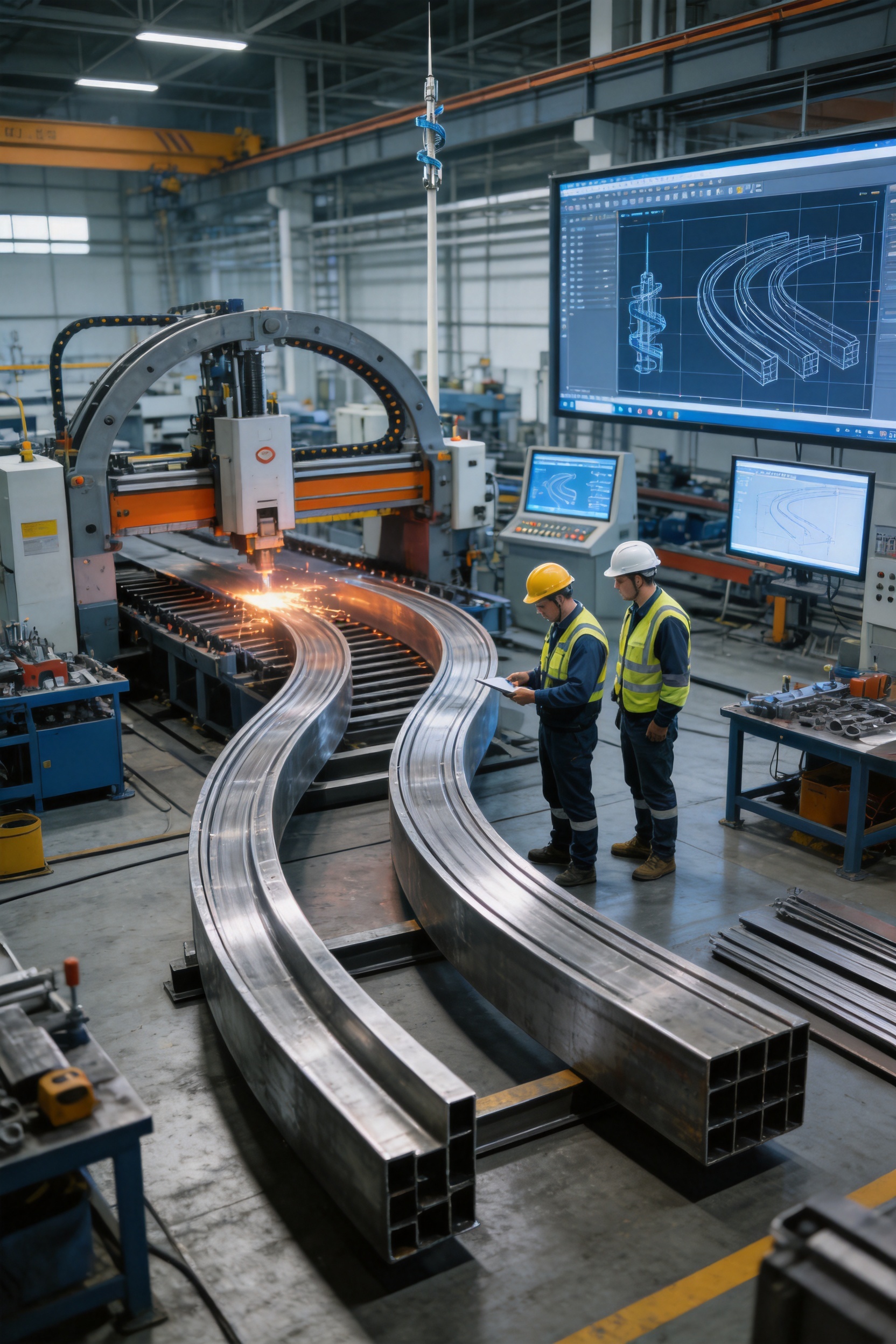
CNC bending is another important process. The ribbon-style tower depends on precise curves and controlled geometry. CNC bending equipment provides consistent bending accuracy, enhances structural integrity, and reduces the need for post-production correction. This improves both appearance and performance. Smooth curves are essential for the ribbon concept, and consistent bending helps every section align correctly during assembly.
High-accuracy cutting also plays a critical role. With cutting accuracy that can reach 0.01 mm under appropriate process conditions, components can be produced with exact dimensions and clean edges. Accurate cutting supports better fit-up, improved welding quality, and reduced assembly error. It also contributes to the final visual quality of the tower. When the product is installed in a high-end public space, every visible joint, edge, and curve matters.
Welding quality is fundamental to tower safety. The company relies on certified welders with many years of welding experience. Experienced welding teams can balance quality and speed, ensuring that large-scale projects meet high standards while remaining on schedule. For communication towers, welds must withstand structural loads, wind forces, vibration, and long-term outdoor stress. Poor welding can compromise safety and service life. Professional welding capability is therefore one of the most important competitive strengths behind the product.
Surface treatment and coating processes determine corrosion resistance and appearance retention. Faster production cycles and strict quality control in anti-corrosion treatment help extend the tower’s outdoor lifespan. Automated lines improve consistency, reduce costs, and support environmentally sustainable production. For a product intended to serve as visible urban sculpture, coating quality is not optional; it is central to both function and image.
The company’s manufacturing system is also supported by quality management certifications and production equipment used across related outdoor infrastructure categories. These include bending machines, powder electrostatic painting equipment, automatic welding and cutting machines, and heavy-duty die casting capability. This integrated production base allows the company to manage quality from raw material preparation through fabrication, finishing, inspection, and delivery.
Engineering Design Services From Concept to Installation
A major advantage of the Ribbon-Style Landscape Ground-Mounted Communication Tower is that it can be supported by a complete engineering and service process. Communication tower projects often involve multiple stakeholders, including operators, design institutes, municipal authorities, landscape architects, contractors, property owners, and maintenance teams. A product that arrives without design support may create coordination problems. This tower is supported by services that help customers manage the full project cycle.
CAD design provides the technical foundation for production and review. It allows dimensions, structural details, component interfaces, mounting positions, and foundation requirements to be clarified before fabrication. Accurate CAD documentation reduces misunderstandings and helps align customer expectations with manufacturing output.
3D product simulation design is useful because the tower has a sculptural form. Flat drawings may not fully communicate the effect of the ribbon curve. Three-dimensional product simulation allows customers to understand volume, proportion, and visual movement. It can also help detect design conflicts before production begins.
3D scene simulation design is especially valuable for landscape sites. The tower can be placed into a digital representation of the intended environment, such as a park path, waterfront promenade, plaza, residential entrance, or commercial district. This helps stakeholders evaluate color, scale, visibility, and integration with nearby trees, buildings, lighting, and pedestrian routes. For approval meetings, visual simulation can make the difference between uncertainty and confidence.
Specification and color customization allow the tower to satisfy both engineering and aesthetic requirements. A tower near modern architecture may require a clean metallic or neutral finish. A tower in a natural park may require earth-tone colors. A tower in a cultural plaza may use a distinctive color to become a landmark. The ability to customize appearance helps the tower belong to its site rather than simply occupy it.
Mechanical calculation for wind and foundation is essential. Wind load affects tower safety, vibration performance, structural member sizing, and foundation design. The ribbon arc is calculated through precision mechanics to present artistic curves while optimizing wind load. Foundation calculation ensures that the ground-mounted system can safely transfer loads into the soil or concrete base. This engineering support is one of the reasons the product can offer confidence in different regions and environments.
Overseas onsite installation guidance can further support international customers. Export projects may involve local contractors who are unfamiliar with the product’s structure or assembly sequence. Technical guidance helps reduce installation errors, improve efficiency, and protect final quality. For customers outside China, this service strengthens the product’s reliability as a complete solution rather than a simple supply item.
Applications in High-Quality Urban and Environmental Spaces
The Ribbon-Style Landscape Ground-Mounted Communication Tower is particularly suitable for spaces where ordinary infrastructure would be too visually disruptive. Ecological parks are one important application. These spaces are designed to provide natural beauty, leisure, and environmental education. Installing a conventional tower in such a setting may conflict with the park’s identity. A ribbon-style tower can offer communication coverage while presenting a softer, more artistic profile that better suits the environment.
Waterfront areas are another strong application. Riversides, lakesides, coastal promenades, and urban canals often require communication coverage because they attract visitors, events, commercial activity, and public transportation. At the same time, waterfronts are visually sensitive. The ribbon-style form can echo the movement of water and wind, making the tower feel more connected to the site. Its anti-corrosion coating is also important in humid environments.
Cultural plazas and public squares can benefit from the tower’s sculptural quality. These spaces often need strong communication service for gatherings, festivals, emergency coordination, public Wi-Fi systems, traffic management, and smart-city equipment. A tower that looks like an art installation can support these functions without reducing the dignity or openness of the plaza.
Premium residential areas are also suitable. Residents often expect both reliable communication and attractive surroundings. Traditional base station structures may create visual concerns, even when they are technically safe and necessary. A landscape communication tower can reduce opposition by appearing as part of the community’s design language. It can be placed near entrances, green spaces, internal roads, or public activity areas with less visual conflict.
Commercial complexes, tourism zones, urban gateways, campus environments, transport hubs, and scenic roads can also use this product. Wherever communication demand intersects with aesthetic sensitivity, the ribbon-style tower offers a balanced solution. It supports modern connectivity while respecting the emotional and visual quality of public space.
Durability, Safety, and Long-Term Value
Communication infrastructure is a long-term investment. A tower must remain safe, stable, and serviceable through years of outdoor exposure. The Ribbon-Style Landscape Ground-Mounted Communication Tower is designed with this long-term view. Its high-strength steel structure provides the foundation for mechanical reliability. Its anti-corrosive coating protects against environmental degradation. Its precision fabrication improves assembly accuracy and reduces hidden stress caused by poor fit-up.
Wind resistance is particularly important. Because towers are vertical structures exposed to open air, they must be able to withstand wind loads appropriate to the installation region. The ribbon-style arc is calculated not only for beauty but also for wind-load optimization. This engineering approach helps the tower maintain structural confidence while preserving its artistic form. Competitor products that focus only on appearance may fail to provide the same balance of design and structural logic.
Maintenance considerations also affect long-term value. A tower with poor surface protection may require frequent repainting or repair. A tower with inconsistent welding may require closer inspection and earlier reinforcement. A tower with poor design integration may continue generating public complaints long after installation. By contrast, a well-manufactured landscape tower can reduce maintenance pressure, protect public acceptance, and extend the useful life of the asset.
Another aspect of long-term value is adaptability. Communication technology evolves, and operators may need to adjust equipment over time. A custom-engineered tower can be designed with equipment requirements in mind, including antenna positions, access considerations, and structural reserve where appropriate. While every project requires specific engineering review, the product’s customizable nature gives customers a better platform for future planning than a purely standard structure.
For municipalities and developers, the tower’s visual contribution can also create lasting value. Public spaces are judged by their details. A poorly integrated piece of infrastructure can reduce the perceived quality of an entire area. A sculptural communication tower, however, can reinforce a modern, well-planned image. This is especially valuable in city branding, commercial district development, tourism planning, and high-end residential projects.
Company Strength Behind the Product
The strength of a communication tower depends not only on its design but also on the manufacturer behind it. Yangzhou Jinyuan Lamps Co., Ltd. brings more than two decades of experience in outdoor lighting and steel infrastructure production. Since its establishment in 2002, the company has focused on street light poles, LED street lights, solar street lights, lighting fixtures, and related products. This background is highly relevant because lighting poles and communication towers share important requirements: structural safety, outdoor durability, wind resistance, corrosion protection, surface finishing, and large-scale production accuracy.
The company covers more than 70,000 square meters and employs more than 300 professional technicians. This scale supports stable production capacity, engineering response, and quality control. Its products are exported to more than 200 countries, which demonstrates experience with international customer expectations, export packaging, documentation, and diverse project requirements.
International quality standards are another important strength. Products meet standards including ISO9001, ISO14001, and OHSAS18001. ISO9001 reflects quality management discipline. ISO14001 reflects environmental management awareness. OHSAS18001 reflects occupational health and safety management. Together, these systems support reliable production and responsible manufacturing.
Advanced production equipment further strengthens competitiveness. Bending machines help form accurate pole and tower components. Powder electrostatic painting equipment supports consistent coating quality. Automatic welding and cutting machines improve production efficiency and repeatability. Heavy-duty die casting capability reflects the company’s broader manufacturing foundation. These assets help the company deliver products that are competitive not only in price but also in consistency, durability, and customization.
The company’s service philosophy is also important: from consultation to project completion, the goal is seamless, personalized support. For customers purchasing a landscape communication tower, this service orientation can reduce risk. A buyer may need help selecting material grades, determining height, confirming color, reviewing wind and foundation calculations, preparing drawings, coordinating production, and guiding installation. A manufacturer with full-process support can become a project partner rather than simply a supplier.
Why This Tower Is a Strong Choice for Competitive Projects
Procurement decisions often involve comparison. Customers may compare the Ribbon-Style Landscape Ground-Mounted Communication Tower with standard monopoles, lattice towers, decorative towers, disguised tree towers, or custom architectural structures. The ribbon-style tower stands out because it combines several advantages in one product.
Compared with lattice towers, it offers a cleaner and more elegant visual profile. Lattice towers are efficient but visually complex. They may be suitable for industrial or remote locations, but they are often less desirable in public landscapes. The ribbon-style tower is more refined and better suited to visible urban environments.
Compared with plain monopoles, it provides stronger artistic identity. A monopole may be simple, but it can still appear dull or utilitarian. The ribbon-style tower adds movement, character, and sculptural value. This can make the difference in projects where the tower is part of a designed public space.
Compared with imitation tree towers or other camouflage towers, it avoids the risk of looking artificial. A fake tree may work in some environments, but in many urban spaces it can appear unnatural. The ribbon-style tower does not pretend to be something else. It honestly expresses itself as a modern designed structure while softening the industrial image of telecom infrastructure.
Compared with fully custom architectural towers, it offers a more practical balance of design and manufacturability. A one-off architectural structure may be expensive, slow to produce, and difficult to standardize. The ribbon-style concept provides a recognizable design system that can be customized without losing production efficiency.
Compared with low-cost competitors, it offers stronger manufacturing assurance. Precise CNC bending, accurate cutting, certified welding, anti-corrosion treatment, automated production lines, and engineering services all contribute to quality. A lower initial price may not be a better value if it results in delays, maintenance, surface failure, or structural concerns. This product is positioned for customers who need dependable long-term performance and a high-quality appearance.
Q&A Section
Q1: What makes the Ribbon-Style Landscape Ground-Mounted Communication Tower different from a traditional communication tower?
Its main difference is the combination of communication function and landscape artistry. Traditional towers often look industrial, while this tower uses flowing ribbon-inspired curves to create a sculptural appearance. It still supports communication equipment, but it integrates more naturally into parks, plazas, waterfronts, residential areas, and other visually sensitive sites.
Q2: What height range can the tower support?
The overall tower height can generally cover approximately 10 meters to 50 meters and can be customized according to site requirements, communication coverage targets, equipment loads, and engineering calculations.
Q3: Is the ribbon shape only decorative?
No. The ribbon arc is designed with precision mechanical calculation. It is intended to create graceful visual curves while also considering wind load behavior and structural performance. The design seeks a balance between artistic form and engineering reliability.
Q4: What materials are available?
The tower can be manufactured from high-strength steel, with material options such as Q235B, Q345B, S275JR, S355JR, Q460, A36, A572, GR56, GR50, and other grades depending on project requirements and applicable standards.
Q5: How is corrosion resistance achieved?
The tower is finished with high-quality anti-corrosive coatings and produced through controlled surface treatment processes. This helps protect the steel structure from outdoor exposure and supports long-term visual freshness.
Q6: Can the color and appearance be customized?
Yes. Specification and color customization are available. The tower can be designed to coordinate with surrounding architecture, landscape features, municipal identity systems, or project-specific visual requirements.
Q7: Where is this tower most suitable?
It is suitable for ecological parks, waterfronts, cultural plazas, premium residential communities, commercial complexes, tourism zones, urban gateways, campuses, scenic roads, and other high-quality locations where communication coverage and visual harmony are both important.
Q8: What manufacturing processes support product quality?
Quality is supported by extensive material stock, CNC bending, high-accuracy cutting, experienced certified welding, anti-corrosion treatment, automated production lines, powder electrostatic painting equipment, and strict quality control procedures.
Q9: Can the manufacturer support design before production?
Yes. Available support can include CAD design, 3D product simulation, 3D scene simulation, specification customization, color customization, wind and foundation mechanical calculation, and installation guidance for overseas projects.
Q10: Why is this product valuable for telecom operators?
It helps operators deploy base station infrastructure in locations where traditional towers may face visual objections or approval difficulties. By landscaping the communication tower, operators can improve site acceptance while maintaining functional performance.
Conclusion
The Ribbon-Style Landscape Ground-Mounted Communication Tower represents a forward-looking approach to communication infrastructure. It recognizes that modern connectivity must coexist with modern public-space design. Cities, communities, and commercial developments need reliable communication coverage, but they also need infrastructure that respects visual quality and environmental character. This product meets that need by transforming a necessary technical structure into an elegant landscape element.
Its ribbon-inspired form creates movement, softness, and artistic vitality. Its high-strength steel construction and anti-corrosive coating provide durability. Its mechanically calculated curves support wind-load performance. Its customizable height, diameter, specification, and color make it adaptable to diverse projects. Its advanced manufacturing processes ensure that the finished tower can achieve the precision and consistency required for both structural safety and visual refinement.
Behind the product is the manufacturing strength of Yangzhou Jinyuan Lamps Co., Ltd., a company with extensive experience, advanced equipment, international quality systems, a large technical team, and a broad export background. From CAD design and 3D simulation to CNC bending, accurate cutting, certified welding, coating, and installation guidance, the company provides a complete support system for customers seeking dependable and attractive communication tower solutions.
For projects where ordinary towers are too industrial, where hidden infrastructure is difficult, and where public acceptance matters, the Ribbon-Style Landscape Ground-Mounted Communication Tower offers a compelling alternative. It is not merely a tower. It is a practical communication platform, a carefully engineered steel structure, and a modern urban sculpture designed to bring connectivity and landscape harmony together.
References
International Organization for Standardization. ISO 9001 Quality Management Systems: Requirements.
International Organization for Standardization. ISO 14001 Environmental Management Systems: Requirements with Guidance for Use.
Occupational Health and Safety Assessment Series. OHSAS 18001 Occupational Health and Safety Management Systems.
American Institute of Steel Construction. Steel Construction Manual.
European Committee for Standardization. Eurocode 3: Design of Steel Structures.
American Society of Civil Engineers. Minimum Design Loads and Associated Criteria for Buildings and Other Structures.
China National Standards. Technical Specifications for Steel Structures and Outdoor Communication Infrastructure.
Telecommunications Industry Engineering Guidance. Structural Design Principles for Antenna Supporting Towers and Base Station Facilities.