


JINYUAN
JINYUAN
JINYUAN
JINYUAN
JINYUAN
JINYUAN
JINYUAN
JINYUAN
JINYUAN
JINYUAN
JINYUAN
JINYUAN
JINYUAN
JINYUAN
JINYUAN
JINYUAN
Content
- 1 1. The Role of High-Brightness LED Outdoor Lighting
- 2 2. Product Design and Technical Characteristics
- 3 3. Advantages Compared with Conventional Outdoor Lighting
- 4 4. Applications in Road and Area Lighting
- 5 5. Manufacturing Strengths Behind the Product
- 6 6. Engineering and Customization Support
- 7 7. Quality, Reliability, and Project Risk Management
- 8 8. Total Cost of Ownership
- 9 9. Installation and Operating Recommendations
- 10 10. Why the Manufacturer Is a Strong Project Partner
- 11 11. Recommended Selection Process
- 12 12. Q&A
- 12.1 Q1: What is the primary application of this LED outdoor lighting luminaire?
- 12.2 Q2: What makes the luminaire energy efficient?
- 12.3 Q3: Is the product suitable for changing outdoor weather conditions?
- 12.4 Q4: What color temperatures are available?
- 12.5 Q5: Can the luminaire be connected to a smart lighting system?
- 12.6 Q6: What is the warranty period?
- 12.7 Q7: Why is aluminum alloy used for the lamp housing?
- 12.8 Q8: Does the manufacturer provide customized products?
- 12.9 Q9: How does the manufacturer support large projects?
- 12.10 Q10: What should be checked before ordering?
- 12.11 Q11: Can the product replace every conventional outdoor lamp directly?
- 12.12 Q12: How can users preserve long-term performance?
- 13 13. Conclusion
- 14 References
- 15 Product: High-Brightness Led Outdoor Lighting Luminaires
Outdoor lighting is a critical part of modern infrastructure. Roads, parking areas, industrial compounds, public parks, logistics centers, pedestrian zones, campuses, and commercial developments all depend on dependable luminaires to provide visibility, safety, and operational continuity after sunset. Selecting the right outdoor lighting product is therefore more complex than choosing a lamp with a high lumen rating. A professional luminaire must combine optical performance, electrical reliability, thermal management, mechanical strength, weather resistance, installation convenience, and long service life.
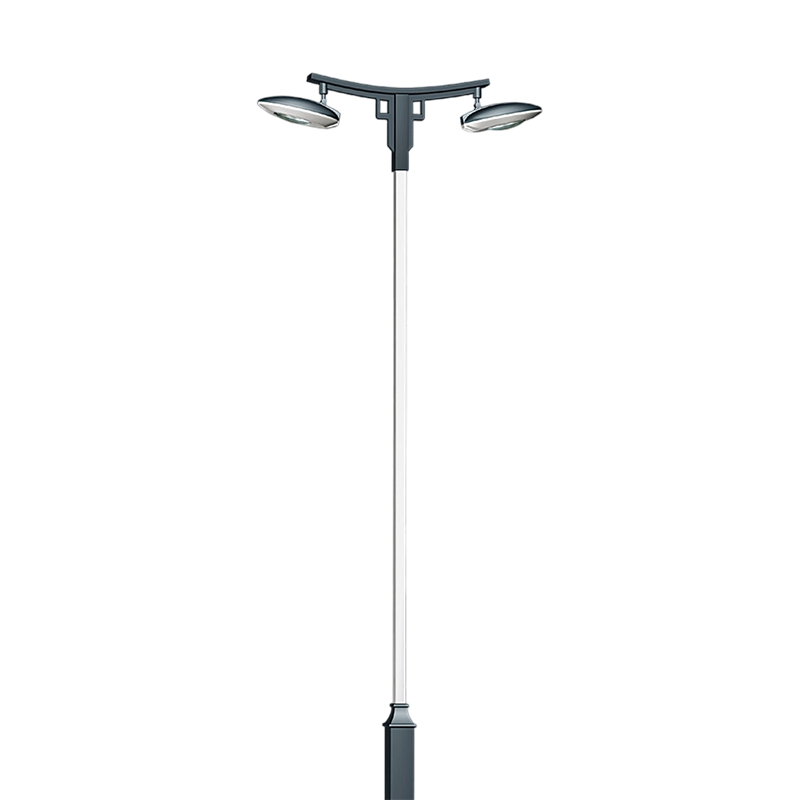
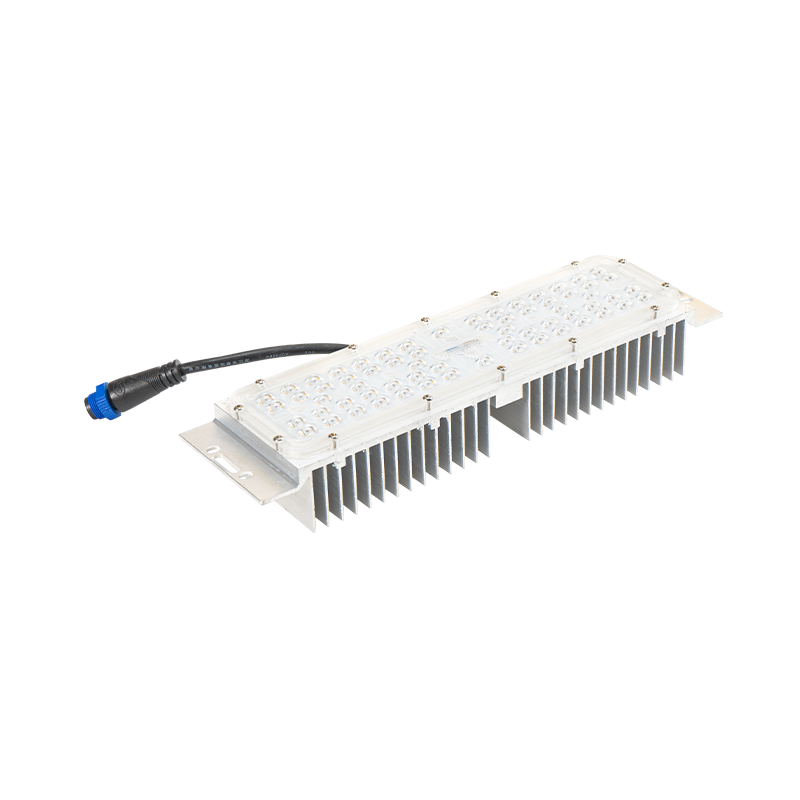
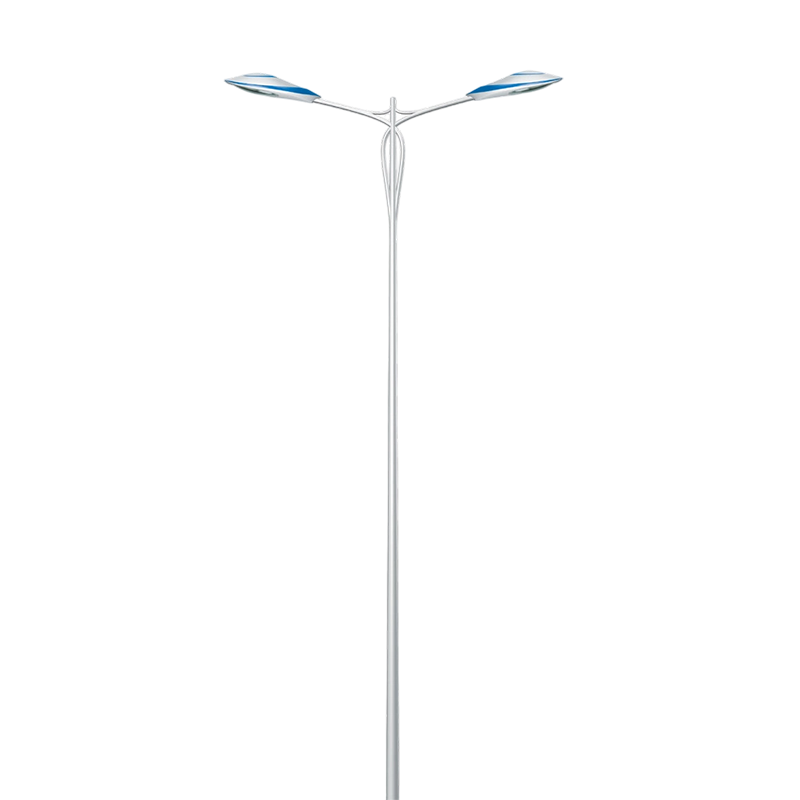
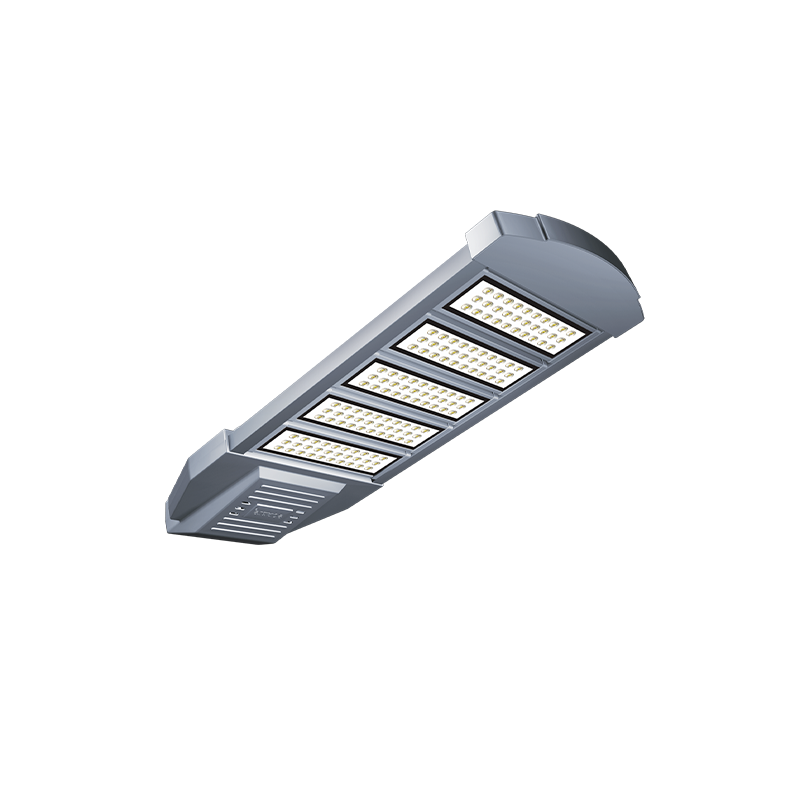
The high-brightness LED outdoor lighting luminaire described in this article is designed to meet these requirements through an efficient LED light source, an aluminum alloy housing, IP65 protection, flexible dimming support, and a lighting efficacy of up to 140 lm/W. It is suitable for road lighting and a wide range of large outdoor areas where powerful, stable, and energy-conscious illumination is required.
Manufactured by Yangzhou Jinyuan Lamps Co., Ltd., the product benefits from the capabilities of an established road illumination manufacturer with experience in lighting products, street light poles, solar street lights, engineering projects, and related infrastructure. The company combines product design, engineering support, fabrication, surface treatment, welding, cutting, assembly, and quality control within an integrated manufacturing system.
This article examines the product’s design advantages, technical characteristics, manufacturing processes, application value, customization capabilities, and service support. It also explains why high-brightness LED technology can offer practical advantages over conventional outdoor lighting solutions and why manufacturing quality is essential for long-term project performance.
High-Brightness Led Outdoor Lighting Luminaires
1. The Role of High-Brightness LED Outdoor Lighting
Outdoor luminaires must perform in conditions that are more demanding than most indoor environments. They may be exposed to rain, dust, strong sunlight, temperature changes, wind, humidity, pollution, and vibration. At the same time, they are expected to provide consistent illumination for long operating periods while consuming as little electricity as possible.
High-brightness LED outdoor lighting addresses these requirements by using light-emitting diodes that convert electrical energy into visible light with high efficiency. Unlike older lighting technologies that depend on gas discharge or heated filaments, LED luminaires generate light through semiconductor devices. This allows the luminaire to provide high output from a comparatively low electrical input.
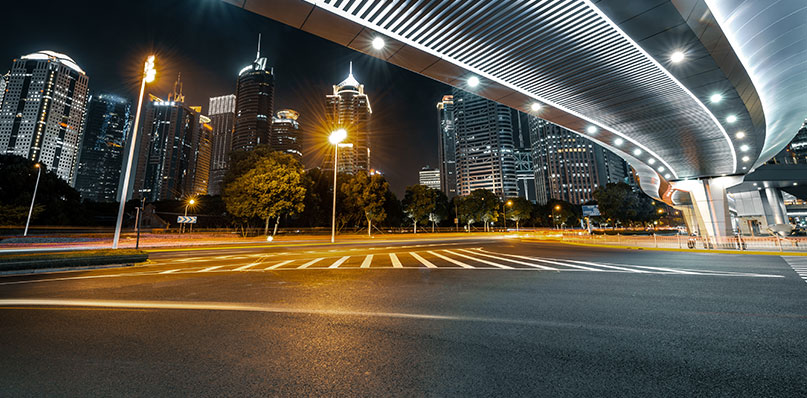
For road and area lighting, high brightness is valuable because it helps improve the visibility of vehicles, pedestrians, road edges, signs, entrances, loading zones, and potential obstacles. A well-designed luminaire can distribute light over a broad area while reducing dark spots and maintaining a more consistent visual environment.
The product is particularly suitable for applications where a large area must be illuminated from an elevated mounting position. These applications include public roads, industrial roads, parking lots, parks, factory compounds, warehouses, logistics facilities, municipal projects, and other outdoor spaces with extended nighttime operating requirements.
1.1 More efficient use of electrical energy
The luminaire has a stated luminous efficiency of 140 lm/W. Luminous efficacy indicates how much visible light is produced for each watt of electrical power consumed. A higher value generally allows a project to achieve a required lighting level with lower installed power, provided that the optical design and installation layout are appropriate.
Reduced power consumption can deliver several benefits. It can lower electricity costs, reduce the load on the distribution system, decrease the size of some supporting electrical equipment, and help organizations meet energy-saving objectives. For projects containing many luminaires or operating throughout the night, even moderate savings per fixture can become significant over the lifetime of the installation.
Energy efficiency also supports sustainability goals. Lower electricity consumption may reduce the indirect environmental impact associated with power generation. For municipalities, property developers, factories, and infrastructure operators, efficient lighting can therefore contribute to both operating-cost management and environmental performance.
1.2 Strong illumination for large outdoor spaces
High-brightness LED luminaires are designed to deliver powerful illumination over broad outdoor areas. The product can be used where the lighting system must support both general visibility and safety. Road users need enough light to identify lane boundaries, pedestrians, vehicles, intersections, and changes in road conditions. People walking through parks, parking areas, and commercial spaces also benefit from a clear and evenly lit environment.
Strong illumination does not simply mean maximum brightness. Professional outdoor lighting must also consider beam distribution, mounting height, spacing, glare control, color temperature, and the visual requirements of the site. The luminaire’s LED light source and available customization options allow project designers to select an appropriate configuration for the intended application.
2. Product Design and Technical Characteristics
The high-brightness LED outdoor lighting luminaire combines a practical mechanical structure with a flexible electrical design. Its principal specifications include an AC85–265V input range, LED light source, aluminum alloy lamp material, IP65 protection rating, 140 lm/W luminous efficiency, 3000K–6000K color temperature options, a color rendering index of Ra 70, DC 0–10V and DALI dimming support, and a five-year warranty period.
| Specification | Product Information | Project Value |
|---|---|---|
| Brand | Jinyuan | Identifies the product series and manufacturing source |
| Application | Road and outdoor area lighting | Suitable for roads, parking areas, parks, and large exterior spaces |
| Input voltage | AC85–265V | Supports a broad range of electrical supply conditions |
| Light source | LED | Provides efficient, long-term solid-state illumination |
| Lamp material | Aluminum alloy | Supports structural durability and heat dissipation |
| Operating temperature | -35°C to 65°C | Suitable for a wide range of outdoor climates |
| Protection rating | IP65 | Helps protect against dust and water jets |
| Luminous efficiency | 140 lm/W | Supports high output with controlled energy consumption |
| Color temperature | 3000K–6000K | Offers warm, neutral, and cool lighting choices |
| Color rendering index | Ra 70 | Provides practical color recognition for outdoor applications |
| Dimming | DC 0–10V and DALI | Enables integration with lighting control systems |
| Warranty | Five years | Provides an extended assurance period for project users |
2.1 Aluminum alloy housing and thermal management
The housing is made from aluminum alloy, a material commonly selected for professional outdoor luminaires because it offers a useful combination of low weight, mechanical strength, corrosion resistance, and thermal conductivity. The housing helps protect internal components while also assisting in the transfer of heat away from the LED modules and driver area.
Thermal management is one of the most important factors affecting LED performance. Although LEDs are more efficient than many conventional light sources, they still produce heat. If that heat is not managed effectively, the LED junction temperature may rise, which can accelerate light depreciation, affect driver performance, and shorten the usable service life of internal components.
An aluminum alloy body with an appropriate heat-dissipation structure can help maintain a more stable operating temperature. This is especially important in outdoor installations where luminaires may operate for many hours each night and where ambient temperatures can vary substantially. The stated operating temperature range of -35°C to 65°C reflects the product’s suitability for demanding climatic conditions.
2.2 IP65 protection for outdoor use
The luminaire has an IP65 protection rating. The first digit indicates protection against dust ingress, while the second digit indicates protection against water projected by a nozzle from different directions. This level of protection is appropriate for many outdoor lighting environments where the fixture may encounter airborne dust, rain, cleaning spray, and general weather exposure.
Protection against the outdoor environment is important because moisture and particles can affect electrical connections, optical components, circuit boards, and moving or sealed interfaces. A properly sealed housing can help preserve product reliability and reduce the risk of contamination during normal operation.
IP65 protection does not mean that the luminaire should be submerged or installed without regard to site conditions. Correct mounting, cable routing, connector selection, drainage, and maintenance remain necessary. Nevertheless, the rating provides a strong foundation for outdoor road and area lighting projects.
2.3 Wide input voltage compatibility
The AC85–265V input range allows the luminaire to work across a broad range of common alternating-current supply conditions. This flexibility can simplify project planning, especially when lighting systems are installed in different regions or when local electrical networks have varying nominal voltages.
A broad input range can also provide greater tolerance for normal supply variation. Electrical designers should still confirm the project’s voltage, frequency, grounding, surge protection, control method, and applicable standards before installation. The luminaire’s wide input compatibility is a practical advantage, but it should be considered as part of a complete electrical design rather than as a substitute for proper system engineering.
2.4 Color temperature choices
The product supports a color temperature range from 3000K to 6000K. This gives project owners and designers the ability to select a light appearance suited to the function and character of the site. Lower color temperatures generally appear warmer and can create a more comfortable visual atmosphere in parks, residential-adjacent areas, pedestrian environments, and architectural settings.
Higher color temperatures generally appear cooler and may be selected for industrial facilities, large parking areas, roads, logistics sites, and locations where a crisp visual environment is preferred. The correct choice depends on local regulations, environmental considerations, glare management, surrounding land use, and the desired appearance of the installation.
2.5 Dimming and control support
DC 0–10V and DALI dimming support gives the luminaire compatibility with common lighting-control strategies. Dimming can be used to reduce output during periods of low traffic, support adaptive road-lighting schemes, coordinate lighting with sensors, or integrate outdoor luminaires into a broader building or municipal control platform.
Control capability can improve energy performance beyond the savings achieved through LED efficiency alone. For example, a parking facility may operate at a higher lighting level during peak activity and reduce output after midnight. A road system may adjust lighting according to traffic flow, weather conditions, or scheduled operating periods. A facility manager may also monitor operating status and identify maintenance needs through a centralized system.
The appropriate control architecture depends on the project’s wiring, communication requirements, control equipment, local standards, and operating strategy. Early coordination between the luminaire supplier, electrical consultant, system integrator, and project owner can help ensure that the selected dimming method functions correctly after installation.
3. Advantages Compared with Conventional Outdoor Lighting
The product’s main competitive advantages come from the relationship between LED efficiency, thermal design, environmental protection, control compatibility, and manufacturing support. Comparing luminaires solely by purchase price can overlook the long-term operating and maintenance factors that influence the total cost of ownership.
3.1 Lower energy consumption
Conventional outdoor lighting systems may require greater electrical input to achieve a similar level of usable illumination. High-efficiency LED technology can reduce installed wattage while maintaining strong light output. This is particularly valuable in projects with hundreds or thousands of lighting points.
Lower power requirements may reduce the ongoing electricity bill and can also reduce the total energy demand of the site. For public authorities and commercial organizations with measurable carbon-reduction goals, efficient luminaires can support environmental reporting and resource-management programs.
3.2 Longer service potential
LED luminaires do not rely on fragile filaments or traditional discharge arrangements. When the LED modules, driver, housing, seals, and thermal system are properly designed and manufactured, the fixture can provide stable service over a long operating period. The aluminum alloy housing and heat-dissipation characteristics support this objective by helping control operating temperature.
Longer service potential can reduce the frequency of lamp replacement. This is especially useful for high-mounted fixtures, road lighting, industrial compounds, and locations where access requires traffic control, lifting equipment, or specialized maintenance crews.
3.3 Reduced maintenance requirements
Fewer replacement cycles can reduce labor, equipment rental, spare-parts management, traffic disruption, and site access costs. The IP65 housing also helps protect the product from dust and water exposure, reducing the risk of environmental contamination affecting internal components.
Maintenance planning remains necessary. Outdoor lighting systems should be inspected for physical damage, loose connections, dirt accumulation, corrosion, control faults, and changes in light output. However, a durable LED luminaire can make routine maintenance more predictable than a system that requires frequent lamp replacement.
3.4 Faster start-up and consistent operation
LED luminaires provide immediate illumination when energized. This is useful for roads, security areas, parking lots, and facilities where reliable start-up is important. The product’s solid-state light source also supports stable operation without the warm-up behavior associated with some conventional discharge lamps.
3.5 Flexible project integration
The wide input voltage range, multiple color temperature choices, and DC 0–10V or DALI dimming support make the product adaptable to different project requirements. This flexibility can help distributors, contractors, consultants, and engineering companies develop solutions for multiple markets without relying on a completely different fixture for every application.
Customization also allows the lighting system to be aligned with site geometry, local preferences, energy targets, and control strategies. A standard product platform with configurable characteristics can simplify procurement while still providing practical design options.
4. Applications in Road and Area Lighting
4.1 Road lighting
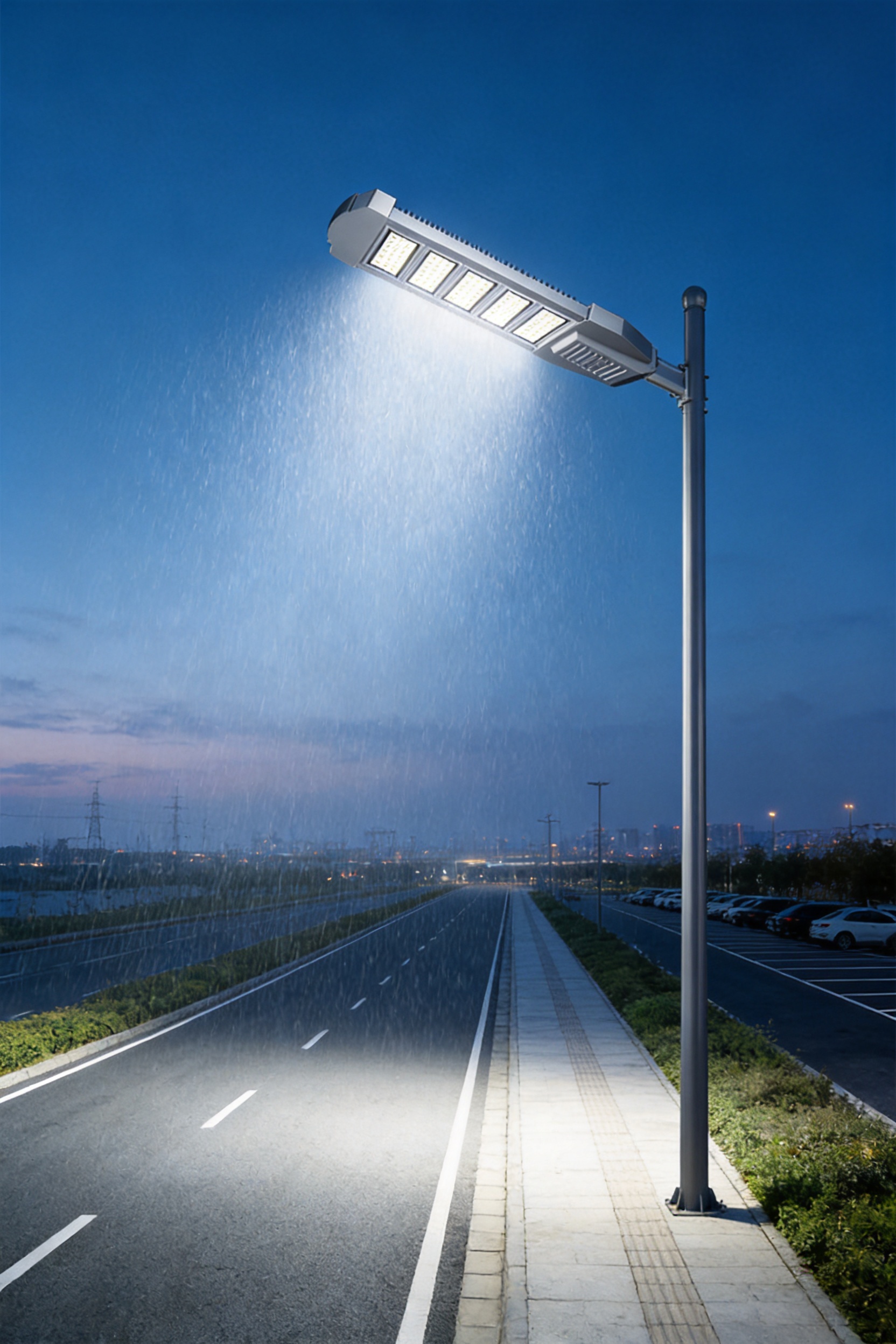
Road lighting is one of the primary applications for the luminaire. Roads require adequate visibility for drivers, cyclists, pedestrians, and maintenance personnel. The fixture can be incorporated into a roadway lighting layout based on pole height, road width, luminaire spacing, mounting angle, traffic classification, and required illumination or luminance levels.
For road projects, the lighting designer should complete a photometric calculation before finalizing the installation. The calculation should consider the luminaire’s optical distribution, mounting arrangement, road surface, pole position, traffic requirements, uniformity, glare, and surrounding environment. A high-brightness fixture can provide strong output, but correct spacing and aiming are necessary to convert that output into useful roadway illumination.
4.2 Parking lots and transport areas
Parking areas benefit from clear and uniform lighting because drivers need to identify vehicles, pedestrians, entrances, curbs, signs, and changes in elevation. LED luminaires can also support different operating levels, allowing the system to respond to periods of high and low activity.
Transport depots, bus terminals, loading yards, and logistics centers often operate for extended hours. Energy-efficient luminaires with durable housings can help maintain visibility while controlling operating costs. The aluminum alloy construction and IP65 protection are useful in environments where dust, rain, vehicle movement, and frequent operational activity are present.
4.3 Industrial and commercial compounds
Factories, warehouses, distribution centers, and commercial compounds often contain internal roads, loading zones, parking spaces, security boundaries, and pedestrian routes. A coordinated outdoor lighting system can improve movement through the site, support security observation, and reduce the risk of accidents near vehicles and equipment.
The product’s wide operating temperature range makes it appropriate for many industrial climates. However, projects in areas with chemical exposure, heavy dust, salt spray, explosive atmospheres, or unusual mechanical hazards should be evaluated separately to confirm that the selected configuration meets the required environmental and safety standards.
4.4 Parks, campuses, and public spaces
Parks, school campuses, hospitals, municipal facilities, and public plazas require lighting that balances visibility, comfort, appearance, and energy use. The available color temperature range allows the lighting appearance to be selected according to the environment. Warmer light may be preferred in areas intended to feel welcoming, while cooler light may be suitable for functional pathways and service zones.
In public areas, designers should pay special attention to glare, light trespass, nearby residences, ecological sensitivity, and the visual relationship between luminaires and surrounding architecture. The compact and modern design of the fixture can be integrated into different outdoor settings when the mounting arrangement and pole design are selected appropriately.
5. Manufacturing Strengths Behind the Product
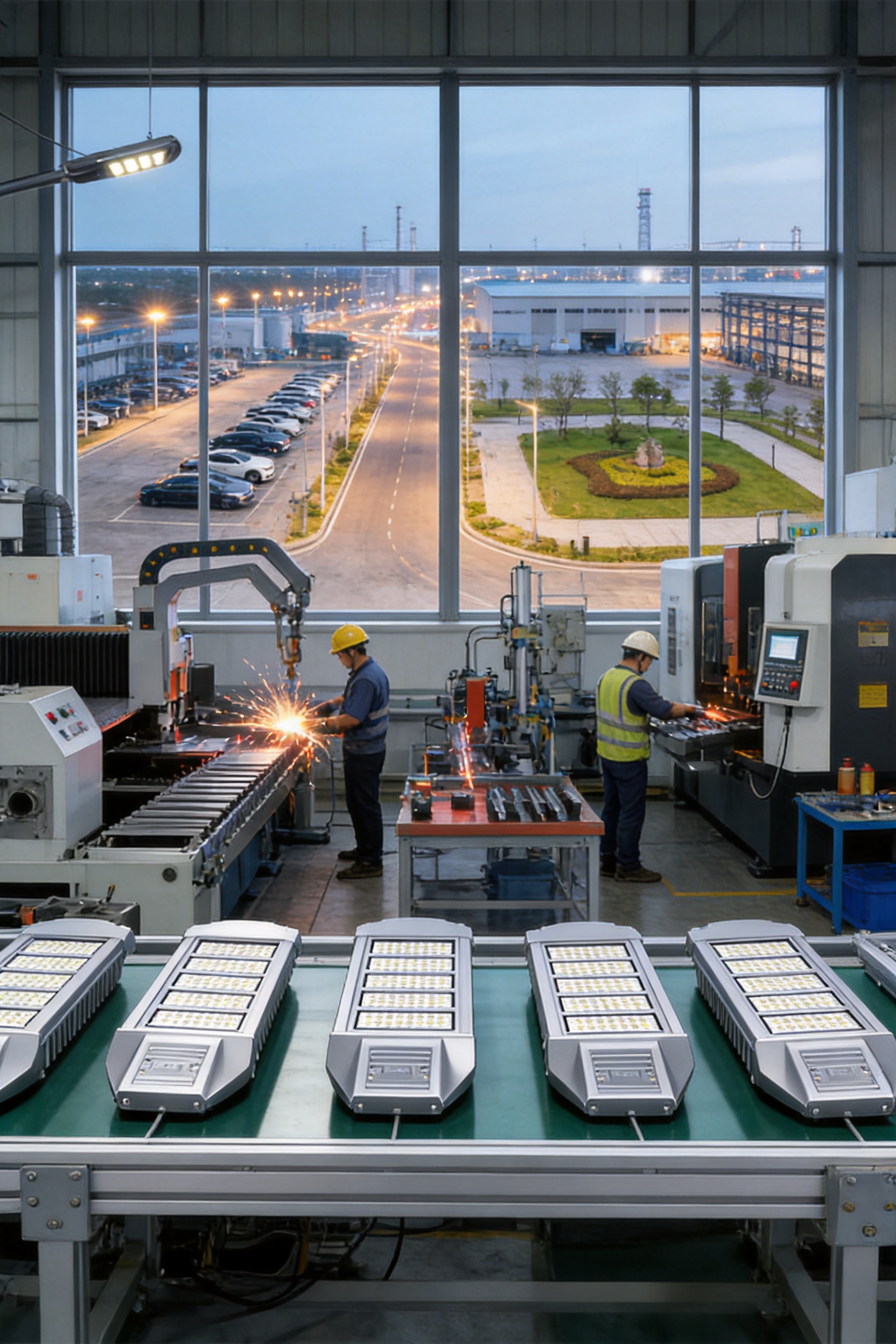
A luminaire’s performance depends not only on its LED modules and electrical specifications but also on the quality of its manufacturing process. Dimensional accuracy, weld quality, surface treatment, material selection, assembly consistency, and inspection procedures all influence the product’s service life in the field.
Yangzhou Jinyuan Lamps Co., Ltd. operates as a professional production, design, and engineering company serving the road illumination industry. Established in 2002, the company manufactures street light poles, LED street lights, solar street lights, light fixtures, and related products. Its broader product experience supports an understanding of complete outdoor lighting systems rather than isolated components.
The company covers more than 70,000 square meters, employs more than 300 professional technicians, and exports products to more than 200 countries. The company’s stated management and quality systems include ISO9001, ISO14001, and OHSAS18001-related standards. These credentials indicate an emphasis on quality management, environmental management, and occupational health and safety practices.
5.1 Material availability and selection
For related lighting structures and project products, the company identifies material options including Q235B, Q345B, S275JR, S355JR, Q460, A36, A572, GR56, and GR50. Maintaining an extensive material inventory can help reduce delays caused by raw-material shortages and support faster production scheduling.
Material selection affects strength, weldability, corrosion performance, forming behavior, and project compliance. Different applications may require different grades according to structural loading, wind conditions, local regulations, and engineering calculations. Having access to a broad range of materials gives the manufacturer greater flexibility when preparing customized poles, brackets, supporting structures, and related products.
5.2 CNC bending precision
Precise CNC bending is used to create consistent shapes and angles in metal components. Consistent bending contributes to accurate assembly, reliable alignment, and improved structural integrity. It can also reduce the need for post-production correction, which helps improve production efficiency and product uniformity.
For lighting poles and structural components, bending accuracy is important because small dimensional deviations can affect installation, bracket alignment, load distribution, and the appearance of the finished project. Computer-controlled bending helps ensure that repeated components follow the intended design more closely than manually adjusted processes.
5.3 High-accuracy cutting
The company reports cutting accuracy of up to 0.01 mm for applicable manufacturing operations. Precise cutting supports clean edges, accurate dimensions, and improved component fit. It can also reduce material waste and limit the amount of grinding or adjustment required before welding and assembly.
Accurate cutting is especially valuable when products are manufactured in batches or when several components must fit together according to engineering drawings. Better dimensional control can improve production speed while reducing the likelihood of inconsistencies between units.
5.4 Automated welding and experienced welders
Welding quality is central to the mechanical reliability of outdoor lighting structures. The company uses automated welding lines together with certified welders who have many years of experience. Automation can improve repeatability, welding speed, and process consistency, while skilled personnel remain essential for setup, inspection, complex joints, and quality verification.
Strong and consistent welds help support the structural integrity of poles, brackets, housings, and related assemblies. This is particularly important for products exposed to wind, vibration, transportation stress, and repeated temperature changes. Welding inspection should be completed according to the project’s requirements, with attention to penetration, continuity, surface condition, deformation, and any applicable non-destructive testing procedures.
5.5 Surface treatment and corrosion protection
Outdoor products require protection against corrosion because rain, humidity, pollution, salt, and temperature changes can gradually affect exposed metal surfaces. The company identifies powder electrostatic painting equipment and production processes intended to enhance anti-corrosion service life.
Electrostatic powder coating can create a durable finish when the surface is properly prepared and the coating is correctly applied and cured. Surface preparation, coating thickness, edge coverage, curing temperature, and handling after coating all affect the final result. A well-controlled process can improve appearance while also providing a protective barrier between the metal and the outdoor environment.
5.6 Die casting and component production
The company also operates a 1250-ton die-casting machine. Die casting supports the production of metal components with repeatable shapes and controlled dimensions. For lighting products, die-cast parts may be used in housings, brackets, heat-dissipation elements, covers, and other components requiring a balance of strength, precision, and production efficiency.
Advanced forming equipment can help maintain consistent product quality across larger production volumes. It can also reduce dependence on multiple external suppliers, making it easier to coordinate material flow, inspection, finishing, and assembly within one manufacturing system.
5.7 Automated production and cost control
Automated lines can improve production speed, reduce process variation, and support more consistent quality control. They may also reduce unnecessary material consumption and improve the use of labor and energy. These benefits help the manufacturer provide competitive pricing while maintaining the production capacity required for larger projects.
Competitive pricing should not be understood as simply offering the lowest initial purchase price. A professional supplier creates value by combining dependable quality, efficient manufacturing, predictable delivery, technical support, and after-sales service. These factors can reduce project risk and improve the total economic performance of a lighting installation.
6. Engineering and Customization Support
Outdoor lighting projects often require more than a standard product catalog. Pole height, roadway width, local wind speed, foundation type, mounting arrangement, lighting level, color temperature, dimming system, and appearance may vary from one project to another. The manufacturer provides engineering and customization support from initial consultation through project completion.
6.1 CAD design
CAD design helps translate project requirements into accurate drawings and production information. It can be used to confirm dimensions, mounting interfaces, bracket positions, access requirements, cable routes, and the relationship between the luminaire and supporting pole.
CAD documentation also assists communication between the supplier, contractor, consultant, and project owner. Clear drawings can reduce misunderstandings during procurement and installation, particularly when customized structures or non-standard mounting arrangements are required.
6.2 Three-dimensional product simulation
Three-dimensional product simulation allows project participants to review the proposed luminaire or supporting structure from different angles before production. This can help identify clearance problems, access limitations, aesthetic concerns, and potential conflicts with other equipment.
Three-dimensional review is valuable when products must match a specific architectural style or when multiple components are installed together. It can also support internal approval processes by providing a clearer representation than two-dimensional drawings alone.
6.3 Three-dimensional scene simulation
Scene simulation places the product within a representation of the actual application environment. Roads, parking areas, parks, building entrances, industrial sites, and public spaces can be evaluated visually before the equipment is manufactured or installed.
This process can help stakeholders assess the scale, appearance, mounting position, and relationship between the lighting fixture and nearby structures. Although a visual simulation does not replace a professional photometric calculation, it is a useful communication and design-review tool.
6.4 Specification and color customization
Project owners may require different specifications, finishes, colors, mounting details, or electrical configurations. Customization allows the product to align with technical requirements and visual guidelines. Color and finish selection can be particularly important for parks, campuses, commercial developments, residential-adjacent areas, and architectural projects.
Customized specifications should be confirmed in writing before production. The confirmation should include dimensions, input requirements, LED configuration, color temperature, dimming method, protection rating, mounting details, finish, packaging, inspection requirements, and applicable documentation.
6.5 Wind and foundation calculations
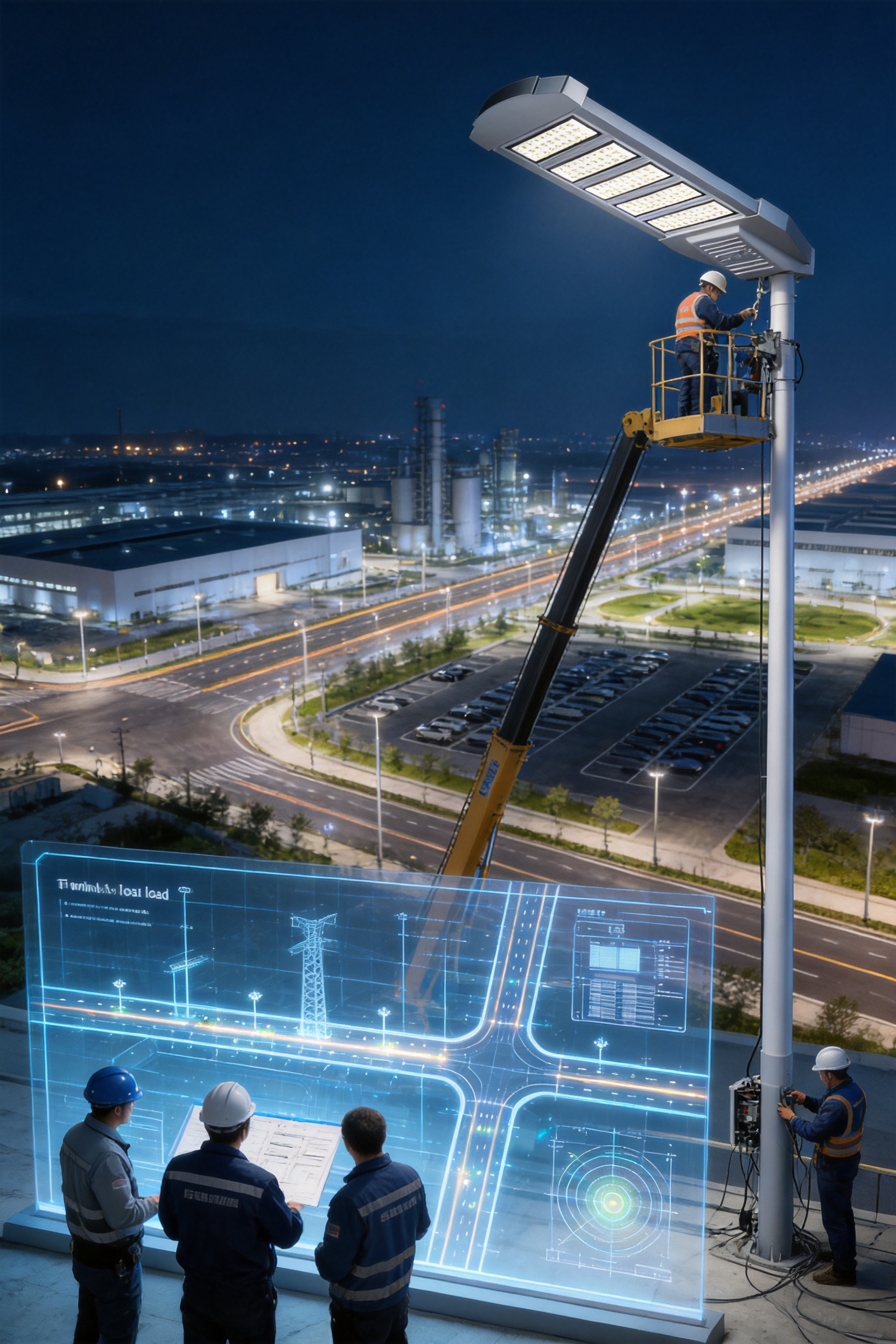
Outdoor lighting structures must be designed for the environmental loads expected at the installation site. The company provides mechanical calculation support for wind and foundation requirements. These calculations can help determine pole dimensions, base plate details, anchor-bolt arrangements, foundation size, and installation requirements.
Wind design should account for local wind speed, exposure category, terrain, luminaire area, mounting height, structural geometry, and any additional attachments. Foundation design should be coordinated with soil conditions, concrete strength, reinforcement, anchor-bolt placement, drainage, and local construction standards.
These engineering services are particularly valuable for large infrastructure projects because they help connect the lighting product with the supporting civil and structural works. Correct coordination reduces the possibility of field modifications, delays, or installation difficulties.
6.6 Overseas installation guidance
International projects may involve local contractors who are unfamiliar with the supplier’s product details. Overseas onsite installation guidance can help teams understand assembly procedures, mounting orientation, cable connections, commissioning steps, and basic troubleshooting.
Good installation support can protect the performance of the product and reduce avoidable errors. It also gives the project owner greater confidence that the equipment will be installed according to the approved design and technical documentation.
7. Quality, Reliability, and Project Risk Management
Quality control should cover the entire product life cycle, beginning with material procurement and continuing through fabrication, assembly, testing, packaging, transportation, installation, and service. A high-brightness luminaire may have excellent specifications on paper, but its field performance depends on whether each manufacturing and installation stage is properly controlled.
7.1 Incoming material control
Raw materials and purchased components should be checked against approved specifications. Metal thickness, alloy or steel grade, dimensions, surface condition, electrical components, seals, fasteners, and packaging materials can all affect final product quality. Organized material control helps prevent incorrect or inconsistent components from entering production.
7.2 Process inspection
Inspection during bending, cutting, welding, coating, die casting, and assembly can identify problems before they become more difficult or expensive to correct. Process inspection may include dimensional checks, visual examination, weld review, coating inspection, component verification, and functional testing.
Consistent process inspection is particularly important for customized products. A standard item may follow a well-established production route, while a customized configuration can introduce new dimensions, interfaces, materials, or finishing requirements.
7.3 Electrical and functional checks
Finished luminaires should be checked for electrical safety, input compatibility, dimming function, light output, mechanical integrity, sealing condition, and general appearance. The exact test program should reflect the product configuration, applicable standards, customer specifications, and destination-market requirements.
Functional checks can help verify that the fixture operates correctly before shipment. They can also provide documentation for project records, quality acceptance, and future maintenance reference.
7.4 Packaging and transportation
Outdoor luminaires may travel long distances before reaching the project site. Packaging must protect housings, lenses, connectors, brackets, and finished surfaces against impact, moisture, abrasion, and vibration. Correct labeling and packing lists also support efficient receiving and installation.
For international shipments, packaging should be coordinated with container loading, customs documentation, handling equipment, and local storage conditions. Protecting the product during transportation is an important part of delivering quality to the customer.
8. Total Cost of Ownership
The economic value of an outdoor luminaire should be evaluated over its operating life rather than by purchase price alone. Total cost of ownership may include equipment cost, shipping, installation, electricity, maintenance, replacement parts, access equipment, control-system integration, and disposal.
The high-brightness LED luminaire can contribute to lower total cost through high luminous efficiency, reduced maintenance needs, durable construction, flexible controls, and long warranty support. The actual financial result depends on operating hours, local electricity prices, system design, environmental conditions, maintenance practices, and the number of fixtures installed.
For a large road project, a small reduction in power consumption per fixture can produce substantial cumulative savings. For a remote or high-mounted installation, avoiding frequent maintenance visits may be equally important. For a smart-lighting project, dimming compatibility can create additional savings by adjusting output according to actual demand.
Project owners should request a complete lifecycle assessment that includes the proposed wattage, expected operating schedule, lighting levels, control strategy, maintenance plan, warranty terms, and replacement assumptions. Comparing products using these factors provides a more accurate assessment than comparing lumen output or unit price alone.
9. Installation and Operating Recommendations
Correct installation is essential for achieving the intended performance of any outdoor luminaire. Before installation, the contractor should verify the product model, mounting accessories, cable requirements, electrical supply, pole condition, foundation readiness, and approved drawings.
9.1 Confirm the lighting layout
The final installation should follow the approved photometric and structural design. Pole spacing, mounting height, tilt angle, orientation, and aiming direction should not be changed without reviewing the effect on illumination, uniformity, glare, and structural loading.
9.2 Protect electrical connections
Cables and connectors should be selected for outdoor use and installed in a manner that prevents water accumulation, excessive bending, abrasion, and mechanical stress. Grounding and surge-protection arrangements should comply with the applicable electrical requirements of the project location.
9.3 Maintain housing and optical surfaces
Dirt, dust, pollution, and bird deposits can reduce light output if they accumulate on the optical surface. Periodic inspection and cleaning should be included in the maintenance schedule. Cleaning methods should be compatible with the lens, coating, gasket, and housing materials.
9.4 Use controls carefully
When DC 0–10V or DALI control is used, the control wiring, addressing, commissioning, and operating schedule should be tested before handover. The project team should document default settings, dimming levels, fault responses, and manual override procedures so that facility operators can manage the system effectively.
9.5 Keep technical records
Product models, installation locations, commissioning dates, wiring diagrams, warranty information, inspection records, and maintenance activities should be retained. Accurate records help identify recurring issues, organize spare parts, and support warranty claims when necessary.
10. Why the Manufacturer Is a Strong Project Partner
A lighting supplier’s value is determined by more than product availability. Projects benefit from suppliers that can understand technical requirements, manufacture consistently, provide engineering documents, support customization, coordinate delivery, and assist during installation.
Yangzhou Jinyuan Lamps Co., Ltd. offers a broad combination of production and engineering capabilities. Its experience in street light poles, LED street lights, solar street lights, light fixtures, and related infrastructure allows it to support projects that involve multiple outdoor lighting products. This broader understanding can simplify coordination when a customer requires luminaires together with poles, brackets, foundations, solar systems, or other road-lighting components.
The company’s manufacturing site, technical workforce, production equipment, international export experience, and quality-management orientation provide a foundation for serving both standard orders and larger customized projects. Its stated export reach of more than 200 countries also reflects experience with international customer requirements, logistics, and project communication.
Another important strength is the ability to offer support from the consultation stage to project completion. CAD design, three-dimensional simulation, specification and color customization, wind and foundation calculations, and overseas installation guidance create a more complete service package than a product-only transaction.
For distributors and contractors, this can make the product easier to market and integrate. For engineering companies, it can reduce the number of suppliers involved in design and fabrication. For project owners, it can provide a clearer line of responsibility and better access to technical support.
11. Recommended Selection Process
Customers considering the high-brightness LED outdoor lighting luminaire should begin by defining the application. The supplier should be informed about the road or area type, mounting height, pole arrangement, environmental conditions, operating hours, local voltage, control requirements, target color temperature, and applicable standards.
The next step is a photometric and structural review. Lighting calculations should verify illuminance, luminance, uniformity, glare, spacing, and energy consumption. Structural calculations should verify the pole, bracket, foundation, anchor bolts, and wind-load assumptions.
A sample or technical data package may then be reviewed. Important documents can include product drawings, electrical specifications, photometric files, installation instructions, warranty conditions, inspection procedures, coating information, and packaging details.
Before mass production, customers should approve the final configuration in writing. Approval should cover the exact model, dimensions, materials, finish, color temperature, input voltage, dimming type, mounting interface, labeling, packaging, and required testing.
After delivery, installation and commissioning should follow the approved documentation. The project team should inspect the products upon arrival, record any transportation damage, verify quantities, test the electrical system, and confirm the lighting and control performance during nighttime operation.
12. Q&A
Q1: What is the primary application of this LED outdoor lighting luminaire?
The primary application is road lighting, but the luminaire is also suitable for parking lots, parks, industrial compounds, logistics areas, campuses, commercial developments, pedestrian zones, and other large outdoor spaces requiring powerful and reliable illumination.
Q2: What makes the luminaire energy efficient?
The luminaire uses an LED light source with a stated luminous efficiency of up to 140 lm/W. This allows the fixture to produce substantial visible light with controlled electrical consumption. Dimming support through DC 0–10V or DALI can provide additional savings when output is adjusted according to traffic, occupancy, or scheduled operating periods.
Q3: Is the product suitable for changing outdoor weather conditions?
Yes. The luminaire uses an aluminum alloy housing and has an IP65 protection rating. It is specified for an operating temperature range of -35°C to 65°C. These features support use in many outdoor climates, although the complete installation must still be designed according to local environmental, electrical, and structural conditions.
Q4: What color temperatures are available?
The product supports color temperatures from 3000K to 6000K. This range allows customers to select a warmer or cooler light appearance according to the application, local requirements, visual comfort objectives, and surrounding environment.
Q5: Can the luminaire be connected to a smart lighting system?
The luminaire supports DC 0–10V and DALI dimming. These control methods can be integrated into suitable lighting-management systems. The exact system architecture should be confirmed with the supplier and control-system integrator before procurement.
Q6: What is the warranty period?
The stated warranty period is five years. Customers should review the complete warranty terms, including operating conditions, installation requirements, exclusions, documentation, and procedures for handling warranty claims.
Q7: Why is aluminum alloy used for the lamp housing?
Aluminum alloy offers a useful combination of low weight, mechanical strength, corrosion resistance, and thermal conductivity. It can help protect internal components and transfer heat away from LED modules and driver components, supporting stable operation and service life.
Q8: Does the manufacturer provide customized products?
Yes. The available services include CAD design, three-dimensional product simulation, three-dimensional scene simulation, specification and color customization, mechanical calculations for wind and foundations, and overseas onsite installation guidance. Customized requirements should be confirmed before production.
Q9: How does the manufacturer support large projects?
The manufacturer combines production, design, engineering, material management, CNC bending, accurate cutting, welding, surface treatment, die casting, automated production, and quality control. This integrated capability can support large-volume orders and customized road-lighting projects.
Q10: What should be checked before ordering?
Customers should confirm the application, lighting layout, input voltage, power requirement, color temperature, dimming method, mounting arrangement, protection rating, operating environment, surface finish, delivery schedule, inspection requirements, warranty terms, and applicable standards.
Q11: Can the product replace every conventional outdoor lamp directly?
Not necessarily. A proper replacement requires a photometric review, electrical compatibility check, mounting assessment, and structural evaluation. The LED luminaire may provide better efficiency and control flexibility, but the final selection should be based on the complete lighting design rather than a simple one-for-one substitution.
Q12: How can users preserve long-term performance?
Users should install the luminaire according to approved instructions, maintain correct cable connections and grounding, keep optical surfaces clean, inspect the housing and mounting hardware, verify dimming performance, and maintain accurate service records. Regular inspection is especially important in dusty, coastal, industrial, or high-traffic environments.
13. Conclusion
The high-brightness LED outdoor lighting luminaire is designed for projects that require powerful illumination, efficient energy use, reliable outdoor protection, and flexible system integration. Its 140 lm/W luminous efficiency, AC85–265V input range, aluminum alloy housing, IP65 protection rating, -35°C to 65°C operating range, adjustable color temperature, DC 0–10V and DALI dimming support, and five-year warranty provide a practical specification package for road and area lighting.
Compared with conventional outdoor lighting, the luminaire can offer advantages in energy consumption, maintenance planning, control capability, start-up performance, and long-term operating value. Its benefits are strengthened by the manufacturer’s ability to provide engineering design, customization, mechanical calculations, production support, and installation guidance.
The manufacturing process is an important part of the product’s value. Material availability, CNC bending, accurate cutting, automated and skilled welding, electrostatic powder coating, die casting, automated production lines, and quality-management systems contribute to consistent and durable products. These capabilities help the manufacturer support both standard lighting requirements and complex international infrastructure projects.
For project owners, contractors, distributors, and engineering companies, the most effective approach is to evaluate the luminaire as part of a complete lighting solution. When the product is matched with an accurate photometric design, suitable structural support, proper electrical installation, effective control strategy, and planned maintenance program, it can provide dependable illumination and measurable lifecycle value across many outdoor applications.
References
1. Product technical information supplied for the high-brightness LED outdoor lighting luminaire, including electrical, optical, mechanical, environmental, dimming, and warranty specifications.
2. Manufacturer information supplied for Yangzhou Jinyuan Lamps Co., Ltd., including company history, production capabilities, product categories, engineering services, quality systems, and export experience.
3. General principles of LED lighting efficiency, thermal management, outdoor luminaire protection, and lighting-control integration.
4. General guidance for road-lighting design, outdoor area illumination, photometric evaluation, glare control, uniformity, and energy management.
5. General engineering practices for metal fabrication, CNC bending, precision cutting, welding, powder coating, die casting, corrosion protection, and structural quality control.