


JINYUAN
JINYUAN
JINYUAN
JINYUAN
JINYUAN
JINYUAN
JINYUAN
JINYUAN
JINYUAN
JINYUAN
JINYUAN
JINYUAN
JINYUAN
JINYUAN
JINYUAN
JINYUAN
Content
- 1 Product Overview and Design Concept
- 2 Double-Fork Cantilever Structure and Competitive Advantages
- 3 LED Optical Performance and Roadway Visibility
- 4 Materials, Protection, and Long-Term Outdoor Durability
- 5 Electrical Characteristics and Smart-Control Readiness
- 6 Manufacturing Strength and Quality Assurance
- 7 Product Specifications
- 8 Applications in Urban and Infrastructure Projects
- 9 Design, Customization, and Project Services
- 10 Installation and Commissioning Considerations
- 11 Maintenance and Lifecycle Value
- 12 Why This Product Offers Strong Project Value
- 13 Recommended Specification Process for Buyers
- 14 Questions and Answers
- 14.1 What type of product is the Double-Fork Cantilever LED Single-Arm Street Light?
- 14.2 What is the main advantage of the double-fork structure?
- 14.3 What pole heights are available?
- 14.4 What input voltage does the luminaire support?
- 14.5 Can the street light be dimmed?
- 14.6 Is the product suitable for smart-city lighting systems?
- 14.7 What is the ingress-protection rating?
- 14.8 What color temperatures are available?
- 14.9 What materials are used?
- 14.10 Can the pole and finish be customized?
- 14.11 Does the manufacturer provide structural engineering support?
- 14.12 Does the company support installation outside China?
- 14.13 What is the warranty period?
- 14.14 How efficient is the LED system?
- 14.15 What manufacturing capabilities support this product?
- 15 Conclusion
- 16 References
- 17 Product: Double-Fork Cantilever LED Single-arm Street Light
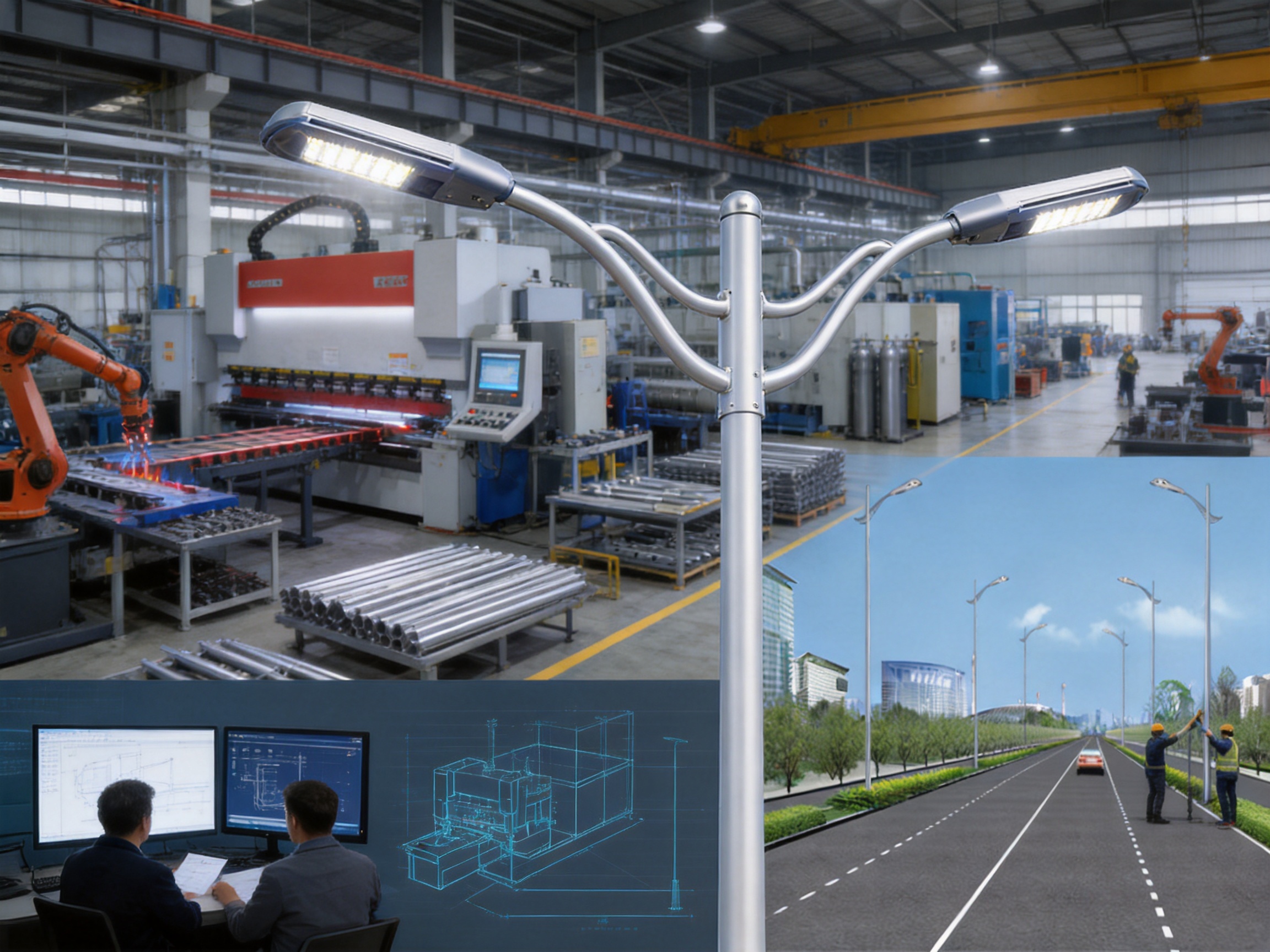
Modern urban lighting is no longer judged only by whether a road is illuminated. Municipal authorities, developers, engineering contractors, and infrastructure operators increasingly expect street lighting to deliver a coordinated combination of structural reliability, optical precision, energy efficiency, visual quality, environmental resistance, smart-control readiness, and long-term service value. The Double-Fork Cantilever LED Single-Arm Street Light has been developed to meet these requirements through a distinctive mechanical structure, high-performance LED technology, precision manufacturing, and flexible project support.
Designed for roads, urban boulevards, business districts, municipal improvement programs, and architectural landscape projects, this luminaire combines a strong double-fork cantilever connection with a clean geometric appearance. The supporting structure gives the lamp head a stable connection to the pole while creating a visually light and agile profile. This balance between engineering function and architectural expression allows the product to perform effectively in demanding outdoor environments without appearing excessively heavy or industrial.
The product is manufactured by Yangzhou Jinyuan Lamps Co., Ltd., a professional road illumination manufacturer with experience in street light poles, LED lighting systems, solar street lights, lighting fixtures, and related infrastructure products. The company operates a production site of more than 70,000 square meters, employs more than 300 professional technicians, and serves customers in more than 200 countries. Its manufacturing and project capabilities support both standard orders and customized lighting programs requiring detailed design, structural calculation, optical selection, coating, and installation guidance.
Product Overview and Design Concept
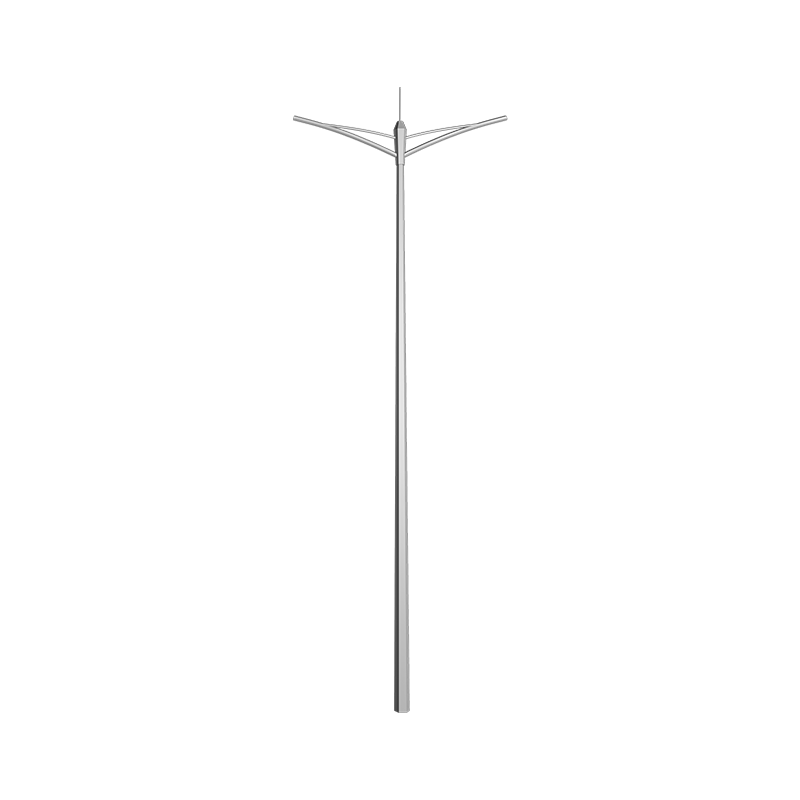
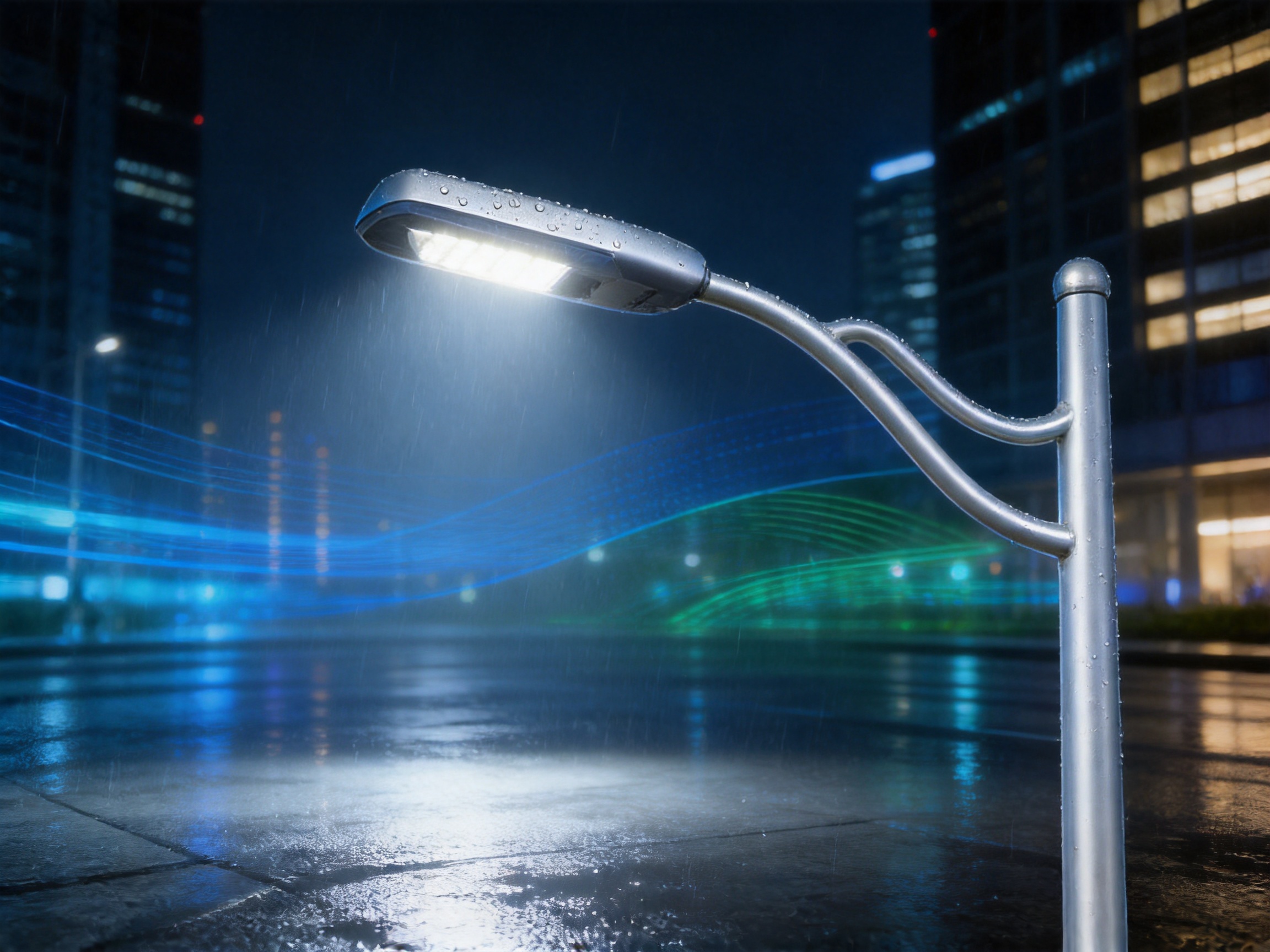
The Double-Fork Cantilever LED Single-Arm Street Light is a road-lighting system designed around a single lamp arm with a two-point forked support structure. Unlike a conventional single-bracket connection, the double-fork cantilever distributes the connection between the pole and luminaire across two supporting points. This configuration improves the visual balance of the assembly while helping manage the mechanical stresses produced by wind, vibration, and the weight of the lamp head.
The design language is intentionally geometric. The two supporting forks create a precise visual rhythm that complements modern roads, commercial districts, technology parks, civic centers, and wide landscape boulevards. In comparison with bulky traditional brackets, the structure presents a lighter appearance while retaining the strength required for outdoor use. This makes it suitable for projects where lighting equipment must contribute to the overall streetscape rather than simply function as a utility component.
The luminaire is available for pole heights from 6 meters to 10 meters. This range supports a variety of road classifications and installation conditions, including local streets, collector roads, urban avenues, access roads, parking areas, and public-space circulation routes. The final pole height, arm geometry, foundation design, and optical distribution can be selected according to road width, mounting arrangement, traffic requirements, local wind conditions, and project aesthetics.
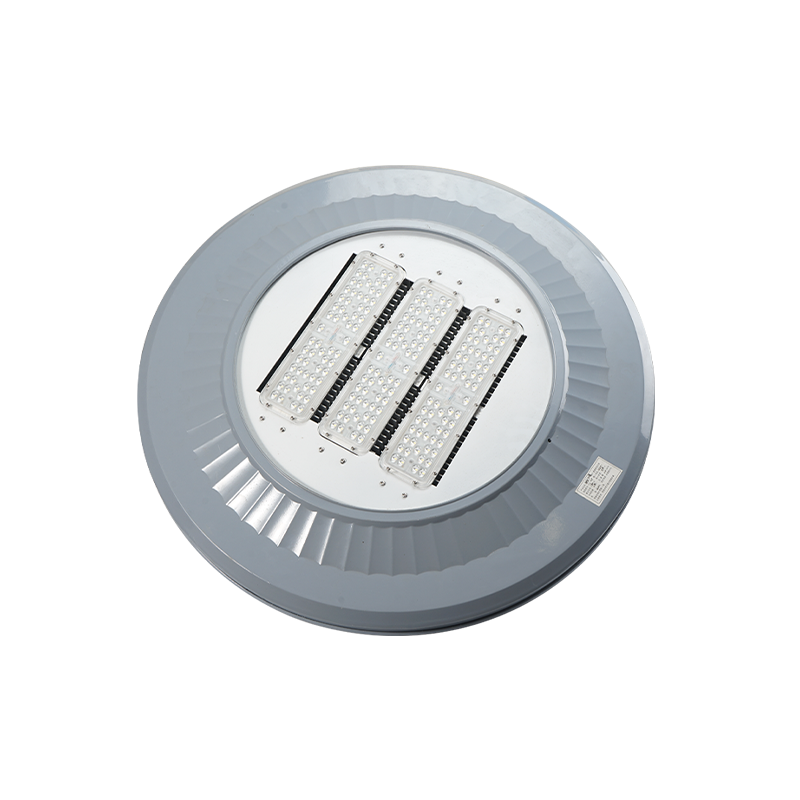
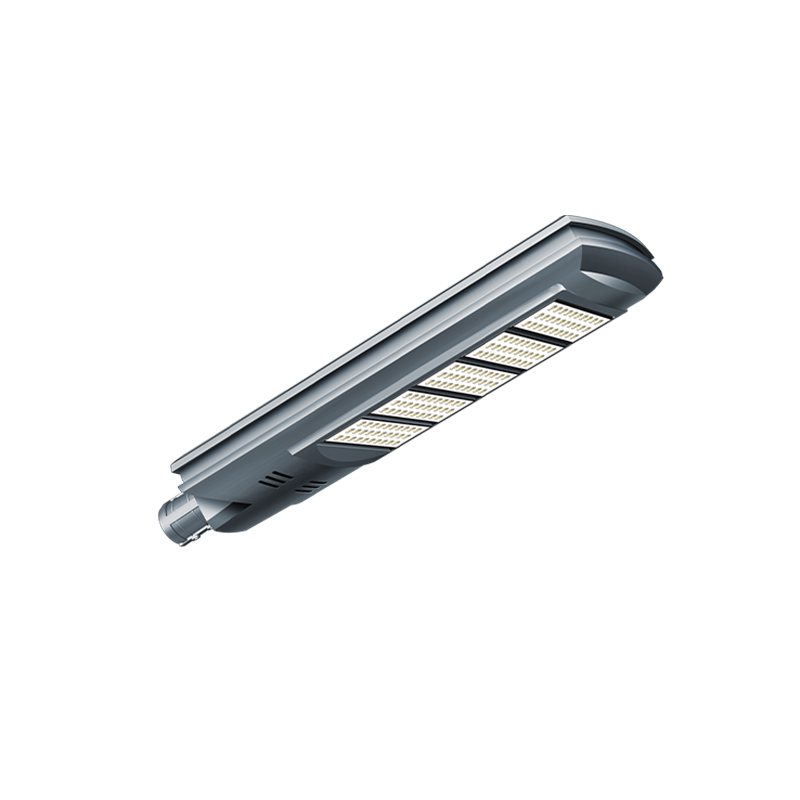
At the lighting level, the product uses an LED light source combined with precision optical lenses. The optical system is designed to direct light toward the roadway rather than dispersing it unnecessarily into surrounding areas. This approach can improve useful illumination, reduce glare, limit wasted upward light, and create a more comfortable nighttime visual environment for drivers, cyclists, and pedestrians.
The lamp housing uses aluminum alloy, providing a practical combination of low weight, thermal performance, corrosion resistance, and manufacturing flexibility. The housing is designed for outdoor service and is rated IP65 for protection against dust and water jets. The pole may be produced from Q235, Q355, SS400, GR65, or other specified steel grades, depending on structural requirements, regional standards, and customer preferences.
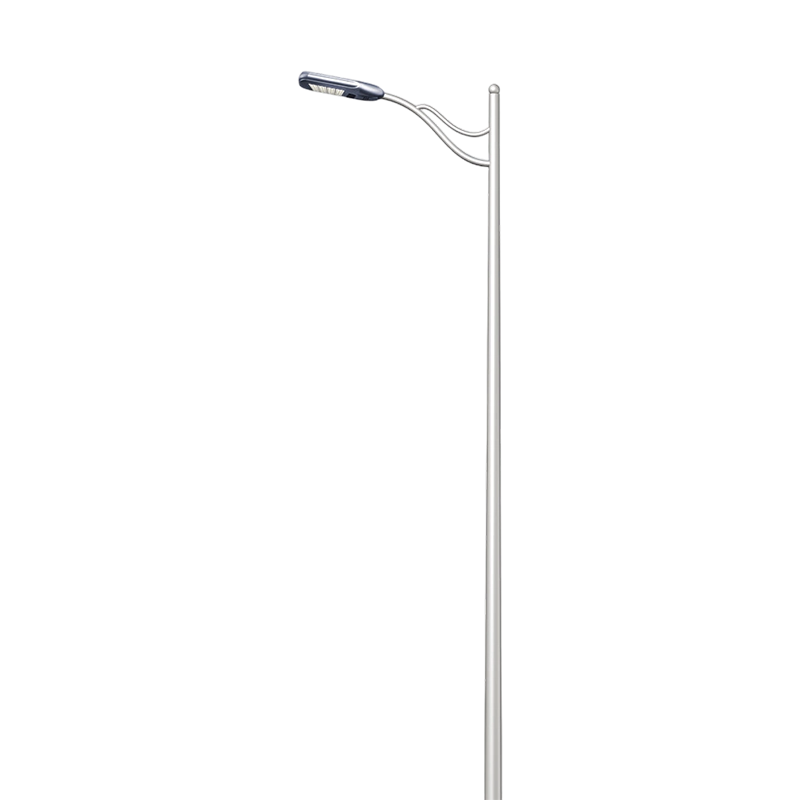
Double-Fork Cantilever LED Single-arm Street Light
Double-Fork Cantilever Structure and Competitive Advantages
Balanced Mechanical Support
The central competitive feature of this street light is its double-fork cantilever structure. A lamp head mounted on a projecting arm is exposed to wind pressure, vibration, and repeated environmental loading. The connection between the pole and the lamp assembly therefore has a direct influence on the stability and service life of the complete lighting system.
By using two supporting connection points, the double-fork design helps distribute mechanical loads over a broader area than a simple single-point bracket. This can reduce localized stress concentrations and improve the overall stability of the arm and luminaire assembly. The structure is particularly valuable in open boulevards, coastal environments, high-wind regions, and locations where seasonal storms create demanding outdoor conditions.
The design also supports a more stable visual alignment of the lamp head. When properly engineered and installed, the forked connection helps maintain the intended orientation of the luminaire and reduces the risk of visible sagging or misalignment. Consistent lamp orientation is important for road-lighting performance because even small changes in tilt can influence the distribution of light on the roadway.
Improved Seismic and Environmental Performance
Street lighting poles are exposed to dynamic conditions throughout their operating life. Wind gusts, vehicle-induced vibration, thermal expansion, maintenance activity, and occasional seismic movement can all affect the pole, arm, fasteners, and luminaire. The double-point support structure helps improve the load path between the lamp head and the pole, supporting better resistance to these repeated forces.
It is important to understand that final structural performance depends on the complete installation, including pole dimensions, steel grade, wall thickness, arm projection, foundation design, anchor bolts, soil conditions, wind speed, and local code requirements. Nevertheless, the double-fork concept provides a strong engineering foundation for designing a reliable single-arm lighting assembly.
For projects located in severe climatic areas, the manufacturer can support mechanical calculation for wind and foundation design. This service allows the lighting system to be assessed as a complete structure rather than treated as a generic catalog item. Such project-specific verification can help reduce installation risk and support compliance with local engineering requirements.
Distinctive Appearance for Contemporary Streetscapes
Many infrastructure projects require lighting equipment that is technically reliable but visually restrained. Large, conventional brackets can dominate a streetscape, especially when installed along pedestrian-oriented boulevards or near modern buildings. The double-fork cantilever offers an alternative with a more refined and architectural appearance.
The forked support creates a sense of lightness and movement. Its geometric lines can complement contemporary facades, glass buildings, landscaped median strips, public plazas, office parks, and commercial developments. Because the product maintains a clean single-arm arrangement, it can deliver directional roadway lighting without creating the visual complexity associated with multiple projecting arms.
This design advantage is especially relevant for business districts and high-end urban improvement projects. A well-designed street light can contribute to a consistent public-realm identity, reinforce a city’s architectural character, and improve the perceived quality of roads and public spaces during both daytime and nighttime.
Practicality Without Decorative Excess
Although the product has a distinctive appearance, its design is not based on decoration alone. Each major feature supports a practical requirement. The double-fork connection contributes to structural stability, the single-arm configuration supports roadway coverage, the aluminum-alloy housing helps manage weight and heat, and the standardized interface facilitates installation and future upgrades.
This combination differentiates the product from lighting fixtures that focus heavily on appearance while offering limited adaptability. It also provides an alternative to purely utilitarian products that may meet basic illumination requirements but lack the visual quality expected in modern urban projects.
LED Optical Performance and Roadway Visibility
High-Efficiency LED Light Source
The luminaire uses a high-performance LED light source with a stated luminous efficiency of up to 140 lumens per watt. High luminous efficiency means that more useful light can be produced from each watt of electrical input, supporting lower energy consumption compared with older conventional light sources or less efficient LED systems.
Energy performance is influenced by more than the LED chip itself. The optical lens, driver, thermal design, operating current, ambient temperature, maintenance condition, and lighting-control strategy all contribute to real-world results. The product’s optical system is therefore designed to work together with the LED source so that a larger proportion of emitted light is directed toward the road surface.
Efficient roadway illumination can help municipalities reduce operating costs, lower carbon emissions, and optimize infrastructure budgets. In large-scale projects involving hundreds or thousands of luminaires, even moderate improvements in energy use can result in meaningful savings over the operating life of the installation.
Precision Light Distribution
Road lighting requires controlled distribution rather than indiscriminate brightness. Excessive lateral spread can create light trespass, while insufficient forward projection may leave dark areas between poles. Excessive upward emission can waste energy and contribute to sky glow. The precision optical lens system is intended to guide light more accurately across the target area.
Appropriate optical distribution helps create more uniform luminance and illuminance along the road. Uniformity is important because drivers need to identify roadway geometry, pedestrians, cyclists, lane boundaries, roadside objects, and changes in traffic conditions. Sudden transitions between bright and dark areas can increase visual fatigue and reduce comfort.
The final photometric result depends on pole spacing, mounting height, road width, arm projection, luminaire tilt, lane arrangement, pavement reflectance, and selected optical distribution. For this reason, professional lighting design and simulation should be conducted before large-scale deployment. The manufacturer’s CAD design and 3D simulation capabilities can support this planning stage.
Reduced Glare and Improved Nighttime Comfort
Glare is a major concern in urban road lighting. A light source that is too bright at high viewing angles can reduce visual comfort and interfere with a driver’s ability to perceive objects beyond the luminaire. The product is designed to maintain high-brightness illumination while limiting unnecessary glare through controlled optical distribution and appropriate fixture orientation.
Reduced glare benefits more than vehicle drivers. Pedestrians, cyclists, residents, security personnel, and workers also experience improved comfort when lighting is directed effectively. In mixed-use areas, controlled illumination can help preserve a pleasant atmosphere without sacrificing safety.
Glare management should be considered during layout design and installation. Correct mounting height, aiming angle, spacing, and optical selection are essential. A technically advanced luminaire can deliver poor results if it is installed at an unsuitable angle or used outside its intended application range.
Color Temperature and Color Rendering
The available color-temperature range is 3000K to 6000K. This range allows project owners and lighting designers to select a warmer or cooler appearance according to road function, urban identity, climate, and surrounding architecture.
Warmer color temperatures can create a welcoming atmosphere in residential neighborhoods, historic areas, landscaped boulevards, and pedestrian-oriented locations. Neutral or cooler color temperatures may be preferred for industrial roads, large transport corridors, commercial districts, and areas requiring a crisp visual appearance.
The stated color rendering index is Ra 70. This level provides practical color recognition for general roadway applications. It enables users to distinguish common objects, vehicles, signs, and surroundings while supporting efficient municipal lighting design. Projects with specialized architectural, security, or public-space requirements should confirm whether a higher color-rendering specification is necessary.
Materials, Protection, and Long-Term Outdoor Durability
Aluminum-Alloy Lamp Housing
The lamp housing is made from aluminum alloy. Aluminum alloy is widely used in outdoor LED lighting because it combines relatively low mass with good thermal conductivity. Effective heat dissipation is important because excessive LED and driver temperatures can accelerate component aging, reduce luminous maintenance, and shorten operating life.
A lighter housing can also reduce the mechanical load applied to the cantilever arm and pole. This is particularly relevant for single-arm configurations, where the projecting assembly creates a moment at the pole connection. Lower weight, when combined with appropriate structural design, can contribute to a more efficient and balanced system.
Aluminum alloy also supports precise casting and machining processes. This allows the housing to be formed with controlled interfaces for lenses, seals, fasteners, mounting components, and maintenance access. Consistent housing geometry helps improve assembly quality and supports repeatable product performance.
IP65 Protection
The product carries an IP65 rating. The first digit indicates protection against dust ingress, while the second digit indicates protection against water projected from different directions. This rating is appropriate for many outdoor road-lighting environments where the luminaire may encounter rain, airborne dust, and water spray.
Protection performance depends on the integrity of the housing, gasket, lens, cable entry, fasteners, and maintenance procedures. During installation and service, covers and sealing elements should be handled carefully. Cable glands should be correctly tightened, and any opened enclosure should be properly resealed according to the manufacturer’s instructions.
IP65 protection does not mean that the luminaire should be submerged or exposed to conditions beyond its design parameters. For projects involving flooding, salt spray, chemical exposure, or unusually aggressive environments, additional material, coating, sealing, or corrosion requirements should be evaluated during specification.
Multi-Stage Anti-Corrosion Treatment
The steel pole receives multiple anti-corrosion spray processes intended to support long-term surface cleanliness and rust resistance. Outdoor poles are exposed to rainfall, humidity, ultraviolet radiation, airborne contaminants, temperature changes, and potentially de-icing salts or coastal aerosols. Surface preparation and coating quality therefore have a direct influence on service life and appearance.
A well-controlled corrosion-protection process normally includes material preparation, cleaning, surface treatment, coating application, curing, inspection, and packaging protection. The exact system can be selected according to local environmental conditions and customer requirements. Projects in coastal or industrial areas may require enhanced coating thickness, specialized primers, additional topcoats, or other corrosion-control measures.
Maintaining a clean and corrosion-resistant pole surface has both technical and aesthetic value. It helps protect the structural steel while preserving the visual quality of the streetscape. This is particularly important in commercial districts, public plazas, tourism developments, and urban regeneration programs where lighting poles remain prominent in daytime views.
Electrical Characteristics and Smart-Control Readiness
Wide Input Voltage Range
The luminaire is specified for AC85-265V input voltage. This wide operating range provides flexibility for different electrical networks and helps accommodate voltage variation that may occur in practical municipal systems. Before installation, the local power supply, frequency, grounding method, surge-protection requirements, and control cabinet arrangement should be verified.
Electrical compatibility is a major factor in international projects. A broad voltage range can simplify product selection across different markets, although local certification, wiring standards, safety regulations, and grid conditions must still be confirmed by the project team.
Dimming and Control Interfaces
The product supports DC 0-10V and DALI dimming. These interfaces provide options for integrating the luminaire into centralized or distributed lighting-control systems. Dimming can reduce energy consumption during periods of lower traffic, support adaptive lighting strategies, and provide more flexible management of urban infrastructure.
DC 0-10V control is widely used in lighting applications and can support straightforward analog dimming arrangements. DALI provides digital communication and can support more detailed addressing, configuration, monitoring, and control functions depending on the system architecture and installed components.
Control-system compatibility should be reviewed before procurement. The lighting controller, driver, communication gateway, cabinet, sensors, software, and network protocol must work together. A clear control strategy should define operating schedules, dimming levels, fault reporting, emergency behavior, manual override, and cybersecurity responsibilities.
Reserved Space for Smart Modules
The internal structure reserves space for smart-control modules. This supports the gradual transition from conventional street lighting to connected urban infrastructure. Depending on the selected configuration, future systems may include remote dimming, energy monitoring, fault alarms, operation scheduling, traffic-responsive control, environmental sensing, and asset-management functions.
Smart readiness is valuable because municipalities may not want to install every connected function during the first project phase. A lighting system with a standardized interface and available internal space can be upgraded later as budgets, communication networks, and city-management priorities develop.
Connected street lighting can become part of a broader urban Internet of Things platform. It may communicate with central management software, public-safety systems, traffic-management platforms, environmental sensors, parking systems, and energy-monitoring applications. The lighting pole can therefore serve as an infrastructure platform rather than a single-purpose electrical asset.
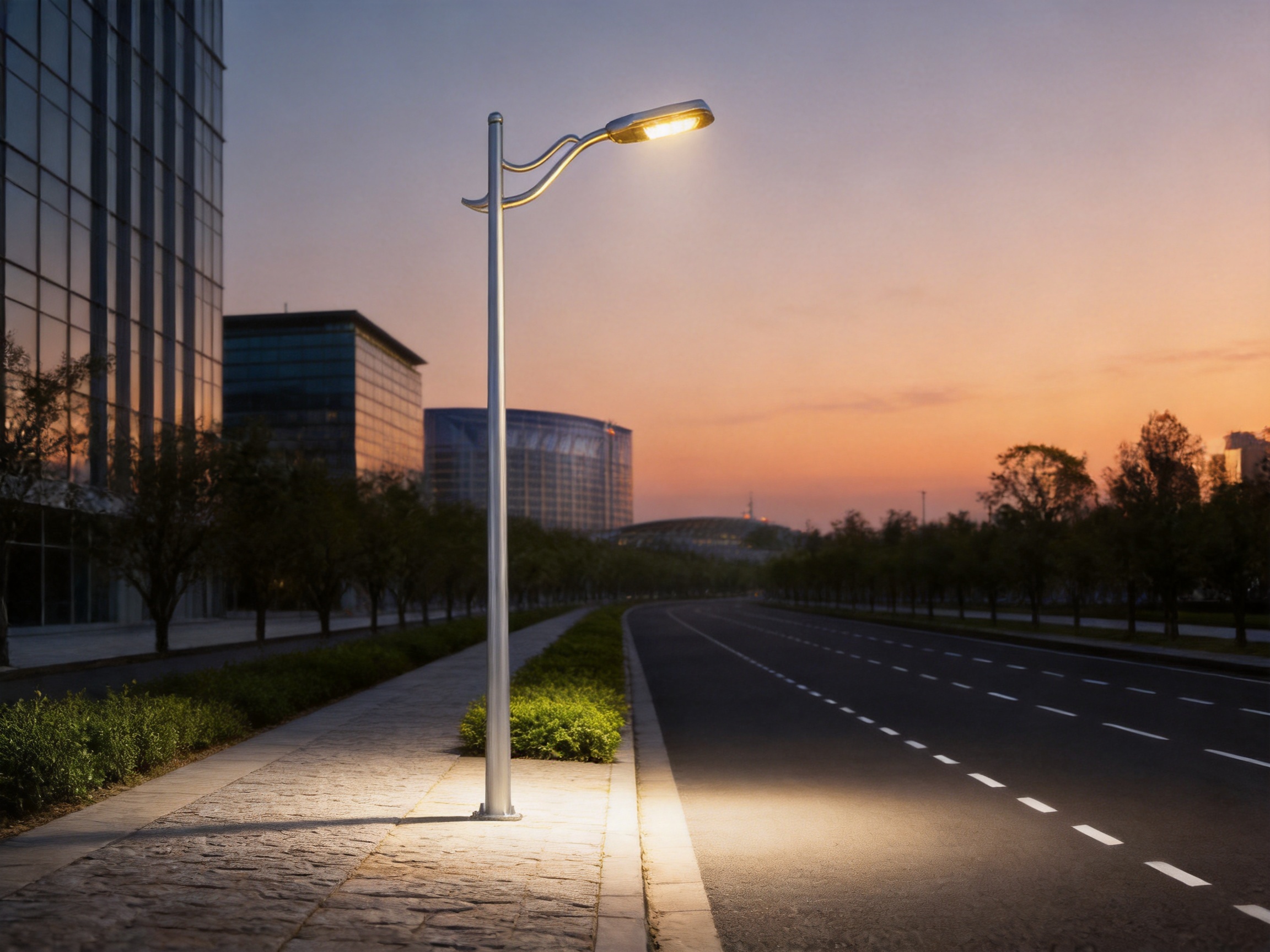
Manufacturing Strength and Quality Assurance
Extensive Material Options and Stock Management
The manufacturer offers a broad range of steel-material options, including Q235B, Q345B, S275JR, S355JR, Q460, A36, A572, GR56, and GR50, among others. Material selection can be matched to structural calculations, regional specifications, customer standards, and availability requirements.
Extensive material stock helps reduce procurement delays and supports faster production planning. In infrastructure projects, delivery reliability is often as important as product price. A lighting supplier that can maintain material availability is better positioned to respond to urgent schedules, phased construction, replacement requirements, and large-volume orders.
Material traceability and incoming inspection are important parts of quality control. Steel should be checked against specified grades and dimensions, while aluminum components, electrical parts, coatings, fasteners, and seals should be verified before entering production. Such controls establish a reliable foundation for consistent finished products.
Precision CNC Bending
Modern street light poles require accurate forming to achieve the intended geometry and structural behavior. Precision CNC bending provides consistent angles, radii, and dimensions across production batches. This consistency improves the fit between pole sections, arms, brackets, access doors, and other components.
Accurate bending also helps reduce post-production corrections. Fewer adjustments can improve production efficiency, reduce material waste, and limit the risk of inconsistent alignment. For customized poles and special cantilever shapes, CNC control is particularly valuable because it allows complex design requirements to be translated into repeatable manufacturing operations.
The double-fork structure benefits from precise fabrication because the two supporting elements must align correctly with the pole and lamp head. Dimensional variation at the connection could affect appearance, assembly, and load transfer. Controlled bending and fixture-based production help maintain the accuracy needed for a professional result.
High-Accuracy Cutting
The production process provides cutting accuracy of up to 0.01 millimeters for applicable operations. High-accuracy cutting supports clean edges, precise component dimensions, and consistent interfaces. It can improve the fit of fabricated parts and reduce the amount of grinding, trimming, or corrective work after cutting.
Clean edges are also important for coating quality and worker safety. Poorly finished edges may create stress points, interfere with assembly, or produce coating weaknesses. Proper cutting and edge treatment help create a more durable and professional finished product.
Precision cutting is especially beneficial when manufacturing customized pole bodies, brackets, base plates, access panels, reinforcement pieces, and decorative elements. It supports repeatability across large orders while preserving the design intent of individual projects.
Automated Welding and Certified Welders
Welding quality has a direct influence on the structural integrity of poles and supporting assemblies. The company uses automated welding lines to improve repeatability and production efficiency. Automated systems can help maintain consistent weld paths, reduce variation, and support stable output in high-volume manufacturing.
Automated equipment is complemented by certified welders with extensive practical experience. Skilled welders are needed for complex assemblies, customized components, production adjustments, inspection, repair, and areas that require judgment beyond automated programming. The combination of automation and professional workmanship provides both speed and flexibility.
Welded areas should be inspected for continuity, penetration, shape, surface defects, and dimensional accuracy. Appropriate inspection procedures help identify issues before coating and shipment. High-quality welding contributes to the pole’s ability to withstand wind loads, vibration, and long-term outdoor service.
Powder Electrostatic Painting and Corrosion Control
Electrostatic powder painting is used to provide a durable and uniform surface finish. The process applies charged powder particles to prepared metal surfaces, followed by curing to form a protective coating. Compared with inconsistent manual application, controlled powder coating can improve appearance, thickness uniformity, and resistance to ordinary outdoor wear.
The coating process also supports environmentally responsible manufacturing by reducing certain solvent emissions associated with traditional liquid coatings. Automated lines can improve production consistency while reducing material waste and labor requirements. These benefits help the manufacturer provide competitive pricing without removing essential quality-control steps.
Coating color and finish can be customized according to project requirements. Common choices may include neutral tones, dark architectural finishes, or colors coordinated with municipal street furniture. Surface specifications should be agreed upon before production, including color reference, gloss level, coating system, pretreatment, and inspection criteria.
Automated Production and Cost Efficiency
Automated production lines improve manufacturing speed, repeatability, and process control. By coordinating cutting, forming, welding, coating, and assembly operations, the manufacturer can shorten production cycles and support large-scale orders.
Automation can also reduce production costs through better material utilization, fewer manual corrections, and more predictable labor requirements. Cost efficiency is valuable to project owners, but it must be achieved through process improvement rather than reduced material quality or insufficient inspection.
The company’s combination of production equipment, technical personnel, material options, and engineering support enables it to serve both standard street-lighting requirements and more demanding customized projects. This manufacturing base is an important advantage over suppliers that rely heavily on outsourced fabrication or have limited control over key production stages.
Product Specifications
The following table summarizes the main available specifications for the Double-Fork Cantilever LED Single-Arm Street Light. Project-specific configurations should be confirmed before order placement because electrical, structural, optical, and finishing requirements may vary by market and application.
| Specification | Available or Rated Value | Project Relevance |
|---|---|---|
| Product type | Double-Fork Cantilever LED Single-Arm Street Light | Single-arm roadway and urban-area lighting |
| Brand | Jinyuan | Manufacturer product identification |
| Application | Road | Urban roads, boulevards, access roads, and municipal infrastructure |
| Input voltage | AC85-265V | Suitable for a broad range of electrical networks |
| Light source | LED | Efficient, controllable solid-state lighting |
| Luminous efficiency | 140 lm/W | Supports energy-conscious roadway illumination |
| Operating temperature | -35°C to 65°C | Suitable for a wide range of outdoor climates |
| Lamp housing material | Aluminum alloy | Lightweight housing with thermal and outdoor-performance benefits |
| Ingress protection | IP65 | Protection against dust and water jets |
| Color temperature | 3000K-6000K | Flexible appearance for different urban environments |
| Color rendering index | Ra 70 | Practical color recognition for general road lighting |
| Dimming | DC 0-10V / DALI | Integration with adaptive and centralized control systems |
| Warranty | 5 years | Long-term product support for qualified installations |
| Pole materials | Q235, Q355, SS400, GR65, and others | Selection according to structural and regional requirements |
| Pole height | 6m-10m | Adaptable to different roadway and streetscape conditions |
Applications in Urban and Infrastructure Projects
Wide Urban Boulevards
Wide boulevards often require lighting equipment that provides effective roadway coverage while maintaining a consistent architectural appearance. The single-arm configuration can be arranged along one or both sides of the road depending on width, median design, and photometric requirements. The double-fork structure adds visual identity without introducing an overly complex bracket system.
For landscaped boulevards, the product can be coordinated with trees, pedestrian paths, traffic signs, benches, fencing, and other urban furniture. The selected color temperature and pole finish can help create a coherent nighttime environment that supports both traffic movement and public-space quality.
Business Districts and Commercial Corridors
Commercial districts frequently require a balance between safety, brightness, appearance, and energy management. The product’s geometric form suits modern office buildings, shopping areas, mixed-use developments, technology parks, and financial districts. Its dimming capability also supports different operating modes for peak traffic, late-night activity, and low-demand periods.
In these environments, lighting should not create excessive glare for storefronts, residences, or upper-level building occupants. Precision optics and appropriate aiming can help keep illumination focused on intended road and pedestrian areas.
Municipal Road Upgrades
Many cities are replacing aging high-pressure sodium or metal-halide lighting with LED systems. A replacement project may require the new luminaire to fit existing pole heights, electrical cabinets, cable routes, and foundation locations. The product’s broad voltage range, flexible mounting approach, and available pole-height options can support modernization programs.
Upgrading to LED technology can provide improved controllability, reduced maintenance, lower energy consumption, and better light distribution. Where existing poles are structurally sound, a suitable luminaire replacement may extend the useful life of the broader infrastructure. Where poles are also being replaced, the double-fork cantilever design provides an opportunity to improve both performance and visual identity.
Industrial Parks and Transport Access Roads
Industrial parks and logistics areas require reliable lighting that can operate through temperature changes, dust, vehicle activity, and extended nighttime schedules. The IP65 luminaire housing, broad operating-temperature range, and robust pole structure make the product suitable for many industrial access-road applications.
Lighting layouts for industrial areas should consider truck turning radii, loading zones, security requirements, pedestrian crossings, gates, and equipment movement. Smart dimming and remote monitoring can help facility managers manage energy use and identify faults without relying entirely on manual inspection.
Public Plazas and Architectural Landscapes
Although designed primarily for roads, the product can also be considered for large public spaces and architectural landscape environments where roadway-style lighting is required. Its distinctive double-fork shape can become part of a coordinated visual theme. The 3000K-6000K color-temperature range allows designers to select a light appearance appropriate for the surrounding materials and activity.
For pedestrian-heavy projects, lighting designers should verify glare, mounting height, pedestrian-scale requirements, and the need for complementary pathway or facade lighting. The street light can form part of a larger lighting plan rather than being used as the only source for every area.
Design, Customization, and Project Services
CAD Design and 3D Product Simulation
Project-specific lighting often requires more than selecting a standard product code. Pole dimensions, arm projection, flange details, access doors, mounting interfaces, decorative elements, and electrical compartments may need to be adapted to local requirements. CAD design allows these details to be reviewed before fabrication.
Three-dimensional product simulation can help project teams understand the relationship between the pole, lamp head, arm, mounting hardware, and surrounding structures. It can also reveal potential interference issues and support approval by architects, engineers, contractors, and municipal authorities.
3D Scene Simulation
Three-dimensional scene simulation provides a visual representation of how the lighting system may appear in its intended environment. This is useful for urban boulevards, commercial districts, public plazas, residential developments, and large infrastructure programs where appearance is an important part of approval.
Scene simulation can help stakeholders compare pole heights, spacing, finishes, arm proportions, and color temperatures. It gives decision-makers an opportunity to refine the design before production, reducing the likelihood of expensive changes during installation.
Specification and Color Customization
The manufacturer supports specification and color customization. This may include adjustments to pole height, material grade, wall thickness, flange dimensions, arm length, coating color, finish, optical configuration, control interface, and electrical arrangement.
Customization should be handled through a clear technical approval process. The project team should confirm the design drawings, structural calculations, photometric data, electrical details, coating requirements, packaging method, inspection plan, and delivery schedule before mass production begins.
Mechanical Calculation for Wind and Foundation
Mechanical calculation is a key service for outdoor lighting projects. The calculation may consider wind speed, exposure category, projected area, luminaire weight, arm geometry, pole height, steel grade, wall thickness, base plate, anchor bolts, and foundation dimensions. Local standards and engineering practices should guide the final design.
Foundation design is especially important because a strong pole cannot perform reliably if the foundation or anchor arrangement is inadequate. Soil conditions, drainage, frost depth, overturning moment, pull-out resistance, and construction quality should be considered by qualified professionals.
Overseas Onsite Installation Guidance
International projects can involve different construction practices, equipment, local labor capabilities, and inspection procedures. Overseas onsite installation guidance helps contractors understand assembly sequence, pole handling, anchor-bolt alignment, cable routing, luminaire mounting, grounding, sealing, and commissioning.
Proper installation protects the product’s structural and electrical performance. It also reduces the risk of damage caused by incorrect lifting, over-tightened fasteners, poor cable entry protection, unsuitable foundation alignment, or incorrect luminaire tilt.
Installation and Commissioning Considerations
Before installation, the project team should verify the approved drawings, foundation dimensions, anchor-bolt positions, pole identification, luminaire model, cable specifications, electrical protection, and control-system requirements. All components should be inspected for shipping damage, coating defects, missing hardware, and signs of moisture intrusion.
The pole should be lifted using suitable equipment and approved lifting points. Improper lifting can cause bending, coating damage, or stress at welded areas. The base plate should be positioned accurately on the foundation, and anchor nuts should be tightened according to the approved installation method.
The luminaire should be mounted with the correct orientation and tilt. Optical performance depends on the fixture being aimed as designed. If the lamp head is rotated or tilted incorrectly, the road may receive uneven illumination, glare may increase, and the intended spacing calculation may no longer be valid.
Electrical connections should be completed by qualified personnel. Grounding, surge protection, cable insulation, polarity, driver compatibility, and control wiring should be checked before energization. If DALI or 0-10V dimming is used, the control cables should be installed and commissioned according to the control-system design.
After installation, the project should include functional testing, nighttime inspection, control verification, and documentation. Photometric verification may be required for major road projects. Any adjustment to tilt, dimming level, or operating schedule should be recorded for future maintenance reference.
Maintenance and Lifecycle Value
LED street lighting is often selected because it can reduce energy consumption and maintenance frequency. However, lifecycle performance still depends on periodic inspection and appropriate operating conditions. Maintenance teams should check the housing, lens, seals, pole surface, fasteners, access doors, cables, grounding, and control equipment at intervals established by the asset owner.
The aluminum-alloy housing should be kept clear of excessive dirt or deposits that could restrict heat dissipation. In heavily polluted or coastal environments, cleaning schedules may need to be more frequent. Damaged coatings should be assessed and repaired using compatible procedures to prevent corrosion from spreading.
The pole and double-fork assembly should be inspected for signs of deformation, cracking, loose fasteners, corrosion, or abnormal vibration. Special attention should be given to the arm-to-pole connection and lamp-head mounting area because these locations transfer mechanical and wind loads.
Smart-control integration can improve maintenance efficiency by reporting operating hours, abnormal power consumption, communication failures, and lamp outages. Remote monitoring does not eliminate physical inspection, but it can help maintenance teams prioritize field visits and identify problems earlier.
The five-year warranty provides an additional level of support for qualified products and installations. Warranty conditions should be reviewed in relation to operating voltage, environmental conditions, installation practices, surge events, unauthorized modifications, and maintenance responsibilities.
Why This Product Offers Strong Project Value
The Double-Fork Cantilever LED Single-Arm Street Light offers value through the interaction of design, performance, manufacturing, and service. Its advantage is not limited to a single specification such as luminous efficiency or ingress protection. Instead, it provides a complete solution for projects that need an attractive structure, reliable lighting, smart-ready controls, and dependable production support.
Compared with basic single-arm street lights, the double-fork support can provide a more distinctive appearance and a broader mechanical load path. Compared with heavily decorative products, it maintains a practical roadway-lighting function and supports professional optical control. Compared with low-cost fixtures that offer limited future flexibility, its 0-10V and DALI support creates a clearer path toward adaptive lighting and connected management.
The manufacturing process is another important differentiator. Access to material options, CNC bending, high-accuracy cutting, automated welding, certified welders, powder electrostatic painting, and automated production lines allows the manufacturer to control important stages of the value chain. This can improve consistency, shorten lead times, and support competitive pricing for large projects.
The company’s engineering services further strengthen project value. CAD design, 3D product simulation, 3D scene simulation, specification customization, color selection, mechanical calculation, foundation support, and overseas installation guidance can reduce coordination difficulties between suppliers, designers, contractors, and asset owners.
For buyers, the most important question is often not whether a product has an attractive specification sheet, but whether the supplier can deliver consistent products at the required scale and provide support when project conditions change. The combination of production capacity, technical personnel, international export experience, and quality-management systems positions this product for both routine and complex infrastructure applications.
Recommended Specification Process for Buyers
Buyers should begin by defining the road classification, carriageway width, lane arrangement, sidewalk requirements, pole spacing, mounting height, existing electrical system, environmental conditions, and local standards. These details determine whether the selected optical and structural configuration is appropriate.
The next step is to request photometric data and a proposed lighting layout. The design should show average illumination or luminance, uniformity, glare considerations, pole spacing, overhang, setbacks, and any conflict with trees, signs, overhead lines, or building entrances.
Structural requirements should then be reviewed. The buyer should confirm the pole material, height, wall thickness, base plate, anchor bolts, wind rating, foundation dimensions, and corrosion-protection system. Projects in high-wind, coastal, seismic, or industrial locations may require additional engineering information.
Electrical and control requirements should be specified clearly. The project should identify input voltage, frequency, driver type, surge protection, dimming interface, photocell or controller requirements, remote-management platform, cable arrangement, and commissioning responsibilities.
Finally, the commercial package should define color, packaging, inspection, spare parts, warranty, delivery schedule, installation guidance, and after-sales support. Clear documentation at the beginning of the project reduces misunderstandings and helps ensure that the delivered product matches the approved design.
Questions and Answers
What type of product is the Double-Fork Cantilever LED Single-Arm Street Light?
It is an LED roadway luminaire mounted on a single cantilever arm that connects to the pole through a distinctive double-fork support structure. It is intended for urban roads, boulevards, commercial districts, municipal projects, and related outdoor lighting applications.
What is the main advantage of the double-fork structure?
The double-fork structure provides two-point support between the pole and lamp assembly. This helps distribute mechanical loads, improves visual balance, supports structural stability, and creates a distinctive geometric appearance compared with a conventional single-point bracket.
What pole heights are available?
The stated pole-height range is 6 meters to 10 meters. The appropriate height depends on road width, pole spacing, optical distribution, traffic requirements, local regulations, and project design.
What input voltage does the luminaire support?
The product is specified for AC85-265V input voltage. The local electrical supply and applicable safety requirements should be verified before installation.
Can the street light be dimmed?
Yes. The product supports DC 0-10V and DALI dimming interfaces. These options can be used for scheduled dimming, adaptive lighting, energy management, and integration with centralized control systems.
Is the product suitable for smart-city lighting systems?
Yes. Its standardized interface and reserved internal space support the installation of smart-control modules. Potential functions include remote dimming, energy monitoring, fault reporting, scheduling, and integration with urban Internet of Things platforms.
What is the ingress-protection rating?
The luminaire is rated IP65, providing protection against dust and water jets. Correct installation and maintenance of seals, covers, and cable entries are necessary to maintain this protection.
What color temperatures are available?
The available color-temperature range is 3000K to 6000K. Warmer settings may suit residential or landscaped areas, while neutral or cooler settings may be selected for commercial, industrial, or high-visibility roads.
What materials are used?
The lamp housing is made from aluminum alloy. Pole materials can include Q235, Q355, SS400, GR65, and other grades selected according to structural calculations and project requirements.
Can the pole and finish be customized?
Yes. The manufacturer supports specification and color customization. Possible adjustments may include pole height, material, dimensions, arm geometry, coating color, finish, optical configuration, and control arrangement.
Does the manufacturer provide structural engineering support?
Yes. Mechanical calculation for wind and foundation design is available as part of the project-support service. Final calculations should be prepared or approved by qualified professionals in accordance with local codes.
Does the company support installation outside China?
Yes. Overseas onsite installation guidance is available to support contractors with assembly, lifting, anchoring, electrical connection, luminaire orientation, sealing, and commissioning procedures.
What is the warranty period?
The stated warranty period is five years. Specific warranty terms should be confirmed in the project contract and reviewed together with environmental, installation, electrical, and maintenance conditions.
How efficient is the LED system?
The stated lamp luminous efficiency is up to 140 lumens per watt. Actual system performance depends on the selected LED configuration, driver, optical lens, operating conditions, control strategy, and maintenance environment.
What manufacturing capabilities support this product?
The manufacturing capabilities include material preparation, CNC bending, high-accuracy cutting, automated welding, certified manual welding, powder electrostatic painting, automated production lines, and quality-control procedures. These capabilities support repeatable production and customized project requirements.
Conclusion
The Double-Fork Cantilever LED Single-Arm Street Light is a comprehensive solution for modern roadway and urban lighting. Its defining double-fork structure provides a distinctive appearance while helping distribute loads between the pole and lamp head. Its LED source, precision optics, 140-lumen-per-watt stated efficiency, IP65 housing, broad operating-temperature range, and flexible color-temperature options support dependable nighttime illumination.
The product is also prepared for the changing needs of connected infrastructure. DC 0-10V and DALI dimming support, together with reserved space for smart modules, provides a practical path toward remote management, energy monitoring, adaptive operation, and urban Internet of Things integration.
Behind the product is a manufacturing and engineering platform capable of supporting large-scale international projects. Material options, precision CNC bending, high-accuracy cutting, automated welding, certified welders, powder electrostatic painting, and automated production lines help deliver consistency and competitive project value. CAD design, three-dimensional simulation, customization, structural calculation, and overseas installation guidance further reduce the technical burden on project teams.
For cities, developers, contractors, and infrastructure operators seeking a street light that combines structural character, optical performance, smart readiness, and professional manufacturing support, this product represents a strong option for high-quality road-lighting upgrades and new urban development projects.
References
1. Product technical information for the Double-Fork Cantilever LED Single-Arm Street Light, including electrical, optical, structural, material, and environmental specifications.
2. Manufacturer-provided information concerning LED street-light production, pole fabrication, CNC bending, precision cutting, welding, powder coating, and automated manufacturing.
3. Manufacturer-provided project-service information covering CAD design, three-dimensional product simulation, three-dimensional scene simulation, customization, mechanical calculation, and overseas installation guidance.
4. General principles of roadway lighting design, including illuminance, luminance, uniformity, glare control, optical distribution, and adaptive lighting.
5. General engineering practices for steel lighting poles, wind-load assessment, foundation design, corrosion protection, electrical installation, and outdoor luminaire maintenance.