


JINYUAN
JINYUAN
JINYUAN
JINYUAN
JINYUAN
JINYUAN
JINYUAN
JINYUAN
JINYUAN
JINYUAN
JINYUAN
JINYUAN
JINYUAN
JINYUAN
JINYUAN
JINYUAN
Content
- 1 1. Designed for Complete Roadway Illumination
- 2 2. High-Efficiency LED Performance
- 3 3. Energy Efficiency and Intelligent Dimming
- 4 4. Durable Materials for Outdoor Environments
- 5 5. Thermal Management for Long-Term Reliability
- 6 6. Manufacturing Precision from Material to Finished Product
- 7 7. Quality Control and International Project Readiness
- 8 8. Customization for Different Project Requirements
- 9 9. Advantages Compared with Basic Roadway Lighting Products
- 10 10. Applications Across Different Infrastructure Environments
- 11 11. Recommended Project Selection Process
- 12 12. Installation and Maintenance Considerations
- 13 13. Manufacturer Capabilities and Project Support
- 14 14. Key Product Specifications
- 15 15. Frequently Asked Questions
- 15.1 Q1: What type of roads are suitable for this dual-arm LED roadway light?
- 15.2 Q2: What is the main benefit of the dual-arm design?
- 15.3 Q3: Can the lighting output be adjusted automatically?
- 15.4 Q4: What color temperatures are available?
- 15.5 Q5: Is the fixture suitable for harsh outdoor weather?
- 15.6 Q6: What pole heights can be supplied?
- 15.7 Q7: Which steel grades can be used for the pole?
- 15.8 Q8: How does the manufacturer support customized projects?
- 15.9 Q9: What is the warranty period?
- 15.10 Q10: Can the product be used with a smart-city lighting system?
- 15.11 Q11: Why is hot-dip galvanizing important for roadway poles?
- 15.12 Q12: Should a lighting simulation be completed before ordering?
- 16 Conclusion
- 17 References
- 18 Product: Dual-Arm Outdoor LED Roadway Light
Modern road infrastructure requires lighting systems that deliver more than basic visibility. Municipal streets, urban expressways, commercial districts, public landscapes, and large-scale development projects all need reliable illumination, structural safety, energy efficiency, and visual consistency. The Dual-Arm Outdoor LED Roadway Light is designed to address these requirements through a combination of high-efficiency LED technology, carefully engineered optical distribution, durable pole construction, intelligent dimming compatibility, and professional manufacturing support.
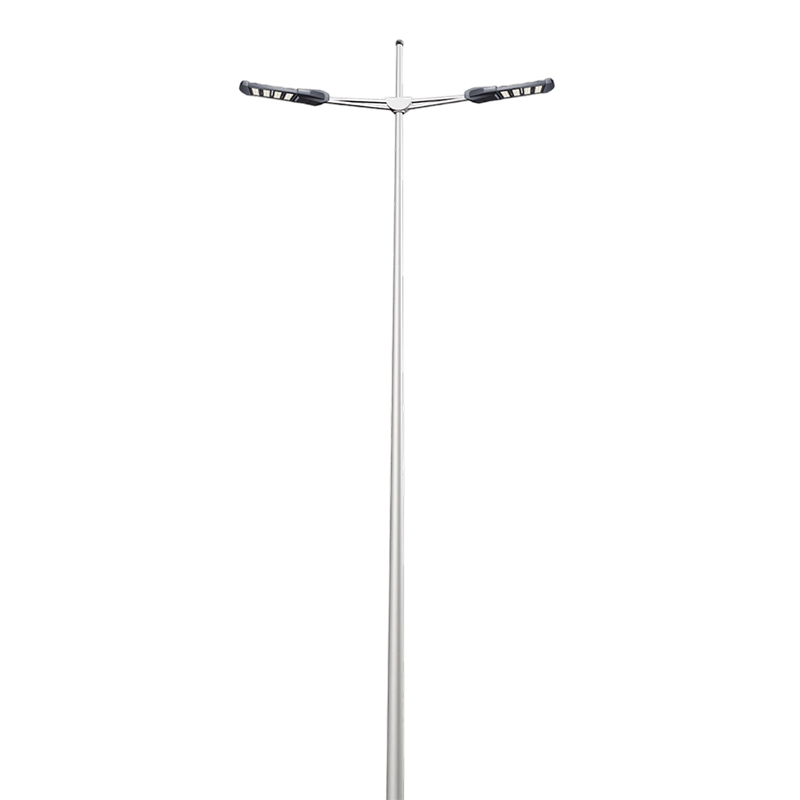
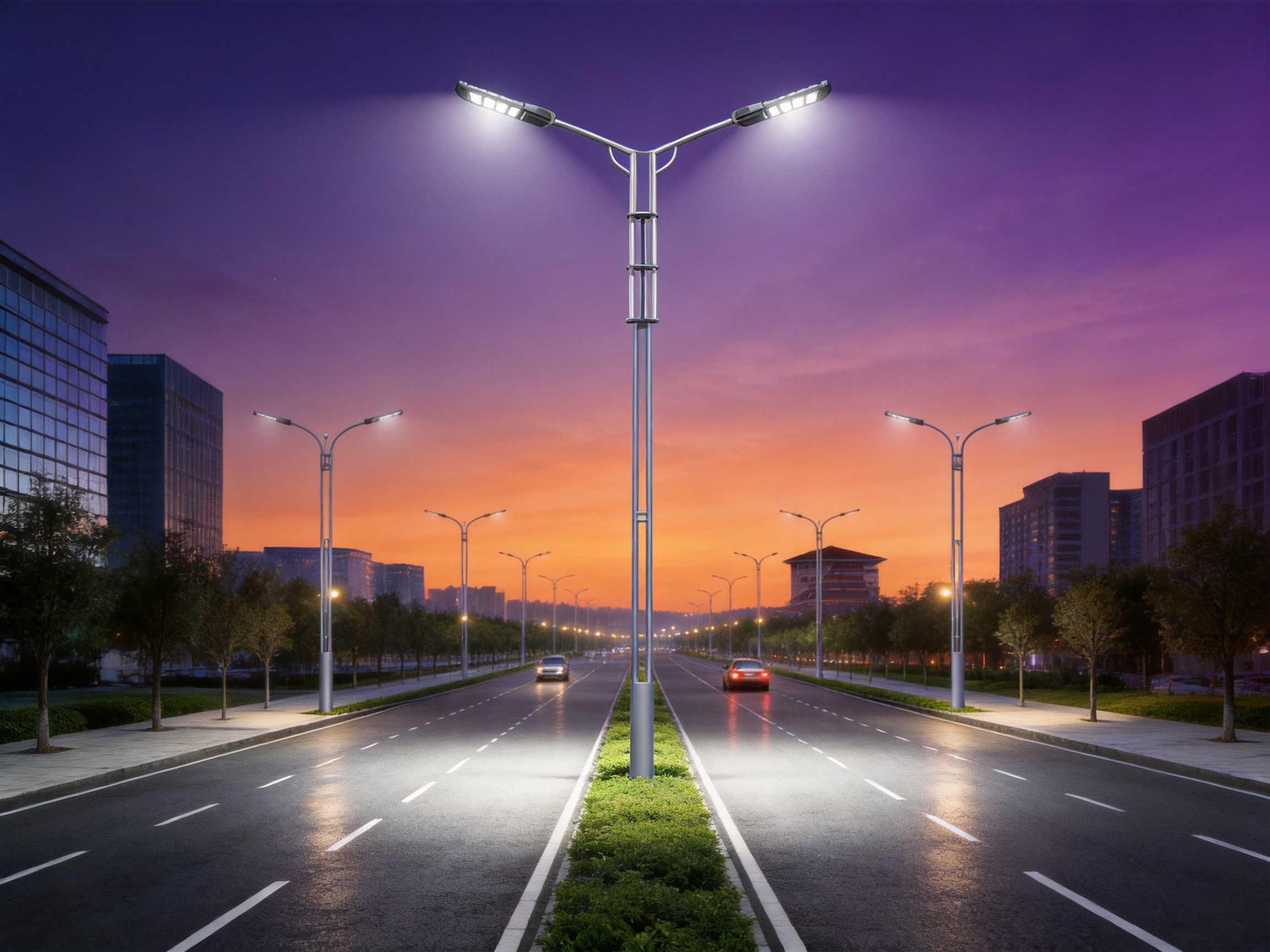
This dual-arm roadway lighting solution provides balanced illumination across broad road surfaces while creating a distinctive, coordinated appearance. Its two-arm configuration is especially suitable for roads with multiple lanes, central medians, wide intersections, public boulevards, and areas where lighting must serve both sides of a roadway. Instead of depending on isolated single-sided fixtures, the dual-arm structure can improve lighting coverage and support a more symmetrical streetscape design.
Developed for demanding outdoor conditions, the system combines an aluminum alloy lamp housing with a high-strength steel pole structure. The pole can be manufactured using Q235, Q355, SS400, GR65, or comparable materials according to project requirements. Precision bending, accurate cutting, professional welding, hot-dip galvanizing, and outdoor powder coating work together to create a lighting structure that is strong, durable, and suitable for long-term exposure to changing weather conditions.
With a luminous efficiency of up to 140 lm/W, a wide input voltage range of AC85-265V, IP65 protection, operating-temperature capability from -35°C to 65°C, and support for DC 0-10V or DALI dimming, this product is engineered for efficient road lighting and flexible project integration. The five-year warranty further supports its suitability for municipal, commercial, and infrastructure applications.

Dual-Arm Outdoor LED Roadway Light
1. Designed for Complete Roadway Illumination
The central purpose of a roadway light is to provide safe, consistent, and comfortable visibility. A road lighting system must illuminate vehicle lanes, pedestrian edges, intersections, medians, traffic islands, entrances, and surrounding areas without creating excessive glare or distracting dark zones. The dual-arm configuration helps address these challenges by positioning two lighting heads to serve a broader area from a single pole.
Compared with a basic single-arm arrangement, a dual-arm structure can offer more balanced lighting coverage when the road is wide or when two opposing traffic directions need to be illuminated. This can reduce the need for closely spaced poles in certain layouts, helping project planners coordinate lighting coverage with road geometry, underground utilities, landscaping, and traffic facilities.
The product is suitable for municipal roads, urban expressways, industrial parks, residential avenues, commercial streets, large public spaces, transport access roads, and landscape-oriented infrastructure. Its appearance can be integrated into projects where the lighting system must perform as both a functional facility and an architectural streetscape element.
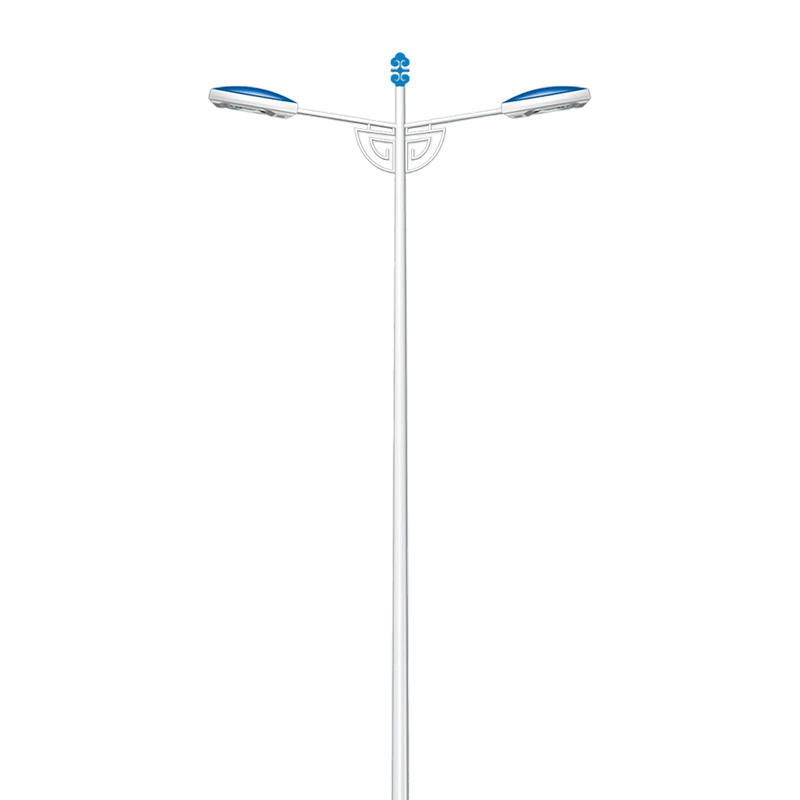
The supporting structure is designed with attention to both mechanical stability and visual proportion. The arms, pole body, lamp mounting points, and overall silhouette can be coordinated with the scale of the road and surrounding buildings. This provides an advantage over purely utilitarian poles that may perform adequately but contribute little to the visual identity of a project.
Balanced Illumination for Wide Roads
Wide roads often create a difficult lighting environment. If fixtures are positioned too far apart, dark areas may appear between lighting zones. If too many poles are installed, construction costs, foundation requirements, maintenance points, and visual clutter may increase. A dual-arm roadway light offers another planning option by serving two directions or two sides of a roadway from one central support structure.
The exact spacing and mounting arrangement should be determined through a professional lighting simulation. Factors such as road width, mounting height, arm length, fixture wattage, road classification, pavement reflectance, traffic volume, and required average illuminance must be evaluated before final installation. The product’s optical flexibility allows engineers and lighting designers to adapt the system to the actual requirements of a project rather than relying on a one-size-fits-all arrangement.
Suitable for Municipal and Landscape Projects
Municipal lighting projects frequently combine practical and aesthetic objectives. A road must be adequately illuminated, but the poles must also match the surrounding environment. In a central business district, a clean and recognizable dual-arm silhouette can reinforce the identity of the area. Along a landscaped boulevard, the structure can complement trees, plazas, gateways, and architectural features. At an urban entrance, a coordinated lighting design can help create a strong first impression.
The product’s design is therefore appropriate for projects where ordinary industrial lighting is insufficient from an aesthetic perspective. Its structural form can be specified for projects that require a more distinctive appearance while retaining the strength and durability expected from professional roadway infrastructure.
2. High-Efficiency LED Performance
The lighting system uses high-efficiency LED modules paired with an advanced optical lens system. This combination is important because LED performance depends not only on the light-emitting components but also on how effectively the emitted light is controlled and directed toward the road surface.
With a stated luminous efficiency of 140 lm/W, the system can produce substantial light output while helping reduce the electrical power required for a given illumination target. Higher efficacy can contribute to lower operating energy consumption, particularly in projects involving hundreds or thousands of fixtures. Over the full service period of a roadway, the resulting energy savings may become a significant part of the project’s total economic value.
LED technology also provides several practical advantages over older conventional light sources. LEDs offer rapid start-up, controllable output, directional light distribution, and compatibility with modern control systems. They do not require lengthy warm-up periods, and their output can be adjusted according to traffic, time of night, environmental conditions, or project-specific operating schedules.
Optical Control and Uniform Distribution
The optical lens system is designed to distribute light across the required roadway area with improved uniformity. Effective optical control helps place light where it is needed instead of allowing excessive spill into adjacent properties, residential windows, or the night sky. This supports better visual comfort and can help reduce unnecessary light pollution.
Uniformity is particularly important for drivers. A road with a high average illuminance but significant dark patches can still be uncomfortable and unsafe. Consistent lighting helps drivers recognize road edges, lane changes, pedestrians, roadside objects, traffic signs, and other vehicles. The lighting design should therefore be evaluated not only by peak brightness but also by average illumination, minimum illumination, uniformity ratios, glare control, and the specific requirements of the road classification.
The fixture can be specified with color temperatures from 3000K to 6000K. Warmer color temperatures may be preferred in residential areas, heritage districts, parks, and landscape-oriented environments where a softer visual atmosphere is desirable. Cooler color temperatures may be selected for expressways, industrial zones, intersections, and areas where a brighter, more neutral appearance is required. The correct selection depends on local regulations, project design standards, environmental considerations, and community preferences.
Color Rendering and Nighttime Recognition
The product has a color rendering index of Ra 70. This level is suitable for many general roadway and municipal lighting applications, supporting the recognition of common objects, vehicles, markings, and environmental features at night. Good color rendering can improve the visual distinction between road surfaces, signs, vegetation, buildings, and traffic facilities.
Lighting designers should consider color rendering together with optical distribution, glare, uniformity, and color temperature. No single specification determines overall lighting quality. The advantage of this product is that its LED module, lens arrangement, thermal design, and control compatibility are developed as an integrated system rather than as unrelated components.
3. Energy Efficiency and Intelligent Dimming
Energy consumption is one of the most important considerations in public lighting. Roadway lights operate for long hours, often every night throughout the year. Even a modest reduction in power consumption can create measurable savings when applied across an extensive network.
The high luminous efficacy of this dual-arm lighting series supports efficient operation without sacrificing the illumination required for road safety. However, energy efficiency is not limited to the LED source itself. It also depends on optical efficiency, thermal management, maintenance conditions, operating schedules, and the ability to reduce output when full brightness is not necessary.
The system supports DC 0-10V and DALI dimming. These control options allow project owners and system integrators to connect the roadway lights with suitable lighting management equipment. Depending on the control architecture, brightness may be reduced during periods of low traffic, increased during peak activity, or adjusted through programmed schedules.
Flexible Control for Different Operating Conditions
Road usage changes throughout the night. A central road may experience heavy traffic in the early evening, reduced traffic after midnight, and increased activity again during morning commuting hours. An intelligent dimming system can respond to these patterns more effectively than a fixed-output installation.
For example, a project may use full output during high-traffic periods and a lower lighting level during quieter hours. In an industrial park, the control schedule may correspond to shift changes. In a residential district, the system may maintain comfortable lighting during the evening and reduce output later at night while retaining an appropriate level of security illumination.
DC 0-10V control is widely used for straightforward analog dimming integration. DALI provides a more advanced digital communication option for projects requiring addressable control, status monitoring, scene management, or coordinated operation with other lighting equipment. The appropriate solution depends on the project’s control platform and electrical design.
Reducing Unnecessary Light Pollution
Excessive or poorly directed outdoor lighting can affect nearby homes, commercial properties, wildlife, and the night sky. The product’s controlled optical distribution and dimming compatibility can help project designers reduce unnecessary illumination outside the target area. This is especially valuable in mixed-use districts, residential streets, ecological zones, and urban areas with strict lighting policies.
Responsible lighting design does not mean simply reducing brightness. It means delivering the correct amount of light, in the correct direction, at the correct time. A well-planned dual-arm system can support that objective by combining suitable optical performance with adjustable operating levels.
4. Durable Materials for Outdoor Environments
Roadway lights are exposed to rain, humidity, dust, temperature changes, ultraviolet radiation, wind, and airborne contaminants. In coastal or industrial areas, salt and corrosive particles may create additional challenges. The durability of the system depends on the quality of the lamp housing, pole material, surface treatment, fasteners, electrical sealing, and manufacturing process.
The lamp housing is made from aluminum alloy. Aluminum alloy is commonly selected for outdoor LED fixtures because it offers a useful balance of low weight, structural strength, corrosion resistance, and heat conductivity. Its thermal properties help transfer heat away from the LED modules and internal electrical components when combined with a correctly designed heat-dissipation structure.
The lamp housing is protected to IP65. This rating indicates protection against dust ingress and water jets from various directions. IP65 protection is appropriate for many outdoor roadway environments, although installation teams must still ensure that cable glands, connectors, covers, and mounting interfaces are correctly sealed during installation and maintenance.
High-Strength Steel Pole Options
The pole can be produced using materials such as Q235, Q355, SS400, and GR65, depending on the structural requirements and applicable standards of the project. Different steel grades offer different combinations of strength, yield performance, weldability, availability, and cost. The final selection should be based on pole height, arm configuration, wind speed, fixture weight, projected area, foundation design, local codes, and transportation conditions.
For a pole height range of 6 to 10 meters, the structure can be configured for a variety of municipal road and public-space applications. A project requiring a longer outreach, a larger fixture, or installation in a high-wind region may require additional engineering analysis and a customized structural solution.
Hot-Dip Galvanizing and Powder Coating
Surface protection is a critical part of long-term pole performance. Precision hot-dip galvanizing creates a protective zinc layer over the steel surface, including areas that are difficult to protect with ordinary paint alone. The zinc coating acts as a barrier and can provide sacrificial protection if the surface is scratched.
After galvanizing, a high-grade outdoor anti-corrosion powder coating can be applied according to project requirements. Powder coating improves appearance and provides an additional protective layer against weathering. It also enables the pole to be finished in a selected color so that it can coordinate with urban furniture, architectural facades, road signs, landscape elements, or municipal identity standards.
The combination of galvanizing and powder coating is a major advantage in comparison with untreated steel or low-quality painted surfaces. A properly prepared and coated pole is better positioned to resist corrosion, maintain its appearance, and reduce the frequency of repainting or premature replacement.
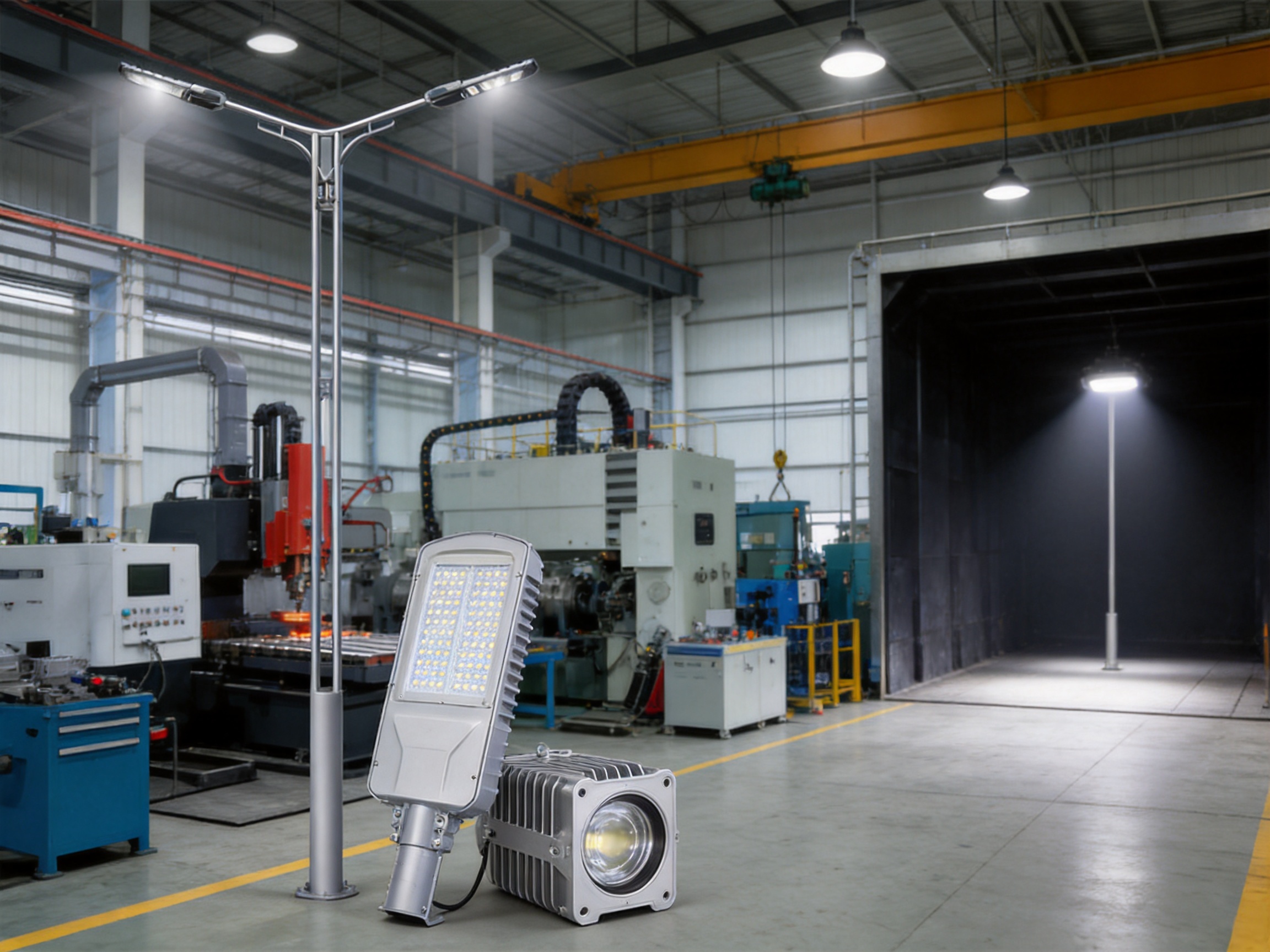
5. Thermal Management for Long-Term Reliability
LEDs are highly efficient, but they still generate heat during operation. If heat is not transferred away effectively, excessive operating temperatures may reduce light output, accelerate component aging, and shorten the service life of the fixture. Thermal management is therefore essential to the performance of an outdoor LED roadway light.
This product series incorporates a high-standard heat dissipation design intended to support stable operation during continuous use. The aluminum alloy housing assists in transferring heat away from the LED modules. The thermal path must be carefully designed so that heat moves from the LED board through the housing and into the surrounding environment.
Effective thermal design also supports more consistent light output over time. A fixture that operates at controlled temperatures is better able to maintain its optical performance than one that experiences repeated overheating. This helps reduce the risk of early lumen depreciation and supports predictable maintenance planning.
Performance in a Broad Temperature Range
The specified operating temperature range is -35°C to 65°C. This broad range makes the lighting series suitable for many cold, temperate, hot, and transitional climates. In cold regions, the fixture must be capable of starting and operating in low temperatures. In hot regions, the housing and internal components must tolerate high ambient temperatures while continuing to dissipate heat.
Actual performance can also be influenced by installation conditions. Pole spacing, fixture orientation, surrounding obstructions, direct solar exposure, ventilation, voltage quality, and maintenance practices should be considered. The product’s environmental rating provides a strong foundation, but correct project engineering and installation remain essential for achieving the expected service life.
6. Manufacturing Precision from Material to Finished Product
The performance of a roadway lighting system is closely connected to the manufacturing process behind it. A well-designed product can still experience problems if material preparation, bending, cutting, welding, surface treatment, assembly, or quality inspection is inconsistent. Advanced production equipment and experienced manufacturing personnel help convert design specifications into reliable finished products.
The manufacturing capabilities associated with this product include material preparation, CNC bending, high-accuracy cutting, automated welding and cutting, powder electrostatic painting, and large-scale metal forming. These capabilities support both standard production and project-specific customization.
Material Selection and Inventory Management
Available material options include Q235B, Q345B, S275JR, S355JR, Q460, A36, A572, GR56, GR50, and other grades. Maintaining access to a broad material range allows the production team to select steel according to structural calculations, regional standards, cost targets, and project specifications.
Extensive material stock can also reduce the risk of production delays. Infrastructure projects often follow strict construction schedules, and delays in pole manufacturing can affect foundation work, electrical installation, road completion, and commissioning. A stable material supply helps the manufacturer respond more quickly to confirmed orders and maintain more predictable production cycles.
CNC Bending for Structural Consistency
Precision CNC bending improves the consistency of pole sections and arm components. Accurate bending helps maintain the intended geometry, reduces variation between units, and supports better alignment during assembly. It also contributes to structural integrity by reducing unnecessary deformation and minimizing the need for extensive post-production correction.
Consistent bending is particularly important for dual-arm poles. The two arms should maintain the correct relationship to one another so that fixtures can be installed at the specified angles and positions. Variations in arm alignment can affect lighting distribution, appearance, wind loading, and installation efficiency.
High-Accuracy Cutting
The production process is described as providing cutting accuracy of up to 0.01 mm for applicable operations. High-accuracy cutting helps produce clean edges, consistent dimensions, and improved component fit. Accurate cutting may reduce material waste and lower the amount of grinding, adjustment, or rework required before welding and assembly.
Clean and precise edges are also important for structural quality. Poorly prepared edges can create irregular weld areas, alignment problems, or stress concentrations. Accurate cutting supports the repeatability required for large orders in which many poles and components must match the same drawings.
Professional Welding
The manufacturing team includes certified welders with extensive experience in structural welding. Skilled welding is essential for roadway poles because the welded joints must transfer loads between the pole body, arms, base plates, access components, and other structural parts.
Professional welding helps achieve consistent penetration, appropriate bead formation, controlled heat input, and reduced distortion. It also supports faster production while maintaining quality standards. For large infrastructure projects, the combination of certified personnel and standardized welding procedures helps ensure that production remains on schedule without compromising structural reliability.
Automated Production Lines
Automated lines can improve repeatability, production speed, and process control. Automation is especially valuable for repetitive cutting, welding, coating, and handling operations. It helps reduce variation caused by manual processes while allowing skilled workers to focus on inspection, engineering, adjustment, and quality-critical operations.
Automated production can also contribute to cost control. Faster production cycles, improved material utilization, reduced rework, and more efficient labor allocation can create competitive pricing without requiring the manufacturer to reduce the quality of the finished product.
Large-Scale Die Casting Capability
The manufacturing facility includes a 1250-ton die casting machine. Large-scale die casting capability supports the production of complex aluminum components with repeatable shapes and dimensions. For LED lighting products, die-cast components may contribute to housing strength, thermal transfer, mounting accuracy, and visual quality.
Die casting can provide a precise and efficient method for producing housings and related parts in volume. When combined with suitable tooling, quality inspection, and finishing processes, it supports reliable product consistency across multiple production batches.
7. Quality Control and International Project Readiness
Roadway lighting projects are often delivered across different climates, regulatory environments, and construction conditions. A supplier must therefore be able to manage technical documentation, production consistency, inspection procedures, packaging, and communication throughout the project lifecycle.
The company’s quality management and environmental credentials include ISO9001, ISO14001, and OHSAS18001-related standards. These certifications and management systems indicate an organized approach to quality control, environmental responsibility, and occupational health and safety. Project owners should still confirm the specific certificates, product test reports, and applicable compliance documents required for their market before placing an order.
Quality control should cover incoming materials, dimensional accuracy, weld quality, galvanizing thickness, coating adhesion, fixture assembly, electrical performance, optical characteristics, IP protection, packaging, and final appearance. For customized projects, inspection should also confirm that the finished products match approved drawings and specifications.
Inspection Before Shipment
Pre-shipment inspection is an important safeguard for large orders. It may include dimensional checks, visual inspection, electrical testing, lighting performance verification, coating inspection, and review of packing lists. Where required, third-party inspection can be arranged according to the purchaser’s procedures.
Proper packaging is equally important. Poles and LED fixtures may travel long distances by road, rail, or sea. Protective packing should reduce the risk of abrasion, impact, moisture exposure, and deformation during handling and transportation. Components should be clearly identified so that installation teams can match arms, fixtures, fasteners, and accessories efficiently at the project site.
8. Customization for Different Project Requirements
Although the standard product specifications provide a strong starting point, roadway lighting projects rarely have identical requirements. The pole height, arm length, fixture power, color temperature, finish, mounting arrangement, foundation design, and control system may all vary from one location to another.
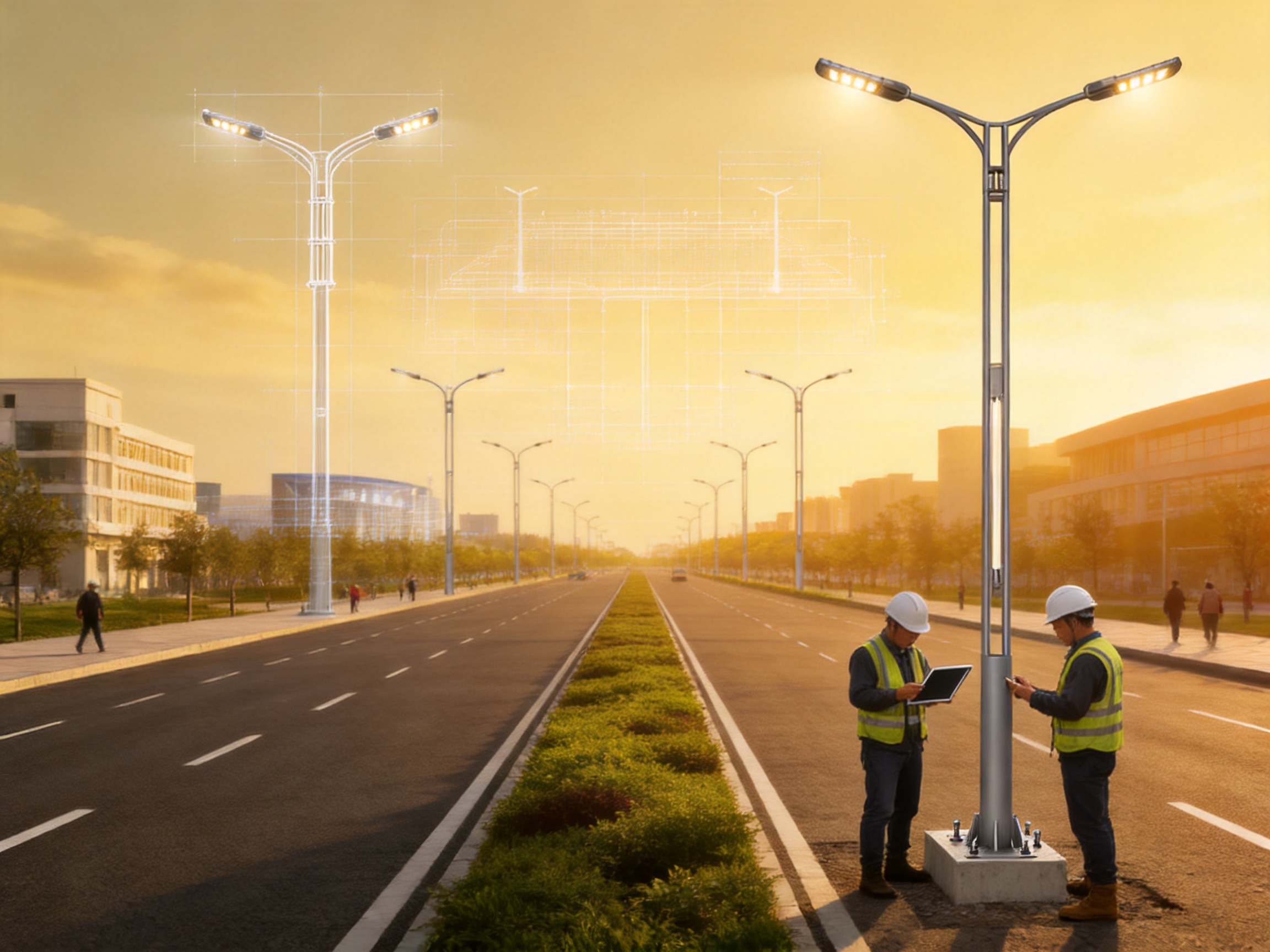
The product supports professional customization services that can help adapt the lighting solution to the project. These services include CAD design, 3D product simulation, 3D scene simulation, specification and color customization, mechanical calculations for wind and foundations, and overseas on-site installation guidance.
CAD Design
CAD design allows the manufacturer and purchaser to review the proposed pole structure before production. Drawings can show dimensions, mounting positions, arm geometry, base plates, access doors, cable openings, flange details, and fixture interfaces. Early drawing review helps identify installation conflicts and ensures that the product is compatible with the planned road layout.
3D Product and Scene Simulation
A three-dimensional product simulation can help project teams understand the relationship between the pole, arms, fixtures, and other components. A 3D scene simulation goes further by showing how the lighting structure may appear within a roadway, plaza, boulevard, entrance, or landscape setting.
These visual tools are useful when multiple departments are involved in approval. Engineers can review structure and installation, architects can assess appearance, lighting designers can evaluate proportions, and project owners can make informed decisions before manufacturing begins.
Specification and Color Customization
Color and finish can influence how a lighting structure fits into its environment. A project may require a standard dark finish, a neutral metallic appearance, or a custom color matching the city’s public furniture. Specification customization also allows the purchaser to define preferred steel grades, fixture parameters, control interfaces, labeling, packing, and documentation.
Wind and Foundation Calculations
Pole stability depends on more than the strength of the steel. Wind speed, exposure category, fixture area, arm projection, pole height, soil conditions, foundation dimensions, anchor-bolt arrangement, and local building codes must be evaluated together. Mechanical calculations for wind and foundations help ensure that the selected structure is appropriate for the installation site.
These calculations should be completed by qualified engineers and reviewed according to the applicable local standards. Customized calculations are particularly important for coastal areas, typhoon zones, open terrain, high-altitude locations, and sites with unusual soil conditions.
Overseas Installation Guidance
International projects may involve local contractors who are unfamiliar with the specific product. Installation guidance can help teams understand pole assembly, arm positioning, fixture mounting, cable routing, grounding, fastener tightening, lifting procedures, and commissioning steps.
Clear installation guidance reduces the possibility of incorrect assembly and supports more efficient project completion. When necessary, overseas on-site guidance can provide additional support during installation and commissioning, subject to project arrangements and local requirements.
9. Advantages Compared with Basic Roadway Lighting Products
Many roadway lighting products may appear similar at first glance, but differences in structure, optical performance, materials, controls, production accuracy, and service can influence the total value of a project. The Dual-Arm Outdoor LED Roadway Light offers several advantages over basic single-arm or low-specification alternatives.
| Evaluation Area | Dual-Arm Outdoor LED Roadway Light | Basic Roadway Lighting Alternative |
|---|---|---|
| Lighting Coverage | Designed to support broad and balanced illumination for wide roads and two-direction applications | May provide narrower coverage and require additional poles for equivalent road width |
| Optical Performance | High-efficiency LED modules with controlled lens distribution | Optical performance may vary significantly according to fixture design |
| Energy Efficiency | Up to 140 lm/W luminous efficiency | Lower efficacy may result in higher operating energy consumption |
| Control Compatibility | Supports DC 0-10V and DALI dimming | May provide only fixed-output operation or limited control compatibility |
| Structural Options | Multiple steel material options and 6 m to 10 m pole heights | Often limited to standard sizes and materials |
| Surface Protection | Hot-dip galvanizing plus outdoor anti-corrosion powder coating | May rely on a single paint layer or less comprehensive protection |
| Environmental Protection | IP65 fixture protection and operation from -35°C to 65°C | Environmental ratings may be less suitable for severe conditions |
| Project Support | CAD, 3D simulation, structural calculations, customization, and installation guidance | May offer limited engineering and after-sales assistance |
| Warranty | Five-year warranty period | Warranty terms vary and may be shorter |
The main competitive advantage is not one isolated specification. It is the integration of lighting performance, structural engineering, surface treatment, intelligent control, manufacturing precision, and project support into one coordinated solution. This reduces the need for the purchaser to manage multiple disconnected suppliers for poles, fixtures, design adaptation, and installation assistance.
10. Applications Across Different Infrastructure Environments
Municipal Roads
Municipal roads require dependable illumination, reasonable operating costs, and a visual design that can remain attractive over many years. The dual-arm configuration can be used on broad urban roads, central avenues, and streets with landscaped medians. Its dimming compatibility can also support municipal energy-management programs.
Urban Expressways
Expressways and major connectors require clear visibility at higher vehicle speeds. Uniform light distribution, controlled glare, reliable thermal performance, and appropriate mounting height are essential. The 6 m to 10 m pole range provides options for different road profiles, although final selection must be confirmed through lighting calculations and local standards.
Industrial Parks
Industrial parks often include large roads, warehouse entrances, logistics routes, loading areas, and long operating schedules. Durable galvanized poles and efficient LED fixtures can help control maintenance and energy costs. DALI or 0-10V control can be integrated with scheduled operation or broader site-management systems where required.
Commercial Districts
Commercial streets need adequate illumination for vehicles and pedestrians while maintaining an attractive public environment. The recognizable dual-arm form can contribute to a coordinated streetscape. Adjustable color temperature and customized surface finishing allow the lighting system to be matched with the visual character of the district.
Landscape and Public-Space Projects
Large plazas, scenic access roads, cultural areas, resorts, and public landscape projects often demand lighting structures with stronger aesthetic integration. The product can be adapted through 3D scene simulation, color selection, arm design, and fixture configuration to achieve a more unified appearance.
Residential and Mixed-Use Areas
In residential and mixed-use areas, light trespass and glare are important concerns. Designers can select suitable optics, warmer color temperatures, lower operating levels, and scheduled dimming to provide useful illumination without excessive nighttime brightness. Final design should consider nearby windows, balconies, pedestrian paths, and local community requirements.
11. Recommended Project Selection Process
A successful roadway lighting installation begins with accurate project information. Before selecting the final configuration, the purchaser should provide the road layout, lane width, median dimensions, pole spacing, mounting height, wind conditions, soil information, power supply, control requirements, and applicable standards.
Lighting engineers can then evaluate fixture wattage, optical distribution, pole placement, arm length, tilt angle, color temperature, and dimming schedules. A photometric simulation should be completed to verify average illumination, uniformity, glare, and light spill.
The structural team should review wind loading, fixture projected area, pole deflection, foundation capacity, anchor bolts, and transportation limitations. For customized poles, approved CAD drawings should be completed before production begins.
After technical approval, the purchaser and manufacturer should confirm the bill of materials, surface finish, packaging method, delivery schedule, inspection requirements, documentation, warranty terms, and installation responsibilities. This process helps prevent misunderstandings and provides a clear basis for manufacturing and site execution.
12. Installation and Maintenance Considerations
Installation should be carried out by qualified personnel in accordance with approved drawings and local electrical regulations. The foundation must be properly cured and aligned before the pole is erected. Anchor bolts should be correctly positioned, and the base connection should be tightened using the specified procedure.
During lifting, the pole and arms should be supported at suitable points to avoid deformation. Fixtures should be mounted at the correct orientation and tilt angle so that the optical distribution matches the lighting design. Electrical cables should be routed safely, protected from sharp edges, and sealed against water ingress.
Grounding and surge protection should be addressed according to the electrical design and local regulations. The power supply should be checked before energizing the fixtures. If a dimming system is used, the control wiring and addressing should be tested during commissioning.
Routine maintenance may include cleaning the fixture cover, checking fasteners, inspecting cable entries, reviewing the condition of the coating, checking for corrosion, and verifying dimming operation. In areas with dust, salt, industrial pollutants, or heavy rainfall, inspection intervals may need to be adjusted.
Preventive maintenance is generally more economical than waiting for a failure. Early detection of loose hardware, damaged coatings, water ingress, or control-system problems can help extend the service life of the overall installation.
13. Manufacturer Capabilities and Project Support
Yangzhou Jinyuan Lamps Co., Ltd. is affiliated with Jinshang Electric Group and operates as a professional production, design, and engineering company in the road illumination industry. Established in 2002, the company specializes in street light poles, LED street lights, solar street lights, light fixtures, and related outdoor lighting products.
The company operates on a site area of more than 70,000 square meters and has more than 300 professional technicians. Its products have been supplied to customers in more than 200 countries. This international experience can help the manufacturer understand the documentation, communication, packaging, technical adaptation, and delivery expectations associated with overseas infrastructure projects.
The company’s product range covers conventional and solar street lighting, high mast lighting, smart street lighting, traffic facilities, photovoltaic power-generation systems, LED floodlights, communication towers, mid-mast lights, and related poles and structures. This broad product scope allows project owners to coordinate multiple outdoor infrastructure requirements with one experienced supplier.
Manufacturing equipment includes CNC bending equipment, powder electrostatic painting equipment, automatic welding and cutting machines, and a 1250-ton die casting machine. These capabilities support the production of both structural poles and LED lighting components, helping the company manage quality and coordination across different product categories.
For buyers, the value of a manufacturer is measured not only by production volume but also by its ability to understand the complete project. Design support, structural calculations, product simulation, customization, inspection, delivery coordination, and installation guidance can all influence the final result. A supplier with engineering and manufacturing capabilities can provide more useful support than a trading company that only resells standard products.
14. Key Product Specifications
| Specification | Details |
|---|---|
| Product Type | Dual-arm outdoor LED roadway light |
| Application | Road and municipal outdoor lighting |
| Brand | Jinyuan |
| Light Source | LED |
| Input Voltage | AC85-265V |
| Luminous Efficiency | Up to 140 lm/W |
| Color Temperature | 3000K-6000K |
| Color Rendering Index | Ra 70 |
| Protection Rating | IP65 |
| Operating Temperature | -35°C to 65°C |
| Lamp Housing Material | Aluminum alloy |
| Dimming Support | DC 0-10V / DALI |
| Warranty | Five years |
| Available Pole Heights | 6 m to 10 m |
| Pole Material Options | Q235, Q355, SS400, GR65, and other specified grades |
| Surface Treatment | Hot-dip galvanizing and outdoor anti-corrosion powder coating |
15. Frequently Asked Questions
Q1: What type of roads are suitable for this dual-arm LED roadway light?
The product is suitable for municipal roads, urban expressways, broad avenues, industrial parks, commercial streets, residential roads, public spaces, and large-scale landscape projects. The final configuration should be selected according to road width, traffic conditions, mounting height, required illumination, and local standards.
Q2: What is the main benefit of the dual-arm design?
The dual-arm structure can provide more balanced coverage for wide roads or two-direction applications. It may also reduce visual asymmetry and support a coordinated streetscape design. The actual benefit depends on pole location, arm dimensions, fixture optics, and the results of a professional lighting simulation.
Q3: Can the lighting output be adjusted automatically?
Yes. The system supports DC 0-10V and DALI dimming. These interfaces can be connected to suitable control equipment for scheduled dimming, traffic-responsive operation, centralized management, or other intelligent lighting strategies.
Q4: What color temperatures are available?
The stated color-temperature range is 3000K to 6000K. Warmer light may be suitable for residential, landscape, and heritage environments, while cooler light may be selected for expressways, industrial areas, and locations requiring a more neutral appearance.
Q5: Is the fixture suitable for harsh outdoor weather?
The fixture has an IP65 protection rating and a specified operating temperature range of -35°C to 65°C. The pole uses high-strength steel options and can receive hot-dip galvanizing and outdoor anti-corrosion powder coating. Correct installation, sealing, grounding, and maintenance are still essential.
Q6: What pole heights can be supplied?
The available pole height range is 6 m to 10 m. Customized dimensions may be considered according to project requirements, structural calculations, road geometry, fixture weight, wind conditions, and applicable standards.
Q7: Which steel grades can be used for the pole?
Available options include Q235, Q355, SS400, GR65, and other specified grades. Additional material choices may include Q235B, Q345B, S275JR, S355JR, Q460, A36, A572, GR56, and GR50. The appropriate grade should be confirmed through project engineering.
Q8: How does the manufacturer support customized projects?
Support includes CAD design, 3D product simulation, 3D scene simulation, specification and color customization, wind and foundation calculations, production coordination, inspection support, and overseas on-site installation guidance where arranged.
Q9: What is the warranty period?
The stated warranty period is five years. Warranty coverage should be confirmed in the commercial contract, including applicable operating conditions, installation requirements, component coverage, exclusions, and service procedures.
Q10: Can the product be used with a smart-city lighting system?
The fixture supports DC 0-10V and DALI dimming, making it suitable for integration with compatible lighting-control systems. The purchaser should confirm communication requirements, monitoring functions, control cabinets, sensors, gateways, and software compatibility before finalizing the system.
Q11: Why is hot-dip galvanizing important for roadway poles?
Hot-dip galvanizing provides a protective zinc layer over steel surfaces and helps protect the pole from corrosion. When combined with outdoor powder coating, it creates a two-layer surface-protection approach that can improve durability and appearance in challenging outdoor environments.
Q12: Should a lighting simulation be completed before ordering?
Yes. A lighting simulation helps verify fixture spacing, mounting height, optical distribution, average illumination, uniformity, glare, and light spill. It also helps determine whether the dual-arm configuration is appropriate for the specific road layout.
Conclusion
The Dual-Arm Outdoor LED Roadway Light is a comprehensive solution for projects that require efficient illumination, broad coverage, structural durability, intelligent control, and visual integration. Its high-efficiency LED modules and advanced lens system support uniform roadway lighting, while the aluminum alloy housing, thermal design, and IP65 protection help maintain reliable operation in demanding outdoor environments.
The product’s five-year warranty, 3000K to 6000K color-temperature range, 140 lm/W luminous efficiency, AC85-265V input range, -35°C to 65°C operating capability, and DC 0-10V or DALI dimming support provide flexibility for different infrastructure applications. The availability of multiple pole materials and 6 m to 10 m height options allows the system to be adapted to diverse road designs.
Its strongest advantage over basic roadway lighting alternatives comes from the complete package. The product combines dual-sided illumination, controlled optics, energy-saving LED technology, intelligent dimming, durable surface treatment, precise structural manufacturing, and professional engineering services. This integrated approach can help project owners achieve better lighting quality while controlling long-term energy, maintenance, and infrastructure costs.
Backed by extensive manufacturing equipment, experienced technicians, international project experience, and customization capabilities, Yangzhou Jinyuan Lamps Co., Ltd. can support projects from initial consultation through design, production, inspection, delivery, and installation guidance. For municipalities, contractors, developers, lighting distributors, and infrastructure investors, this makes the product a practical choice for modern road illumination projects that demand both performance and dependable project execution.
References
1. Product specification information for the Dual-Arm Outdoor LED Roadway Light, including voltage, luminous efficiency, color temperature, protection rating, materials, dimming, warranty, and pole dimensions.
2. Manufacturer information concerning LED roadway lighting, outdoor lighting structures, manufacturing equipment, engineering services, and international project support.
3. General principles of roadway lighting design, including illuminance, uniformity, glare control, optical distribution, and visual comfort.
4. General technical guidance for hot-dip galvanizing and corrosion protection of outdoor steel structures.
5. General LED lighting engineering principles covering luminous efficacy, thermal management, color temperature, color rendering, and service-life considerations.
6. General practices for DALI and DC 0-10V lighting-control integration in outdoor lighting systems.