


JINYUAN
JINYUAN
JINYUAN
JINYUAN
JINYUAN
JINYUAN
JINYUAN
JINYUAN
JINYUAN
JINYUAN
JINYUAN
JINYUAN
JINYUAN
JINYUAN
JINYUAN
JINYUAN
Content
- 1 1. The Role of Off-Grid Solar Power in Remote Areas
- 2 2. System Architecture and Operating Principle
- 3 3. Photovoltaic Module Options and Technical Flexibility
- 4 4. Durable Module Construction
- 5 5. Advantages Compared with Conventional Alternatives
- 6 6. Application Scenarios
- 7 7. Engineering and System Sizing
- 8 8. Manufacturing Strength and Quality Control
- 9 9. Project Engineering and Customized Service
- 10 10. Installation Considerations
- 11 11. Operation and Maintenance
- 12 12. Reliability, Safety, and Lifecycle Value
- 13 13. Why Integrated Manufacturing Matters
- 14 14. Recommended Selection Process
- 15 15. Frequently Asked Questions
- 15.1 Q1: What is an off-grid solar photovoltaic power generation system?
- 15.2 Q2: Can the system supply both AC and DC loads?
- 15.3 Q3: What battery technology is typically used?
- 15.4 Q4: What protective functions are provided?
- 15.5 Q5: What photovoltaic module power ratings are available?
- 15.6 Q6: Are the photovoltaic modules suitable for outdoor use?
- 15.7 Q7: Can the system be used in coastal or island environments?
- 15.8 Q8: Can the system be expanded later?
- 15.9 Q9: Is a generator required?
- 15.10 Q10: What services are available for customized projects?
- 15.11 Q11: What types of sites are suitable for this system?
- 15.12 Q12: What information is needed for a quotation or system design?
- 16 16. Conclusion
- 17 References
- 18 Product: Off-grid solar photovoltaic power generation system
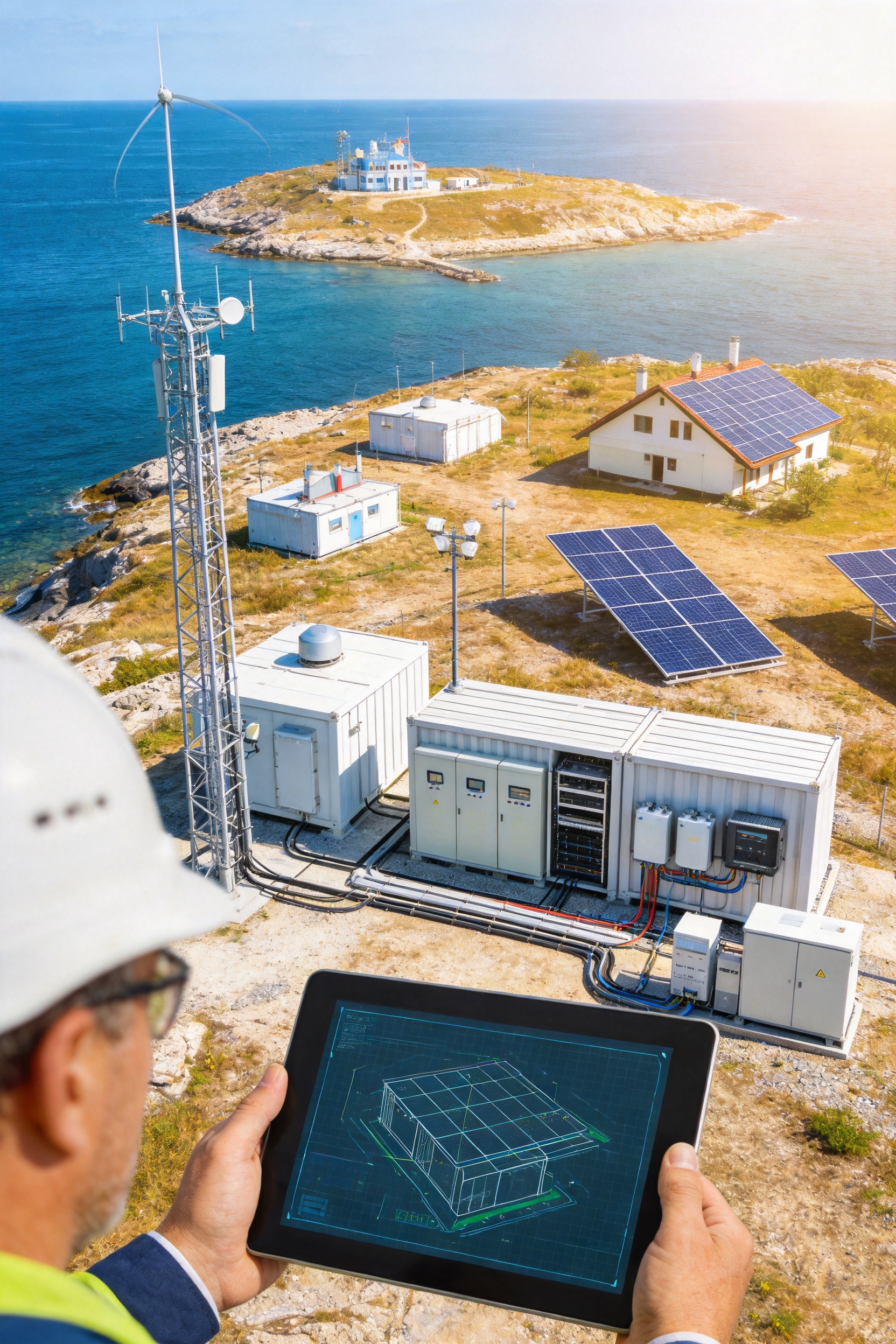
Reliable electricity is one of the most important foundations for modern life, public services, communications, security, and economic development. However, many locations remain beyond the practical reach of utility networks. Remote mountain villages, border islands, isolated medical stations, military facilities, private residences, field camps, telecommunications sites, and overseas construction projects may face high grid-extension costs, difficult terrain, unstable utility service, or no grid access at all.
An off-grid solar photovoltaic power generation system provides a practical solution for these environments. By combining photovoltaic modules, intelligent charge control, batteries, inverters, and DC-DC conversion equipment, the system transforms available sunlight into usable electrical energy and stores surplus power for later use. It can supply direct-current loads, standard alternating-current appliances, communications equipment, lighting systems, medical devices, and other electrical equipment according to the requirements of the project.
The system described in this article is designed as a flexible energy platform rather than a single fixed-size product. Its architecture can be adapted to different load capacities, operating voltages, storage requirements, climates, and installation conditions. The use of industrial-grade photovoltaic modules, protective battery management functions, robust mechanical construction, and customized engineering support allows the system to compete effectively with conventional grid-extension projects and less integrated solar solutions.
1. The Role of Off-Grid Solar Power in Remote Areas
Traditional electricity infrastructure depends on a stable generation source, transmission lines, substations, distribution networks, and ongoing maintenance access. In populated urban areas, these requirements can be economically justified. In remote areas, however, the cost of extending utility infrastructure may be far greater than the cost of installing a local renewable-energy system.
Solar energy is especially suitable for isolated applications because photovoltaic generation is modular, silent, scalable, and compatible with a wide range of installation environments. A basic system may power a small residence, while a larger system can support a clinic, communications station, water-pumping facility, security installation, or multiple buildings.
Unlike a fuel-based generator, a solar photovoltaic system does not require daily fuel delivery. This is a major advantage for islands, mountainous areas, border locations, and overseas projects where transportation is expensive or unreliable. Solar generation also reduces exposure to fluctuating fuel prices, engine maintenance, exhaust emissions, and noise pollution.
The system can be configured to supply power during the day directly from the photovoltaic array while simultaneously charging the batteries. At night or during periods of low solar radiation, the batteries provide stored energy. This operating principle creates a dependable local micro-power network without requiring a connection to a public grid.
2. System Architecture and Operating Principle
The off-grid photovoltaic system consists of several coordinated subsystems. Each part has a specific function, but the system is engineered to operate as an integrated power supply rather than as a collection of unrelated components.
2.1 Photovoltaic modules
Photovoltaic modules are the primary energy conversion units. They receive sunlight and generate direct-current electricity. The available module range includes compact low-power models and larger modules suitable for higher-capacity installations. Depending on the electrical design, modules can be connected in series, parallel, or a combination of both to achieve the required voltage and current.
The supplied module specifications include models from approximately 5 W to 185 W. Low-power modules can be used for small control systems, sensors, compact lighting applications, or auxiliary loads. Higher-power models are suitable for residences, field offices, medical equipment, communications facilities, and other applications requiring more daily energy.
Many of the listed modules use an optimal operating voltage of 17.5 V, making them suitable for nominal 12 V battery systems when paired with an appropriate charge controller. Larger modules with an optimal operating voltage of 35 V and an open-circuit voltage of approximately 43 V can support 24 V battery architectures and higher-capacity applications. This range makes it possible to design systems around different battery banks and load requirements.
2.2 Intelligent charge controller
The charge controller is the central energy-management component. It regulates the energy delivered from the photovoltaic array to the battery bank and the connected loads. The controller helps prevent charging conditions that could damage the battery and can disconnect or limit loads when the battery reaches an unsafe discharge level.
Key control functions include overcharge protection, over-discharge protection, temperature compensation, time control, and light control. These functions are important because solar availability changes throughout the day and across seasons. A controller that responds intelligently to battery voltage, temperature, sunlight conditions, and load schedules can extend battery service life while improving the use of available solar energy.
Time-control functions are useful for lighting, security systems, and scheduled equipment. Light-control functions can automatically activate or deactivate selected loads according to ambient conditions. Together, these functions reduce unnecessary energy consumption and help ensure that essential equipment remains powered when it is most needed.
2.3 Battery energy storage
The battery bank stores electricity generated when sunlight is available. Stored energy can then be released at night, during cloudy periods, or during temporary peaks in demand. The supplied system description identifies high-performance lead-acid batteries as the typical storage technology.
Lead-acid batteries remain widely used in off-grid projects because they are commercially available, familiar to technicians, relatively economical, and capable of supporting a broad range of system sizes. Correct battery sizing is essential. The design must consider daily energy consumption, maximum load, desired autonomy, local solar conditions, permissible depth of discharge, battery temperature, and maintenance expectations.
Battery protection is particularly important in remote systems because service access may be limited. Over-discharge can shorten battery life, while uncontrolled charging can cause heat generation, premature aging, or reduced capacity. The controller’s protective functions help prevent these conditions and contribute to safer, more predictable operation.
2.4 DC-AC inverter
Many electrical appliances require alternating current rather than the direct current produced by photovoltaic modules and stored in batteries. The inverter converts the battery’s DC output into standard AC power, such as 110 V or 220 V, depending on the project location and equipment requirements.
An appropriately selected inverter enables the system to operate household appliances, office equipment, lighting, tools, medical devices, and other standard loads. Inverter capacity must be selected according to continuous power demand, starting or surge current, power factor, and the characteristics of the connected equipment.
2.5 DC-DC voltage conversion
Not every load requires AC power. Communications equipment, electronic controls, sensors, routers, and other devices may operate directly from low-voltage DC. The system therefore supports DC-DC conversion, such as reducing 24 VDC to 5 VDC.
Directly supplying compatible DC equipment can reduce conversion losses compared with converting DC to AC and then using another adapter to return to DC. This is particularly valuable for telecommunications and monitoring installations where low-power electronic devices may operate continuously.
3. Photovoltaic Module Options and Technical Flexibility
A significant advantage of the system is the breadth of photovoltaic module choices. Rather than forcing every customer into one fixed panel configuration, the product range supports different power classes, dimensions, electrical outputs, and installation layouts.
| Module range | Typical maximum power | Typical operating voltage | Typical application direction |
|---|---|---|---|
| Compact modules | 5 W to 30 W | Approximately 17.5 V | Sensors, small controls, compact lighting, and auxiliary systems |
| Small and medium modules | 35 W to 95 W | Approximately 17.5 V | Small residences, lighting, monitoring, and communication loads |
| Higher-voltage modules | 100 W to 125 W | Approximately 35 V | 24 V battery systems and medium-capacity installations |
| Large modules | 130 W to 185 W | Approximately 35 V | Residences, field facilities, clinics, and higher-demand applications |
The lower-voltage module family includes models with an optimal operating voltage of approximately 17.5 V, an open-circuit voltage of approximately 21.5 V, and power ratings extending from 5 W to 95 W. The higher-voltage family includes modules with an optimal operating voltage of approximately 35 V and an open-circuit voltage of approximately 43 V, with power ratings extending from approximately 100 W to 185 W.
Current ratings increase in proportion to module power. For example, a 50 W module in the lower-voltage family is listed with an operating current of approximately 2.86 A, while a 90 W version is listed with an operating current of approximately 5.14 A. In the higher-voltage range, a 150 W module has an operating current of approximately 4.28 A, while a 185 W module has an operating current of approximately 5.28 A.
This modularity provides several practical benefits. Installers can select modules that fit the available roof area, ground-mounting structure, transportation limitations, and system voltage. It also makes it easier to develop replacement strategies if a particular module size is unavailable in a remote market.
4. Durable Module Construction
Photovoltaic modules used in remote applications must withstand transportation, installation stress, weather exposure, temperature changes, dust, humidity, and long-term ultraviolet radiation. The listed construction details show that the modules are designed around established photovoltaic manufacturing practices.
The module structure includes a 3.2 mm glass front surface, EVA encapsulation, a TPT backsheet, and an aluminum frame. The glass provides mechanical protection and allows sunlight to reach the photovoltaic cells. EVA helps encapsulate the cells and protect electrical connections against moisture and mechanical stress. The TPT backsheet provides an additional protective barrier on the rear surface, while the aluminum frame contributes rigidity and facilitates mounting.
The cells are identified as six-inch cells with dimensions of approximately 125 mm by 125 mm. Depending on the module format, the cell count may include 36 cells or 72 cells. This configuration supports the different voltage classes and physical dimensions available in the product range.
Each module includes a junction box with bypass diodes. Bypass diodes help reduce the effect of partial shading or localized cell problems by allowing current to bypass an affected section of the module. This can improve energy yield under non-ideal conditions and reduce the impact of a single shaded area on the entire string.
Cable lengths are available in configurations such as 700 mm and 900 mm/700 mm. Appropriate cable design simplifies installation and helps reduce the need for unnecessary field modifications. The exact cable arrangement should be confirmed during project engineering to match the mounting structure, string layout, controller, and electrical protection equipment.
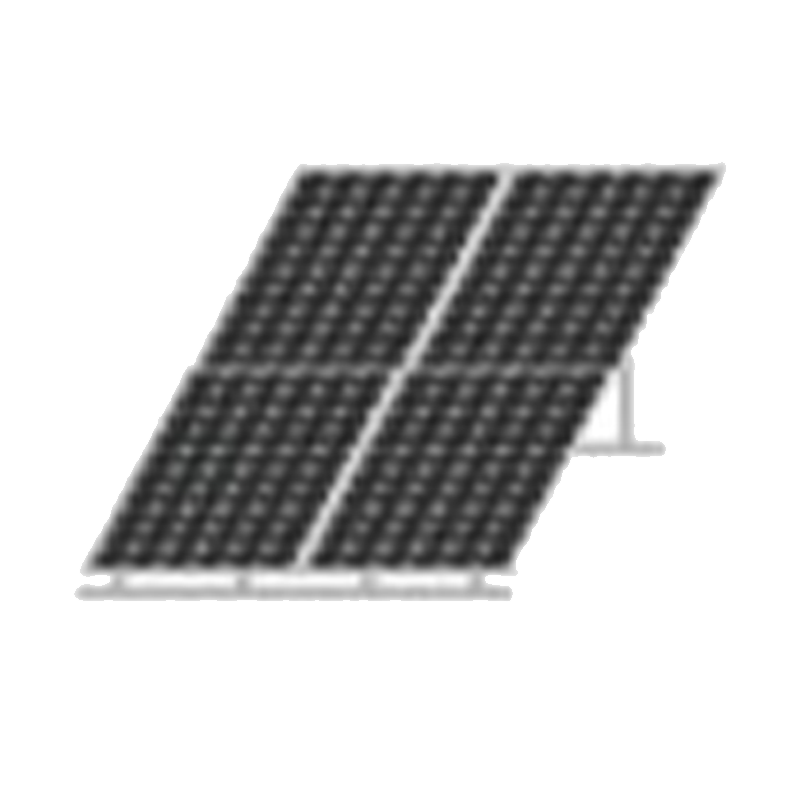
Off-grid solar photovoltaic power generation system
5. Advantages Compared with Conventional Alternatives
5.1 Lower dependence on fuel logistics
Diesel generators and gasoline generators can provide off-grid electricity, but their operation depends on continuous fuel supply. In remote areas, the cost of transporting fuel may become a major part of total operating expenditure. Weather, damaged roads, maritime conditions, border restrictions, and emergency events can interrupt fuel delivery.
Solar photovoltaic generation reduces this logistical dependence. Once installed, the photovoltaic array produces electricity from sunlight without daily fuel deliveries. Batteries provide energy during periods when the array is not generating, while the controller and inverter manage the flow of power.
5.2 Lower noise and emissions
Generators produce engine noise, vibration, exhaust gases, and heat. These effects may be undesirable near residences, clinics, schools, nature reserves, military facilities, and communications stations. Photovoltaic modules operate silently and produce no direct exhaust emissions during generation.
A solar system may still be combined with backup generation where critical loads require extended autonomy, but the generator can operate less frequently and consume less fuel. This hybrid approach can further reduce operating costs and environmental impact.
5.3 Modular capacity expansion
Grid infrastructure and generator installations are often selected around a specific project capacity. Increasing capacity later may require replacing major components. A photovoltaic system can generally be expanded by adding modules, increasing battery capacity, upgrading the controller, or installing a larger inverter, provided that the original design allows for future growth.
Modular expansion is useful for developing villages, growing telecommunications networks, temporary facilities, and phased construction projects. It also enables customers to begin with essential loads and add non-critical equipment when budget or demand increases.
5.4 Flexible DC and AC supply
Less integrated solar systems may require multiple independent converters and adapters. The described system supports both DC and AC use, creating more flexibility for mixed loads. Standard household and industrial devices can be supplied through the inverter, while compatible electronics can be served through DC-DC conversion.
This arrangement can improve system efficiency and reduce the need for separate small power supplies. It also simplifies the design of installations that combine lighting, communications, control equipment, and general-purpose appliances.
5.5 Protection designed for unattended operation
Remote systems cannot always rely on daily technical supervision. The inclusion of overcharge, over-discharge, temperature-compensation, time-control, and light-control functions helps automate essential operating decisions.
Automated protection does not eliminate the need for inspection and maintenance, but it can reduce the likelihood of avoidable battery damage or unnecessary energy consumption. This is especially important for border stations, isolated islands, remote monitoring installations, and facilities that may only be visited periodically.
6. Application Scenarios
6.1 Remote mountain villages
Mountain communities may have limited access to transmission lines because of steep terrain, long distances, and difficult construction conditions. A local photovoltaic system can provide electricity for lighting, small appliances, communications, refrigeration, water pumping, education, and community services.
System sizing should begin with a survey of household energy consumption and expected development. Essential loads such as lighting, communications, and medical refrigeration may be given priority, while larger appliances can be scheduled for periods of stronger solar generation.
6.2 Medical facilities and health stations
Reliable electricity is essential for rural clinics and medical posts. Solar power can support lighting, vaccine or medicine refrigeration, diagnostic equipment, communications, computers, ventilation, and emergency charging.
Medical applications require careful design because some loads are sensitive, continuous, or safety-critical. Battery autonomy, inverter quality, voltage regulation, protection, and backup planning must be evaluated by qualified engineers. The photovoltaic system can serve as the primary energy source or as part of a hybrid supply strategy.
6.3 Private residences and field housing
For homes outside the utility network, an off-grid system can supply lighting, fans, televisions, refrigerators, charging equipment, water pumps, and selected kitchen appliances. The use of energy-efficient LED lighting and high-efficiency appliances can significantly reduce the required photovoltaic and battery capacity.
Residential systems benefit from clear load prioritization. Essential circuits may remain available during low battery conditions, while optional circuits can be disconnected automatically to protect stored energy.
6.4 Border islands and coastal locations
Islands and coastal outposts often face high fuel transportation costs and difficult maintenance access. Solar generation can provide power for navigation support, communications, lighting, surveillance equipment, accommodation, and basic public services.
For these environments, the mechanical design must consider salt-laden air, humidity, strong wind, and corrosion. Mounting structures, fasteners, cable connections, and enclosures should be specified for the local environment. The company’s experience with outdoor lighting structures and metal processing supports the development of robust project-specific mounting solutions.
6.5 Military and overseas operations
Military, humanitarian, and overseas operations may need rapidly deployable power for command posts, temporary accommodation, field hospitals, communications, security systems, and equipment charging. Solar modules can be combined with battery storage and optional backup generation to form a flexible field microgrid.
Such systems benefit from low acoustic output, reduced fuel dependence, modular transport, and the ability to operate away from utility infrastructure. Engineering should account for transportation packaging, assembly time, security, weather exposure, and the criticality of each connected load.
6.6 Communication towers and monitoring stations
Communication towers, remote data stations, traffic monitoring equipment, and environmental sensors often require continuous low-power operation. The combination of photovoltaic generation, batteries, DC-DC conversion, and intelligent control is well suited to these applications.
Direct DC supply can be particularly beneficial for communication equipment. Remote monitoring of battery voltage, photovoltaic output, load consumption, and system alarms may also be integrated depending on the controller and project requirements.
7. Engineering and System Sizing
Correct sizing is more important than selecting the largest available component. An oversized system increases initial cost and may create unnecessary installation challenges, while an undersized system may experience frequent low-battery conditions and inadequate service reliability.
7.1 Load assessment
The design process begins with a detailed load list. Each appliance or device should be recorded with its rated power, operating hours per day, starting current, voltage, and priority level. Daily energy consumption can be estimated by multiplying rated power by operating time and adding the energy required by all loads.
Continuous loads, such as communication equipment or refrigeration, should be distinguished from intermittent loads, such as lighting, tools, or pumps. Seasonal changes in operating hours and solar availability should also be considered.
7.2 Battery capacity
Battery capacity depends on daily energy demand, desired autonomy, system voltage, allowable depth of discharge, battery efficiency, temperature, and aging margin. A system intended to operate through several cloudy days requires more storage than a system with a generator available as backup.
Lead-acid batteries should not normally be discharged beyond the level recommended by the manufacturer. Maintaining an appropriate reserve improves service life and reduces the likelihood of unexpected shutdowns.
7.3 Photovoltaic array capacity
The photovoltaic array must generate enough energy to supply daily loads and recharge the battery after normal overnight use. Design calculations should include local peak sun hours, temperature effects, module tolerance, wiring losses, controller losses, dust, shading, and battery charging efficiency.
Array voltage must remain within the controller’s operating range under both low-temperature open-circuit conditions and high-temperature operating conditions. The number of modules in series and parallel should be selected carefully to balance voltage, current, cable size, and energy yield.
7.4 Inverter selection
The inverter should support the continuous load and the maximum starting demand. Motors, pumps, compressors, refrigerators, and some medical equipment may draw a surge current several times higher than their normal operating power.
Output voltage and frequency must match local requirements. For projects using 110 V or 220 V appliances, the inverter should be specified accordingly. Sensitive equipment may require a high-quality waveform and additional surge protection.
7.5 DC-DC converter selection
DC-DC converters should be selected according to input voltage range, output voltage, maximum current, efficiency, isolation requirements, environmental rating, and protection functions. A converter used to reduce 24 VDC to 5 VDC must have sufficient capacity for both normal operation and transient demand.
8. Manufacturing Strength and Quality Control
The performance of an off-grid energy system depends not only on electrical design but also on the quality of the supporting structures, enclosures, brackets, poles, cabinets, and installation components. The manufacturer’s broader production capabilities provide an important advantage for projects requiring customized outdoor infrastructure.
The company operates as a professional production, design, and engineering enterprise in the road-illumination industry. Its manufacturing experience includes street light poles, LED street lights, solar street lights, lighting fixtures, and associated products. This background is relevant to off-grid photovoltaic projects because many installations require outdoor mounting structures, lighting support, cable routing, protective cabinets, and integrated site engineering.
8.1 Material selection
Available structural material options include Q235B, Q345B, S275JR, S355JR, Q460, A36, A572, GR56, and GR50, subject to project requirements and applicable standards. Providing multiple material options allows engineers to balance strength, weldability, corrosion performance, local availability, and cost.
Extensive material inventory can help shorten production lead times. This is valuable for overseas projects and infrastructure programs in which delays may affect installation teams, shipping schedules, civil works, and commissioning plans.
8.2 CNC bending
Precise CNC bending supports consistent geometry and improved structural integrity. Accurate bending reduces variation between components and minimizes the need for corrective work after fabrication. For solar-support structures and outdoor lighting components, consistent angles and dimensions are important for assembly, alignment, wind-load performance, and appearance.
8.3 Precision cutting
The production capability includes cutting accuracy stated at approximately 0.01 mm. Precise cutting contributes to clean edges, accurate dimensions, improved fit-up, and reduced material waste. It also supports the fabrication of repeatable components for large projects requiring many identical structures.
8.4 Welding quality
Certified welders with extensive experience support the fabrication of structural components and customized assemblies. Consistent welding quality is essential for poles, brackets, cabinets, support frames, and other equipment exposed to wind, vibration, transportation stress, and outdoor weather.
Welding quality control should include suitable joint preparation, qualified procedures, visual inspection, dimensional inspection, and additional testing when required by the project specification. Strong and consistent welds help extend structural service life and reduce the risk of field repair.
8.5 Corrosion protection
Outdoor power systems require protection against moisture, ultraviolet radiation, salt, dust, and temperature changes. The company’s production capabilities include powder electrostatic painting and related finishing processes. Proper surface preparation and coating selection can improve the anti-corrosion life of outdoor metal components.
For coastal or industrial environments, the finish should be specified according to local exposure conditions. Hot-dip galvanizing, powder coating, paint systems, stainless steel hardware, sealed enclosures, and drainage provisions may be combined where appropriate.
8.6 Automated production
Automated lines can improve repeatability, production speed, process control, and material efficiency. Automation is particularly useful for large orders involving standardized poles, brackets, frames, and housings. It can also help reduce manufacturing costs while maintaining consistent quality.
8.7 Die casting and component manufacturing
The company has a 1250-ton die-casting machine for the production of suitable aluminum or metal components. This capability can support the manufacture of lighting bodies, connection parts, housings, and other components requiring repeatable shapes and stable dimensions.
9. Project Engineering and Customized Service
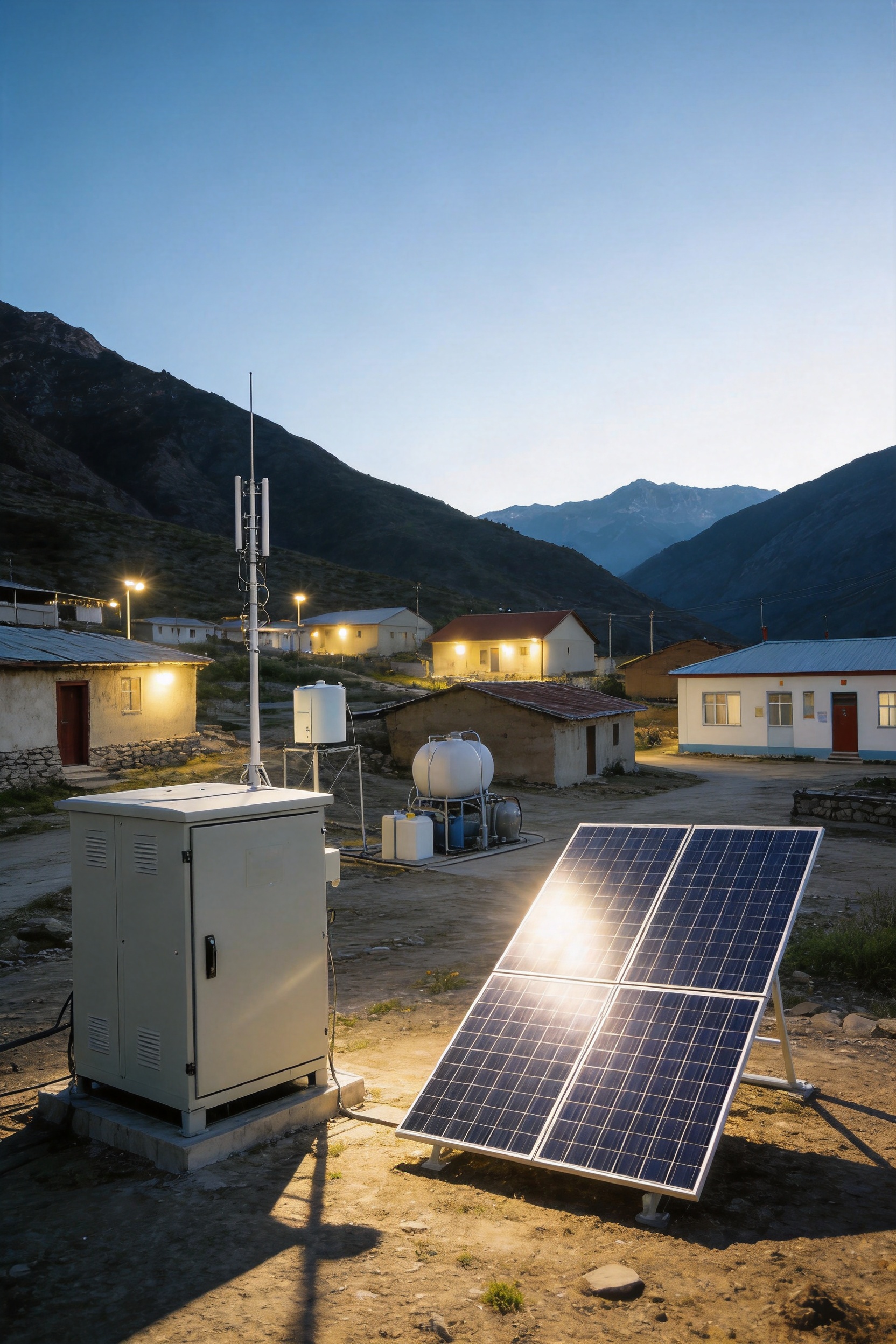
Off-grid power projects vary considerably. A system for a small residence has different requirements from a medical station, communication tower, island outpost, or military facility. Engineering support is therefore an important differentiator.
9.1 CAD design
CAD design helps define the arrangement of photovoltaic modules, batteries, controllers, inverters, cabinets, cable routes, mounting frames, and access spaces. Clear drawings simplify review, procurement, fabrication, installation, and maintenance.
9.2 Three-dimensional product simulation
Three-dimensional product simulation allows customers and engineers to review the physical appearance and assembly of the proposed equipment before production. It can reveal interference between components, insufficient clearance, difficult maintenance access, and transportation limitations at an early stage.
9.3 Three-dimensional scene simulation
Scene simulation places the proposed system into a representative site environment. This is useful for evaluating module orientation, shading, structure height, visual impact, access routes, equipment spacing, and relationships with existing buildings or infrastructure.
9.4 Specification and color customization
Outdoor equipment may need to match local architectural requirements, corporate standards, security requirements, or environmental conditions. Specification and color customization can be applied to suitable structural and lighting components, subject to material, coating, and production limitations.
9.5 Wind and foundation calculations
Solar modules, poles, brackets, and outdoor cabinets are exposed to wind loads. Mechanical calculations should consider local wind speed, module arrangement, structure height, foundation conditions, soil properties, exposure category, and applicable design standards.
Foundation calculation and structural verification are particularly important for high-wind coastal locations, islands, mountain ridges, and open terrain. Proper engineering helps prevent excessive movement, foundation failure, or long-term fatigue damage.
9.6 Overseas installation guidance
International projects may involve local contractors, different construction practices, language requirements, transportation restrictions, and unfamiliar site conditions. Overseas installation guidance helps coordinate the assembly sequence, electrical connections, structural installation, commissioning checks, and basic maintenance procedures.
Installation guidance should not replace local licensed engineering where regulations require it. Instead, it provides practical product-specific support that helps local teams install the equipment correctly and efficiently.
10. Installation Considerations
Photovoltaic modules should be positioned to receive as much unobstructed sunlight as possible. Orientation and tilt depend on geographic location, seasonal energy priorities, roof or ground conditions, and local structural requirements. Nearby trees, buildings, poles, and terrain should be assessed for possible shading throughout the day.
Shading can reduce the output of a module string, even when only part of the array is affected. Bypass diodes help reduce the impact of shaded sections, but they cannot eliminate all shading losses. Careful site selection remains one of the most effective ways to improve system performance.
Battery rooms or battery cabinets should provide suitable ventilation, temperature control, protection from water ingress, and safe access. Lead-acid batteries may release gases during charging, so installation must follow applicable electrical and safety requirements.
Inverters, controllers, and DC-DC converters should be protected from direct rain, excessive heat, dust, and unauthorized access. Cable routing should minimize voltage drop and protect conductors from abrasion, ultraviolet exposure, rodents, and mechanical damage.
Grounding, fuses, circuit breakers, surge protection, disconnect switches, and polarity checks should be included according to the system voltage and local regulations. All components must be rated for the maximum expected voltage and current, including cold-weather open-circuit voltage and fault conditions.
11. Operation and Maintenance
Although photovoltaic systems have relatively low operating requirements, planned maintenance is necessary for dependable long-term service. Maintenance frequency depends on local dust, humidity, salt exposure, vegetation, wildlife, temperature, and system criticality.
Module surfaces should be inspected for dust, bird deposits, cracks, delamination, frame damage, and loose connections. Cleaning should be performed when soiling materially reduces energy production and should follow safe procedures that avoid damaging the glass or electrical components.
Battery condition should be monitored through voltage, temperature, electrolyte condition where applicable, terminal cleanliness, and signs of swelling, leakage, or corrosion. Maintenance requirements vary by battery type, so the battery manufacturer’s instructions should be followed.
Controllers and inverters should be checked for alarm records, abnormal temperatures, loose terminals, blocked ventilation openings, and error conditions. Cable glands and enclosure seals should be inspected, especially after severe weather.
A maintenance log should record inspection dates, measured voltages, battery condition, energy production, load behavior, alarms, repairs, and replacement parts. Such records help identify declining performance before it causes a service interruption.
12. Reliability, Safety, and Lifecycle Value
Reliability should be evaluated over the complete project lifecycle rather than only by the initial purchase price. A low-cost system may become expensive if it requires frequent battery replacement, has inadequate protection, uses weak structures, or lacks technical support.
The described product approach combines energy conversion, storage, control, mechanical fabrication, and engineering support. This integrated capability can reduce coordination problems between different suppliers. It also enables the electrical system and the outdoor support structures to be considered together during design.
Safety must remain a central design principle. Photovoltaic arrays can produce hazardous DC voltage whenever they are exposed to light. Batteries can deliver very high fault currents. Inverters produce AC output that may be dangerous even when the grid is absent. Installation, testing, maintenance, and troubleshooting should be performed by appropriately trained personnel.
Emergency disconnects, clear labeling, proper enclosure design, protective devices, grounding, and safe working clearances help reduce risk. Project documentation should include wiring diagrams, operating instructions, maintenance schedules, component ratings, and emergency procedures.
Lifecycle value also includes the ability to obtain replacement modules, batteries, cables, controllers, and structural components. A product range with multiple module sizes and a manufacturer capable of producing customized parts can simplify future repairs and system expansion.
13. Why Integrated Manufacturing Matters
Many solar projects require more than photovoltaic panels and batteries. They may include solar street-lighting poles, high-mast structures, equipment cabinets, mounting frames, LED fixtures, traffic facilities, communication supports, and custom metalwork. A manufacturer with experience across outdoor lighting and infrastructure can address these requirements within a broader engineering framework.
Integrated manufacturing can provide more consistent dimensional control between the photovoltaic equipment and the supporting structure. It can also simplify surface treatment, packaging, quality inspection, and delivery coordination.
The company reports a production site exceeding 70,000 square meters, more than 300 professional technicians, and exports to over 200 countries. These capabilities indicate experience with international project requirements, large-scale production, export documentation, and overseas customer coordination.
Quality systems identified by the company include ISO 9001, ISO 14001, and OHSAS 18001. These standards relate respectively to quality management, environmental management, and occupational health and safety management. The actual certification scope and validity should be confirmed for the specific project and order.
For customers, the practical value of these capabilities is the potential to receive a coordinated solution covering design, fabrication, electrical integration, structural engineering, finishing, inspection, packaging, and installation guidance.
14. Recommended Selection Process
The selection process should begin by identifying the site location, available solar resource, daily load profile, required autonomy, local voltage, environmental conditions, and installation limitations.
The second step is to classify loads by priority. Essential loads may include medical refrigeration, communications, emergency lighting, security equipment, and control systems. Non-essential loads may include entertainment equipment, convenience appliances, or high-power tools. Load prioritization allows the controller or distribution system to preserve energy for critical services.
The third step is to select the system voltage. Smaller systems may use a 12 V architecture, while higher-capacity systems may benefit from 24 V or another suitable DC voltage to reduce current and cable losses. The photovoltaic module voltage, controller input range, battery configuration, inverter input, and DC-DC converters must all be compatible.
The fourth step is to determine the battery capacity and photovoltaic array size. The design should include autonomy days, seasonal conditions, battery aging, energy losses, and future load growth.
The fifth step is to review mechanical and civil requirements. This includes mounting arrangements, roof loading, ground foundations, wind calculations, corrosion protection, cable routes, equipment access, security, and transportation.
The final step is to confirm documentation, inspection, packaging, installation guidance, commissioning procedures, warranty terms, spare parts, and after-sales support. A complete project specification reduces uncertainty and helps ensure that the system performs as expected after delivery.
15. Frequently Asked Questions
Q1: What is an off-grid solar photovoltaic power generation system?
An off-grid solar photovoltaic power generation system produces electricity without relying on a public utility network. Solar modules generate DC electricity, a charge controller manages energy flow, batteries store surplus power, and an inverter converts DC electricity into standard AC power for compatible appliances.
Q2: Can the system supply both AC and DC loads?
Yes. The inverter supplies AC loads such as household appliances, lighting equipment, and office devices. DC-DC converters can supply lower-voltage DC equipment, such as communication devices, sensors, controllers, and electronics.
Q3: What battery technology is typically used?
The described system typically uses high-performance lead-acid batteries. Battery capacity and configuration depend on daily energy demand, desired autonomy, system voltage, temperature, allowable depth of discharge, and backup requirements.
Q4: What protective functions are provided?
The intelligent controller can provide overcharge protection, over-discharge protection, temperature compensation, time control, and light control. These functions help protect the batteries and manage the operation of connected loads.
Q5: What photovoltaic module power ratings are available?
The listed module range extends from approximately 5 W to 185 W. The range includes lower-voltage modules with operating voltage near 17.5 V and higher-voltage modules with operating voltage near 35 V. The correct model depends on system voltage, array size, installation area, and energy demand.
Q6: Are the photovoltaic modules suitable for outdoor use?
The modules use construction features including 3.2 mm glass, EVA encapsulation, a TPT backsheet, an aluminum frame, and a junction box with bypass diodes. These features are intended for long-term outdoor photovoltaic service, subject to correct installation and environmental specification.
Q7: Can the system be used in coastal or island environments?
Yes, but coastal installations require careful selection of materials, coatings, fasteners, enclosures, cable glands, and foundations. Salt-laden air and high humidity can accelerate corrosion, so the project should specify suitable protection for the local exposure conditions.
Q8: Can the system be expanded later?
Many systems can be expanded by adding photovoltaic modules, batteries, controllers, or inverter capacity. Expansion should be considered during the original design so that electrical ratings, structural capacity, space, cable sizing, and protection equipment can accommodate future growth.
Q9: Is a generator required?
A generator is not always required, but it may be recommended for critical facilities or locations with extended periods of low solar radiation. A generator can serve as emergency backup while solar generation supplies most normal energy requirements.
Q10: What services are available for customized projects?
Project services may include CAD design, three-dimensional product simulation, three-dimensional site simulation, specification and color customization, wind and foundation calculations, and overseas installation guidance. The exact scope should be confirmed according to the project requirements.
Q11: What types of sites are suitable for this system?
Suitable applications include remote villages, medical stations, private residences, border islands, military facilities, overseas operations, communication towers, monitoring stations, field camps, security installations, and other locations without dependable utility-grid access.
Q12: What information is needed for a quotation or system design?
Useful information includes the installation location, daily energy consumption, individual load ratings, operating hours, required autonomy, local AC voltage and frequency, battery preference, available installation area, environmental conditions, expected expansion, and any structural or transportation limitations.
16. Conclusion
An off-grid solar photovoltaic power generation system can provide stable, flexible, and lower-maintenance electricity for locations where utility-grid access is unavailable or impractical. Its main advantages come from the coordinated use of photovoltaic generation, battery storage, intelligent control, DC-AC inversion, and DC-DC conversion.
The broad range of photovoltaic modules, durable construction, bypass-diode junction boxes, aluminum frames, and multiple voltage classes allows the system to be adapted to small and large applications. Protective controller functions help manage battery charging and discharging, while the inverter and DC-DC converter support a mixture of AC and DC loads.
Beyond the electrical equipment, the manufacturer’s capabilities in material selection, CNC bending, precision cutting, welding, corrosion protection, automated production, die casting, CAD design, structural calculation, and overseas installation guidance provide added value for complete outdoor infrastructure projects.
For remote communities, medical facilities, private homes, islands, military operations, communication towers, and overseas construction sites, the system offers a practical route toward energy independence. Careful load assessment, professional sizing, correct installation, regular maintenance, and suitable environmental protection are essential to achieving dependable long-term performance.
References
1. Photovoltaic module electrical and mechanical specification sheets supplied for the TYNS module series.
2. Off-grid photovoltaic system design principles covering solar generation, battery storage, charge control, and inverter selection.
3. General practices for lead-acid battery installation, charging, maintenance, and depth-of-discharge management.
4. General engineering guidance for photovoltaic array sizing, battery autonomy, voltage-drop control, and load prioritization.
5. International quality, environmental, and occupational health and safety management principles associated with ISO 9001, ISO 14001, and OHSAS 18001.
6. General structural engineering practices for outdoor solar supports, lighting poles, wind-load assessment, corrosion protection, and foundation design.
7. Manufacturer-provided production, engineering, equipment, and customized service information.