


JINYUAN
JINYUAN
JINYUAN
JINYUAN
JINYUAN
JINYUAN
JINYUAN
JINYUAN
JINYUAN
JINYUAN
JINYUAN
JINYUAN
JINYUAN
JINYUAN
JINYUAN
JINYUAN
Content
- 1 1. The Role of Double-Arm Lighting in Contemporary Outdoor Spaces
- 2 2. Product Performance at a Glance
- 3 3. Efficient LED Illumination for Safer Roads
- 4 4. Double-Arm Design for Broader Application Flexibility
- 5 5. Structural Materials Built for Outdoor Exposure
- 6 6. Hot-Dip Galvanizing and Powder Coating Protection
- 7 7. Manufacturing Precision from Material to Finished Pole
- 8 8. Quality Control as a Project Advantage
- 9 9. Energy Management and Dimming Compatibility
- 10 10. Applications Across Urban and Industrial Environments
- 11 11. Design and Engineering Support Before Production
- 12 12. Advantages Compared with Basic Competitive Products
- 13 13. Installation and Commissioning Considerations
- 14 14. Maintenance and Lifecycle Management
- 15 15. Responsible Project Specification
- 16 16. Company Manufacturing and Service Strength
- 17 17. Q&A: Frequently Asked Questions
- 17.1 Q1. What is the main purpose of the double-arm configuration?
- 17.2 Q2. Is this product suitable for coastal locations?
- 17.3 Q3. What pole heights are available?
- 17.4 Q4. What materials can be used for the pole?
- 17.5 Q5. What is the luminous efficiency of the LED system?
- 17.6 Q6. Can the lighting level be adjusted at night?
- 17.7 Q7. What color temperatures are available?
- 17.8 Q8. What does IP65 protection mean for this luminaire?
- 17.9 Q9. Can the appearance be customized?
- 17.10 Q10. Does the supplier provide structural calculations?
- 17.11 Q11. What is the warranty period?
- 17.12 Q12. What should be checked before ordering?
- 18 18. Conclusion
- 19 References
- 20 Product: High-Performance Outdoor Double-Arm LED Street and Landscape Light
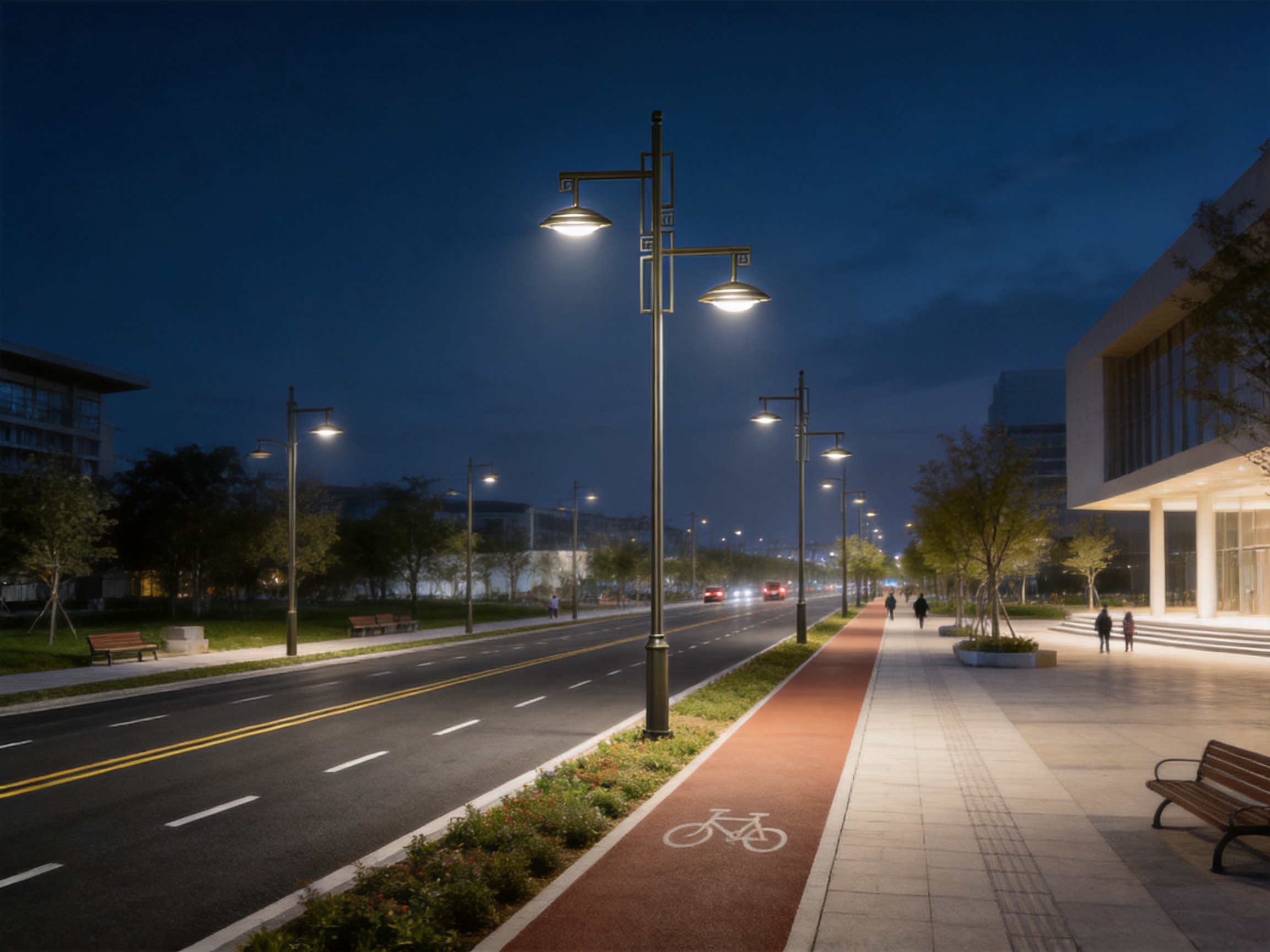
Modern outdoor lighting must do more than make a road visible after sunset. It must improve traffic safety, support pedestrian comfort, complement surrounding architecture, withstand difficult weather, and operate economically for many years. The High-Performance Outdoor Double-Arm LED Street and Landscape Light is designed around these combined requirements. Its double-arm configuration provides broad design flexibility, while its industrial-grade LED modules, corrosion-resistant construction, and intelligent light distribution support dependable illumination in demanding public environments.
This lighting series is suitable for urban arterial roads, industrial parks, public squares, cultural districts, pedestrian routes, landscape paths, campuses, residential developments, and other large outdoor projects. It combines a robust steel pole system with aluminum-alloy lamp housing, high-efficiency LED technology, adjustable color temperatures, and optional dimming interfaces. The result is a configurable lighting platform rather than a single-purpose luminaire.
For project owners, consulting engineers, contractors, and distributors, the value of this product lies in the balance between appearance, performance, serviceability, and manufacturing control. A well-designed double-arm street light should not only look attractive in a catalog. It should remain structurally stable, optically effective, and visually consistent after years of exposure to wind, rain, ultraviolet radiation, pollution, humidity, and temperature changes.
1. The Role of Double-Arm Lighting in Contemporary Outdoor Spaces
Double-arm lighting is frequently selected where one pole must serve more than one visual or functional purpose. Two arms can direct light toward separate carriageways, illuminate a broad road section, provide different mounting positions, or combine roadway lighting with landscape-oriented lighting. This arrangement can reduce the need for multiple independent poles while creating a stronger visual rhythm along a boulevard or public space.
On a divided road, the two arms may extend in opposite directions to support balanced illumination on both sides of the central alignment. At an intersection, a double-arm pole can help provide coverage across approaching lanes and pedestrian areas. In a park or cultural district, the arms may be arranged to illuminate a main route and an adjacent landscape zone. The exact configuration depends on pole height, arm geometry, road width, luminaire distribution, mounting angle, and the project’s lighting calculations.
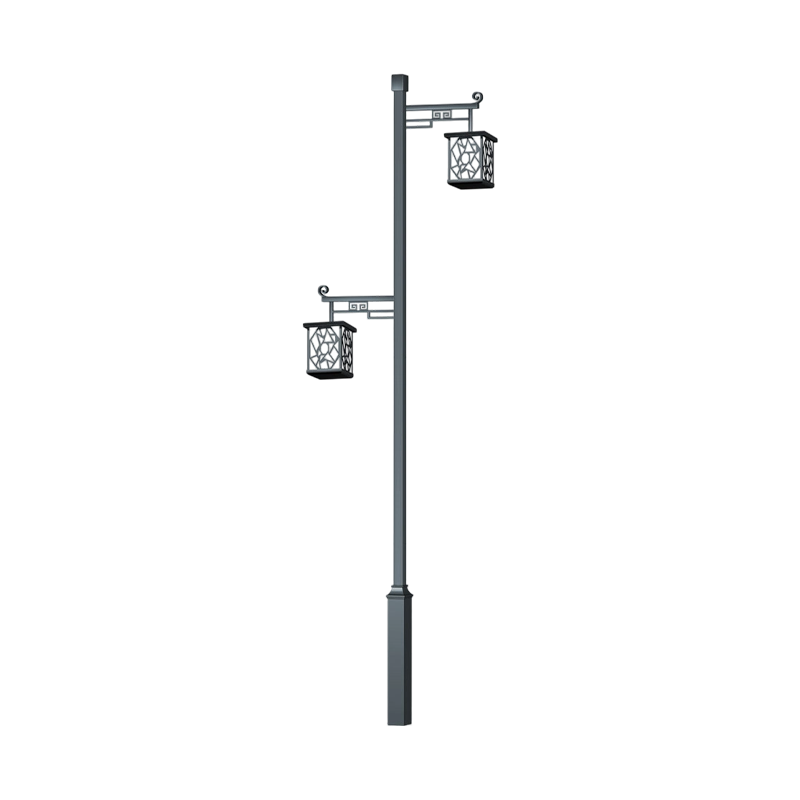
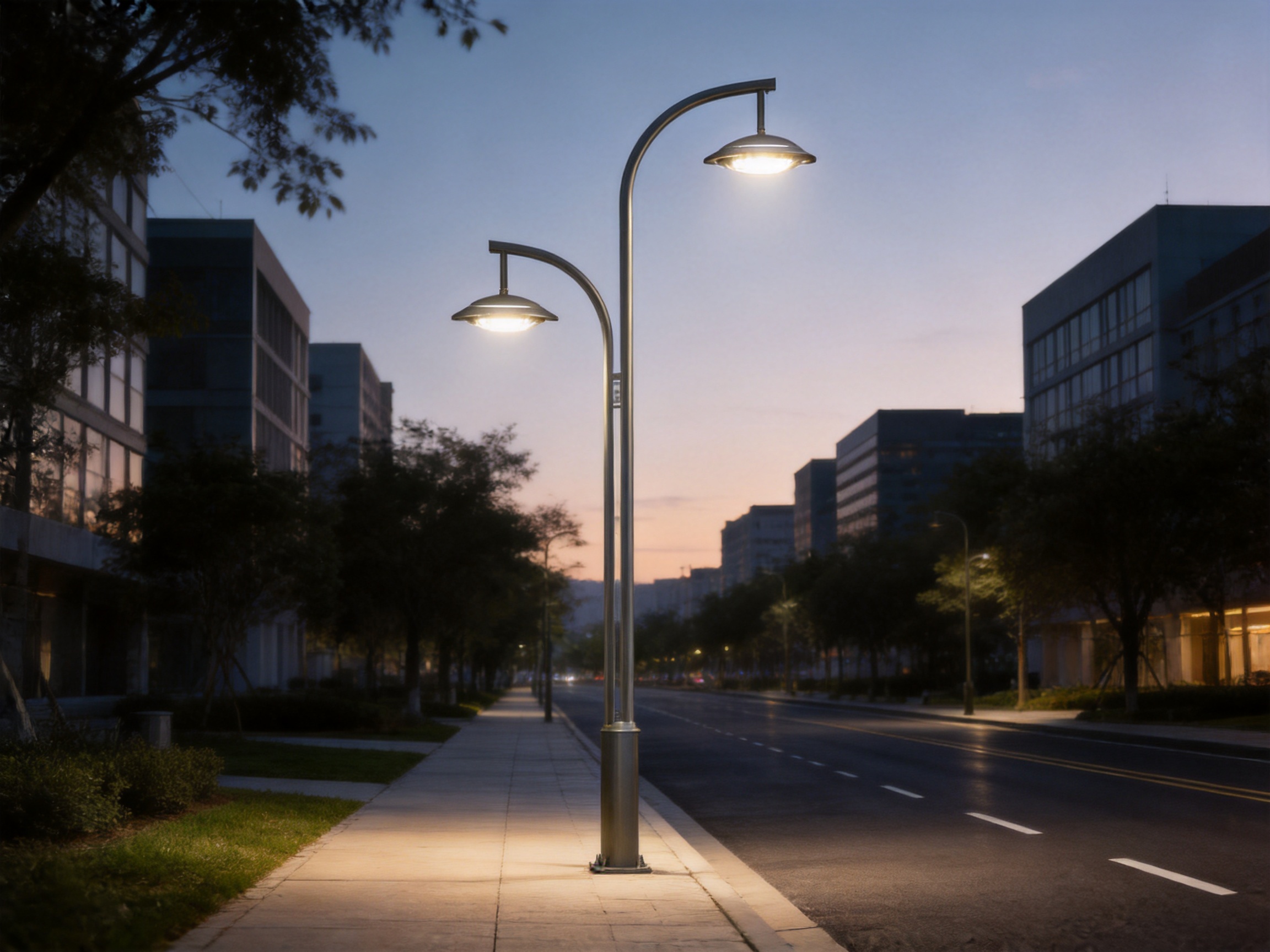
The product is categorized as an LED High-low Arm Light, which allows the two fixtures to be positioned at different elevations or with distinct arm profiles. A high-low arrangement can create visual depth and help adapt the pole to roads, plazas, paths, and architectural environments with different scale requirements. It also gives designers more freedom to establish hierarchy between primary traffic lighting and secondary pedestrian or landscape lighting.
Compared with a basic single-arm street light, a double-arm solution offers greater flexibility in both coverage and appearance. Compared with decorative lighting systems that prioritize appearance over engineering, this product is developed with structural materials, corrosion protection, industrial LED modules, and project-oriented customization in mind. The design objective is to provide a professional lighting environment without sacrificing practical performance.
2. Product Performance at a Glance
The following specifications describe the standard product information provided for this lighting series. Final selection should be confirmed according to the project’s photometric calculations, local electrical requirements, wind conditions, foundation design, and installation environment.
| Specification | Provided Value | Project Significance |
|---|---|---|
| Product category | LED High-low Arm Light | Suitable for double-arm roadway, landscape, and public-space applications |
| Application | Road | Designed for outdoor roadway and related infrastructure lighting |
| Light source | LED | Supports efficient, long-life, low-maintenance illumination |
| Input voltage | AC85-265V | Broad operating range for compatible electrical systems |
| Lamp luminous efficiency | Up to 140 lm/W | Helps achieve required illumination with controlled energy consumption |
| Operating temperature | -35 to 65 degrees Celsius | Suitable for a wide range of cold and hot outdoor conditions |
| Lamp housing material | Aluminum alloy | Supports heat dissipation and outdoor mechanical performance |
| Ingress protection | IP65 | Helps protect the luminaire against dust and water jets |
| Color temperature | 3000K to 6000K | Allows warm, neutral, or cool lighting selections |
| Color rendering index | Ra 70 | Provides practical color recognition for roadway environments |
| Dimming support | DC 0-10V and DALI | Enables integration with compatible control and energy-management systems |
| Warranty period | 5 years | Provides a defined period of product support for qualifying installations |
| Pole height | 6 to 10 meters | Supports different roadway, plaza, and landscape scales |
| Pole materials | Q235, Q355, SS400, GR65, and others | Allows structural material selection based on engineering requirements |
These specifications make the series suitable for projects that require a combination of moderate-to-high mounting height, reliable environmental protection, broad voltage compatibility, and controllable operating performance. As with any professional outdoor lighting product, specifications should be reviewed together rather than individually. For example, high luminous efficiency is most valuable when paired with appropriate beam distribution, thermal management, glare control, and correct installation geometry.
3. Efficient LED Illumination for Safer Roads
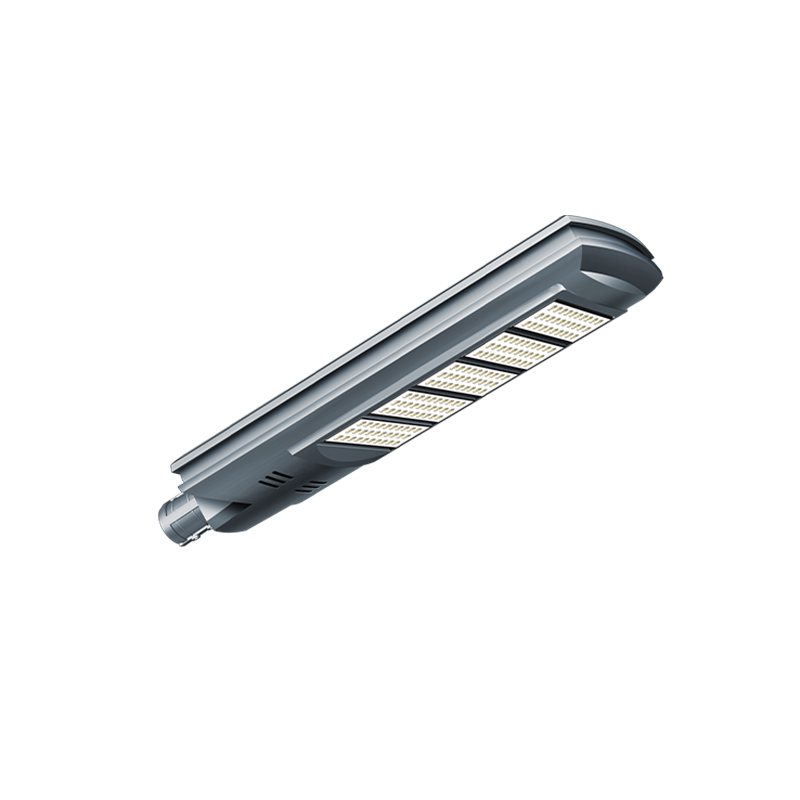
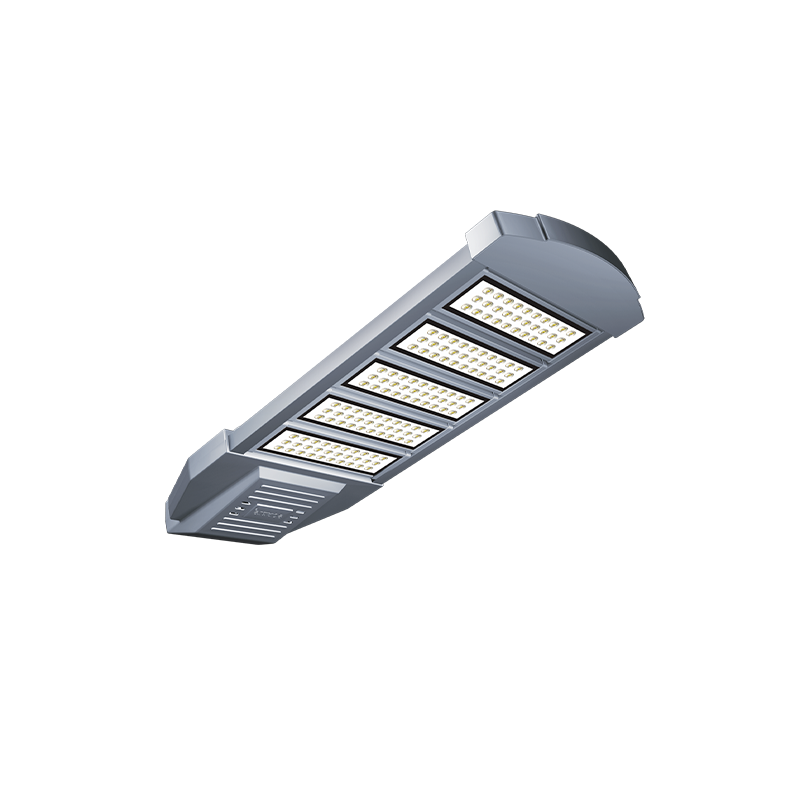
The central performance advantage of the product is its LED lighting system. Industrial-grade LED modules provide high luminous efficiency and low light decay, helping the luminaire maintain useful illumination over an extended service period. With a stated luminous efficiency of up to 140 lumens per watt, the series is designed to deliver substantial light output while limiting energy consumption compared with older conventional sources.
Energy efficiency is particularly important in municipal roads, industrial parks, logistics areas, and commercial developments where hundreds or thousands of luminaires may operate every night. Even a moderate reduction in power consumption can produce significant savings over the life of a project. Lower electrical demand can also reduce the required capacity of distribution equipment and support more manageable operating budgets.
However, efficiency should never be judged only by the lumen-per-watt figure printed on a specification sheet. Actual project value depends on the amount of useful light reaching the road, the uniformity of illumination, the mounting arrangement, the optical distribution, the control schedule, and the maintenance condition of the installation. This series addresses that broader requirement through an intelligent light distribution design intended to reduce glare, blind spots, and uneven bright-dark transitions.
Uniform lighting helps drivers interpret road geometry and detect pedestrians, cyclists, vehicles, lane changes, and potential obstacles. It also supports visual comfort by reducing abrupt changes in brightness. On pedestrian routes and landscape paths, a carefully selected distribution can make the environment feel safer and more welcoming without creating unnecessary glare for nearby residents or visitors.
The product can be configured with color temperatures from 3000K to 6000K. Warm or neutral white light may be selected for parks, historic areas, residential environments, and landscape-oriented projects where visual softness is important. Cooler color temperatures may be suitable for arterial roads, industrial zones, or locations where a brighter visual impression and stronger contrast are desired. The final choice should consider local regulations, environmental impact, architectural character, and the needs of surrounding communities.
A color rendering index of Ra 70 provides practical color recognition for general roadway use. This level is commonly suitable for identifying road users, vehicles, signs, surfaces, and basic environmental details. Where a project requires enhanced color appearance for retail areas, architectural façades, public art, or high-end pedestrian environments, the lighting designer can evaluate whether a different LED configuration is appropriate.

High-Performance Outdoor Double-Arm LED Street and Landscape Light
4. Double-Arm Design for Broader Application Flexibility
The most visible feature of this series is its double-arm structure. Rather than limiting the design to one fixed arm and one fixed luminaire position, the system can be developed with different head shapes, arm curves, mounting heights, and power configurations. This adaptability allows the lighting pole to respond to the identity and geometry of each site.
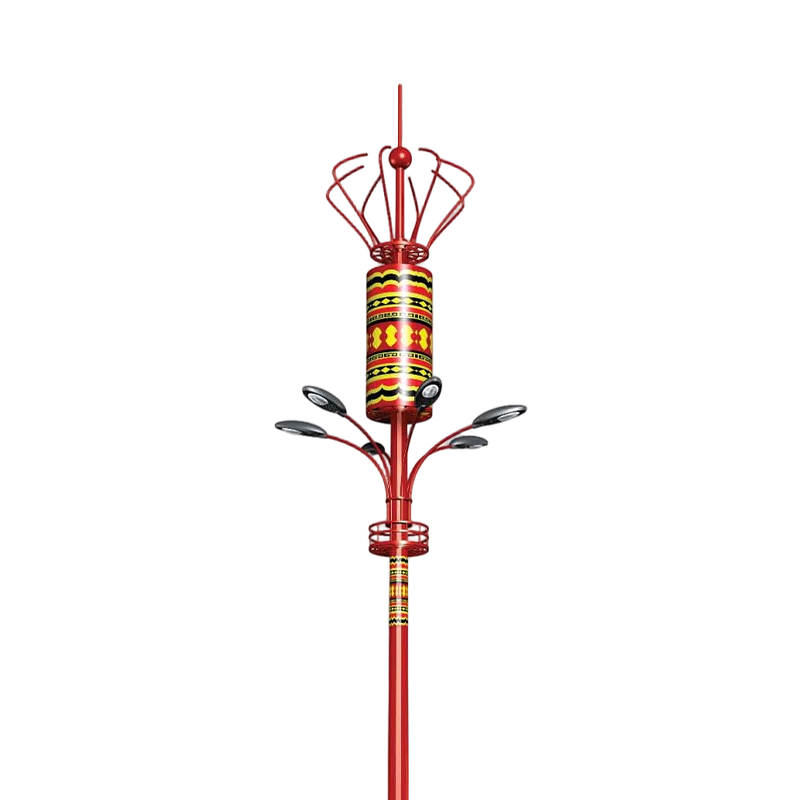
For modern urban arterial roads, streamlined arms and clean luminaire forms can reinforce a contemporary streetscape. For parks, pedestrian streets, and cultural districts, traditional motifs or artistic curves can provide a more decorative visual language. In an industrial park, the design may emphasize clear lines, high visibility, and functional efficiency. In a mixed-use development, the same general platform can be customized to coordinate with nearby buildings, landscape elements, signs, and street furniture.
The high-low arrangement is especially useful when a project contains more than one lighting zone. The higher luminaire can focus on the main roadway, while the lower luminaire can serve a sidewalk, bicycle path, plaza edge, or landscape area. This approach can help separate lighting tasks and may reduce the need to use excessive power from a single fixture aimed at every area simultaneously.
Arm geometry also influences wind loading, visual balance, maintenance access, and the relationship between the pole and the surrounding built environment. For that reason, decorative styling should be developed together with structural calculations. The manufacturer’s ability to provide CAD design, three-dimensional product simulation, three-dimensional scene simulation, and mechanical calculations for wind and foundation conditions is an important advantage during the planning stage.
Projects often differ in road width, pole spacing, foundation dimensions, mounting orientation, local wind speed, soil condition, and aesthetic expectations. A standardized product with no opportunity for adjustment may force designers to compromise. By contrast, a configurable double-arm platform can be adapted before production, helping reduce the risk of field modifications and mismatched components.
5. Structural Materials Built for Outdoor Exposure
Outdoor lighting poles must withstand forces that indoor products never encounter. Wind pressure, vibration, vehicle-generated air movement, rain, snow, ultraviolet radiation, salt, industrial pollutants, and repeated thermal expansion all influence long-term performance. The structural material and protective treatment therefore have a direct effect on safety, appearance, and maintenance cost.
The pole system can be manufactured using materials such as Q235, Q355, SS400, GR65, and other project-approved grades. This range allows structural engineers and project purchasers to select a material suitable for the required strength, local standards, fabrication process, and procurement conditions. Material selection should be confirmed through engineering review rather than made solely on the basis of nominal grade.
High-strength structural steel provides a reliable foundation for pole fabrication. The steel must be cut, formed, welded, finished, and protected with consistent process control. Poorly controlled fabrication can create weak areas, dimensional deviations, stress concentration, or coating defects. The manufacturing process used for this series is intended to address those risks through stock control, precision cutting, CNC bending, experienced welding, automated production, and quality inspection.
The luminaire housing is made from aluminum alloy. Aluminum alloy is widely used in LED outdoor lighting because it can provide a practical combination of low weight, corrosion resistance, mechanical strength, and heat dissipation. Effective thermal management is essential because LED performance and lifetime are affected by junction temperature. A housing that transfers heat efficiently can help reduce thermal stress on LED modules and electronic components.
The product is rated IP65. This rating indicates protection against dust ingress and water projected by a nozzle from applicable directions. It is an important level of protection for outdoor roads and landscape installations. Nevertheless, IP protection depends on the complete assembly, including gaskets, covers, cable entries, fasteners, seals, and maintenance procedures. Proper installation and periodic inspection remain necessary to preserve the intended enclosure performance.
6. Hot-Dip Galvanizing and Powder Coating Protection
Corrosion is one of the most serious threats to outdoor lighting infrastructure. A pole may be exposed to persistent humidity, rainwater, road salt, coastal salt spray, fertilizer, dust, and airborne industrial chemicals. Surface damage around welds, cut edges, bolt areas, or drainage points can become the starting point for corrosion if the protective system is not properly designed and applied.
This lighting series uses a dual-protection approach based on rigorous hot-dip galvanizing and multi-layer electrostatic powder coating processes. Hot-dip galvanizing creates a zinc-based protective layer over the steel surface. It can provide both barrier protection and sacrificial protection, helping shield the underlying steel when minor surface damage occurs. The process is particularly valuable for poles installed in humid or corrosive outdoor environments.
Electrostatic powder coating adds a durable decorative and protective finish. The powder is applied using electrostatic attraction and then cured to form a continuous coating. This finish can improve resistance to weathering, abrasion, and surface contamination while allowing the project to select colors that coordinate with the surrounding environment.
The combination of galvanizing and powder coating is more robust than relying on a single decorative paint layer. It supports a longer-lasting appearance and can reduce the frequency of repainting or corrosion-related maintenance. The exact durability of the finished system depends on coating thickness, pretreatment, galvanizing quality, edge design, local environment, installation handling, and maintenance practices.
For coastal projects, extra attention should be given to salt exposure, drainage, fastener selection, coating compatibility, and inspection requirements. For areas with severe winter conditions, designers should also consider deicing salt and freeze-thaw cycles. The product’s corrosion-protection approach gives project teams a strong foundation, but site-specific environmental review remains essential for responsible specification.
7. Manufacturing Precision from Material to Finished Pole
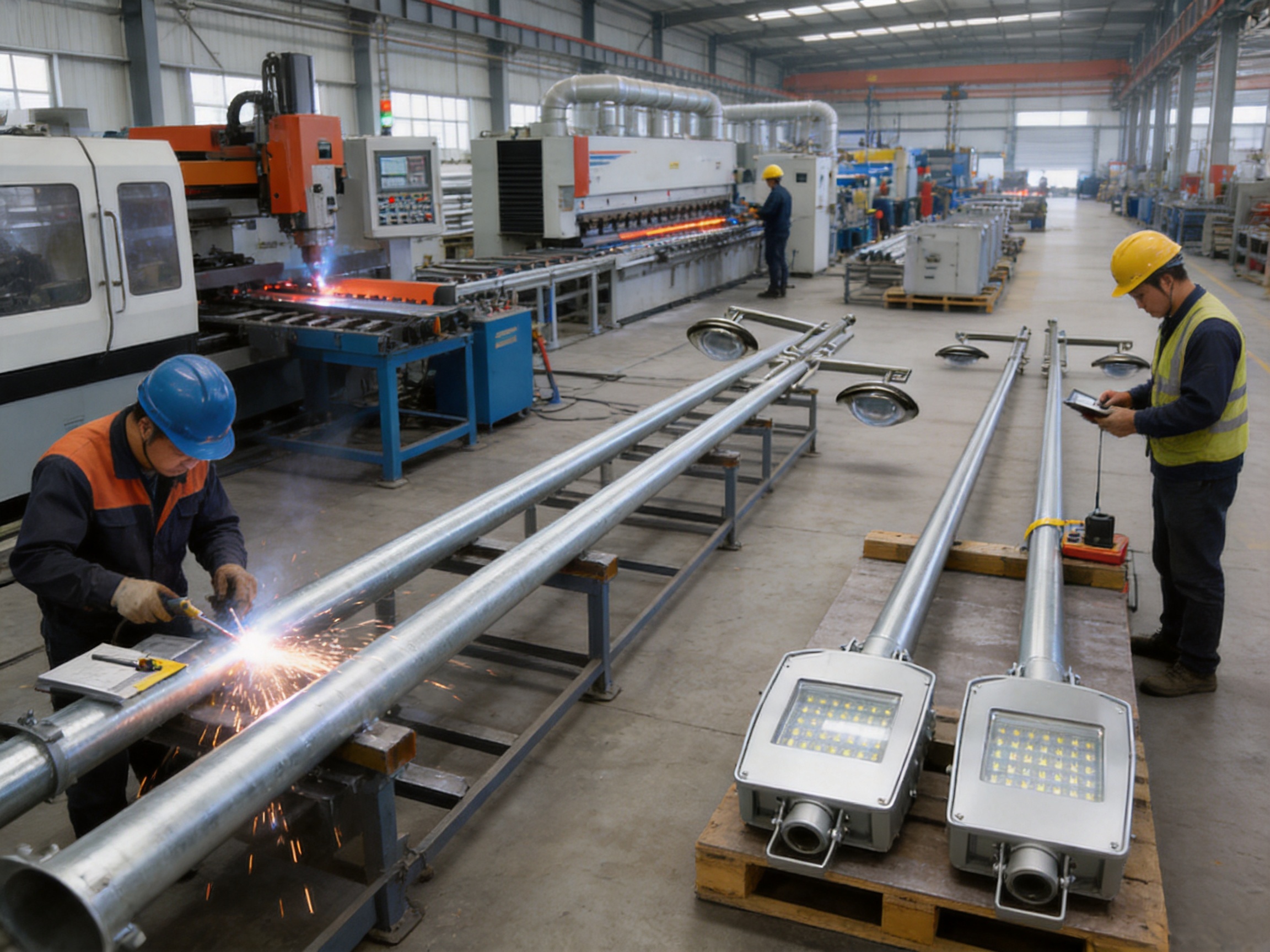
A high-quality street light is the result of a controlled production chain rather than a single manufacturing step. The company operates as a professional production, design, and engineering enterprise serving the road illumination industry. Its manufacturing capabilities include material preparation, CNC bending, precision cutting, welding, coating, automated production, and assembly.
Material availability is an important factor in large infrastructure projects. Delayed steel procurement can affect the entire project schedule, especially when the lighting system must be coordinated with road construction, landscape installation, electrical trenching, and commissioning. Extensive stocks of structural materials help support faster production planning and reduce the risk of delays caused by material shortages.
CNC bending provides consistent forming of pole sections and arms. Precision bending improves dimensional repeatability and helps reduce post-production adjustment. When multiple poles are installed along a long road, consistent arm angles and pole geometry contribute to a more orderly appearance. Consistency also supports easier packaging, transportation, foundation alignment, and assembly at the project site.
Precision cutting with an accuracy stated at 0.01 millimeters helps produce exact dimensions and clean edges. Accurate cutting is especially important for components that must fit together during welding or assembly. Clean edges can also simplify finishing operations and reduce the potential for irregularities that might affect coating quality or create areas vulnerable to corrosion.
Welding is another critical stage in pole production. The company’s certified welders have extensive experience working with structural lighting components. Correct welding technique supports the strength of joints, the alignment of arms, and the long-term reliability of the pole under wind and vibration. Welding quality should be assessed through suitable inspection procedures according to the applicable project and structural requirements.
Automated cutting, welding, and coating lines can improve production speed while supporting repeatable quality control. Automation does not replace engineering judgment or inspection, but it helps reduce variation in repetitive processes. It can also improve material utilization, reduce unnecessary rework, and create a more predictable production schedule for large orders.
The company also operates advanced equipment, including bending machines, electrostatic powder painting equipment, automatic welding and cutting machines, and a 1250-ton die-casting machine. This equipment base supports the production of both structural pole components and lighting-related parts. An integrated manufacturing capability can improve coordination between design, production, inspection, and delivery.
8. Quality Control as a Project Advantage
Outdoor lighting projects are often installed in large quantities. A small defect repeated across hundreds of poles can become a major cost or safety issue. Quality control must therefore address not only the individual luminaire but also batch consistency, dimensional accuracy, material traceability, coating integrity, electrical performance, packaging, and documentation.
A disciplined production system begins with incoming material inspection. Steel grades, dimensions, surface condition, and supporting documentation should be reviewed before fabrication. Components should then be checked after cutting, bending, welding, galvanizing, coating, and assembly. Final inspection should verify appearance, dimensions, interfaces, electrical connections, labels, protective components, and packing condition.
For purchasers, the company’s experience in large-scale production is an important advantage. The organization has operated since 2002 and serves domestic and overseas customers. Its stated management and quality systems include ISO9001, ISO14001, and OHSAS18001-related standards. These systems indicate a focus on quality management, environmental management, and occupational health and safety. Project-specific compliance should still be confirmed through the documentation required by the buyer, consultant, or local authority.
Quality is also related to engineering communication. A supplier that can assist with CAD drawings, three-dimensional simulations, specification customization, wind calculations, foundation calculations, and overseas installation guidance can help identify problems before production. Early review may reveal conflicts involving road clearance, arm reach, luminaire orientation, foundation bolts, cable routing, transport dimensions, or maintenance access.
For international projects, communication is especially important because standards, electrical systems, wind codes, road classifications, and installation practices vary by region. A technically capable manufacturer should be prepared to review the purchaser’s drawings and requirements rather than assuming that one standard configuration will work everywhere.
9. Energy Management and Dimming Compatibility
The lighting series supports DC 0-10V and DALI dimming interfaces. These options allow the luminaires to participate in energy-management strategies where compatible drivers, controllers, sensors, and software are included in the project design.
Dimming can reduce energy use during periods of lower traffic or pedestrian activity. A road may require full output during evening peak hours but operate at a reduced level late at night, provided that safety requirements and local regulations permit the change. In a park or landscape district, lighting levels may also be adjusted according to opening hours, events, security requirements, or environmental policies.
Control systems can offer additional benefits beyond energy savings. They may provide scheduling, fault alerts, remote monitoring, scene management, and maintenance planning. However, the complete control architecture must be designed as a system. Compatibility should be confirmed among the LED driver, dimming protocol, central controller, photocell, sensor, communication gateway, and power supply.
0-10V control is widely used for straightforward analog dimming arrangements. DALI can support more advanced digital communication and individual or grouped luminaire control when the appropriate equipment is installed. The preferred option depends on the project’s control objectives, budget, required interoperability, and maintenance capabilities.
Dimming should also be evaluated in relation to optical performance. Reducing output does not change the physical road layout, but it changes maintained illumination levels and visibility conditions. Lighting calculations should therefore consider all intended operating modes, not only the full-power condition.
10. Applications Across Urban and Industrial Environments
Urban Arterial Roads
Urban arterial roads require continuous, reliable lighting that supports drivers, pedestrians, cyclists, public transport, and nearby properties. The double-arm configuration can be used along divided roads, broad avenues, intersections, and gateway corridors. A streamlined design can complement contemporary buildings while the high-efficiency LED system helps control operating costs.
Roadway applications should be evaluated according to lane arrangement, traffic speed, pole spacing, mounting height, road surface reflectance, intersection geometry, and local lighting requirements. The available 6-to-10-meter pole range provides flexibility for many medium-height road environments, while final selection should be confirmed through photometric calculations.
Industrial Parks and Logistics Areas
Industrial parks often include long internal roads, loading zones, factory entrances, storage yards, pedestrian routes, and security perimeters. These sites may experience dust, vehicle movement, vibration, and demanding operating schedules. A robust steel pole, aluminum-alloy luminaire, IP65 protection, and broad operating temperature range make the series suitable for many such applications.
The double-arm layout can help cover roadways and adjacent service areas from a coordinated pole position. Dimming support may be useful where different zones operate on different schedules. For heavy industrial environments, the purchaser should specify any additional requirements related to chemicals, explosive atmospheres, impact risk, or specialized electrical protection.
Parks, Campuses, and Landscape Paths
Public parks and campuses require lighting that feels safe without appearing harsh or overly utilitarian. Decorative arm curves, lower mounting positions, warmer color temperatures, and carefully controlled beam distribution can help create a more comfortable atmosphere. The double-arm form can provide a distinctive visual element while illuminating paths, plazas, entrances, or landscaped edges.
Landscape lighting must be designed with attention to glare, tree growth, ecological impact, neighboring properties, and nighttime visual character. The availability of several head shapes, arm curves, colors, and power configurations helps designers integrate the pole into a broader landscape concept.
Cultural Districts and Historic Areas
Historic districts and cultural streets often require infrastructure that respects existing architectural language. A simple contemporary pole may appear visually unsuitable, while an overly ornate design may conflict with modern requirements. This series can be configured with traditional motifs or artistic curves to provide a more compatible appearance.
In these environments, light quality is as important as pole appearance. Warmer color temperatures and moderate brightness may be preferred to preserve atmosphere and reduce visual competition with historic façades. The final design should be reviewed by the relevant planning, heritage, and public-realm authorities.
Residential and Mixed-Use Developments
Residential roads, commercial promenades, and mixed-use developments require a balance between visibility, comfort, appearance, and control. Dimming can help reduce unnecessary late-night brightness, while a carefully selected color temperature may improve the sense of warmth and place. The double-arm design can coordinate roadway lighting with sidewalks or shared public spaces.
Special consideration should be given to light trespass into homes, glare toward drivers, noise from electrical equipment, and the visual relationship between poles and building entrances. The available simulation and customization services can support design review before manufacturing.
11. Design and Engineering Support Before Production
One of the strongest advantages of a project-oriented lighting supplier is the ability to provide support before fabrication begins. The company offers CAD design, three-dimensional product simulation, three-dimensional scene simulation, specification and color customization, mechanical calculations for wind and foundation conditions, and overseas onsite installation guidance.
CAD design helps establish exact dimensions, mounting interfaces, arm orientation, access doors, cable routes, foundation bolt arrangements, and installation clearances. These details are often difficult to resolve through a basic product photograph or catalog drawing. Accurate drawings also help consultants coordinate lighting poles with civil, electrical, landscape, and architectural plans.
Three-dimensional product simulation allows the project team to review the pole itself from different angles. It can reveal whether the arm profile is proportionate to the pole height, whether the luminaire shape is visually balanced, and whether decorative elements are consistent with the design intent.
Three-dimensional scene simulation places the product in a representative environment. This may help stakeholders compare color options, arm configurations, pole spacing, mounting heights, and relationships with nearby buildings or landscape elements. Visual simulation does not replace engineering calculations, but it improves design communication and approval processes.
Mechanical calculations for wind and foundation conditions are particularly important for double-arm poles. Two luminaires and extended arms can create greater projected area and overturning moment than a compact single-arm assembly. The design must account for pole height, arm geometry, luminaire dimensions, wind speed, exposure category, terrain, foundation capacity, anchor bolts, and local code requirements.
Installation guidance can help overseas contractors understand assembly sequences, lifting procedures, cable connections, pole orientation, luminaire aiming, grounding, and inspection points. Good installation practice is essential because even a well-manufactured product can perform poorly if it is incorrectly assembled, inadequately anchored, damaged during handling, or connected to an incompatible power system.
12. Advantages Compared with Basic Competitive Products
Many outdoor lighting products appear similar at first glance. The differences become more significant when the buyer examines the full product lifecycle. Compared with basic single-arm or lightly protected lighting systems, this series offers several practical advantages.
More Flexible Coverage
The double-arm and high-low structure can illuminate multiple directions or zones from one coordinated pole. This may improve layout flexibility and reduce the visual clutter that can result from installing several unrelated poles. It also allows the roadway and adjacent pedestrian or landscape area to be considered as one design system.
Greater Design Adaptability
Different head shapes, arm curves, heights, power configurations, colors, and specifications can be considered for different environments. This is a meaningful advantage over fixed catalog products that offer only one arm shape or one visual style.
Stronger Corrosion Protection
The use of hot-dip galvanizing together with multi-layer electrostatic powder coating provides a more comprehensive protective approach than a simple painted steel surface. This can be especially valuable in humid, coastal, industrial, and high-salt environments.
Integrated Manufacturing Capability
Access to material stock, CNC bending, precision cutting, experienced welding, automated production, powder coating, and advanced die-casting equipment can support consistent quality and more predictable delivery. Buyers benefit from dealing with a manufacturer that understands both structural pole fabrication and LED lighting requirements.
Professional Engineering Services
CAD drawings, 3D simulations, wind and foundation calculations, customization, and installation guidance help reduce the gap between a standard product and a successful project installation. These services can be more valuable than a small difference in initial purchase price because they help avoid field modifications and coordination errors.
Operational Control
Support for 0-10V and DALI dimming gives the product a path toward more efficient operation and future control-system integration. A basic luminaire without dimming compatibility may require replacement if the project later adopts centralized energy management.
Defined Long-Term Support
A stated five-year warranty provides a clear framework for product support, subject to the applicable terms and installation conditions. A defined warranty can help project owners evaluate lifecycle risk and compare suppliers more effectively.
13. Installation and Commissioning Considerations
Successful installation begins with a foundation designed for the actual pole, arm, luminaire, soil, and wind conditions. The foundation should be checked for dimensions, concrete strength, anchor-bolt positioning, cable entry, drainage, and alignment. The foundation must be fully cured and capable of supporting the design loads before the pole is erected.
During transport and lifting, the galvanized and powder-coated surfaces should be protected from impact, dragging, and uncontrolled contact with hard objects. Scratches or deformation should be inspected before installation. Any repair procedure should be approved for compatibility with the protective coating system.
Electrical connections should be performed by qualified personnel according to applicable codes. The input voltage range is AC85-265V, but the actual project supply, surge protection, grounding arrangement, driver configuration, and control interface must be confirmed before energization. Cable glands and enclosure seals should be correctly installed to maintain the intended IP protection.
Arm orientation should be checked against the approved layout and photometric design. A small change in luminaire rotation or tilt can affect road uniformity, glare, and spill light. After installation, the luminaires should be aimed and tested under actual conditions. Controls, photocells, dimming commands, and fault-monitoring functions should be commissioned as part of the complete system.
Final inspection should include pole verticality, bolt tightening, grounding continuity, coating condition, door closure, cable routing, luminaire alignment, lighting levels, and nighttime appearance. Documentation should record the installed configuration, control settings, warranty information, and maintenance recommendations.
14. Maintenance and Lifecycle Management
LED lighting generally requires less routine maintenance than older discharge-lamp systems, but no outdoor lighting installation is maintenance-free. Dust, insects, salt, pollution, vibration, electrical surges, impact, and vegetation growth can affect performance over time. A planned maintenance program helps preserve both safety and appearance.
Periodic inspections should examine the pole surface, base compartment, access door, bolts, weld areas, coating, luminaire cover, cable entry, and foundation. Coastal or industrial sites may require more frequent inspections than clean inland environments. Any corrosion, coating damage, water ingress, loose fastener, or abnormal vibration should be addressed promptly.
The LED lens and housing should be cleaned when contamination begins to reduce light output. Cleaning methods must avoid scratching optical surfaces or damaging gaskets. Electrical components should be inspected by qualified technicians, particularly where the installation includes dimming, remote control, surge protection, or centralized monitoring.
Dimming schedules should be reviewed periodically against actual traffic patterns, pedestrian activity, security requirements, and local regulations. A control profile that was appropriate at project opening may need adjustment after a site’s usage pattern changes. Proper control management can extend component life and reduce unnecessary energy consumption.
Maintaining accurate records is useful for large projects. Asset registers can include pole location, luminaire model, installation date, driver information, control address, maintenance history, and warranty status. This information enables faster troubleshooting and better long-term budget planning.
15. Responsible Project Specification
To specify the product correctly, the buyer should define more than the nominal wattage and pole height. The project brief should include road classification, lane width, pole spacing, mounting arrangement, required illumination and uniformity, glare limitations, color temperature, environmental exposure, wind speed, foundation conditions, control requirements, and applicable standards.
The double-arm structure should be described clearly. The specification should identify whether the arms are opposite, same-direction, high-low, symmetrical, or customized. It should also state the required arm reach, angle, luminaire orientation, mounting interface, finish color, access provisions, and cable routing.
Environmental information should include coastal exposure, industrial pollution, chemical contact, winter salt, temperature range, snow load where applicable, and risk of mechanical impact. These details help the manufacturer recommend suitable materials, coatings, fasteners, seals, and inspection procedures.
Electrical requirements should identify nominal supply voltage, frequency, surge environment, grounding, driver type, dimming method, control protocol, photocell arrangement, and emergency or backup requirements if applicable. Compatibility should be verified before purchase rather than after installation.
For international projects, the purchaser should request technical submittals, drawings, material information, coating details, test reports, installation instructions, warranty conditions, packing information, and spare-parts recommendations. Clear documentation improves procurement, approval, installation, and future maintenance.
16. Company Manufacturing and Service Strength
Yangzhou Jinyuan Lamps Co., Ltd. is affiliated with Jinshang Electric Group and operates in China’s road illumination industry. Established in 2002, the company focuses on street light poles, LED street lights, solar street lights, light fixtures, and related outdoor lighting products.
The company reports a site area of more than 70,000 square meters and a team of more than 300 professional technicians. Its products are supplied to domestic and overseas customers in more than 200 countries. This international project experience can be valuable for purchasers who need communication across different technical, commercial, and installation environments.
The manufacturing site includes equipment for bending, electrostatic powder painting, automatic welding, automatic cutting, and die casting. These capabilities support a broad product range and allow the company to coordinate structural fabrication with luminaire production. In large-scale projects, this level of internal capability can improve delivery planning and reduce dependence on multiple unrelated subcontractors.
The company’s stated management systems include ISO9001, ISO14001, and OHSAS18001-related standards. These systems reflect attention to quality management, environmental responsibility, and occupational health and safety. Buyers should review current certificates and project-specific compliance documents during the technical approval process.
Service begins with consultation and continues through design, customization, production, inspection, delivery, and installation guidance. The ability to support CAD design, 3D simulation, mechanical calculations, color customization, and overseas onsite guidance positions the company as more than a component vendor. It can participate in the development of a complete outdoor lighting solution.
17. Q&A: Frequently Asked Questions
Q1. What is the main purpose of the double-arm configuration?
The double-arm configuration allows one pole to support two luminaires or two lighting directions. It can serve divided roads, broad public spaces, adjacent sidewalks, landscape areas, and high-low lighting arrangements. The final layout depends on the project’s road geometry and lighting calculations.
Q2. Is this product suitable for coastal locations?
It can be considered for coastal locations because the pole uses hot-dip galvanizing and powder coating for enhanced corrosion protection. Coastal projects should still specify the exposure conditions, confirm coating requirements, use suitable fasteners, and establish an appropriate inspection and maintenance program.
Q3. What pole heights are available?
The provided standard height range is 6 to 10 meters. Customized dimensions may be possible depending on the project, structural calculations, transportation requirements, and manufacturing feasibility.
Q4. What materials can be used for the pole?
Available material options include Q235, Q355, SS400, GR65, and other project-approved grades. The correct material should be selected according to structural requirements, local standards, wind conditions, and procurement specifications.
Q5. What is the luminous efficiency of the LED system?
The stated lamp luminous efficiency is up to 140 lumens per watt. Actual system performance depends on the selected LED module, driver, optical distribution, operating temperature, dimming level, and project configuration.
Q6. Can the lighting level be adjusted at night?
Yes. The product supports DC 0-10V and DALI dimming interfaces. A compatible control system, driver, wiring arrangement, and commissioning procedure are required. The dimming schedule should comply with road safety and local lighting regulations.
Q7. What color temperatures are available?
The provided range is 3000K to 6000K. Warm, neutral, and cool options can be selected according to the road environment, landscape concept, architectural style, local requirements, and glare considerations.
Q8. What does IP65 protection mean for this luminaire?
IP65 indicates protection against dust ingress and water projected by a nozzle from applicable directions. Correct installation, sealed cable entries, intact gaskets, and proper maintenance are necessary to preserve the intended protection level.
Q9. Can the appearance be customized?
The product can be developed with different light head shapes, arm curves, colors, heights, and power configurations. CAD design, product simulation, and scene simulation can help confirm the appearance before production.
Q10. Does the supplier provide structural calculations?
The available services include mechanical calculation for wind and foundation conditions. Project teams should provide the relevant local wind data, soil information, pole geometry, luminaire dimensions, and applicable design code.
Q11. What is the warranty period?
The provided warranty period is five years. The purchaser should review the detailed warranty terms, including installation conditions, electrical protection, operating environment, maintenance responsibilities, and claim procedures.
Q12. What should be checked before ordering?
Before ordering, confirm the pole height, arm arrangement, luminaire output, beam distribution, color temperature, input voltage, dimming method, coating system, foundation design, wind conditions, control architecture, documentation requirements, packaging, delivery schedule, and installation responsibilities.
18. Conclusion
The High-Performance Outdoor Double-Arm LED Street and Landscape Light is designed for projects that require more than basic illumination. Its double-arm and high-low configuration provides broad application flexibility, while its LED modules, 140-lumen-per-watt efficiency, IP65 protection, aluminum-alloy housing, adjustable color temperatures, and dimming compatibility support dependable outdoor performance.
Its competitive strength also comes from the manufacturing system behind the product. High-strength structural steel, hot-dip galvanizing, electrostatic powder coating, CNC bending, precision cutting, experienced welding, automated production, and advanced equipment contribute to a controlled path from raw material to finished lighting pole. Engineering services such as CAD design, 3D simulation, wind and foundation calculations, customization, and installation guidance help convert a standard concept into a project-ready solution.
For urban roads, industrial parks, campuses, cultural districts, parks, pedestrian streets, and mixed-use developments, the product can provide a practical combination of visual quality, energy efficiency, structural reliability, and long-term serviceability. When specified with appropriate photometric calculations, structural review, electrical design, installation quality, and maintenance planning, it offers a strong foundation for safe, attractive, and efficient nighttime environments.
References
International Commission on Illumination. CIE 115: Lighting of Roads for Motor and Pedestrian Traffic.
Illuminating Engineering Society. Recommended Practice for Design and Maintenance of Roadway and Parking Facility Lighting.
International Electrotechnical Commission. IEC 60598-1: Luminaires, General Requirements and Tests.
International Electrotechnical Commission. IEC 60598-2-3: Particular Requirements for Road and Street Lighting Luminaires.
International Organization for Standardization. ISO 9001: Quality Management Systems, Requirements.
International Organization for Standardization. ISO 14001: Environmental Management Systems, Requirements with Guidance for Use.
International Electrotechnical Commission. IEC 60529: Degrees of Protection Provided by Enclosures.
International Commission on Illumination. Guidance on Limiting Obtrusive Light and Controlling Outdoor Lighting Effects.