


JINYUAN
JINYUAN
JINYUAN
JINYUAN
JINYUAN
JINYUAN
JINYUAN
JINYUAN
JINYUAN
JINYUAN
JINYUAN
JINYUAN
JINYUAN
JINYUAN
JINYUAN
JINYUAN
Content
- 1 1. The Urban Need for Concealed Communication Infrastructure
- 2 2. Product Overview
- 3 3. Aesthetic Integration Without Compromising Function
- 4 4. Electromagnetic Transparency and Communication Performance
- 5 5. Mechanical Strength and Outdoor Durability
- 6 6. Advanced Manufacturing Capabilities
- 7 7. Surface Treatment and Corrosion Protection
- 8 8. Automated Production and Quality Control
- 9 9. Engineering and Project Support Services
- 10 10. Advantages Over Conventional Antenna Installations
- 11 11. Applications Across Different Urban Environments
- 12 12. Installation Planning and Maintenance
- 13 13. Quality, Compliance, and Manufacturing Reliability
- 14 14. Sustainability and Lifecycle Considerations
- 15 15. Recommended Project Workflow
- 15.1 Step One: Define the Communication Objective
- 15.2 Step Two: Survey the Installation Environment
- 15.3 Step Three: Develop the Visual Concept
- 15.4 Step Four: Verify Structural and RF Requirements
- 15.5 Step Five: Confirm Materials and Finishes
- 15.6 Step Six: Manufacture and Inspect
- 15.7 Step Seven: Install and Commission
- 16 16. Buyer Considerations
- 17 17. Frequently Asked Questions
- 17.1 What is a landscape concealment antenna?
- 17.2 Does the concealment structure affect communication performance?
- 17.3 Can the product be installed on a street-light pole?
- 17.4 Can the appearance be customized?
- 17.5 Is the antenna suitable for outdoor use?
- 17.6 What materials are available?
- 17.7 Can the product be used on a rooftop?
- 17.8 How does the product help with urban site approval?
- 17.9 What manufacturing processes support product quality?
- 17.10 Can installation support be provided for international projects?
- 17.11 Is the product suitable for large projects?
- 17.12 How should the antenna be maintained?
- 18 18. Conclusion
- 19 References
- 20 Product: Landscape Concealment Antenna
Urban communication networks are expanding rapidly, yet the physical infrastructure required to support them is often difficult to integrate into established communities. Antennas, support structures, cables, cabinets, and related equipment must be positioned where signals can reach users efficiently. Unfortunately, the most technically suitable locations are frequently found in visually sensitive areas, including residential districts, commercial centers, historic neighborhoods, parks, roadsides, rooftops, public squares, and landscaped municipal facilities. Traditional antenna installations can appear industrial, interrupt architectural views, and create opposition during the site approval process.
The Landscape Concealment Antenna Series provides a practical response to this challenge. It combines communication infrastructure with carefully designed exterior forms so that antenna systems can be integrated into existing urban surroundings. Depending on the project, the concealment structure may resemble a natural element, blend into a municipal facility, become part of a street-lighting installation, or complement a rooftop and landscape design. The result is a telecommunications solution that respects the visual character of the city without sacrificing the fundamental performance requirements of a modern communication network.
Rather than treating concealment as a simple decorative cover, this product concept approaches concealment as a coordinated engineering system. Exterior appearance, electromagnetic transparency, mechanical strength, weather resistance, installation flexibility, maintenance access, and structural safety must all be considered together. The series is therefore suitable for communication operators, infrastructure contractors, municipalities, landscape designers, property developers, and engineering companies that need dependable network coverage in locations where conventional antenna equipment would be difficult to approve or aesthetically unacceptable.
1. The Urban Need for Concealed Communication Infrastructure
Mobile communication has become an essential public utility. People depend on reliable connectivity for business operations, emergency communication, transportation services, education, public administration, financial transactions, and daily personal activities. As user density increases, network operators must expand coverage and capacity through additional sites and improved antenna deployment. This requirement is particularly important in urban environments, where many users may be concentrated within a small geographic area.
Urban areas, however, are also the most visually demanding environments for infrastructure development. A conventional antenna mounted on a prominent rooftop or a visibly exposed tower may create concerns related to streetscape quality, property value, heritage preservation, or community acceptance. Even when the technical location is ideal, local authorities and residents may request an alternative design. The delay caused by site objections can affect network expansion schedules and increase the cost of planning, permitting, construction, and operation.
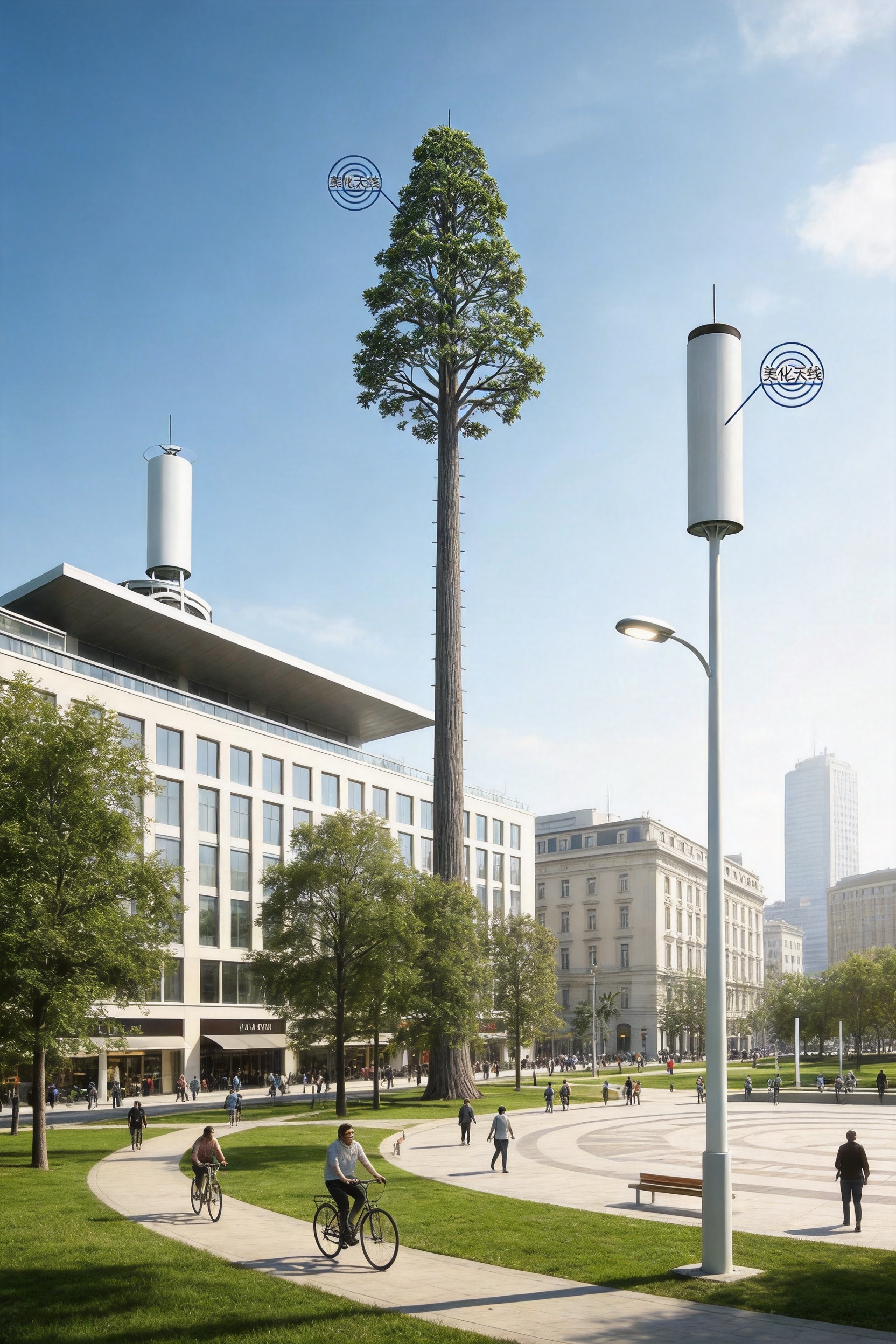
Landscape concealment offers a way to reduce this conflict. By integrating the antenna into a familiar urban form, the communication facility can become less visually intrusive while retaining its functional purpose. The concealment structure may be designed to resemble vegetation, a decorative pole, a public sculpture, a rooftop architectural feature, or another element that is compatible with the surrounding environment. This approach does not eliminate the need for professional site planning, but it gives project developers a wider range of acceptable design options.
The key advantage is that network infrastructure can be planned according to both technical and environmental priorities. Instead of choosing between communication performance and visual quality, project stakeholders can pursue a balanced solution. The antenna remains positioned to support network coverage, while the external appearance is customized to reflect the identity of the site.
2. Product Overview
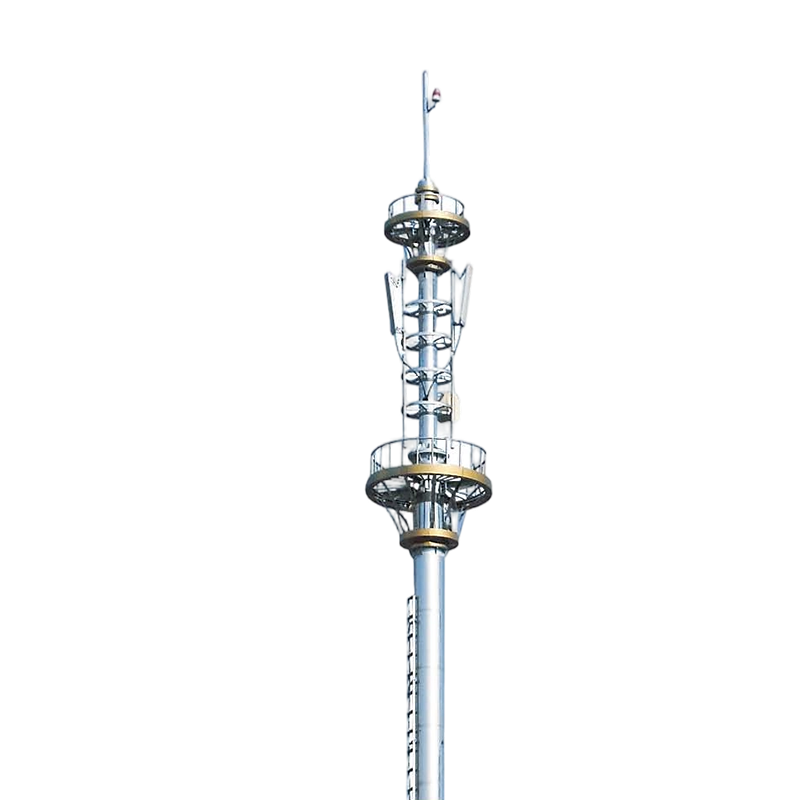
The Landscape Concealment Antenna Series is designed to disguise and integrate communication antenna systems within urban landscape facilities. Its exterior can be customized according to the proposed installation environment, the required visual theme, the available structural support, and the technical requirements of the communication equipment. This adaptability makes the series suitable for multiple types of projects rather than a single standardized installation.
A concealment antenna normally consists of an internal antenna arrangement and an external protective or decorative shroud. The internal system performs the communication function, while the outer structure helps protect the equipment and reduce its visual impact. The shroud must be engineered carefully because it is positioned directly around or near the radiating elements. Materials, thickness, shape, joints, coatings, and internal supports can influence the electromagnetic behavior of the completed assembly.
The product series uses optimized RF material engineering to provide high electromagnetic transparency. This design objective helps reduce unnecessary signal attenuation as radio-frequency energy passes through the concealment structure. Maintaining transmission efficiency is essential because an attractive exterior would have little value if it significantly weakened coverage, reduced capacity, or disrupted network quality.
At the same time, the concealment structure must withstand outdoor exposure. Wind, rain, humidity, solar radiation, temperature changes, dust, and accidental physical contact can affect the service life of an inadequately designed product. The series therefore emphasizes lightweight construction together with mechanical durability. A properly engineered structure can reduce additional load on the supporting pole or building while maintaining stability throughout long-term outdoor operation.
Each project can be evaluated individually. Site dimensions, wind conditions, foundation or support details, antenna configuration, access requirements, maintenance procedures, color selection, surface finish, and surrounding landscape should all be reviewed before production. This project-based approach enables the product to be adapted to actual engineering conditions instead of forcing a location to accept a fixed visual or structural format.
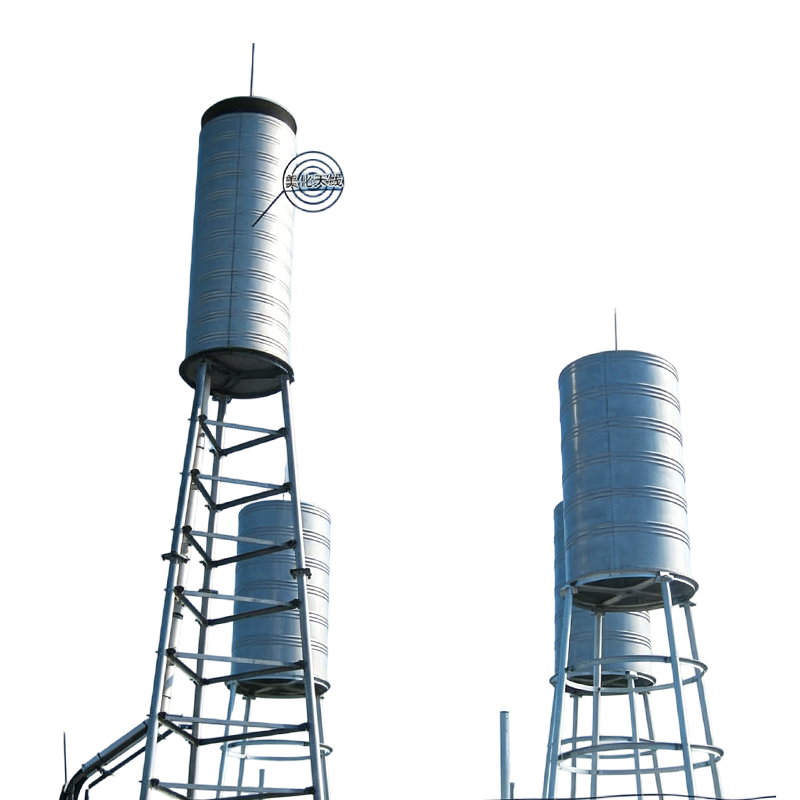
Landscape Concealment Antenna
3. Aesthetic Integration Without Compromising Function
The central value of a landscape concealment antenna is its ability to connect technical equipment with the visual language of the surrounding environment. A communication facility in a park may be shaped and finished to harmonize with vegetation and landscape furniture. A rooftop installation may be integrated into a building feature. A roadside installation may be combined with a lighting pole or another municipal structure. A public-space project may use a sculptural form that complements the architectural identity of the area.
This flexibility is especially valuable in locations where the skyline, streetscape, or public experience is carefully controlled. Modern urban design increasingly emphasizes continuity between buildings, transportation corridors, public lighting, green spaces, and service infrastructure. Communication equipment should therefore be considered as part of the complete urban environment rather than as an isolated technical object.
Visual integration can also support more efficient use of limited urban space. A single coordinated structure may accommodate communication equipment and other municipal functions, such as lighting or landscape enhancement. When designed correctly, this can reduce visual clutter, simplify the number of independent structures, and create a more organized appearance. It may also help project owners make better use of existing poles, rooftops, or public facilities.
The concealment design should be realistic and proportionate to its surroundings. Excessive decoration can attract more attention than a simple, well-integrated form. For this reason, professional design must consider scale, viewing distance, lighting conditions, color relationships, material texture, maintenance access, and the changing appearance of the landscape through different seasons. A successful solution is not merely hidden; it appears intentional and belongs naturally to its location.
Exterior customization may include the overall silhouette, panel arrangement, surface color, coating system, decorative elements, access doors, mounting components, and integration with supporting structures. This makes it possible to develop a visual solution for a specific city district, commercial property, park, resort, transportation facility, or public project.
3.1 Integration with Street-Light Poles
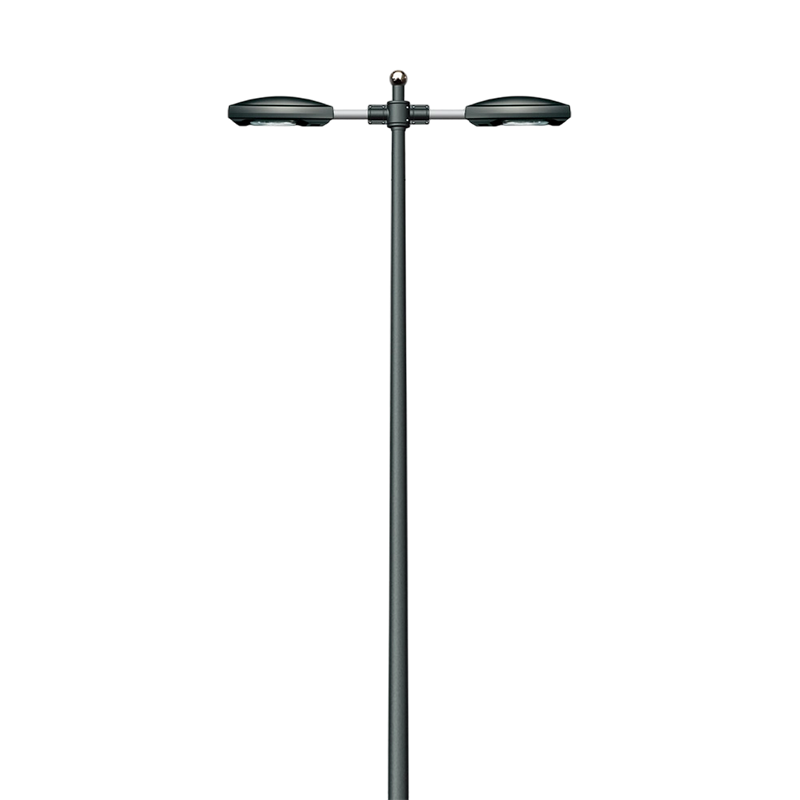
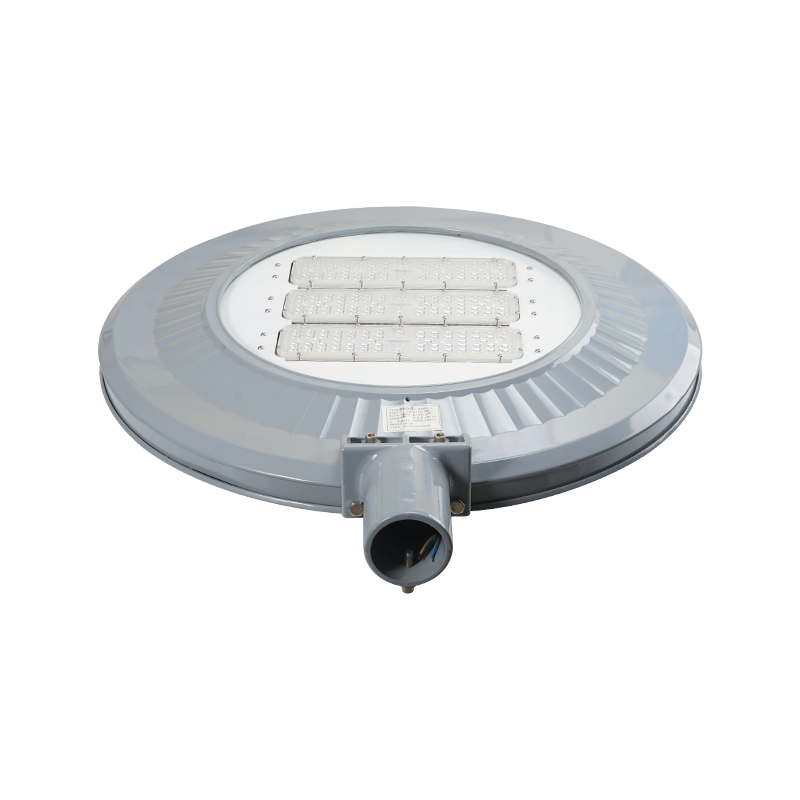
Street-light poles are among the most practical support structures for concealed communication equipment. They are already distributed along roads and public areas, have an established municipal function, and are often located where wireless coverage is required. Integrating communication equipment into a suitable lighting pole can reduce the need for a visually separate antenna structure.
A combined installation must be evaluated for total weight, wind load, center of gravity, cable routing, maintenance access, lighting performance, and electrical safety. The antenna concealment structure should not interfere with the luminaire, obstruct light distribution, or create excessive stress in the pole. Mechanical calculations and appropriate foundation review are important parts of the design process.
When carefully coordinated, the completed installation can appear to be a unified urban service pole rather than a separate telecommunications facility. This is particularly useful along boulevards, pedestrian streets, campuses, transport interchanges, shopping districts, and public plazas.
3.2 Integration with Rooftops
Rooftops often provide useful elevation and coverage, but exposed antenna equipment can conflict with building appearance or planning requirements. A concealment structure can be designed to blend with parapets, rooftop mechanical enclosures, architectural screens, or other existing features. It may also be customized to match the building’s color and general design language.
Rooftop solutions require attention to waterproofing, wind uplift, support anchoring, maintenance pathways, lightning protection, and access for future equipment replacement. The concealment assembly should be compatible with the roof structure and should not create avoidable damage to waterproof membranes or drainage systems. A coordinated design review before fabrication can substantially reduce installation complications.
3.3 Integration with Landscape and Public Art
Parks, gardens, resorts, and public squares often require infrastructure that is functional but visually restrained. In these environments, bionic forms, natural textures, and sculptural structures can help the antenna become part of the landscape. The design may be influenced by trees, branches, decorative columns, rocks, signs, or other site-specific elements.
Such applications require sensitivity to pedestrian movement and public interaction. The structure should avoid sharp edges, unstable attachments, exposed cables, and inaccessible maintenance points. Its surface finish should remain attractive under outdoor conditions, while the internal antenna arrangement should be protected from unnecessary impact or water entry.

4. Electromagnetic Transparency and Communication Performance
The most important distinction between a professional concealment antenna and a purely decorative enclosure is electromagnetic performance. The concealment material must allow radio-frequency energy to pass with minimal adverse effect. If the external structure absorbs, reflects, or distorts too much energy, the antenna may suffer increased attenuation, altered radiation characteristics, or reduced network efficiency.
The Landscape Concealment Antenna Series is developed around optimized RF material engineering. The purpose of this approach is to provide high electromagnetic transparency while preserving the structural and weather-resistance requirements of an outdoor product. Material selection and geometry are considered together because RF behavior is influenced not only by the basic material composition but also by thickness, joints, fasteners, coatings, internal supports, and the distance between the shroud and antenna elements.
Maintaining electromagnetic transparency can produce several practical benefits. It may help preserve expected coverage, reduce the risk of avoidable signal loss, support more stable transmission, and make the concealment system easier to integrate with the operator’s network planning. It also allows the exterior design to be customized without treating appearance as a substitute for technical verification.
Every communication project has its own operating bands, antenna arrangement, orientation, power level, and coverage objective. Consequently, final RF validation should be performed for the specific equipment and configuration. The concealment structure should be assessed as part of the complete antenna system rather than as an independent decorative component. This engineering discipline helps ensure that the visual design supports, rather than undermines, network performance.
The product concept is suitable for modern network environments in which operators require flexible deployment options. As urban networks become denser and equipment is installed closer to users, the ability to place antennas in visually acceptable positions becomes increasingly important. A well-designed RF-transparent shroud helps create those options while respecting the technical demands of the network.
5. Mechanical Strength and Outdoor Durability
Outdoor communication infrastructure must remain stable through changing weather conditions and long service periods. A concealment antenna may be exposed to strong winds, driving rain, ultraviolet radiation, temperature variation, humidity, airborne pollutants, and occasional maintenance activity. The structure must resist these conditions without excessive deformation, cracking, corrosion, or loss of appearance.
The series is designed to balance lightweight construction with durability. Reducing unnecessary weight is beneficial because the antenna may be mounted on a lighting pole, rooftop, decorative support, or existing municipal structure. Lower dead load can simplify structural coordination and may reduce the reinforcement required for some applications. However, lightweight design must never be achieved at the expense of stiffness, connection reliability, or resistance to wind-induced movement.
Wind resistance is particularly important for elevated structures. The shape of a concealment shroud influences the area exposed to wind and the resulting forces transferred to the support. Smooth and carefully proportioned forms may help reduce unnecessary turbulence and pressure concentration, but the actual design must be verified using project-specific mechanical calculations. Support poles, brackets, anchor points, foundations, and surrounding structures must also be checked as part of the complete system.
Waterproofing and drainage are equally important. Rainwater should not be allowed to collect inside the concealment structure or around sensitive connection points. Proper joints, seals, access panels, and drainage provisions help protect the antenna and associated components. UV-resistant materials and finishes can reduce degradation caused by long-term sunlight exposure and help preserve the exterior appearance.
Corrosion protection is another essential consideration, particularly in coastal, industrial, humid, or polluted environments. Appropriate material selection, surface preparation, coating, and quality inspection can extend service life. The manufacturing capabilities of the supplier are important because corrosion resistance depends on process consistency as much as on the nominal specification of the coating system.
6. Advanced Manufacturing Capabilities
Product performance begins with reliable manufacturing. A visually complex concealment structure may involve curved or formed parts, precision-cut components, welded assemblies, support brackets, access panels, fasteners, and protective finishes. Small dimensional errors can affect assembly fit, external appearance, load transfer, maintenance access, and the final relationship between the concealment structure and the antenna equipment.
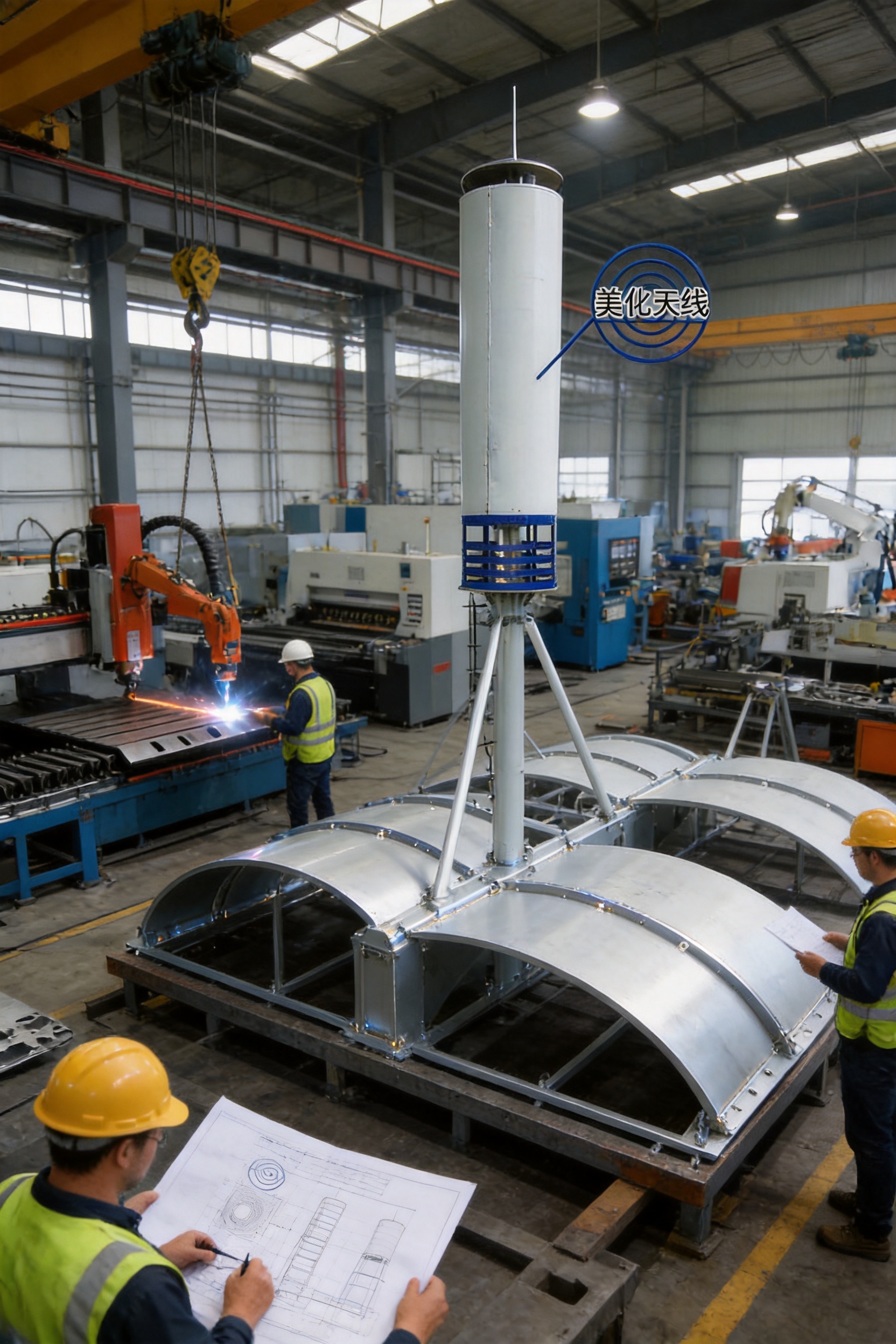
The manufacturing resources supporting this product series include material preparation, CNC bending, precision cutting, welding, automated production lines, surface treatment, and quality-control procedures. These capabilities allow the supplier to manage both customized designs and larger project quantities while maintaining consistency between units.
6.1 Material Selection
Available structural material options include Q235B, Q345B, S275JR, S355JR, Q460, A36, A572, GR56, and GR50, among others. The appropriate material depends on the design load, section requirements, fabrication method, environmental conditions, local standards, and project specifications. Maintaining an extensive stock of materials can shorten procurement time and reduce the risk of production delays caused by material shortages.
Material availability is particularly valuable for projects involving multiple concealment designs or phased installation. When engineering decisions are finalized, production can begin more efficiently if suitable materials are already available. This supports predictable delivery planning while providing a solid foundation for structural quality.
6.2 CNC Bending
Precise CNC bending helps create consistent curves, angles, and formed sections. This is important for concealment products because the external shape is often a visible part of the design, while the formed components may also contribute to structural stiffness. Consistent bending reduces variation between units and can improve the fit of adjacent panels and connection components.
Accurate forming also reduces the need for extensive post-production correction. Fewer adjustments can improve production efficiency, reduce the risk of surface damage, and make final assembly more predictable. For projects with repeated units, CNC processing helps maintain a consistent appearance across the complete installation area.
6.3 Precision Cutting
Precision cutting with reported accuracy of up to 0.01 millimeters supports clean edges and exact dimensions. Such accuracy is valuable for mounting plates, access openings, connection components, internal supports, and panel interfaces. Properly cut parts fit together more reliably and require less manual correction during assembly.
Clean cutting also contributes to appearance and safety. Reduced burrs and more accurate edges can simplify finishing, improve weld preparation, and reduce the possibility of uneven joints. In a customized product where each component must align with a particular antenna or support arrangement, precision cutting can have a direct effect on project quality.
6.4 Welding Quality
The company’s certified welders bring extensive experience to the fabrication of structural and customized assemblies. Welding quality affects strength, dimensional stability, surface appearance, and long-term resistance to outdoor conditions. Consistent welding procedures help ensure that load-bearing joints and attachment points perform as intended.
Experienced welders are especially important for non-standard products because customized shapes may include changing angles, curved sections, restricted access areas, and interfaces between different components. Professional welding can support both production speed and structural reliability, helping large-scale projects reach the required standard within the planned schedule.
7. Surface Treatment and Corrosion Protection
Outdoor equipment should be protected against corrosion from the earliest stages of production. Surface treatment typically includes preparation, cleaning, coating, curing, and inspection. The exact system should be selected according to the material, exposure environment, expected service life, color requirements, and applicable project standards.
The production capability includes powder electrostatic painting and related automated processes. Automated surface treatment can improve coating consistency, coverage, and repeatability. It can also reduce the variation that may occur when large numbers of components are finished manually. A uniform coating contributes to both appearance and protection, particularly when the product must visually match a municipal pole, building façade, or landscape element.
Strict process control is essential. The substrate must be properly prepared, contaminants must be removed, and coating conditions must be managed carefully. Curing must be sufficient to achieve the expected hardness and adhesion. Inspection should identify uneven coverage, surface defects, damage, or other issues before the product leaves the factory.
Proper corrosion protection can extend the functional and aesthetic life of the concealment antenna. This is important for operators and property owners because replacement or repainting at elevated locations can be disruptive and expensive. A durable finish reduces maintenance frequency and helps the installation remain compatible with its environment over time.
8. Automated Production and Quality Control
Automated production lines can improve productivity while supporting consistent quality. Automation is useful for repeated cutting, forming, welding, coating, and handling operations. It can reduce avoidable variation, improve production cycles, and help the manufacturer manage large orders more effectively.
Automation also contributes to cost control. More efficient use of materials, labor, and production time can help maintain competitive pricing without lowering the expected standard of the finished product. Environmental sustainability may also benefit from automated processes that improve material utilization, reduce rework, and control coating application more precisely.
Quality control should extend across the complete production process. Incoming materials need to be checked against specifications. Cut and bent components should be reviewed for dimensional accuracy. Welds should be inspected for continuity and appearance. Assemblies should be checked for alignment, fit, access, and connection quality. Surface finishes should be examined before packing and shipment.
A dependable quality program is especially important when the product is customized. Each project may include different dimensions, decorative forms, mounting details, colors, antenna interfaces, and structural requirements. Documented procedures and inspection checkpoints help ensure that the completed product reflects the approved design rather than an approximate interpretation.
The company’s manufacturing background is supported by advanced equipment, including bending machines, automatic welding and cutting machines, electrostatic painting equipment, and a 1,250-ton die-casting machine. These resources provide a broad production foundation for lighting poles, communication structures, and related infrastructure. The combination of fabrication experience and engineering coordination helps support projects that require both standardized manufacturing and site-specific customization.
9. Engineering and Project Support Services
A concealment antenna project involves more than manufacturing a finished shell. The design must respond to the site, antenna equipment, support structure, environmental conditions, installation sequence, and maintenance requirements. Comprehensive technical support can reduce errors between concept, fabrication, delivery, and installation.
9.1 CAD Design
CAD design establishes the basic geometry and interfaces of the product. It can define dimensions, connection points, access panels, internal clearances, pole interfaces, and relationships between the concealment structure and the antenna equipment. Accurate CAD documentation provides a common reference for the customer, engineering team, production department, and installation personnel.
9.2 Three-Dimensional Product Simulation
Three-dimensional product simulation allows stakeholders to review the proposed structure before fabrication. It can help identify interference between panels, brackets, internal equipment, cables, and maintenance openings. The customer can also evaluate the product’s form, proportions, and visual details more effectively than through two-dimensional drawings alone.
9.3 Three-Dimensional Scene Simulation
Scene simulation places the proposed concealment antenna within a representation of the actual environment. This may include a street, building, garden, public square, rooftop, or lighting corridor. Reviewing the product in context helps stakeholders judge scale, visibility, color, and compatibility with neighboring structures.
Scene simulation is valuable during approval discussions because non-technical decision-makers can understand the visual outcome more easily. It may also reveal practical issues, such as whether a decorative form is too prominent, whether maintenance access is blocked, or whether the antenna should be positioned at a different height.
9.4 Specification and Color Customization
Different sites require different dimensions, finishes, and visual treatments. Specification and color customization allow the product to coordinate with existing poles, architectural materials, landscape elements, corporate design guidelines, or municipal color standards. Customization should be managed through approved drawings and samples so that the final appearance is consistent with the project expectations.
9.5 Mechanical Calculations for Wind and Foundations
Mechanical calculations for wind and foundation conditions are essential for safe deployment. The analysis should consider the concealment structure, internal equipment, mounting brackets, pole or rooftop support, wind exposure, and foundation connection. Site-specific conditions may include terrain, building height, local wind requirements, soil properties, and existing structural limitations.
Providing this engineering support helps project owners make informed decisions before fabrication. It can identify reinforcement needs, confirm attachment methods, and reduce the possibility of costly changes during installation. Structural calculations should always be reviewed and approved according to the applicable local regulations and project responsibilities.
9.6 Overseas On-Site Installation Guidance
International projects may involve local contractors who are unfamiliar with a customized concealment structure. Overseas on-site installation guidance can help clarify assembly order, lifting arrangements, connection details, cable access, sealing, alignment, and final inspection. Remote or on-site support may reduce installation uncertainty and help ensure that the completed product matches the approved design.
10. Advantages Over Conventional Antenna Installations
| Evaluation Area | Conventional Exposed Antenna | Landscape Concealment Antenna |
|---|---|---|
| Visual impact | Equipment and support components remain clearly visible. | Exterior forms can blend with landscape, architecture, lighting, or public infrastructure. |
| Site approval flexibility | May encounter objections in visually sensitive locations. | Provides an alternative design approach for urban and aesthetic environments. |
| RF protection | Radiating elements are exposed or protected by standard enclosures. | Uses an RF-transparent concealment structure designed to minimize unnecessary attenuation. |
| Design adaptability | Often based on standard tower or rooftop configurations. | Can be customized for poles, rooftops, sculptures, greenery, and municipal facilities. |
| Urban integration | May appear as a separate technical installation. | Can be coordinated with existing streetscape and architectural features. |
| Structural planning | Usually focuses primarily on the exposed antenna support. | Considers concealment, equipment, support, wind conditions, foundations, and appearance together. |
| Maintenance planning | Access may be straightforward but visually exposed. | Access points can be incorporated into the customized structure while preserving the appearance. |
The comparison demonstrates why concealment technology is increasingly relevant to urban network development. A conventional exposed installation may be technically acceptable in an industrial or remote setting, but it may be unsuitable for a central business district, residential street, heritage area, resort, or public park. The Landscape Concealment Antenna Series provides a broader range of deployment possibilities without treating aesthetics as an afterthought.
Its competitive advantage is not based on appearance alone. The product combines visual customization with RF material engineering, outdoor durability, structural design, precision production, and project support. This integrated approach is more difficult to achieve than attaching a decorative cover to a standard antenna. It requires coordination between telecommunications requirements, mechanical engineering, manufacturing, surface treatment, and urban design.
11. Applications Across Different Urban Environments
11.1 Residential Communities
Residential neighborhoods often require improved coverage but may have limited tolerance for prominent technical equipment. Concealed installations can be coordinated with street lighting, landscape structures, rooftops, or community facilities. A visually compatible design may help reduce concerns from residents and property managers while enabling the operator to address coverage gaps.
11.2 Commercial and Business Districts
Business districts depend on reliable connectivity for mobile work, payment systems, security services, logistics, and customer communication. At the same time, commercial streets and premium developments place strong emphasis on appearance. A customized antenna integrated into lighting infrastructure or architectural elements can support connectivity without conflicting with the visual standards of the district.
11.3 Parks, Resorts, and Tourism Facilities
Visitors expect parks and resorts to provide both digital connectivity and an attractive environment. Exposed technical structures may interfere with natural views or themed landscape design. Bionic or decorative concealment forms can reduce this conflict. The exterior may be adapted to the character of the resort, garden, waterfront, or recreational area.
11.4 Historic and Culturally Sensitive Areas
Historic districts require careful control of new construction and visual change. A concealed antenna can be designed to minimize contrast with existing façades, rooftops, poles, or public structures. The final design must comply with heritage requirements and should be reviewed by the relevant authorities, but concealment provides an additional option where a conventional tower would be unacceptable.
11.5 Transportation Corridors
Roads, rail stations, bus terminals, airports, and interchanges require dependable communication for passengers, operations, safety, and traffic management. These areas also contain extensive lighting and sign infrastructure. Integrating antennas into suitable existing structures can help use available space efficiently while maintaining an organized appearance.
11.6 Campuses and Public Institutions
Universities, hospitals, government complexes, and research campuses may require strong indoor and outdoor communication coverage. Their grounds often contain planned landscapes, designated architectural styles, and strict facility-management procedures. A coordinated concealment antenna can fit within the campus design while supporting the communication needs of students, staff, patients, visitors, and public services.
12. Installation Planning and Maintenance
Successful installation begins with accurate site information. The project team should identify the support structure, available space, antenna dimensions, cable routes, access requirements, local weather conditions, surrounding obstacles, and applicable regulations. Photographs, measurements, structural drawings, and site surveys can help the manufacturer develop a more reliable customized solution.
The installation sequence should be planned before shipment. Large or elevated components may require cranes, lifting equipment, temporary supports, traffic control, or specialized access. The assembly should be designed so that parts can be transported and installed safely without damaging the surface finish or sensitive antenna equipment.
Maintenance access should be incorporated from the beginning. Operators may need to inspect connectors, replace antenna components, check cables, clean surfaces, examine seals, or repair lighting and supporting equipment. Access panels and removable sections can be integrated discreetly into the exterior form. A concealment structure that is difficult to open may create higher long-term operating costs, even if its initial appearance is excellent.
Routine maintenance should include visual inspection, checking of fasteners and connections, examination of coatings, removal of accumulated dirt, and review of water drainage. Coastal or industrial environments may require more frequent inspection because salt, chemicals, and airborne pollutants can accelerate deterioration. Any maintenance plan should follow the equipment manufacturer’s recommendations and applicable safety procedures.
13. Quality, Compliance, and Manufacturing Reliability
Infrastructure customers need confidence that customized products will perform consistently across different projects and geographic markets. The manufacturer’s quality-management and environmental systems provide an important foundation for this confidence. The company reports compliance with international standards including ISO9001, ISO14001, and OHSAS18001. These certifications and management frameworks indicate an organized approach to quality, environmental responsibility, and occupational health and safety, subject to the scope and validity of the applicable certificates.
Quality is also supported by manufacturing scale and industry experience. Yangzhou Jinyuan Lamps Co., Ltd. was established in 2002 and operates as a production, design, and engineering company serving the road illumination and infrastructure sector. Its product range includes street-light poles, LED street lights, solar street lights, lighting fixtures, and related structures. This background is relevant to concealment antenna projects because many applications require integration with poles, lighting equipment, foundations, coatings, and outdoor electrical infrastructure.
The company reports a site area of more than 70,000 square meters, a team of more than 300 professional technicians, and exports to more than 200 countries. These capabilities suggest experience with international project coordination, documentation, production planning, and customer requirements. For buyers, a broad export background can be useful when projects involve different standards, climates, installation practices, and delivery conditions.
Manufacturing reliability is particularly important for large-scale deployment. Operators may require dozens or hundreds of units with consistent dimensions and appearance. A supplier with stocked materials, CNC forming, accurate cutting, automated welding, surface-treatment equipment, and experienced technical staff is better positioned to manage repeat orders while maintaining uniformity.
14. Sustainability and Lifecycle Considerations
Urban infrastructure should be evaluated throughout its lifecycle rather than only at the point of installation. A durable concealment antenna can reduce the frequency of replacement, repainting, emergency repair, and access equipment use. Long service life may lower the consumption of materials and energy associated with repeated fabrication and transportation.
Automated production can also support more responsible manufacturing by improving material utilization and reducing rework. Consistent cutting and forming may reduce scrap, while controlled coating processes can reduce unnecessary material use. Environmental management systems such as ISO14001 provide a framework for identifying and managing production-related environmental impacts.
Lightweight construction may reduce transportation and lifting requirements, although the final structural design must always meet safety requirements. Integration with existing street-light poles or municipal structures may also reduce the need for additional foundations and separate visual installations, provided that the existing structure is suitable and properly assessed.
Sustainability should not be separated from maintainability. A product that can be inspected, repaired, and upgraded without complete replacement may provide better long-term value. Concealment structures should therefore be designed with reasonable access to internal components and with materials and finishes appropriate to the expected local environment.
15. Recommended Project Workflow
A clear project workflow helps transform a general concealment concept into a reliable finished installation.
Step One: Define the Communication Objective
The project team should identify the coverage area, capacity objective, antenna type, operating requirements, mounting height, orientation, cable routes, and equipment arrangement. These technical factors establish the internal space and RF considerations for the concealment structure.
Step Two: Survey the Installation Environment
The site should be reviewed for dimensions, surrounding structures, pedestrian access, wind exposure, existing poles, rooftop conditions, landscape features, visibility from different viewpoints, and local planning requirements. A site survey helps prevent conflicts between the proposed appearance and actual conditions.
Step Three: Develop the Visual Concept
The design team can then determine whether the antenna should resemble a natural element, coordinate with a street-light pole, integrate into a rooftop, or take another customized form. CAD drawings and three-dimensional scene simulations can be used to compare alternatives.
Step Four: Verify Structural and RF Requirements
The proposed form should be reviewed for electromagnetic transparency, antenna clearance, wind loading, support capacity, foundation conditions, cable access, drainage, and maintenance. Mechanical calculations and technical review should be completed before production approval.
Step Five: Confirm Materials and Finishes
The project team should approve the structural material, coating system, color, surface texture, fasteners, access details, and any decorative features. Environmental exposure and local standards should be considered when making these decisions.
Step Six: Manufacture and Inspect
Approved drawings should guide material preparation, CNC bending, precision cutting, welding, assembly, surface treatment, and inspection. Quality checkpoints should verify dimensions, joints, finish, fit, and packaging before shipment.
Step Seven: Install and Commission
Installation should follow the approved method statement and safety plan. After assembly, the project team should verify structural connections, cable routing, sealing, alignment, access panels, visual appearance, and communication performance. Any lighting or municipal functions integrated into the structure should also be tested.
16. Buyer Considerations
Customers evaluating a landscape concealment antenna should look beyond the initial appearance and purchase price. The most important question is whether the supplier can coordinate design, RF considerations, structural engineering, production, finishing, delivery, and installation support as one complete process.
Material availability is an important consideration for projects with strict schedules. Production equipment is equally important because customized shapes require repeatable forming, cutting, welding, and finishing. Buyers should also ask how drawings are approved, how design changes are controlled, what inspections are performed, and how replacement or maintenance components can be obtained later.
Environmental conditions should be discussed in detail. A product installed near the coast may require a different corrosion-protection approach from one installed in a dry inland climate. High-wind locations, areas with heavy snowfall, industrial zones, and rooftop installations may require additional structural analysis. The concealment concept should be adapted to these conditions rather than treated as a universal enclosure.
Buyers should also clarify responsibility for local permits, foundation design, electrical connections, antenna installation, lightning protection, and final network testing. Clear responsibility at the planning stage reduces misunderstandings during construction and helps ensure that the product is used within its intended design parameters.
17. Frequently Asked Questions
What is a landscape concealment antenna?
A landscape concealment antenna is a communication antenna system integrated into a customized exterior structure designed to reduce visual impact. The external form may resemble a natural feature, blend with a rooftop or municipal facility, or be incorporated into a street-light pole, public sculpture, or landscape element.
Does the concealment structure affect communication performance?
Any material placed around an antenna can influence radio-frequency behavior, which is why material selection and design are important. This series uses optimized RF material engineering to provide high electromagnetic transparency and minimize unnecessary signal attenuation. Final performance should be verified for the specific antenna, frequency range, configuration, and site.
Can the product be installed on a street-light pole?
Yes. Street-light pole integration is one of the intended application scenarios. The combined structure must be checked for weight, wind load, pole capacity, cable routing, access, lighting clearance, and foundation conditions before production and installation.
Can the appearance be customized?
Yes. The exterior form, dimensions, surface finish, color, mounting details, and visual treatment can be designed according to the installation environment and project requirements. CAD design, three-dimensional product simulation, and three-dimensional scene simulation can support the approval process.
Is the antenna suitable for outdoor use?
The series is designed for outdoor urban applications and emphasizes wind resistance, waterproofing, UV resistance, and structural stability. The exact environmental performance depends on the selected materials, coatings, design, installation conditions, and maintenance program.
What materials are available?
Material options include Q235B, Q345B, S275JR, S355JR, Q460, A36, A572, GR56, and GR50, among others. The final selection should be based on structural calculations, local standards, manufacturing requirements, and environmental exposure.
Can the product be used on a rooftop?
Yes. Rooftop applications can be designed to coordinate with parapets, architectural features, mechanical enclosures, or other building elements. Waterproofing, anchoring, wind uplift, lightning protection, access, and roof load capacity must be assessed before installation.
How does the product help with urban site approval?
It provides a visually integrated alternative to an exposed antenna or conventional tower. By reducing visual disruption and matching the surrounding landscape or architecture, the product may help address aesthetic concerns during planning discussions. Approval remains dependent on local regulations and the specific project.
What manufacturing processes support product quality?
The manufacturing process includes stocked structural materials, CNC bending, precision cutting, professional welding, automated production lines, powder electrostatic painting, and quality inspection. These processes help improve dimensional consistency, structural integrity, coating quality, production speed, and repeatability.
Can installation support be provided for international projects?
Overseas on-site installation guidance is available as part of the project-support approach. Guidance may cover assembly sequence, lifting, connection details, cable access, sealing, alignment, and final inspection. The exact service arrangement should be confirmed for each project.
Is the product suitable for large projects?
Yes. The supplier’s material inventory, manufacturing equipment, technical team, and export experience support both customized individual installations and larger project orders. Production planning and inspection procedures should be agreed upon according to the required quantity and delivery schedule.
How should the antenna be maintained?
Maintenance should include periodic inspection of fasteners, joints, coatings, access panels, seals, drainage, cable routes, and support structures. The inspection frequency should reflect the local climate, pollution level, wind exposure, and operator requirements. Any work at height must follow appropriate safety procedures.
18. Conclusion
The Landscape Concealment Antenna Series addresses one of the most difficult challenges in modern urban telecommunications: how to expand reliable network infrastructure without damaging the appearance and character of the city. By combining customized exterior design with RF-transparent materials, mechanical durability, weather resistance, and professional manufacturing, the series creates a balanced solution for visually sensitive locations.
Its advantages are strongest when the project requires more than a standard antenna support. Street-light poles, rooftops, landscape facilities, public sculptures, greenery, commercial developments, parks, resorts, and institutional campuses can all benefit from a design that considers communication performance and environmental integration at the same time. The product helps operators gain flexible deployment options while giving municipalities and property owners a practical tool for improving streetscape quality.
The manufacturing foundation further strengthens the solution. Material inventory, CNC bending, precision cutting, experienced welding, automated production, electrostatic painting, and structured quality control support consistent delivery and long-term reliability. CAD design, three-dimensional simulation, specification customization, mechanical calculations, and overseas installation guidance extend the product value beyond fabrication alone.
For communication infrastructure that must function effectively and belong visually to its surroundings, a professionally engineered landscape concealment antenna offers a compelling alternative to conventional exposed installations. It represents a cooperative approach in which telecommunications, manufacturing, structural engineering, architecture, and urban landscape design work together to create a more connected and visually harmonious city.
References
International Organization for Standardization. Quality Management Systems: Fundamentals and Vocabulary.
International Organization for Standardization. Environmental Management Systems: Requirements with Guidance for Use.
International Telecommunication Union. Recommendations and Guidance Concerning Radio-Frequency Exposure and Radio Communication Systems.
European Committee for Standardization. Structural Design Actions, Including Wind Actions on Structures.
American Institute of Steel Construction. Specification for Structural Steel Buildings.
International Electrotechnical Commission. Radio-Frequency and Microwave Engineering Principles for Antenna Systems.
Telecommunications Industry Association. Structural Standards for Antenna Supporting Structures and Antennas.
Project materials supplied for the Landscape Concealment Antenna Series, including product descriptions, manufacturing capabilities, engineering services, and company information.