


JINYUAN
JINYUAN
JINYUAN
JINYUAN
JINYUAN
JINYUAN
JINYUAN
JINYUAN
JINYUAN
JINYUAN
JINYUAN
JINYUAN
JINYUAN
JINYUAN
JINYUAN
JINYUAN
Content
- 1 1. A Contemporary Solution for Urban and Architectural Lighting
- 2 2. Integrated Pole-and-Fixture Aesthetics
- 3 3. Material Selection for Different Project Requirements
- 4 4. Precision CNC Bending for Structural Accuracy
- 5 5. High-Accuracy Laser Cutting and Clean Component Preparation
- 6 6. Professional Welding and Production Consistency
- 7 7. Hot-Dip Galvanizing and Outdoor Powder Coating
- 8 8. Wind Resistance and Structural Engineering
- 9 9. Reinforced Flange and Concealed Access Door
- 10 10. LED Compatibility and Lighting System Integration
- 11 11. Advanced Manufacturing Equipment and Production Capacity
- 12 12. Quality Management and International Project Support
- 13 13. Design and Engineering Services
- 14 14. Comparison with Conventional Low-Cost Light Poles
- 15 15. Typical Applications
- 16 16. Recommended Project Selection Parameters
- 17 17. Installation and Maintenance Considerations
- 18 18. Sustainability and Long-Term Value
- 19 19. Why Manufacturing Capability Matters to Buyers
- 20 20. Frequently Asked Questions
- 20.1 Q1: What makes these light poles different from standard street light poles?
- 20.2 Q2: Which materials are available?
- 20.3 Q3: Can the pole be customized?
- 20.4 Q4: How is the pole protected against corrosion?
- 20.5 Q5: How long can the product last?
- 20.6 Q6: Can the poles withstand severe typhoon conditions?
- 20.7 Q7: Is the access door visible?
- 20.8 Q8: Can the pole be used with smart lighting controls?
- 20.9 Q9: Does the company provide engineering drawings?
- 20.10 Q10: Is overseas installation assistance available?
- 20.11 Q11: What information is needed for a quotation?
- 20.12 Q12: Are the products suitable for large projects?
- 21 21. Conclusion
- 22 References
- 23 Product: Modern Decorative LED Light Poles
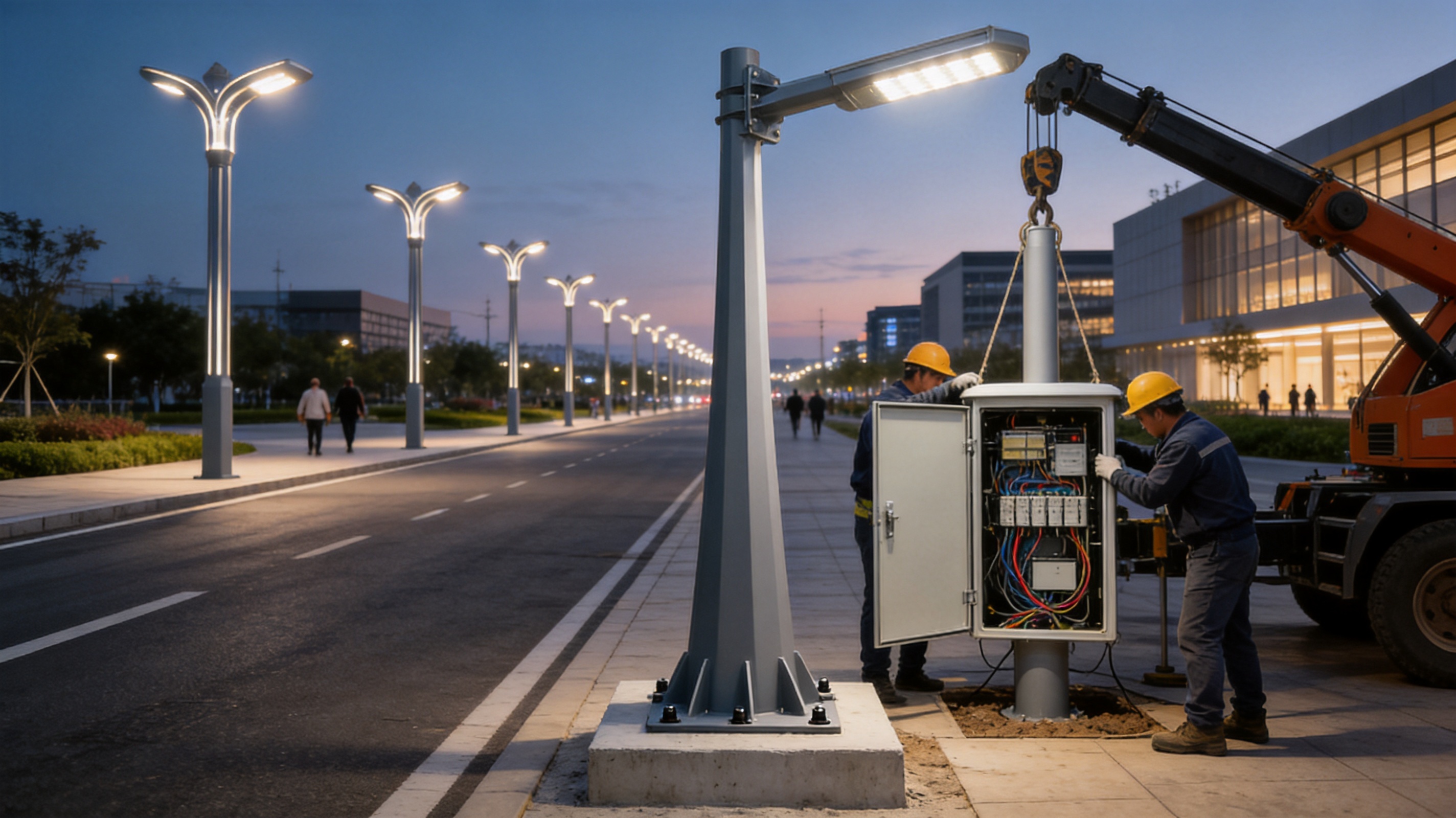
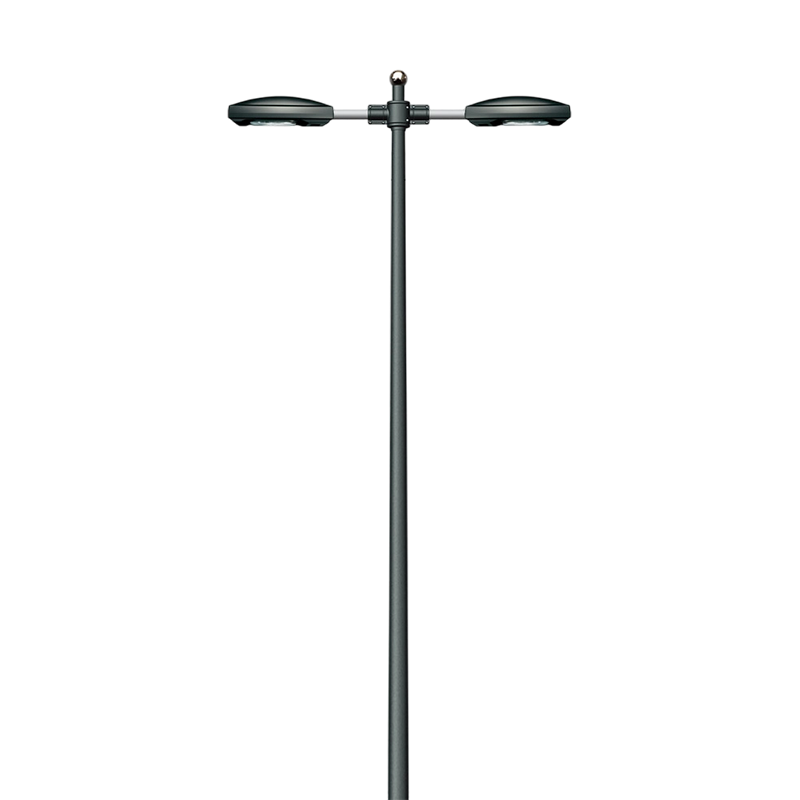
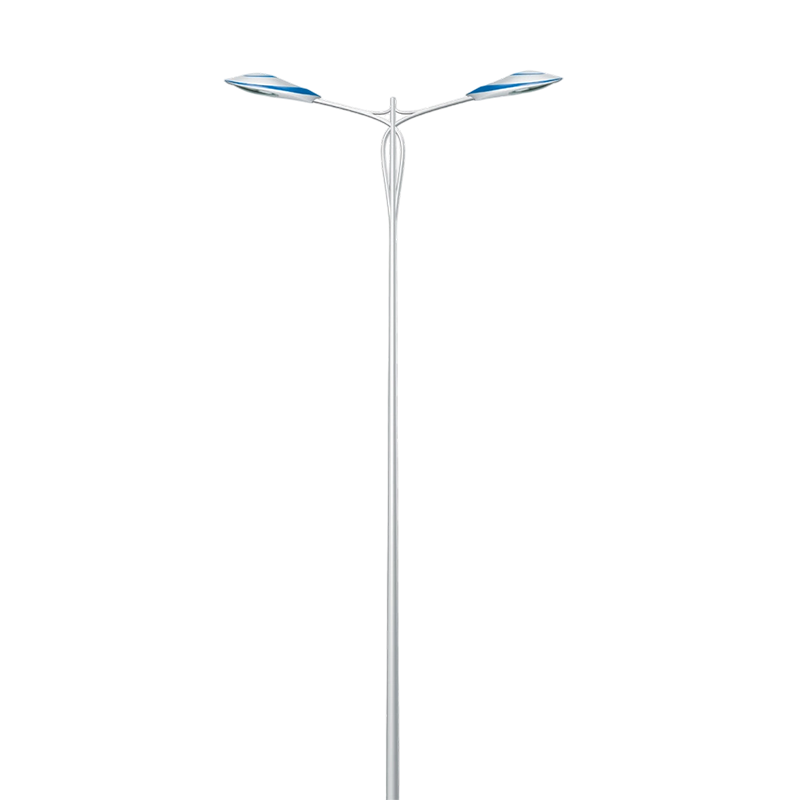
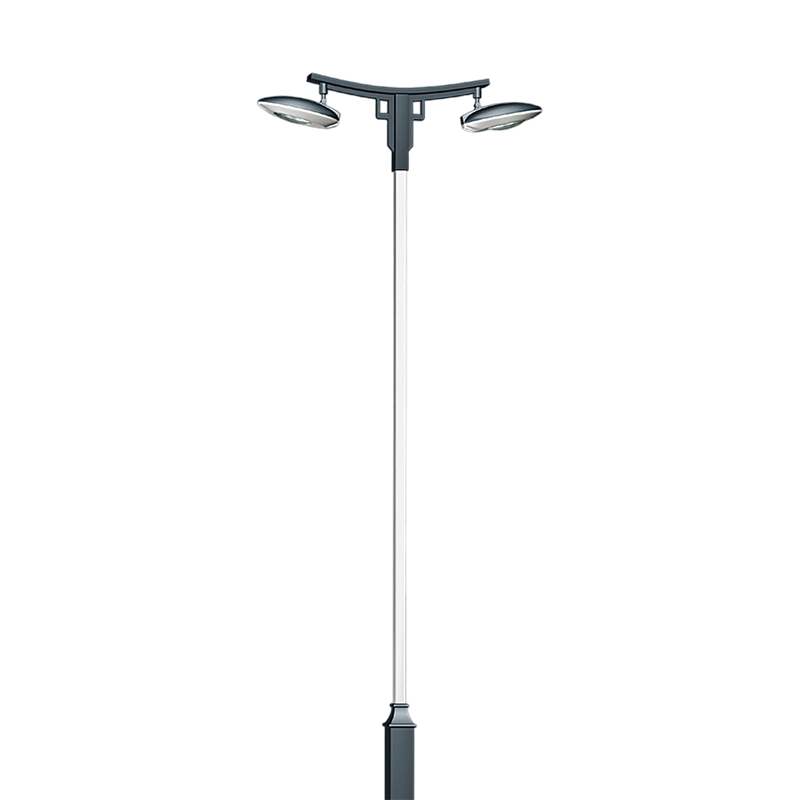
Modern Decorative LED Light Poles are designed for projects that require more than basic illumination. They combine structural strength, refined appearance, efficient LED compatibility, and dependable outdoor performance in one integrated lighting solution. Suitable for streets, commercial districts, residential developments, public spaces, campuses, industrial parks, transport areas, and architectural landscapes, these single-arm street lights provide a practical way to improve both nighttime visibility and the visual identity of an outdoor environment.
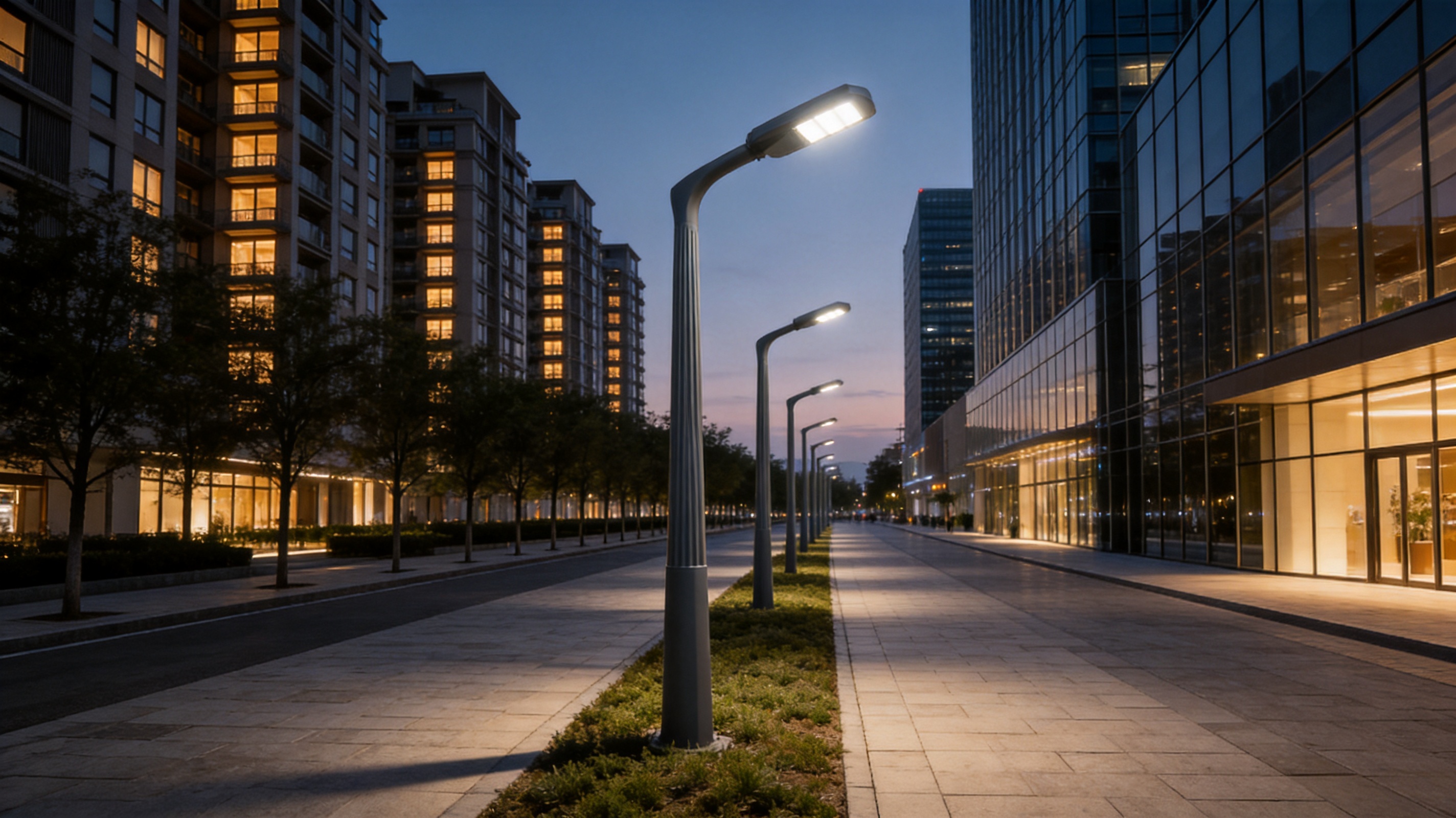
The product is built around a minimalist, streamlined concept. In selected configurations, the pole and lighting fixture form a visually integrated unit, reducing unnecessary visual complexity and producing a clean contemporary appearance. This approach is especially valuable for urban projects where lighting equipment must support the surrounding architecture rather than compete with it. The result is a lighting pole that functions as infrastructure during the day and as part of the landscape design after dark.
Behind the modern appearance is a manufacturing process focused on structural precision, material reliability, corrosion protection, and production consistency. High-strength steel or aviation-grade aluminum alloy profiles can be selected according to project requirements. Automated CNC bending, precision laser cutting, mechanical analysis, professional welding, hot-dip galvanizing, and outdoor electrostatic powder coating work together to create a product suitable for demanding long-term applications.
Unlike low-cost poles that may prioritize appearance while compromising on material thickness, surface treatment, or fabrication accuracy, these decorative LED light poles are engineered as complete systems. Their reinforced flange, concealed access door, carefully formed pole body, and coordinated fixture design support stable installation and a more polished finished project.
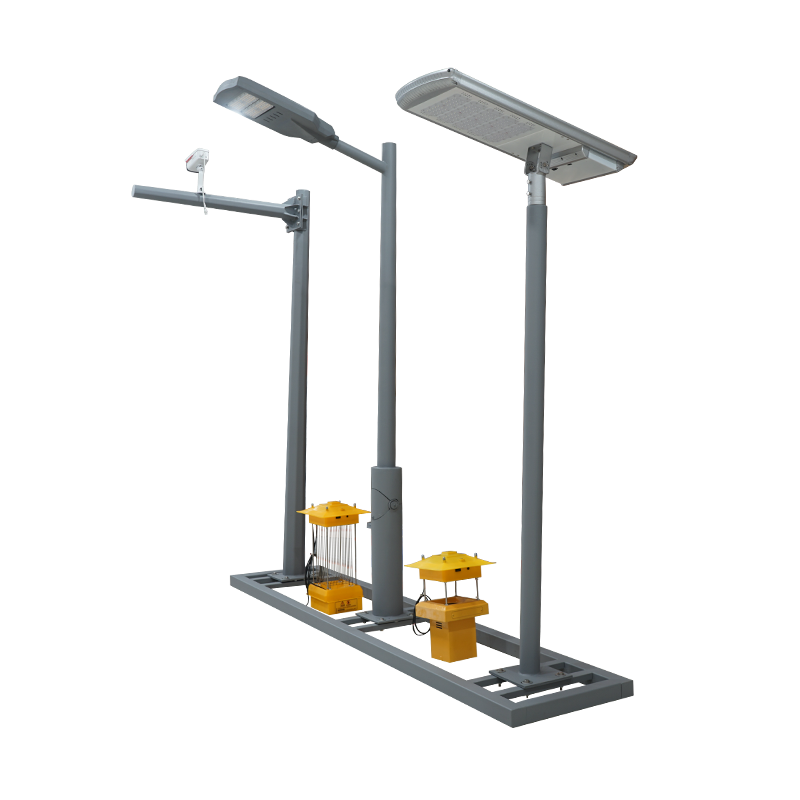
Modern Decorative LED Light Poles
1. A Contemporary Solution for Urban and Architectural Lighting
Outdoor lighting has evolved from a purely functional requirement into an important part of urban planning and architectural expression. Municipal streets, pedestrian avenues, hotels, residential communities, parks, shopping areas, and public facilities increasingly require lighting products that are efficient, attractive, durable, and compatible with modern surroundings.
Modern Decorative LED Light Poles respond to this need with a balanced combination of visual simplicity and engineering capability. Their single-arm configuration provides direct illumination while maintaining a relatively light and uncluttered silhouette. The arm can be coordinated with the pole body and selected fixture to create a consistent appearance throughout a project.
The streamlined design is particularly useful in locations where conventional utility-style poles appear too industrial or visually heavy. A carefully proportioned decorative pole can help define a boulevard, entrance road, public plaza, hotel driveway, garden walkway, or commercial frontage. Because the design is adaptable, it can be used in both new developments and refurbishment projects.
A modern light pole must also work in changing environmental conditions. Outdoor products are exposed to rain, humidity, sunlight, dust, temperature fluctuations, wind, and airborne pollutants. The pole therefore requires more than an attractive profile. It must have adequate mechanical strength, stable connections, a reliable surface treatment, and an installation structure that remains secure throughout its service life.
These products are developed with those requirements in mind. The combination of strong base materials, precision forming, protective finishing, and reinforced mounting details creates a dependable foundation for LED lighting systems. The product can be customized for different road widths, mounting heights, lighting arrangements, colors, and architectural themes, subject to project-specific engineering confirmation.
2. Integrated Pole-and-Fixture Aesthetics
One of the most notable advantages of the product is its visually integrated design. In selected models, the pole and luminaire are developed to appear as a coordinated assembly rather than as two unrelated components. This creates a unified outline and gives the entire lighting installation a stronger design identity.
The integrated appearance offers several benefits. First, it reduces visual clutter. A simple pole body and carefully positioned arm can make an area look more organized, especially when multiple poles are installed along a road or walkway. Second, it supports architectural consistency. The color, shape, and proportions of the lighting equipment can be selected to complement buildings, paving, landscaping, and street furniture. Third, it can help create a recognizable visual character for a development or public space.
Minimalism does not mean the product is limited to one style. The design can be adapted to different project directions, including contemporary urban, premium residential, commercial, resort, landscape, and civic applications. The pole body may be specified with different finishes, dimensions, and decorative details while retaining the same basic principles of efficient illumination and structural reliability.
Compared with conventional poles that use prominent external doors, exposed fasteners, or visually oversized brackets, the concealed access door and coordinated base design preserve a cleaner appearance. These details are important because small construction elements can have a major effect on the final appearance of a large installation.
When a project includes dozens or hundreds of light poles, consistency becomes essential. Uneven arm angles, inconsistent color, rough welds, or visible manufacturing variations can reduce the perceived quality of the entire development. Advanced forming and finishing procedures help support uniform production, while design customization allows the pole to fit the project rather than forcing the project to accommodate an unsuitable standard product.
3. Material Selection for Different Project Requirements
The main body of the pole can be manufactured from high-strength steel or aviation-grade aluminum alloy profiles, depending on the required combination of strength, weight, corrosion resistance, appearance, and installation conditions.
Steel is widely used for street lighting structures because it provides excellent mechanical strength and is suitable for a broad range of pole heights and wind-load conditions. The material options available for related production include Q235B, Q345B, S275JR, S355JR, Q460, A36, A572, GR56, GR50, and other equivalent grades subject to project specifications and supply confirmation.
Different steel grades provide different mechanical properties and may be selected according to structural calculations, local standards, pole height, fixture weight, exposure conditions, and transportation requirements. Maintaining an extensive stock of commonly requested materials can help reduce procurement delays and support faster production scheduling. It also allows the manufacturer to establish a stable material foundation before fabrication begins.
Aluminum alloy is another useful option where reduced structural weight, modern appearance, or ease of handling is important. An aluminum pole can simplify certain transportation and installation operations while offering a distinctive visual finish. The appropriate alloy, profile design, wall thickness, and surface treatment should be determined through engineering evaluation and the specific requirements of the project.
Material selection should not be based solely on initial price. A lower-cost material may create additional expenses through increased weight, difficult installation, premature corrosion, greater maintenance requirements, or limited structural performance. A professional manufacturer evaluates the entire product life cycle, including material availability, fabrication efficiency, protective finishing, shipping, installation, and expected service conditions.
Before production, customers can confirm critical details such as material grade, pole height, arm outreach, fixture weight, foundation arrangement, mounting method, finish, and local wind conditions. This process helps ensure that the final product is appropriately designed rather than simply selected from a general-purpose catalog.
4. Precision CNC Bending for Structural Accuracy
The geometry of a light pole directly affects its appearance, strength, and installation performance. Poorly controlled bending can create uneven curves, inconsistent angles, local deformation, and difficulties when matching the pole with the arm or lighting fixture. For this reason, precision CNC bending is an important part of the manufacturing process.
Computer-controlled bending equipment produces repeatable shapes according to approved technical drawings. The process supports consistent dimensions across production batches and reduces dependence on manual estimation. It also helps maintain the intended relationship between the pole body, arm, flange, access door, and luminaire mounting section.
Accurate bending contributes to structural integrity because controlled forming reduces unnecessary deformation and helps maintain the designed load path. The pole can therefore be produced with fewer post-production adjustments. This is particularly important for large projects where even small dimensional differences can become noticeable when many poles are installed in a straight line or arranged around a public space.
Precision forming also supports more efficient assembly. When components are produced within controlled tolerances, welding, fixture attachment, door fitting, and base connection work can be completed more smoothly. Reduced adjustment requirements help shorten production cycles and improve overall consistency.
From a design perspective, CNC bending allows greater flexibility than basic straight-section fabrication. Subtle tapers, angled arms, smooth transitions, and customized profiles can be developed for projects that require a distinctive visual identity. The final shape remains subject to structural calculation, material limitations, and production feasibility, but the technology provides a strong platform for customized lighting design.
5. High-Accuracy Laser Cutting and Clean Component Preparation
Laser cutting is used to produce accurately dimensioned components, openings, connection plates, access-door sections, stiffeners, and other fabricated parts. The stated cutting accuracy can reach 0.01 millimeters under suitable production conditions, providing precise dimensions and clean edges for a reliable fit.
High cutting accuracy improves both appearance and assembly quality. Clean edges reduce the need for extensive secondary processing and help ensure that parts align correctly during welding. Accurate access-door openings also support a better fit between the door, frame, hinges, and locking hardware. When the pole includes customized decorative sections or complex mounting details, precision cutting becomes even more valuable.
Laser processing can also reduce material waste by allowing efficient nesting and controlled cutting paths. Better material utilization contributes to cost management and supports a more sustainable production approach. Although the final result depends on material thickness, geometry, equipment settings, and operator control, automated cutting provides a more stable process than inconsistent manual methods.
Another benefit is repeatability. Once a design has been confirmed, the same cutting program can be used to produce consistent parts for a large order. This helps customers achieve uniformity across the whole project and reduces the risk that replacement parts will differ significantly from the original production.
Precision cutting is especially important for the base and concealed access door. The base must accommodate the internal structure and electrical access requirements without creating an awkward external appearance. The door opening must be practical for maintenance while remaining visually discreet. A well-fabricated access area supports both serviceability and design quality.
6. Professional Welding and Production Consistency
Welding connects the pole body, arm, base components, brackets, reinforcement elements, and other structural parts. The quality of these joints affects strength, appearance, durability, and long-term safety. The manufacturer’s team of certified welders brings years of welding experience to the production of large-scale lighting structures.
Experienced welders are able to manage different joint configurations, material thicknesses, component geometries, and production requirements. They understand the importance of penetration, bead consistency, heat control, alignment, and surface preparation. These factors influence not only the mechanical reliability of the pole but also the quality of the finish applied later.
Consistent welding helps prevent common problems such as incomplete joints, excessive spatter, distortion, uneven seams, and avoidable rework. It also supports faster production because parts can move through fabrication with fewer interruptions. For large orders, the combination of trained personnel and controlled production methods helps maintain both quality and delivery performance.
Welded areas require particular attention before galvanizing and coating. Rough edges, trapped contaminants, and poorly prepared joints can affect surface protection. Proper fabrication and inspection help ensure that the protective treatment reaches the relevant surfaces and that the finished product presents a clean, professional appearance.
The relationship between automation and skilled labor is important. Automated machines provide repeatability for bending and cutting, while experienced technicians manage assembly, welding, inspection, and process decisions. This combination is more effective than relying entirely on either manual fabrication or automation alone. It provides precision where repetition is essential and human judgment where complex fabrication conditions require attention.
7. Hot-Dip Galvanizing and Outdoor Powder Coating
Outdoor light poles must resist corrosion throughout years of exposure. Moisture, rain, salt-laden air, road spray, industrial pollutants, and ultraviolet radiation can gradually damage unprotected metal. The product uses a comprehensive protective approach that combines a hot-dip galvanized base layer with specialized outdoor electrostatic powder coating.
Hot-dip galvanizing provides a metallic zinc coating that protects steel through barrier protection and sacrificial action. If a small area is damaged, the zinc can help protect the underlying steel in the surrounding area. The process is widely used for outdoor structures because it provides durable protection on complex fabricated components when properly designed and controlled.
The galvanized surface is then combined with outdoor powder coating. Electrostatic powder application helps create an even decorative layer with a broad choice of colors and surface appearances. The coating can support the project’s visual requirements while adding another barrier against moisture, weathering, and ultraviolet exposure.
This two-stage protection system offers an advantage over basic paint applied directly to untreated steel. A conventional coating may provide an attractive appearance initially, but if moisture reaches the substrate through scratches, weak edges, or coating defects, corrosion can develop beneath the finish. A galvanized foundation provides an additional level of defense, while the powder coating contributes color stability and surface protection.
Surface preparation remains essential. The quality of the finished coating depends on suitable cleaning, galvanized-surface treatment, powder selection, curing control, and inspection. Automated powder electrostatic painting equipment supports more consistent application and helps reduce unnecessary overspray and material waste.
The designed service life of the product can exceed 20 years under appropriate material selection, manufacturing quality, installation, and environmental conditions. Actual performance depends on factors such as coastal exposure, industrial atmosphere, maintenance practices, coating specification, and local climate. Customers should confirm the required coating system and testing criteria for their particular environment.
8. Wind Resistance and Structural Engineering
Street lighting structures are exposed to wind loads that vary according to geographic location, pole height, fixture size, installation terrain, and local building standards. A pole that performs well in a sheltered urban area may require a different design from one installed along an open coastline or in a region affected by severe typhoons.
The structural design of these decorative LED light poles is rigorously evaluated through mechanical simulations. The objective is to understand how the pole, arm, luminaire, flange, anchor bolts, and foundation interact under expected loads. This engineering process supports more reliable design decisions and helps identify potential stress concentrations before production.
The product is designed to withstand challenging wind conditions, including severe typhoons exceeding Force 12, when properly specified for the relevant project and installed with an appropriate foundation. Wind resistance is not determined by the pole alone. It depends on the complete system, including the projected area of the fixture, arm configuration, pole height, material properties, foundation dimensions, anchor-bolt arrangement, and soil conditions.
Mechanical calculation of the pole and foundation is available as part of the project support service. This is a valuable advantage for contractors, consultants, and property developers because it helps connect the manufactured product with actual site conditions. It also reduces the risk of selecting a visually suitable pole that is not adequately engineered for the location.
Customers should provide local wind-speed requirements, exposure category, installation height, fixture dimensions, soil information, and applicable standards whenever possible. The manufacturer can then work with the project team to confirm a suitable design. Engineering documentation should be reviewed and approved by the responsible project professionals and authorities where required.
9. Reinforced Flange and Concealed Access Door
The base of a light pole is one of its most important structural areas. It transfers loads from the pole into the foundation and must maintain alignment under wind, vibration, and long-term outdoor conditions. The reinforced flange is designed to support secure anchoring and stable installation.
A properly designed flange helps distribute forces around the base and provides a reliable interface with anchor bolts and the concrete foundation. Its dimensions, thickness, bolt-hole arrangement, and reinforcement should be confirmed through structural calculations. The correct foundation and anchor system are equally important, since even a strong pole can perform poorly if installed on an unsuitable base.
The concealed access door provides practical access to internal electrical connections while preserving the pole’s streamlined appearance. Maintenance personnel can reach the relevant wiring and components without the visual impact of a large exposed panel. This is an example of how functional requirements can be integrated into a modern decorative design.
The access door should be correctly positioned, securely fitted, and protected against unauthorized opening where required. Door dimensions and internal clearance should be coordinated with the selected electrical equipment. Proper cable routing, grounding, and connection practices must be completed according to local electrical regulations and project specifications.
Combining a reinforced flange with a concealed service door demonstrates the product’s balanced design philosophy. The structure is engineered for stability, while the visible details are carefully managed to maintain an elegant appearance. This balance is a key difference between a purpose-designed decorative pole and a standard pole with decorative elements added after fabrication.
10. LED Compatibility and Lighting System Integration
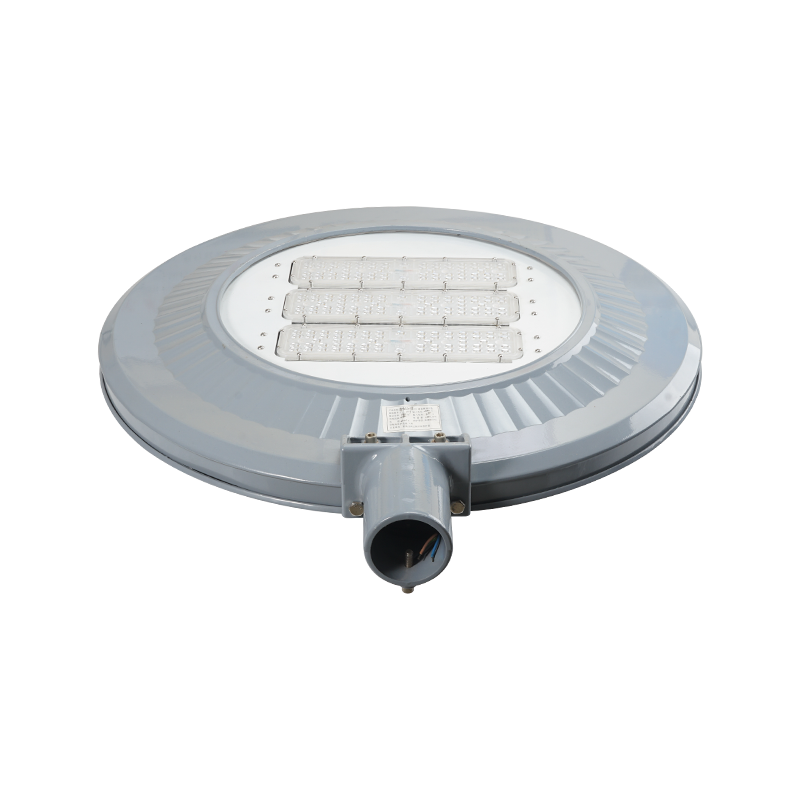
The pole is intended for use with LED lighting fixtures suitable for street, area, landscape, and architectural illumination. LED technology offers advantages such as high energy efficiency, long operating life, controllable light distribution, and reduced maintenance compared with many traditional light sources.
For the best result, the pole and luminaire should be considered together. The arm outreach, mounting height, fixture orientation, bracket dimensions, and cable path all influence the final lighting performance. A visually attractive pole will not deliver a satisfactory project if the fixture is positioned incorrectly or the lighting distribution does not match the road and pedestrian requirements.
Single-arm configurations are suitable for many roadways, entrances, sidewalks, parking areas, and public spaces. The appropriate arm length and luminaire angle depend on road width, pole spacing, mounting height, target illuminance, uniformity, glare control, and local lighting standards. Photometric design should be completed before final production whenever the project has precise illumination requirements.
The integrated appearance of the pole and fixture can make the installation look more refined. The luminaire can be aligned with the arm so that the transition appears intentional rather than improvised. This is especially important for premium developments where the lighting equipment remains visible during the day.
Electrical integration should include suitable cable protection, grounding, surge protection, driver compatibility, and maintenance access. Where smart controls, dimming systems, or photovoltaic power are required, the pole configuration can be reviewed to accommodate the related equipment. These additional functions should be confirmed at the design stage to ensure that the internal space and access provisions are adequate.
11. Advanced Manufacturing Equipment and Production Capacity
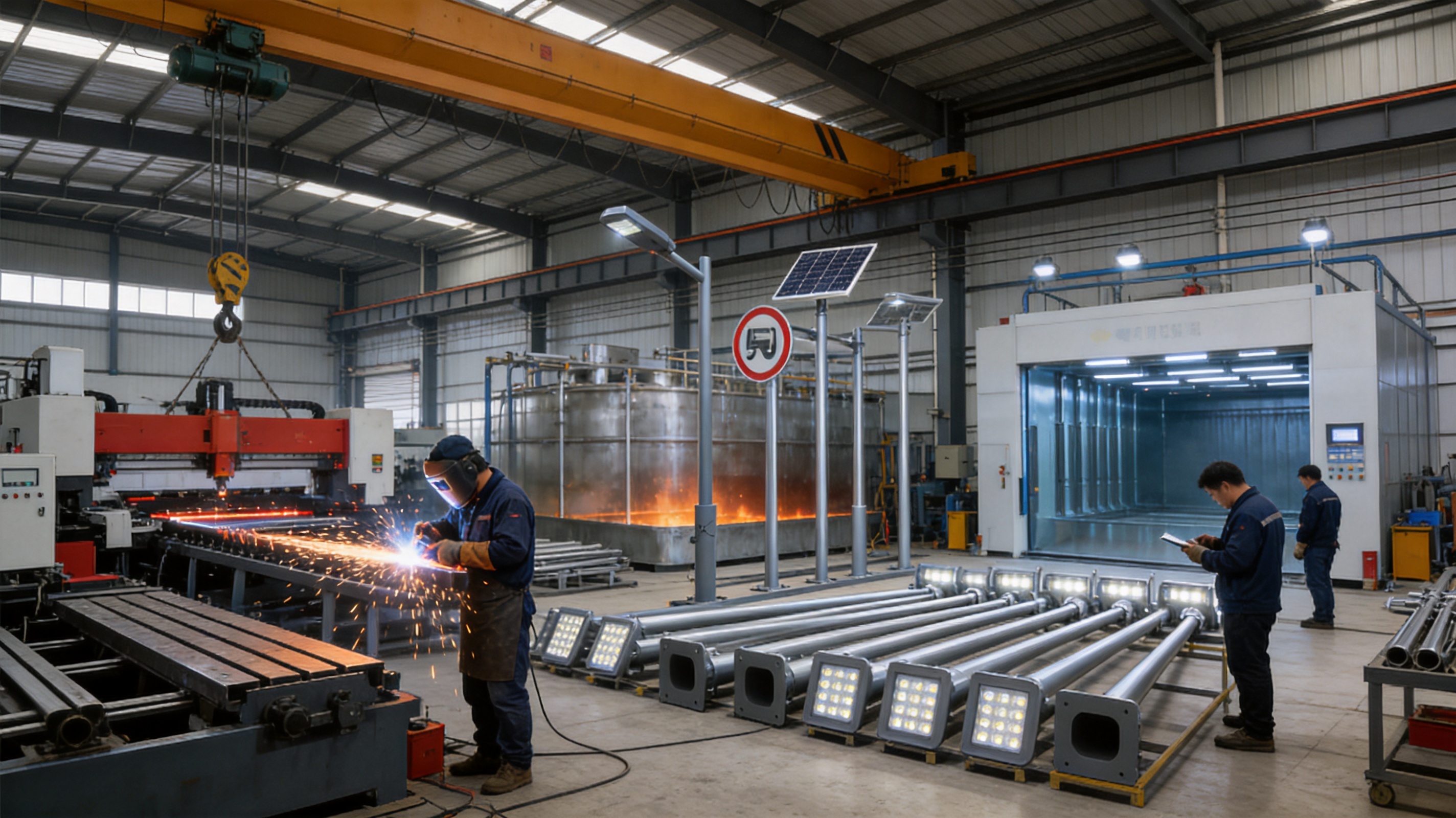
The manufacturer operates a production environment supported by advanced equipment for bending, laser cutting, powder electrostatic painting, automatic welding, and automatic cutting. The production system is designed to improve accuracy, increase efficiency, support repeatable quality, and reduce unnecessary processing costs.
Large-scale projects benefit from a coordinated production system because delivery performance depends on more than one machine. Material preparation, cutting, bending, welding, surface treatment, inspection, packing, and shipment must be organized as a connected workflow. Delays at one stage can affect the entire project schedule.
Automated lines can improve production speed while supporting stricter quality control. Repeatable machine settings reduce variation between batches, and controlled processing helps produce consistent components. Automation can also reduce material waste, energy use, and unnecessary rework, supporting a more sustainable manufacturing approach.
The company’s facilities include a 1,250-ton die-casting machine, which supports the production of relevant metal components and demonstrates substantial manufacturing capability. Equipment of this scale can be valuable for producing strong, accurately formed parts used in lighting and electrical applications, subject to the requirements of each product design.
Production capacity is supported by a workforce of more than 300 professional technicians and a site area exceeding 70,000 square meters. This combination of facility space, personnel, and equipment supports the manufacture of poles, LED street lights, solar street lights, light fixtures, and associated products for domestic and international projects.
Large production capability also supports project coordination. Customers may require different pole heights, colors, arm arrangements, materials, mounting details, or packaging methods within one order. A capable manufacturer can organize these variables through drawings, production schedules, inspection procedures, and shipment plans.
12. Quality Management and International Project Support
Quality assurance begins before fabrication. Technical drawings, material grades, dimensions, surface treatments, packing requirements, and inspection criteria should be reviewed and confirmed before production starts. This reduces misunderstandings and helps ensure that the manufactured product matches the project’s expectations.
The company’s management systems and product processes are supported by international standards including ISO9001, ISO14001, and OHSAS18001. These standards represent a focus on quality management, environmental management, and occupational health and safety. The specific scope and current validity of any certification should be confirmed for the applicable product and order.
Quality control may include material verification, dimensional checks, weld inspection, surface-treatment assessment, coating inspection, flange measurement, door-fitting checks, and final visual examination. The exact inspection plan can be adapted to customer requirements, project standards, and destination-market regulations.
International experience is another important strength. The company exports products to more than 200 countries and has experience supporting customers with different technical expectations, documentation requirements, packaging standards, and installation conditions. International supply requires careful attention to communication, production scheduling, shipping preparation, and after-sales coordination.
For overseas projects, clear documentation is especially valuable. Customers may request approved drawings, material information, coating details, packing lists, installation guidance, inspection records, or mechanical calculations. Providing the correct documentation helps contractors coordinate procurement, civil works, electrical installation, and final commissioning.
13. Design and Engineering Services
A lighting pole is often one component of a larger development. Its design must coordinate with road geometry, architectural elevations, landscaping, electrical infrastructure, foundation details, and visual standards. To support this process, the manufacturer offers several design and engineering services.
CAD Design
CAD design supports the preparation and review of pole dimensions, arm geometry, mounting details, flange arrangements, access doors, and related components. Accurate drawings help customers check clearances, installation interfaces, and appearance before manufacturing begins.
3D Product Simulation Design
Three-dimensional product simulation allows customers to review the pole from multiple angles. It can help identify proportions, arm transitions, luminaire positioning, and potential interference between components. This is particularly useful for customized decorative poles where visual balance is an important part of the decision.
3D Scene Simulation Design
Scene simulation places the proposed lighting product within a representative environment. Customers can evaluate how the pole relates to roads, buildings, landscaping, pedestrian areas, and other street furniture. This service helps project teams make design decisions with greater confidence before committing to production tooling or large quantities.
Specification and Color Customization
Customization may include pole height, arm length, profile, material, wall thickness, flange dimensions, fixture interface, access-door arrangement, and coating color. Color selection can be coordinated with architectural finishes and other outdoor equipment. All custom designs should be reviewed for production feasibility and structural compliance.
Mechanical Calculation for Wind and Foundation
Mechanical calculation supports the evaluation of wind resistance, pole stability, flange loading, anchor-bolt requirements, and foundation design. Project-specific data is essential for meaningful results. The final foundation should be designed and approved according to local soil conditions, construction standards, and the responsible engineer’s requirements.
Overseas On-Site Installation Guidance
Overseas installation guidance can help customers understand assembly, foundation interface, pole erection, cable routing, luminaire mounting, and basic commissioning procedures. On-site guidance is particularly valuable for large or customized projects where the installation team needs direct technical coordination.
14. Comparison with Conventional Low-Cost Light Poles
Price is an important consideration in any infrastructure project, but the lowest purchase price does not always represent the lowest total cost. A light pole should be evaluated according to its expected service life, installation requirements, maintenance needs, visual quality, structural reliability, and replacement risk.
Low-cost products may use thinner materials, less controlled fabrication, basic paint systems, or limited inspection procedures. These choices can reduce the initial price but may increase the likelihood of corrosion, deformation, inconsistent appearance, difficult installation, or early replacement. They may also provide fewer options for engineering support and customization.
Modern Decorative LED Light Poles offer several competitive advantages:
Integrated pole-and-fixture styling creates a cleaner and more contemporary appearance.
High-strength steel or aviation-grade aluminum alloy options support different project needs.
Precision CNC bending improves consistency and structural accuracy.
Laser cutting provides clean, accurately dimensioned components.
Experienced certified welders support reliable fabrication and production speed.
Hot-dip galvanizing combined with outdoor powder coating provides layered corrosion protection.
Mechanical simulation supports better wind-resistance and foundation decisions.
Reinforced flanges and concealed access doors combine installation stability with visual refinement.
CAD, 3D simulation, customization, and installation guidance support complete project delivery.
Large production capacity helps accommodate international and large-scale orders.
These advantages do not eliminate the need for proper specification. The correct pole must still be selected according to local conditions, lighting calculations, structural requirements, electrical standards, and foundation design. However, they provide a stronger basis for achieving dependable long-term value.
15. Typical Applications
Modern Decorative LED Light Poles can be used in a wide range of outdoor environments.
Urban Roads and Residential Streets
The streamlined form is suitable for city roads, residential communities, internal development streets, and neighborhood entrances. The design can improve nighttime visibility while supporting a modern streetscape.
Commercial Districts and Retail Developments
Shopping centers, business parks, mixed-use developments, and hotel zones often require lighting that reflects a premium architectural image. Coordinated pole and fixture designs help create a consistent visual identity.
Hotels, Resorts, and Landscape Areas
Resorts, gardens, promenades, and leisure facilities benefit from decorative lighting that is attractive during the day and effective at night. Color and profile customization can help the poles blend with landscape themes.
Campuses and Public Institutions
Schools, universities, hospitals, civic buildings, and cultural facilities require safe, dependable, and visually appropriate illumination. A single-arm design can serve internal roads, walkways, parking zones, and entrances.
Industrial Parks and Logistics Areas
Industrial environments require durable lighting structures capable of serving large outdoor areas. Material selection, wind calculations, fixture mounting, and maintenance access can be adapted to the operational requirements of the site.
Transportation and Entrance Areas
Entrance roads, parking areas, transport facilities, and gateway structures can use decorative poles to create a clear arrival experience. The integrated design helps organize large open areas without excessive visual clutter.
16. Recommended Project Selection Parameters
Before ordering, customers should prepare a clear technical brief. The following parameters help the manufacturer develop an accurate proposal:
| Project Parameter | Recommended Information | Why It Matters |
|---|---|---|
| Application | Road, plaza, campus, landscape, parking area, commercial site, or other location | Determines the appropriate form, mounting arrangement, and lighting objective |
| Pole height | Required mounting height and overall height | Influences coverage, wind load, appearance, and foundation design |
| Arm configuration | Single-arm direction, outreach, angle, and fixture interface | Controls luminaire positioning and the visual proportion of the pole |
| Material | Steel grade or aluminum alloy option | Affects strength, weight, fabrication, and corrosion strategy |
| LED fixture | Power, weight, dimensions, optics, and mounting method | Supports structural and photometric compatibility |
| Wind conditions | Local wind speed, typhoon exposure, terrain, and applicable standard | Required for mechanical and foundation calculations |
| Foundation | Soil data, concrete details, anchor bolts, and civil design | Ensures safe transfer of structural loads to the ground |
| Surface finish | Galvanizing, powder coating, color, and gloss requirement | Determines appearance and environmental protection |
| Electrical requirements | Cable size, access, grounding, controls, and protection devices | Ensures safe installation and future maintenance |
| Quantity and delivery | Order volume, phased schedule, destination, and packing requirements | Supports production planning and logistics coordination |
Providing this information early allows the design, engineering, purchasing, and construction teams to work from the same technical foundation. It also helps prevent late changes that can increase cost or affect delivery schedules.
17. Installation and Maintenance Considerations
Installation quality has a direct effect on the performance and service life of a light pole. The foundation should be completed according to approved drawings, with the anchor bolts correctly positioned and adequately secured. Concrete strength and curing should meet the project requirements before the pole is erected.
During installation, the pole should be lifted using appropriate equipment and methods that avoid damage to the coating. The flange should sit properly on the foundation, and nuts, washers, and anchor components should be installed according to the approved arrangement. The pole should be checked for vertical alignment before final tightening.
Electrical connections should be completed by qualified personnel. The concealed access door allows access to internal wiring and protective devices, but all connections must be sealed and arranged according to applicable safety regulations. Grounding continuity should be verified, and cable routing should avoid sharp edges or excessive bending.
Routine maintenance may include visual inspection of the pole, flange, fasteners, coating, access door, luminaire, electrical connections, and surrounding foundation. In coastal or industrial areas, inspections may need to be more frequent. Any coating damage should be evaluated and repaired using a compatible system.
LED fixtures generally require less maintenance than older lighting technologies, but they should still be inspected for lens condition, driver performance, thermal issues, cable integrity, and mounting security. Preventive maintenance helps reduce unexpected outages and protects the appearance of the installation.
18. Sustainability and Long-Term Value
Sustainability in outdoor lighting involves more than energy consumption. It includes material efficiency, product durability, manufacturing waste, maintenance requirements, replacement frequency, and end-of-life considerations.
LED technology helps reduce energy use and can support dimming or intelligent control strategies. A durable pole with a designed service life exceeding 20 years can reduce the need for frequent replacement and the associated consumption of raw materials, labor, transportation, and construction resources.
Automated cutting and forming can improve material utilization and reduce avoidable waste. Automated powder coating lines can support more controlled application and help reduce environmental impact compared with less efficient processes. The use of durable protective treatments also extends the usable life of the structure.
Environmental performance should always be evaluated in relation to the actual project. Customers may need to confirm coating requirements, recycling provisions, energy performance, packaging materials, and local environmental regulations. A manufacturer with an established environmental management approach is better positioned to support these discussions.
19. Why Manufacturing Capability Matters to Buyers
When purchasing decorative LED light poles, buyers are not only purchasing a finished metal structure. They are selecting a manufacturing partner that must convert drawings and specifications into a consistent, safe, and installable product.
A manufacturer with strong production capability can provide more reliable control over material purchasing, fabrication, finishing, inspection, packing, and delivery. This reduces dependence on multiple subcontractors and simplifies communication for the customer.
Advanced equipment matters because it supports precision and repeatability. Skilled personnel matter because they interpret drawings, manage complex fabrication, solve production issues, and inspect workmanship. Engineering services matter because they connect the product to real wind, foundation, electrical, and visual requirements.
International experience matters because overseas projects often involve different standards, languages, shipping conditions, and installation practices. A manufacturer that has supplied products to more than 200 countries is familiar with the importance of export packing, documentation, coordination, and customer support.
The combination of design support, manufacturing equipment, material options, quality systems, and installation guidance gives customers a more complete solution than a basic product transaction. It allows the lighting pole to be considered as part of the project from the earliest design stage through final installation.
20. Frequently Asked Questions
Q1: What makes these light poles different from standard street light poles?
The product combines a minimalist decorative appearance with structural engineering and manufacturing controls intended for long-term outdoor use. Integrated pole-and-fixture styling, concealed access, reinforced flanges, precision bending, laser cutting, layered surface protection, and design support distinguish it from basic utility-style poles.
Q2: Which materials are available?
Depending on project requirements, the pole can be produced from high-strength steel or aviation-grade aluminum alloy profiles. Steel material options may include Q235B, Q345B, S275JR, S355JR, Q460, A36, A572, GR56, GR50, and other comparable grades subject to confirmation.
Q3: Can the pole be customized?
Yes. Customization may include height, arm length, profile, fixture interface, material, wall thickness, flange dimensions, access-door arrangement, and coating color. Custom designs should be reviewed through drawings and structural calculations before production.
Q4: How is the pole protected against corrosion?
The product uses a hot-dip galvanized base layer combined with specialized outdoor electrostatic powder coating. This layered system provides both metallic corrosion protection and a decorative weather-resistant finish. The exact system should be selected according to the project environment.
Q5: How long can the product last?
The designed service life can exceed 20 years under suitable material selection, manufacturing quality, installation, environmental conditions, and maintenance. Actual service life depends on climate, coastal or industrial exposure, coating specification, wind conditions, and local maintenance practices.
Q6: Can the poles withstand severe typhoon conditions?
The structural design is evaluated through mechanical simulations and can be engineered for severe wind conditions, including typhoons exceeding Force 12, when the pole, fixture, foundation, and installation are correctly specified. Project-specific wind data and foundation information are required for confirmation.
Q7: Is the access door visible?
The base includes a concealed access door designed to provide maintenance access while preserving the pole’s clean, streamlined appearance. The exact door size and internal arrangement depend on the electrical equipment and project requirements.
Q8: Can the pole be used with smart lighting controls?
It may be possible to integrate dimming, monitoring, or smart-control equipment, subject to the required internal space, cable routing, fixture compatibility, and electrical design. These requirements should be confirmed before fabrication.
Q9: Does the company provide engineering drawings?
Design support can include CAD drawings, 3D product simulation, 3D scene simulation, specification and color customization, and mechanical calculations for wind and foundation requirements.
Q10: Is overseas installation assistance available?
Overseas on-site installation guidance is available as part of the project support service. The scope and arrangement should be agreed according to project location, installation complexity, and customer requirements.
Q11: What information is needed for a quotation?
Useful information includes the application, quantity, pole height, arm configuration, LED fixture details, material preference, wind conditions, coating color, foundation information, destination, delivery schedule, and any required standards or documentation.
Q12: Are the products suitable for large projects?
Yes. The manufacturer has a production site exceeding 70,000 square meters, more than 300 professional technicians, advanced fabrication equipment, and experience exporting to more than 200 countries. Production planning should be confirmed according to quantity and delivery schedule.
21. Conclusion
Modern Decorative LED Light Poles provide a strong solution for outdoor projects that require visual quality, structural dependability, manufacturing precision, and long-term value. Their minimalist forms and integrated pole-and-fixture aesthetics support contemporary urban and architectural environments, while the underlying engineering addresses wind resistance, corrosion protection, installation stability, and maintenance access.
The use of high-strength steel or aviation-grade aluminum alloy, precision CNC bending, high-accuracy laser cutting, professional welding, hot-dip galvanizing, and outdoor powder coating creates a product developed for demanding conditions. Reinforced flanges and concealed access doors further demonstrate the effort to combine practical engineering with a refined appearance.
Beyond the product itself, the manufacturing partner provides CAD design, 3D simulations, color and specification customization, mechanical calculation, and overseas installation guidance. These services help transform a general lighting concept into a coordinated project solution.
For developers, contractors, lighting designers, municipalities, and distributors, the key advantage is the combination of appearance and substance. The poles can contribute to a distinctive visual environment while offering the production capability, quality systems, material choices, and technical support required for reliable large-scale deployment.
When properly specified, manufactured, installed, and maintained, these decorative LED light poles can provide efficient illumination and a durable architectural presence for more than two decades. They are therefore suited to projects where lighting infrastructure must perform reliably while also enhancing the character and perceived quality of the surrounding space.
References
1. ISO 9001, Quality Management Systems — Requirements.
2. ISO 14001, Environmental Management Systems — Requirements with Guidance for Use.
3. OHSAS 18001, Occupational Health and Safety Management Systems — Requirements.
4. General principles of hot-dip galvanizing for fabricated steel products.
5. General engineering practices for outdoor lighting pole structural design and foundation coordination.
6. General LED roadway and area-lighting design principles, including photometric distribution, mounting height, uniformity, and glare control.
7. General practices for powder coating of outdoor metal structures and weather-resistant architectural components.