


JINYUAN
JINYUAN
JINYUAN
JINYUAN
JINYUAN
JINYUAN
JINYUAN
JINYUAN
JINYUAN
JINYUAN
JINYUAN
JINYUAN
JINYUAN
JINYUAN
JINYUAN
JINYUAN
Content
- 1 Designed for the Requirements of Modern Outdoor Lighting
- 2 Core Product Advantages
- 3 Technical Specifications at a Glance
- 4 Optical Performance and Visual Comfort
- 5 Intelligent Dimming and Energy Management
- 6 Materials and Surface Protection
- 7 Advanced Manufacturing Capabilities
- 8 Why Manufacturing Quality Matters to Project Owners
- 9 Customization and Engineering Support
- 10 Advantages Compared with Basic Competing Products
- 11 Applications Across Different Project Types
- 12 Recommended Project Selection Process
- 12.1 Step One: Define the Lighting Objective
- 12.2 Step Two: Review Site Conditions
- 12.3 Step Three: Select the Pole and Arm Configuration
- 12.4 Step Four: Complete Photometric and Structural Analysis
- 12.5 Step Five: Confirm Electrical and Control Requirements
- 12.6 Step Six: Approve Materials and Finishes
- 12.7 Step Seven: Establish Inspection and Delivery Requirements
- 13 Maintenance and Operational Considerations
- 14 Quality, Compliance, and Responsible Procurement
- 15 Company Manufacturing Strength and Industry Experience
- 16 Frequently Asked Questions
- 16.1 What is a double-arm LED street light?
- 16.2 What applications are suitable for this product?
- 16.3 What pole heights are available?
- 16.4 Can the lighting system be dimmed?
- 16.5 What input voltage does the luminaire support?
- 16.6 What does the IP65 rating mean?
- 16.7 What color temperatures are available?
- 16.8 What materials can be used for the pole?
- 16.9 How is the pole protected against corrosion?
- 16.10 Does the manufacturer provide design support?
- 16.11 What is the warranty period?
- 16.12 Why is manufacturing precision important for a double-arm pole?
- 16.13 How should the product be compared with competing street lights?
- 17 Conclusion
- 18 References
- 19 Product: High-Performance Municipal and Landscape Double-Arm LED Street Light
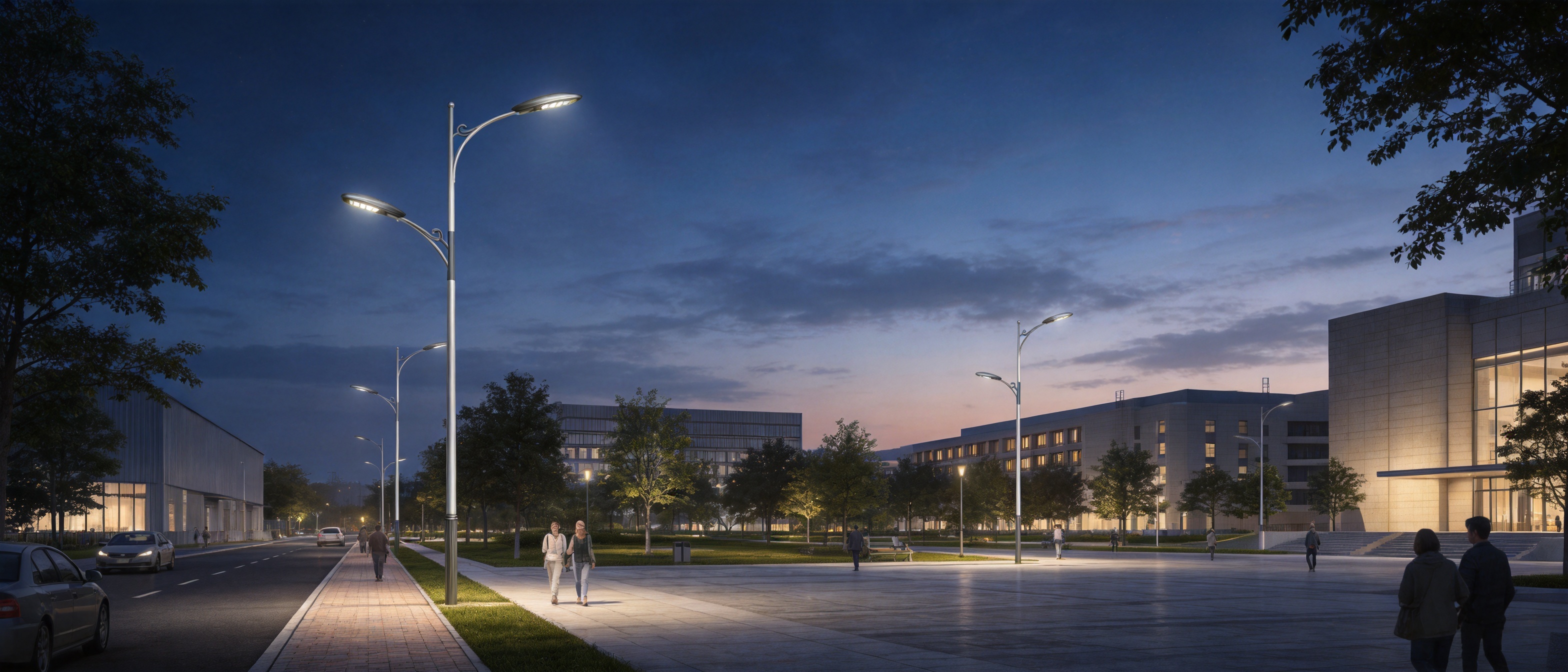
Modern urban lighting must do far more than illuminate a roadway after sunset. It must improve traffic visibility, support pedestrian safety, complement architectural and landscape design, withstand severe weather, reduce energy consumption, and remain dependable for many years with limited maintenance. Municipal authorities, property developers, industrial park operators, and infrastructure contractors therefore require lighting equipment that combines optical performance, mechanical strength, installation flexibility, and long-term value.
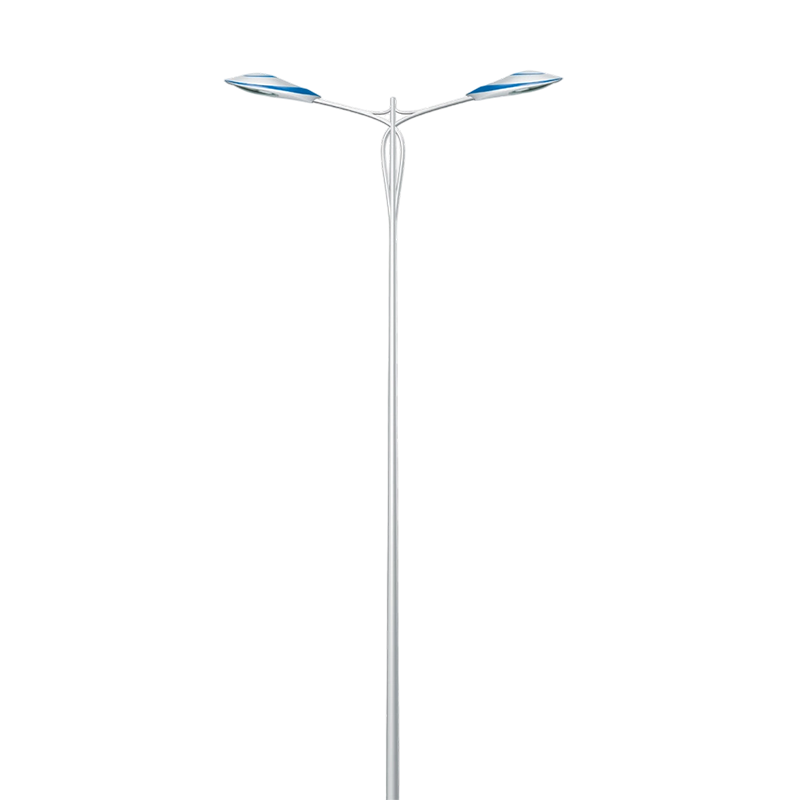
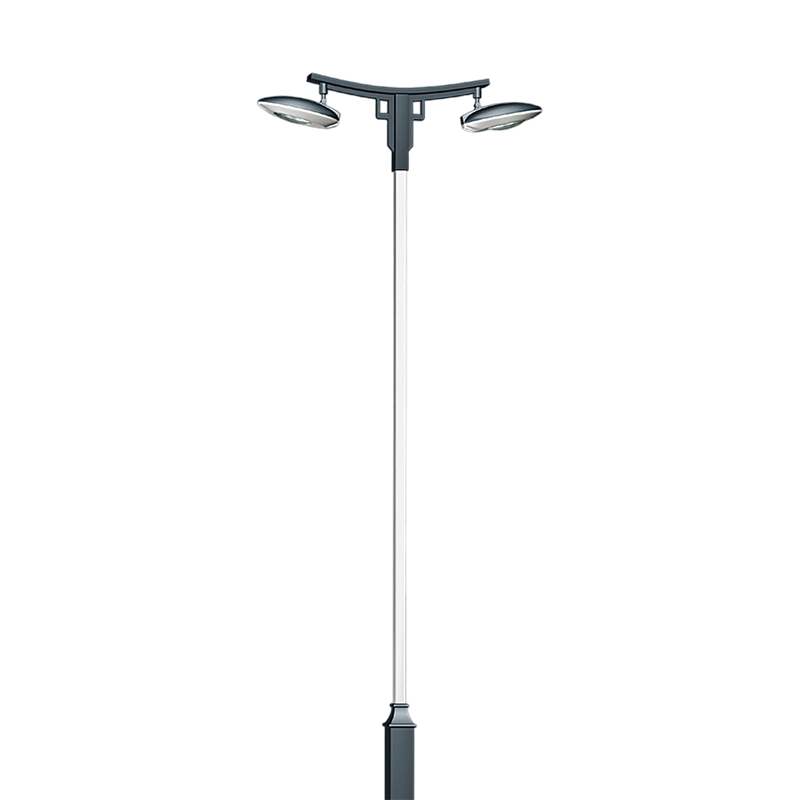
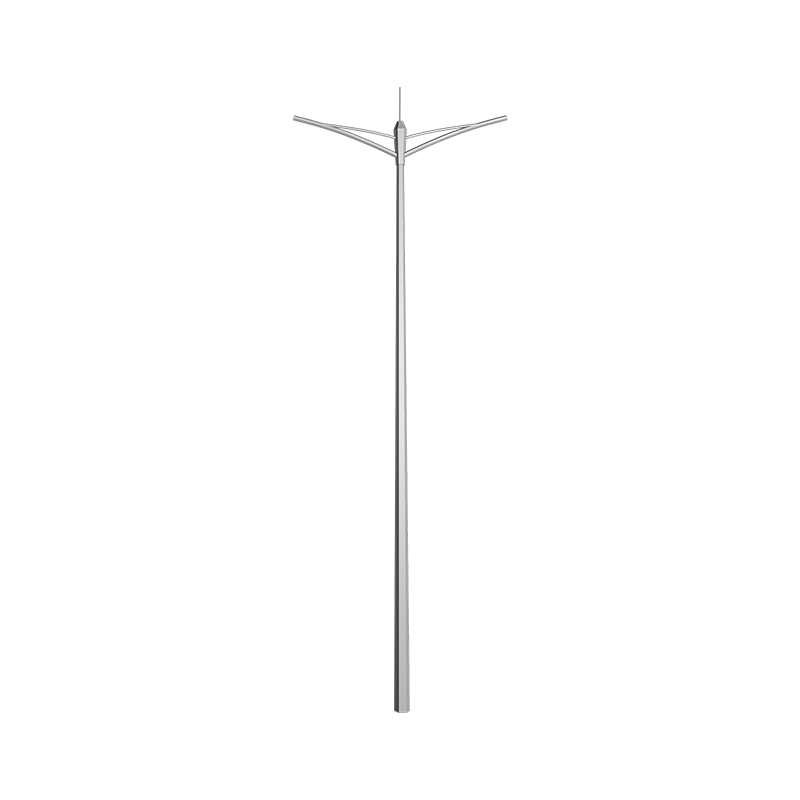
The high-performance municipal and landscape double-arm LED street light is engineered to address these requirements in one integrated solution. Designed for urban roads, large public areas, residential developments, industrial zones, parks, and other demanding outdoor environments, this LED high-low arm light uses advanced LED technology, corrosion-resistant pole construction, precision manufacturing, and adaptable double-arm configurations to provide stable and efficient illumination.
Unlike basic street lighting products that focus only on initial purchase price, this series is designed around the full project lifecycle. Its high-efficiency LED light source can reduce energy demand, its robust pole structure helps withstand outdoor exposure, and its modular configuration supports diverse road layouts. Combined with professional design assistance and manufacturing capabilities, the product offers a practical balance between performance, appearance, serviceability, and total cost of ownership.
Designed for the Requirements of Modern Outdoor Lighting
Roads and public spaces are rarely simple lighting environments. A municipal arterial road may require broad, uniform illumination across multiple traffic lanes. A residential community may need a more visually refined appearance with controlled glare. An industrial zone may demand rugged equipment capable of operating through dust, rain, temperature changes, and continuous night-time use. A park or landscape project may require two different lighting directions or mounting heights from a single pole structure.
The double-arm configuration provides a versatile answer to these varied requirements. Two arms can support bidirectional lighting, illuminate opposite roadways, serve a central median, or provide different lighting orientations within an open public space. The high-low arm arrangement can also create visual hierarchy and help direct light toward areas with different elevation, distance, or usage requirements.
This flexibility gives project designers more options than a standard single-arm pole. In suitable applications, a double-arm pole may reduce the number of foundation locations required while providing coverage on both sides of a road or central area. Fewer pole positions can simplify site planning, reduce visual clutter, and improve the continuity of a streetscape. The final layout must still be confirmed through photometric analysis and structural calculation, but the product platform offers a strong foundation for customized planning.
Core Product Advantages
High-Efficiency LED Illumination
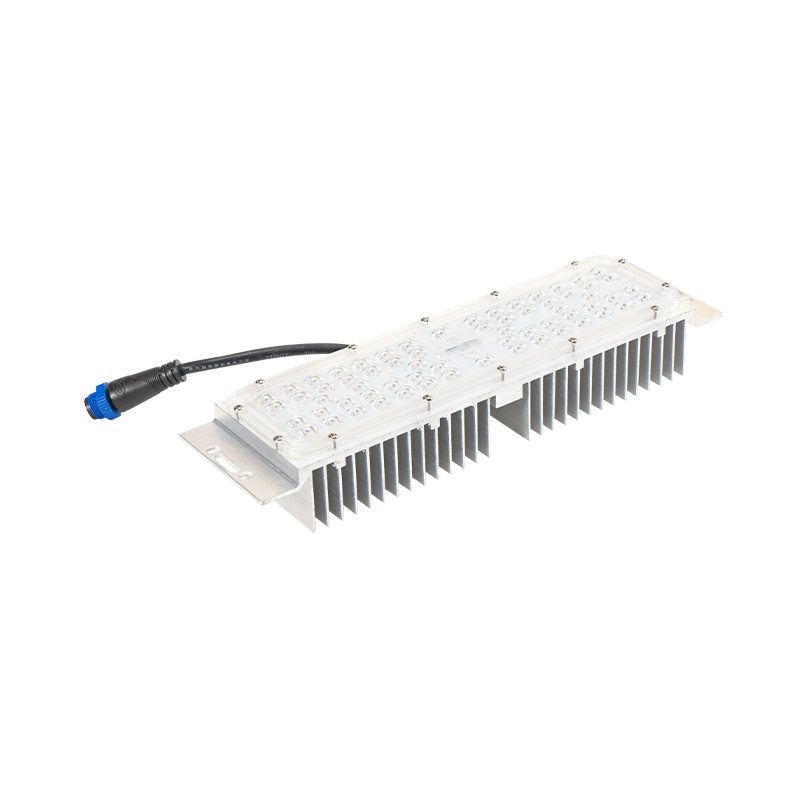
The light source uses industrial-grade LED chips characterized by high luminous efficiency and low light decay. The stated lamp luminous efficiency is up to 140 lm/W, allowing the fixture to produce substantial illumination with a comparatively low electrical input. In large municipal projects, even a small improvement in system efficiency can produce meaningful annual energy savings across hundreds or thousands of operating hours.
High luminous efficiency is only one part of effective outdoor lighting. The optical system must also distribute light evenly, minimize excessive brightness, and direct illumination toward the intended area. The design objective of this series is to provide uniform light distribution while reducing glare. This is particularly valuable on roads, where uncontrolled brightness can reduce visual comfort for drivers and pedestrians.
LED technology also offers operational advantages over older conventional light sources. LEDs reach full output quickly, support intelligent dimming systems, and can be arranged in a compact fixture housing. Their low light decay helps preserve useful illumination over an extended service period when the fixture is correctly installed and operated within its specified conditions.
Bidirectional Coverage from a Double-Arm Structure
A double-arm street light can illuminate two directions from one pole, making it suitable for divided roads, broad avenues, central medians, intersections, public squares, and large outdoor facilities. The high-low arm design gives the product a distinctive appearance while allowing lighting positions to be adapted to the geometry of the site.
Compared with a basic single-arm design, the double-arm arrangement can offer greater planning flexibility. It may support different outreach lengths, mounting orientations, and fixture angles depending on the road width and required distribution. For landscape projects, the structure can also provide a balanced visual composition along boulevards, entrances, parks, and civic spaces.
The design is not limited to one installation environment. It can be specified for municipal roads, large residential communities, industrial parks, parking areas, public gardens, campuses, and other outdoor spaces. Project engineers can determine the appropriate pole height, arm dimensions, LED power, optical distribution, and spacing according to local standards and calculated lighting requirements.
Weather-Resistant Construction
The product information specifies an IP65 protection rating for the lamp. This level of ingress protection is appropriate for many outdoor roadway and landscape environments because it helps protect the fixture against dust and water jets from different directions. The enclosure, seals, cable entry points, and installation practices must work together to maintain this protection in actual service.
The operating temperature range is listed as -35°C to 65°C. This broad range enables the lighting system to serve projects exposed to cold winters, hot summers, and significant daily temperature variation. Proper thermal design remains important, because LED performance and service life depend on heat management as well as electrical and optical quality.
Outdoor reliability is also influenced by surface treatment and material selection. The pole structure is manufactured from high-grade structural steel and receives precision hot-dip galvanizing followed by multi-layer electrostatic spray coating. This combination creates a protective barrier against moisture, oxidation, and corrosive atmospheric conditions. It is especially useful in regions with heavy rainfall, high humidity, industrial pollution, or coastal exposure, subject to the applicable environmental specification.
Structural Stability and Wind Resistance
Street light poles must carry their own weight, the weight of the arms and luminaires, and the wind pressure applied to the complete assembly. Double-arm structures can present a larger exposed surface area than single-arm products, making structural design and engineering calculations especially important.
The use of structural steel grades such as Q235, Q355, SS400, and GR65 provides project teams with material options for different strength, design, and regional specification requirements. The appropriate grade, wall thickness, taper, arm geometry, anchor arrangement, and foundation must be selected according to pole height, luminaire size, wind speed, terrain category, and local codes.
The available pole height range is 6 to 10 meters. This range covers many common municipal, residential, industrial, and landscape applications. Lower poles can suit pedestrian-scale environments, internal roads, and community streets, while taller poles may be appropriate for broader roadways, open areas, and locations requiring wider coverage. Final selection should be based on a complete lighting and structural assessment rather than height alone.
Technical Specifications at a Glance
| Item | Specification |
|---|---|
| Product type | Double-arm LED street light / LED high-low arm light |
| Primary applications | Roads, municipal areas, parks, residential communities, industrial zones, and landscape projects |
| Brand | Jinyuan |
| Input voltage | AC 85–265 V |
| Light source | LED |
| Lamp luminous efficiency | Up to 140 lm/W |
| Color temperature | 3000 K–6000 K |
| Color rendering index | Ra 70 |
| Dimming support | DC 0–10 V / DALI |
| Ingress protection | IP65 |
| Operating temperature | -35°C to 65°C |
| Lamp housing material | Aluminum alloy |
| Pole material options | Q235, Q355, SS400, GR65, and other specified materials |
| Pole height | 6 m–10 m |
| Warranty period | 5 years |
| Typical application | Road lighting |
The specifications above provide a starting point for project comparison. Lighting performance should be evaluated as a complete system, including the LED module, driver, optical distribution, pole geometry, mounting height, spacing, electrical supply, controls, and environmental conditions. A product with a high nominal lumen figure may not produce the best roadway result if its distribution is poorly matched to the site.
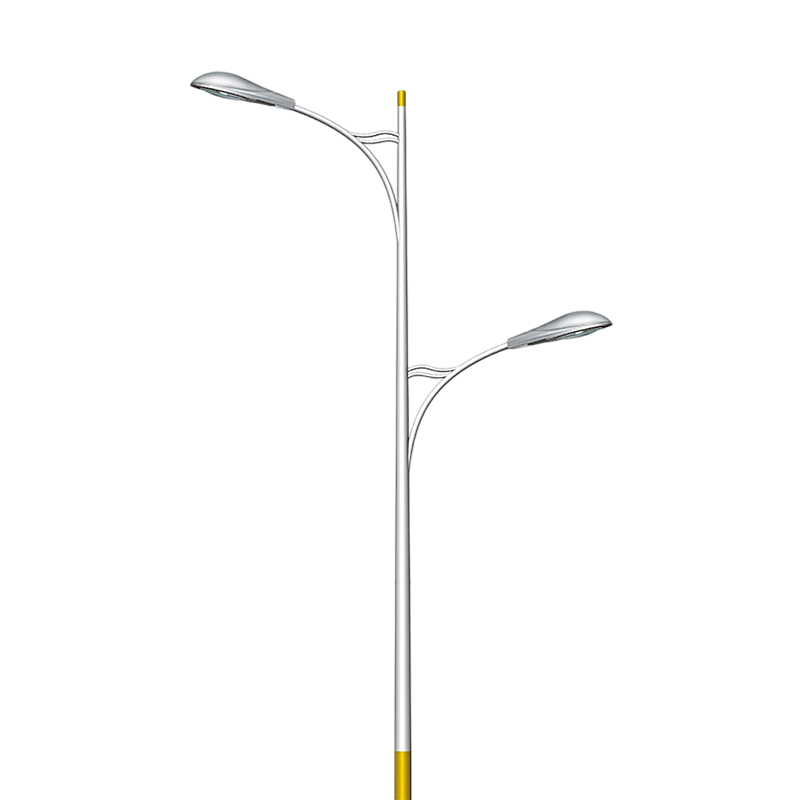
High-Performance Municipal and Landscape Double-Arm LED Street Light
Optical Performance and Visual Comfort
Efficient street lighting must place light where it is needed instead of simply producing maximum brightness. The optical design of a roadway luminaire influences lane visibility, sidewalk illumination, uniformity, glare, and the perceived safety of the environment. The double-arm LED street light is intended to deliver controlled and uniform illumination for bidirectional and complex site layouts.
Uniformity is important because sharp differences between bright and dark areas can make it more difficult for drivers and pedestrians to recognize obstacles. Consistent distribution across the illuminated area can improve visual comfort and help reduce the need for excessive output. In practical design work, optical performance should be verified through lighting simulations using the actual pole spacing, mounting height, road width, surface reflectance, and required lighting class.
The adjustable color temperature range of 3000 K to 6000 K supports different project preferences. Warmer color temperatures can create a more comfortable and visually welcoming atmosphere in parks, residential districts, historic settings, and landscape areas. Cooler color temperatures may be selected for certain road, industrial, or security-oriented environments where a crisper visual appearance is preferred. The final choice should consider local regulations, ecological concerns, nearby residences, and the intended character of the development.
With a stated color rendering index of Ra 70, the luminaire provides practical color recognition for general roadway and outdoor applications. Color rendering requirements may vary between projects. Areas involving detailed visual tasks, architectural presentation, public safety, or special environmental considerations may require additional review before specification.
Intelligent Dimming and Energy Management
The product supports DC 0–10 V and DALI dimming. These control options enable the luminaire to operate as part of a more responsive energy management system rather than functioning only as an on-and-off device. Dimming can be programmed according to time schedules, traffic patterns, pedestrian activity, weather conditions, or signals from a broader smart city platform.
For example, a road may operate at a higher lighting level during evening peak activity and transition to a reduced level during low-traffic hours. A public park may use scheduled dimming after closing time, while an industrial zone may maintain a higher level during shift changes. These strategies can reduce energy consumption and extend the useful operating period of the LED system, provided that safety requirements and local standards are respected.
Dimming also supports a more sustainable approach to infrastructure design. Rather than installing excess capacity to cover every possible operating condition, project owners can select an appropriate normal output and use control systems to adapt performance when conditions change. This can reduce unnecessary light emissions and help limit disturbance to nearby buildings, residents, and sensitive environments.
Control compatibility is an important advantage over conventional non-dimmable street lights. However, the control system should be evaluated together with the LED driver, wiring, communication equipment, commissioning process, and maintenance plan. A successful smart lighting installation requires coordinated planning across the fixture, network, software, and operating organization.
Materials and Surface Protection
Aluminum Alloy Lamp Housing
The lamp housing uses aluminum alloy, a material widely used for outdoor LED luminaires because of its balance of low weight, corrosion resistance, manufacturability, and thermal conductivity. A well-designed aluminum housing can help transfer heat away from LED components and the driver while reducing the load placed on the supporting arm.
Weight reduction can be valuable in a double-arm application. Lower fixture weight may simplify installation and reduce the structural demand on the arm and pole, although all components must still be included in the engineering calculation. The housing must also provide adequate protection for internal electrical components and allow appropriate access for inspection or replacement.
Structural Steel Pole Options
The pole material options include Q235, Q355, SS400, and GR65, as well as other grades requested for a project. This flexibility helps the manufacturer respond to different national standards, design calculations, procurement requirements, and engineering specifications.
Material selection is not an isolated purchasing decision. It affects yield strength, welding behavior, bending performance, wall thickness, weight, transportation, and total cost. A professional supplier can help match the steel grade and pole configuration to the required height, outreach, wind load, foundation design, and environmental conditions.
Hot-Dip Galvanizing and Powder Coating
Hot-dip galvanizing protects steel by applying a bonded zinc coating to the prepared surface. This process provides both barrier protection and a degree of sacrificial protection if the surface is locally damaged. It is widely used for outdoor steel structures because it can protect internal and external surfaces that may be difficult to reach through ordinary painting alone.
The additional electrostatic spray coating provides another protective and decorative layer. It can improve resistance to weathering and help the poles harmonize with the visual language of a municipal or landscape project. A multi-layer finish also offers opportunities for color customization, allowing the poles to complement road furniture, architectural materials, brand standards, or local design guidelines.
Surface preparation, coating thickness, curing, inspection, packaging, and handling all influence the final result. Even a high-quality coating system can be damaged by careless transportation or installation. For this reason, the supply process should include clear inspection criteria and practical protection procedures from factory dispatch to final erection.
Advanced Manufacturing Capabilities
The performance of a street light depends not only on the design shown in a catalog but also on the consistency of the manufacturing process. Dimensional accuracy, weld quality, bending precision, cutting quality, coating uniformity, and final inspection all influence installation efficiency and long-term reliability.
Material Availability and Production Readiness
The manufacturing operation supports material options including Q235B, Q345B, S275JR, S355JR, Q460, A36, A572, GR56, and GR50, among others. Maintaining an extensive material stock can help reduce delays caused by limited availability or long procurement cycles. It also allows production teams to respond more quickly to customized orders and project-specific material requirements.
Material traceability and incoming inspection are important parts of this process. Steel should be checked for dimensions, surface condition, grade documentation, and suitability for the intended fabrication process. A reliable material foundation reduces the risk of dimensional inconsistency, welding problems, and premature surface defects later in production.
Precision CNC Bending
Street light poles and arms often require carefully controlled tapers, angles, and curves. CNC bending equipment helps maintain repeatable geometry across production batches. Precise bending can improve structural consistency, simplify assembly, and reduce the need for post-production adjustment.
Accurate forming is especially important for double-arm products because the two arms should maintain the intended alignment and visual balance. Small deviations may affect luminaire orientation, road coverage, or appearance when multiple poles are installed along a long boulevard. Consistent CNC bending contributes to both engineering performance and architectural quality.
High-Precision Cutting
The production information highlights cutting accuracy of up to 0.01 mm. Such precision supports clean edges, accurate component dimensions, and a more reliable fit between parts. Accurate cutting also helps reduce material waste and lowers the amount of manual correction required before welding or assembly.
Clean cutting edges are valuable for safety and finish quality. Reduced burrs and more consistent profiles can simplify subsequent processing, improve joint preparation, and support better coating coverage. When repeated across a large order, these small production advantages can improve the consistency of the entire installation.
Automated Welding and Skilled Welders
Welding quality affects the strength, appearance, and durability of a pole assembly. Automated welding lines can provide repeatable parameters and consistent production speed, while certified welders contribute the judgment and skill required for complex assemblies, special configurations, and quality verification.
The combination of automation and experienced personnel is stronger than relying exclusively on either approach. Automated equipment can provide repeatability for standardized components, while skilled welders can manage customized structures, inspect joint conditions, and respond to project-specific requirements. Proper welding procedures, inspection routines, and surface preparation are necessary before galvanizing or coating.
Automated Production and Environmental Efficiency
Automated lines can improve manufacturing efficiency while supporting more consistent quality control. Faster production cycles are particularly valuable for large infrastructure projects with strict delivery schedules. Consistent processing can also reduce rework, material waste, and unnecessary energy consumption.
Automation does not replace quality management. It should be supported by process documentation, equipment maintenance, operator training, sampling inspection, and final product verification. When these elements work together, automated production can help lower project costs without sacrificing structural or surface quality.
Die-Casting Capability
The company’s manufacturing equipment includes a 1250-ton die-casting machine. This capability supports the production of precision aluminum components and other cast parts that may be used in lighting products or related equipment. Die casting can provide repeatable shapes, integrated features, clean appearance, and efficient production for suitable component designs.
In-house or closely managed component production can improve coordination between product design and manufacturing. It may also help shorten development cycles for customized housings, brackets, covers, or connection parts. The exact application of die-cast components depends on the project design and product configuration.
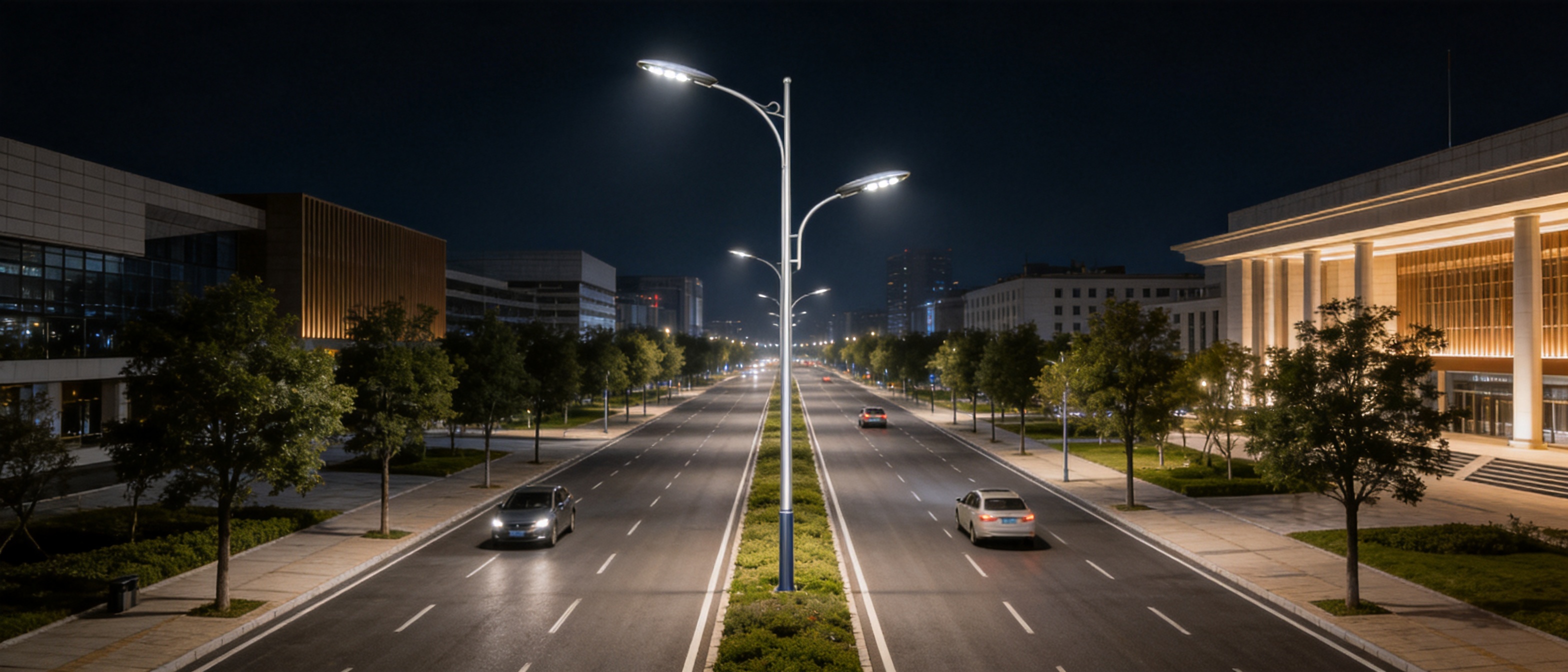
Why Manufacturing Quality Matters to Project Owners
For a project owner, a street light is not simply a fixture purchased by unit price. It is part of a public asset that may remain in service for many years. Failures, coating deterioration, misaligned arms, inconsistent light output, or difficult installation can create costs that are much higher than the original purchasing difference.
Manufacturing quality affects several stages of the project lifecycle. Accurate components can reduce installation time. Consistent pole geometry can simplify alignment. Proper galvanizing and coating can reduce maintenance caused by corrosion. Reliable electrical and optical assembly can help preserve lighting performance. Clear documentation can assist with inspection, acceptance, and future replacement.
The value of a professional manufacturer is therefore measured through more than production capacity. It includes the ability to understand site conditions, translate design requirements into manufacturable components, manage quality at each step, and support the project after delivery.
Customization and Engineering Support
Outdoor lighting projects often require more than a standard catalog selection. Road width, median design, foundation conditions, local wind speed, color requirements, outreach length, luminaire power, control method, and installation equipment can all influence the final product.
The service capabilities associated with this product include CAD design, 3D product simulation design, 3D scene simulation design, specification and color customization, mechanical calculation for wind and foundation requirements, and overseas on-site installation guidance. These services can help convert a general concept into a practical and coordinated lighting solution.
CAD Design
CAD drawings can define pole dimensions, arm geometry, mounting details, access doors, cable openings, anchor arrangements, and connection interfaces. Clear drawings help engineers, contractors, consultants, and inspection teams review the product before fabrication begins.
For customized double-arm structures, CAD coordination is especially useful because the relationship between the pole, arms, luminaires, and foundation must be carefully controlled. Design review at this stage can identify conflicts before materials are cut or welded.
Three-Dimensional Product Simulation
Three-dimensional product simulation allows project teams to review the proportions and component relationships of a proposed light pole. This can be helpful when the product forms part of a civic landscape, gateway road, residential development, or architectural environment where appearance is an important consideration.
Three-dimensional review may also reveal installation or access issues that are less obvious in two-dimensional drawings. It can support communication between manufacturers, designers, owners, and contractors, particularly when several stakeholders are working across different locations.
Three-Dimensional Scene Simulation
Scene simulation places the proposed product in a representative environment. It can help stakeholders evaluate spacing, visual rhythm, pole height, arm orientation, color, and relationship to buildings, trees, roadways, and public spaces.
Although a visual simulation does not replace photometric or structural analysis, it provides a useful design communication tool. It can help decision-makers compare alternatives and confirm whether the lighting structure supports the desired character of the project.
Wind and Foundation Calculations
Wind and foundation calculations are essential for safe pole installation. The required foundation depends on soil conditions, pole dimensions, wind speed, exposure category, anchor bolt arrangement, and the loads imposed by the arms and luminaires. A supplier that can support mechanical calculations provides valuable assistance during design coordination.
These calculations should be reviewed against local building codes and approved by the responsible project engineer. The manufacturer’s technical input is an important part of the process, but site-specific geological and regulatory requirements must also be considered.
Installation Guidance
Overseas on-site installation guidance can help contractors understand assembly order, lifting procedures, cable routing, luminaire orientation, bolt tightening, grounding, and commissioning. Correct installation protects the product’s mechanical and electrical performance and helps preserve the intended IP rating.
Installation teams should also inspect galvanized and coated surfaces after transport and erection. Any damage should be treated according to the approved repair procedure. Foundation curing, anchor bolt alignment, pole verticality, and torque verification are additional details that influence the final result.
Advantages Compared with Basic Competing Products
Every project should compare products according to verified specifications and applicable standards. Nevertheless, this double-arm LED street light offers several practical advantages over basic single-function or low-cost alternatives.
More Flexible Coverage
A standard single-arm light may illuminate only one side of a roadway or one direction from a pole. The double-arm structure supports bidirectional coverage and can be configured for more complex spaces. This flexibility can simplify layout planning and improve visual continuity along broad roads and public areas.
Better Integration of Lighting and Landscape Design
Many low-cost street lights prioritize utility while giving limited attention to appearance. The high-low arm form provides a more deliberate architectural presence. With customized colors, proportions, and arm arrangements, the product can contribute to the identity of a municipal avenue, residential community, industrial park, or landscape development.
Higher Efficiency and Control Compatibility
Older or lower-quality luminaires may provide less light per watt and may not support modern control systems. With a stated efficiency of up to 140 lm/W and support for 0–10 V and DALI dimming, this product is suitable for projects pursuing energy reduction and intelligent operation.
Stronger Protection for Outdoor Conditions
Basic painted steel products can deteriorate quickly if surface preparation and coating quality are poor. The combination of structural steel, hot-dip galvanizing, and electrostatic spray coating is designed to provide a more durable protective system. The IP65 lamp rating and broad operating temperature range further support outdoor use.
More Complete Project Support
Some suppliers provide only a product and a packing list. A project-oriented manufacturer can support design, simulation, structural calculation, customization, and installation guidance. This broader service can reduce coordination problems and give contractors and owners a clearer path from concept to commissioning.
Improved Long-Term Value
The lowest initial purchase price does not always represent the lowest project cost. Energy use, replacement frequency, maintenance access, corrosion repairs, installation adjustments, and downtime all contribute to lifecycle expenditure. High-efficiency LEDs, dimming compatibility, durable construction, and manufacturing consistency can help improve the long-term value of the lighting system.
Applications Across Different Project Types
Municipal Arterial Roads
Urban arterial roads require dependable illumination across extended distances and often include multiple lanes, medians, intersections, pedestrian routes, and service areas. The double-arm design can support lighting on both sides of a divided roadway or provide balanced illumination from a central median.
For these projects, designers should review traffic speed, road classification, required illuminance, uniformity, glare limits, mounting height, pole spacing, and maintenance access. Dimming schedules can be coordinated with traffic patterns when permitted by local requirements.
Residential Communities
Residential developments benefit from lighting that supports safety without creating excessive glare or visual intrusion. Warm or neutral color temperatures may be selected to create a more comfortable environment, while careful optical control can direct light toward roads, sidewalks, entrances, and shared spaces.
The decorative potential of the high-low arm structure can help create a consistent streetscape. Customized pole colors and coordinated spacing may reinforce the architectural style of the community while maintaining practical illumination.
Public Parks and Landscape Areas
Parks, gardens, waterfronts, and civic landscapes often require a careful balance between visibility, atmosphere, and environmental sensitivity. The product’s adjustable color temperature, customizable finish, and double-arm configuration can support different zones within a larger landscape plan.
Designers should consider tree growth, pedestrian movement, nearby residences, wildlife, reflected light, and operating hours. Dimming can be useful when public activity decreases, helping reduce energy use and unnecessary nighttime brightness.
Industrial Parks and Logistics Areas
Industrial zones and logistics facilities may operate throughout the night and require reliable visibility for vehicles, workers, loading operations, and perimeter roads. The broad operating temperature range and corrosion-resistant construction support demanding outdoor conditions.
Lighting design in these areas should account for heavy vehicles, high mounting points, dust, equipment movement, security requirements, and emergency access. The double-arm configuration can provide useful coverage along internal roads, intersections, and large open spaces.
Large Public Spaces
Squares, campuses, transport approaches, exhibition grounds, and public gathering areas may require lighting from several directions. A double-arm pole can illuminate separate circulation routes or combine roadway and pedestrian-area lighting in one coordinated structure.
Because these environments are often visually prominent, product proportions, surface finish, and pole spacing should be considered as part of the overall public-realm design rather than treated as purely technical details.
Recommended Project Selection Process
Step One: Define the Lighting Objective
Begin by identifying the road type, public-space function, expected traffic, operating hours, safety requirements, and desired visual character. Determine whether the project needs roadway lighting, pedestrian lighting, landscape enhancement, security visibility, or a combination of these objectives.
Step Two: Review Site Conditions
Record road widths, median dimensions, sidewalk positions, mounting locations, nearby buildings, trees, utility lines, soil conditions, wind exposure, temperature range, humidity, and potential corrosive influences. These factors affect the pole, foundation, luminaire, and coating specification.
Step Three: Select the Pole and Arm Configuration
Choose the appropriate height within the 6–10 meter range and define the high-low arm geometry, outreach, mounting angle, and luminaire orientation. The configuration should be reviewed for both lighting coverage and structural loads.
Step Four: Complete Photometric and Structural Analysis
Use lighting software to evaluate illuminance, uniformity, glare, and light distribution. At the same time, complete wind load and foundation calculations according to local requirements. These analyses should be completed before final production approval.
Step Five: Confirm Electrical and Control Requirements
Verify the available voltage, driver compatibility, cable routing, grounding, surge protection, switching method, dimming protocol, and smart control interface. The listed AC 85–265 V input range provides broad compatibility, but the complete electrical system must still be checked.
Step Six: Approve Materials and Finishes
Confirm the steel grade, wall thickness, galvanizing requirements, coating color, aluminum housing finish, fasteners, and corrosion protection system. Samples or drawings may be reviewed when appearance is important to the project.
Step Seven: Establish Inspection and Delivery Requirements
Define dimensional checks, weld inspection, coating inspection, electrical tests, packaging, labeling, documentation, and delivery milestones. A clear quality plan helps all parties understand what must be verified before shipment and installation.
Maintenance and Operational Considerations
LED street lights generally require less routine maintenance than older lamp technologies, but they are not maintenance-free. Periodic inspection should check the housing, lens, seals, mounting bolts, cable connections, grounding, pole surface, access door, and foundation condition.
Dust, salt, industrial residue, bird activity, and road spray can gradually affect optical performance and surface appearance. Cleaning intervals should be based on the local environment. Coastal or heavily polluted sites may require more frequent inspection than clean inland locations.
The five-year warranty period provides an important level of project support. Warranty conditions should be reviewed carefully, including coverage scope, exclusions, installation requirements, electrical conditions, maintenance responsibilities, and procedures for reporting a potential failure. Proper records of installation, commissioning, and maintenance can simplify future service.
For large installations, owners may benefit from maintaining spare luminaires, drivers, seals, fasteners, and other critical components. Standardized product selection across a project can simplify inventory management and reduce the time required for future repairs.
Quality, Compliance, and Responsible Procurement
Responsible procurement requires more than reviewing a product photograph. Buyers should request technical datasheets, drawings, test reports, material information, coating specifications, warranty terms, packing details, and installation instructions. They should also confirm whether the product meets the standards required in the destination market.
The company’s stated management and product credentials include ISO9001, ISO14001, and OHSAS18001-related standards. These references indicate attention to quality management, environmental management, and occupational health and safety processes. Project teams should still verify current certificates, scope, validity, and relevance to the specific supply contract.
Environmental responsibility also extends beyond manufacturing. Efficient LED operation can reduce energy use during the product’s service life. Dimming can further reduce consumption when full output is unnecessary. Durable corrosion protection and reliable construction may reduce replacement frequency, material use, and maintenance-related transport.
Good procurement should balance performance, price, delivery, service, and lifecycle impact. A transparent technical comparison helps prevent decisions based only on nominal wattage or initial unit cost.
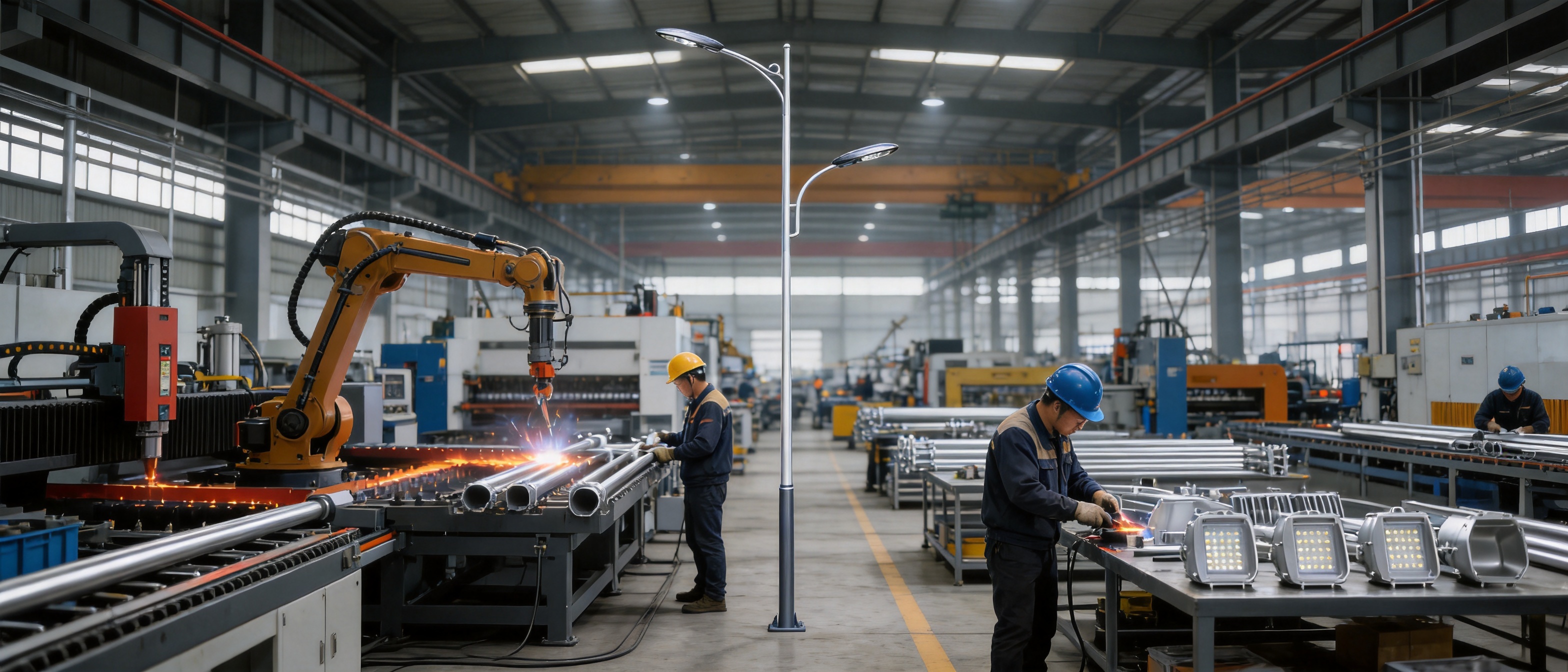
Company Manufacturing Strength and Industry Experience
Yangzhou Jinyuan Lamps Co., Ltd. is affiliated with Jinshang Electric Group and operates as a large-scale production, design, and engineering company in China’s road illumination industry. Established in 2002, the company specializes in street light poles, LED street lights, solar street lights, light fixtures, and related road lighting products.
The company reports a site area of more than 70,000 square meters, a team of more than 300 professional technicians, and exports to more than 200 countries. These resources support the production of standard and customized lighting equipment for domestic and overseas infrastructure projects.
A broad manufacturing base can be especially valuable for complex orders that combine poles, arms, luminaires, solar lighting components, traffic facilities, communication structures, or photovoltaic-related equipment. Coordinated production can simplify sourcing and improve communication between different product groups.
The company’s equipment includes CNC bending machines, powder electrostatic painting equipment, automatic welding and cutting machines, and a 1250-ton die-casting machine. Together with material inventory, experienced welding personnel, automated production lines, and engineering services, these capabilities form a production system designed to support quality, speed, and customization.
Frequently Asked Questions
What is a double-arm LED street light?
A double-arm LED street light is a pole-mounted lighting system with two supporting arms and LED luminaires. The arms may extend in opposite directions, at different heights, or in a customized arrangement. This allows one pole to serve bidirectional roads, medians, public spaces, and complex outdoor layouts.
What applications are suitable for this product?
The product is suitable for municipal roads, arterial roads, residential communities, parks, public squares, industrial zones, campuses, parking areas, and landscape developments. The final suitability depends on the required photometric performance, structural calculation, environmental conditions, and local regulations.
What pole heights are available?
The listed pole height range is 6 to 10 meters. A specific height should be selected according to road width, pole spacing, luminaire output, lighting requirements, wind conditions, and foundation design.
Can the lighting system be dimmed?
Yes. The product supports DC 0–10 V and DALI dimming. These interfaces can support scheduled operation, energy management, and integration with suitable smart lighting control systems.
What input voltage does the luminaire support?
The listed input voltage range is AC 85–265 V. The complete electrical design should confirm the local supply, driver compatibility, grounding, surge protection, and control requirements before ordering.
What does the IP65 rating mean?
IP65 indicates that the lamp enclosure is designed to provide dust protection and protection against water jets from different directions. Proper installation, sealing, cable entry, maintenance, and physical condition are necessary to preserve the intended protection in service.
What color temperatures are available?
The stated color temperature range is 3000 K to 6000 K. Warmer settings may suit residential, park, and landscape environments, while cooler settings may be selected for certain road, industrial, and security applications. The final selection should consider project objectives and local requirements.
What materials can be used for the pole?
Listed options include Q235, Q355, SS400, and GR65, with additional grades available according to project requirements. The correct material depends on structural calculations, applicable standards, environmental exposure, manufacturing requirements, and budget.
How is the pole protected against corrosion?
The pole is described as receiving precision hot-dip galvanizing followed by multi-layer electrostatic spray coating. This combined system is intended to improve resistance to rust, moisture, and outdoor exposure. Coating specifications should be confirmed for the environmental conditions of the project.
Does the manufacturer provide design support?
Available services include CAD design, three-dimensional product and scene simulation, specification and color customization, wind and foundation mechanical calculations, and overseas on-site installation guidance. These services can assist with technical coordination and project implementation.
What is the warranty period?
The listed warranty period is five years. Buyers should review the complete warranty terms, including covered components, operating conditions, installation requirements, exclusions, and claims procedures.
Why is manufacturing precision important for a double-arm pole?
Manufacturing precision helps maintain correct arm alignment, dimensional consistency, structural integrity, assembly fit, and visual balance. These factors influence installation efficiency, luminaire orientation, lighting coverage, and long-term reliability.
How should the product be compared with competing street lights?
Compare complete system performance rather than only unit price or nominal wattage. Important factors include luminous efficiency, optical distribution, dimming compatibility, IP rating, operating temperature, material options, corrosion protection, wind calculations, warranty, manufacturing capability, delivery performance, installation support, and lifecycle cost.
Conclusion
The high-performance municipal and landscape double-arm LED street light provides a versatile platform for urban roads, public spaces, parks, industrial zones, residential communities, and large-scale landscape projects. Its principal strengths include bidirectional lighting capability, high LED efficiency, controlled illumination, broad input voltage compatibility, dimming support, IP65 protection, a wide operating temperature range, corrosion-resistant pole treatment, and multiple structural material options.
Its value is further strengthened by the manufacturing system behind the product. Material availability, CNC bending, precision cutting, automated production, skilled welding, electrostatic coating, die-casting capability, and engineering support help create a more consistent and project-ready solution. CAD design, three-dimensional simulation, structural calculation, customization, and installation guidance provide additional support beyond the supply of a standard luminaire.
For project owners and contractors, the most important advantage is the combination of lighting performance, structural durability, design flexibility, and lifecycle support. When correctly specified through photometric analysis, wind calculation, electrical review, and local code compliance, this double-arm LED street light can contribute to safer roads, more attractive public spaces, lower operating costs, and more sustainable urban infrastructure.
References
1. Product technical information for the high-performance municipal and landscape double-arm LED street light, including rated voltage, efficiency, color temperature, dimming, materials, protection rating, operating temperature, pole height, and warranty data.
2. Manufacturer-provided information on structural steel options, hot-dip galvanizing, electrostatic spray coating, CNC bending, precision cutting, welding, automated production, die casting, and project engineering services.
3. ISO 9001, Quality Management Systems—Requirements.
4. ISO 14001, Environmental Management Systems—Requirements with Guidance for Use.
5. International Electrotechnical Commission, IEC 60529, Degrees of Protection Provided by Enclosures.
6. International Electrotechnical Commission, standards and guidance relating to LED luminaires, roadway lighting equipment, and control systems.
7. General engineering practice for roadway lighting design, photometric evaluation, glare control, structural wind-load calculation, foundation design, and outdoor electrical installation.
8. General industry guidance on hot-dip galvanizing, protective coating systems, corrosion prevention, LED thermal management, and lifecycle assessment of outdoor lighting infrastructure.