


JINYUAN
JINYUAN
JINYUAN
JINYUAN
JINYUAN
JINYUAN
JINYUAN
JINYUAN
JINYUAN
JINYUAN
JINYUAN
JINYUAN
JINYUAN
JINYUAN
JINYUAN
JINYUAN
Content
- 1 Why High-Brightness Outdoor Lighting Matters
- 2 Core Product Performance
- 3 Energy Efficiency and Total Cost of Ownership
- 4 Durable Aluminum Alloy Construction
- 5 Protection Against Outdoor Conditions
- 6 Optical Performance and Lighting Quality
- 7 Advantages Compared with Conventional Outdoor Fixtures
- 8 Precision Manufacturing and Engineering Capability
- 9 Advanced Cutting and CNC Bending
- 10 Welding, Surface Treatment, and Corrosion Resistance
- 11 Die Casting and Integrated Production Resources
- 12 Design and Project Support Services
- 13 Applications in Roads and Public Infrastructure
- 14 Installation Considerations
- 15 Maintenance and Long-Term Reliability
- 16 Quality Assurance and Project Confidence
- 17 How to Select the Appropriate Configuration
- 18 Frequently Asked Questions
- 18.1 What is the primary application of this luminaire?
- 18.2 How efficient is the LED outdoor lighting luminaire?
- 18.3 Can the luminaire operate in cold and hot climates?
- 18.4 What does IP65 protection mean?
- 18.5 Does the product support dimming?
- 18.6 What color temperatures are available?
- 18.7 Is the aluminum alloy housing beneficial for LED performance?
- 18.8 How does this product compare with conventional lamps?
- 18.9 Can the product be customized?
- 18.10 Does the manufacturer provide support for pole and foundation design?
- 18.11 What manufacturing capabilities support the product?
- 18.12 What warranty is provided?
- 19 Conclusion
- 20 References
- 21 Product: High-Brightness Led Outdoor Lighting Luminaires
Outdoor lighting plays a vital role in road safety, public security, traffic management, commercial development, and the usability of open spaces after dark. As cities, industrial parks, transportation facilities, and infrastructure projects continue to expand, lighting purchasers are looking for luminaires that provide high brightness without creating excessive energy consumption, maintenance demands, or installation difficulties. The high-brightness LED outdoor lighting luminaire described in this article is designed to address these requirements through efficient LED technology, a durable aluminum alloy housing, all-weather protection, flexible control options, and a manufacturing process built around precision and quality consistency.
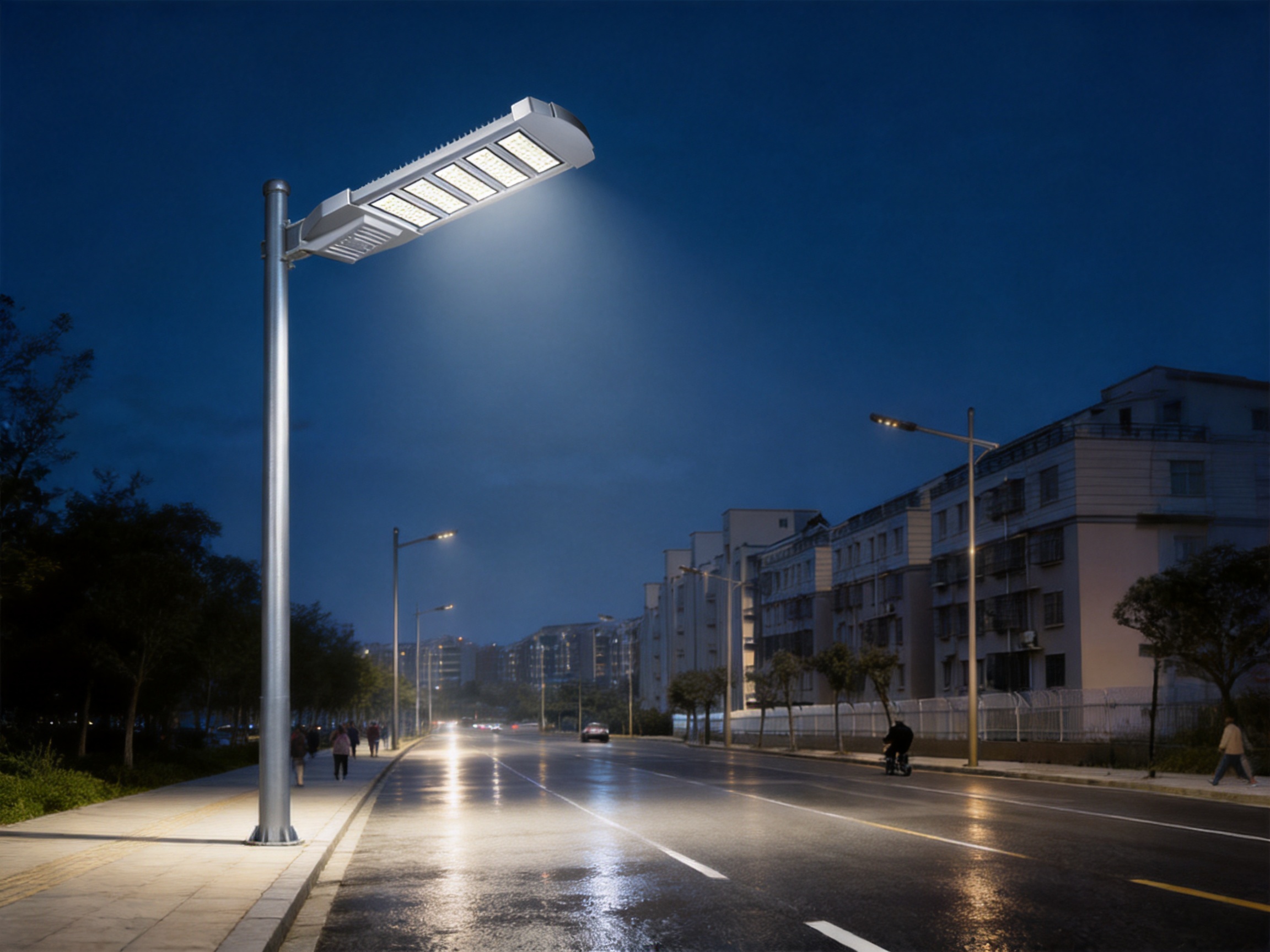
This luminaire is suitable for roads, parks, parking areas, campuses, industrial compounds, public spaces, and other large outdoor environments. Its high luminous efficiency of up to 140 lm/W helps deliver powerful illumination while limiting electrical demand. Its AC85-265V input range supports stable operation across a broad range of power conditions, while its IP65 protection rating helps protect the internal components from dust and water exposure. With a rated operating temperature from -35°C to 65°C, the product is engineered for use in many demanding climates.
Unlike basic outdoor lamps that may focus only on initial purchase price, this luminaire is developed as a complete lighting solution. Thermal management, optical performance, housing strength, protection, dimming compatibility, ease of installation, and long service life are considered together. This integrated approach can help project owners reduce the total cost of ownership and improve lighting performance over the life of the installation.
Why High-Brightness Outdoor Lighting Matters
Outdoor lighting must perform in conditions that are often more challenging than indoor environments. A road luminaire may be exposed to rain, dust, vibration, temperature changes, insects, airborne pollutants, and voltage fluctuations. It may also be installed at a considerable height, making maintenance more expensive and time-consuming than replacing an indoor fixture.
For this reason, brightness alone is not enough. A suitable outdoor luminaire must provide useful light distribution, maintain stable operation, manage heat effectively, resist environmental conditions, and remain serviceable over many years. A high-brightness LED luminaire combines these characteristics in a single product platform, offering an alternative to older high-pressure sodium, metal halide, or inefficient conventional lighting systems.
LED technology converts electrical power into light more efficiently than many traditional sources. It also provides instant start-up, directional light output, improved controllability, and reduced dependence on frequent lamp replacement. These features are especially valuable for roads, parking facilities, parks, and industrial sites where reliable illumination is required throughout the night.
High brightness is particularly important in large outdoor areas. A luminaire with strong optical output can cover a greater area, support wider spacing between lighting poles, and reduce dark zones when the lighting layout is properly designed. This can help improve visibility for drivers, pedestrians, security personnel, and property users. The final result depends on mounting height, pole spacing, optical distribution, road width, surface reflectance, and local lighting standards, but an efficient high-output luminaire gives designers greater flexibility.
Core Product Performance
The high-brightness LED outdoor lighting luminaire uses LED as its light source and is designed for road and area lighting applications. Its 140 lm/W luminous efficiency provides a strong balance between output and energy consumption. This efficiency can help project owners achieve required illumination levels using less electricity than many older lighting technologies.
| Specification | Product Information | Practical Benefit |
|---|---|---|
| Brand | Jinyuan | Dedicated lighting manufacturing and engineering support |
| Application | Road and outdoor area lighting | Suitable for roads, parking areas, parks, and large open spaces |
| Input voltage | AC85-265V | Broad compatibility with common power networks |
| Light source | LED | Efficient, controllable, and long-service lighting performance |
| Operating temperature | -35°C to 65°C | Adaptable to cold and hot outdoor conditions |
| Lamp material | Aluminum alloy | Lightweight structure and effective heat dissipation |
| Protection rating | IP65 | Protection against dust and water jets from typical outdoor exposure |
| Luminous efficiency | Up to 140 lm/W | High light output with reduced power consumption |
| Color temperature | 3000K-6000K | Choice of warm, neutral, or cool white appearance |
| Color rendering index | Ra 70 | Suitable color recognition for general road and area lighting |
| Dimming | DC 0-10V and DALI | Compatibility with energy management and lighting control systems |
| Warranty | 5 years | Long-term support for project confidence |
The broad AC85-265V input range is an important advantage for outdoor projects because power conditions can vary between regions and sites. It supports use in many electrical environments and helps simplify product selection for international buyers. Nevertheless, professional installation should always include a review of the local electrical supply, surge protection, grounding, and applicable safety requirements.
The product operates across a wide temperature range. Outdoor luminaires installed in northern regions may face freezing temperatures, while those used in subtropical or desert locations may experience high ambient heat. Operation from -35°C to 65°C provides useful environmental flexibility, although the actual installation should consider solar radiation, enclosure temperature, airflow, mounting orientation, and the thermal characteristics of the complete system.
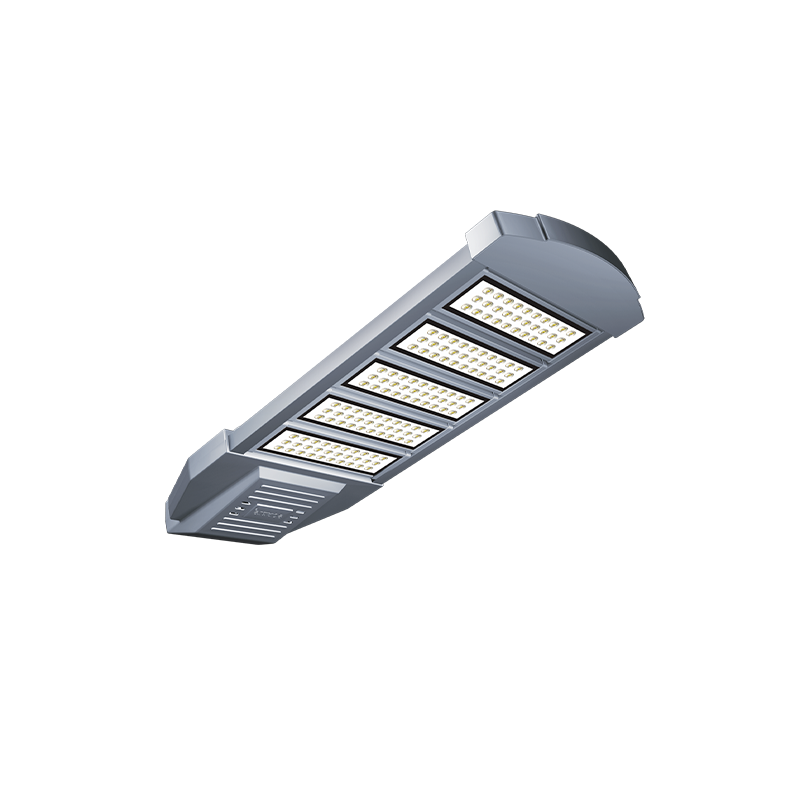
High-Brightness Led Outdoor Lighting Luminaires
Energy Efficiency and Total Cost of Ownership
Energy consumption is one of the largest recurring costs in public and commercial lighting. A luminaire that operates every night can consume thousands of kilowatt-hours over its service life. Improving luminous efficiency therefore has a direct effect on operating expenses and environmental performance.
At up to 140 lm/W, the high-brightness LED outdoor lighting luminaire is designed to deliver substantial illumination from a comparatively low electrical load. For example, when a project requires a defined amount of light output, a more efficient luminaire may achieve the target with lower wattage than an older design. The exact savings depend on the selected power rating, operating schedule, electricity price, lighting layout, and comparison product.
LED luminaires also offer savings beyond electricity consumption. Traditional lamps may require periodic replacement because of limited lamp life, delayed starting, reduced output, or sensitivity to repeated switching. LED systems are well suited to automatic control and scheduled operation. They can be switched or dimmed according to traffic levels, occupancy, time of night, or special events, reducing unnecessary energy use during low-demand periods.
The available DC 0-10V and DALI dimming support makes the product suitable for projects that require more than simple on-and-off control. A 0-10V system can provide a practical analog dimming method for many lighting control installations. DALI can support more structured digital control, addressing, grouping, monitoring, and scene management when the broader system is designed accordingly. The correct control method should be selected according to project objectives, driver compatibility, wiring arrangements, and control-system requirements.
A five-year warranty further supports lifecycle planning. A warranty cannot replace proper design, installation, and maintenance, but it gives buyers an additional level of confidence when evaluating long-term infrastructure investments. For municipal, industrial, and commercial users, the combination of high efficiency, controllability, durable construction, and warranty coverage can make the product more attractive than a low-cost fixture with limited technical support.
Durable Aluminum Alloy Construction
The luminaire housing is made from aluminum alloy, a material widely used in professional outdoor lighting because it combines structural strength, relatively low weight, corrosion resistance, and heat conduction. The material is particularly valuable in LED luminaires because the performance and service life of LED components depend strongly on effective thermal management.
LEDs produce less waste heat than many traditional light sources, but they still generate heat at the semiconductor junction and within the driver. If heat accumulates inside the luminaire, it can accelerate component aging, reduce light output, and shorten the usable life of electronic parts. The aluminum alloy housing helps transfer heat away from the LED module and driver area, allowing heat to dissipate into the surrounding environment.
Good thermal performance is more than a material choice. It also depends on the housing geometry, contact surfaces, internal component arrangement, surface treatment, ventilation strategy, sealing design, and installation orientation. A professionally manufactured aluminum housing provides a reliable foundation for these engineering considerations. It can help the luminaire maintain more stable performance during long operating periods, especially in warm climates or installations with extended nightly schedules.
The housing also contributes to mechanical durability. Outdoor fixtures can be exposed to wind loads, vibration from nearby roads, handling during transportation, and repeated maintenance activity. A well-formed aluminum body offers a balance between rigidity and manageable weight. Lower fixture weight can simplify handling at installation height and reduce loading on the supporting bracket or arm, subject to the mechanical calculations required for the project.
Protection Against Outdoor Conditions
Outdoor lighting equipment must be protected from water and airborne contaminants. The IP65 protection rating indicates that the enclosure is designed to resist dust ingress and water jets from different directions. This makes the product suitable for normal outdoor exposure, including rain, roadside dust, and general environmental contamination.
Protection performance depends on the complete product, including seals, lenses, cable entries, fasteners, access covers, and assembly quality. Manufacturing consistency is therefore essential. A small gap, damaged gasket, improperly tightened fastener, or poorly sealed cable connection can compromise an otherwise well-designed enclosure. Quality control during assembly helps ensure that protection features work as intended.
The IP65 rating should be matched to the installation environment. Locations exposed to temporary flooding, high-pressure cleaning, immersion, corrosive salt spray, or unusual chemical contamination may require a more specialized design or additional protection. Buyers should also verify the appropriate rating for junction boxes, control cabinets, connectors, and other associated equipment rather than considering the luminaire in isolation.
For normal road, park, parking lot, and industrial outdoor applications, IP65 provides a practical level of enclosure protection. It reduces the likelihood that dust accumulation or rain exposure will interfere with the LED module and driver. This contributes to more stable operation and can reduce maintenance caused by environmental contamination.
Optical Performance and Lighting Quality
The purpose of an outdoor luminaire is not simply to produce a bright point of light. It must distribute light across the intended area with suitable uniformity and limited glare. A high-brightness fixture should be integrated into a lighting plan that considers road classification, pedestrian activity, traffic speed, pole height, spacing, mounting angle, and the desired illuminance or luminance level.
The product offers a color temperature range from 3000K to 6000K. Warmer color temperatures can provide a softer visual atmosphere and may be preferred in residential, landscape, or heritage environments. Neutral and cooler color temperatures can create a clearer visual impression for roads, industrial compounds, parking facilities, and security-sensitive spaces. The final choice should reflect local regulations, community expectations, environmental considerations, and the intended visual character of the site.
With a color rendering index of Ra 70, the luminaire is suitable for general outdoor applications where practical visibility and energy efficiency are the principal goals. This level of color rendering supports useful recognition of common objects, vehicles, road markings, and surroundings. Applications requiring highly accurate color identification, such as certain inspection, retail, architectural, or security environments, may require a higher color-rendering specification.
In road lighting, visual comfort is also important. Excessive glare can reduce visibility even when measured brightness is high. Proper optical design, aiming, mounting height, shielding, and spacing can help direct light toward the required surface and limit light entering drivers’ or pedestrians’ eyes. A qualified lighting designer should use photometric files and project-specific calculations to confirm compliance with the required lighting standards.
Advantages Compared with Conventional Outdoor Fixtures
The product offers several practical advantages over many conventional outdoor lighting options. The first is efficiency. Older light sources may consume more power to produce comparable usable illumination, especially as lamp output declines over time. LED technology can maintain a more consistent performance profile while enabling lower operating wattage.
The second advantage is controllability. Conventional lamps may have limitations related to switching frequency, warm-up time, or dimming compatibility. LED luminaires can respond quickly to control commands and are well suited to photocells, timers, motion-based strategies, central management systems, and scheduled dimming. The 0-10V and DALI options increase the product’s usefulness in projects where energy management is a priority.
The third advantage is compactness and design flexibility. The luminaire’s modern form can integrate into different architectural and infrastructure environments without the bulky appearance associated with some older fixtures. Its relatively compact construction can also simplify handling and reduce visual clutter on poles and building structures.
The fourth advantage is reduced maintenance exposure. Outdoor fixtures mounted on high poles often require lifting equipment or lane closures for service. A durable enclosure, effective heat dissipation, and long warranty can help reduce the frequency and cost of interventions. Maintenance requirements never disappear entirely, but a reliable luminaire can make them more predictable.
The fifth advantage is broad application compatibility. The product can be used for road lighting, parking lots, parks, campuses, commercial areas, industrial sites, and large outdoor spaces. Buyers can standardize on a common luminaire family across several site types while adjusting color temperature, dimming strategy, mounting arrangement, and photometric design as necessary.
Compared with poorly engineered low-cost LED products, the product’s advantages are associated with more than the LED chip itself. Housing material, thermal design, enclosure protection, driver quality, assembly accuracy, quality testing, and technical support all influence long-term performance. A low purchase price may not represent low total cost if early failures, uneven light distribution, premature dimming, or difficult warranty handling occur.
Precision Manufacturing and Engineering Capability
The performance of an outdoor luminaire depends on the consistency of its production. Even a strong design can produce unreliable results if material preparation, cutting, bending, welding, coating, assembly, and inspection are not controlled carefully. Yangzhou Jinyuan Lamps Co., Ltd. supports its lighting products with a broad manufacturing and engineering capability developed for road illumination and related infrastructure.
The company was established in 2002 and is affiliated with Jinshang Electric Group. It operates from a site of more than 70,000 square meters and has more than 300 professional technicians. Its product range includes street light poles, LED street lights, solar street lights, light fixtures, and related road lighting products. The company exports to more than 200 countries and serves both domestic and international customers.
Its management and quality systems include ISO9001, ISO14001, and OHSAS18001-related standards and practices. These certifications and systems are valuable because they encourage structured procedures for quality assurance, environmental management, occupational safety, documentation, and continual improvement. For international project buyers, a formal management system can make supplier evaluation and project coordination more transparent.
Material availability is an important part of production reliability. The company maintains extensive material stocks and works with material options such as Q235B, Q345B, S275JR, S355JR, Q460, A36, A572, GR56, and GR50 for appropriate structural applications. While many of these grades are associated with poles and supporting structures rather than the aluminum luminaire housing itself, the availability of materials across the company’s broader manufacturing operation helps support integrated lighting and pole projects.
Stable access to suitable materials can shorten production lead times and reduce the risk of project delays. It also allows engineering teams to select materials according to strength, environmental conditions, fabrication requirements, and applicable standards. Material selection should always be confirmed against the technical specification and local regulations for each project.
Advanced Cutting and CNC Bending
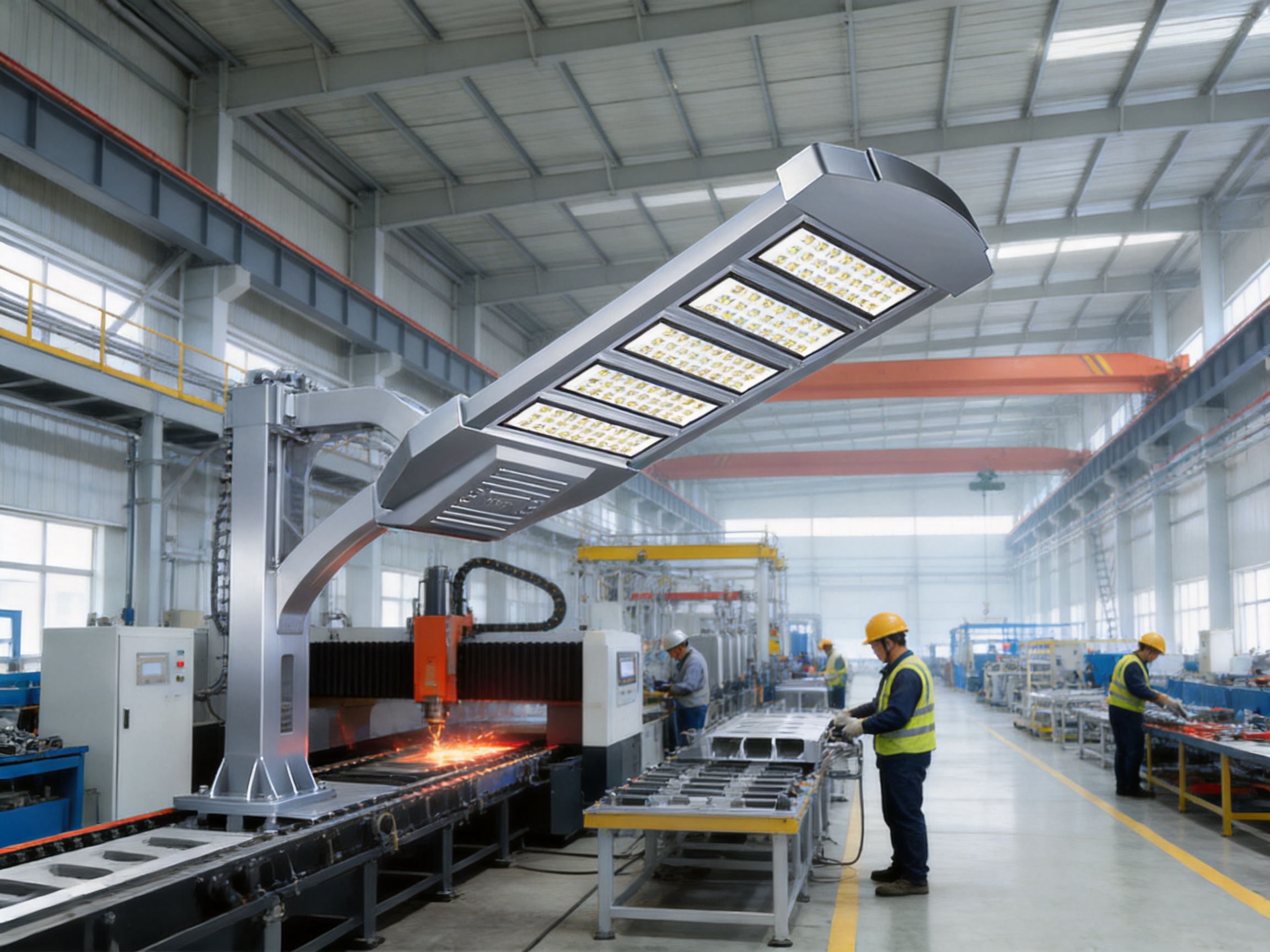
Accurate fabrication is essential for lighting poles, brackets, housings, mounting components, and other structural elements used in outdoor lighting projects. The company uses cutting equipment capable of achieving accuracy down to 0.01 mm in relevant production operations. Precise cutting helps create accurate dimensions, clean edges, and consistent component interfaces.
Accurate cutting offers several benefits. It can reduce the need for post-production correction, improve assembly fit, limit material waste, and support repeatable production across large orders. Clean edges also make it easier to perform subsequent processes such as bending, welding, grinding, coating, and assembly. Better dimensional consistency reduces the possibility of misalignment between a luminaire, mounting bracket, and pole arm.
CNC bending provides another important manufacturing advantage. Computer-controlled bending can produce consistent angles and radii across multiple components. This supports structural integrity and helps maintain a uniform appearance throughout a project. For large infrastructure orders, repeatability is especially important because dozens or hundreds of components may need to fit together in the same way.
Precise bending can also reduce post-production adjustments. When manually corrected parts are minimized, production becomes more efficient and the risk of surface damage or dimensional variation is reduced. Consistent geometry supports more predictable wind-load calculations, component alignment, and installation work.
For outdoor lighting, the importance of precision extends beyond appearance. A correctly formed bracket can help maintain the intended luminaire angle. Accurate pole components can support proper verticality and connection strength. Consistent enclosure parts can help maintain sealing pressure and reduce the risk of water ingress. These details contribute to the reliability of the complete lighting system.
Welding, Surface Treatment, and Corrosion Resistance
Welding quality affects the structural strength and long-term durability of lighting poles, brackets, frames, and related metalwork. The company employs certified welders with extensive welding experience. Skilled welders can help maintain joint quality, control heat input, manage distortion, and meet project-specific welding requirements.
A reliable welding process should include appropriate preparation, qualified procedures, suitable filler materials, controlled parameters, and inspection. The exact inspection method depends on the component, design standard, material, and project requirements. For large-scale infrastructure, consistent welding helps ensure that products arrive ready for installation with fewer remedial adjustments.
Surface treatment is equally important in outdoor applications. Unprotected metal can deteriorate when exposed to moisture, salt, industrial pollutants, and temperature changes. The company uses powder electrostatic painting equipment and related production processes to support a durable and consistent finish. Proper surface preparation, coating thickness, curing conditions, and inspection all influence the anti-corrosion performance of the finished product.
An effective coating improves both protection and appearance. It helps preserve the surface against weathering and gives project owners greater flexibility in selecting a finish that suits the surrounding infrastructure. Color and coating specifications should be confirmed before production, especially when luminaires, poles, brackets, cabinets, and other visible components must match.
Automated production lines can improve consistency while reducing unnecessary labor and material waste. Automation supports repeatable application, faster production cycles, and more stable quality control. It can also contribute to environmental performance by improving material utilization and reducing process variation. These benefits are particularly relevant when the supplier is producing large quantities for municipal, transportation, or industrial projects.
Die Casting and Integrated Production Resources
The company operates advanced equipment that includes a 1,250-ton die casting machine. Die casting is useful for producing precise metal components with repeatable shapes, clean surfaces, and controlled dimensions. In lighting products, die-cast components may be used for housings, end sections, mounting interfaces, heat-dissipation structures, or other engineered parts depending on the product design.
Integrated production resources can shorten communication paths between design, fabrication, quality control, and assembly teams. When a supplier can support both lighting fixtures and related infrastructure, it may be easier to coordinate product dimensions, mounting systems, pole arrangements, control requirements, and project documentation.
This integrated capability is particularly valuable for projects involving multiple product categories, including LED street lighting, solar street lighting, high-mast lighting, mid-mast lighting, traffic facilities, communication towers, and photovoltaic power generation systems. A purchaser can discuss the broader infrastructure requirement with one experienced engineering organization instead of coordinating every component through unrelated suppliers.
Although every project requires its own technical review, an integrated manufacturer can help identify interface issues earlier. Examples include pole-top mounting compatibility, cable routing, foundation requirements, wind-load considerations, electrical cabinet placement, solar panel integration, and control-system communication. Early coordination reduces the likelihood of costly changes after production or delivery.
Design and Project Support Services
Outdoor lighting projects often require more than a catalog product. The correct solution depends on the site, road geometry, lighting target, pole height, mounting arrangement, climate, power supply, and local standards. The company provides design and project support from consultation through completion.
CAD design can help establish accurate dimensions for luminaires, poles, brackets, foundations, control cabinets, and associated components. Detailed drawings provide a common reference for the purchaser, engineering team, contractor, and installation personnel. They can also support approval procedures and help identify conflicts before fabrication begins.
Three-dimensional product simulation design can show how the luminaire or lighting structure is assembled. Three-dimensional scene simulation design can place the product within a representative road, parking area, industrial site, or public space. These visual tools help buyers evaluate proportion, appearance, mounting height, pole spacing, and the relationship between the lighting system and surrounding architecture.
Specification and color customization can support different project identities and environmental requirements. Buyers may need a particular surface finish, color, mounting interface, cable arrangement, control configuration, or product labeling system. Customization should be confirmed through approved technical drawings so that the final product remains consistent with mechanical, electrical, thermal, and protection requirements.
Mechanical calculations for wind and foundation design are important for pole-mounted systems. Wind speed, exposure category, pole height, luminaire weight, projected area, bracket geometry, soil conditions, and foundation dimensions must be considered together. The company provides mechanical calculation support for wind and foundation requirements, helping project teams develop a more reliable installation plan.
Overseas onsite installation guidance is another useful service for international projects. Remote or onsite guidance can help contractors understand assembly sequences, cable connections, foundation interfaces, luminaire orientation, tightening requirements, and commissioning procedures. The level of support should be agreed before shipment according to project size and location.
Applications in Roads and Public Infrastructure
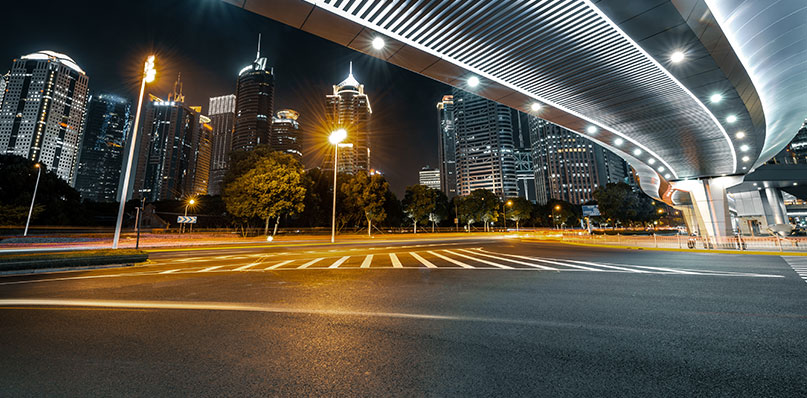
Road lighting is one of the main applications for this high-brightness luminaire. Roads require consistent visibility for drivers and pedestrians, particularly at intersections, curves, crossings, bus stops, bridges, ramps, and areas with mixed traffic. A suitable LED luminaire can provide a more efficient and controllable alternative to conventional road fixtures.
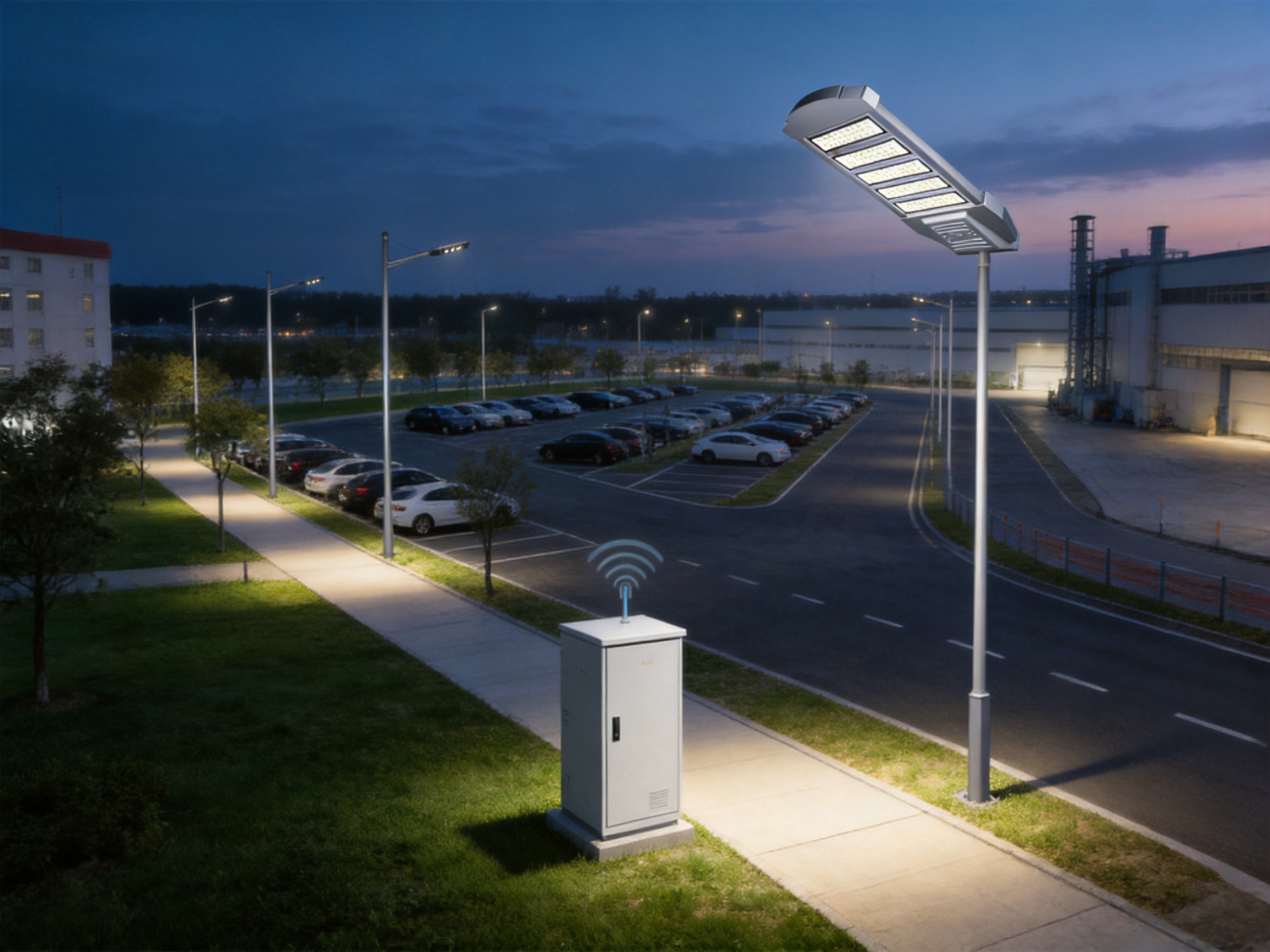
Parking lots benefit from high-brightness lighting because users need to see vehicles, pedestrian routes, signs, curbs, and potential obstacles. Lighting can also support security monitoring and improve the sense of safety after dark. The product’s broad input range, IP65 protection, aluminum housing, and dimming compatibility make it suitable for many parking facility designs.
Parks and public spaces may require a balance between visibility, comfort, appearance, and environmental sensitivity. The available color temperature range allows designers to choose a light appearance that suits the space. Dimming can reduce brightness during low-use periods while maintaining basic safety and orientation lighting.
Industrial facilities often operate continuously and may contain large yards, loading zones, warehouses, access roads, and equipment areas. Efficient LED lighting can reduce energy expenditure across long operating schedules. The durable housing and broad temperature range are also useful in environments that experience dust, heat, cold, or changing weather conditions.
Campuses, commercial complexes, logistics centers, and transportation facilities can use the luminaire as part of a coordinated outdoor lighting system. Standardized luminaires simplify spare-parts planning and maintenance training. A centralized control strategy can help facility operators manage schedules, dimming levels, and energy consumption across several zones.
Installation Considerations
Correct installation is essential for achieving the intended performance of any outdoor luminaire. Before installation, the project team should confirm the mounting bracket, pole arm, bolt pattern, cable entry, driver access, electrical protection, and control connections. The supporting structure must be capable of carrying the luminaire and resisting the local wind load.
The installation angle affects the direction of light and the distribution of illuminance. A fixture that is rotated or tilted incorrectly may create dark areas, excessive brightness, or glare. Contractors should follow the approved drawings and photometric design. Where adjustment is required onsite, changes should be documented and reviewed by the project engineer.
Electrical connections should be completed by qualified personnel. The input voltage must be verified, and the system should include appropriate overcurrent protection, grounding, surge protection, and isolation procedures. Control wiring for 0-10V or DALI should be installed according to the control-system design and manufacturer requirements.
Although the luminaire is rated IP65, cable glands and external junction points must be sealed correctly. Water protection can be weakened if cables are left loose, connectors are improperly fitted, or access covers are not secured. Installation teams should inspect gaskets, fasteners, and cable entries before commissioning.
The aluminum housing should not be covered with materials that block heat dissipation. Nearby equipment, decorative panels, or incorrectly installed accessories may restrict airflow or increase the local ambient temperature. Maintaining the intended mounting position helps preserve thermal performance.
Maintenance and Long-Term Reliability
LED outdoor lighting generally requires less routine maintenance than many conventional systems, but periodic inspection remains advisable. Maintenance teams should check for physical damage, loose fasteners, corrosion, cable deterioration, abnormal flicker, reduced output, water marks, and changes in the lighting pattern.
The exterior of the luminaire may accumulate dust, pollution, bird contamination, or industrial residue. Cleaning intervals depend on the environment. A clean optical surface allows more light to reach the target area and helps maintain consistent performance. Cleaning procedures should avoid aggressive chemicals or tools that could damage the lens, coating, seals, or housing.
Control systems should also be reviewed periodically. Dimming schedules, photocell settings, communication status, and energy reports can reveal unusual operating conditions. If a luminaire is connected to a central management system, recorded faults can help maintenance teams identify issues before they affect a larger area.
Keeping accurate asset records improves lifecycle management. Records may include installation date, pole location, product specification, driver information, control address, maintenance history, and warranty details. Standardizing the product across a project can simplify inventory management and reduce the number of spare parts that must be stored.
The five-year warranty provides additional assurance, but warranty support is most effective when installation and operating conditions are properly documented. Buyers should retain purchase records, approved specifications, commissioning reports, and maintenance records in accordance with the supplier’s warranty procedures.
Quality Assurance and Project Confidence
Quality assurance begins with product design and continues through material purchasing, fabrication, assembly, inspection, packaging, delivery, and technical support. A manufacturer with established production equipment and documented processes is better positioned to deliver consistent results across repeated orders.
The company’s capabilities in CNC bending, precision cutting, welding, powder coating, automated production, and die casting support a controlled manufacturing environment. These capabilities are complemented by engineering personnel, certified welders, quality systems, and experience with international projects.
For buyers, supplier evaluation should include more than a review of the product brochure. It is useful to examine technical drawings, photometric data, sample products, test reports, driver specifications, protection details, warranty terms, packaging methods, and references for comparable projects. A factory audit or production inspection may also be appropriate for large orders.
Competitive pricing is important, but it should be evaluated alongside service life, energy use, installation cost, maintenance access, spare-parts support, and project risk. A product that performs reliably and reduces field intervention may provide better value than a cheaper fixture that requires frequent replacement or creates inconsistent illumination.
How to Select the Appropriate Configuration
The right configuration depends on the lighting application. For a road, buyers should provide road width, lane arrangement, pole height, pole spacing, mounting arm dimensions, road classification, required lighting level, and local standards. For a parking facility, information about parking layout, pedestrian routes, vehicle circulation, security requirements, and operating hours is valuable.
The selected color temperature should reflect the visual purpose of the site. A warmer setting may be suitable for community spaces or landscape-sensitive areas, while a cooler setting may be preferred for industrial yards or high-visibility work zones. The choice should also consider local regulations and the potential effects of outdoor light on nearby properties or ecosystems.
Dimming should be planned at the beginning of the project rather than added after installation. The designer should decide whether the system needs simple scheduled reduction, zone-based control, digital addressing, remote monitoring, or integration with a broader smart-city platform. The use of 0-10V or DALI should match the selected driver and control architecture.
Buyers should also confirm the environmental conditions. Coastal projects may require additional corrosion protection. Areas exposed to chemical vapors may need specialized materials or coatings. Locations with extreme heat should be reviewed for thermal performance. Areas subject to impact, vandalism, or frequent washing may require additional mechanical or enclosure protection.
Frequently Asked Questions
What is the primary application of this luminaire?
The primary application is outdoor road and area lighting. It can be used for roads, parking lots, parks, campuses, industrial compounds, commercial areas, logistics facilities, and other large outdoor spaces that require reliable illumination.
How efficient is the LED outdoor lighting luminaire?
The specified luminous efficiency is up to 140 lm/W. Actual system performance depends on the selected power, optical configuration, operating temperature, driver, installation conditions, and photometric design.
Can the luminaire operate in cold and hot climates?
Yes. The specified operating temperature range is -35°C to 65°C. The complete installation should still be reviewed for local solar exposure, enclosure temperature, airflow, and other site-specific conditions.
What does IP65 protection mean?
IP65 indicates protection against dust ingress and water jets from different directions. It is suitable for many ordinary outdoor environments. It does not mean that the luminaire is designed for immersion or temporary flooding.
Does the product support dimming?
Yes. The product supports DC 0-10V and DALI dimming. The selected control method should be matched with the driver, wiring, control equipment, and project operating strategy.
What color temperatures are available?
The specified color temperature range is 3000K to 6000K. This range allows project designers to select warmer or cooler white light according to the application, visual environment, local standards, and user preference.
Is the aluminum alloy housing beneficial for LED performance?
Yes. Aluminum alloy provides a lightweight and durable housing while helping conduct heat away from the LED module and driver. Effective thermal performance can support stable output and longer component life when the luminaire is correctly installed and operated.
How does this product compare with conventional lamps?
It offers the typical advantages of modern LED technology, including high luminous efficiency, instant operation, controllability, compact construction, and reduced routine lamp replacement. The actual energy and maintenance savings depend on the comparison product and project operating conditions.
Can the product be customized?
Project support includes specification and color customization, CAD design, three-dimensional simulation, and engineering coordination. Any customization should be confirmed through approved technical documents before production.
Does the manufacturer provide support for pole and foundation design?
Yes. The company provides mechanical calculation support for wind and foundation requirements. Final structural design should be reviewed and approved according to local conditions, applicable standards, soil information, and project responsibility arrangements.
What manufacturing capabilities support the product?
The broader manufacturing operation includes precision cutting, CNC bending, certified welding, powder electrostatic painting, automated production lines, and a 1,250-ton die casting machine. These capabilities help support dimensional consistency, structural quality, surface durability, and efficient production.
What warranty is provided?
The listed warranty period is five years. Buyers should confirm warranty terms, exclusions, installation conditions, commissioning requirements, and claim procedures before placing an order.
Conclusion
The high-brightness LED outdoor lighting luminaire is designed for projects that require strong illumination, energy efficiency, outdoor durability, and long-term operating confidence. Its LED light source, up to 140 lm/W luminous efficiency, AC85-265V input range, -35°C to 65°C operating range, aluminum alloy housing, IP65 protection, 3000K-6000K color temperature range, and 0-10V or DALI dimming support provide a practical combination of performance features.
Its advantages over conventional or poorly engineered alternatives extend beyond light output. Efficient operation can reduce energy consumption, dimming can improve control, aluminum construction can support thermal management, and a protected enclosure can improve resilience against ordinary outdoor exposure. A five-year warranty and project support services add further value for purchasers planning long-term infrastructure investments.
The manufacturer’s capabilities in precision cutting, CNC bending, welding, powder coating, automated production, die casting, CAD design, three-dimensional simulation, mechanical calculation, and overseas installation guidance support the product from concept through delivery. This combination of product performance and manufacturing strength makes the luminaire suitable for roads, parks, parking lots, industrial facilities, campuses, commercial developments, and other large outdoor environments.
For the best result, every project should be supported by a site-specific lighting calculation, structural review, electrical design, control strategy, and professional installation plan. When these elements are coordinated with the luminaire’s technical characteristics, the result can be a safer, more efficient, and more dependable outdoor lighting system.
References
1. Product technical information supplied for the high-brightness LED outdoor lighting luminaire, including electrical, optical, environmental, material, protection, dimming, and warranty specifications.
2. Manufacturer information supplied for Yangzhou Jinyuan Lamps Co., Ltd., including company history, production capacity, equipment, certifications, engineering services, and product categories.
3. International Electrotechnical Commission, degree of protection provided by enclosures and the IP Code.
4. International Electrotechnical Commission, performance and safety considerations for LED modules, LED controlgear, and lighting equipment.
5. International Organization for Standardization, quality management system principles and requirements for manufacturing organizations.
6. International Organization for Standardization, environmental management system principles for responsible industrial production.
7. General professional guidance on road lighting design, outdoor illuminance, glare control, uniformity, pole spacing, and photometric evaluation.