


JINYUAN
JINYUAN
JINYUAN
JINYUAN
JINYUAN
JINYUAN
JINYUAN
JINYUAN
JINYUAN
JINYUAN
JINYUAN
JINYUAN
JINYUAN
JINYUAN
JINYUAN
JINYUAN
Content
- 1 1. The Changing Role of Communication Towers in Urban Design
- 2 2. Product Overview and Design Concept
- 3 3. Structural Performance and Engineering Reliability
- 4 4. Aesthetic Integration and Customization
- 5 5. Manufacturing Process and Quality Control
- 6 6. Why This Tower Offers Advantages Over Conventional Alternatives
- 7 7. Design and Project Development Workflow
- 8 8. Applications in Different Environments
- 9 9. Company Manufacturing Strength and Service Capability
- 10 10. Sustainability, Maintenance, and Lifecycle Value
- 11 11. Selection Checklist for Buyers and Project Designers
- 12 12. Frequently Asked Questions
- 12.1 Q1: What is the main purpose of the Flower Basket Style Landscape Ground-Mounted Communication Tower?
- 12.2 Q2: Can the tower support equipment for more than one operator?
- 12.3 Q3: Is the tower suitable for future 5G expansion?
- 12.4 Q4: What materials can be used to manufacture the tower?
- 12.5 Q5: How is the tower protected against corrosion?
- 12.6 Q6: Can the color and appearance be customized?
- 12.7 Q7: Can lighting be integrated into the tower?
- 12.8 Q8: Does the product require a special foundation?
- 12.9 Q9: How does modular construction benefit installation?
- 12.10 Q10: Is the tower difficult to maintain because of its decorative shape?
- 12.11 Q11: What design services are available?
- 12.12 Q12: Where is this product most appropriate?
- 12.13 Q13: What makes this product different from a standard communication pole?
- 12.14 Q14: How should customers begin a project inquiry?
- 13 13. Conclusion
- 14 References
- 15 Product: Flower Basket Style Landscape Ground-Mounted Communication Tower
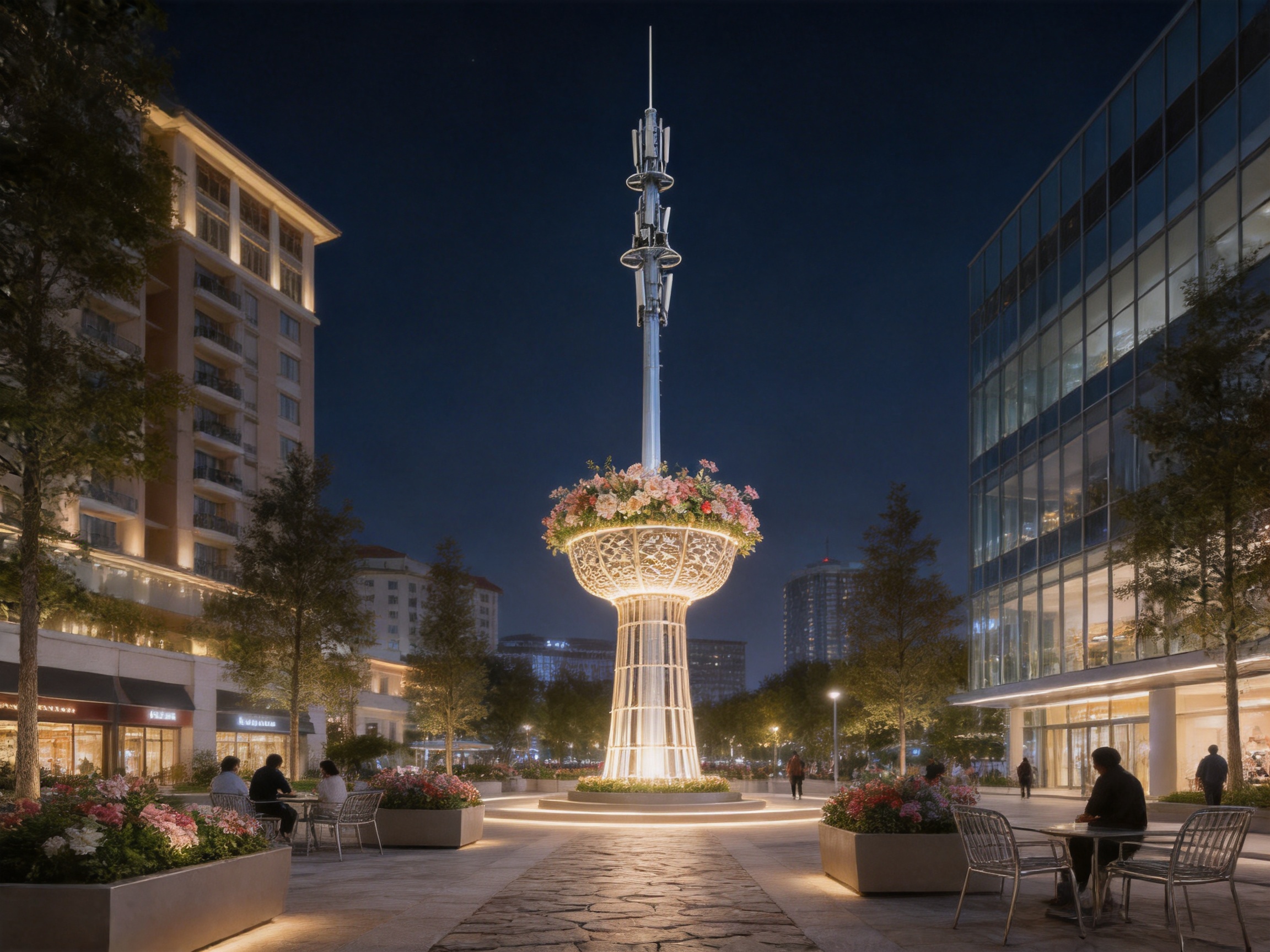
Modern cities require communication infrastructure that is reliable, scalable, safe, and visually compatible with the environments in which people live, work, and travel. Traditional communication towers are highly functional, but their industrial appearance can create visual conflict in parks, tourist destinations, residential communities, commercial developments, resort areas, and other public spaces where landscape quality is important. The Flower Basket Style Landscape Ground-Mounted Communication Tower provides a practical response to this challenge by combining structural engineering with architectural and landscape design.
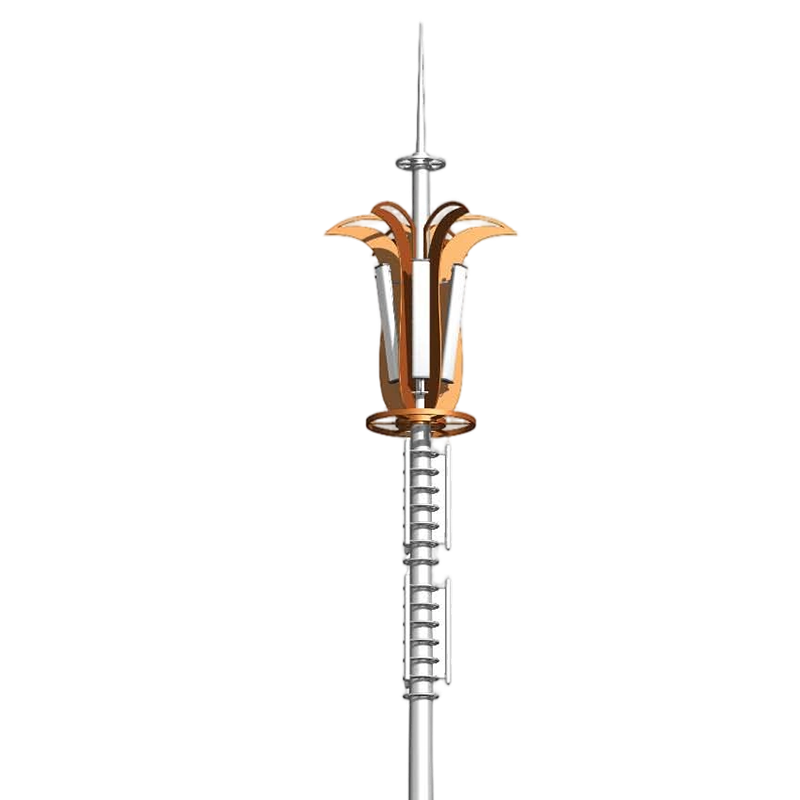
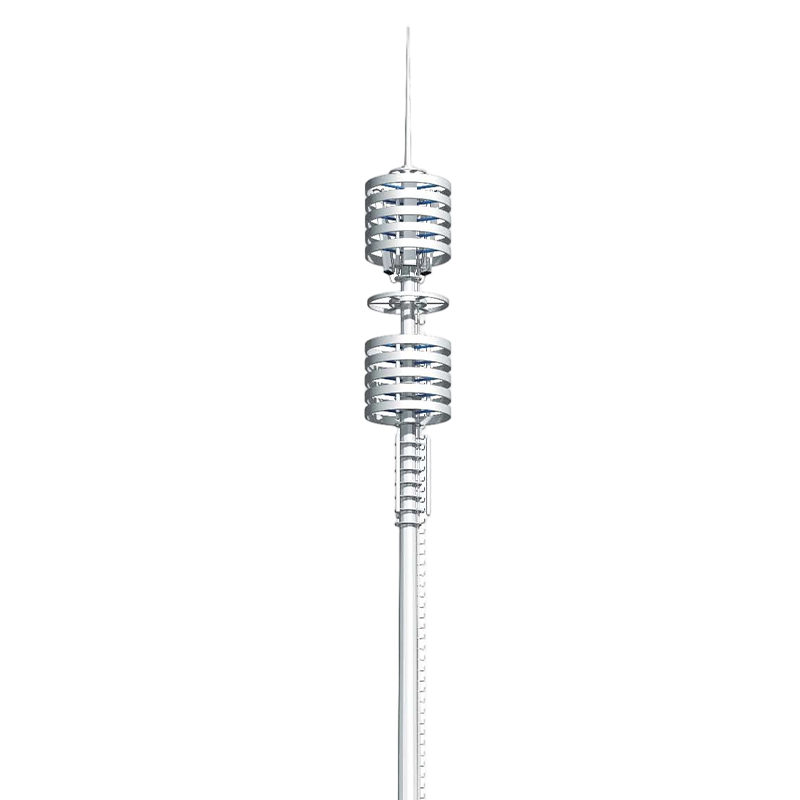
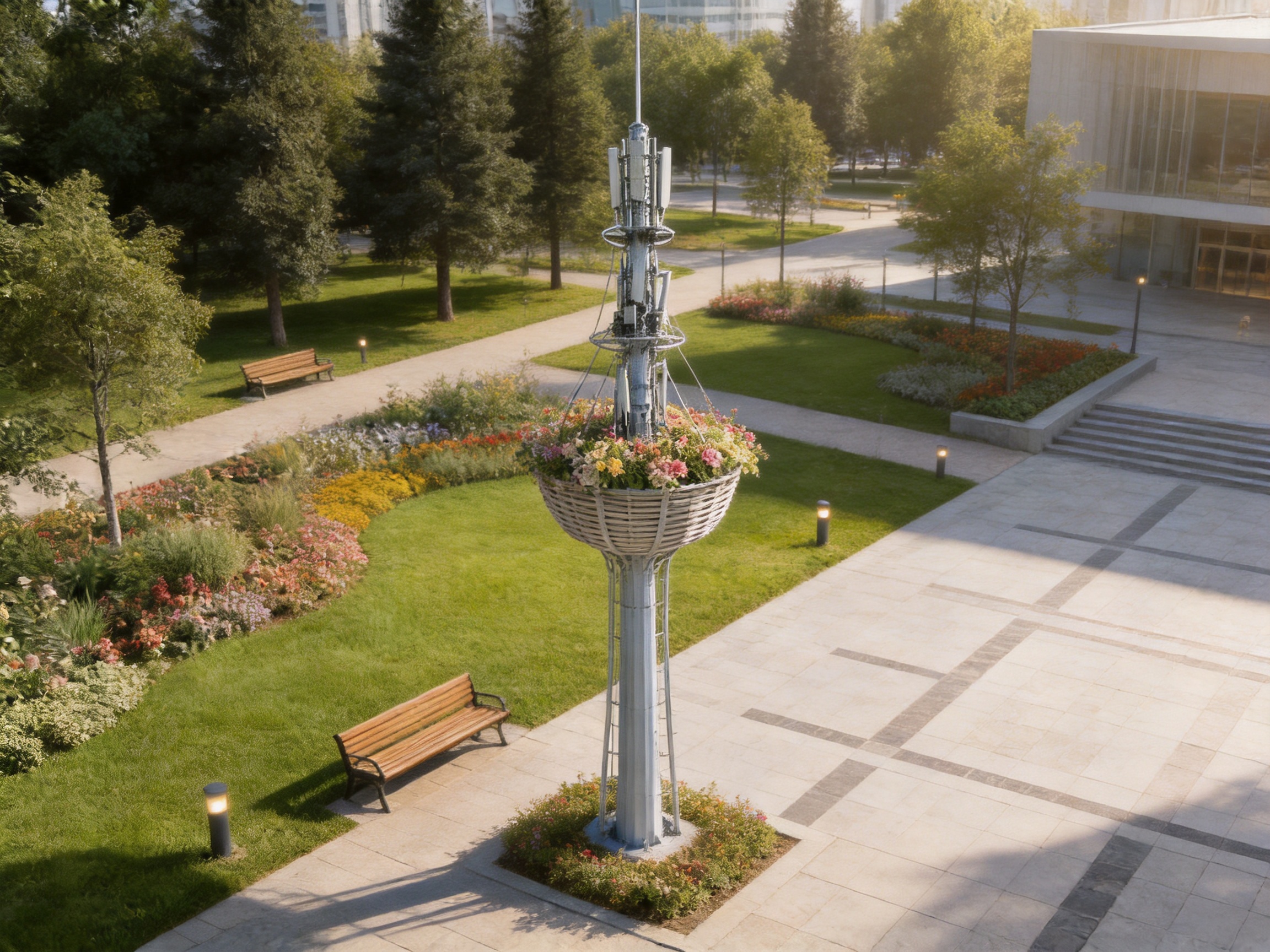
This product is designed as a ground-mounted communication tower with the appearance of a decorative flower basket. Its form allows telecommunications equipment to be integrated into an element that feels intentional within the surrounding environment rather than appearing as an isolated steel structure. While the tower retains the strength and operational functionality required for modern communication networks, its bionic styling, customizable finish, concealed cable routing, and optional lighting integration help it contribute positively to the visual identity of a site.
The tower is particularly suitable for public parks, scenic areas, urban plazas, high-end residential developments, hotel zones, cultural districts, campuses, transportation areas, and other locations where network coverage is essential but conventional tower designs may be considered visually intrusive. It can support antenna systems for multiple operators and technologies, while also providing space for future communication upgrades, including 5G small-cell expansion.
Behind the product is a manufacturing system based on structural steel processing, precision CNC fabrication, automated cutting and welding, surface treatment, mechanical calculation, customized design, and project-oriented technical support. This integrated capability enables the tower to be developed not only as a standard product but also as an engineered solution adapted to specific wind conditions, foundation requirements, antenna configurations, local regulations, and landscape concepts.
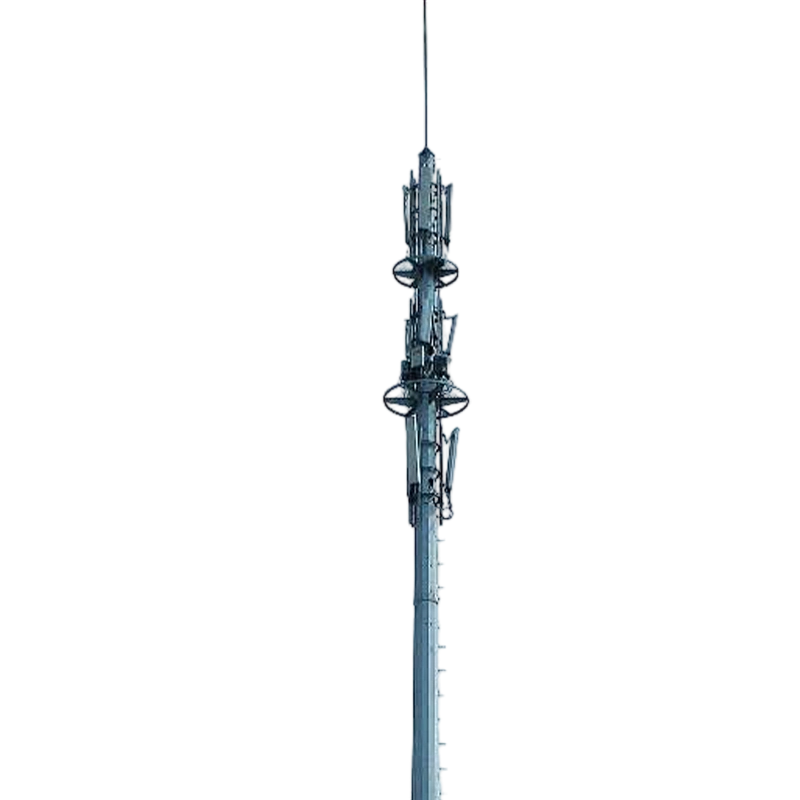
Flower Basket Style Landscape Ground-Mounted Communication Tower
1. The Changing Role of Communication Towers in Urban Design
Communication towers have traditionally been evaluated mainly according to technical criteria such as height, load capacity, wind resistance, antenna compatibility, corrosion protection, and installation efficiency. These criteria remain essential. However, the location of communication infrastructure has expanded into more visually sensitive environments. Network operators increasingly need equipment near users, which means that towers may be installed in parks, residential districts, tourist attractions, commercial centers, and public facilities rather than only in remote or industrial areas.
As a result, the appearance of infrastructure has become an important part of project planning. A tower that is technically successful but visually incompatible with its surroundings may face community objections, planning delays, additional screening costs, or restrictions on its location. An aesthetically considered tower can help project owners communicate that infrastructure and landscape quality do not have to be opposing objectives.
The Flower Basket Style Landscape Ground-Mounted Communication Tower addresses this need through a design language inspired by a flower basket. The form creates a recognizable visual identity and can be coordinated with planting, pathways, plazas, lighting systems, and other urban landscape features. Instead of attempting to hide every part of the structure, the product transforms the tower into a deliberate visual element.
This approach is especially valuable in locations where the tower will be viewed at close range. In a park or scenic district, people may pass directly beside the structure. In a residential or hotel development, the tower may be visible from windows, gardens, roads, and public gathering areas. A decorative design, clean surface treatment, and concealed service arrangement can significantly improve the perceived quality of the installation.
Functional infrastructure with a landscape-oriented appearance
The landscape character of the tower does not replace its communication function. The tower is still engineered to support antenna equipment and associated loads. Its decorative appearance is achieved through the shaping and arrangement of the steel structure, the selection of coatings and colors, and the integration of technical elements into the overall design.
This combination is an important advantage over conventional single-purpose tower solutions. Standard lattice towers and simple monopoles may provide economical structural support, but they generally offer limited aesthetic integration. A purpose-designed landscape tower can reduce the need for extensive visual screening and can be incorporated into a broader site concept from the beginning of a project.
2. Product Overview and Design Concept
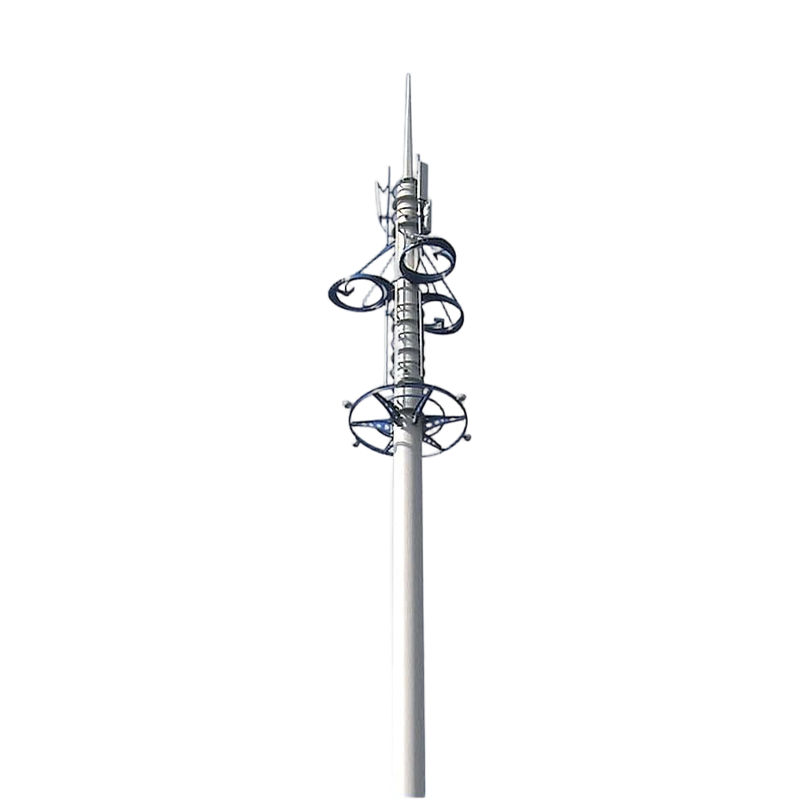
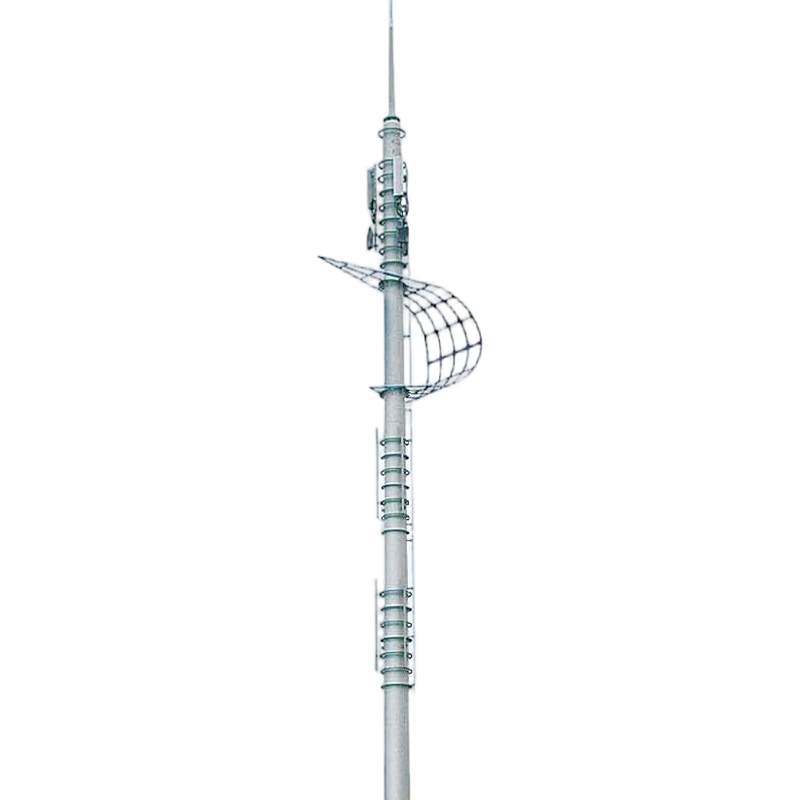
The Flower Basket Style Landscape Ground-Mounted Communication Tower is manufactured from high-strength carbon steel and developed as a modular structure. The tower body uses a bionic form that resembles a flower basket, creating a softer and more decorative silhouette than a conventional telecommunications mast. The exact dimensions, height, antenna arrangement, color, surface texture, and accessory configuration can be adapted according to project requirements.
The product can be designed for different communication applications, including multi-operator base station deployments, urban coverage enhancement, data network expansion, and future small-cell integration. A project may require space for multiple sector antennas, microwave equipment, remote radio units, cables, cabinets, lighting, or other telecommunications components. These requirements can be considered during the design stage to prevent later modifications from damaging the appearance or structural balance of the tower.
The modular concept supports standardized fabrication and assembly. Factory-produced sections can be prepared, inspected, coated, packaged, and transported before being assembled at the project location. This can shorten on-site construction time and reduce disruption in busy public areas. It is particularly useful for scenic zones, landscaped parks, and urban properties where prolonged construction activities could affect visitors, residents, businesses, or traffic flow.
Key design characteristics
The tower incorporates several design characteristics that distinguish it from ordinary communication support structures:
First, its flower basket-inspired appearance provides a stronger relationship with gardens, planting areas, public art, and decorative landscape features. The form can be used as a visual focal point or as a supporting element within a larger landscape plan.
Second, the tower is designed with hidden or organized internal cable channels. These channels help reduce the visibility of wiring and support a cleaner exterior appearance. They also help protect cables from unnecessary exposure to weather, accidental contact, and visual clutter.
Third, the structure can include dedicated spaces for maintenance and equipment access. This allows service personnel to perform inspections and repairs without treating the decorative exterior as an obstacle.
Fourth, the surface treatment can be adapted through color matching and texturing. A project may select neutral tones for a restrained appearance, natural colors for a park environment, or a distinctive palette for a resort, commercial development, or cultural district.
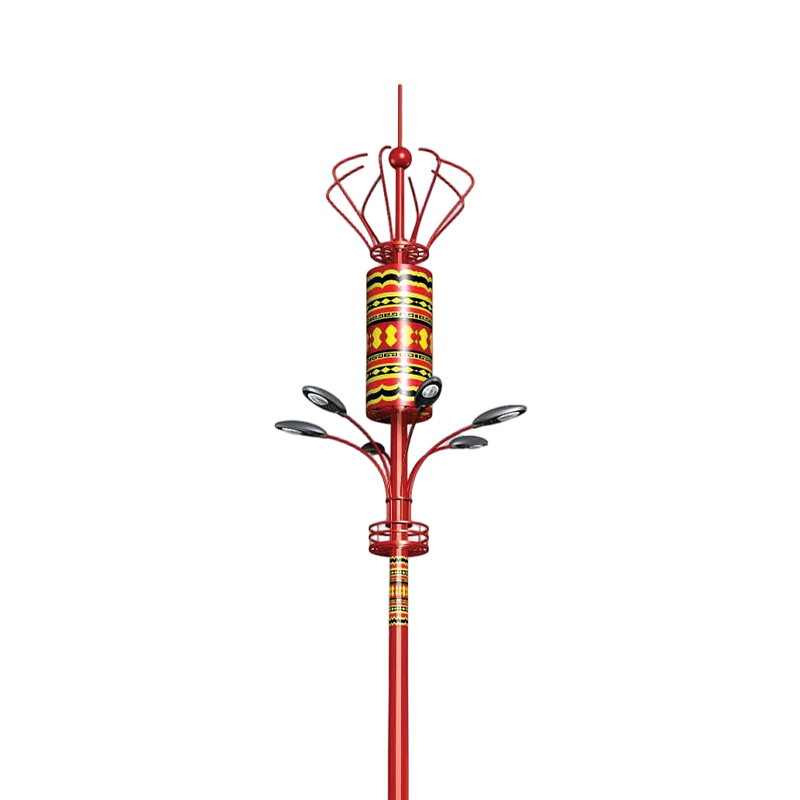
Fifth, embedded or integrated lighting can be considered where appropriate. During the day, the tower functions as a landscape structure. At night, carefully planned lighting can emphasize its form and help it become part of the site’s nighttime identity. Lighting must be designed responsibly so that it does not interfere with aviation requirements, nearby residences, traffic visibility, or the operation of communication equipment.
3. Structural Performance and Engineering Reliability
A decorative communication tower must first be a dependable structural product. The visual concept cannot compromise the ability of the tower to resist wind, support equipment, transfer loads to the foundation, and remain stable throughout its service life. For this reason, the product is developed through mechanical analysis and wind-loading evaluation before fabrication.
Structural design considers the tower geometry, total height, steel grade, section dimensions, connection details, antenna arrangement, equipment weight, cable routing, maintenance loads, wind exposure, foundation behavior, and local environmental conditions. These factors work together. A change in antenna size or mounting position can alter the center of gravity and wind area. A change in height or location can influence the required foundation and member dimensions. Engineering review is therefore essential before a final production drawing is approved.
Material options for project flexibility
The manufacturing system supports a range of structural steel material options, including Q235B, Q345B, S275JR, S355JR, Q460, A36, A572, GR56, and GR50, subject to project specifications and applicable standards. The selection of steel depends on factors such as required strength, availability, welding requirements, local codes, design loads, and customer preferences.
Using suitable material grades enables the tower to be optimized for strength, weight, fabrication efficiency, and cost. Higher-strength materials may help reduce member sizes in selected applications, while commonly available structural grades can simplify procurement and support economical production. The final material selection should always be confirmed through engineering calculations and project documentation.
Wind-load considerations
Wind is one of the most important design factors for any exposed tower. The flower basket form introduces a distinctive geometry that must be evaluated carefully because decorative components can affect projected area, turbulence, and load distribution. The engineering process therefore considers both the primary structural members and the external details that may influence wind response.
Wind-load analysis may include the tower body, antenna mounts, platforms, equipment brackets, cables, decorative elements, lighting components, and other attachments. The tower can then be configured to provide suitable strength and stiffness for the proposed installation. Foundation design is also reviewed because the tower must transfer vertical, horizontal, and overturning forces safely into the ground.
Project-specific calculations are particularly important when the tower is installed in coastal locations, open terrain, high-wind regions, typhoon-prone areas, elevated ground, or dense urban zones with complex wind conditions. The ability to provide mechanical calculations for wind and foundation requirements gives project owners a more complete basis for approval and construction planning.
Multi-operator and future-ready capacity
Communication networks are frequently shared by multiple operators or upgraded over time. A tower that is designed only for the first installation may require costly reinforcement or modification when additional antennas are needed. The Flower Basket Style Landscape Ground-Mounted Communication Tower can be engineered with pre-configured capacity for multiple operators and future 5G small-cell expansion.
Future-ready planning may include reserved mounting locations, internal cable routes, equipment space, access provisions, and structural allowances. This does not mean that every tower must be oversized. Instead, the design can be balanced according to the owner’s current needs and anticipated development plan. Planning for future requirements at the beginning can reduce the risk of disruptive retrofits later.
4. Aesthetic Integration and Customization
The appearance of a communication tower can influence public acceptance, planning review, property value perception, and the overall character of a development. The flower basket concept provides a natural starting point for aesthetic integration, but customization is important because each site has its own architectural language and landscape conditions.
For a public park, the tower may use green, earth-tone, or muted colors that complement trees, lawns, and planting beds. For a resort or hotel property, a refined metallic, bronze, or custom color may be selected to coordinate with architectural finishes. In a residential development, a quieter profile and neutral color may be preferred. In a cultural or tourism district, the structure may be adapted to reflect local identity without sacrificing technical functionality.
Color and surface treatment
The tower uses multi-layer anti-corrosion and weather-resistant coating technology. The surface system is intended to protect the carbon steel from moisture, ultraviolet exposure, temperature changes, and general outdoor wear. Coating selection may vary according to the location, exposure level, customer specification, and required service conditions.
Color matching can be used to make the tower visually consistent with nearby light poles, fencing, buildings, sculptures, planters, or other public infrastructure. Surface texture may also influence how the structure is perceived. A carefully selected finish can reduce harsh reflections, improve visual depth, and create a more refined appearance than untreated or inconsistently painted steel.
Surface treatment is not only an aesthetic consideration. Effective corrosion protection is essential to long-term structural performance. The coating process must be supported by suitable surface preparation, controlled application, curing, inspection, and packaging practices. A high-quality coating system can help extend maintenance intervals and preserve the visual condition of the tower.
Optional lighting integration
Because the tower is intended for urban and landscape environments, lighting integration may be considered as part of the design. Low-energy LED lighting can be incorporated into selected areas to highlight the flower basket form, improve nighttime identity, or coordinate with the lighting plan of the surrounding site.
Lighting should be treated as an engineered component rather than an afterthought. Electrical routing, access for maintenance, heat management, waterproofing, control systems, and safety requirements must be addressed. The lighting arrangement should also avoid excessive glare, unnecessary light pollution, and visual distraction for drivers or nearby residents.
5. Manufacturing Process and Quality Control
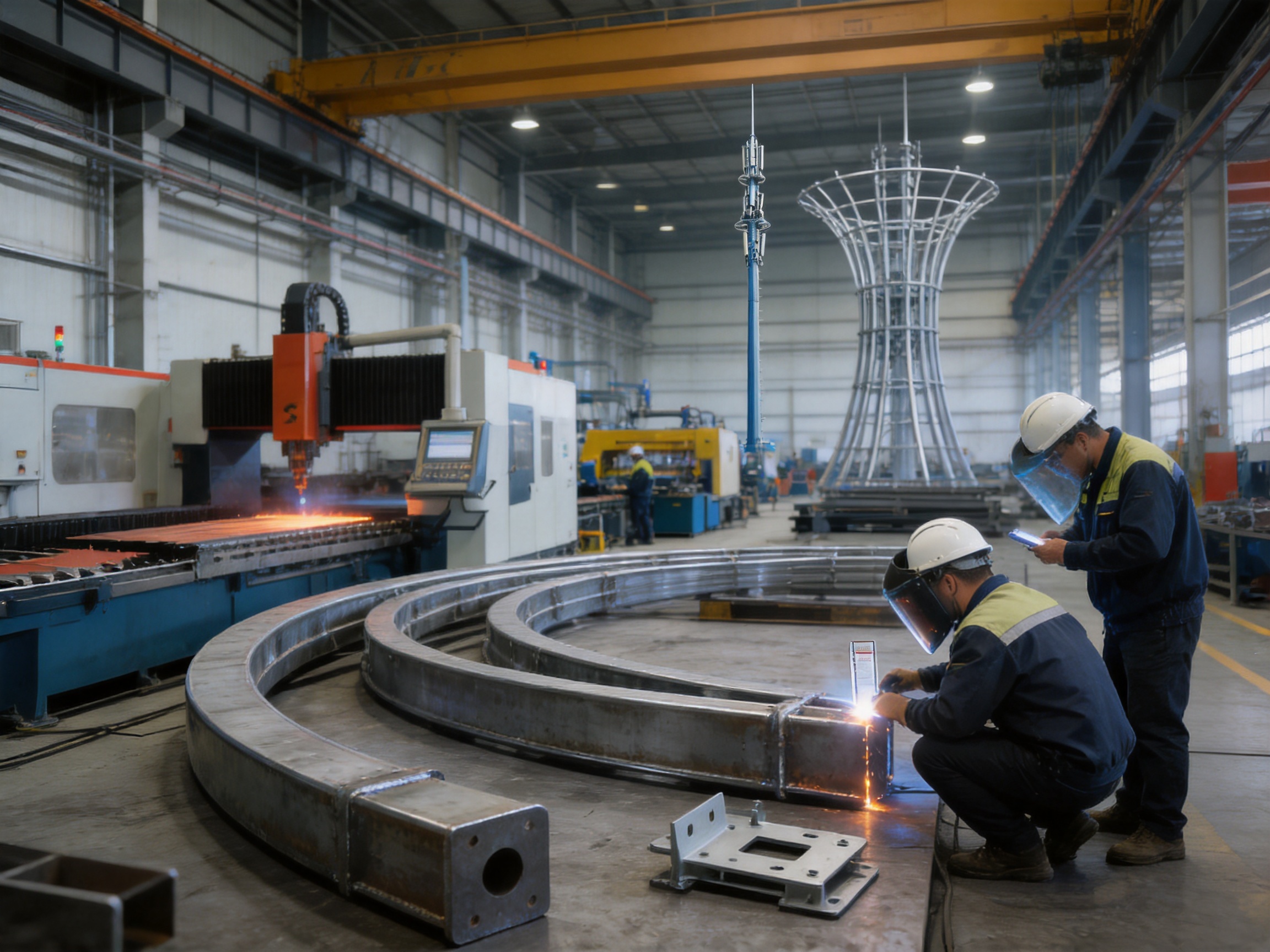
The product is supported by a manufacturing process that combines material management, CNC fabrication, precision cutting, forming, welding, surface treatment, inspection, and project service. This integrated approach is important because the tower contains both structural and aesthetic requirements. Small dimensional errors can affect assembly, alignment, coating quality, cable routing, or the final visual appearance.
Material preparation and inventory management
Reliable material availability is an important part of project delivery. The manufacturing operation maintains extensive stock of suitable structural materials so that production can begin according to the approved schedule. This reduces the risk of delays caused by last-minute material procurement and supports more predictable project planning.
Material control begins with verification of steel grade, thickness, dimensions, and documentation. Materials are selected according to the approved design and then prepared for cutting and forming. Proper identification and handling help prevent the accidental use of incorrect material and support traceability throughout production.
CNC bending and forming
Precision CNC bending is used to form structural components consistently. The flower basket shape includes curved, angled, and coordinated elements that must align during assembly. Controlled bending helps maintain repeatability from one component to another and reduces the need for extensive adjustment during installation.
Accurate forming contributes to structural integrity because properly shaped members can fit together more effectively and transfer loads through intended connection points. It also improves the appearance of the finished product by helping preserve smooth lines and balanced proportions.
High-accuracy cutting
The production process uses cutting equipment capable of approximately 0.01-millimeter cutting accuracy under suitable operating conditions. Precise cutting produces accurate dimensions and clean edges, supporting better fit-up during fabrication. Clean and consistent edges can also reduce the amount of post-processing required before welding and coating.
Accurate cutting is particularly valuable for customized towers because each project may include different dimensions, brackets, openings, plates, cable channels, and connection details. A controlled cutting process helps ensure that the manufactured parts correspond with the approved CAD drawings and engineering documentation.
Welding and assembly
Welding is one of the most important operations in the manufacture of a steel communication tower. The production team includes certified welders with extensive experience in structural fabrication. Welding quality affects strength, fatigue resistance, dimensional stability, appearance, and long-term service performance.
Weld preparation, joint alignment, welding parameters, sequencing, inspection, and finishing all contribute to the final result. Skilled welding helps ensure that large-scale projects can be produced with consistent quality and delivered according to schedule. Where required by the project, weld inspection and documentation can be incorporated into the quality plan.
Factory assembly or trial fitting may be used to verify connection alignment before shipment. This can reduce installation difficulty at the site, especially when the tower contains complex decorative members or concealed cable arrangements. Proper labeling and modular packaging can further improve assembly efficiency.
Automated production lines
Automated lines support consistent processing, faster production cycles, and repeatable quality control. Automation can reduce variation in repetitive operations and improve the efficient use of materials, labor, and energy. It can also support more stable production planning for large orders or multi-site projects.
Automation does not replace engineering judgment or skilled supervision. Instead, it works together with experienced technicians, quality personnel, and production managers. The combination of automated equipment and human expertise helps maintain both manufacturing efficiency and the flexibility needed for customized communication towers.
6. Why This Tower Offers Advantages Over Conventional Alternatives
The most important competitive advantage of the Flower Basket Style Landscape Ground-Mounted Communication Tower is that it addresses two project objectives at the same time: network functionality and visual integration. Conventional towers may be structurally reliable, but they are often designed with limited attention to landscape appearance. Decorative structures that are not engineered for communication loads may provide visual appeal but lack the required technical capacity. This product is developed to bridge that gap.
Improved visual acceptance
A visually considered tower can be easier to introduce into locations where appearance matters. The flower basket form gives the structure a recognizable and landscape-oriented identity. This can support communication with property owners, local authorities, landscape designers, community stakeholders, and project investors.
Although aesthetic design cannot guarantee planning approval, it can provide a stronger basis for discussing the project than a generic industrial mast. The tower can be shown as part of the site’s overall design rather than as a separate technical object added after the landscape plan is complete.
Reduced need for visual concealment
Traditional towers may require screens, artificial foliage, architectural cladding, or separate enclosures to reduce their visual impact. These measures can add material, labor, maintenance, and ventilation requirements. A purpose-designed landscape tower may reduce dependence on additional screening because its primary structure already has a decorative character.
This does not mean that supplementary landscaping will never be needed. Trees, shrubs, planting beds, walls, or other landscape elements may still be used for safety, privacy, or visual composition. However, the tower itself contributes to the appearance of the site and does not rely entirely on concealment.
Support for multiple technologies
The tower can be configured for multiple operators and communication technologies. It may support present-day antenna requirements while allowing space for future small-cell equipment. This provides a more adaptable solution than a structure designed only for a single initial deployment.
Future capacity is especially important as mobile networks evolve. Demand for data, low-latency services, smart-city systems, public safety communications, and connected devices continues to expand. A tower that can be upgraded without major visual or structural changes can provide better long-term value.
Efficient installation in sensitive areas
Modular fabrication and standardized assembly can shorten construction time at the project location. This is valuable in areas with high visitor traffic, restricted access, limited working hours, or strict environmental requirements. Shorter installation periods can reduce disturbance to residents, businesses, tourists, and surrounding landscaping.
Factory manufacturing also allows more work to be completed under controlled conditions. Welding, coating, inspection, and assembly checks can be conducted before the components arrive on-site. This can help improve installation predictability and reduce the amount of fabrication required in public areas.
Coordinated technical and design support
The product is supported by CAD design, three-dimensional product simulation, three-dimensional scene simulation, specification and color customization, mechanical calculations for wind and foundations, and overseas on-site installation guidance. These services help customers evaluate both technical performance and visual suitability before production begins.
Many tower projects involve several parties, including operators, engineering consultants, architects, landscape designers, construction contractors, property owners, and local authorities. Clear drawings and visual simulations can help these parties reach agreement more efficiently. Early coordination can reduce design changes and prevent conflicts between the tower, foundation, equipment, access routes, and surrounding landscape.
7. Design and Project Development Workflow
A successful landscape communication tower project begins with a clear understanding of the site and the intended use. The development process should consider technical, architectural, construction, maintenance, and regulatory factors together.
Step one: Site and application assessment
The first stage is to review the proposed installation location. Important information includes the site coordinates, ground conditions, surrounding buildings, nearby trees, access routes, power availability, existing communication facilities, local wind conditions, and the desired viewing angles.
The project team should also identify the communication objectives. These may include coverage improvement, capacity expansion, multi-operator sharing, public safety communication, smart-city connectivity, or future 5G deployment. The number and type of antennas, radio units, cables, cabinets, and other equipment should be estimated at this stage.
Step two: Concept design and visual coordination
After the initial assessment, a concept design can be prepared. The flower basket profile, overall height, equipment arrangement, color palette, lighting approach, access method, and relationship with surrounding landscape features are considered together.
CAD drawings can define the structural layout, while three-dimensional product simulations help stakeholders understand the tower from different viewing angles. A scene simulation can place the tower within a representation of the actual park, plaza, road, resort, or residential environment. This allows the customer to assess scale, proportion, color, and visibility before production.
Step three: Mechanical and foundation analysis
Once the concept and equipment requirements are established, engineering calculations are performed. The analysis evaluates the structural members, connections, antenna loads, wind effects, maintenance loads, foundation reactions, and stability requirements.
Foundation design depends on soil conditions, tower geometry, local standards, and calculated reactions. The foundation may require a reinforced concrete solution or another approved approach. Accurate information at this stage is essential because the foundation is a permanent part of the installation and can be expensive to modify after construction begins.
Step four: Specification and color approval
The customer confirms the technical specifications, material grade, coating system, color, surface finish, antenna supports, access provisions, cable routing, lighting details, and packaging requirements. Approval drawings should clearly identify dimensions, connection details, bolt requirements, equipment interfaces, and installation instructions.
Color samples or digital simulations may be used to verify the relationship between the tower and the surrounding environment. If lighting is included, its location, color temperature, control method, power supply, and maintenance access should be approved at the same time.
Step five: Fabrication and inspection
After approval, production begins with material preparation, cutting, bending, welding, assembly, surface treatment, and quality inspection. The manufacturing team checks dimensions, welds, coating appearance, connection holes, component identification, and packaging readiness.
Quality records can be organized according to the customer’s requirements. Depending on the project, documentation may include material information, drawings, inspection reports, coating records, welding information, packing lists, and installation guidance.
Step six: Delivery and installation support
The finished components are packed for transportation, with attention to protection of painted surfaces, decorative members, connection parts, and lighting components. Clear labeling can help the installation team identify each section and reduce assembly time.
Overseas on-site installation guidance can be provided when required. This support may include review of the foundation condition, component identification, assembly sequence, lifting arrangements, connection checks, cable routing, and final inspection. The exact scope of support depends on the project contract and local construction arrangements.
8. Applications in Different Environments
Public parks and gardens
In parks and gardens, the flower basket appearance can complement planting schemes and recreational facilities. The tower may be positioned near walking paths, event lawns, visitor centers, or public service areas where mobile coverage is required. Coordinated colors and planting can help integrate the structure into the park rather than making it appear separate from the landscape.
Tourist attractions and scenic areas
Tourist attractions often require strong communication coverage because visitors depend on mobile connectivity for navigation, photography, ticketing, social media, digital guides, and emergency communication. At the same time, scenic areas are sensitive to visual disturbance. The landscape tower provides a way to deliver network infrastructure while respecting the character of the destination.
In a heritage or cultural setting, the design and color may need to be carefully controlled. The tower can be customized to use a restrained appearance or to reflect the visual language of nearby facilities without imitating protected historic structures inappropriately.
High-end residential communities
Residential developments place special emphasis on appearance, noise, access, safety, and long-term maintenance. A conventional tower may be viewed negatively if it is placed near gardens, clubhouses, or shared amenities. A decorative tower can help the infrastructure fit into the community’s design concept.
Careful planning remains necessary regarding setbacks, equipment access, electrical safety, electromagnetic compliance, and resident communication. The aesthetic design supports the project but does not replace the need for proper technical and regulatory management.
Hotels and resort developments
Hotels and resorts need reliable communication services for guests, staff, security systems, operations, and digital services. Their buildings and landscapes are often designed around a distinctive visual theme. A customized flower basket tower can be coordinated with gardens, entrance areas, pathways, or event spaces.
The tower may also be combined with architectural lighting or landscape lighting, provided that all electrical, maintenance, and environmental requirements are addressed. A well-integrated structure can become a subtle part of the resort environment instead of a visually disruptive utility installation.
Commercial districts and urban plazas
Commercial zones require connectivity for customers, retailers, payment systems, public Wi-Fi, security, and smart-city applications. Urban plazas also contain lighting, signage, public art, trees, seating, and architectural features. A communication tower designed with a decorative profile can be coordinated with these elements to create a more unified public space.
Campuses and institutional sites
Universities, hospitals, research centers, and large institutional campuses need reliable wireless infrastructure across extensive areas. A landscape tower can support network expansion while maintaining the visual standards of the campus. Its modular structure also supports phased development as coverage requirements change over time.
9. Company Manufacturing Strength and Service Capability
Yangzhou Jinyuan Lamps Co., Ltd. is affiliated with Jinshang Electric Group and operates as a production, design, and engineering company serving the road illumination and outdoor infrastructure sector. Established in 2002, the company has developed experience in street light poles, LED street lights, solar street lights, light fixtures, communication-related structures, and associated engineering products.
The company operates a production site covering more than 70,000 square meters and employs more than 300 professional technicians. Its products are exported to more than 200 countries, providing experience in international customer communication, overseas project coordination, export packaging, and varied technical requirements.
Its quality management and environmental systems include ISO9001, ISO14001, and OHSAS18001-related standards and practices. These systems provide a framework for controlling production processes, managing quality objectives, supporting environmental responsibility, and improving occupational health and safety practices.
Advanced production equipment
The manufacturing base includes bending machines, electrostatic powder-painting equipment, automatic welding and cutting machines, and a 1250-ton die-casting machine. This equipment supports the production of large steel structures and lighting-related components while improving repeatability and process control.
Bending machines are used to form structural members and pole components. Automatic cutting equipment supports accurate preparation of plates, tubes, and connection parts. Welding equipment helps improve production efficiency and consistency. Electrostatic powder-painting equipment supports controlled surface finishing for outdoor products and structural components. The die-casting capability expands the company’s ability to produce selected precision metal parts used in related outdoor infrastructure applications.
The combination of equipment and technical personnel enables the company to manage multiple stages of production internally. This can improve coordination between design, fabrication, surface treatment, inspection, and delivery. It also supports customization, which is important for landscape communication towers because each project may have different dimensional, aesthetic, and equipment requirements.
Engineering and customer support
The company’s service approach extends beyond manufacturing. Customers can receive support from initial consultation through project completion. Available services include CAD design, 3D product simulation, 3D scene simulation, specification and color customization, mechanical calculations for wind and foundations, and overseas installation guidance.
This project-oriented approach can be valuable for buyers who require more than a catalog product. A communication tower often involves coordination between structural engineering, telecommunications planning, landscape design, civil construction, electrical work, and local approval. A supplier able to participate in these discussions can help reduce communication gaps and improve project continuity.
Personalized service also helps customers adapt the tower to different markets. Local standards, wind conditions, steel grades, coating preferences, packaging rules, electrical requirements, and installation practices may vary. Early technical communication allows these differences to be considered before production.
10. Sustainability, Maintenance, and Lifecycle Value
Sustainability in outdoor infrastructure includes more than energy consumption. It also involves service life, material efficiency, repairability, installation disturbance, maintenance requirements, and the ability to adapt to future needs. A durable and upgradeable communication tower can provide lifecycle value by reducing the frequency of replacement and minimizing repeated construction activities.
The use of steel supports long-term structural applications and allows components to be processed within established recycling systems at the end of their useful life. Material selection and fabrication should be optimized to provide the required strength without unnecessary excess. Accurate cutting and controlled production can help reduce waste and improve material utilization.
Modular installation can reduce on-site disturbance because more work is completed in the factory. This is particularly relevant for parks, scenic areas, and residential communities where excavation, welding, coating, and heavy construction can affect landscaping and public use.
Maintenance planning should be considered during the design stage. Hidden cable channels, accessible equipment areas, durable coatings, organized connections, and suitable inspection points can make routine service more efficient. Future equipment upgrades should also be considered so that technicians can access key areas without damaging decorative components.
Where lighting is integrated, energy-efficient LED sources and suitable controls can reduce electricity consumption. Timers, dimming, occupancy-based controls, or centralized management may be considered according to the project. The lighting system should be balanced with the visual requirements of the site and the need to avoid excessive nighttime illumination.
11. Selection Checklist for Buyers and Project Designers
Before ordering a Flower Basket Style Landscape Ground-Mounted Communication Tower, buyers should prepare a complete project brief. The following points can help organize the technical and commercial discussion.
| Project Item | Information to Confirm | Reason for Review |
|---|---|---|
| Installation location | Coordinates, terrain, surrounding buildings, access, nearby public areas | Supports site planning, wind assessment, logistics, and visual coordination |
| Communication requirements | Operators, antennas, radio units, microwave equipment, future expansion | Defines structural loads, mounting points, equipment space, and cable routes |
| Tower dimensions | Required height, overall width, basket profile, maintenance clearances | Controls coverage objectives, appearance, stability, and installation method |
| Structural materials | Preferred steel grade, applicable standards, material documentation | Ensures compatibility with engineering calculations and local requirements |
| Environmental exposure | Wind, coastal atmosphere, humidity, temperature, pollution, corrosion risk | Guides structural design and coating-system selection |
| Surface finish | Color, texture, powder coating, paint system, decorative details | Allows the tower to match the landscape and architectural environment |
| Lighting | Required or optional lighting, controls, power source, maintenance access | Coordinates nighttime appearance, energy use, and electrical safety |
| Foundation | Soil information, foundation type, anchor arrangement, civil works scope | Ensures stable load transfer and efficient site construction |
| Installation | Crane access, lifting plan, assembly sequence, local labor, guidance needs | Reduces construction delays and supports safe installation |
| Documentation | Drawings, calculations, inspection reports, packing lists, manuals | Supports approval, quality verification, construction, and future maintenance |
A complete project brief enables the manufacturer to provide a more accurate quotation, design proposal, production schedule, and technical solution. It also reduces the risk that important requirements will be discovered after manufacturing has already started.
12. Frequently Asked Questions
Q1: What is the main purpose of the Flower Basket Style Landscape Ground-Mounted Communication Tower?
The main purpose is to provide a structurally engineered support solution for communication antennas and related equipment while presenting a landscape-oriented appearance. It is intended for sites where conventional industrial-looking towers may conflict with parks, scenic areas, residential communities, resorts, commercial districts, or other visually sensitive environments.
Q2: Can the tower support equipment for more than one operator?
Yes. The tower can be designed to support antenna deployments for multiple operators and technologies. The exact number and type of antennas depend on the project’s structural calculations, equipment arrangement, height, wind conditions, and customer requirements.
Q3: Is the tower suitable for future 5G expansion?
It can be configured with reserved space and structural provisions for future 5G small-cell expansion. These provisions should be defined during the design stage so that mounting positions, cable routes, equipment access, and load allowances are properly coordinated.
Q4: What materials can be used to manufacture the tower?
Available material options include Q235B, Q345B, S275JR, S355JR, Q460, A36, A572, GR56, and GR50, subject to the final design, applicable standards, and customer specifications. The appropriate grade is selected according to strength requirements, fabrication needs, local codes, and project conditions.
Q5: How is the tower protected against corrosion?
The tower uses a multi-layer anti-corrosion and weather-resistant coating approach. The exact surface system depends on the environment, exposure level, customer specification, and required service life. Proper surface preparation, controlled application, inspection, and packaging are important parts of achieving durable protection.
Q6: Can the color and appearance be customized?
Yes. Customers can discuss color matching, surface texture, decorative details, dimensions, lighting integration, equipment layout, and other appearance-related requirements. Three-dimensional simulations and color approvals can help confirm the visual result before production.
Q7: Can lighting be integrated into the tower?
Lighting can be considered as an optional feature. LED lighting may be integrated to emphasize the tower’s form at night or coordinate with the surrounding landscape lighting system. Electrical routing, waterproofing, maintenance, control, glare, and local safety requirements must be addressed during design.
Q8: Does the product require a special foundation?
The foundation is designed according to the tower height, geometry, equipment loads, wind forces, soil conditions, and applicable standards. Mechanical calculations for wind and foundation requirements can be provided as part of the engineering service. Final civil design should be reviewed and approved by the responsible project engineer.
Q9: How does modular construction benefit installation?
Modular construction allows components to be manufactured and inspected in the factory before being shipped to the project site. Standardized assembly can reduce on-site fabrication, shorten installation time, simplify component identification, and limit disturbance in public or landscaped areas.
Q10: Is the tower difficult to maintain because of its decorative shape?
The tower is designed with dedicated maintenance space and hidden or organized cable channels. Equipment access and service requirements can be considered during the design stage. Proper planning helps ensure that the decorative exterior does not prevent routine inspections, equipment replacement, or cable maintenance.
Q11: What design services are available?
Available services include CAD design, three-dimensional product simulation, three-dimensional scene simulation, specification and color customization, mechanical calculations for wind and foundation requirements, and overseas on-site installation guidance. The exact service scope depends on the project’s technical and commercial requirements.
Q12: Where is this product most appropriate?
Typical applications include public parks, tourist attractions, scenic areas, high-end residential communities, hotels, resorts, commercial districts, urban plazas, campuses, institutional sites, and other locations where communication coverage is required alongside strong visual integration.
Q13: What makes this product different from a standard communication pole?
A standard communication pole generally focuses on functional support with a simple industrial appearance. The Flower Basket Style Landscape Ground-Mounted Communication Tower adds a bionic landscape form, customizable color and texture, optional lighting integration, concealed cable routing, and project-based visual simulation while retaining engineered structural capacity for communication equipment.
Q14: How should customers begin a project inquiry?
Customers should prepare information about the site, required height, antenna quantity, operator requirements, environmental conditions, preferred appearance, future expansion plans, foundation conditions, and delivery location. This information allows the manufacturer to evaluate the project and develop a more accurate technical proposal.
13. Conclusion
The Flower Basket Style Landscape Ground-Mounted Communication Tower represents a new direction for communication infrastructure in visually sensitive environments. It recognizes that modern network equipment must function within real communities, public spaces, tourist destinations, and carefully designed developments. Technical reliability remains the foundation of the product, but aesthetic compatibility, modular construction, future expandability, and lifecycle maintenance are treated as equally important project considerations.
Its high-strength carbon steel construction, mechanical analysis, wind-load evaluation, multi-operator capacity, future 5G provisions, anti-corrosion coating, concealed cable channels, maintenance access, and modular assembly make it suitable for demanding outdoor applications. Its flower basket-inspired appearance, customizable colors, surface textures, and optional lighting integration help it become part of the surrounding landscape rather than an unwanted visual interruption.
The manufacturing capabilities of Yangzhou Jinyuan Lamps Co., Ltd., including material management, CNC bending, high-accuracy cutting, automated welding and cutting, powder-painting equipment, skilled welding, quality systems, engineering design, simulation, and installation guidance, support the product from concept to completion. The company’s experience in outdoor lighting and infrastructure, broad export capability, large production site, technical workforce, and international standards provide a strong foundation for customized projects.
For project owners and network operators, the central benefit is the ability to combine communication performance with a more thoughtful public-space presence. Instead of choosing between a technically capable tower and an attractive landscape feature, customers can develop one engineered solution that serves both purposes. With appropriate site assessment, structural calculation, coating selection, installation planning, and maintenance access, the Flower Basket Style Landscape Ground-Mounted Communication Tower can provide durable network support while improving the visual quality of the places it serves.
References
1. Structural steel design principles and standard practices for outdoor communication-support structures.
2. Wind-loading and stability considerations for antenna towers, masts, poles, and exposed outdoor equipment.
3. General guidance for corrosion protection and protective coating systems used on exterior steel structures.
4. ISO 9001 quality management system principles for manufacturing and project delivery.
5. ISO 14001 environmental management system principles for industrial production.
6. Occupational health and safety management practices for metal fabrication and construction operations.
7. Urban landscape design principles for integrating public utilities and communication infrastructure.
8. Best practices for modular fabrication, transportation, assembly, inspection, and maintenance of steel structures.
9. Technical planning considerations for multi-operator mobile communication facilities and future small-cell deployment.
10. General principles of LED outdoor lighting design, energy efficiency, glare control, and nighttime landscape integration.