


JINYUAN
JINYUAN
JINYUAN
JINYUAN
JINYUAN
JINYUAN
JINYUAN
JINYUAN
JINYUAN
JINYUAN
JINYUAN
JINYUAN
JINYUAN
JINYUAN
JINYUAN
JINYUAN
Content
- 1 1. Product Overview and Design Philosophy
- 2 2. High-Efficiency LED Array and Compact Light Source
- 3 3. Advanced Heat Dissipation Structure
- 4 4. Interchangeable Optical Lenses for Multiple Applications
- 5 5. Waterproof Quick-Connectors and Serviceability
- 6 6. Weather-Resistant Sealing and IP65 Protection
- 7 7. Electrical Performance and Dimming Compatibility
- 8 8. Product Specifications
- 9 9. Advantages Compared with Less Flexible LED Fixtures
- 10 10. Manufacturing Capabilities and Process Strengths
- 11 11. Engineering and Customization Services
- 12 12. Applications
- 13 13. Energy Efficiency and Lifecycle Value
- 14 14. Quality Management and International Supply Capability
- 15 15. Recommended Project Evaluation Process
- 16 16. Installation and Maintenance Considerations
- 17 17. Frequently Asked Questions
- 17.1 Q1: What type of product is this lighting fixture?
- 17.2 Q2: Can the lighting module be used for both streetlighting and floodlighting?
- 17.3 Q3: What is the luminous efficacy of the product?
- 17.4 Q4: How does the heat sink improve product performance?
- 17.5 Q5: What environmental protection rating does the module have?
- 17.6 Q6: What input voltage does the fixture support?
- 17.7 Q7: Does the product support dimming?
- 17.8 Q8: Can the module be replaced in the field?
- 17.9 Q9: What color temperatures are available?
- 17.10 Q10: What is the operating temperature range?
- 17.11 Q11: What material is used for the lamp body and heat sink?
- 17.12 Q12: Is the product suitable for smart street lighting systems?
- 17.13 Q13: What warranty period is provided?
- 17.14 Q14: Does the manufacturer provide engineering support?
- 17.15 Q15: Why is modularity important for large lighting projects?
- 18 18. Conclusion
- 19 References
- 20 Product: High-Efficiency Heat Dissipation LED Lighting Fixtures
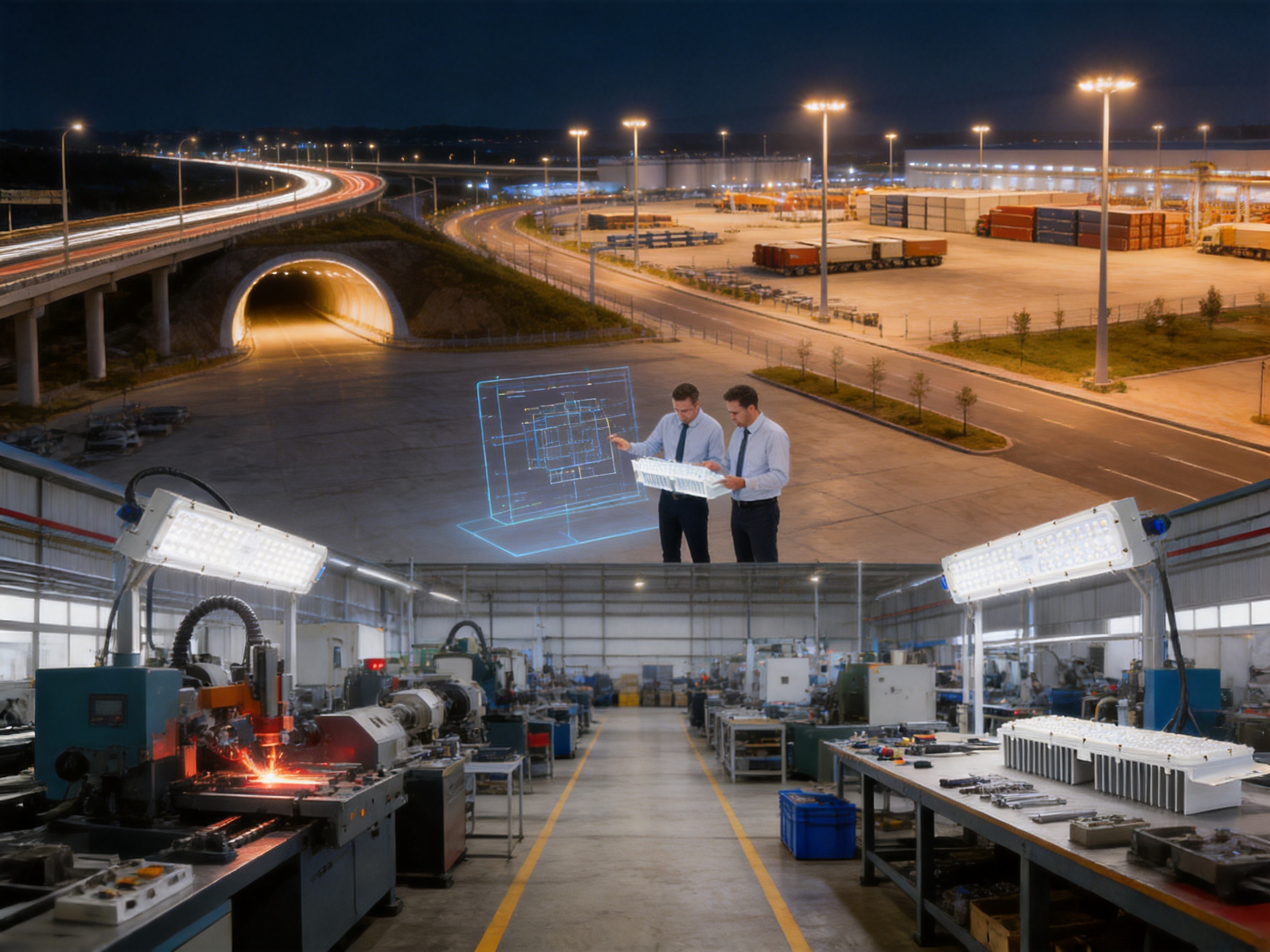
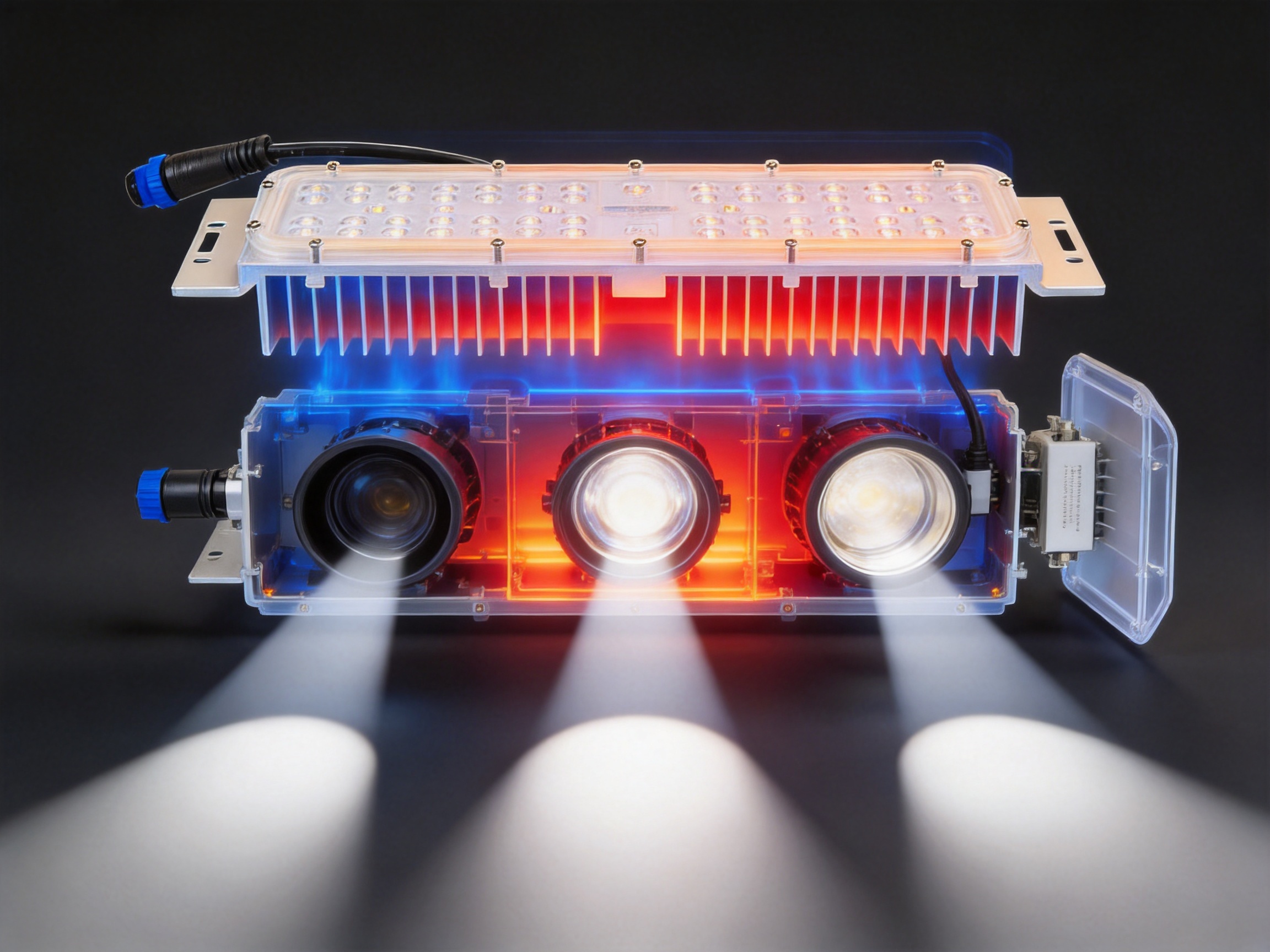
Modern outdoor lighting projects demand more than a bright light source. Municipal roads, industrial parks, highways, tunnels, public spaces, ports, logistics facilities, and commercial developments all require lighting equipment that can deliver dependable illumination, efficient energy use, long service life, straightforward maintenance, and stable operation under changing environmental conditions. The High-Efficiency Heat Dissipation LED Lighting Fixture is designed to address these requirements through a modular construction that combines a high-output LED array, precision optical lenses, an aluminum alloy heat sink, waterproof quick-connectors, and a weather-resistant sealing system.
Rather than functioning as a single-purpose lamp, this product serves as a flexible lighting module for a wide range of streetlights and floodlights. The same basic module can be configured for different applications by selecting a suitable optical lens, changing the installation arrangement, or integrating it into a compatible fixture housing. Narrow, medium, and wide beam options allow project designers to adapt the light distribution to roads, open areas, tunnels, building façades, yards, and other environments.
The product is manufactured by Yangzhou Jinyuan Lamps Co., Ltd., a Chinese road illumination manufacturer with experience in product design, large-scale production, engineering support, and international supply. Established in 2002 and affiliated with Jinshang Electric Group, the company operates a production site covering more than 70,000 square meters, employs more than 300 professional technicians, and exports products to more than 200 countries. Its manufacturing capabilities include automated cutting and welding, CNC bending, powder electrostatic painting, die casting, and other processes used in the production of lighting fixtures, poles, and associated infrastructure.
This article examines the technical design, performance advantages, application flexibility, manufacturing strengths, quality considerations, service support, and purchasing value of this LED lighting module. It also explains why a modular heat-dissipation platform can be more practical than a fixed, non-serviceable lighting design in demanding outdoor environments.
1. Product Overview and Design Philosophy
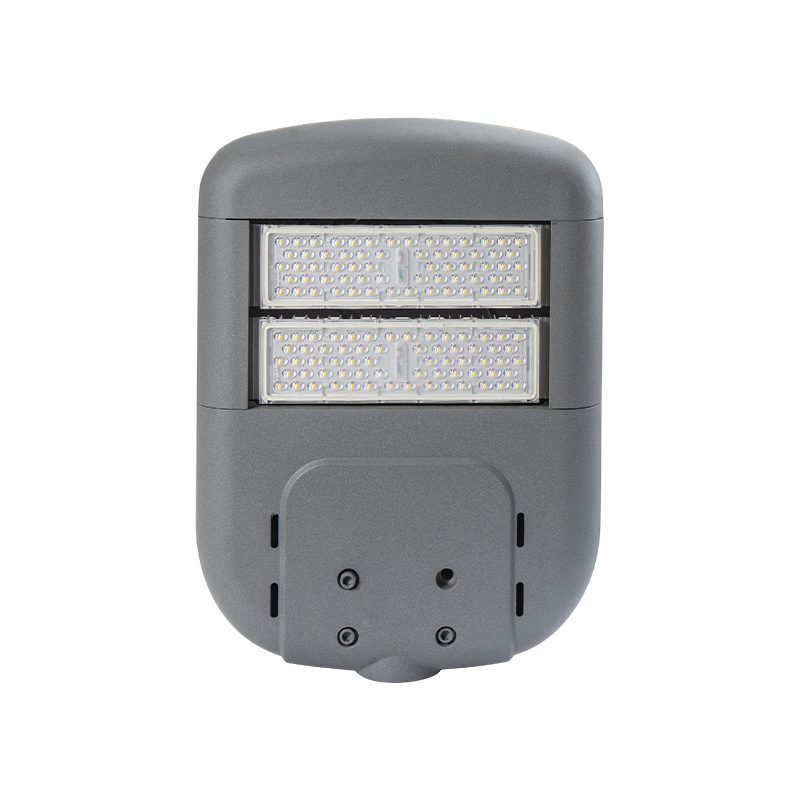
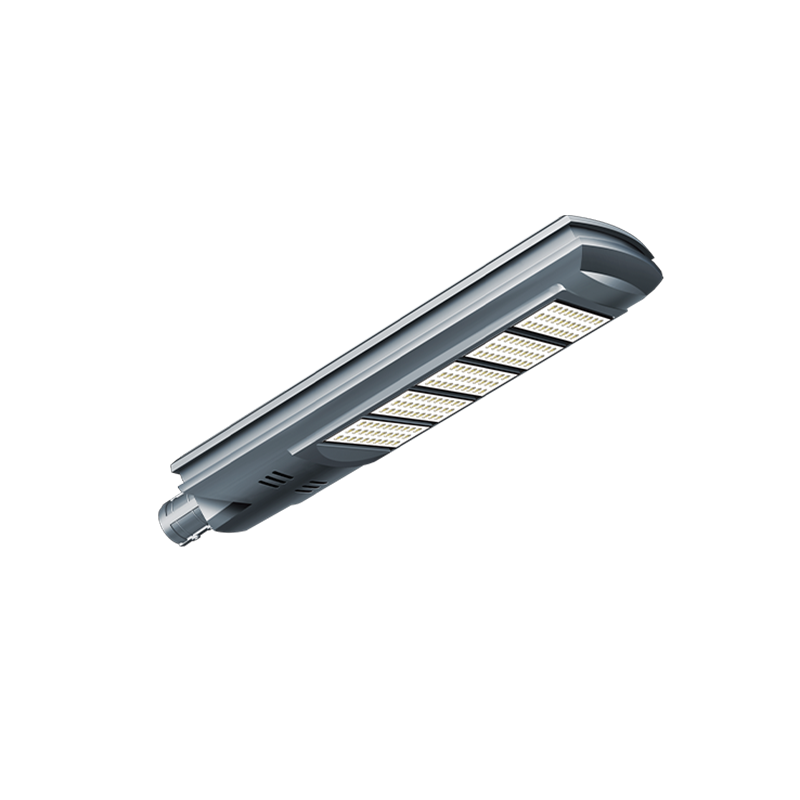
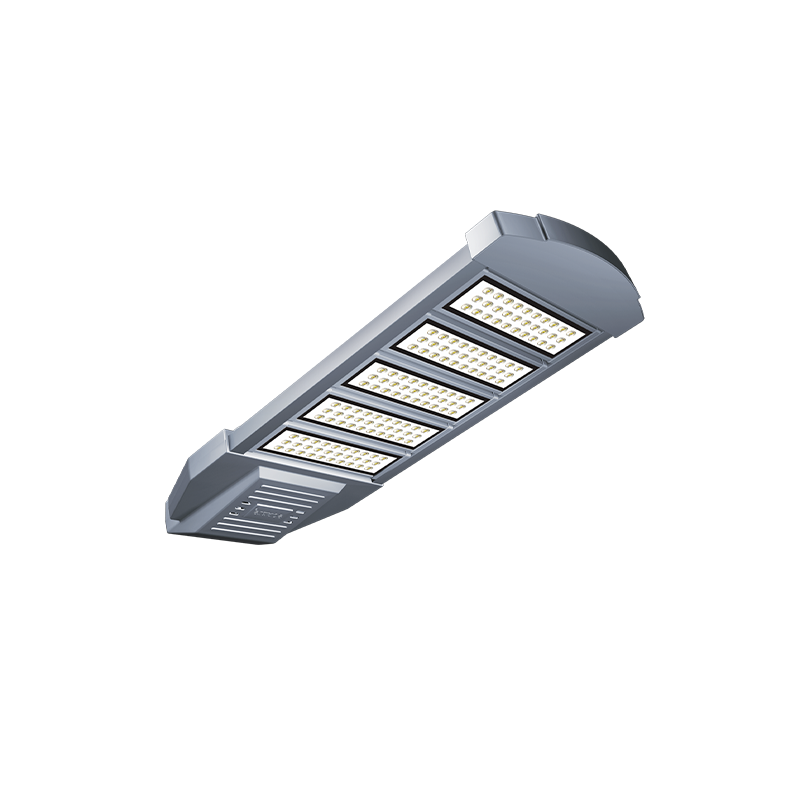
The High-Efficiency Heat Dissipation LED Lighting Fixture is built around a modular engineering concept. Its main components include a high-brightness LED array, optical lenses, a thickened aluminum profile heat sink, waterproof quick-connectors, and a perimeter sealing gasket. These components work together to create a compact but serviceable lighting unit that can be integrated into different fixture housings.
A conventional integrated outdoor luminaire may require replacement of the entire lamp when a driver, LED board, lens, or other internal element reaches the end of its useful life. Such a design can increase maintenance costs, create more waste, and require specialized service equipment. By contrast, the modular structure of this product allows the lighting engine to be treated as a replaceable or upgradeable component. Technicians can remove the module from the fixture housing, disconnect the waterproof connector, and install a new compatible unit without replacing every external part of the lamp.
The module also provides flexibility during the design stage. Road lighting projects often require a different optical distribution from floodlighting projects. A narrow beam can help concentrate light along a roadway or on a distant target, while a wider distribution can provide more uniform coverage in an open yard or public area. Interchangeable lenses allow one platform to support these different requirements, reducing the need to develop, stock, and maintain a completely different luminaire for every application.
The overall design balances output, thermal performance, environmental protection, serviceability, and integration capability. The result is a practical lighting foundation for modular streetlights, LED floodlights, tunnel lighting systems, and other outdoor luminaires.
2. High-Efficiency LED Array and Compact Light Source
The lighting module integrates dozens of high-brightness LED beads within a compact form factor. This arrangement allows the product to generate substantial illumination while maintaining a relatively concentrated and manageable optical structure. The LED array is positioned to work with precision lenses, helping distribute light according to the selected application.
LED technology provides several advantages over older conventional light sources. LEDs can offer high luminous efficacy, fast startup, directional light output, controllable dimming, and a long operating life when properly designed and thermally managed. The specified luminous efficacy of this product is up to 140 lm/W, which supports energy-conscious roadway and area-lighting projects. Actual system performance will depend on the selected power configuration, driver efficiency, ambient temperature, optical lens, installation height, and operating conditions.
The compact LED arrangement also supports modular integration. Instead of requiring a large lamp body for every lighting configuration, the light source can be combined with a suitable housing, pole-mounted fixture, floodlight enclosure, or tunnel-lighting structure. This can simplify product standardization for contractors and lighting distributors who serve multiple project types.
The color temperature range of 3000K to 6000K gives project planners room to select a warmer or cooler appearance. Warmer light can be suitable for areas where a more comfortable visual environment is desired, while cooler light may be selected for applications requiring a brighter or more alert visual impression. The specified color rendering index is Ra 70, which is appropriate for many general outdoor roadway and industrial lighting applications.
Because LED performance is closely connected to junction temperature, the LED array cannot be evaluated separately from the heat sink and housing design. The product’s thermal structure is therefore a central part of its performance rather than an accessory feature.
3. Advanced Heat Dissipation Structure
Heat management is one of the most important factors in the long-term reliability of an LED fixture. When LEDs operate, a portion of electrical energy is converted into heat. If that heat remains concentrated around the LED package, the temperature of the LED junction can rise. Excessive temperature may accelerate lumen depreciation, affect color consistency, reduce driver reliability, and shorten the service life of electrical components.
This lighting module uses a thickened aluminum profile heat sink with a dense finned structure. The fins substantially increase the surface area available for transferring heat from the lighting assembly to the surrounding air. Aluminum alloy is commonly selected for outdoor LED fixtures because it combines relatively low weight, good thermal conductivity, corrosion resistance when appropriately treated, and practical manufacturability.
The dense fin arrangement is designed to promote passive heat dissipation. Heat moves from the LED assembly into the metal structure and then radiates or convects from the expanded fin surfaces. A larger effective surface area generally improves the ability of the fixture to release heat, especially when the fixture is installed with adequate airflow around the heat sink.
The thickened profile also supports structural stability. An overly thin heat sink may be lighter, but it can be more vulnerable to deformation, vibration, or uneven contact between the LED board and the thermal interface. A robust profile helps maintain mechanical integrity and supports more consistent thermal contact during the operating life of the product.
In comparison with low-cost LED products that prioritize minimal material usage, this heat-dissipation approach places greater emphasis on long-term operating stability. A product with a more substantial thermal structure can provide better protection against the performance losses commonly associated with excessive heat, particularly in high-temperature climates or high-duty-cycle applications.
The operating temperature range specified for the module is -35°C to 65°C. This broad range supports installation in many climatic regions, from cold winter environments to hot summer conditions. Actual performance should still be evaluated according to the complete luminaire configuration, local solar exposure, installation orientation, ambient airflow, driver characteristics, and project-specific thermal calculations.
Why Thermal Design Matters in Outdoor Lighting
Outdoor fixtures often operate for long periods every night. A streetlight may run continuously from dusk until dawn, while a security floodlight or industrial-area lamp may be required to operate for extended hours. In tropical or desert locations, the ambient temperature can remain high for significant periods. In cold regions, repeated thermal cycling can place stress on mechanical and electrical components.
A well-designed heat sink helps reduce thermal stress by distributing heat over a larger area. It can also improve the consistency of the light output during operation. This is particularly important for projects where maintaining predictable illumination levels is necessary for safety, traffic visibility, or compliance with lighting plans.
Thermal performance should be considered together with installation. Dust accumulation, blocked airflow, direct exposure to heat-producing equipment, or poor fixture orientation can reduce heat dissipation. Proper installation and periodic inspection remain important even when a luminaire has a high-quality heat sink.
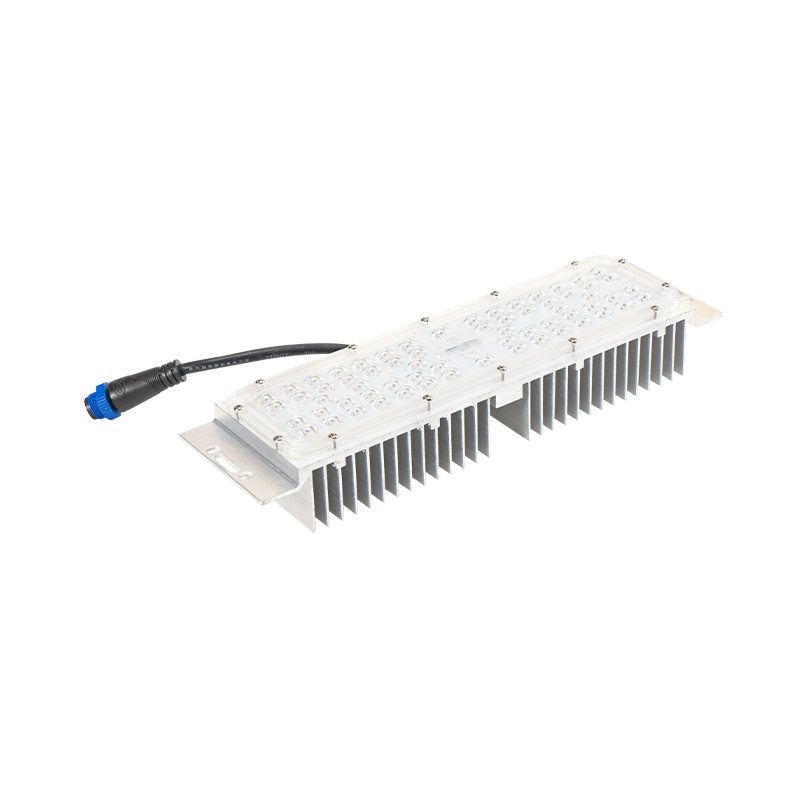
High-Efficiency Heat Dissipation LED Lighting Fixtures
4. Interchangeable Optical Lenses for Multiple Applications
One of the product’s most distinctive features is its interchangeable lens system. The module can be configured with different light distribution lenses, including narrow, medium, and wide beam options. This feature allows the same LED platform to serve different lighting objectives without requiring a completely new light engine.
Narrow-beam optics can be useful when light needs to be projected over a longer distance or concentrated on a specific zone. Examples may include roadway lighting with carefully controlled forward distribution, high mounting positions, long corridors, or targeted architectural and industrial lighting.
Medium-beam optics provide a balance between concentration and coverage. They may be appropriate for general road lighting, parking areas, medium-sized yards, pedestrian zones, and applications where both reach and uniformity are important.
Wide-beam optics spread light over a broader area. They can be useful for open plazas, construction areas, warehouse surroundings, sports-adjacent spaces, security lighting, and floodlighting where broad coverage is more important than long-distance projection.
The ability to select the lens according to a project’s geometry can help reduce excessive light spill. Better optical matching may improve illumination uniformity and reduce the need to install additional fixtures simply to compensate for an unsuitable beam pattern. It may also help designers manage glare, dark spots, and inefficient overlap between adjacent lamps.
Optical interchangeability provides value throughout the product lifecycle. If a road is widened, a site layout changes, or a facility adopts a new lighting plan, the lighting module may be adapted with a different lens rather than replaced in full. This helps create a more flexible asset-management strategy for municipalities, contractors, facility owners, and lighting distributors.
5. Waterproof Quick-Connectors and Serviceability
Outdoor lighting maintenance is often affected by access conditions. Fixtures may be installed on high poles, over roads, along industrial boundaries, or in locations where traffic control and lifting equipment are required. Reducing the time needed for service can therefore provide significant operational value.
The product uses waterproof quick-connectors to simplify module replacement and upgrading. The connector design allows technicians to disconnect the module from the fixture wiring and reconnect a replacement unit without extensive rewiring. This plug-and-play approach can reduce the technical barrier associated with field maintenance.
Quick-connectors can offer several practical advantages. They can shorten service time, reduce the number of wiring operations performed at height, improve consistency between replacement jobs, and make it easier to maintain a stock of compatible modules. They may also reduce the risk of wiring errors compared with field assembly involving multiple loose conductors.
Connector selection and installation remain important. The connector must be properly mated, sealed, and protected from mechanical strain. Cable routing should prevent water from collecting at connection points, and technicians should follow the recommended installation and maintenance procedures. When correctly used, the waterproof quick-connector system supports the broader modular-service philosophy of the product.
Compared with a sealed luminaire that can only be serviced by opening the entire housing, a replaceable module can help preserve the useful value of the external fixture body, mounting bracket, and associated infrastructure. This can reduce material consumption over time and make maintenance planning more predictable.
6. Weather-Resistant Sealing and IP65 Protection
Outdoor luminaires must withstand rain, dust, humidity, temperature changes, and other environmental influences. The lighting module is sealed around its perimeter with a highly weather-resistant silicone gasket. This gasket helps protect the internal LED and optical components by creating a barrier against water and dust ingress.
The specified protection rating is IP65. Under the internationally recognized Ingress Protection classification system, IP6X indicates a dust-tight enclosure, while IPX5 indicates protection against water jets from various directions. This rating makes the module suitable for many outdoor applications when it is installed correctly within a compatible fixture housing.
The perimeter gasket also supports modular integration. Because the module itself has a high level of protection, it can be incorporated into different external housings while maintaining a defined protective boundary around the light engine. The final protection level of a complete luminaire depends on all enclosure components, including covers, cable entries, connectors, mounting interfaces, and assembly quality.
Silicone sealing materials are commonly used for outdoor lighting because they can maintain flexibility over a wide temperature range and accommodate small movements caused by thermal expansion and contraction. A reliable seal helps protect optical clarity, electrical insulation, and the long-term performance of internal components.
For harsh environments, users should consider additional factors such as salt spray, chemical exposure, vibration, airborne pollutants, and coastal humidity. The product’s aluminum alloy construction and weather-resistant sealing provide a strong foundation, while the surface treatment, installation method, and project-specific environmental specification should be matched to the site.
7. Electrical Performance and Dimming Compatibility
The product supports an input voltage range of AC85-265V. This broad voltage range allows it to accommodate common alternating-current supply conditions in different markets and helps provide flexibility for international projects. Voltage stability, driver configuration, surge protection, and local electrical standards should still be assessed during project design.
The module supports DC 0-10V and DALI dimming systems. These control options allow the fixture to participate in energy-saving strategies and lighting-management programs. Dimming can be used to reduce output during low-traffic hours, match illumination to occupancy, respond to environmental conditions, or integrate the fixture into a larger smart lighting network.
DC 0-10V is widely used for analog lighting control. It can provide a straightforward method of adjusting output levels through a control signal. DALI is a digital lighting-control protocol that can support addressable control, status monitoring, grouped operation, and more advanced lighting-management functions when the complete system is designed for DALI compatibility.
In roadway and public-area applications, dimming can reduce energy consumption while maintaining appropriate illumination. For example, a road may operate at a higher output during peak traffic periods and at a lower output during quieter hours. Industrial facilities may use scheduling or sensor-based controls to balance safety and energy performance.
The fixture’s compatibility with dimming systems also supports future upgrades. A project can begin with basic operation and later add centralized control, smart controllers, sensors, or communication modules without replacing the entire LED light engine, provided that the electrical architecture is correctly specified.
8. Product Specifications
The following table summarizes the principal technical information supplied for the lighting module.
| Parameter | Specification | Project Significance |
|---|---|---|
| Product type | Modular LED lighting fixture | Suitable for integration into streetlights, floodlights, and other outdoor luminaires |
| Brand | Jinyuan | Manufacturer product platform |
| Application | Road | Designed for roadway and related outdoor lighting uses |
| Light source | LED | Efficient, directional, controllable light source |
| Input voltage | AC85-265V | Supports a broad range of common AC supply conditions |
| Luminous efficacy | Up to 140 lm/W | Supports energy-efficient lighting design |
| Operating temperature | -35°C to 65°C | Suitable for many cold and hot outdoor environments |
| Lamp material | Aluminum alloy | Supports thermal transfer, structural strength, and manageable weight |
| Protection rating | IP65 | Protection against dust and water jets when properly installed |
| Color temperature | 3000K-6000K | Allows selection of warmer or cooler white light |
| Color rendering index | Ra 70 | Suitable for many general roadway and outdoor applications |
| Dimming | DC 0-10V / DALI | Supports energy management and smart lighting integration |
| Warranty | 5 years | Provides extended product assurance for qualified applications |
| Optical options | Narrow, medium, and wide beam lenses | Supports application-specific light distribution |
Project engineers should confirm final photometric data, power ratings, dimensions, driver information, surge protection, mounting details, and certification requirements before approving a specific configuration. The values above describe the supplied product information and provide a basis for initial evaluation.
9. Advantages Compared with Less Flexible LED Fixtures
Many LED lighting products can provide basic illumination, but their long-term value depends on how well they address installation, service, thermal, and application requirements. The High-Efficiency Heat Dissipation LED Lighting Fixture offers several advantages over simpler non-modular or poorly thermally managed alternatives.
9.1 Modular Replacement Instead of Complete Fixture Disposal
A modular light engine can be replaced independently from the outer fixture housing when maintenance or upgrading is required. This may reduce replacement material, labor time, and inventory complexity. It also helps preserve mounting hardware and external structures that remain serviceable.
9.2 Greater Optical Adaptability
Interchangeable lenses make the product adaptable to different beam requirements. A fixed optical design may be suitable for one project but inefficient for another. The ability to select narrow, medium, or wide distribution improves the likelihood that the lighting system can be matched to the site geometry.
9.3 Stronger Thermal Focus
The thickened aluminum heat sink and dense fins show that thermal management is a central design priority. Compared with fixtures that use minimal heat-dissipation material, this approach can better support stable operation and long-term lumen maintenance, subject to correct installation and operating conditions.
9.4 Reduced Maintenance Complexity
Waterproof quick-connectors simplify module replacement and reduce the need for extensive field wiring. This can be particularly useful for projects with many fixtures distributed across roads, industrial sites, or large public areas.
9.5 Compatibility with Lighting Controls
Support for DC 0-10V and DALI makes the module suitable for projects that require dimming, scheduling, centralized management, or future smart lighting upgrades. A fixture without control compatibility may require costly replacement when energy-management requirements change.
9.6 Broad Environmental Usability
The IP65 protection rating, silicone perimeter gasket, aluminum alloy body, and stated operating temperature range provide a strong foundation for outdoor service. These features are important differentiators when comparing a professional roadway lighting module with a basic indoor LED product adapted for outdoor use.
10. Manufacturing Capabilities and Process Strengths
The performance of a lighting product depends not only on its design but also on the consistency of its manufacturing process. Yangzhou Jinyuan Lamps Co., Ltd. combines product development, engineering support, component processing, assembly, quality control, and project services within an established industrial operation.
The company’s production base covers more than 70,000 square meters. Its workforce includes more than 300 professional technicians, supporting product engineering, production management, quality inspection, installation guidance, and project coordination. The company’s experience in road illumination covers street light poles, LED streetlights, solar streetlights, light fixtures, and related products.
10.1 Material Selection
The company identifies a broad range of structural steel options for its wider product manufacturing activities, including Q235B, Q345B, S275JR, S355JR, Q460, A36, A572, GR56, and GR50. Extensive material stock can help support production continuity and reduce delays caused by material shortages. Material selection should be matched to the structural, environmental, and project requirements of each product.
For the LED lighting module, aluminum alloy is used for the lamp structure and heat sink. This material supports a balance of thermal performance, corrosion resistance, weight, and manufacturability. For poles and associated structures, the available steel grades provide flexibility for different strength and specification requirements.
10.2 CNC Bending
Precision CNC bending helps create repeatable shapes and consistent dimensions in structural components. Accurate bending can improve assembly alignment, reduce post-production adjustment, and support better mechanical integrity. Consistency is particularly important in large projects where hundreds or thousands of components must fit together with minimal variation.
10.3 High-Accuracy Cutting
The company reports cutting accuracy down to 0.01 mm for applicable manufacturing operations. Precise cutting can produce clean edges and exact dimensions, supporting better fit between parts and reducing unnecessary rework. Accurate preparation also helps improve the efficiency of welding, assembly, and surface treatment.
10.4 Automated Welding and Experienced Welders
Automated welding lines can improve repeatability and production efficiency, while certified welders with extensive experience provide additional support for complex or project-specific work. The combination of automation and skilled personnel can help balance speed, consistency, and adaptability.
For large-scale lighting infrastructure, welding quality affects structural strength, vibration resistance, alignment, and long-term durability. Proper welding procedures and inspection are therefore essential to the reliability of poles, brackets, housings, and support structures.
10.5 Powder Electrostatic Painting and Corrosion Protection
Powder electrostatic painting provides a controlled method of applying protective and decorative coatings to suitable metal surfaces. A properly prepared and coated surface can help improve resistance to corrosion, weather exposure, and general wear. The company emphasizes production efficiency and quality control intended to support a longer anti-corrosion lifespan.
Coating performance depends on surface preparation, powder selection, curing conditions, coating thickness, handling, and the environmental category of the project. Coastal, industrial, and chemically exposed locations may require enhanced specifications beyond standard outdoor treatment.
10.6 Die Casting Capability
The company operates a 1250-ton die-casting machine. Die casting can support the production of complex aluminum components with repeatable geometry, smooth surfaces, and efficient cycle times. Such capability is relevant to lighting housings, heat-management components, mounting structures, and other precision metal parts.
By maintaining in-house or closely controlled manufacturing resources, a supplier can improve coordination between design, tooling, production, and quality inspection. This can be valuable when customers require customized dimensions, color treatments, mounting arrangements, or project-specific adaptations.
11. Engineering and Customization Services
Outdoor lighting projects often require more than a standard product catalog. Pole height, road width, mounting angle, wind load, foundation conditions, illumination targets, color requirements, control systems, and local regulations can all affect the final design. The company provides several engineering and service capabilities intended to support customers from initial consultation to project completion.
11.1 CAD Design
CAD design supports accurate communication between the supplier, contractor, consultant, and project owner. Drawings can help define fixture dimensions, pole interfaces, bracket arrangements, cable routes, mounting holes, and other technical details before production begins.
11.2 Three-Dimensional Product Simulation
Three-dimensional product simulation can help users review the appearance and mechanical relationships of components. It may also support design adjustments before tooling or mass production, reducing the risk of errors that are more expensive to correct after fabrication.
11.3 Three-Dimensional Scene Simulation
Scene simulation places products within a representation of the intended environment. This can help customers evaluate scale, visual appearance, mounting positions, and the relationship between fixtures and surrounding structures. It is particularly useful for streetscapes, plazas, industrial developments, and large landscape projects.
11.4 Specification and Color Customization
Different projects may require specific dimensions, surface colors, mounting systems, optical configurations, or electrical arrangements. Customization allows the product to be aligned with architectural standards, municipal requirements, branding guidelines, or environmental conditions.
11.5 Mechanical Wind and Foundation Calculations
For pole-mounted lighting systems, wind loading and foundation design are essential safety considerations. Mechanical calculations can help determine whether a proposed pole, bracket, foundation, and luminaire combination is suitable for the local wind conditions and installation environment.
11.6 Overseas On-Site Installation Guidance
International projects may involve different construction teams, electrical practices, languages, and site conditions. Overseas on-site installation guidance can help improve communication during assembly, commissioning, troubleshooting, and handover. This service is especially valuable for large projects where installation quality affects the performance of the completed lighting system.
12. Applications
12.1 Roadway Lighting
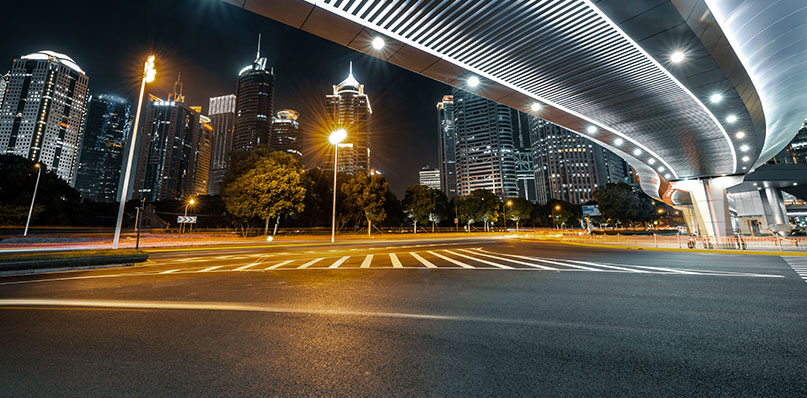
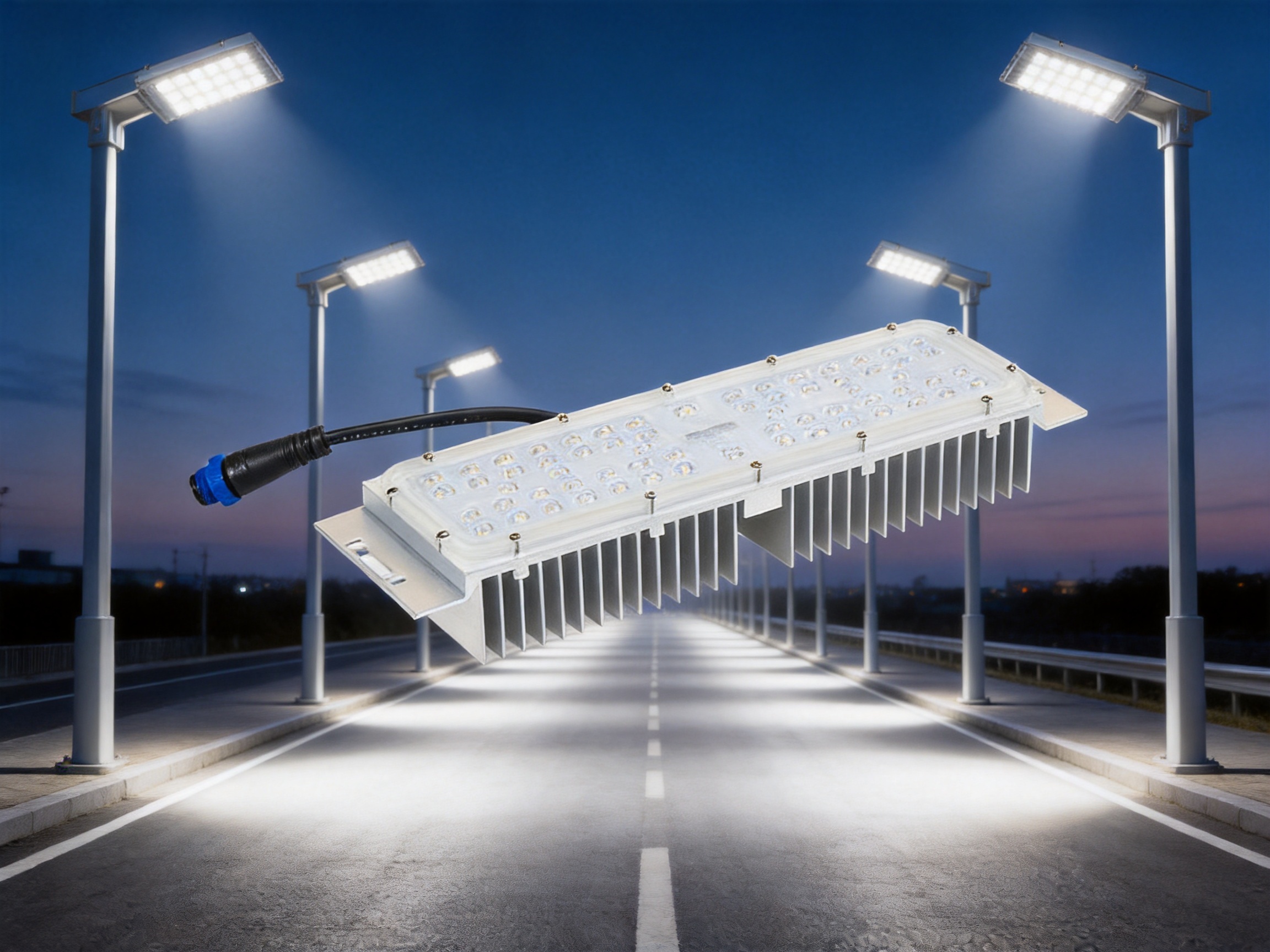
The primary application is roadway lighting. The module can be integrated into streetlights designed for urban roads, secondary roads, industrial access roads, residential streets, and transport corridors. The selection of optical lens, mounting height, pole spacing, and dimming schedule should be based on the road classification and required illumination or luminance levels.
12.2 LED Floodlighting
With a suitable wide or medium beam lens, the module can support floodlighting for yards, façades, loading zones, storage areas, construction sites, and security perimeters. Its modular form allows the same core lighting technology to be integrated into different floodlight housings.
12.3 Tunnel Lighting
Tunnel applications require careful attention to glare, uniformity, visibility, ventilation, maintenance access, and environmental exposure. The interchangeable optical system can help designers select a distribution suitable for the tunnel geometry. Final tunnel designs should follow applicable road and tunnel lighting standards and include detailed photometric analysis.
12.4 Industrial and Logistics Facilities
Factories, warehouses, distribution centers, ports, and logistics yards often require long operating hours and dependable outdoor illumination. The thermal design, dimming compatibility, weather protection, and replaceable module structure can support these demanding environments.
12.5 Public Spaces and Parking Areas
Parking lots, pedestrian approaches, public plazas, and community areas can benefit from controlled, uniform illumination. Medium and wide beam options may help reduce dark areas while providing flexibility in fixture spacing and mounting height.
12.6 Smart Lighting Networks
The DC 0-10V and DALI interfaces provide a foundation for integration with energy-management and smart lighting systems. Additional controllers, sensors, communication gateways, and central management platforms can be specified according to project needs.
13. Energy Efficiency and Lifecycle Value
Energy consumption is a major operating cost for roadway and outdoor lighting. A luminous efficacy of up to 140 lm/W can support lower power consumption compared with less efficient lighting technologies, especially when combined with appropriate optical design and dimming controls.
Energy performance should be assessed at the system level rather than by efficacy alone. Important factors include actual delivered lumens, driver efficiency, optical losses, maintenance factors, operating schedules, dimming profiles, installation geometry, and the number of fixtures required to achieve the target lighting level.
The modular construction can also support lifecycle value. If only the light engine requires replacement, the project may avoid discarding the entire housing and mounting system. Quick-connectors can shorten maintenance labor, while interchangeable lenses may allow the fixture to adapt to future layout changes.
A five-year warranty provides an additional level of product assurance for qualified applications. Warranty coverage normally depends on correct installation, approved operating conditions, appropriate electrical protection, and compliance with the supplier’s terms. Purchasers should review warranty conditions before final procurement.
Long-term value also includes inventory management. A distributor or facility operator may be able to stock replacement modules rather than complete luminaires, simplifying storage and potentially reducing the range of spare parts required across multiple installations.
14. Quality Management and International Supply Capability
The company states that its products meet international quality-management and environmental standards including ISO9001, ISO14001, and OHSAS18001. ISO9001 is associated with quality-management systems, ISO14001 with environmental-management systems, and OHSAS18001 with occupational health and safety management. OHSAS18001 has been superseded in many contexts by ISO 45001, so buyers should confirm the current certification status and applicable documentation for a specific project.
International supply experience can be important when a lighting manufacturer serves customers across different markets. Exporting to more than 200 countries indicates experience with overseas logistics, documentation, product coordination, and communication across different regions. Customers should still verify local certification, customs, voltage, installation, and regulatory requirements before ordering.
Quality control should extend across incoming materials, component processing, LED module assembly, driver integration, optical installation, sealing, electrical testing, mechanical inspection, coating, packaging, and final shipment. A structured manufacturing system helps reduce variation and supports more predictable project outcomes.
15. Recommended Project Evaluation Process
Before selecting a configuration, project stakeholders should define the lighting objective. This includes the road or area classification, required illumination level, mounting height, pole spacing, beam distribution, target color temperature, control strategy, operating schedule, and environmental conditions.
The next step is photometric evaluation. Designers should review the relevant photometric files, beam diagrams, lumen output, glare performance, uniformity, and installation geometry. Narrow, medium, and wide beam options should be compared against the actual site layout rather than selected solely on general preference.
Thermal and environmental evaluation should follow. The expected ambient temperature, solar exposure, mounting orientation, airflow, humidity, dust, salt, chemical pollutants, and vibration should be considered. The complete fixture assembly should be reviewed because the final thermal and ingress performance depends on the housing, driver, connector, and installation details.
Electrical compatibility should also be confirmed. Input voltage, driver type, surge protection, grounding, dimming method, control-system integration, and cable specifications should be coordinated with the project’s electrical design.
Finally, purchasers should confirm delivery schedule, packaging, spare-part availability, warranty conditions, inspection procedures, installation guidance, and after-sales support. A technically suitable product provides the greatest value when supported by reliable production and project service.
16. Installation and Maintenance Considerations
Installation should be performed by qualified personnel according to the approved drawings and electrical requirements. The module should be securely mounted, the gasket should be correctly seated, and all connectors should be fully engaged and protected from unnecessary mechanical tension.
Technicians should inspect the fixture after installation to verify that the optical lens is clean, the heat sink is unobstructed, the cables are correctly routed, and the housing is properly sealed. Any protective film or packaging material should be removed where applicable.
Periodic maintenance may include visual inspection, cleaning of accumulated dust or debris, checking of mounting hardware, examination of cable entries, verification of dimming operation, and review of light output. In dusty or industrial environments, the heat sink should be kept sufficiently clear to preserve airflow and thermal performance.
If a module requires replacement, power should be isolated before disconnection. The waterproof quick-connector should be handled carefully, and the replacement module should match the approved electrical, optical, and mechanical specifications. After replacement, the technician should verify operation, sealing, alignment, and control response.
17. Frequently Asked Questions
Q1: What type of product is this lighting fixture?
It is a modular LED lighting unit designed to serve as a light engine for streetlights, floodlights, tunnel lights, and other outdoor luminaires. It combines LEDs, optical lenses, an aluminum heat sink, sealing components, and waterproof quick-connectors.
Q2: Can the lighting module be used for both streetlighting and floodlighting?
Yes. Its interchangeable lens system allows the module to be configured for different beam distributions. Narrow, medium, and wide beam options can support roadway, area, tunnel, industrial, and floodlighting applications.
Q3: What is the luminous efficacy of the product?
The specified lamp luminous efficacy is up to 140 lm/W. Actual system performance depends on the selected LED configuration, driver, optics, operating temperature, and complete fixture design.
Q4: How does the heat sink improve product performance?
The thickened aluminum profile and dense fins increase the surface area available for heat transfer. This helps move heat away from the LED assembly and supports stable operation, lumen maintenance, and component reliability when the fixture is correctly installed.
Q5: What environmental protection rating does the module have?
The stated protection rating is IP65. This indicates dust-tight protection and protection against water jets. The final rating of a complete luminaire also depends on the external housing, cable entries, connectors, and assembly quality.
Q6: What input voltage does the fixture support?
The specified input voltage range is AC85-265V. Project engineers should confirm the final driver and electrical configuration for the intended market and installation.
Q7: Does the product support dimming?
Yes. The module supports DC 0-10V and DALI dimming. These interfaces can support scheduled operation, energy reduction, centralized management, and smart lighting integration.
Q8: Can the module be replaced in the field?
Yes. The waterproof quick-connectors are designed to simplify module replacement or upgrading. Qualified technicians should isolate the power supply and follow the approved installation procedure when performing service.
Q9: What color temperatures are available?
The stated color temperature range is 3000K to 6000K. The appropriate selection depends on the visual environment, project requirements, local regulations, and the desired appearance of the lighting.
Q10: What is the operating temperature range?
The specified operating temperature range is -35°C to 65°C. Actual operation should also consider solar loading, fixture orientation, driver temperature, airflow, and local environmental conditions.
Q11: What material is used for the lamp body and heat sink?
The lamp material is aluminum alloy. This material offers a useful combination of thermal transfer, corrosion resistance, structural strength, and manageable weight for outdoor lighting applications.
Q12: Is the product suitable for smart street lighting systems?
It can support smart lighting integration through its DC 0-10V and DALI dimming interfaces. The complete smart system may also require controllers, sensors, communication gateways, software, and compatible drivers.
Q13: What warranty period is provided?
The supplied product information specifies a five-year warranty. Purchasers should review the detailed warranty terms, operating conditions, installation requirements, and exclusions before procurement.
Q14: Does the manufacturer provide engineering support?
The company provides services including CAD design, three-dimensional product simulation, three-dimensional scene simulation, specification and color customization, mechanical wind and foundation calculations, and overseas on-site installation guidance.
Q15: Why is modularity important for large lighting projects?
Modularity can simplify maintenance, reduce replacement time, support optical changes, improve spare-part management, and preserve the value of serviceable fixture housings and mounting structures. It can be particularly beneficial when a project contains many widely distributed fixtures.
18. Conclusion
The High-Efficiency Heat Dissipation LED Lighting Fixture is designed as a flexible and serviceable platform for modern outdoor illumination. Its high-brightness LED array, precision optical lenses, dense-finned aluminum heat sink, weather-resistant silicone gasket, IP65 protection, waterproof quick-connectors, and broad electrical compatibility address many of the requirements associated with roadway and area lighting.
The product’s most important advantage is the way these features work together. High luminous efficacy supports energy-efficient operation. The heat sink helps manage operating temperature. Interchangeable lenses allow the same module to serve different lighting applications. Quick-connectors make field replacement easier. Dimming compatibility enables energy-management strategies and smart lighting integration. The modular structure can also improve lifecycle flexibility by allowing a light engine to be replaced or upgraded without discarding every part of the fixture.
The manufacturing capabilities of Yangzhou Jinyuan Lamps Co., Ltd. further support the product offering. Its large production site, technical workforce, automated equipment, CNC processing, cutting, welding, powder coating, die casting, engineering services, and international supply experience provide a foundation for both standard and customized lighting projects.
For project owners, consultants, contractors, and distributors, this product is best evaluated as part of a complete lighting system. Photometric performance, thermal conditions, electrical compatibility, installation details, environmental exposure, control requirements, maintenance planning, and local standards should all be reviewed. When properly specified and installed, the modular LED lighting fixture can provide a practical combination of efficiency, adaptability, durability, and long-term serviceability for demanding outdoor applications.
References
1. International Electrotechnical Commission, Degrees of Protection Provided by Enclosures, IEC 60529.
2. International Electrotechnical Commission, Digital Addressable Lighting Interface Systems, IEC 62386.
3. International Organization for Standardization, Quality Management Systems Requirements, ISO 9001.
4. International Organization for Standardization, Environmental Management Systems Requirements with Guidance for Use, ISO 14001.
5. International Organization for Standardization, Occupational Health and Safety Management Systems Requirements, ISO 45001.
6. Illuminating Engineering Society, Recommended Practice for Design and Maintenance of Roadway and Parking Facility Lighting.
7. Illuminating Engineering Society, Technical guidance on LED lighting performance, thermal management, and roadway illumination.
8. Product technical information supplied for the High-Efficiency Heat Dissipation LED Lighting Fixture.
9. Manufacturer information supplied for Yangzhou Jinyuan Lamps Co., Ltd., including production capabilities, engineering services, quality systems, and international supply experience.