


JINYUAN
JINYUAN
JINYUAN
JINYUAN
JINYUAN
JINYUAN
JINYUAN
JINYUAN
JINYUAN
JINYUAN
JINYUAN
JINYUAN
JINYUAN
JINYUAN
JINYUAN
JINYUAN
Content
- 1 1. Why Decorative Solar Lighting Is Becoming More Important
- 2 2. Product Design: Combining Artistic Form with Practical Utility
- 3 3. Integrated Solar Technology and Energy Management
- 4 4. LED Lighting Quality and Visual Comfort
- 5 5. Structural Configuration and Pole Options
- 6 6. Advantages Compared with Conventional and Less Integrated Alternatives
- 7 7. Manufacturing Strength and Quality Assurance
- 8 8. Factory Testing and Process Control
- 9 9. Certifications and Management Systems
- 10 10. Applications in Landscape and Infrastructure Projects
- 11 11. Project Services from Concept to Installation
- 12 12. Installation and Commissioning Recommendations
- 13 13. Maintenance and Long-Term Operation
- 14 14. How to Select the Correct Configuration
- 15 15. Why Manufacturing Depth Matters to Buyers
- 16 16. Frequently Asked Questions
- 16.1 Q1: What is an integrated solar street light?
- 16.2 Q2: Where is this decorative model most suitable?
- 16.3 Q3: Does the installation require underground power cables?
- 16.4 Q4: How long can the light operate continuously?
- 16.5 Q5: How does the automatic control system work?
- 16.6 Q6: What are the available pole heights?
- 16.7 Q7: What materials are used for the lamp body and pole?
- 16.8 Q8: Can the appearance and finish be customized?
- 16.9 Q9: What color temperatures are available?
- 16.10 Q10: What is the stated luminous efficacy?
- 16.11 Q11: What quality tests are performed at the factory?
- 16.12 Q12: Does the manufacturer provide engineering support?
- 16.13 Q13: What certifications and management standards are associated with the manufacturer?
- 16.14 Q14: How should the product be maintained?
- 16.15 Q15: Is the product suitable for every road application?
- 17 17. Conclusion
- 18 References
- 19 Product: Decorative Landscape Integrated Solar Street Light
Decorative Landscape Integrated Solar Street Lighting for Modern Outdoor Spaces
Outdoor lighting has evolved from a basic safety requirement into an important part of landscape design, urban planning, environmental management, and property value creation. In parks, resorts, residential communities, pedestrian areas, and tourism destinations, lighting must provide dependable illumination while also complementing the visual character of the surrounding environment. A fixture that performs well but appears industrial or visually intrusive may not satisfy the expectations of a high-end landscape project. Conversely, a decorative luminaire that lacks sufficient energy performance, weather resistance, or operational reliability can create long-term maintenance problems.
The Decorative Landscape Integrated Solar Street Light series is designed to address both sides of this challenge. It combines a decorative outdoor appearance with integrated solar power generation, LED lighting, built-in energy storage, intelligent control, and a carefully engineered aluminum alloy lamp body. The result is a lighting solution intended for scenic park paths, tourist resorts, high-end residential landscapes, pedestrian routes, garden roads, and other areas where appearance and performance must work together.
Unlike conventional grid-connected landscape lights that depend on underground cables, this integrated solar street light combines the photovoltaic module, battery system, controller, and LED lamp unit into one coordinated product. The design reduces the need for cable trenching, simplifies installation, and allows lighting to be deployed in locations where access to the electrical grid may be difficult, expensive, or visually undesirable.
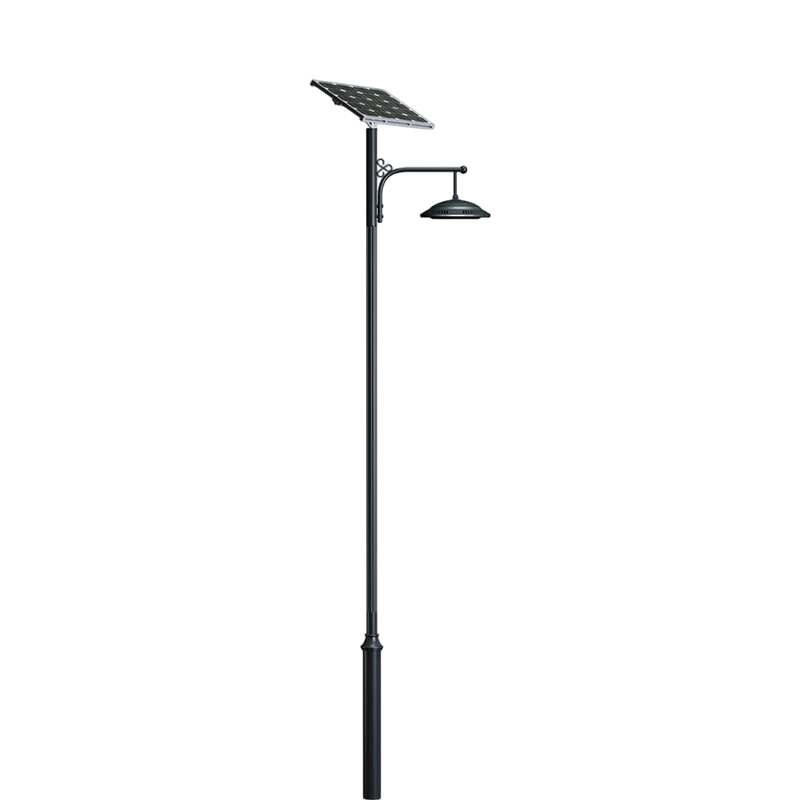
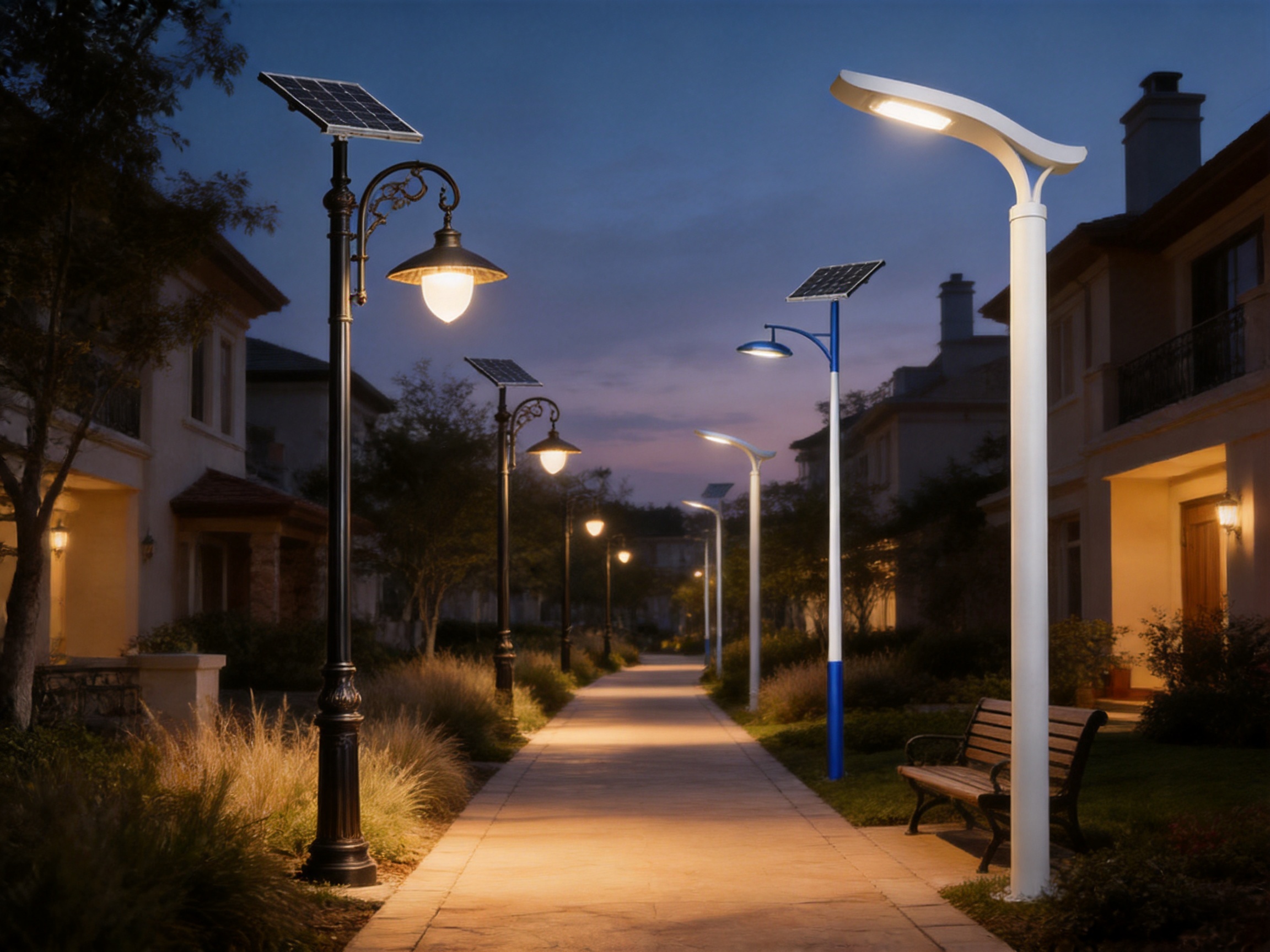
The series also offers two distinct design directions. One model uses a classic-inspired decorative hanging arm and an umbrella-shaped shade to create a soft, downward light distribution. Another adopts a modern curved cantilever layout, balancing the solar panel and lamp unit through fluid lines and a compact visual profile. These alternatives allow project designers to select a style that suits the architectural language and landscape identity of a site.
Supported by professional manufacturing capabilities, extensive material options, automated production systems, factory testing, quality certifications, and project-oriented technical services, the product is suitable for customers seeking a complete outdoor lighting solution rather than a basic standalone lamp.
1. Why Decorative Solar Lighting Is Becoming More Important
Landscape lighting has traditionally involved separate components: a lamp pole, a luminaire, underground power cables, a distribution cabinet, a control system, and sometimes a separate transformer or battery backup system. While such arrangements can deliver substantial power, they require careful civil construction and significant coordination. Cable routes must be planned, trenches must be excavated, drainage must be considered, and underground connections must be protected against moisture and mechanical damage.
Integrated solar lighting provides a different approach. Solar energy is collected during the day, stored in the internal battery, and used to power the LED source after sunset. Because the product is self-contained, it can be installed without underground wiring between the light poles. This is particularly valuable in finished landscapes, historic environments, protected scenic areas, newly developed sites, and remote paths where construction disturbance should be minimized.
In a decorative application, the lighting equipment must also contribute to the character of the site. A park may require a welcoming, traditional appearance. A resort may favor elegant lines and coordinated finishes. A modern residential development may prefer a minimal structure with a smaller visual footprint. The Decorative Landscape Integrated Solar Street Light series responds to these needs by integrating functional components into carefully designed forms rather than treating the solar panel as an afterthought.
When properly selected and installed, a solar landscape light can provide several practical advantages:
• Reduced dependence on grid electricity.
• Lower installation complexity because underground power cables are not required.
• Flexible deployment along paths, roads, courtyards, and open spaces.
• Automatic operation through light-control and time-control functions.
• Reduced visual clutter caused by separate electrical infrastructure.
• Improved compatibility with sustainable development objectives.
• A decorative appearance that supports the identity of premium outdoor environments.
2. Product Design: Combining Artistic Form with Practical Utility
The central design objective of this series is to create a lighting product that looks appropriate in a landscape during both daytime and nighttime. During the day, the pole and luminaire become visible architectural elements. At night, the product must provide comfortable and useful illumination without creating excessive glare or harsh visual contrast.
2.1 Classic Decorative Hanging Arm Design
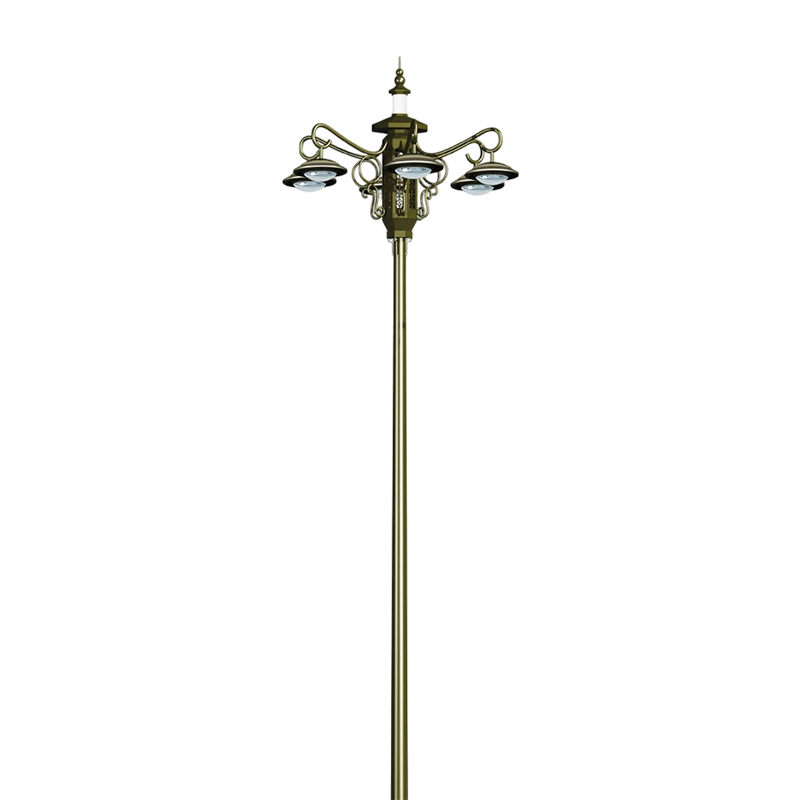
The classic-inspired model uses a decorative hanging arm that gives the fixture a familiar ornamental character. This configuration is well suited to traditional gardens, historical-style developments, tourist areas, resort promenades, and residential communities that use classical architectural details.
The umbrella-shaped shade helps direct light downward and creates a softer visual impression. Instead of exposing the light source as a bright point, the shade helps integrate the luminaire into the overall structure. Its form can provide a more comfortable appearance for pedestrians while also reinforcing the decorative identity of the installation.
This design is especially useful where the lamp itself is expected to become part of the landscape composition. Along a garden walkway, for example, repeated decorative poles can establish rhythm and visual continuity. Around a resort entrance or public plaza, the fixtures can help communicate a sense of quality and permanence.
2.2 Modern Curved Cantilever Design
The alternative modern design uses a curved cantilever structure. Its fluid lines create a balanced relationship between the solar panel and the lamp unit while reducing the visual heaviness of the installation. The arrangement is suitable for contemporary residential communities, modern parks, commercial landscapes, and architectural projects that favor simple, refined forms.
The curved structure is not only an aesthetic feature. A well-balanced cantilever arrangement can support a stable relationship between the pole, solar module, and luminaire. By organizing the components into a cohesive shape, the design avoids the appearance of several unrelated parts mounted onto one pole.
The compact visual footprint is another advantage in areas where designers want lighting but do not want equipment to dominate the view. This can be important along narrow pedestrian paths, beside planting beds, near water features, and around buildings with clean architectural elevations.
2.3 Materials and Surface Finishes
The lamp body is made from aluminum alloy, a material widely used in outdoor lighting because it offers a useful combination of low weight, structural performance, corrosion resistance, and heat dissipation. A lighter lamp body can reduce the mechanical burden on the upper structure and simplify handling during installation.
The product can be finished with antique-style or modern matte powder coating. An antique finish can help the fixture blend with traditional gardens, brick architecture, stone paving, and heritage-inspired landscapes. A matte modern finish can support contemporary projects where understated surfaces and clean lines are preferred.
Powder coating also provides an important protective layer against outdoor exposure. When correctly applied and properly cured, the coating helps protect the metal surface from moisture, ultraviolet exposure, and ordinary environmental wear. It also enables project owners to coordinate the lighting finish with other site elements such as railings, gates, benches, signage, and architectural facades.
3. Integrated Solar Technology and Energy Management
The product uses high-efficiency monocrystalline silicon photovoltaic modules. Monocrystalline technology is valued for its relatively high conversion efficiency and compact form. In a decorative luminaire, this is particularly beneficial because the photovoltaic panel must generate sufficient energy without making the fixture appear oversized.
A smaller panel footprint can help maintain a balanced visual relationship between the solar module and the light unit. This is important for landscape applications, where a very large panel may appear visually dominant or conflict with the intended decorative form.
During daylight hours, the photovoltaic module converts solar energy into electrical energy. The energy is stored in the integrated battery system and later used to operate the LED source after dark. The controller manages charging, switching, and operating logic so that the product can function as an autonomous lighting unit.
The integrated structure reduces the number of exposed connections and avoids the need for separate external battery enclosures in ordinary installations. It also allows the product to be shipped and installed as a coordinated system, reducing the risk that incompatible components will be combined on site.
3.1 Intelligent Light and Time Control
The series uses light-control and time-control functions. The light sensor detects changes in ambient brightness and enables the system to respond automatically to dusk and dawn. Time-based control can be used to manage the operating schedule and support more efficient energy use.
After installation, the transport mode must be disabled so that the lighting system can begin normal operation. Once activated, the product is designed to turn on automatically at night and charge during the daytime. This reduces the need for daily manual switching and helps ensure consistent operation in public or semi-public spaces.
Automatic control is particularly useful for parks, resort paths, and residential landscapes where operating personnel may not be present at every lighting point. It also reduces the risk of lights being left on during daylight hours, which could waste stored energy and reduce nighttime operating performance.
3.2 Continuous Lighting Performance
The stated continuous lighting time is 5 to 12 hours. Actual performance depends on factors such as solar radiation, seasonal weather, installation orientation, local climate, battery condition, operating mode, LED power, and the required lighting schedule. Proper project design should therefore consider local solar conditions and the intended illumination target before final configuration.
The broad operating range allows the system to be adapted to different landscape requirements. A short evening operation may be suitable for decorative pathways with low traffic, while longer operation may be preferred for residential access roads, resort circulation routes, or public pedestrian areas.
For project owners, the key benefit is the ability to match the lighting schedule with actual site needs instead of treating every application as a continuously powered grid-lighting installation. Intelligent scheduling can improve energy utilization and contribute to a more sustainable operating model.
Decorative Landscape Integrated Solar Street Light
4. LED Lighting Quality and Visual Comfort
The product uses LED as its light source and provides a stated lamp luminous efficacy of up to 140 lm/W. High luminous efficacy allows more visible light to be produced from a given amount of electrical energy. This is especially important in a solar lighting system because the available energy is limited by the capacity of the photovoltaic module and battery.
Efficient LED performance can help the lighting system achieve useful illumination with a smaller energy demand. This supports the use of a more compact solar panel and battery system, which in turn contributes to the product’s integrated appearance.
The available color temperature range is 3000K to 6000K. Warm or neutral color temperatures, such as approximately 3000K to 4000K, are often suitable for hospitality landscapes, garden paths, and residential environments because they can produce a more welcoming atmosphere. Cooler color temperatures may be selected where a brighter, more contemporary visual effect is preferred.
The product has a stated Color Rendering Index of Ra 70. Color rendering describes how naturally the light source reveals the colors of objects, surfaces, vegetation, paving, and architectural materials. For general outdoor pathways and landscape circulation areas, this level can support practical visibility and reasonable color recognition.
4.1 Downward Light Distribution
Landscape lighting should illuminate walking surfaces and adjacent areas without creating unnecessary glare for pedestrians, drivers, or nearby residents. The umbrella-shaped shade in the decorative model is designed to support a soft, downward distribution. This can help focus light where it is needed and reduce the visual discomfort associated with exposed, high-intensity light sources.
Downward illumination also supports a more controlled relationship between the lighting installation and the surrounding environment. Instead of projecting light indiscriminately into the sky or across nearby properties, the luminaire can direct more of its output toward the path, road, or landscaped zone.
Final light distribution depends on the optical design, mounting height, pole spacing, installation orientation, and selected power configuration. A professional lighting layout should be prepared for larger projects to verify illuminance, uniformity, glare control, and spacing.
5. Structural Configuration and Pole Options
The pole height range is 6 to 10 meters, allowing the product to serve more than one type of outdoor application. Lower heights can be appropriate for pedestrian paths, gardens, courtyards, and residential landscapes. Higher configurations may be used along wider roads, resort access routes, open plazas, and larger circulation areas.
The available pole materials include Q235, Q355, SS400, GR65, and other specified grades depending on project requirements. These materials are commonly associated with structural steel applications and can be selected according to mechanical calculations, local standards, environmental conditions, and project specifications.
Pole selection should consider wind loading, foundation design, soil conditions, installation location, solar panel area, luminaire weight, and local regulatory requirements. For this reason, the supplier provides mechanical calculation support for wind and foundation design as part of its project services.
A correctly engineered pole is essential to long-term reliability. The pole must safely support the decorative arm, photovoltaic module, battery-integrated lamp unit, and any additional structural loads. It must also maintain alignment and stability throughout repeated exposure to wind, rain, temperature changes, and maintenance activities.
5.1 Weather and Temperature Resistance
The stated operating temperature range is -35°C to 65°C. This broad range makes the product suitable for many outdoor environments, from cold winter regions to hot summer climates. However, project-specific environmental evaluation remains important. Extremely humid, coastal, dusty, corrosive, or heavily polluted locations may require additional protective measures and appropriate material or coating selections.
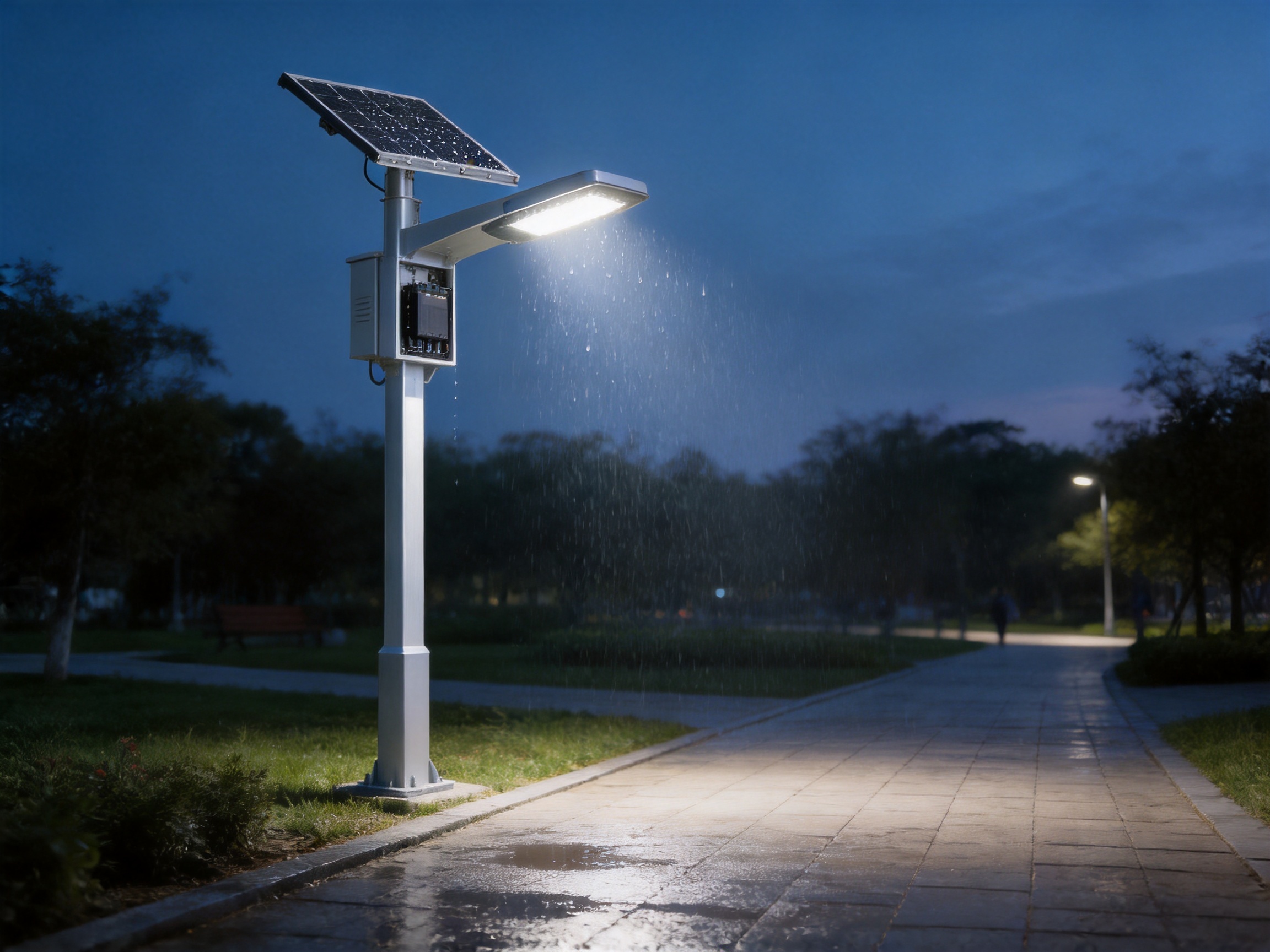
Outdoor lighting products are exposed to more than temperature alone. Rainwater, condensation, ultraviolet radiation, wind-blown dust, insects, and airborne contaminants can all influence service life. The product’s structural waterproofing testing and sealed photovoltaic manufacturing processes are intended to support reliable outdoor operation.
Factory verification of waterproofing helps identify potential weaknesses before products are shipped. Consistent sealing of photovoltaic modules is also important because moisture penetration can reduce electrical performance and accelerate component degradation.
6. Advantages Compared with Conventional and Less Integrated Alternatives
The Decorative Landscape Integrated Solar Street Light series offers several advantages when compared with conventional grid-connected decorative lights and basic solar fixtures assembled from separate components.
| Evaluation Area | Decorative Integrated Solar Street Light | Conventional Grid-Connected Landscape Light | Basic Separate-Component Solar Light |
|---|---|---|---|
| Power source | Solar energy with integrated storage | Utility grid | Solar energy, often with externally matched components |
| Underground wiring | Normally not required | Required for power distribution | Normally not required |
| Installation process | Streamlined and coordinated | Requires cable trenching and electrical connection | Requires field matching and assembly of multiple units |
| Visual design | Decorative classic and modern options | Depends on selected grid fixture | Often prioritizes function over appearance |
| Energy management | Light control plus time control | Central or local electrical control | Varies according to controller quality |
| Maintenance exposure | Fewer external electrical connections | Underground cables and distribution equipment require maintenance | Multiple component interfaces may require inspection |
| Landscape integration | Designed for premium visual environments | May require additional design coordination | May have a more utilitarian appearance |
6.1 Lower Civil Construction Requirements
The absence of underground power wiring can reduce civil construction work. There is generally less need for trench excavation, cable laying, conduit installation, cable testing, and reinstatement of finished landscape surfaces. This can be a major advantage in projects where paving, planting, irrigation, or architectural finishes have already been completed.
Reduced construction disturbance also benefits environmentally sensitive locations. Scenic areas and parks may contain mature trees, decorative paving, drainage systems, or protected ground surfaces that are difficult to excavate without creating damage or additional restoration costs.
6.2 Improved Deployment Flexibility
Because the product generates and stores its own energy, it can be installed in locations that are distant from electrical distribution points. This allows designers to place lighting according to pedestrian movement, landscape composition, and safety requirements rather than according only to the location of existing cables.
The same flexibility can be useful during site expansion. Additional lighting points can be introduced along new paths or in newly landscaped areas without necessarily extending a complete underground electrical network.
6.3 Coordinated System Engineering
A product with an integrated panel, storage system, controller, and luminaire is engineered as a complete package. This can reduce the risk of mismatched voltage ratings, inadequate battery capacity, incompatible charging parameters, or poorly coordinated mounting arrangements.
Integrated design also improves the visual result. Instead of combining a generic panel, a separate battery box, and a standard lamp head, the components are arranged as a unified product. This is particularly important when the fixture is visible from multiple directions and forms part of the landscape’s daytime appearance.
6.4 Reduced Operating Energy Dependence
Solar operation can reduce electricity consumption from the public grid. Over the operating life of a project, this may support lower energy expenditure and help property owners demonstrate progress toward energy-efficiency or low-carbon objectives. The financial outcome depends on local electricity prices, solar conditions, installation costs, maintenance requirements, and the selected operating schedule.
Solar lighting does not eliminate the need for engineering. Panel orientation, shading, battery capacity, pole spacing, and local weather must still be evaluated. However, the product provides a practical foundation for projects seeking autonomous or partially independent outdoor illumination.
7. Manufacturing Strength and Quality Assurance
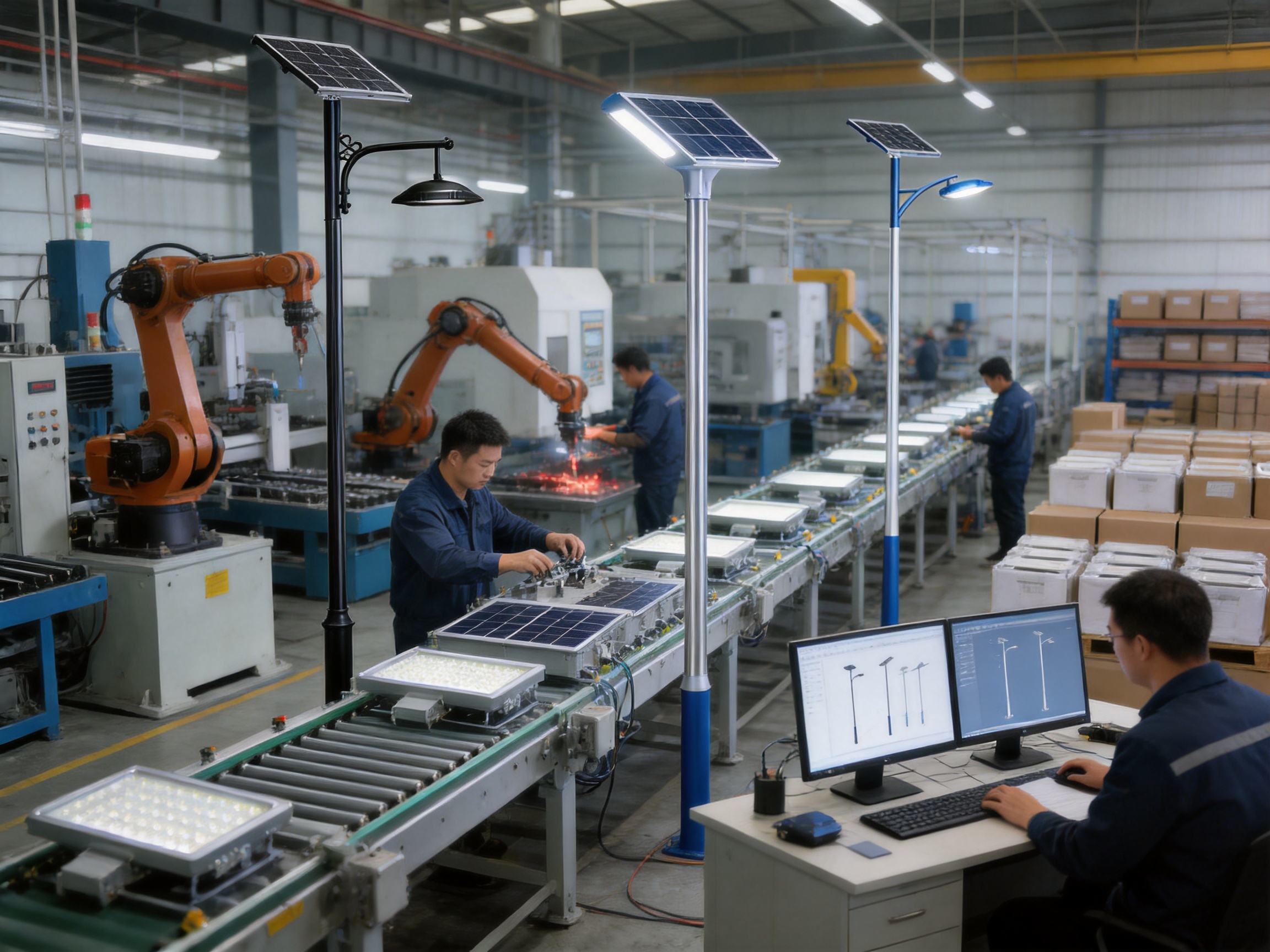
The supplier’s manufacturing capabilities are a significant part of the product value. Outdoor lighting reliability depends not only on the design shown in a catalog but also on material control, forming accuracy, welding quality, coating consistency, assembly standards, electrical testing, and final inspection.
The company operates as a professional production, design, and engineering enterprise in the road illumination industry. Established in 2002 and affiliated with an electric group, it has developed experience in street light poles, LED street lights, solar street lights, light fixtures, and related outdoor lighting products.
The manufacturing site covers more than 70,000 square meters and is supported by more than 300 professional technicians. The company also serves international customers in more than 200 countries. This combination of production scale, technical personnel, and export experience supports the ability to handle both standardized products and project-specific requirements.
7.1 Broad Material Selection
Material options include Q235B, Q345B, S275JR, S355JR, Q460, A36, A572, GR56, GR50, and other grades. The exact selection can be adapted to project specifications, mechanical requirements, regional standards, and procurement preferences.
Maintaining an extensive material inventory can help shorten production lead times. Material availability is especially important for infrastructure projects, where delays in pole fabrication may affect foundation work, transport planning, installation schedules, and overall project completion.
A stable material supply also supports consistency. When raw materials are selected and controlled systematically, the manufacturer can better maintain repeatable mechanical properties and dimensional accuracy across production batches.
7.2 CNC Bending and Structural Precision
Precise CNC bending is used to form structural components with consistent dimensions and repeatable geometry. Accurate bending improves the fit between parts and can enhance the structural integrity of the finished pole or decorative arm.
Consistent forming also reduces the amount of post-production adjustment required. Fewer manual corrections can improve production efficiency and reduce variation between units. For a project involving many decorative solar lights, visual consistency is important because small differences in arm angle, pole shape, or mounting position can become noticeable when fixtures are installed in a repeated sequence.
7.3 Automated Welding and Cutting
Automatic welding and cutting equipment supports efficient fabrication of steel poles and related components. Machine-assisted processes can help maintain repeatable weld positions, cut lengths, and component dimensions while reducing dependence on inconsistent manual operations.
Weld quality is important for both structural performance and appearance. Properly controlled welding helps ensure that decorative arms, base plates, stiffeners, and connection points remain secure under outdoor loading. It also supports a cleaner surface before galvanizing, painting, or powder coating.
7.4 Powder Electrostatic Painting
Powder electrostatic painting equipment is used to apply protective and decorative finishes. Electrostatic application can support more uniform coverage and efficient material use. A consistent finish improves resistance to normal outdoor exposure while also helping the product maintain a professional appearance.
For decorative landscape projects, surface quality matters because fixtures are often located near pedestrian routes and viewed at close range. Uneven coating, visible runs, exposed metal, or inconsistent color can reduce the perceived quality of an otherwise well-designed landscape.
7.5 Large-Scale Die Casting Capability
The company operates a 1250-ton die casting machine. Large-scale die casting capability can support the production of complex aluminum components with repeatable shapes and efficient surface quality. This is relevant to lamp bodies, brackets, housings, and other components requiring dimensional consistency.
Die-cast aluminum parts can provide a useful balance of strength, weight, thermal management, and design flexibility. Complex forms can be produced more efficiently than through a combination of multiple fabricated pieces, potentially reducing joints and improving the integrated appearance of the luminaire.
8. Factory Testing and Process Control
The product undergoes three critical factory tests: light source aging and durability testing, structural waterproofing testing, and comprehensive performance verification. These tests are important because outdoor lighting must operate reliably after installation, often in locations where frequent access is inconvenient.
8.1 Light Source Aging and Durability Testing
LED components and associated electrical systems are tested for operating stability and durability. Aging tests can help reveal early failures, unstable performance, or manufacturing issues before products reach the customer.
Testing the light source as part of a controlled factory process provides greater confidence than relying only on visual inspection. It also supports more consistent performance across large orders, where every fixture must deliver comparable lighting characteristics.
8.2 Structural Waterproofing Testing
Waterproofing is essential for solar street lights because the panel, controller, battery enclosure, LED housing, and electrical connections are exposed to rain and humidity. Structural waterproofing tests help assess whether the product’s protective design can withstand expected outdoor conditions.
Water ingress can cause corrosion, insulation deterioration, short circuits, charging failures, or premature battery and controller damage. By testing the structure before shipment, the manufacturer can identify potential sealing problems and reduce the likelihood of field failures.
8.3 Comprehensive Performance Verification
Comprehensive verification may include checks of charging behavior, lighting operation, control response, component assembly, mechanical integrity, and general product conformity. Such testing is particularly valuable for an integrated system because the photovoltaic module, battery, controller, and LED source must work together correctly.
Dual-layer quality control is used to minimize post-sales issues. The combination of production-stage inspection and final product verification helps create a more controlled manufacturing process from raw material preparation through final assembly.
8.4 Photovoltaic Module Quality
The photovoltaic modules use Grade-A silicon wafers. These wafers are selected for high energy conversion efficiency, stable crystal structure, weather resistance, impact resistance, and resistance to aging and degradation.
Solar panels operate outdoors for long periods and are exposed to repeated heating and cooling cycles, moisture, wind, dust, and ultraviolet radiation. Stable materials and controlled encapsulation are therefore important to long-term power generation.
Automated production lines and machine-based inspections are used in processes ranging from solar cell encapsulation to final product verification. Standardized sealing procedures support weather resistance and help protect the electrical layers inside the module.
9. Certifications and Management Systems
The company reports compliance with international quality and management standards including ISO9001, ISO14001, and OHSAS18001. It also holds certifications such as ISO, CE, and CQC for relevant products and processes.
ISO9001 relates to quality management and supports systematic control of production, documentation, inspection, corrective action, and customer requirements. ISO14001 focuses on environmental management, which is increasingly relevant for manufacturers serving sustainable infrastructure and renewable-energy projects. OHSAS18001 is associated with occupational health and safety management.
CE and CQC certifications can support market access and product acceptance in applicable regions, although project owners should always confirm the exact certification scope, product model, destination-market requirements, and applicable electrical standards before ordering.
Certifications do not replace project engineering or installation quality, but they provide evidence that the manufacturer has established formal systems for controlling important aspects of production and management.
10. Applications in Landscape and Infrastructure Projects
10.1 Scenic Parks and Garden Paths
In scenic parks, lighting must support pedestrian safety while preserving the atmosphere of the landscape. The decorative structure can blend with planting, paving, seating, water features, and garden architecture. Solar operation can also reduce the need for extensive cable installation across landscaped areas.
Warm color temperatures and downward light distribution may be selected to create a comfortable evening environment. The 6-meter to 10-meter pole range allows project designers to adapt the product to different path widths and open-space conditions.
10.2 Tourist Resorts
Resorts often use lighting as part of their visual identity. Guests may encounter lighting fixtures along entrances, promenades, parking approaches, garden routes, poolside paths, and service roads. Decorative solar lights can help maintain a coordinated appearance across these zones.
The integrated system can be particularly useful in resort expansions, where new facilities may be separated from existing electrical infrastructure. Lighting can be deployed along new access routes without immediately requiring extensive underground cabling.
10.3 High-End Residential Landscapes
Residential communities and private developments increasingly place emphasis on the appearance of shared outdoor spaces. A carefully designed light pole can contribute to a sense of security, comfort, and property quality.
The availability of antique and modern matte finishes allows the product to coordinate with different architectural themes. Classic designs may suit villas and traditional residences, while curved contemporary structures may be more appropriate for modern apartments and mixed-use developments.
10.4 Pedestrian and Access Roads
The product information identifies road applications and provides pole heights up to 10 meters. This makes the series suitable for certain internal roads, access routes, campus roads, and low-speed circulation areas, subject to appropriate photometric and structural design.
For roads with significant vehicle traffic, higher lighting standards may apply. Project designers should verify road classification, traffic conditions, required illuminance, glare limits, and local regulations before selecting a final configuration.
10.5 Remote and Off-Grid Locations
Remote locations often face higher costs for grid connection and maintenance. Solar lighting can provide a practical alternative for trails, rural tourism sites, entrances to recreational facilities, and isolated community routes.
In these applications, correct solar sizing becomes especially important. The design should account for the lowest expected solar resource, seasonal operation, battery reserve requirements, and the consequences of prolonged cloudy weather.
11. Project Services from Concept to Installation
A major strength of the supplier is its ability to support customers beyond the sale of individual products. Outdoor lighting projects often require coordination between civil engineering, landscape design, electrical planning, structural analysis, procurement, transport, and installation. Technical assistance can reduce uncertainty during these stages.
11.1 CAD Design
CAD design support can help project teams review dimensions, mounting arrangements, connection points, and layout requirements. Accurate drawings are useful for confirming the relationship between the pole, foundation, solar panel, decorative arm, and lamp head.
11.2 Three-Dimensional Product Simulation
Three-dimensional product simulation can assist with design approval and component coordination. Project owners can review the product form, relative proportions, and mounting arrangement before production.
11.3 Three-Dimensional Scene Simulation
Scene simulation places the lighting product within a representative landscape environment. This can help customers evaluate how the fixture will appear beside buildings, trees, paving, walls, water features, and other site elements.
For decorative lighting, scene visualization is particularly useful because appearance is a central part of product selection. A fixture that looks attractive in isolation may require a different finish, height, or arm style when viewed in the complete landscape.
11.4 Specification and Color Customization
Customization support can cover specifications, finishes, and color requirements. This allows the product to align more closely with a project’s architectural palette and design guidelines.
Customers should provide technical requirements as early as possible, including lighting duration, target brightness, preferred color temperature, pole height, environmental conditions, foundation limitations, and finish preferences. Early confirmation helps reduce changes during production.
11.5 Wind and Foundation Calculations
Mechanical calculations for wind loading and foundations help ensure that the pole and support structure are suitable for the installation environment. The calculation process should consider local wind speed, terrain category, pole height, panel dimensions, luminaire weight, soil conditions, and foundation materials.
Such engineering is important for both safety and long-term alignment. A decorative pole that tilts, vibrates excessively, or experiences foundation movement can negatively affect both performance and appearance.
11.6 Overseas Installation Guidance
Overseas installation guidance can help customers and local contractors understand assembly, transport mode settings, foundation preparation, wiring checks, orientation, commissioning, and operating procedures.
Although the integrated product is designed for straightforward installation, correct commissioning remains essential. The transport mode must be disabled, the panel should be positioned appropriately, the battery and controller connections should be checked, and the lighting schedule should be verified after sunset.
12. Installation and Commissioning Recommendations
Before installation, the site should be assessed for solar exposure. Trees, buildings, rooflines, signs, and other structures can cast shadows over the photovoltaic module. Even partial shading during important charging periods may reduce energy generation.
The solar panel should be oriented and inclined according to local conditions and the manufacturer’s technical guidance. In the Northern Hemisphere, panels are generally oriented toward the south for maximum annual solar exposure, while locations in the Southern Hemisphere may require a northerly orientation. Local latitude, seasonal priorities, and project-specific restrictions should be considered.
The foundation should be completed and sufficiently cured before the pole is erected. Anchor bolts must be positioned accurately, and the foundation should be designed for the local soil and wind conditions. Improper anchor alignment can create installation difficulties and may place unnecessary stress on the base connection.
After the pole and lamp assembly are installed, technicians should inspect mechanical fasteners, cable routing, panel orientation, protective seals, and controller connections. The product should then be tested through a complete day-night cycle when possible.
Transport mode is intended to protect the system during shipping and storage. It must be disabled after installation so that the intelligent lighting controls can operate normally. If this step is overlooked, the product may appear inactive even though the components are correctly installed.
Project owners should also retain installation records, product model information, commissioning dates, and maintenance documentation. These records can simplify future inspections and warranty communication.
13. Maintenance and Long-Term Operation
Solar lighting generally requires less infrastructure maintenance than grid-connected systems, but it is not maintenance-free. Periodic inspection helps preserve energy performance and extend service life.
Photovoltaic modules should be checked for dust, leaves, bird deposits, snow, or other obstructions. Dirt reduces the amount of sunlight reaching the cells and may lower the available charging energy. Cleaning frequency depends on local conditions, including rainfall, dust levels, nearby vegetation, and air pollution.
The lamp body and decorative arm should be inspected for coating damage, corrosion, loose fasteners, accidental impact, or signs of water entry. Any damage should be addressed promptly to prevent deterioration from spreading.
Battery performance should be monitored over time. A gradual reduction in nighttime operating duration may indicate battery aging, reduced solar exposure, controller issues, or abnormal energy demand. Maintenance personnel should evaluate the complete system rather than replacing a component without diagnosis.
Vegetation management is also important. Trees and plants that grow after installation may eventually shade the solar panel or obstruct the light distribution. Landscape maintenance plans should therefore consider the long-term relationship between vegetation growth and lighting performance.
14. How to Select the Correct Configuration
Customers should begin with the application rather than selecting a fixture solely by appearance. The required lighting area, path width, traffic type, operating time, local weather, and design style will influence the appropriate configuration.
Important selection questions include:
• Is the product intended for a pedestrian path, internal road, resort route, or open plaza?
• How many hours must the light operate after sunset?
• What are the local solar conditions during the least favorable season?
• Are there trees or buildings that could shade the solar module?
• Is a classic decorative form or a modern curved form more appropriate?
• What pole height and spacing will provide suitable illumination?
• Which color temperature best supports the intended atmosphere?
• What wind speed and soil conditions apply at the installation site?
• Is a specific metal grade, coating color, or certification required?
• Will installation be completed by the customer’s contractor or require overseas guidance?
The product offers voltage options of 3.2V, 12V, and 24V according to the applicable configuration. The correct electrical arrangement should be confirmed with the supplier based on the selected LED power, battery, controller, and photovoltaic system.
15. Why Manufacturing Depth Matters to Buyers
Buyers of outdoor lighting are not only purchasing a lamp head. They are purchasing a system expected to remain outdoors for years. The quality of the pole, panel, coating, battery enclosure, control system, fasteners, and assembly all influence the result.
A manufacturer with in-house production and supply chain oversight can control more stages of the process. This improves traceability and helps reduce uncertainty associated with multiple subcontractors. It also allows technical changes to be coordinated more efficiently when a project requires customized dimensions, finishes, or structural details.
Manufacturing depth can also support supply continuity. Extensive material stock, automated production lines, CNC forming, welding, coating, die casting, solar module assembly, and factory testing create a more complete production chain. This can be valuable for large orders, repeat developments, and projects with firm delivery schedules.
International project experience provides another advantage. Exporting to customers in more than 200 countries requires familiarity with packaging, documentation, communication, quality expectations, and different installation environments. While every destination still has its own regulations, an experienced export manufacturer is better positioned to coordinate these requirements.
16. Frequently Asked Questions
Q1: What is an integrated solar street light?
An integrated solar street light combines the photovoltaic panel, battery, controller, and LED lamp unit into one coordinated lighting product. It stores solar energy during the day and uses that energy to illuminate the area at night.
Q2: Where is this decorative model most suitable?
It is suitable for scenic parks, tourist resorts, high-end residential landscapes, garden paths, pedestrian routes, internal roads, courtyards, campuses, and other outdoor environments where appearance and autonomous operation are important.
Q3: Does the installation require underground power cables?
Normally, no. The product is designed to operate using solar energy and integrated storage, so underground power wiring is generally not required. Foundation construction and mechanical installation are still necessary.
Q4: How long can the light operate continuously?
The stated continuous lighting time is 5 to 12 hours. Actual duration depends on solar radiation, battery capacity, operating mode, LED power, weather, installation orientation, and seasonal conditions.
Q5: How does the automatic control system work?
The system uses light control and time control. The light sensor detects darkness and daylight, allowing the fixture to turn on at night and charge during the day. The transport mode must be disabled after installation.
Q6: What are the available pole heights?
The stated pole height range is 6 to 10 meters. The appropriate height depends on the application, road or path width, required lighting level, pole spacing, and project design.
Q7: What materials are used for the lamp body and pole?
The lamp body is made from aluminum alloy. Pole options include Q235, Q355, SS400, GR65, and other grades. The final selection should be based on structural calculations, local standards, environmental conditions, and project requirements.
Q8: Can the appearance and finish be customized?
The series supports specification and color customization. Antique and modern matte powder-coated finishes are available, subject to project requirements and production confirmation.
Q9: What color temperatures are available?
The stated color temperature range is 3000K to 6000K. Warmer tones are often selected for welcoming landscape environments, while cooler tones may be used for contemporary visual effects or specific visibility requirements.
Q10: What is the stated luminous efficacy?
The stated lamp luminous efficacy is 140 lm/W. The actual delivered lighting performance depends on the selected configuration, LED power, optics, operating mode, and installation conditions.
Q11: What quality tests are performed at the factory?
The product undergoes light source aging and durability testing, structural waterproofing testing, and comprehensive performance verification. These checks are intended to identify issues before shipment and improve consistency between units.
Q12: Does the manufacturer provide engineering support?
Yes. Available services include CAD design, three-dimensional product simulation, three-dimensional scene simulation, specification and color customization, wind and foundation calculations, and overseas installation guidance.
Q13: What certifications and management standards are associated with the manufacturer?
The company reports ISO9001, ISO14001, OHSAS18001, ISO, CE, and CQC-related certifications or management systems for applicable operations and products. Customers should confirm the certification scope for their specific order and destination market.
Q14: How should the product be maintained?
Maintenance should include periodic cleaning of the solar panel, inspection of the lamp body and coating, checking of fasteners and seals, observation of operating duration, and management of nearby vegetation that could shade the panel.
Q15: Is the product suitable for every road application?
Not automatically. The product is identified for road and outdoor applications, but the final suitability depends on road classification, traffic speed, required illuminance, spacing, glare limits, structural loads, and local regulations. A project-specific lighting and mechanical design should be completed before installation.
17. Conclusion
The Decorative Landscape Integrated Solar Street Light series offers a balanced solution for outdoor projects that require attractive design, autonomous energy operation, dependable LED performance, and flexible installation. Its classic decorative hanging-arm model and modern curved cantilever model provide alternatives for different architectural and landscape styles.
High-efficiency monocrystalline photovoltaic modules help maintain a compact appearance while collecting solar energy. Integrated energy storage, light sensing, and time control simplify daily operation. Aluminum alloy lamp bodies, powder-coated finishes, multiple pole materials, and a broad operating temperature range support outdoor use across diverse environments.
Compared with conventional grid-connected lighting, the product can reduce dependence on underground wiring and simplify deployment in finished or remote landscapes. Compared with basic solar fixtures assembled from separate components, its integrated structure offers more coordinated system design and a cleaner visual result.
The company’s strengths extend beyond product design. Its large production site, technical workforce, material inventory, CNC bending, automated welding and cutting, powder electrostatic painting, die casting, solar module manufacturing, factory testing, certifications, and international project experience provide a strong foundation for quality-controlled delivery.
For customers developing parks, resorts, residential communities, tourism facilities, access roads, and other premium outdoor environments, this product can serve as both a lighting system and a landscape design element. With appropriate solar assessment, structural engineering, lighting layout, installation, and maintenance, it provides a practical path toward attractive, low-infrastructure, and energy-conscious outdoor illumination.
References
1. Product technical information for Decorative Landscape Integrated Solar Street Light, including operating temperature, pole height, luminous efficacy, color temperature, control method, materials, and warranty data.
2. Manufacturer-provided information concerning integrated photovoltaic lighting systems, solar charging, automatic nighttime operation, and built-in energy storage.
3. Manufacturer-provided production and quality assurance information covering CNC bending, automated welding and cutting, powder electrostatic painting, die casting, solar cell encapsulation, and factory testing.
4. Manufacturer company profile and export information concerning road illumination products, engineering services, production facilities, technical personnel, and international markets.
5. General principles of outdoor lighting design, including pedestrian visibility, glare control, color temperature selection, lighting distribution, and landscape integration.
6. General principles of photovoltaic system planning, including solar exposure, panel orientation, seasonal energy availability, battery storage, and operating-schedule design.
7. General structural engineering principles for outdoor lighting poles, including wind loading, foundation design, material selection, anchor-bolt positioning, and installation safety.
8. General quality management and environmental management concepts associated with ISO9001, ISO14001, occupational safety systems, CE conformity, and applicable product certification procedures.