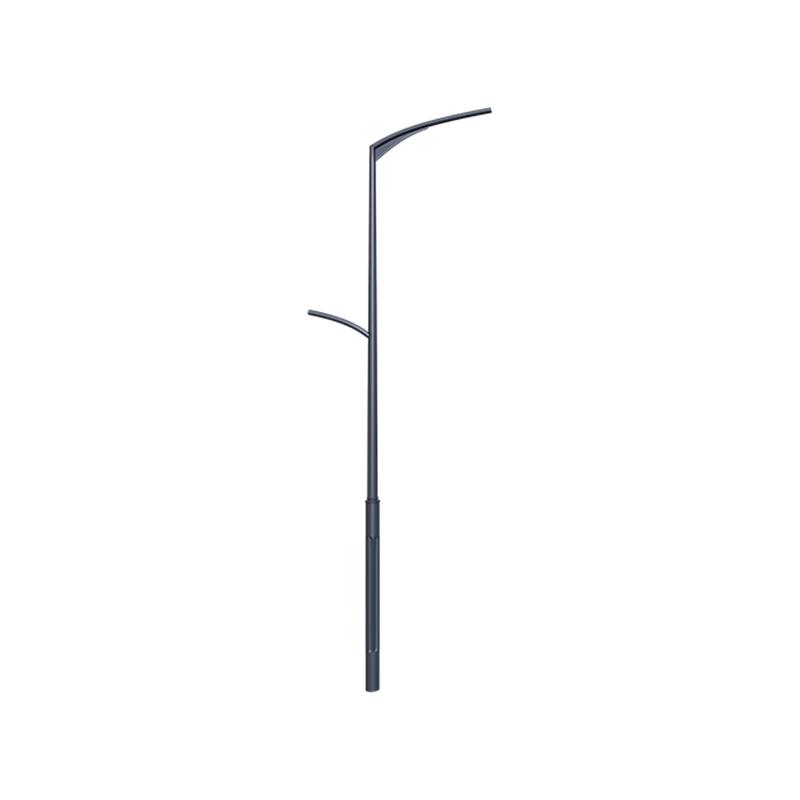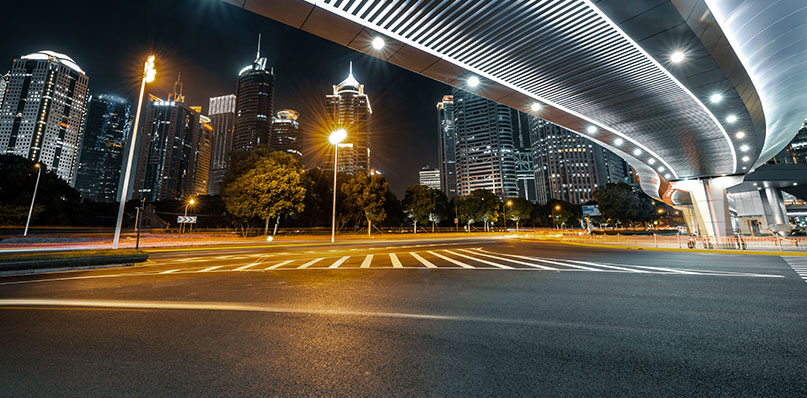



JINYUAN
JINYUAN
JINYUAN
JINYUAN
JINYUAN
JINYUAN
JINYUAN
JINYUAN
JINYUAN
JINYUAN
JINYUAN
JINYUAN
JINYUAN
JINYUAN
JINYUAN
JINYUAN
Content
- 1 Product Overview and Design Concept
- 2 Key Advantages Over Conventional Street Lighting
- 3 Technical Specification Summary
- 4 Optical Performance and Public-Space Comfort
- 5 Smart Dimming and Energy Management
- 6 Materials and Structural Reliability
- 7 Advanced Manufacturing Capabilities
- 8 Quality Assurance and Project Consistency
- 9 Customization and Engineering Support
- 10 Applications in Different Urban Environments
- 11 Installation and Maintenance Considerations
- 12 Why the Product Is a Competitive Choice
- 13 Supplier Capability and Global Project Support
- 14 Project Selection Guidance
- 15 Frequently Asked Questions
- 15.1 What is the main purpose of this dual-arm street light?
- 15.2 Can one pole illuminate both sides of a road?
- 15.3 What voltage does the product support?
- 15.4 What is the luminous efficiency?
- 15.5 What color temperatures are available?
- 15.6 Does the fixture support dimming?
- 15.7 Is the product suitable for harsh outdoor conditions?
- 15.8 What pole heights are available?
- 15.9 What materials can be used for the pole?
- 15.10 How long is the warranty?
- 15.11 Can the color and specifications be customized?
- 15.12 Does the supplier provide engineering drawings?
- 15.13 What manufacturing processes support product quality?
- 15.14 Where is this product most suitable?
- 16 Conclusion
- 17 References
- 18 Product: Modern Aesthetic Dual-Arm Decorative Street Light
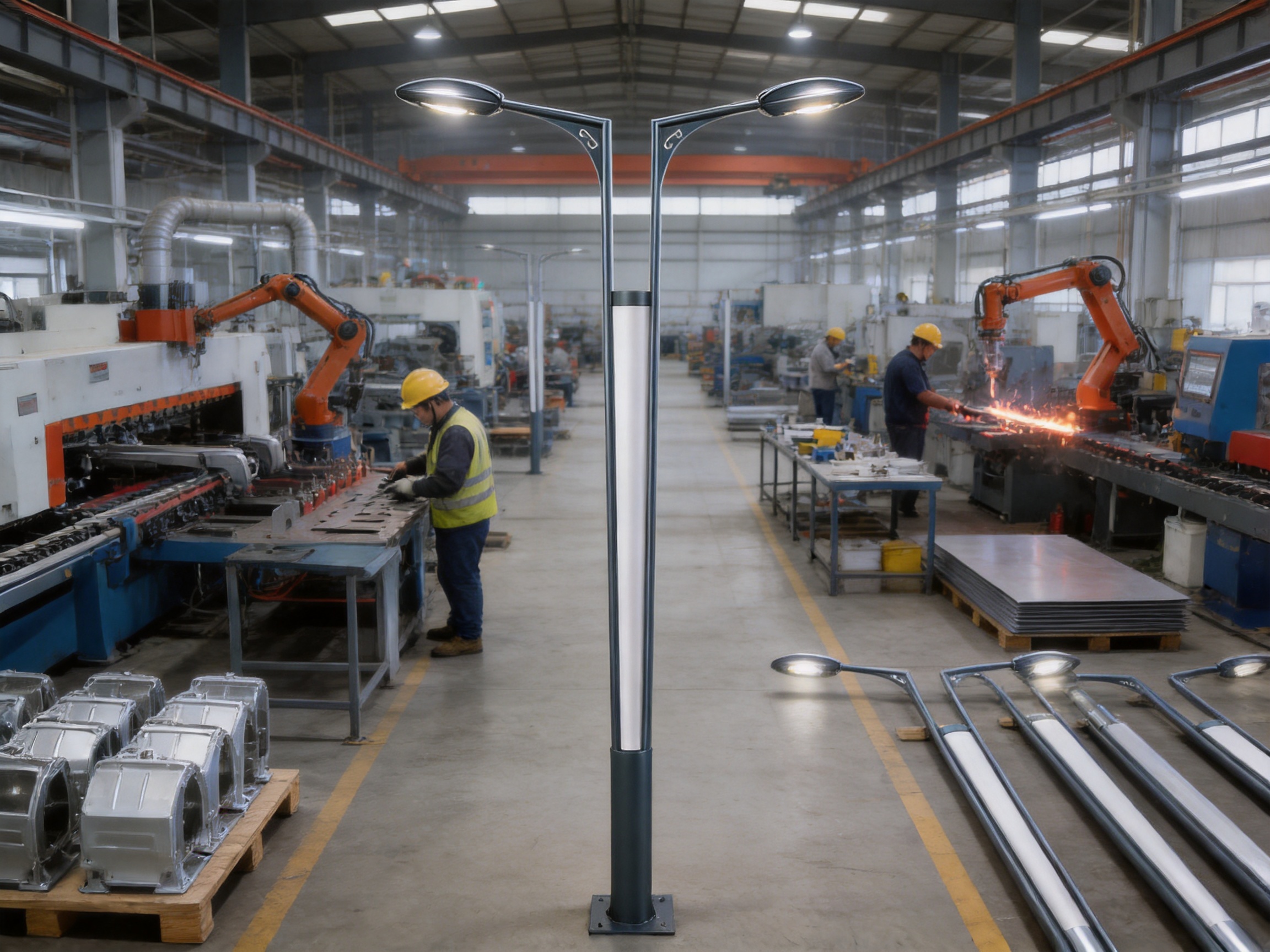
Urban lighting is no longer judged only by whether a road is bright after sunset. Modern projects increasingly require lighting equipment that combines dependable illumination, structural durability, visual identity, energy efficiency, and long-term maintainability. The Modern Aesthetic Dual-Arm Decorative Street Light is designed for this broader requirement. It provides practical road lighting while contributing to the architectural character of streets, pedestrian areas, premium residential communities, commercial districts, and other carefully planned public spaces.
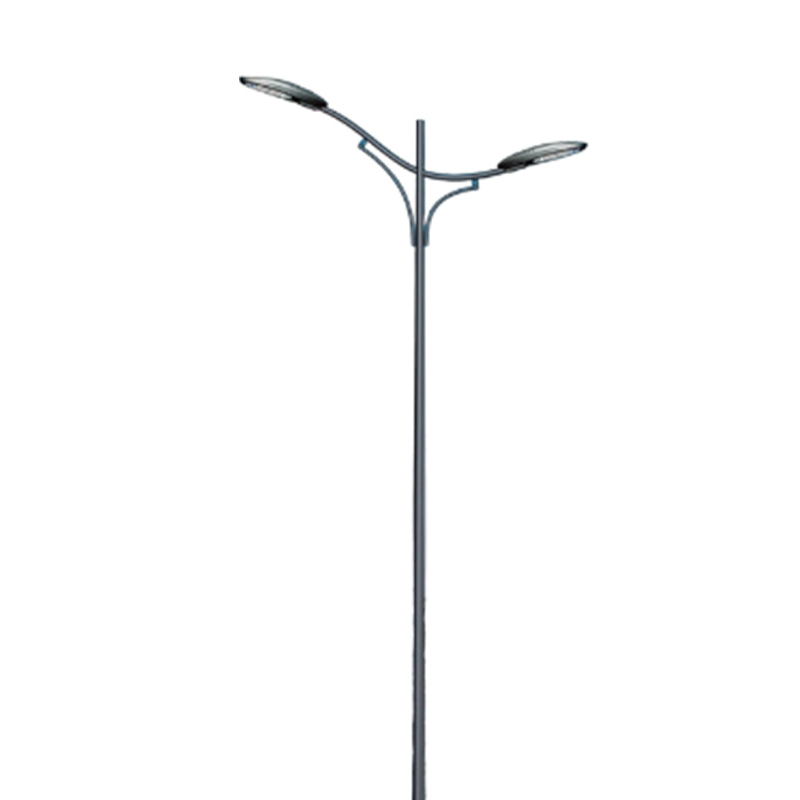
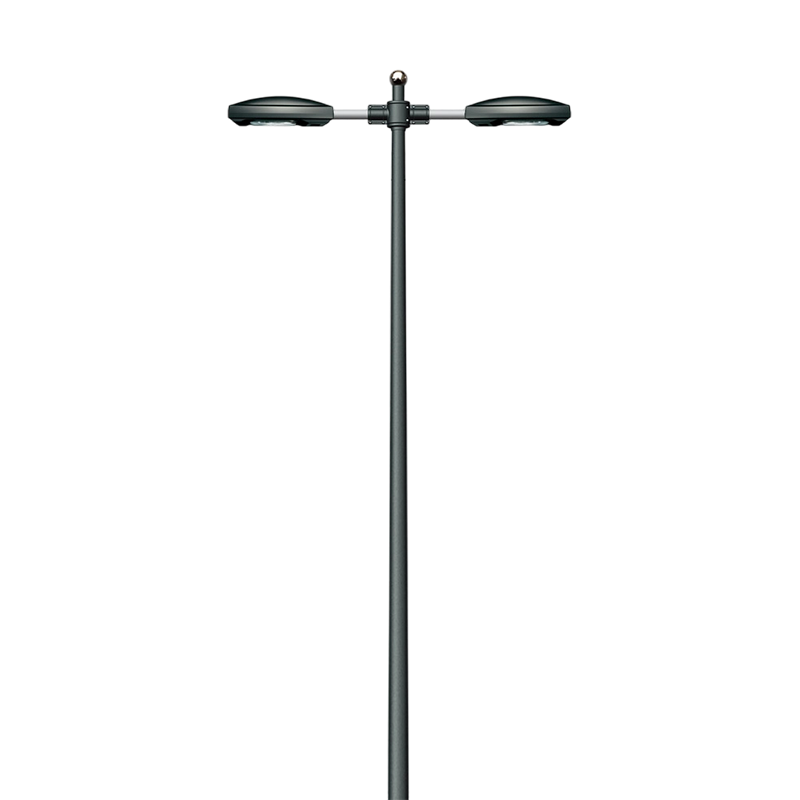
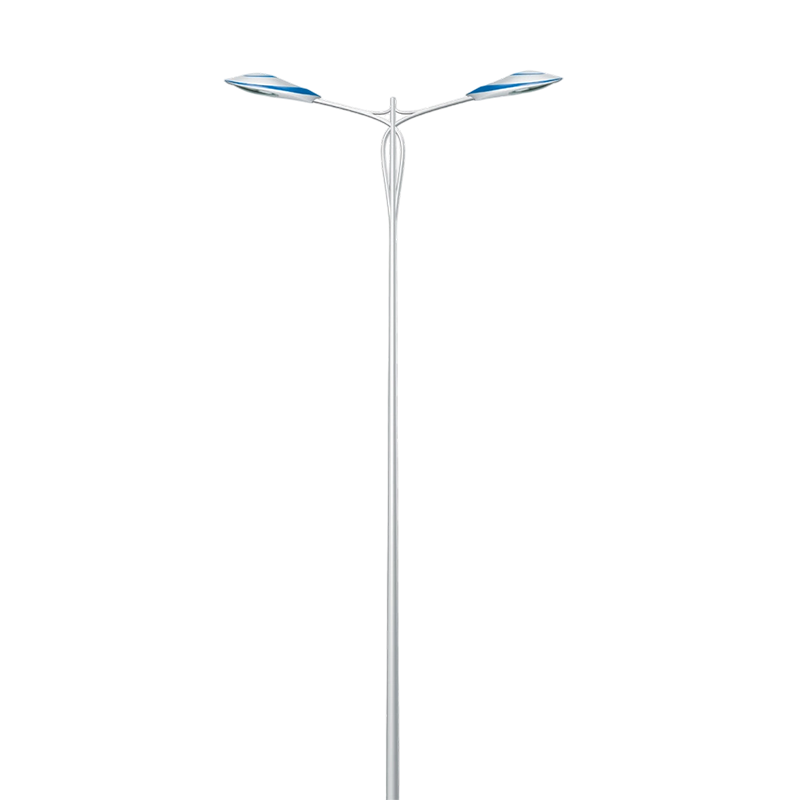
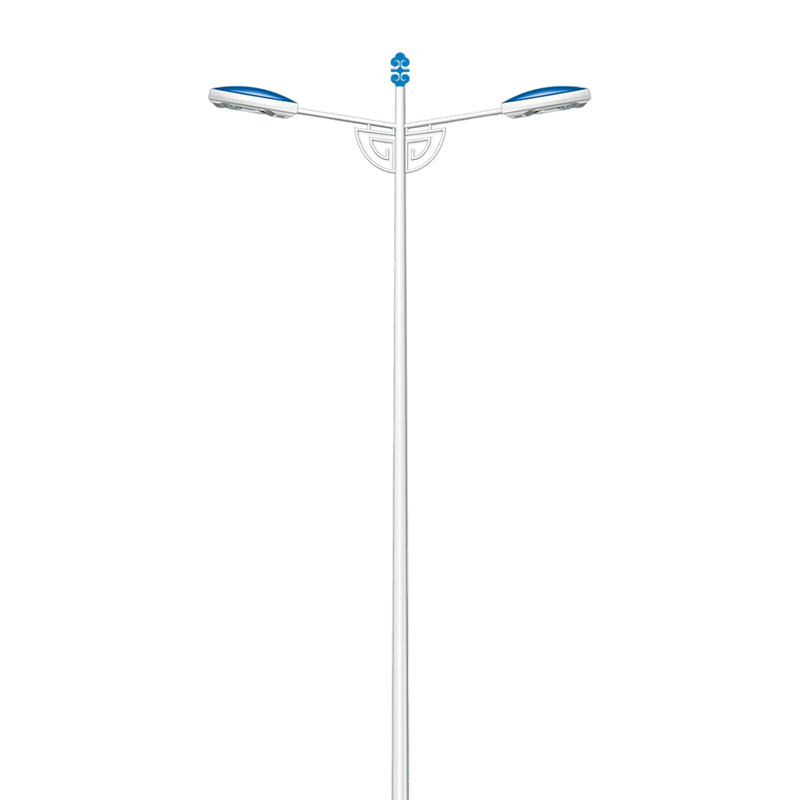
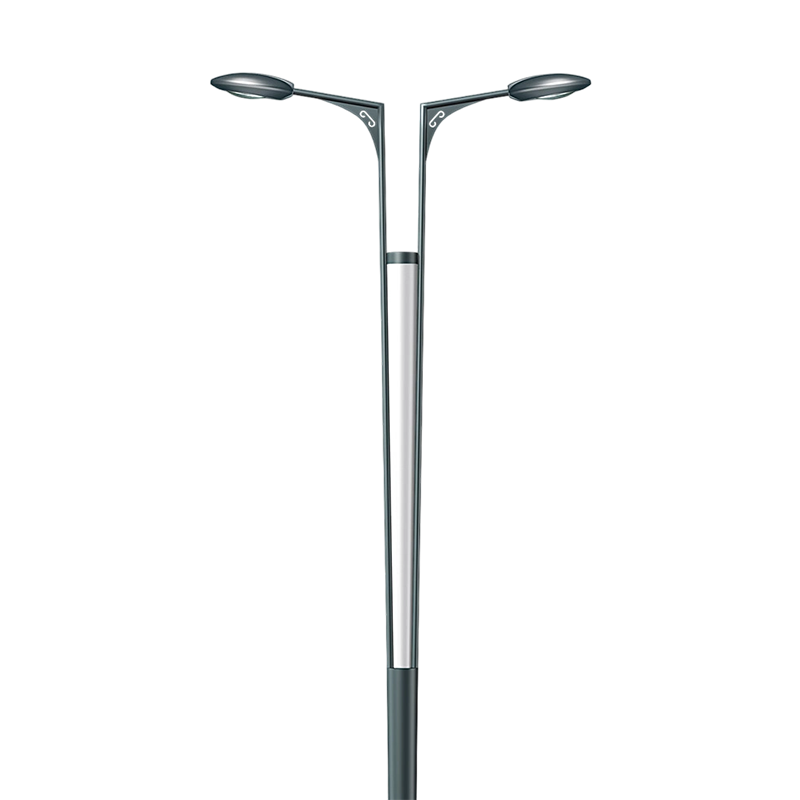
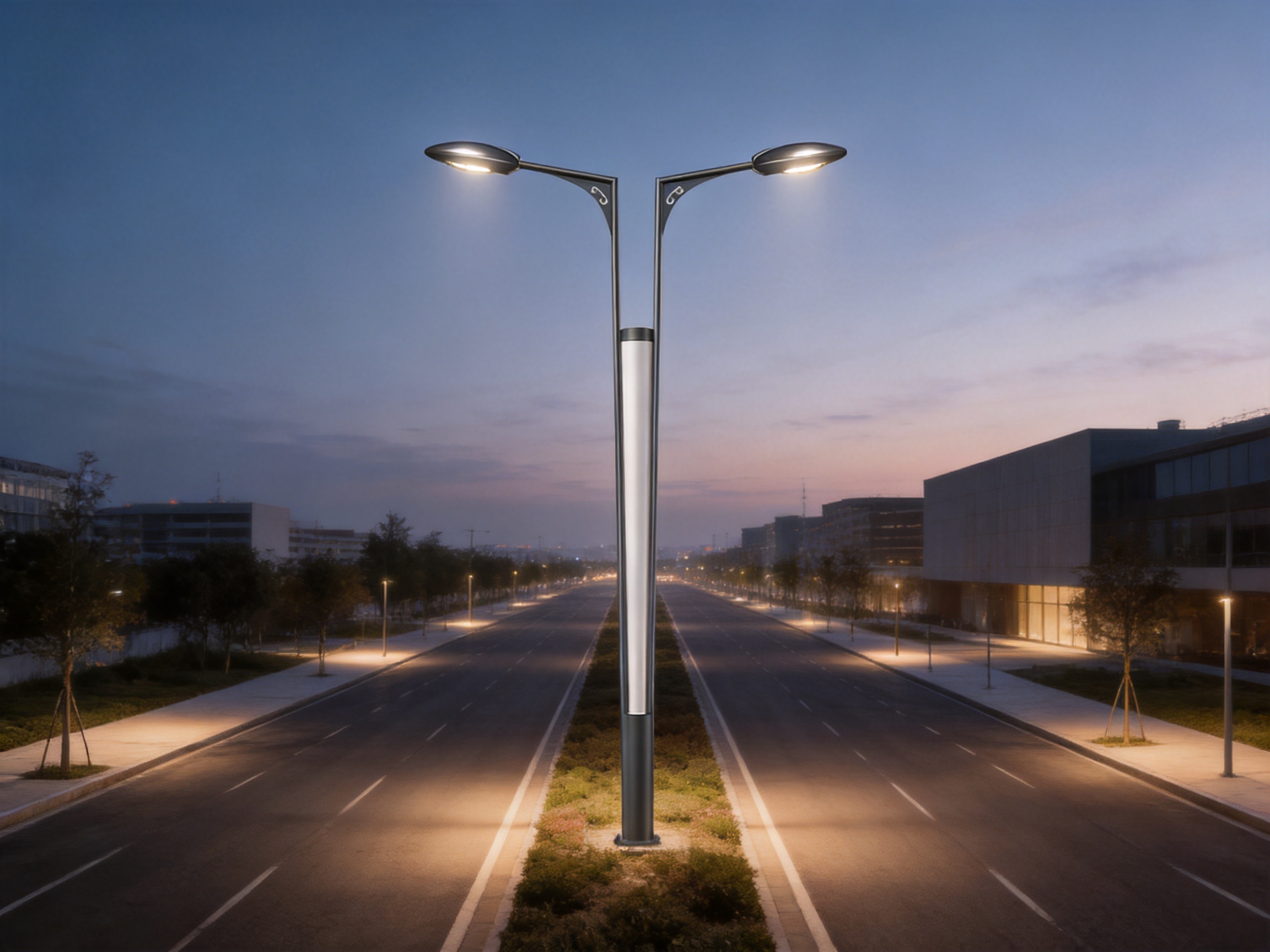
Its defining feature is a balanced dual-arm configuration. Instead of treating the pole and luminaire as purely functional hardware, the design uses two coordinated arms to create a recognizable streetscape element. The symmetrical structure supports illumination on both sides of a road or public area, while its refined proportions give the installation a more decorative and distinguished appearance than a conventional single-arm street light.
This product is especially suitable for projects where lighting performance and visual presentation must work together. High-standard urban arterial roads, boulevard entrances, commercial pedestrian streets, landscaped roads, residential avenues, mixed-use developments, campuses, resorts, and public gathering spaces can all benefit from its combination of practical performance and aesthetic appeal.
The luminaire is built around a high-performance LED light source system. Through optimized lens arrangement and carefully controlled optical distribution, the fixture is intended to deliver useful road brightness, improve uniformity, and reduce poorly illuminated areas. Its available color temperature range, dimming support, weather-resistant construction, and broad pole-height compatibility make it adaptable to different project conditions.
Behind the finished product is a manufacturing system centered on material control, precision forming, automated cutting, consistent welding, surface treatment, engineering support, and quality inspection. These capabilities allow the supplier to support both standard orders and customized lighting projects while maintaining a competitive production cycle.
Product Overview and Design Concept
The Modern Aesthetic Dual-Arm Decorative Street Light is categorized as an LED double-arm light. Its main purpose is to provide reliable illumination across roads and public spaces while establishing a more distinctive visual presence than ordinary utility-style fixtures. The two-arm arrangement creates a balanced composition that can be integrated into a central road median, a broad roadside installation, or a location where illumination is needed in two directions.
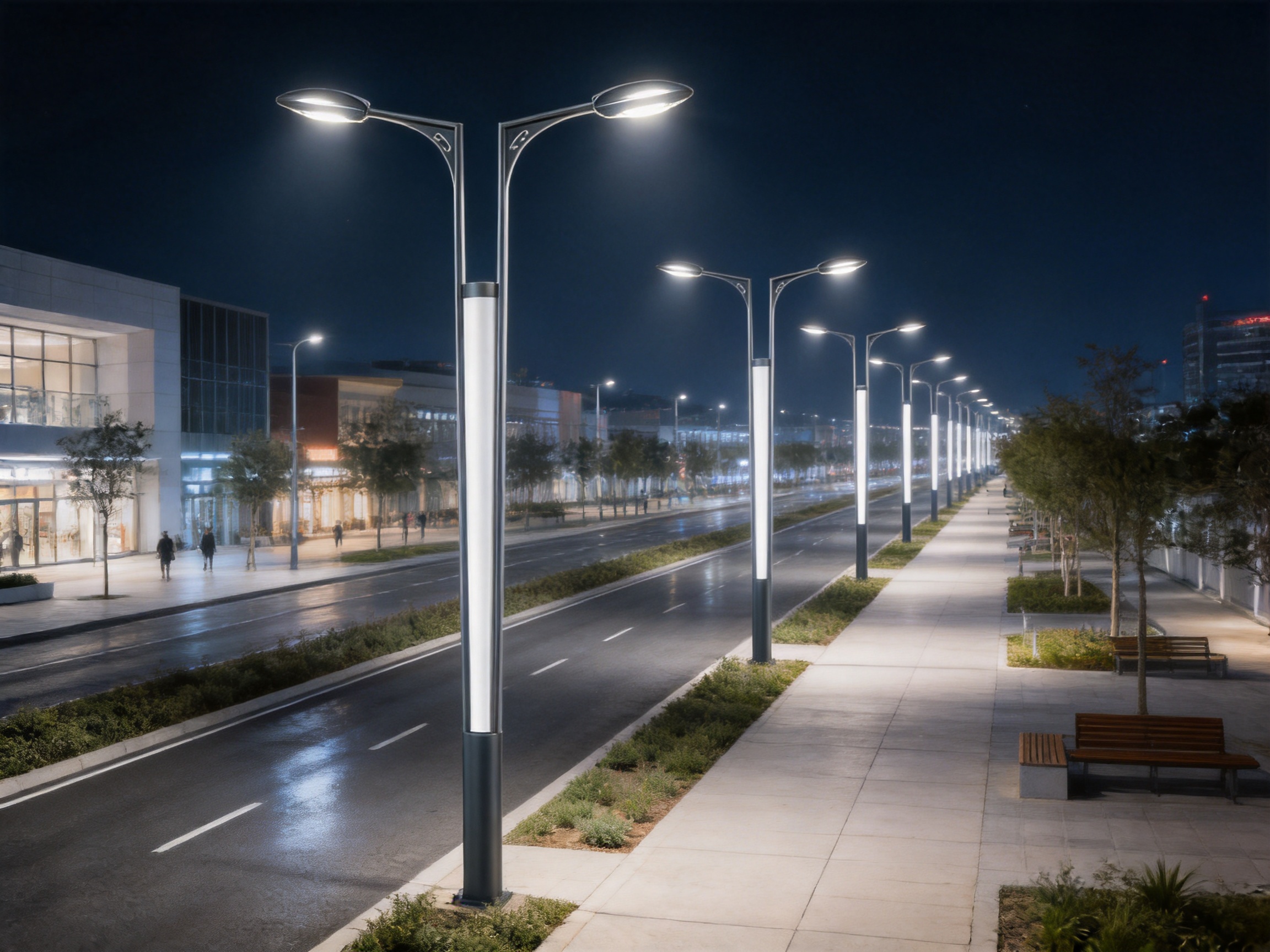
A dual-arm structure also offers a practical solution for areas that require coverage on both sides of a roadway. Depending on the road layout and photometric plan, a single pole may support luminaires oriented in opposite directions. This can reduce the need for separate poles in certain applications and may help create a consistent rhythm along long streets, avenues, and entrances.
The design language is modern but not excessively ornamental. Its appeal comes from the relationship between the pole, the arms, and the luminaires rather than from fragile decorative components. This makes the product appropriate for projects seeking a recognizable identity without sacrificing the structural requirements of outdoor lighting.
Balanced mechanical design is one of the product’s important characteristics. A symmetrical dual-arm arrangement can distribute visual and structural loads more evenly than an irregular decorative structure. Properly engineered support arms help the installation present a stable appearance while accommodating the weight and wind exposure of the lighting equipment.
The product can be used in projects where lighting poles are part of the overall landscape design. Along a commercial street, for example, repeated dual-arm poles can create a clear visual corridor. At the entrance to a residential development, the structure can reinforce a sense of arrival. On an arterial road, the same design can provide a formal and coordinated appearance while performing the essential task of illuminating traffic lanes.
Key Advantages Over Conventional Street Lighting
Combination of Illumination and Decorative Value
Many basic street lights focus almost entirely on utility. They may provide acceptable brightness, but their appearance can be visually neutral or unsuitable for projects with strong architectural ambitions. The dual-arm decorative design addresses this limitation by making the lighting structure part of the urban environment.
The result is a product that can support both technical and aesthetic project objectives. It helps designers avoid the need to select between a decorative pole with limited optical performance and a highly functional fixture with little visual character. The dual-arm configuration provides a more complete solution for streets where the lighting equipment is visible during the day as well as at night.
Balanced Two-Sided Lighting Potential
A single-arm street light generally projects light toward one side of a pole. When two-sided coverage is required, the project may need separate poles or a more complex installation arrangement. A dual-arm product can support luminaires in two directions from one structural location, depending on the lighting design and road geometry.
This arrangement can help create a more organized installation pattern. It may also support improved visual consistency along wide roads, medians, and central avenues. The actual spacing, orientation, mounting height, and optical distribution should always be confirmed through a project-specific lighting calculation, but the two-arm format offers useful design flexibility from the outset.
High-Efficiency LED Performance
The light source system uses LED technology with a stated lamp luminous efficiency of up to 140 lm/W. This figure indicates that the fixture is designed to convert electrical power into useful light efficiently. In practical applications, energy performance will also depend on the selected wattage, operating schedule, optical distribution, ambient conditions, control strategy, and maintenance condition.
Compared with older conventional light sources, LED systems can offer lower energy consumption for an equivalent lighting target, immediate start-up, improved controllability, and reduced routine replacement requirements. The product’s LED platform is therefore suitable for projects that are seeking more efficient road lighting and a modern replacement for outdated fixtures.
Controlled Optical Distribution
Road lighting is not simply a matter of producing a large quantity of light. The light must be directed toward the required areas with appropriate uniformity and limited glare. The product uses an optimized lens arrangement to guide light onto the roadway and surrounding areas more precisely.
Precise optical control can help reduce wasted upward light and improve the relationship between pole spacing, mounting height, and illuminated road width. It may also reduce dark zones between poles when the layout and photometric design are properly coordinated. The anti-glare approach is intended to create a more comfortable visual environment for drivers, pedestrians, and nearby residents.
Wide Color Temperature Selection
The available color temperature range is 3000K to 6000K. This allows the project team to select a warmer, neutral, or cooler appearance according to the surrounding environment and design brief. Warmer light may suit residential districts, historical areas, hospitality developments, and landscaped pedestrian environments. Neutral or cooler settings may be preferred for arterial roads, industrial areas, campuses, and applications where a more crisp visual appearance is desired.
Color temperature should be selected together with glare control, color rendering, local regulations, environmental objectives, and the character of nearby buildings. The range gives designers more flexibility than a fixed-color product and allows the same basic product family to be adapted to different streetscape concepts.
Weather-Resistant Construction
The lamp housing is manufactured from aluminum alloy, and the product has an IP65 rating. Aluminum alloy offers a practical combination of low weight, structural suitability, and heat dissipation potential. The IP65 protection level indicates protection against dust ingress and water jets from different directions when the product is correctly assembled and maintained.
These characteristics make the fixture suitable for outdoor roadway conditions, including exposure to rain, dust, seasonal temperature changes, and general environmental contaminants. The stated operating temperature range of -35°C to 65°C provides a broad reference range for project evaluation, although final installation conditions should always be reviewed by the project engineer.
Long-Term Surface Protection
The product uses an advanced baking varnish process on its alloy body. A properly prepared and cured coating helps protect the surface from ultraviolet exposure, moisture, and environmental corrosion. It also contributes to the product’s visual consistency, which is particularly important when multiple poles are installed along a prominent road or public space.
A durable surface finish can reduce the frequency of repainting and maintenance caused by ordinary outdoor exposure. For city authorities and property operators, this may help reduce lifecycle disruption. For developers, it helps preserve the intended visual quality of the site after handover rather than allowing the lighting structures to deteriorate rapidly in appearance.
Technical Specification Summary
The following table summarizes the principal information provided for the product. Final project specifications, including power, mounting details, photometric files, foundation requirements, and pole configuration, should be confirmed during the engineering and quotation process.
| Item | Specification | Project Significance |
|---|---|---|
| Product type | LED double-arm light | Supports two-directional lighting concepts and decorative streetscape design |
| Brand | Jinyuan | Product identification for sourcing and documentation |
| Application | Road | Suitable for roadway and related outdoor public-space projects |
| Input voltage | AC85-265V | Broad input range for compatible electrical systems |
| Light source | LED | Efficient, controllable, and long-life illumination platform |
| Operating temperature | -35°C to 65°C | Supports evaluation for a wide range of outdoor climates |
| Housing material | Aluminum alloy | Combines light weight, durability, and heat dissipation potential |
| IP rating | IP65 | Protection against dust and water jets for outdoor use |
| Luminous efficiency | 140 lm/W | Supports energy-conscious lighting design |
| Color temperature | 3000K-6000K | Allows warm, neutral, or cool visual effects |
| Color rendering index | Ra 70 | Provides practical color recognition for roadway environments |
| Dimming support | DC 0-10V / DALI | Allows integration with compatible control systems |
| Warranty period | 5 years | Provides a defined period of product assurance |
| Pole materials | Q235, Q355, SS400, GR65, and others | Supports selection according to structural and project requirements |
| Pole height | 6m-10m | Suitable for various roadway and public-space layouts |
Optical Performance and Public-Space Comfort
Good road lighting must help people see without creating unnecessary visual stress. Drivers need sufficient illumination to recognize road geometry, vehicles, pedestrians, signs, and potential obstacles. Pedestrians need a comfortable level of visibility around crossings, sidewalks, entrances, and shared spaces. Nearby residents and businesses benefit when lighting is directed responsibly and excessive glare is controlled.
The product’s lens arrangement is intended to support this balance. Rather than allowing light to spread without direction, the optical system focuses the output according to the needs of the roadway. The selected distribution should be matched to lane width, pole spacing, mounting angle, installation height, and the required lighting class.
Uniformity is equally important. A road with very bright areas separated by dark zones can be uncomfortable and may reduce visual confidence. A properly planned LED layout can provide a smoother transition between illuminated areas. The dual-arm structure may also support a symmetrical lighting plan for roads with two carriageways or broad central spaces.
Color temperature contributes to the atmosphere of a location. A warm 3000K setting can make landscaped roads and residential areas feel more welcoming. A mid-range setting can provide a balanced appearance for many urban applications. A cooler setting toward 6000K can create a crisp, high-visibility visual environment where the project design and local requirements support it.
The stated Ra 70 color rendering index is suitable for many roadway applications where practical recognition is required. It allows common objects, road markings, vehicles, and surroundings to appear with useful color differentiation. Applications with specialized color-identification requirements should be evaluated separately to determine whether a higher color rendering level is necessary.
Smart Dimming and Energy Management
The product supports DC 0-10V and DALI dimming. This makes it more adaptable than a fixture limited to simple on-and-off operation. When paired with a compatible control system, the light output can potentially be adjusted according to time, traffic levels, pedestrian activity, seasonal requirements, or energy-management policies.
Dimming can be useful on roads where full output is essential during evening peak periods but reduced output may be acceptable during low-traffic hours. A carefully developed schedule can lower energy use while retaining a suitable level of safety and orientation. Control strategies should be established by the project owner and lighting engineer in accordance with applicable regulations.
DALI compatibility may support more detailed monitoring and control in projects that use a digital lighting management architecture. The 0-10V option can be useful where a simpler analog control approach is preferred. The availability of both methods gives system integrators more flexibility when coordinating the street light with existing or planned infrastructure.
Smart control should not be viewed only as an energy-saving feature. It may also support maintenance planning, fault identification, lighting scene management, and operational reporting. In a commercial district, different operating schedules could be planned for business hours, late-night periods, holidays, and special events. In a residential community, the control profile could be aligned with traffic and pedestrian patterns.
The selected control system, wiring arrangement, surge protection, photocell strategy, communication architecture, and commissioning procedure must be confirmed for each project. The fixture provides the dimming compatibility, while the complete performance depends on the quality of the control design and installation.
Materials and Structural Reliability
Outdoor lighting structures are exposed to wind, rain, sunlight, temperature changes, dust, vibration, and occasional impact. The quality of the materials and the consistency of fabrication therefore have a direct influence on service reliability. The product combines an aluminum-alloy lamp housing with poles available in structural steel options such as Q235, Q355, SS400, GR65, and other specified materials.
Different projects may require different material grades according to pole height, wind speed, coastal exposure, local codes, foundation conditions, and architectural requirements. Providing multiple material options allows the pole and arm assembly to be considered as part of a broader structural design rather than treated as a one-size-fits-all component.
The listed pole height range is 6m to 10m. This makes the product applicable to a variety of road and public-space layouts. Lower heights can suit pedestrian-oriented areas, residential roads, entrances, and smaller streets. Higher configurations may be appropriate for broader roadways or locations requiring a greater coverage area. The final height should be selected through a combination of photometric calculation, structural assessment, and visual planning.
Mechanical calculation for wind and foundation is available as part of the project service capability. This is valuable because pole performance depends not only on the visible shaft and arms but also on the foundation, anchor bolts, soil conditions, wind exposure, and installation method. Coordinating these factors early can reduce the risk of redesign, construction delays, or field modifications.
Advanced Manufacturing Capabilities
Material Availability and Selection
A reliable manufacturing program begins with controlled raw materials. The production capability described for this product includes material options such as Q235B, Q345B, S275JR, S355JR, Q460, A36, A572, GR56, and GR50, in addition to other grades required by specific projects. Extensive material stock can shorten procurement cycles and reduce the risk of production delays caused by limited availability.
Material selection is not merely a purchasing decision. It affects welding behavior, forming performance, structural strength, corrosion resistance, weight, and compatibility with project standards. By maintaining access to multiple material options, the manufacturer can respond more effectively to international specifications and engineering requirements.
For large infrastructure orders, material availability is especially important. A delayed batch of steel or an unexpected substitution can affect the production schedule, installation sequence, and handover date. Stock management and early material confirmation help create a more predictable path from purchase order to delivery.
Precision CNC Bending
The production line uses precise and consistent CNC bending. CNC equipment helps control bending angles, dimensions, and repeatability across multiple components. This is important for dual-arm lighting because symmetrical geometry contributes to both visual quality and structural balance.
Consistent bending can reduce post-production adjustment and improve the fit between connected components. When a large project includes dozens or hundreds of poles, small dimensional variations can become visually apparent along the roadway. Repeatable forming helps maintain a consistent appearance from one installation point to the next.
Precision bending also supports structural integrity. Controlled forming can help reduce irregular deformation, unwanted stress concentration, and alignment problems. The final result depends on material properties, tooling, process settings, inspection, and welding, but CNC bending provides a strong foundation for consistent fabrication.
High-Accuracy Cutting
The manufacturing information identifies cutting accuracy of 0.01 mm. High-accuracy cutting supports exact dimensions and clean edges, which are valuable for component fit, assembly efficiency, and finished appearance. Clean cutting can also reduce the amount of secondary correction required before welding or surface treatment.
Accurate component preparation is particularly useful when the product includes repeated arm assemblies, access openings, brackets, base plates, and other connected parts. Better dimensional control can help reduce installation difficulties and improve the consistency of the completed structure.
In a competitive manufacturing environment, production accuracy directly influences cost as well as quality. Fewer rejected parts, less rework, and faster assembly can help maintain competitive pricing without relying on reduced material quality or simplified inspection.
Professional Welding
The supplier employs certified welders with extensive welding experience. Welding quality is essential for street-light poles and dual-arm assemblies because the welded joints must handle structural loads, vibration, and long-term outdoor exposure. Inconsistent welds can create cosmetic defects and may also affect structural reliability.
Experienced welders can help ensure proper preparation, controlled heat input, suitable penetration, consistent bead appearance, and appropriate finishing. Certified personnel also support the documentation and process discipline expected in larger infrastructure projects.
For large-scale orders, welding capacity influences both quality and delivery. A production team that can maintain consistent welding standards while handling volume is better positioned to complete projects on schedule. This is especially important when lighting poles must be coordinated with civil works, electrical installation, road construction, or landscape completion.
Automated Production Lines
Automated lines help improve repeatability, production speed, and process control. Automation does not replace engineering judgment or skilled supervision, but it can reduce variation in repetitive operations. It may also improve workplace efficiency and support a more stable output across large quantities.
The described production system is intended to improve product quality while reducing unnecessary cost and supporting environmentally responsible manufacturing. Faster cycles and controlled processes can reduce material waste, rework, and energy loss associated with inefficient production.
Automation is particularly valuable when a project requires consistent dimensions, matching surface finishes, and a predictable delivery schedule. A coordinated manufacturing line can move products through cutting, forming, welding, treatment, inspection, and packing with fewer interruptions.
Surface Treatment and Corrosion Protection
Corrosion protection has a significant influence on the service life and appearance of outdoor lighting. The product uses a baking varnish process designed to improve resistance to ultraviolet radiation and environmental exposure. Correct surface preparation, coating application, curing, and inspection are all important to achieve reliable results.
A controlled finishing process can help the pole and fixture maintain a uniform appearance over time. This is valuable in decorative streetscape projects where surface deterioration would be particularly noticeable. It can also reduce the need for frequent repainting or localized repair.
Projects in coastal, industrial, high-humidity, or heavily polluted environments should include a location-specific corrosion review. Additional coating systems, special fasteners, sealing methods, or maintenance procedures may be required depending on the exposure category and local specification.
Modern Aesthetic Dual-Arm Decorative Street Light
Quality Assurance and Project Consistency
Quality assurance begins before fabrication and continues through final inspection. The manufacturer’s production capability is supported by a broad range of equipment, including bending machines, electrostatic powder-painting equipment, automatic welding and cutting machines, and a 1250-ton die-casting machine. This equipment base supports both lighting products and associated pole manufacturing operations.
Quality control is especially important for a product that combines visible design features with structural responsibility. The pole must be dimensionally consistent, the arms must align correctly, the luminaire mounting points must be accurate, and the surface finish must be suitable for outdoor exposure. A defect in any one of these areas can affect appearance, installation efficiency, or long-term performance.
Internationally oriented manufacturing also requires attention to documentation. Product drawings, material information, electrical specifications, inspection records, packing details, and installation guidance may all be important for project approval. Clear documentation helps contractors, consultants, importers, and end users confirm that the supplied product matches the approved design.
The company reports compliance with quality and management standards including ISO9001, ISO14001, and OHSAS18001. These standards indicate a formal approach to quality management, environmental management, and occupational health and safety. Certification alone does not replace product inspection, but it provides a useful framework for evaluating the maturity of an industrial supplier.
For buyers, the most effective quality process combines supplier evaluation, approved drawings, pre-production confirmation, in-process controls, final inspection, and correct installation. The five-year warranty provides an additional assurance period, while proper maintenance and operation remain necessary for achieving the expected service life.
Customization and Engineering Support
Urban lighting projects rarely have identical requirements. Road widths, pole spacing, architectural styles, wind conditions, electrical standards, color preferences, and foundation designs vary from one location to another. The product can therefore be supported through a range of design and engineering services.
CAD Design
CAD design helps transform a general concept into a clear technical proposal. It can show the pole profile, dual-arm arrangement, luminaire position, mounting details, base plate, access doors, and connection points. Clear drawings allow the project team to review dimensions and identify potential conflicts before manufacturing begins.
Three-Dimensional Product Simulation
Three-dimensional product simulation can help clients understand how the pole, arms, and luminaires will appear as a complete assembly. It is useful for reviewing proportions, clearances, mounting angles, and decorative details. This stage can reduce uncertainty when a product is being developed for a premium streetscape or landmark location.
Three-Dimensional Scene Simulation
Scene simulation places the lighting product within a representative road, plaza, entrance, or landscape environment. This allows designers to consider the relationship between the pole, surrounding buildings, trees, signs, sidewalks, and traffic lanes. It can also help clients compare color finishes and visual styles before committing to production.
Specification and Color Customization
Customization may include color, surface finish, arm proportions, mounting details, pole material, height, electrical configuration, and other project-specific requirements. Decorative products are often expected to align with a city identity, developer branding, architectural palette, or landscape concept. Specification and color customization helps the lighting system look intentional rather than generic.
Mechanical Calculation
Wind and foundation calculations support a safer and more coordinated installation. They can take into account pole height, arm projection, luminaire area, local wind conditions, soil information, anchor arrangement, and foundation geometry. These calculations should be reviewed by the responsible project engineer and adapted to the applicable local codes.
Overseas Installation Guidance
Installation guidance can support overseas contractors and project managers during assembly, positioning, wiring, foundation coordination, and commissioning. Clear guidance is especially useful when local teams are working with an unfamiliar pole configuration or when the project includes customized components.
Applications in Different Urban Environments
Urban Arterial Roads
On arterial roads, lighting must support vehicle movement, lane recognition, intersection awareness, and a coherent streetscape. The dual-arm configuration may be used where both sides of a roadway or median require coordinated illumination. The 6m to 10m pole-height range provides options for different road geometries, subject to lighting calculations and structural review.
The decorative appearance can also support urban renewal programs. Replacing older, visually inconsistent poles with a coordinated dual-arm design can strengthen the identity of a major corridor. The selected color temperature and dimming schedule can then be adjusted to suit traffic patterns and the desired nighttime character.
Commercial Pedestrian Streets
Commercial streets require more than basic roadway brightness. Lighting should help create a welcoming atmosphere, support wayfinding, highlight storefront approaches, and make the public realm feel comfortable after dark. A decorative dual-arm light can act as both an illumination source and a repeated visual element along the shopping corridor.
A warmer color temperature may be considered for retail and hospitality areas, especially where the design includes landscaping, seating, outdoor dining, or historic architectural features. Dimming can also help the operator manage brightness during different phases of the evening while maintaining an appropriate sense of safety.
Premium Residential Communities
Residential developments often place strong emphasis on visual quality, comfort, and maintenance. The product’s balanced form can complement landscaped entrances, internal avenues, clubhouses, and central boulevards. Its anti-glare approach and adjustable color temperature can help create a pleasant environment for residents and visitors.
The durable aluminum-alloy housing, IP65 protection, and weather-resistant finish are also relevant to long-term property management. A lighting installation that retains its appearance and operates reliably can support the perceived quality of the wider development.
Campuses and Institutional Areas
Universities, hospitals, government campuses, and cultural institutions often require lighting that is functional but also visually coordinated with important buildings and public spaces. The dual-arm design can help define entrances, pedestrian corridors, drop-off areas, and internal roads while maintaining a consistent campus identity.
Control compatibility is useful in these settings because operating schedules may vary significantly between weekdays, weekends, holidays, and special events. The lighting system can be planned as part of a broader campus energy-management strategy.
Resorts and Landscape Developments
Resorts, parks, and landscape-oriented developments need careful control of visual impact. The product can be used where the pole itself is intended to contribute to the design rather than disappear completely. The available color temperature range allows the project team to coordinate the nighttime atmosphere with planting, water features, pathways, and architectural elements.
In such environments, glare control and responsible light direction are particularly important. The optical design should be selected to provide useful illumination without unnecessarily disturbing nearby accommodations, natural areas, or viewing zones.
Installation and Maintenance Considerations
Successful performance depends on correct installation as well as product quality. Before installation, the project team should confirm foundation dimensions, anchor bolt positions, cable routes, pole orientation, lifting requirements, and luminaire mounting details. The dual-arm geometry should be checked carefully to ensure that both arms face the intended directions and maintain the planned alignment.
Electrical installation should follow the applicable local standards. Input voltage, earthing, surge protection, control wiring, driver compatibility, and isolation procedures should be verified by qualified personnel. Dimming systems require particular attention because incorrect wiring or incompatible control equipment may affect operation.
After installation, the luminaires should be inspected for correct tilt, secure fastening, cable protection, sealing, and optical orientation. A nighttime inspection can confirm that the actual lighting pattern corresponds with the approved design. Any unexpected glare, dark zone, misalignment, or light trespass should be addressed during commissioning.
Routine maintenance should include visual inspection, cleaning where environmental conditions require it, checking of fasteners and access doors, examination of cable entries, and review of the coating condition. Although IP65 protection reduces the risk of dust and water ingress, seals and covers must remain correctly installed throughout the service period.
Control systems should also be tested periodically. Dimming schedules, photocells, communication modules, and fault reporting functions should be reviewed to ensure that the intended energy and operating strategy remains active. A well-maintained control system can help the product deliver greater value over its operating life.
Why the Product Is a Competitive Choice
The product’s competitive strength comes from the combination of features rather than from a single specification. A conventional light may offer basic illumination, while a purely decorative product may focus on appearance. This dual-arm LED street light is designed to address both requirements at the same time.
Its 140 lm/W luminous efficiency supports energy-conscious design. The 3000K to 6000K color temperature range supports different architectural and environmental objectives. DC 0-10V and DALI dimming provide compatibility with more advanced control strategies. IP65 protection, a broad operating temperature range, aluminum-alloy housing, and a five-year warranty support outdoor deployment.
The structural offering is also flexible. Pole heights from 6m to 10m and multiple material options allow the product to be adapted to different road conditions and project standards. Engineering support, including CAD drawings, three-dimensional simulations, customization, wind calculations, and installation guidance, can reduce the burden on the buyer’s project team.
Manufacturing capacity further strengthens the offer. Access to material stock, CNC bending, high-accuracy cutting, certified welding, automated lines, surface-treatment equipment, and large-scale production infrastructure helps support consistent quality and competitive lead times. This is particularly important for municipal and commercial projects where delivery reliability can be as important as the initial product price.
When comparing suppliers, buyers should evaluate the entire value proposition: optical performance, structural design, material traceability, coating quality, production capacity, customization, documentation, warranty, and after-sales support. A product with a slightly higher initial price may provide better total value if it reduces rework, premature replacement, energy consumption, and maintenance demands.
Supplier Capability and Global Project Support
Yangzhou Jinyuan Lamps Co., Ltd. is affiliated with Jinshang Electric Group and operates as a professional production, design, and engineering company in the road illumination industry. Established in 2002, the company focuses on street light poles, LED street lights, solar street lights, light fixtures, and related lighting products.
The company reports a site area of more than 70,000 square meters and a workforce of more than 300 professional technicians. Its products are exported to more than 200 countries. This international experience can be valuable for buyers who require communication across different time zones, documentation for overseas approval, and coordination with contractors or distributors in different markets.
The product range covers more than one lighting category, including high mast lighting, solar lighting, smart street lighting, traffic facilities, photovoltaic power generation systems, LED floodlights, LED street lighting, communication towers, and mid-mast lighting. This broader industrial background may help the supplier understand projects where street lighting is connected with other outdoor infrastructure.
A supplier capable of supporting multiple product categories can sometimes provide a more coordinated solution for complex developments. For example, a project may require decorative roadway lighting, high-mast illumination for a large interchange, solar lighting for a remote pathway, and traffic facilities around the same site. The ability to discuss these systems with one experienced manufacturer may simplify procurement and technical coordination.
At the same time, each project should be evaluated on its own technical requirements. Buyers should request the relevant drawings, photometric data, electrical details, structural calculations, coating information, inspection records, packing standards, and installation instructions before final approval.
Project Selection Guidance
The Modern Aesthetic Dual-Arm Decorative Street Light is most appropriate when the project needs a visible design feature, two-directional lighting potential, reliable LED performance, and long-term outdoor durability. It is a strong candidate for roads and public areas where the lighting structure contributes to the identity of the development.
During selection, the project team should first define the road classification, required illumination level, lane arrangement, sidewalk condition, pole spacing, mounting height, and control schedule. These factors determine the appropriate optical distribution and fixture configuration.
The next step is to evaluate the environment. Coastal locations, areas with industrial pollution, regions with severe winter conditions, and places with high wind exposure may require enhanced material or coating specifications. The available pole material options should be considered alongside local structural codes and foundation conditions.
Designers should then review the visual relationship between the pole and its surroundings. The arm profile, pole finish, color temperature, and spacing pattern should be coordinated with buildings, landscaping, signs, road furniture, and other public-realm elements. Three-dimensional product and scene simulations can be useful at this stage.
Finally, the owner should establish the operating and maintenance strategy. Dimming schedules, inspection intervals, cleaning requirements, spare-part planning, warranty procedures, and documentation should be defined before handover. This approach helps ensure that the product continues to provide both visual and technical value after installation.
Frequently Asked Questions
What is the main purpose of this dual-arm street light?
The main purpose is to provide effective LED roadway illumination while adding a distinctive decorative element to the streetscape. It is intended for roads, commercial pedestrian streets, premium residential areas, landscaped avenues, campuses, and other public spaces where appearance and performance are both important.
Can one pole illuminate both sides of a road?
The dual-arm structure is designed to support lighting in two directions. Whether one pole can replace separate installations depends on road width, median arrangement, required lighting class, optical distribution, pole spacing, and local engineering requirements. A project-specific photometric and structural design should confirm the final arrangement.
What voltage does the product support?
The stated input voltage range is AC85-265V. Compatibility with the project electrical system should be confirmed before ordering, including frequency, earthing, surge protection, driver requirements, and control wiring.
What is the luminous efficiency?
The listed lamp luminous efficiency is 140 lm/W. Actual system performance should be evaluated together with the selected power, optical distribution, ambient temperature, driver performance, dimming level, and maintenance condition.
What color temperatures are available?
The stated color temperature range is 3000K to 6000K. This provides options from warm white through neutral and cooler white appearances. The best choice depends on the project’s architecture, road function, environmental requirements, local regulations, and desired nighttime atmosphere.
Does the fixture support dimming?
Yes. The product supports DC 0-10V and DALI dimming. The selected control method must be matched with compatible drivers, wiring, sensors, communication equipment, and commissioning procedures.
Is the product suitable for harsh outdoor conditions?
The product uses an aluminum-alloy lamp housing, has an IP65 rating, and is specified for an operating temperature range of -35°C to 65°C. These features support outdoor use, but projects in highly corrosive or extreme environments should receive a location-specific material and coating review.
What pole heights are available?
The stated pole-height range is 6m to 10m. The final height should be selected according to road width, required illumination, pole spacing, wind conditions, architectural proportions, and local standards.
What materials can be used for the pole?
Available options include Q235, Q355, SS400, GR65, and other materials. The appropriate grade depends on structural calculations, local codes, environmental exposure, availability, and project specifications.
How long is the warranty?
The stated warranty period is five years. Warranty conditions, exclusions, operating requirements, installation responsibilities, and claim procedures should be confirmed in the commercial and technical documentation.
Can the color and specifications be customized?
Yes. The available project services include specification and color customization. Depending on the project, customization may also involve pole height, material, arm arrangement, mounting details, optical configuration, electrical parameters, and surface finish.
Does the supplier provide engineering drawings?
CAD design, three-dimensional product simulation, three-dimensional scene simulation, mechanical calculation for wind and foundation, and overseas installation guidance are listed among the available services. The exact deliverables should be agreed during the design and quotation stage.
What manufacturing processes support product quality?
The described production capabilities include stocked structural materials, CNC bending, high-accuracy cutting, certified welding, automated production lines, electrostatic powder-painting equipment, and advanced surface-treatment processes. These operations support dimensional consistency, structural reliability, appearance, and production efficiency.
Where is this product most suitable?
It is especially suitable for high-standard urban arterial roads, commercial pedestrian streets, premium residential communities, landscaped avenues, campuses, resorts, entrances, and other projects where the lighting equipment is part of the overall visual design.
Conclusion
The Modern Aesthetic Dual-Arm Decorative Street Light offers a balanced response to the changing demands of urban lighting. It combines a recognizable dual-arm form with high-performance LED illumination, controlled optical distribution, adjustable color temperature, dimming compatibility, weather-resistant construction, and a durable surface finish.
Its value is not limited to the luminaire itself. The product is supported by flexible pole materials, 6m to 10m height options, engineering calculations, CAD and three-dimensional design services, customization, installation guidance, and a manufacturing system equipped for large-scale production. These capabilities make it suitable for projects that require both a refined appearance and dependable technical execution.
Compared with ordinary single-arm utility lighting, the product can offer stronger visual identity and two-directional design potential. Compared with decorative products that prioritize appearance over performance, it provides a more complete LED lighting platform with efficient output, optical control, IP65 protection, dimming support, and a five-year warranty.
For project owners, consultants, distributors, and contractors, the strongest results will come from treating the product as part of an integrated lighting design. Correct photometric planning, structural analysis, foundation coordination, control selection, installation, and maintenance are essential to achieving the intended performance.
When these factors are properly coordinated, the dual-arm street light can do more than illuminate a roadway. It can help define an urban corridor, improve nighttime comfort, strengthen the visual character of a development, and deliver a durable lighting solution for many years of outdoor service.
References
1. Product technical information for the Modern Aesthetic Dual-Arm Decorative Street Light, including electrical, optical, material, environmental, dimming, warranty, and pole specifications.
2. Manufacturer-provided information concerning production equipment, material options, CNC bending, precision cutting, welding, automated production, surface treatment, and engineering services.
3. Manufacturer company profile and road illumination industry information supplied for this product presentation.
4. General principles of roadway lighting design, optical distribution, glare control, lighting uniformity, and public-space visual comfort.
5. General quality-management, environmental-management, occupational-safety, structural-steel, and outdoor-luminaire evaluation principles applicable to roadway lighting projects.