


JINYUAN
JINYUAN
JINYUAN
JINYUAN
JINYUAN
JINYUAN
JINYUAN
JINYUAN
JINYUAN
JINYUAN
JINYUAN
JINYUAN
JINYUAN
JINYUAN
JINYUAN
JINYUAN
Content
- 1 1. The Role of Double-Arm Lighting in Modern Urban Development
- 2 2. Product Design and Structural Advantages
- 3 3. LED Performance and Energy Efficiency
- 4 4. Core Technical Specifications
- 5 5. Advantages Compared with Conventional and Less Adaptable Alternatives
- 6 6. Manufacturing Quality and Production Capabilities
- 7 7. Engineering Support from Concept to Installation
- 8 8. Application Areas
- 9 9. Installation and Maintenance Considerations
- 10 10. Quality Management and International Reliability
- 11 11. Why Manufacturer Integration Matters to Buyers
- 12 12. Project Selection Guide
- 13 13. Frequently Asked Questions
- 13.1 What is the main purpose of a double-arm landscape light?
- 13.2 What makes this product different from a standard roadway light?
- 13.3 What is the luminous efficiency of the product?
- 13.4 What input voltage does the fixture support?
- 13.5 Can the light be dimmed?
- 13.6 What color temperatures are available?
- 13.7 What material is used for the lamp housing?
- 13.8 What is the protection rating?
- 13.9 What operating temperature range is specified?
- 13.10 What pole heights are available?
- 13.11 Which pole materials can be used?
- 13.12 Is the product suitable for coastal environments?
- 13.13 Does the manufacturer provide design assistance?
- 13.14 How long is the warranty period?
- 13.15 Can the fixture be used in a smart city lighting system?
- 13.16 How should the product be maintained?
- 14 14. Conclusion
- 15 References
- 16 Product: Modern Urban Roadway LED Double-Arm Landscape Light
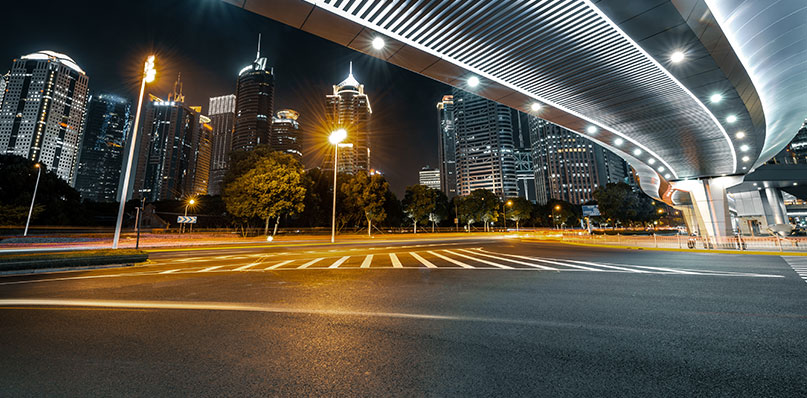
Urban lighting is no longer limited to providing basic visibility after sunset. Modern roadway lighting must support traffic safety, pedestrian comfort, architectural identity, environmental quality, and long-term infrastructure value. Municipal authorities, developers, engineering contractors, and landscape designers increasingly require lighting equipment that combines reliable illumination with visual sophistication, mechanical strength, energy efficiency, and convenient maintenance.
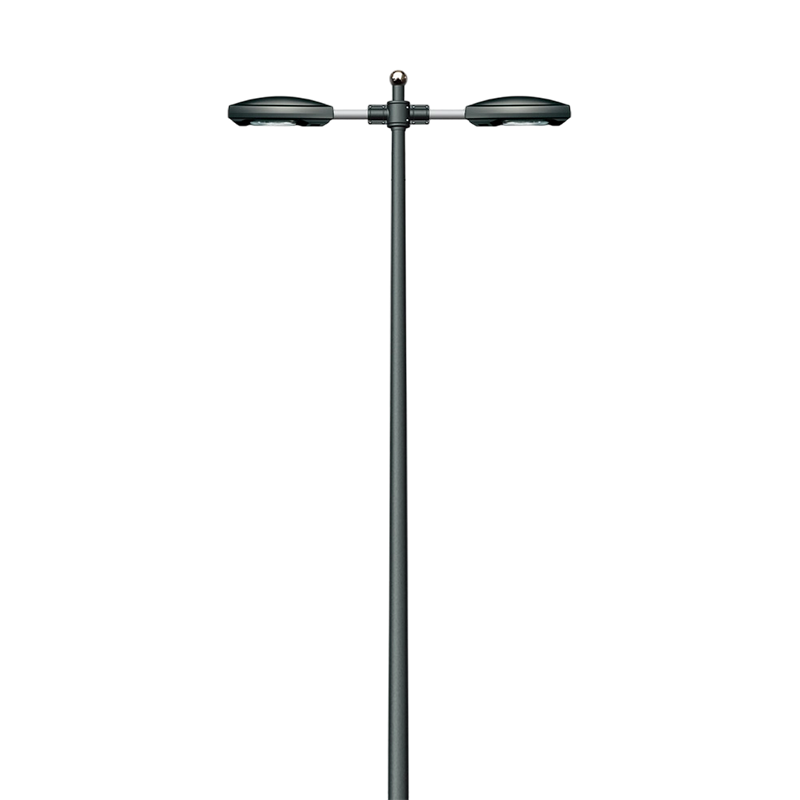
The LED Double-Arm Landscape Light is designed to meet these increasingly demanding requirements. With its symmetrical double-arm structure, high-efficiency LED light source, durable aluminum alloy housing, configurable color temperature, intelligent dimming compatibility, and adaptable pole options, it provides a practical lighting solution for urban roads, commercial districts, themed streets, public spaces, and high-quality landscape environments.
Unlike a basic single-arm roadway luminaire that primarily focuses on one side of a road, a double-arm configuration is engineered to deliver balanced illumination across broader areas. This arrangement can help improve visual continuity, reduce dark zones, and create a more coordinated streetscape. At the same time, the fixture’s modular form allows it to be integrated into different architectural and landscape styles, ranging from clean contemporary developments to more decorative urban districts.
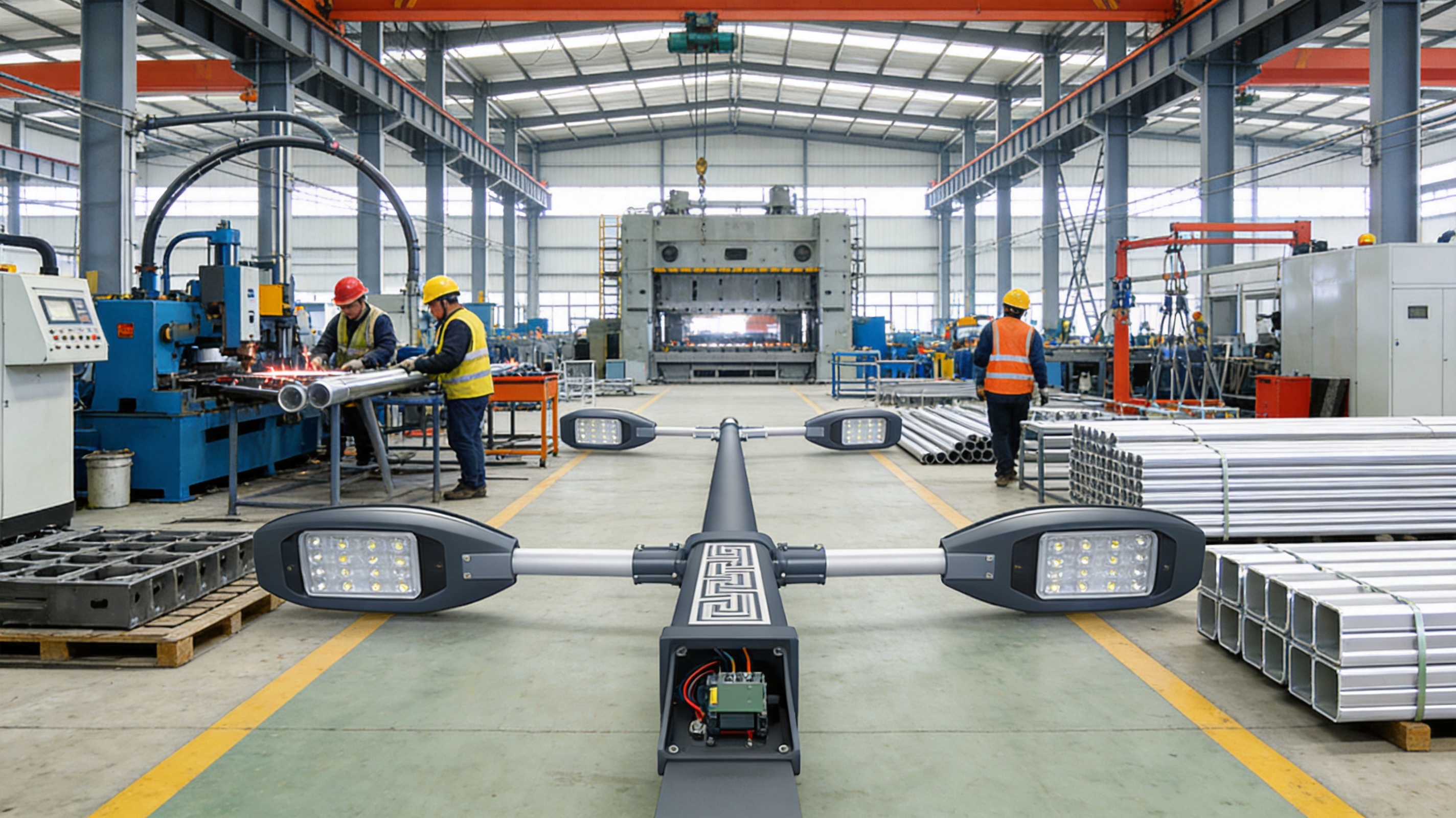
Behind the finished product is a complete manufacturing and engineering capability. The production process includes material selection, CNC bending, precision cutting, automated welding, anti-corrosion treatment, powder coating, die casting, quality inspection, and project-specific engineering support. This integrated approach helps transform a lighting concept into a dependable infrastructure product suitable for demanding outdoor applications.
Modern Urban Roadway LED Double-Arm Landscape Light
1. The Role of Double-Arm Lighting in Modern Urban Development
Roadway lighting has a direct relationship with public safety and the overall perception of a city. A well-designed lighting system helps drivers identify road geometry, pedestrians recognize vehicles and obstacles, and people move more confidently through public areas. It also influences how commercial streets, residential communities, transport corridors, and civic spaces appear at night.
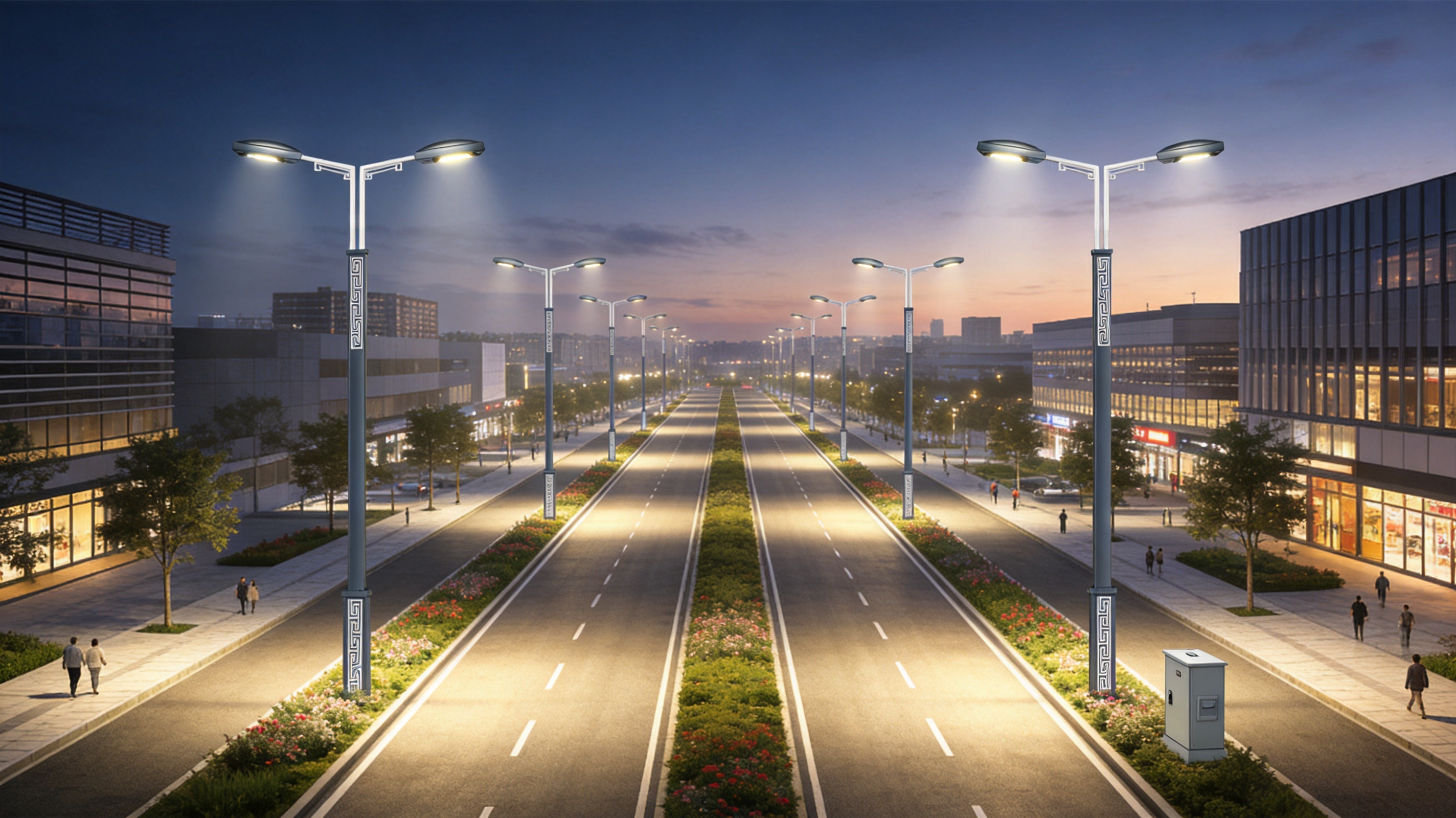
A double-arm landscape light contributes to this objective by distributing lighting equipment symmetrically along the pole. Depending on the project layout, the two arms may illuminate opposite sides of a roadway, a central median, parallel pedestrian paths, or a broader open space. This makes the configuration particularly useful where the lighting plan requires balanced coverage rather than one-directional illumination.
The visual balance of a double-arm pole can also strengthen the identity of a streetscape. In many urban areas, lighting columns are among the most visible elements of the public realm. Their form, proportion, finish, and arrangement can influence whether a road appears modern, orderly, elegant, or industrial. The product therefore combines practical lighting performance with a design-oriented approach to urban infrastructure.
For business districts, the fixture can complement modern buildings, glass façades, landscaped medians, and carefully planned pedestrian zones. For thematic streets and leisure areas, customized textures, finishes, and structural details can be selected to support a specific visual concept. For major roadways, the symmetrical arrangement can provide a consistent appearance across long corridors while supporting broad and uniform illumination.
Balanced illumination for road and pedestrian environments
One important advantage of a double-arm system is its ability to address multiple lighting directions from a single pole location. This can help reduce the need for closely spaced independent poles in certain layouts, although final spacing must always be confirmed through a professional lighting design and photometric calculation.
Balanced placement can also create a more coherent visual rhythm. When poles are installed at regular intervals, the repeated double-arm form produces a recognizable pattern along the road. This is valuable for city entrances, boulevard projects, central avenues, bridges, public plazas, and other locations where the appearance of infrastructure matters as much as basic function.
Support for traffic safety and pedestrian visibility
Improved nighttime visibility depends on more than brightness. Light distribution, glare control, color temperature, mounting height, road geometry, surface reflectance, and spacing all influence the user experience. The LED Double-Arm Landscape Light is intended to serve as part of a complete lighting system that supports road users while providing a visually comfortable environment.
Its LED light source provides efficient illumination with a stated luminous efficiency of up to 140 lumens per watt. This allows project designers to pursue strong lighting performance while managing electrical consumption. The available color temperature range of 3000K to 6000K provides flexibility for different environments, from warmer and more welcoming pedestrian zones to cooler and more functional roadway applications.
2. Product Design and Structural Advantages
The product is built around a combination of symmetry, modularity, and outdoor durability. Its double-arm structure distributes the luminaires in a balanced arrangement, while the pole and fixture assembly can be adapted to project-specific requirements. This approach provides more design freedom than a fixed, one-style lighting product.
The lamp housing is manufactured from aluminum alloy. This material provides a useful balance between strength, weight, corrosion resistance, and heat dissipation. Effective thermal management is essential for LED equipment because operating temperature can influence component performance, light output, and service life. The aluminum housing assists in transferring heat away from the LED assembly and supporting stable operation in outdoor conditions.
The housing is protected with a precision anti-corrosion coating suitable for demanding external environments. The product has an IP65 rating, indicating protection against dust ingress and water projected from common outdoor directions. This level of protection makes the fixture appropriate for many roadway and landscape applications, subject to correct installation and project-specific environmental assessment.
The stated operating temperature range is -35°C to 65°C. This broad range supports use in diverse climates, including areas exposed to severe winter conditions, hot summers, and large seasonal temperature changes. Proper electrical design, installation, ventilation, and maintenance remain important, but the specification demonstrates that the fixture is developed for real outdoor service rather than protected indoor use.
Modular adaptation to different architectural styles
Urban projects rarely share exactly the same visual language. A central business district may require a minimalist and refined appearance, while a historic-themed street may call for decorative elements. A residential development may favor a softer landscape form, and an industrial corridor may prioritize a robust and functional appearance.
The modular structural concept allows the double-arm light to be adapted to these different contexts. Designers can consider variations in arm geometry, decorative details, surface finish, mounting arrangement, and pole configuration while maintaining the core lighting concept. This flexibility is a significant advantage over standardized products that offer only one fixed appearance.
Customization also helps reduce the visual conflict between lighting infrastructure and surrounding architecture. Instead of treating light poles as unrelated technical objects, project teams can coordinate their form with paving, landscaping, façades, signage, traffic facilities, and public furniture.
Material choices for long-term outdoor service
Outdoor lighting structures are exposed to wind, rain, humidity, sunlight, pollution, salt, dust, and repeated heating and cooling cycles. Material selection therefore has a direct impact on durability and maintenance requirements. The lamp housing uses aluminum alloy, while pole materials can include Q235, Q355, SS400, GR65, and other specified grades depending on engineering needs.
The availability of multiple pole material options makes it possible to select a suitable balance of strength, cost, weldability, corrosion protection, and regional standard compliance. For a particular project, the final choice should be based on structural calculations, local codes, wind conditions, foundation design, transportation requirements, and the desired service environment.
The manufacturer’s production capability also includes steel material options such as Q235B, Q345B, S275JR, S355JR, Q460, A36, A572, GR56, and GR50. This broad material range supports international project requirements and gives engineering teams greater flexibility when preparing technical specifications.
3. LED Performance and Energy Efficiency
LED technology has become a preferred option for roadway and landscape lighting because it can deliver high luminous efficiency, directional control, long operating life, rapid switching, and compatibility with modern control systems. The LED Double-Arm Landscape Light uses LED as its light source and provides a stated efficiency of 140 lumens per watt.
High luminous efficiency can reduce the electrical power required to achieve a target level of illumination. For large roadway projects with hundreds or thousands of fixtures, even moderate reductions in energy use can influence long-term operating costs. Lower consumption may also support municipal sustainability targets and reduce the total environmental burden of the lighting system.
Energy performance should always be evaluated as part of a complete project calculation. Factors include rated wattage, annual operating hours, dimming schedules, tariff structure, maintenance intervals, lighting levels, and the number of installed fixtures. Nevertheless, a high-efficiency LED platform provides a strong foundation for achieving an economical system.
Color temperature flexibility
The available color temperature range of 3000K to 6000K enables project teams to select a visual appearance that fits the application. Warmer light can create a comfortable and welcoming atmosphere in pedestrian areas, residential streets, parks, hospitality zones, and landscape corridors. Neutral or cooler light may be selected for major roads, industrial areas, intersections, and locations where a more technical appearance is required.
Color temperature should be chosen carefully. A lighting designer must consider surrounding buildings, vegetation, road markings, signage, local regulations, environmental sensitivity, and the desired nighttime identity of the area. The product’s range allows these considerations to be addressed without changing the basic fixture platform.
Color rendering for urban environments
The product has a stated color rendering index of Ra 70. This level is suitable for many roadway and general outdoor applications, where the primary objectives are visibility, traffic guidance, and consistent illumination. Color rendering influences how accurately objects, surfaces, signs, vehicles, and landscape elements appear under artificial light.
For special projects requiring enhanced visual recognition, the project team can review the lighting specification during the design stage. The appropriate value will depend on the application, local requirements, desired visual quality, and the balance between color rendering, efficiency, and cost.
Compatibility with lighting controls
The fixture supports DC 0-10V and DALI dimming. This compatibility allows it to be integrated into control strategies that adjust output according to time, traffic conditions, occupancy, daylight levels, or municipal operating policies.
Scheduled dimming can reduce energy consumption during low-traffic periods while maintaining appropriate safety levels. In a smart urban lighting system, dimming may be combined with sensors, remote monitoring, fault alerts, and centralized management. The use of established control interfaces also makes the product more adaptable to different control architectures.
Control integration should be planned before installation. Electrical compatibility, driver selection, cable configuration, network architecture, commissioning procedures, and cybersecurity requirements should be reviewed by qualified engineers. When correctly designed, dimming can extend operational flexibility and help reduce the total cost of ownership.
4. Core Technical Specifications
The following table summarizes the main technical information provided for the LED Double-Arm Landscape Light. Actual project specifications may vary according to configuration, photometric requirements, structural calculations, and customization requests.
| Specification | Provided Value | Project Significance |
|---|---|---|
| Product type | LED Double-Arm Landscape Light | Designed for balanced roadway and landscape illumination |
| Brand | Jinyuan | Manufacturer product platform |
| Application | Road | Suitable for roadway and related outdoor lighting projects |
| Input voltage | AC85-265V | Supports a broad range of common AC supply conditions |
| Light source | LED | Efficient, controllable solid-state lighting technology |
| Luminous efficiency | 140 lm/W | Supports energy-conscious lighting design |
| Operating temperature | -35°C to 65°C | Suitable for a wide range of outdoor climates |
| Lamp housing material | Aluminum alloy | Supports strength, heat dissipation, and outdoor durability |
| Ingress protection | IP65 | Protection suitable for many exposed outdoor environments |
| Color temperature | 3000K-6000K | Allows warm to cool lighting appearance selection |
| Color rendering index | Ra 70 | Appropriate for many general roadway applications |
| Dimming support | DC 0-10V / DALI | Enables integration with modern control systems |
| Warranty | 5 years | Provides defined manufacturer warranty coverage |
| Pole material options | Q235, Q355, SS400, GR65, and others | Supports structural and project-specific customization |
| Pole height | 6m-10m | Suitable for a variety of roadway and landscape layouts |
5. Advantages Compared with Conventional and Less Adaptable Alternatives
Every lighting project must compare initial cost, performance, durability, appearance, installation, and maintenance. The LED Double-Arm Landscape Light offers several advantages over conventional single-direction fixtures and less adaptable standardized alternatives.
More balanced coverage than a basic single-arm arrangement
A single-arm light is often appropriate for narrow roads or situations where illumination is required primarily on one side. However, wider roads, central medians, divided carriageways, and integrated pedestrian areas may require coverage in more than one direction. A double-arm design can address these requirements from a coordinated pole structure.
This arrangement may create a cleaner streetscape and reduce the visual clutter associated with multiple independent poles. It can also support more consistent illumination planning when two sides of a road or two adjacent zones need to be treated as part of one design.
More visual value than purely functional luminaires
Many conventional roadway fixtures prioritize basic utility and provide limited design flexibility. The LED Double-Arm Landscape Light places greater emphasis on both performance and appearance. Its adaptable design can be integrated into streets where the light pole is part of the public-facing landscape.
This is particularly valuable in city centers, tourism districts, commercial boulevards, cultural areas, public plazas, and premium residential developments. In these locations, infrastructure is expected to support the overall identity of the project rather than appear as an unrelated technical installation.
Greater energy efficiency than traditional light sources
Compared with older conventional light sources, LED technology can provide improved efficiency, better controllability, faster switching, and more precise optical distribution. The stated 140 lm/W luminous efficiency gives designers a strong basis for reducing power demand while maintaining an appropriate lighting level.
LED systems can also work effectively with scheduled dimming. Traditional lighting technologies may offer less flexibility in switching and control, whereas LED fixtures can be integrated into modern management systems with greater precision.
More flexible than fixed-format products
Urban projects often involve different pole heights, road widths, architectural themes, environmental conditions, and local standards. A product that can be customized in structure, finish, color temperature, control method, and pole material is generally easier to adapt than a fixed-format luminaire.
The modular approach used for this product supports both modern functional applications and decorative landscape schemes. This helps reduce the need to compromise between a project’s technical requirements and its design objectives.
Reduced long-term maintenance pressure
Maintenance costs are influenced by access requirements, component reliability, corrosion resistance, cleaning frequency, spare parts, and the ease of replacing or servicing equipment. The product is designed for practical installation and maintenance, while its aluminum alloy housing, IP65 protection, anti-corrosion finish, and five-year warranty support long-term project planning.
A maintenance strategy should still include periodic inspections, electrical testing, cleaning, fastener checks, pole inspections, control-system reviews, and replacement planning. However, a durable and serviceable fixture can help reduce unplanned interventions and improve the predictability of operating costs.
6. Manufacturing Quality and Production Capabilities
The quality of a roadway lighting product depends heavily on how consistently it is manufactured. A well-designed drawing can only deliver reliable field performance when material preparation, cutting, forming, welding, coating, assembly, and inspection are all controlled.
The manufacturer operates as a large-scale production, design, and engineering company specializing in road illumination products. Its capabilities include street light poles, LED street lights, solar street lights, light fixtures, and related infrastructure. This broad product scope provides valuable experience in coordinating luminaires with poles, foundations, electrical systems, and complete roadway projects.
The company’s production site covers more than 70,000 square meters and includes more than 300 professional technicians. It exports products to more than 200 countries, indicating experience with different project environments, technical expectations, packaging requirements, and international customer needs.
Material availability and production continuity
Extensive material stock can help reduce delays caused by shortages or long procurement cycles. For large infrastructure projects, a stable material supply is important because lighting poles and luminaires are often connected to strict construction schedules. Delayed delivery can affect foundation work, cable installation, road completion, landscaping, and final commissioning.
Maintaining a broad range of steel grades also helps support different structural requirements. Material selection can be coordinated with local standards and engineering calculations, while the availability of common grades helps the factory respond efficiently to standard and customized orders.
Precision CNC bending
CNC bending is used to form components with controlled geometry and repeatable dimensions. Precise bending contributes to structural integrity, visual consistency, and simplified assembly. It can also reduce the need for post-production adjustments, which helps improve production efficiency and minimize variation between units.
For double-arm lighting structures, consistent bending is particularly important because the two arms should maintain a balanced relationship. Dimensional variation can affect both appearance and installation. CNC-controlled forming helps support uniformity across a production batch.
High-accuracy cutting
The production process is described as achieving cutting accuracy of 0.01 mm. Precise cutting produces clean edges and accurate dimensions, which can improve the fit between components and reduce unnecessary rework. Accurate cutting is especially useful for complex assemblies, mounting plates, access openings, reinforcement elements, and customized structures.
Clean edges also support subsequent welding and finishing processes. When parts fit correctly, welders can maintain better alignment, and the final coating can be applied more consistently across the surface.
Experienced and certified welding personnel
Welding is a critical process in the production of poles, arms, brackets, and other structural elements. The manufacturer works with certified welders who have many years of experience. This supports both quality and production speed, which is important when handling large project quantities.
Reliable welding helps improve structural continuity and resistance to service loads. Welded areas must be properly prepared, inspected, cleaned, and protected because they can be especially sensitive to corrosion if surface treatment is incomplete. Skilled welding teams can help ensure that production assemblies meet the intended design and quality requirements.
Automated production lines
Automated lines can improve repeatability, production speed, and process control. They may also reduce unnecessary material waste and help lower manufacturing costs. In addition, automation can support a cleaner and more controlled working environment when integrated with appropriate environmental and safety procedures.
For large orders, automation helps maintain consistent quality across multiple production batches. It also enables the factory to manage different product configurations while preserving stable process parameters.
Powder electrostatic painting and anti-corrosion protection
Powder electrostatic painting is used to provide a durable and visually consistent finish. The process applies charged powder particles to prepared metal surfaces, followed by curing to create a protective coating. When surface preparation, coating thickness, curing temperature, and inspection are properly controlled, the finish can provide strong resistance to common outdoor exposure.
Anti-corrosion treatment is essential for lighting poles and fixtures because these products remain outdoors for many years. The correct coating system depends on climate, humidity, pollution, salt exposure, soil conditions, and local specifications. For coastal or highly corrosive environments, the project should identify an appropriate enhanced protection system during the design stage.
Large-scale die-casting capability
The company has a 1250-ton die casting machine as part of its advanced equipment. Die casting can produce metal components with accurate shapes, consistent dimensions, and efficient repeatability. It is valuable for producing complex aluminum parts such as housing sections, brackets, heat-dissipation structures, and other components requiring a controlled form.
When combined with machining, finishing, and inspection, die-casting capability can support both attractive product design and reliable functional performance. It also strengthens the manufacturer’s ability to manage key components internally rather than relying entirely on external suppliers.
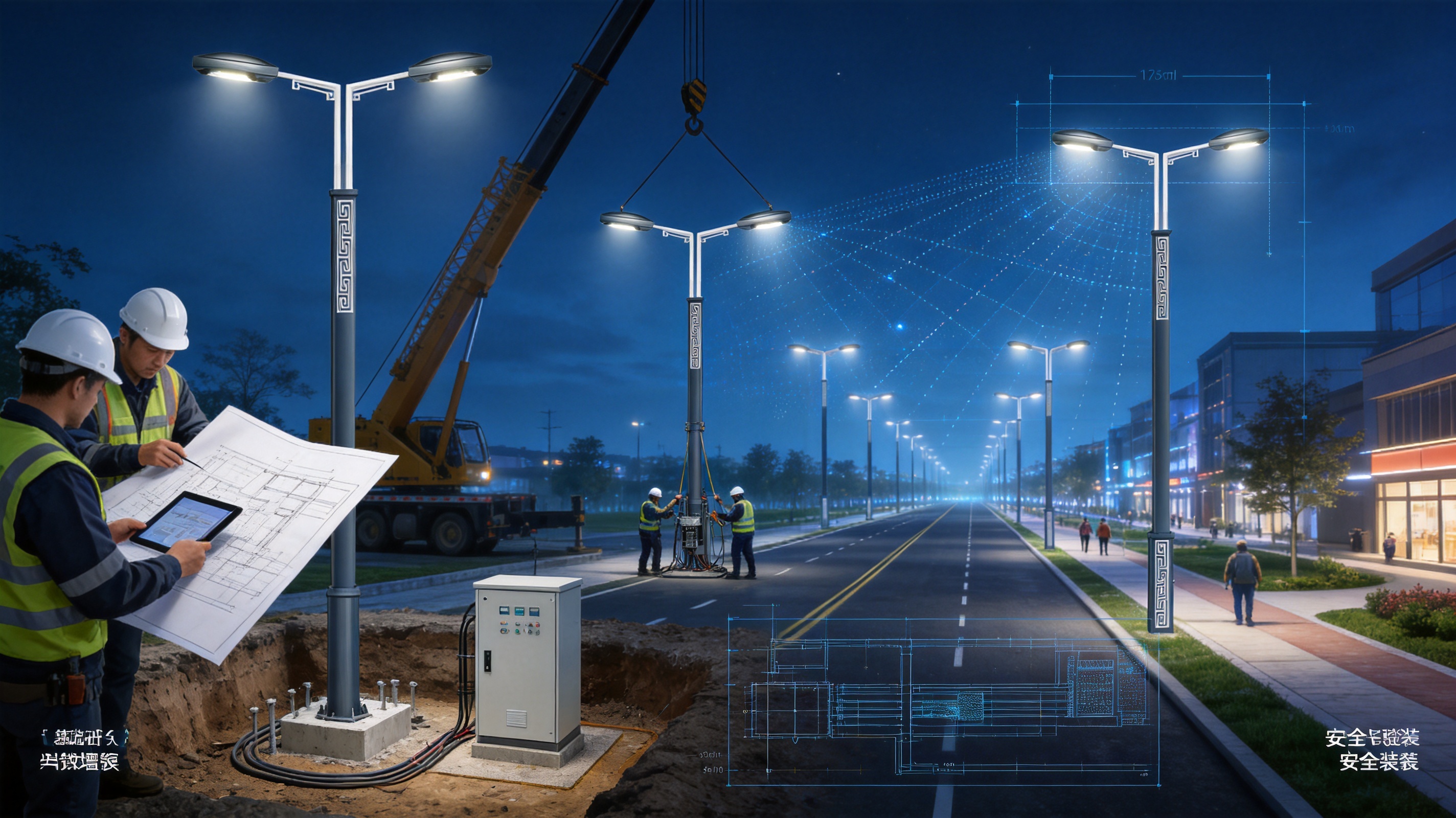
7. Engineering Support from Concept to Installation
A successful roadway lighting project requires more than selecting a fixture from a catalog. It involves site conditions, road geometry, pole spacing, foundation design, wind loading, electrical infrastructure, lighting calculations, transportation, installation, commissioning, and maintenance planning.
The manufacturer provides engineering support from consultation through project completion. This service-oriented approach helps customers address technical questions before production begins and reduce the risk of changes during construction.
CAD design
CAD design enables project teams to review dimensions, mounting arrangements, arm geometry, connection details, and installation interfaces. It is particularly useful when the project requires a non-standard pole height, decorative element, special bracket, or coordinated design with existing infrastructure.
Detailed drawings also help contractors prepare foundations, anchor bolt layouts, cable routes, and installation equipment. Early drawing review can identify potential conflicts before materials are manufactured.
Three-dimensional product simulation
Three-dimensional product simulation allows customers to examine the product from multiple angles and understand how different components fit together. This is valuable for reviewing proportions, decorative details, arm symmetry, housing form, and access arrangements.
For projects with strict aesthetic requirements, three-dimensional review can improve communication between the manufacturer, lighting designer, architect, contractor, and owner. It reduces dependence on verbal explanations and helps all participants approve the design with greater confidence.
Three-dimensional scene simulation
Scene simulation places the lighting product within a representative urban environment. This helps project teams evaluate how the poles interact with roads, buildings, sidewalks, planting, signs, medians, and other public-space elements.
Visual simulation can reveal whether the pole height appears appropriate, whether the double-arm structure is proportionate to the road, and whether the selected color and finish support the intended landscape concept. It is also useful for presentations to municipal committees, developers, and community stakeholders.
Specification and color customization
Customization can include color, finish, decorative features, pole height, arm configuration, mounting details, and other project-specific requirements. This allows the lighting system to become part of a coordinated visual strategy rather than a collection of unrelated standard products.
Color selection should consider durability, solar exposure, surrounding materials, cleaning requirements, and local design guidelines. A professional coating and inspection process helps maintain consistency across the completed installation.
Mechanical calculation for wind and foundation design
Lighting poles are structural products and must be evaluated for wind pressure, fixture area, arm geometry, pole height, material properties, foundation conditions, and regional design requirements. The manufacturer provides mechanical calculation support for wind and foundation considerations.
Final structural approval should be completed by qualified engineering professionals in accordance with applicable local codes. Soil conditions, seismic requirements, foundation reinforcement, anchor bolts, drainage, and installation tolerances should be included in the project documentation.
Overseas installation guidance
International projects can involve different construction methods, electrical standards, lifting equipment, inspection procedures, and local labor capabilities. Overseas onsite installation guidance can help contractors understand assembly sequences, cable connections, pole erection, fixture orientation, torque requirements, and commissioning procedures.
Clear installation guidance is especially important for double-arm products because correct alignment affects both appearance and light distribution. Proper handling during transportation and lifting also helps prevent damage to the coating, brackets, housing, and electrical components.
8. Application Areas
Urban arterial roads
Major urban roads require dependable illumination, consistent pole spacing, and a design that can remain visually appropriate over long distances. The double-arm arrangement can serve divided roadways, central medians, and broad corridors where lighting is needed in more than one direction.
The 6-meter to 10-meter pole height range allows designers to evaluate different mounting arrangements according to road width, traffic conditions, surrounding buildings, and required lighting levels. Photometric calculations should determine the final luminaire wattage, optical distribution, spacing, and orientation.
Commercial districts and business centers
Commercial areas remain active after dark and often require a balance between traffic safety, pedestrian comfort, architectural presentation, and visual identity. The product’s modern appearance and customization options can help create a coordinated nighttime environment around offices, retail facilities, hotels, restaurants, and public gathering spaces.
Warm or neutral color temperatures may be selected to support a welcoming atmosphere, while dimming can help adapt output to changing activity levels throughout the evening.
Themed streets and cultural districts
Themed streets often have specific requirements concerning decorative forms, colors, textures, and visual references. The modular design enables the core double-arm lighting concept to be adapted to a more distinctive streetscape.
In cultural and heritage environments, customization should be carefully coordinated with planning authorities and conservation requirements. The objective is to complement the surroundings without creating excessive visual competition or inappropriate brightness.
Parks, promenades, and leisure areas
Landscape areas require lighting that supports orientation and safety while preserving a comfortable atmosphere. The product can be considered for broad promenades, park entrances, waterfront roads, recreational corridors, and landscaped public spaces where the lighting pole contributes to the overall design.
Lighting levels, glare, color temperature, and operating schedules should be reviewed carefully in areas with residents, wildlife, water features, or sensitive vegetation. Dimming functions can help reduce unnecessary output during low-use periods.
Residential developments
Large residential communities often require lighting for internal roads, entrances, landscaped avenues, and shared public areas. A coordinated double-arm system can provide a consistent design language across the development.
Because residents experience the lighting environment every night, visual comfort and glare control are particularly important. Product placement, mounting height, optical distribution, and control schedules should be designed to illuminate roads and walkways without causing unwanted light into homes.
Transport and infrastructure zones
Approaches to transport hubs, parking facilities, logistics centers, and other infrastructure sites may benefit from robust and efficient roadway lighting. The product’s broad input voltage range, outdoor protection, temperature tolerance, and structural options can support a variety of project conditions.
These applications may require special attention to vehicle movement, clearance, pole protection, emergency access, maintenance routes, and compatibility with traffic signs or security systems.
9. Installation and Maintenance Considerations
Proper installation is essential for achieving the intended performance of any roadway light. Before installation, the project team should verify the foundation, anchor bolts, cable routes, pole orientation, luminaire position, control wiring, and grounding system.
The double-arm structure should be aligned accurately so that both sides maintain the planned visual symmetry. Fixture tilt and orientation should follow the approved lighting design. Incorrect adjustment can create uneven illumination, glare, or dark areas even when the product itself is functioning correctly.
Electrical connections should be completed by qualified personnel. The AC85-265V input range supports a broad supply range, but the actual project voltage, frequency, protection devices, surge protection, earthing, and control interface must be verified before energization.
Recommended maintenance activities
Routine maintenance may include visual inspection of the housing, coating, pole surface, access doors, fasteners, brackets, cables, and foundation. Accumulated dust or deposits can affect appearance and, in some environments, thermal performance. Cleaning intervals should be established according to local conditions.
Technicians should also check for signs of water ingress, corrosion, mechanical deformation, loose connections, abnormal dimming behavior, and control-system faults. Any damaged seals or access covers should be addressed promptly to preserve the intended IP protection.
For coastal, industrial, or high-humidity environments, inspections may need to occur more frequently. Corrosion should be documented and treated according to the approved maintenance procedure. Structural problems must be assessed by qualified personnel before the pole is returned to service.
Planning for lifecycle value
The cost of a roadway lighting system includes more than the purchase price. Energy consumption, installation labor, access equipment, replacement parts, maintenance visits, downtime, and eventual disposal all contribute to lifecycle cost.
The LED Double-Arm Landscape Light supports lifecycle planning through efficient LED technology, dimming compatibility, durable materials, a five-year warranty, and engineering assistance. A complete cost evaluation should compare the expected operating profile with alternative products under the same lighting requirements.
10. Quality Management and International Reliability
Infrastructure products supplied to international markets must satisfy more than visual expectations. They must be manufactured consistently, documented accurately, packed safely, and supported throughout the project. The manufacturer’s quality management system is supported by international standards including ISO9001, ISO14001, and OHSAS18001.
ISO9001 reflects a structured quality management approach. It supports process control, documentation, continuous improvement, customer feedback, and accountability throughout manufacturing and service activities.
ISO14001 relates to environmental management. This is important for a production industry that processes steel, aluminum, coatings, packaging materials, and electrical components. Environmental management helps organizations control resource use, emissions, waste, and production impacts.
OHSAS18001 represents an occupational health and safety management framework. Safe working practices are essential in facilities handling large steel sections, CNC machinery, welding equipment, painting systems, die-casting machinery, and heavy lifting operations.
These standards do not replace product-specific inspection or local compliance requirements, but they demonstrate a structured approach to organizational quality, environmental responsibility, and workplace safety.
Quality control throughout production
Effective quality control begins with incoming materials. Steel grades, aluminum components, electrical parts, coatings, fasteners, and packaging materials should be checked against approved specifications. During production, dimensions, bends, welds, surface preparation, coating quality, assembly, and electrical performance require appropriate inspection.
Final inspection may include dimensional verification, visual examination, coating checks, electrical testing, sealing review, packaging inspection, and confirmation of project-specific requirements. For large orders, batch consistency is particularly important because all products must perform and appear uniformly after installation.
11. Why Manufacturer Integration Matters to Buyers
Buying a roadway lighting product from an integrated manufacturer can simplify communication and reduce coordination risks. When a company handles design, poles, luminaires, customization, manufacturing, and engineering support, the customer can work through a more unified technical process.
This is valuable for projects where the luminaire, arm, pole, foundation, and control system must be coordinated. A fragmented supply chain may require several suppliers to interpret drawings, confirm interfaces, and resolve responsibility for defects. An integrated manufacturer can provide a clearer path from concept approval to production and installation.
The company’s long operating history, established in 2002, provides experience in road illumination products and project execution. Its large production area, technical workforce, international export experience, and equipment investment support the capacity required for both standard products and customized infrastructure orders.
For contractors and distributors, manufacturing capacity can also influence delivery reliability. Large-scale projects need predictable production schedules, clear technical documentation, stable quality, and responsive after-sales support. These factors can be as important as the initial product specification.
12. Project Selection Guide
Before selecting the LED Double-Arm Landscape Light, project owners and designers should define the road classification, mounting height, pole spacing, target illumination, environmental exposure, control requirements, and visual design objectives.
The first step is to determine the lighting area. Is the product intended for two sides of a divided road, a central median, a pedestrian corridor, a plaza, or a landscape avenue? The answer affects the arm arrangement, optical distribution, pole height, and spacing.
The second step is to assess the environment. Coastal locations may require enhanced corrosion protection. Areas with heavy dust may require additional cleaning planning. Cold regions should verify low-temperature electrical performance, while hot environments should consider thermal management and installation ventilation.
The third step is to establish the control strategy. Projects may require simple switching, scheduled dimming, DC 0-10V control, DALI integration, or a broader smart lighting network. Control components and wiring should be defined before production.
The fourth step is to coordinate structure and appearance. Pole material, height, arm shape, coating color, decorative details, access doors, foundation dimensions, and luminaire orientation should be reviewed together. This prevents the lighting system from being treated as separate from the rest of the streetscape.
The fifth step is to confirm documentation and acceptance requirements. These may include technical drawings, photometric files, material certificates, coating information, inspection records, packing lists, installation instructions, warranty terms, and commissioning procedures.
13. Frequently Asked Questions
What is the main purpose of a double-arm landscape light?
The main purpose is to provide balanced illumination in two directions from a coordinated pole structure. It is suitable for roads, medians, pedestrian areas, commercial streets, landscaped corridors, and other outdoor spaces where broad coverage and visual symmetry are important.
What makes this product different from a standard roadway light?
It combines roadway lighting performance with a design-oriented, adaptable structure. In addition to LED efficiency and outdoor durability, it offers a symmetrical double-arm configuration, modular customization, multiple pole material options, a broad color temperature range, and support for DC 0-10V and DALI dimming.
What is the luminous efficiency of the product?
The stated lamp luminous efficiency is 140 lumens per watt. Actual system performance depends on the selected LED configuration, driver, optical distribution, operating temperature, and project conditions.
What input voltage does the fixture support?
The listed input voltage is AC85-265V. Project engineers should still confirm the local power supply, frequency, surge protection, grounding, and control-system requirements before installation.
Can the light be dimmed?
Yes. The product supports DC 0-10V and DALI dimming. These interfaces can be used for scheduled output reduction, centralized control, energy management, and integration with smart lighting systems.
What color temperatures are available?
The stated color temperature range is 3000K to 6000K. This gives project teams the flexibility to select warmer, neutral, or cooler light according to the application and design concept.
What material is used for the lamp housing?
The lamp housing is made from aluminum alloy. This material supports structural strength, corrosion resistance, and heat dissipation for outdoor LED operation.
What is the protection rating?
The fixture has an IP65 rating. It is designed for exposed outdoor use, although correct installation, sealing, maintenance, and environmental assessment remain essential.
What operating temperature range is specified?
The stated operating temperature range is -35°C to 65°C. The project should also verify local conditions, electrical design, installation practices, and any additional environmental requirements.
What pole heights are available?
The listed pole height range is 6 meters to 10 meters. Final height should be selected based on road width, lighting calculations, wind loading, visual proportion, maintenance access, and local regulations.
Which pole materials can be used?
Available options include Q235, Q355, SS400, GR65, and other specified materials. Additional steel grades such as Q235B, Q345B, S275JR, S355JR, Q460, A36, A572, GR56, and GR50 are also identified within the manufacturing capabilities.
Is the product suitable for coastal environments?
It may be suitable when the coating system, material selection, fasteners, sealing, and maintenance plan are properly specified for coastal exposure. A coastal project should request an environmental review and enhanced anti-corrosion requirements before production.
Does the manufacturer provide design assistance?
Yes. Available support includes CAD design, three-dimensional product simulation, three-dimensional scene simulation, specification and color customization, mechanical calculations for wind and foundation requirements, and overseas onsite installation guidance.
How long is the warranty period?
The listed warranty period is five years. Buyers should confirm the detailed warranty terms, coverage conditions, exclusions, installation requirements, and claims procedure in the commercial and technical documentation.
Can the fixture be used in a smart city lighting system?
Its DC 0-10V and DALI dimming support makes it compatible with many modern lighting-control strategies. A complete smart-city application may also require sensors, communication gateways, controllers, monitoring software, and network infrastructure.
How should the product be maintained?
Maintenance should include cleaning, inspection of the housing and coating, checking of fasteners and brackets, review of electrical connections, verification of control performance, and inspection of the pole and foundation. The frequency should be adjusted to local climate, pollution, traffic, and corrosion conditions.
14. Conclusion
The LED Double-Arm Landscape Light is a versatile infrastructure solution for urban roads and visually important outdoor environments. Its symmetrical structure supports balanced illumination, while its modern and customizable appearance allows it to complement a wide range of architectural and landscape settings.
Its technical advantages include LED illumination, a stated efficiency of 140 lumens per watt, AC85-265V input, 3000K-6000K color temperature selection, Ra 70 color rendering, DC 0-10V and DALI dimming support, IP65 protection, an operating temperature range of -35°C to 65°C, aluminum alloy housing, and a five-year warranty.
The product is further strengthened by the manufacturer’s integrated production capabilities. Extensive material options, CNC bending, high-accuracy cutting, experienced welding teams, automated manufacturing lines, powder electrostatic painting, anti-corrosion treatment, and a 1250-ton die-casting machine provide a solid foundation for consistent quality and large-scale project delivery.
Equally important is the company’s engineering support. CAD design, three-dimensional simulation, customization, wind and foundation calculations, and overseas installation guidance help customers manage the complete process from initial concept to field completion.
For municipalities, contractors, developers, distributors, and lighting designers seeking a combination of performance, visual quality, adaptability, and manufacturing reliability, this double-arm LED platform offers a practical basis for creating safer, more efficient, and more attractive nighttime urban environments.
References
1. Product technical information supplied for the LED Double-Arm Landscape Light, including electrical, optical, structural, environmental, and warranty specifications.
2. Manufacturer-provided information concerning production equipment, material options, CNC bending, precision cutting, welding, automated manufacturing, powder coating, and die-casting capabilities.
3. Manufacturer-provided engineering service information covering CAD design, three-dimensional product simulation, three-dimensional scene simulation, customization, mechanical calculations, and overseas installation guidance.
4. General principles of roadway lighting design, including illumination uniformity, glare management, pole spacing, mounting height, traffic visibility, and pedestrian safety.
5. General guidance for LED luminaire selection, thermal management, dimming control, outdoor ingress protection, corrosion prevention, and lifecycle maintenance.
6. International quality, environmental management, and occupational health and safety management principles associated with ISO9001, ISO14001, and OHSAS18001.