


JINYUAN
JINYUAN
JINYUAN
JINYUAN
JINYUAN
JINYUAN
JINYUAN
JINYUAN
JINYUAN
JINYUAN
JINYUAN
JINYUAN
JINYUAN
JINYUAN
JINYUAN
JINYUAN
Content
- 1 1. The Need for Compact and Efficient Outdoor Lighting
- 2 2. Product Overview and Intended Applications
- 3 3. Compact Construction and Thermal Performance
- 4 4. Optical Design for Roadway Uniformity
- 5 5. Energy Efficiency and Environmental Advantages
- 6 6. Electrical Compatibility and Operating Reliability
- 7 7. Long Service Life and Reduced Maintenance
- 8 8. Color Temperature and Visual Quality
- 9 9. Advantages Compared with Conventional Competitors
- 10 10. Manufacturing Strength and Production Capabilities
- 11 11. Engineering and Customization Services
- 12 12. Recommended Project Selection Process
- 13 13. Installation and Maintenance Considerations
- 14 14. Frequently Asked Questions
- 14.1 What type of road is this luminaire designed for?
- 14.2 What power configurations are available?
- 14.3 What mounting system does it use?
- 14.4 Is the product suitable for unstable power grids?
- 14.5 Can the luminaire be dimmed?
- 14.6 What protection rating does it have?
- 14.7 What is the expected service life?
- 14.8 What operating-temperature information is available?
- 14.9 What color temperatures are available?
- 14.10 What color-rendering performance should be expected?
- 14.11 Which housing colors can be supplied?
- 14.12 Does the manufacturer provide engineering support?
- 14.13 What warranty is listed?
- 15 15. Conclusion
- 16 References
- 17 Product: Xiao Jin Dou Series Compact High-Efficiency Outdoor Light
Modern outdoor lighting must do more than provide basic visibility. Municipal roads, residential communities, urban alleys, pedestrian routes, and public spaces require luminaires that combine dependable illumination, low energy consumption, robust environmental protection, simple installation, and a visually appropriate appearance. The Xiao Jin Dou Series Compact High-Efficiency Outdoor Light has been developed to meet these requirements through a lightweight structure, efficient LED technology, optimized optical performance, and flexible configuration options.
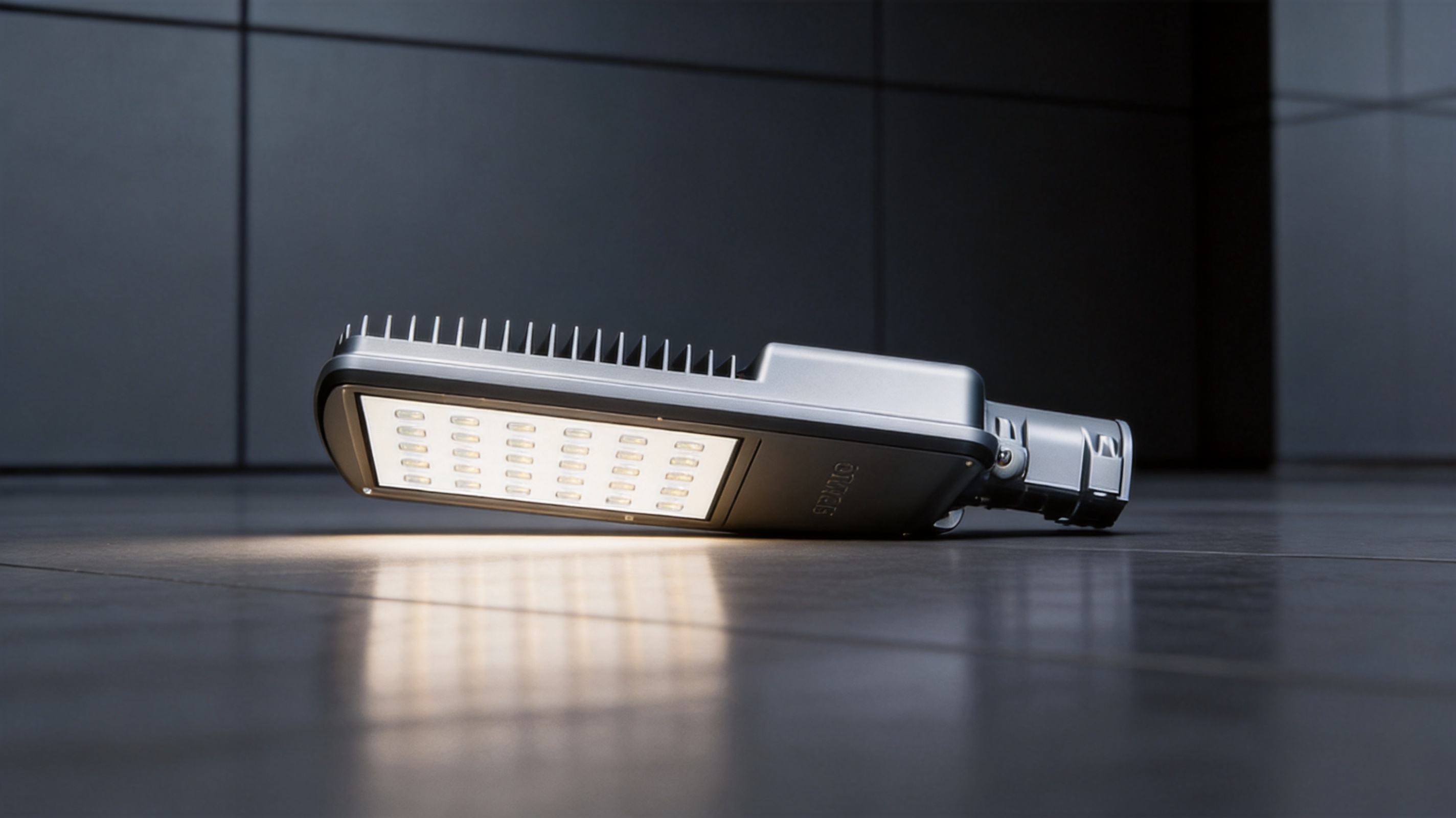
Designed primarily for medium-to-low traffic roads and community lighting, this compact outdoor luminaire provides a practical alternative to oversized or inefficient conventional streetlights. Its modest dimensions and lightweight aluminum alloy housing make it suitable for applications where a smaller fixture is preferred, while its finned heat sink and carefully designed optical system support reliable long-term operation.
The product is available in 20-watt and 30-watt configurations, producing initial luminous fluxes of approximately 2,200 lumens and 3,300 lumens respectively. These outputs are suited to light-duty roadway applications, urban slip roads, internal community streets, access lanes, walkways, and other public areas where balanced illumination is more important than excessive power.
By combining a wide input-voltage range, IP65 protection, a service life of up to 50,000 hours, flexible color finishes, and support for dimming systems, the luminaire offers a strong value proposition for project owners, lighting designers, distributors, contractors, and municipal buyers. It also benefits from the manufacturing capabilities of an established road-lighting producer with extensive experience in steel structures, LED luminaires, pole fabrication, welding, cutting, coating, assembly, and engineering services.
1. The Need for Compact and Efficient Outdoor Lighting
Outdoor lighting projects are increasingly judged by total operating value rather than initial purchase price alone. A luminaire may appear inexpensive when viewed as a single item, but inefficient power consumption, frequent maintenance, premature component failure, difficult installation, and poor light distribution can create substantial costs over the life of a project.
Traditional outdoor fixtures often consume more electricity than necessary for low-traffic locations. They may also produce uneven illumination, excessive glare, dark areas near the edges of the road, and unnecessary light spill into adjacent homes or natural areas. In community streets and narrow urban routes, a large and heavy fixture can also create structural, aesthetic, and maintenance challenges.
The Xiao Jin Dou Series addresses these concerns with a compact design intended for appropriately scaled applications. Instead of applying a high-power luminaire to every road, project planners can select a lower-power LED fixture that provides the required amount of light with improved energy efficiency. This approach can reduce electrical infrastructure requirements and support more responsible use of public resources.
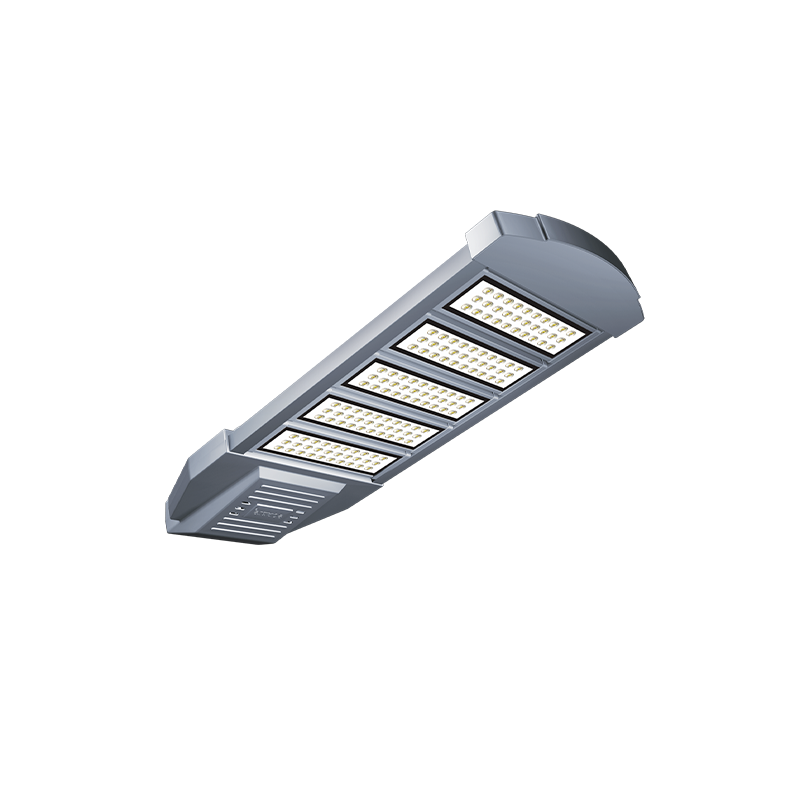
A compact luminaire is particularly valuable in locations where poles are closely spaced, mounting heights are moderate, or road widths are limited. The product’s dimensions of approximately 518 millimeters by 213 millimeters by 72 millimeters allow it to maintain a relatively low visual profile. Its compatibility with standard 48-millimeter-diameter pole mounts also supports straightforward installation on common road-lighting structures.
Efficient lighting should not be confused with simply reducing wattage. The optical system, installation spacing, mounting height, road width, surface reflectance, and required uniformity all influence the final result. This series is therefore designed around the relationship between electrical power, luminous output, and light distribution rather than power reduction alone.
2. Product Overview and Intended Applications
The Xiao Jin Dou Series Compact High-Efficiency Outdoor Light is an LED luminaire intended for outdoor roadway and public-space illumination. Its core applications include urban slip roads, community streets, residential access roads, alleyways, campus roads, internal industrial routes, parking areas, pedestrian approaches, and general-purpose public spaces.
The product is especially appropriate for locations with medium-to-low traffic levels. These areas typically need safe and visually comfortable illumination but do not require the high optical power associated with major highways, large intersections, or high-speed arterial roads. Selecting a fixture that matches the actual lighting task helps avoid over-lighting and unnecessary energy expenditure.
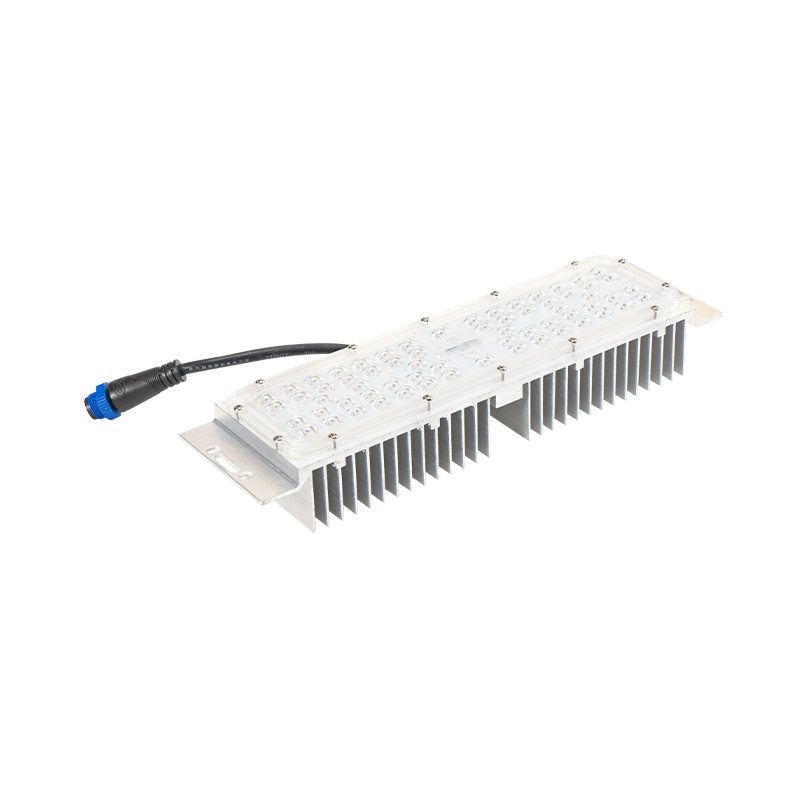
The compact housing is manufactured from aluminum alloy and incorporates a finned heat-sink structure. Aluminum alloy is widely used in professional LED luminaires because it provides a useful combination of low weight, mechanical strength, corrosion resistance, and thermal conductivity. The fins increase the effective surface area of the housing, helping transfer heat from internal components to the surrounding air.
The product uses an LED light source and is offered in two principal power configurations. The 20-watt version provides an initial luminous flux of approximately 2,200 lumens, while the 30-watt version provides approximately 3,300 lumens. These two options allow project designers to select a suitable level of output based on pole spacing, mounting height, road width, lighting requirements, and local standards.
| Specification | Product Information | Project Benefit |
|---|---|---|
| Product type | Compact outdoor LED luminaire | Suitable for efficient roadway and public-space lighting |
| Power options | 20 W and 30 W | Allows output to be matched to the application |
| Initial luminous flux | Approximately 2,200 lm and 3,300 lm | Supports light-duty roads and community areas |
| Input voltage | AC85–260 V in the product description; AC85–265 V in the technical information | Broad compatibility with electrical networks |
| Frequency | 50–60 Hz | Suitable for common international power systems |
| Light source | LED | Low energy consumption and long operating life |
| Housing material | Aluminum alloy | Lightweight structure and effective heat dissipation |
| Dimensions | Approximately 518 × 213 × 72 mm | Compact appearance and easier handling |
| Pole compatibility | Standard 48 mm diameter pole mounts | Facilitates installation on common support structures |
| Ingress protection | IP65 | Protection against dust and water jets |
| Operating temperature | Product description: -40°C to +50°C; technical information: -35°C to +65°C | Designed for demanding outdoor environments |
| Rated service life | Up to 50,000 hours | Reduces replacement frequency and maintenance effort |
| Light distribution | Optimized bat-wing distribution | Improves roadway coverage and uniformity |
| Dimming | DC 0–10 V and DALI support | Enables energy management and lighting control |
| Color temperature | 3000 K–6000 K | Provides warm to cool white options |
| Warranty | 5 years | Supports long-term procurement confidence |
Because published project data may vary according to configuration, market, driver selection, or final technical revision, purchasers should confirm the exact voltage range, operating-temperature rating, color-rendering specification, and optical distribution before placing a large order. This is a normal and important step in professional lighting procurement.
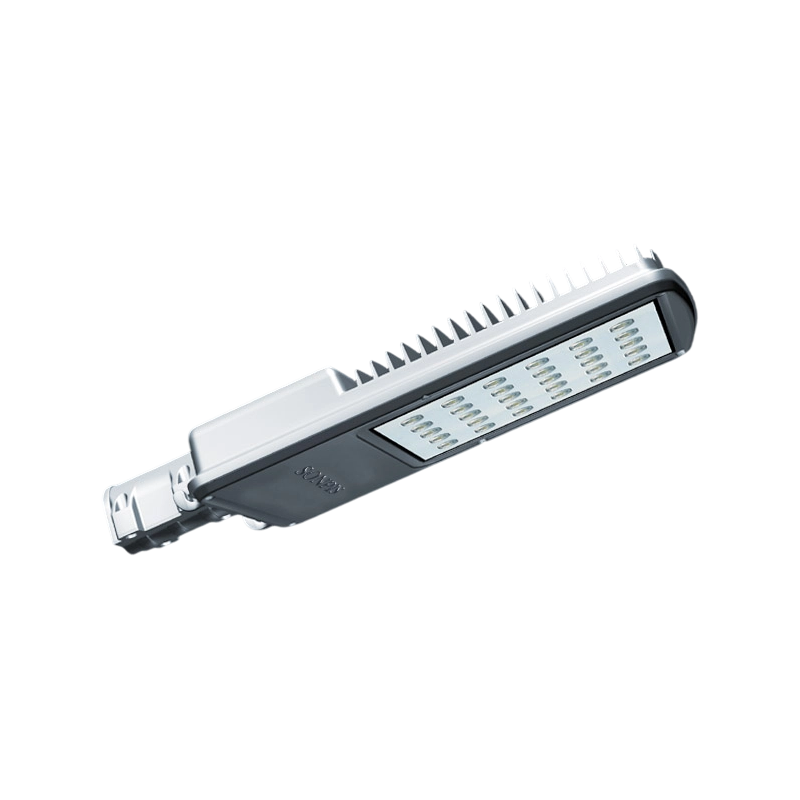
Xiao Jin Dou Series Compact High-Efficiency Outdoor Light
3. Compact Construction and Thermal Performance
Thermal management is one of the most important factors affecting LED luminaire reliability. LEDs are more efficient than many traditional light sources, but they still generate heat. If heat is not transferred away effectively, the LED package, driver, seals, and other internal components may experience accelerated aging.
The Xiao Jin Dou Series uses an aluminum alloy finned housing to support passive heat dissipation. The heat sink is integrated into the external structure, allowing heat to move from the internal components through the housing and into the surrounding air without relying on a fan. This fanless arrangement helps simplify the design and avoids the moving parts, noise, and maintenance requirements associated with active cooling systems.
The fin geometry increases the exposed surface area of the housing. When the luminaire is operating, heat travels through the aluminum body and is released through the fins by convection and radiation. The effectiveness of this arrangement depends on installation orientation, ambient temperature, air circulation, component layout, and cleanliness. For this reason, the luminaire should be installed according to the manufacturer’s instructions and should not be covered or obstructed.
The housing dimensions have been optimized to maintain a balance between compactness and thermal performance. A fixture that is too small may struggle to dissipate heat, while a fixture that is unnecessarily large can increase material use, weight, wind loading, and visual impact. The product aims to occupy a practical middle ground for light-duty outdoor applications.
The lightweight body also benefits installation teams. Smaller and lighter luminaires can be easier to lift, align, secure, and replace. This can be particularly useful when working on existing poles, narrow roads, community streets, or projects where access equipment is limited. Lower fixture weight may also reduce the mechanical demand placed on the mounting arm and pole-top assembly.
3.1 Mechanical suitability for outdoor projects
The aluminum alloy housing provides a stable enclosure for the optical and electrical components. Its compact shape can help reduce visual clutter on streetscapes where large fixtures would appear disproportionate to the surrounding architecture. The available gray, white, black, blue, and orange finishes provide additional flexibility for matching municipal, residential, commercial, or industrial environments.
Surface finishing is not merely an aesthetic choice. A properly prepared and coated metal surface can contribute to protection against moisture, weathering, and general environmental exposure. The manufacturing information indicates the use of advanced powder electrostatic painting equipment and controlled production processes. These capabilities can help achieve consistent coating coverage and repeatable appearance across larger batches.
For coastal, industrial, or highly corrosive locations, the complete project specification should also address the required coating system, fastener materials, salt-spray expectations, and maintenance program. The luminaire’s aluminum construction is advantageous, but environmental suitability should always be assessed in relation to the complete installation.
4. Optical Design for Roadway Uniformity
High-quality roadway lighting must illuminate the surface consistently rather than create isolated bright spots surrounded by dark areas. Uneven light can make it more difficult for drivers, cyclists, and pedestrians to recognize obstacles, road edges, signs, and other people. It may also create discomfort when the eye repeatedly adjusts between bright and dark zones.
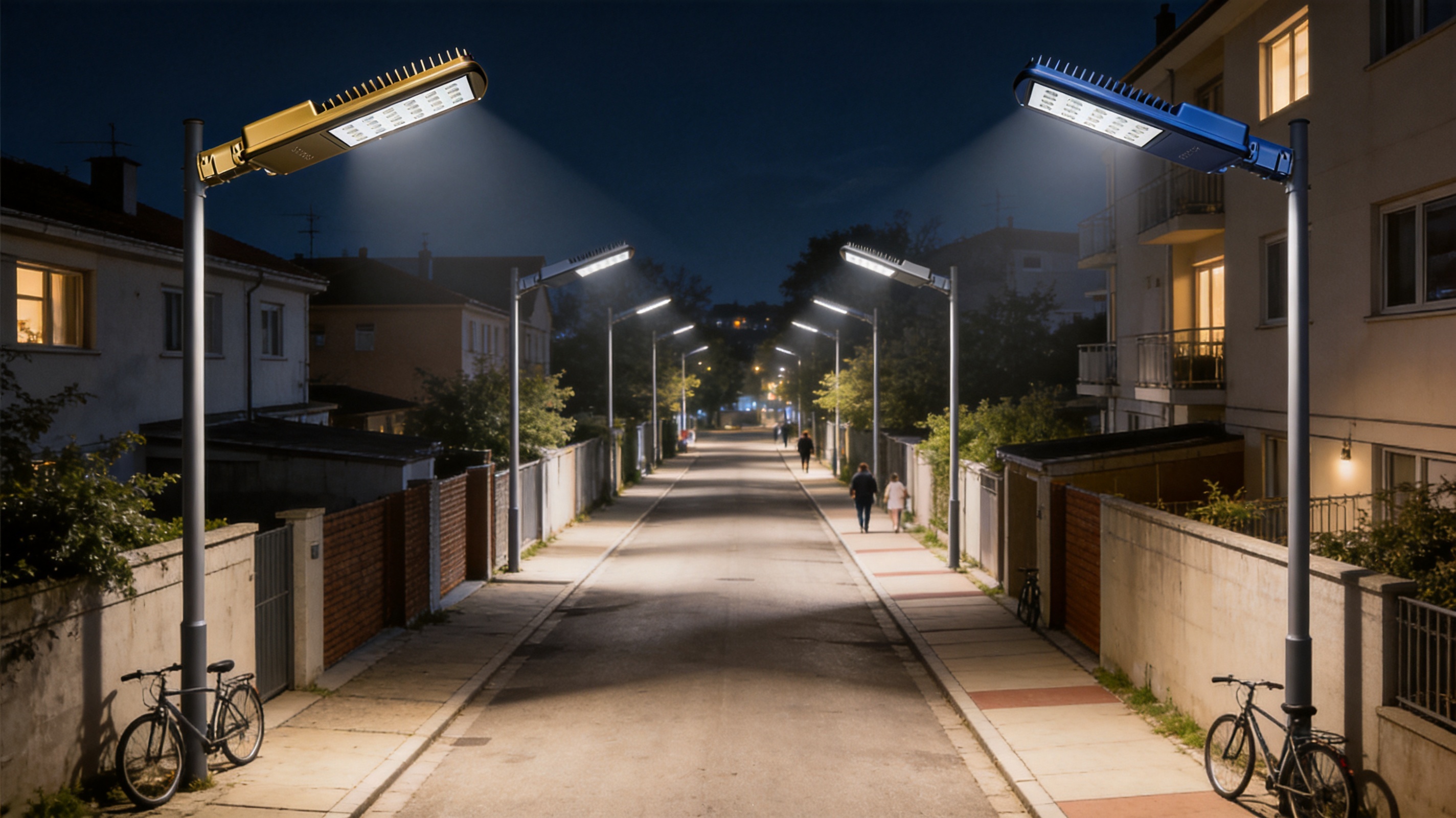
The Xiao Jin Dou Series uses an optimized bat-wing distribution curve. This type of distribution is designed to send useful light toward the sides of the roadway while reducing excessive concentration directly below the pole. When properly matched to mounting height and pole spacing, the result can be a wider and more balanced pattern across the road surface.
The product description states that roadway uniformity ratios can exceed 0.7 under appropriate design conditions. Actual uniformity will depend on the selected optic, pole arrangement, mounting angle, road geometry, surface reflectance, and calculation method. Nevertheless, the stated design objective demonstrates that the fixture is intended to provide functional roadway illumination rather than simply maximize peak brightness.
Improved uniformity may also support visual comfort. Conventional fixtures can produce harsh hot spots, sharp transitions, and uneven patches that are visually tiring. A more controlled distribution can provide a smoother night-time environment while preserving adequate visibility in the principal use area.
Glare control is another important consideration. The luminaire is designed to reduce glare and uneven light spots commonly associated with less advanced outdoor fixtures. In practical terms, this can help improve pedestrian comfort and reduce visual distraction for drivers. The final glare performance should be verified through photometric files and project calculations, especially where the fixture is installed near homes, apartment windows, schools, or pedestrian pathways.
4.1 Matching optics to the installation
No single optical distribution is ideal for every road. A narrow lane, a broad community street, a parking area, and an open public square may require different spacing and aiming strategies. The bat-wing pattern is a useful general-purpose approach, but lighting designers should consider the complete geometry of the site.
Important design factors include pole height, pole spacing, road width, mounting-arm length, setback from the carriageway, roadway curvature, tree canopies, building façades, and the presence of sidewalks or cycle lanes. Photometric software should be used to confirm average illuminance, minimum illuminance, uniformity, glare, and light trespass before final installation.
The compact luminaire can serve as a flexible building block within a broader lighting plan. In some projects, the 20-watt version may be sufficient for narrow access roads or pedestrian-oriented spaces. In other locations, the 30-watt configuration may provide the additional output needed for wider roads, greater mounting heights, or longer spacing.
5. Energy Efficiency and Environmental Advantages
The principal energy advantage of the product comes from the combination of LED technology, efficient optical design, and application-appropriate power selection. The product information states that advanced high-efficiency chip packaging technology can deliver energy savings of more than 60 percent compared with traditional lighting equipment. The exact saving will vary according to the comparison fixture, operating schedule, maintenance condition, and lighting level required.
Energy efficiency can produce benefits at several levels. For municipalities and property owners, lower wattage can reduce electricity costs. For utilities and infrastructure planners, lower connected load can simplify power distribution and reduce the demand placed on circuits. For environmental programs, reduced electricity consumption can contribute to lower operational carbon emissions where electricity generation includes fossil-fuel sources.
LED luminaires also allow more precise control than many older light sources. The product supports DC 0–10 V and DALI dimming, making it suitable for projects that incorporate centralized controls, scheduled dimming, presence-based management, or smart-city platforms. A road may require full output during peak evening activity but reduced output during periods of low traffic. Dimming can help match light levels to actual demand.
Controlled dimming must be designed carefully. The minimum acceptable light level, driver compatibility, control wiring, communication protocol, and recovery behavior after a power interruption should all be confirmed. When correctly implemented, dimming can extend energy savings beyond the benefit achieved through the luminaire’s basic efficiency.
The product also supports a cleaner lighting environment. Its manufacturing description identifies zero mercury and zero ultraviolet radiation as environmental and visual-health advantages. LED systems do not require mercury-based discharge lamps, and the absence of ultraviolet output can help reduce attraction of insects and minimize potential effects on sensitive materials and ecosystems.
Responsible outdoor lighting also means avoiding unnecessary upward or sideways spill. Proper mounting and optical selection can reduce wasted light and help preserve the night environment. This is especially important in residential areas, parks, ecological zones, and locations where neighboring properties may be affected by excessive brightness.
6. Electrical Compatibility and Operating Reliability
The luminaire is designed for a wide input-voltage range. The product description identifies AC85 V to 260 V at 50–60 Hz, while the technical information lists AC85 V to 265 V. This broad operating range is intended to provide compatibility with common power networks and resilience against normal voltage variation.
Wide-voltage operation is valuable in regions where grid quality is inconsistent or where voltage conditions differ between urban, suburban, and rural installations. It can help maintain stable operation in the presence of moderate fluctuations and reduce the need to stock different voltage versions for different markets. However, the actual supply conditions at the installation site should always be measured and compared with the final driver specification.
Electrical protection should be considered as part of the complete system. Depending on the project location, designers may specify surge protection devices, circuit breakers, grounding arrangements, isolation procedures, and lightning protection. Roadside luminaires are exposed to long cable runs, switching events, and thunderstorms, so the pole, cable, control cabinet, and fixture should be evaluated together.
The IP65 rating indicates that the complete luminaire is protected against dust ingress and water projected by jets from applicable directions. This is an important level of protection for outdoor roads and public spaces. It helps defend internal components against rain, airborne dust, and ordinary weather exposure when the housing, cable entries, gaskets, and covers are properly maintained.
IP protection is not a substitute for correct installation. Covers must be closed securely, cable glands must be appropriate, and seals must not be damaged or contaminated. The fixture should also be inspected after installation and during scheduled maintenance, particularly in areas subject to dust, salt, industrial pollution, or construction activity.
7. Long Service Life and Reduced Maintenance
The stated service life of the series is up to 50,000 hours. This figure represents a significant advantage over short-life light sources and can reduce the frequency of replacement work. In roadway applications, maintenance often requires traffic management, lifting equipment, safety personnel, and temporary access restrictions. Extending the interval between replacements can therefore generate savings beyond the cost of the lamp itself.
Long service life depends on more than the LED chip. Thermal management, driver quality, surge conditions, sealing, component selection, operating temperature, and installation practices all influence actual performance. The product’s aluminum heat sink, IP65 construction, and professional manufacturing processes are intended to support stable operation over an extended period.
The five-year warranty listed in the technical information provides additional procurement confidence. Warranty terms should be reviewed in detail before purchase, including coverage for LED modules, drivers, housing defects, finish quality, labor, replacement procedures, shipping responsibilities, and exclusions associated with improper installation or abnormal electrical conditions.
Maintenance teams can benefit from the product’s relatively simple external structure. The luminaire does not depend on a fan or other routine mechanical cooling device. A periodic visual inspection should still be conducted to confirm that the housing remains clean, the mounting connection is secure, the optical cover is intact, and there is no corrosion or water entry.
For large projects, asset managers may also record installation dates, pole locations, power ratings, control settings, and replacement history. Such information can improve future planning and help identify patterns related to environmental exposure or electrical performance.
8. Color Temperature and Visual Quality
The listed color-temperature range is 3000 K to 6000 K. This range gives project designers the ability to choose warmer or cooler white light according to the character and function of the location. Warm white light can create a more comfortable and residential atmosphere, while neutral or cooler white light may support a brighter technical appearance and strong color contrast.
Color temperature should be selected according to the surrounding environment rather than treated as an isolated specification. Residential streets, historic districts, parks, and pedestrian areas may benefit from warmer light. Industrial roads, service entrances, and security-oriented sites may use a more neutral appearance. The chosen value should also be compatible with local regulations and the preferences of the project owner.
The product content describes a color-rendering index above 75, while the technical table lists a color-rendering index of 70. Because these values differ, the exact CRI should be confirmed for the selected production configuration. Both values represent useful color-rendering performance for general outdoor lighting, but the final project specification should identify the required minimum value clearly.
A suitable color-rendering level helps people recognize clothing, vehicles, signs, landscaping, and architectural finishes more naturally. Improved visual recognition can benefit pedestrian orientation and general perception of safety. It can also enhance the appearance of public spaces without requiring excessive brightness.
Multiple housing colors are available, including gray, white, black, blue, and orange. This flexibility is valuable for projects where the luminaire must blend with poles and street furniture or serve as a deliberate visual accent. Gray and black may suit modern urban infrastructure, white may complement light-colored architecture, and brighter colors may be used for themed or site-specific developments.
9. Advantages Compared with Conventional Competitors
The strongest competitive advantage of the Xiao Jin Dou Series is its balance of compactness, efficiency, and practical performance. Some competing luminaires focus primarily on low purchase price, while others use oversized housings and higher wattage to provide more light than the application actually requires. This series is positioned between those extremes.
Compared with conventional high-power fixtures used indiscriminately on low-traffic roads, the 20-watt and 30-watt options can reduce connected load while maintaining purposeful roadway illumination. The lower power levels may also reduce thermal stress, simplify electrical planning, and decrease operating costs.
Compared with basic low-cost LED fixtures, the product offers a more developed approach to thermal management and optical distribution. The finned aluminum housing helps manage heat, while the bat-wing light pattern is intended to improve roadway uniformity. These features address common weaknesses in inexpensive luminaires, such as premature degradation, harsh glare, and poor use of light.
Compared with bulky fixtures, the compact dimensions and lightweight body can provide installation and aesthetic benefits. Smaller products are easier to handle and may be more appropriate for narrow poles, community streets, and locations where infrastructure should remain visually discreet.
Compared with fixed-output luminaires, the availability of DC 0–10 V and DALI dimming provides a pathway toward intelligent energy management. The luminaire can be included in a wider smart-lighting strategy involving scheduled operation, remote monitoring, adaptive dimming, and fault reporting, subject to the selected control system.
Compared with products that offer limited customization, the range of color temperatures and housing finishes supports greater design flexibility. This is useful for distributors and contractors serving different markets, as well as for municipalities seeking visual consistency across multiple districts.
| Comparison Area | Compact High-Efficiency Series | Typical Basic Fixture | Project Implication |
|---|---|---|---|
| Application focus | Medium-to-low traffic roads and public spaces | May use one general fixture for many applications | Better matching between fixture capacity and lighting need |
| Power selection | 20 W and 30 W options | Often limited or oversized power choices | Supports more precise energy planning |
| Thermal structure | Aluminum alloy finned heat sink | May have limited heat-dissipation design | Supports component stability and service life |
| Optical approach | Optimized bat-wing distribution | May produce concentrated hot spots | Can improve uniformity and visual comfort |
| Control compatibility | DC 0–10 V and DALI | May be fixed-output only | Enables dimming and smart-lighting integration |
| Installation profile | Compact body and standard 48 mm mount | May be heavier or less adaptable | Can simplify handling and pole compatibility |
| Customization | Multiple color temperatures and finishes | Often limited to one appearance | Improves architectural and municipal coordination |
| Warranty information | Five-year warranty listed | May offer shorter or less defined coverage | Provides stronger procurement assurance |
These advantages do not mean that the product is suitable for every roadway. High-speed highways, major intersections, airports, stadiums, and very wide roads may require substantially different optics and output levels. The correct comparison is always between products designed for the same lighting task and evaluated under the same photometric and environmental criteria.
10. Manufacturing Strength and Production Capabilities
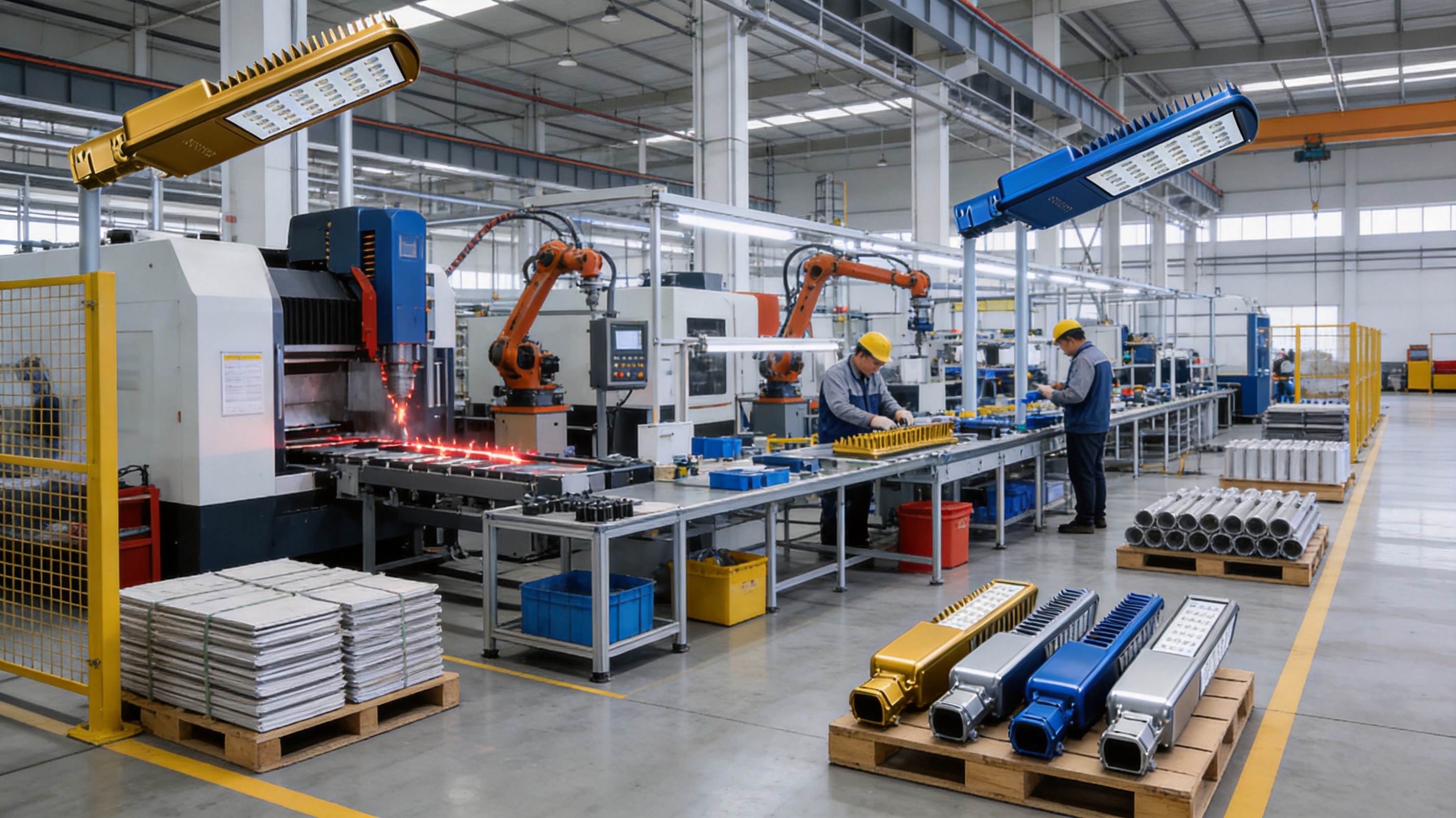
The product is supported by a company with extensive experience in road illumination products and engineering services. Its business covers street-light poles, LED streetlights, solar streetlights, light fixtures, communication towers, and associated infrastructure. This broader product range is important because it gives the manufacturer practical knowledge of how luminaires interact with poles, foundations, cables, controls, wind loads, and complete roadside systems.
The company was established in 2002 and operates a production site covering more than 70,000 square meters. Its workforce includes more than 300 professional technicians, and its products are exported to more than 200 countries. This combination of experience, scale, and international exposure can support consistent production and communication across different project environments.
Quality systems are identified as including ISO9001, ISO14001, and OHSAS18001-related standards. ISO9001 is associated with quality-management processes, ISO14001 with environmental management, and occupational health and safety systems with workplace risk control. Certifications and management systems do not replace product testing, but they can provide a structured framework for documentation, process control, corrective action, and continuous improvement.
10.1 Material preparation and inventory control
The manufacturing information identifies material options such as Q235B, Q345B, S275JR, S355JR, Q460, A36, A572, GR56, and GR50 for applicable structural products. Maintaining a broad material capability and extensive stock can help reduce delays in large infrastructure projects. It also allows engineering teams to select materials according to strength, availability, welding requirements, corrosion conditions, and local standards.
Although the luminaire housing itself uses aluminum alloy, the company’s steel-processing capability is relevant to complete lighting projects. Customers may require poles, brackets, foundations, towers, and fixtures from one coordinated supplier. This can reduce interface problems between separate vendors and simplify technical communication.
10.2 CNC bending and structural consistency
Precise CNC bending equipment supports repeatable shaping of metal components. Consistent bending angles and radii can improve dimensional accuracy, structural integrity, and assembly efficiency. In large projects, repeatability is particularly valuable because small variations can accumulate across hundreds or thousands of components.
Controlled bending also reduces the need for post-production correction. Fewer manual adjustments can improve throughput, reduce labor-related variation, and support more predictable delivery schedules. For poles, brackets, and related structures, accurate forming contributes to alignment and installation quality.
10.3 High-accuracy cutting
The production information states that cutting accuracy can reach 0.01 millimeters. Such precision supports clean edges, exact dimensions, and better fit between components. While the practical tolerance required depends on the individual part, high-accuracy cutting demonstrates the use of modern manufacturing controls rather than purely manual fabrication.
Accurate cutting can also reduce material waste. When parts are nested and cut efficiently, the manufacturer can make better use of raw materials while maintaining repeatable quality. This contributes to cost control and supports more responsible resource consumption.
10.4 Welding expertise and automated production
The company employs certified welders with many years of experience. Skilled welding is essential for lighting poles, brackets, towers, and other structural products because weld quality affects strength, appearance, fatigue resistance, and corrosion performance. Experienced personnel can identify fit-up problems, control heat input, and maintain consistent workmanship.
Automated welding and cutting lines further improve consistency and production speed. Automation can reduce variation between batches, support repeatable parameters, and increase output for large orders. Human expertise remains important for programming, inspection, setup, repair, and quality verification, but automated equipment provides a valuable foundation for efficient production.
10.5 Powder coating and corrosion protection
Powder electrostatic painting equipment is used to apply protective and decorative coatings. Electrostatic application helps attract coating particles to prepared metal surfaces, supporting more even coverage. After curing, the coating forms a durable finish that can help protect against weathering and general environmental exposure.
Coating quality depends on surface preparation, cleanliness, pretreatment, powder selection, curing temperature, film thickness, and inspection. A professional production line allows these factors to be managed more systematically than informal manual painting. For outdoor infrastructure, this contributes to a longer anti-corrosion lifespan and a more consistent appearance.
11. Engineering and Customization Services
A successful lighting project requires more than selecting a fixture from a catalog. Pole height, foundation design, wind conditions, cable routing, mounting brackets, road geometry, and local regulations all affect the final result. The company’s service offering includes CAD design, three-dimensional product simulation, three-dimensional scene simulation, specification and color customization, mechanical wind and foundation calculations, and overseas on-site installation guidance.
CAD design can assist with dimensional coordination and interface checking. Before production, the customer can review mounting arrangements, pole connections, cabinet locations, and other project details. This helps identify conflicts early and reduces the likelihood of costly changes during installation.
Three-dimensional product simulation is useful when the buyer needs to understand how the luminaire will appear in relation to a pole or bracket. Three-dimensional scene simulation goes further by showing the proposed lighting equipment within an architectural or streetscape environment. Such visualizations can support municipal approvals, stakeholder presentations, and design reviews.
Specification and color customization help adapt the product to project requirements. Customers may need a particular finish, color temperature, dimming method, mounting arrangement, labeling system, or packaging configuration. Customization should be documented carefully so that the approved sample, production version, inspection criteria, and delivery documents all remain consistent.
Mechanical calculations for wind and foundations are especially important for poles and towers. Wind speed, exposure category, pole geometry, luminaire area, bracket projection, soil conditions, and foundation dimensions must be considered together. Professional calculation support can improve safety and reduce the risk of under-designed infrastructure.
Overseas installation guidance can help contractors understand assembly sequences, lifting arrangements, cable connections, grounding, pole erection, luminaire alignment, and commissioning procedures. Remote or on-site support is valuable when projects involve different languages, standards, climates, and construction practices.
12. Recommended Project Selection Process
Project owners should begin by defining the actual lighting task. The required illumination level, uniformity, road classification, pedestrian activity, operating hours, and environmental sensitivity should be documented before a product is selected. The 20-watt and 30-watt versions can then be evaluated against those requirements.
The next step is to collect the physical site data. This should include road width, pole spacing, pole height, mounting-arm length, pole setback, surface reflectance, nearby buildings, trees, sidewalks, intersections, and potential obstructions. Accurate information is essential for reliable photometric calculations.
Designers should request the relevant photometric files and confirm the available optical distribution. Calculations should assess average and minimum illuminance, uniformity, glare, light trespass, and energy consumption. A sample installation or field trial may be appropriate for high-visibility projects or locations with sensitive surroundings.
Electrical conditions should also be evaluated. Confirm the actual supply voltage, frequency, circuit arrangement, grounding system, surge environment, control requirements, and dimming protocol. If the project will connect to a smart-city management platform, compatibility testing should be completed before mass deployment.
Environmental requirements should include ambient temperature, rainfall, humidity, dust, salt exposure, industrial pollution, insects, and possible vandalism. The IP65 rating is suitable for many outdoor applications, but severe environments may require additional protective measures and a more detailed corrosion specification.
Finally, procurement documents should define the exact product configuration. This includes wattage, luminous flux, color temperature, CRI, input range, driver type, dimming interface, housing color, mounting diameter, surge protection, warranty, packaging, inspection, and spare-parts requirements.
13. Installation and Maintenance Considerations
Installation should be performed by qualified personnel following local electrical and safety regulations. Before mounting the luminaire, technicians should verify the pole condition, mounting diameter, arm alignment, cable condition, grounding, and isolation of the power circuit.
The fixture should be installed at the specified orientation and tilt angle. Incorrect aiming may reduce roadway uniformity, increase glare, or send light outside the intended area. Mounting hardware should be tightened to the specified torque, and the fixture should be checked for movement after installation.
Cable entries and covers must be sealed correctly to preserve the IP65 rating. Cables should be routed without excessive bending, abrasion, or tension. Any unused entry should be closed with an appropriate sealing component. After connection, the electrical system should be tested for insulation, continuity, grounding, polarity, and correct operation.
Maintenance inspections should be scheduled according to the environment and operating importance of the site. The inspection may include cleaning the optical cover, checking the housing for damage, examining fasteners, reviewing cable glands, confirming pole stability, and recording any flicker, color shift, or abnormal brightness.
Cleaning should be carried out with methods that do not scratch or chemically damage the optical surface. Harsh solvents and abrasive materials should be avoided unless specifically approved. In dusty or coastal areas, more frequent cleaning may be necessary to maintain optical performance and heat dissipation.
When connected to a dimming or smart-control system, operators should periodically review schedules, output levels, fault reports, and communication status. A well-maintained control strategy can preserve energy savings and identify failures before they become visible public complaints.
14. Frequently Asked Questions
What type of road is this luminaire designed for?
The product is intended primarily for medium-to-low traffic roads, urban slip roads, community streets, alleyways, residential access roads, internal campus routes, parking areas, and other public spaces. It is not automatically a replacement for high-power luminaires used on highways or major intersections.
What power configurations are available?
The series is described as being available in 20-watt and 30-watt versions. The approximate initial luminous fluxes are 2,200 lumens and 3,300 lumens respectively. The final selection should be based on photometric calculations rather than wattage alone.
What mounting system does it use?
The housing is described as compatible with standard 48-millimeter-diameter pole mounts. The exact mounting interface, insertion depth, fastener arrangement, and tilt adjustment should be confirmed in the approved dimensional drawing.
Is the product suitable for unstable power grids?
The wide input-voltage specification is intended to support operation across common power networks and provide resistance to normal grid variation. The published materials list AC85–260 V and AC85–265 V, so the exact range should be confirmed for the selected version before ordering.
Can the luminaire be dimmed?
Yes. The technical information lists DC 0–10 V and DALI dimming support. Control-system compatibility, wiring, driver behavior, and minimum dimming levels should be checked during project design.
What protection rating does it have?
The complete unit is listed as IP65. This indicates protection against dust ingress and water jets. Correct installation of covers, gaskets, cable glands, and connectors is essential to maintain that rating.
What is the expected service life?
The stated service life is up to 50,000 hours. Actual performance depends on ambient temperature, electrical conditions, thermal management, driver quality, operating schedule, installation, and maintenance.
What operating-temperature information is available?
The product description states a range of -40°C to +50°C, while the technical table states -35°C to +65°C. Because the figures differ, purchasers should request the final approved datasheet for the exact configuration and market.
What color temperatures are available?
The listed range is 3000 K to 6000 K. This provides options from warm white through cooler white. The preferred color temperature should be selected according to the site environment, local requirements, and visual objectives.
What color-rendering performance should be expected?
The product description states a color-rendering index above 75, while the technical table lists Ra 70. The final CRI should be confirmed in the configuration-specific technical documentation, especially for projects with formal minimum requirements.
Which housing colors can be supplied?
Available finishes are described as gray, white, black, blue, and orange. Custom color requirements should be discussed during quotation and documented in the production approval.
Does the manufacturer provide engineering support?
Available services include CAD design, three-dimensional product simulation, three-dimensional scene simulation, color and specification customization, mechanical wind and foundation calculations, and overseas installation guidance.
What warranty is listed?
The technical information lists a five-year warranty. Buyers should review the complete warranty terms, including coverage, exclusions, installation conditions, response procedures, and replacement responsibilities.
15. Conclusion
The Xiao Jin Dou Series Compact High-Efficiency Outdoor Light is designed for project owners who need reliable illumination without the size, power consumption, and visual impact of oversized roadway fixtures. Its 20-watt and 30-watt configurations provide practical options for community roads, urban lanes, alleys, access routes, and public spaces.
Its principal strengths include a compact aluminum alloy body, finned passive heat dissipation, IP65 protection, broad input-voltage compatibility, a stated service life of up to 50,000 hours, optimized bat-wing distribution, and support for DC 0–10 V and DALI dimming. The available color temperatures and housing finishes add further flexibility for architectural and municipal applications.
Compared with basic competitors, the product offers a more balanced combination of thermal design, optical control, energy efficiency, installation convenience, and customization. Compared with oversized conventional fixtures, it can help reduce connected load and better match lighting equipment to the actual needs of low- and medium-traffic locations.
The manufacturer’s broader capabilities strengthen the product proposition. Advanced CNC bending, accurate cutting, automated welding and cutting, powder electrostatic painting, certified welding expertise, extensive material resources, quality-management systems, and engineering support provide a foundation for consistent production and complete project coordination.
For the best result, customers should confirm configuration-specific specifications, complete photometric calculations, evaluate site conditions, and define electrical, environmental, control, warranty, and installation requirements before placing an order. When properly selected and installed, this compact LED luminaire can support safer public spaces, lower operating costs, improved visual comfort, and more sustainable outdoor lighting infrastructure.
References
1. Product technical description for the Xiao Jin Dou Series Compact High-Efficiency Outdoor Light.
2. Product specification table covering voltage, materials, protection rating, luminous efficiency, color temperature, dimming, and warranty.
3. Manufacturer-provided information on LED luminaire applications and roadway lighting performance.
4. Manufacturer-provided information on CNC bending, precision cutting, welding, powder coating, and automated production equipment.
5. Manufacturer-provided information on CAD design, three-dimensional simulation, mechanical calculations, customization, and installation guidance.
6. General principles of roadway lighting design, photometric evaluation, glare control, uniformity, and maintenance planning.
7. General LED luminaire engineering practices concerning thermal management, ingress protection, electrical compatibility, and service-life assessment.