


JINYUAN
JINYUAN
JINYUAN
JINYUAN
JINYUAN
JINYUAN
JINYUAN
JINYUAN
JINYUAN
JINYUAN
JINYUAN
JINYUAN
JINYUAN
JINYUAN
JINYUAN
JINYUAN
Content
- 1 1. The Concept Behind the Flower-Style Tower
- 2 2. Product Specifications and Configuration Flexibility
- 3 3. Advantages Compared with Conventional Communication Towers
- 4 4. Applications in Public and Commercial Environments
- 5 5. Engineering and Design Development
- 6 6. Materials and Structural Quality
- 7 7. Advanced Manufacturing Processes
- 8 8. Quality Assurance and Project Reliability
- 9 9. Service and Customer Support
- 10 10. Sustainability and Long-Term Value
- 11 11. Recommended Project Workflow
- 12 12. Frequently Asked Questions
- 12.1 Q1: What is the main purpose of the Flower-Style Landscape Ground-Mounted Communication Tower?
- 12.2 Q2: What is the available tower height?
- 12.3 Q3: What are the design diameter and decorative height ranges?
- 12.4 Q4: Where can this tower be installed?
- 12.5 Q5: Can the tower be customized?
- 12.6 Q6: What materials are available?
- 12.7 Q7: How does the product compare with a conventional lattice tower?
- 12.8 Q8: Does the product require wind and foundation calculations?
- 12.9 Q9: What manufacturing processes support product quality?
- 12.10 Q10: Is installation guidance available for overseas projects?
- 12.11 Q11: What should customers provide before requesting a quotation?
- 12.12 Q12: How should the finished tower be maintained?
- 13 13. Why This Product Is a Strong Choice for Landmark Infrastructure
- 14 References
- 15 Product: Flower-Style Landscape Ground-Mounted Communication Tower
Communication infrastructure is an essential part of modern public life. Mobile networks, wireless services, emergency communications, transport coordination, and digital public services all depend on reliable base-station facilities. However, communication towers are often installed in locations where appearance matters as much as technical performance. Scenic areas, city plazas, sports venues, commercial districts, transportation hubs, and prominent public spaces require infrastructure that can provide dependable telecommunications support without creating an unattractive or visually disruptive environment.
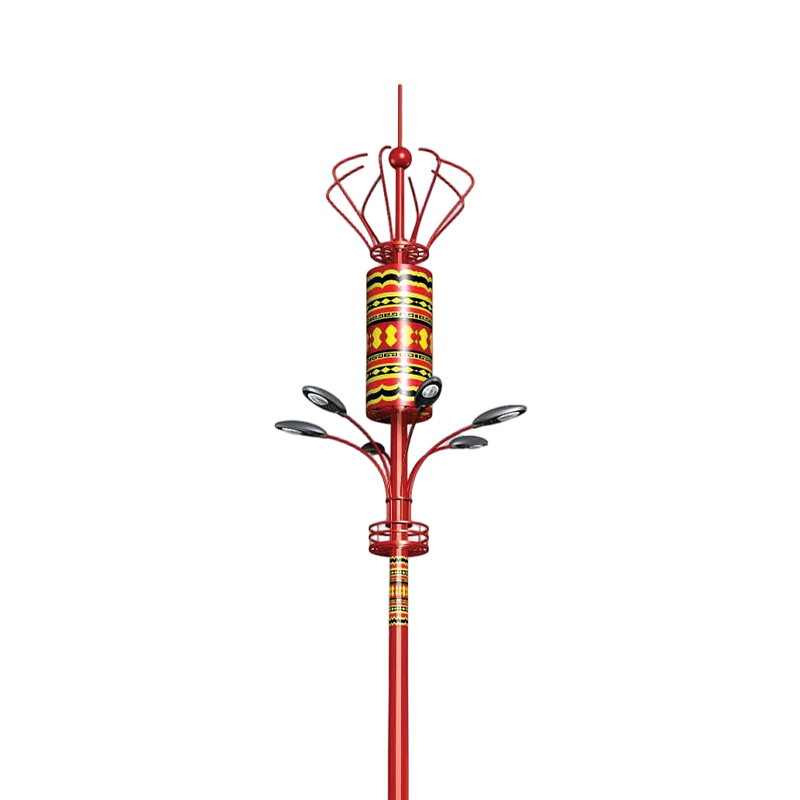
The Flower-Style Landscape Ground-Mounted Communication Tower responds to this challenge by combining a telecommunications support structure with a distinctive architectural concept. Inspired by the crown of a king and shaped with a flower-style visual language, the tower is designed to convey elegance, grandeur, and brilliance. Instead of treating a communication tower as a purely functional steel structure, this product transforms it into a recognizable landscape element that can contribute to the identity and visual quality of its surroundings.
With a design diameter ranging from 2.4 meters to 3.6 meters, a design height specification between 4 and 5 meters, and an overall tower height from 10 to 50 meters, the product offers flexibility for different project conditions. Special dimensions and structural configurations can also be customized according to telecommunications, architectural, wind-load, foundation, and installation requirements.
The tower is manufactured by Yangzhou Jinyuan Lamps Co., Ltd., a professional Chinese production, design, and engineering company serving the road illumination and outdoor infrastructure sector. The company has developed extensive experience in street light poles, LED lighting products, solar street lights, light fixtures, communication-related structures, and engineering applications. Its manufacturing capabilities include CNC bending, precision cutting, automated welding and cutting, powder electrostatic painting, and other production processes that support consistent quality and efficient project delivery.
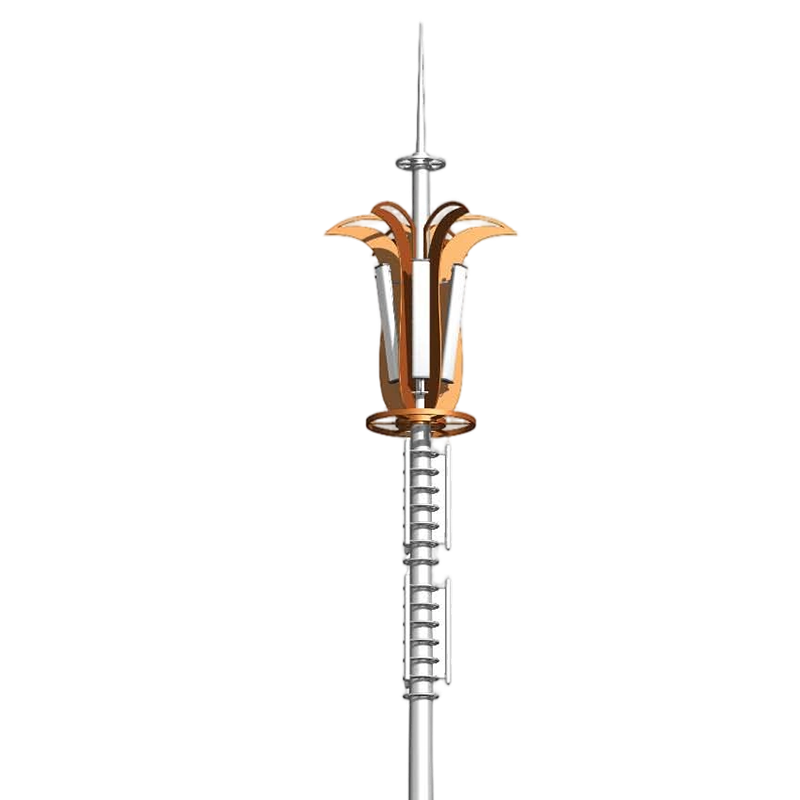
Flower-Style Landscape Ground-Mounted Communication Tower
1. The Concept Behind the Flower-Style Tower
The design of a communication tower has traditionally been driven by structural efficiency, antenna support, and installation practicality. Those functions remain essential, but contemporary urban planning increasingly recognizes that infrastructure must also fit the visual and cultural character of a location. Large structures installed in public spaces become part of the landscape. Their shape, proportions, color, and surface finish influence how residents, visitors, and users perceive the environment.
The Flower-Style Landscape Ground-Mounted Communication Tower was developed around the idea that technical infrastructure can possess symbolic and artistic value. Its crown-inspired form suggests authority, achievement, celebration, and prestige. The flower-style structure creates a softer and more decorative visual impression than a conventional lattice tower or plain monopole. This makes it particularly suitable for locations where the tower will be visible from a distance or placed near architectural landmarks, recreational facilities, parks, or public gathering areas.
The concept is not limited to decorative styling. The structure is intended to support the practical functions expected from a ground-mounted communication tower. Its design can be adapted to meet site conditions, required height, equipment arrangements, structural calculations, and project-specific visual requirements. As a result, the product occupies an important position between ordinary telecommunications infrastructure and custom landscape architecture.
1.1 A balance between utility and appearance
A major advantage of the flower-style concept is its ability to address two project objectives simultaneously. The first objective is telecommunications performance: the tower must provide a stable elevated structure for communication equipment and related systems. The second objective is environmental compatibility: the structure should look intentional, coordinated, and appropriate within the surrounding public space.
Conventional towers may appear visually heavy, industrial, or disconnected from their surroundings. They can be technically effective but difficult to integrate into areas that emphasize landscape design and visitor experience. A decorative communication tower offers an alternative by making the structure part of the overall design language. It can become a landmark, a wayfinding feature, or a visual symbol associated with a venue or district.
1.2 A recognizable public-space landmark
In large sports venues, plazas, scenic areas, and transportation corridors, recognizable structures help create a sense of place. The flower-style profile gives planners an opportunity to install communication infrastructure that is easier to identify and more memorable than a standard utility structure. When appropriately proportioned and finished, the tower may support the architectural narrative of a development rather than competing with it.
The crown-inspired form can also be adapted for special projects that require a ceremonial or prestigious appearance. For example, it may be considered for entrance zones, cultural districts, resort developments, public squares, and landmark areas where infrastructure needs to reflect a higher level of design quality.
2. Product Specifications and Configuration Flexibility
The product series is designed to accommodate a broad range of project requirements. Its stated design diameter ranges from 2.4 meters to 3.6 meters, while the design height specification is between 4 and 5 meters. The overall tower height ranges from 10 meters to 50 meters. These dimensions provide a foundation for developing different configurations according to coverage requirements, site restrictions, landscape proportions, and engineering calculations.
| Item | Available or Stated Range | Project Significance |
|---|---|---|
| Design diameter | 2.4 to 3.6 meters | Supports different visual proportions and site layouts |
| Design height specification | 4 to 5 meters | Provides flexibility for the decorative upper structure |
| Overall tower height | 10 to 50 meters | Allows adaptation to different communication and landscape requirements |
| Customization | Available for special requirements | Enables project-specific dimensions, finishes, and structural solutions |
| Typical applications | Scenic areas, sports venues, plazas, and transport zones | Supports infrastructure integration in visible public environments |
These figures should be treated as a product design range rather than a substitute for project engineering. The final structure must be selected according to the required antenna arrangement, wind conditions, foundation design, local standards, transportation limitations, installation method, and site-specific safety requirements. Through engineering coordination, the tower can be configured to meet the actual needs of a project instead of forcing every application into one standard model.
2.1 Height adaptation
The 10-to-50-meter overall height range makes the tower suitable for projects with widely different coverage objectives. A shorter structure may be appropriate in a landscaped plaza, resort, or low-rise public development where visual proportion is particularly important. A taller structure may be considered for transportation zones, large venues, broad scenic areas, or sites where equipment elevation and signal coverage require additional height.
Height selection affects more than telecommunications performance. It also influences the visual relationship between the tower and surrounding buildings, trees, lighting columns, roadways, and landscape features. A well-designed solution considers both technical elevation and architectural balance. The manufacturer’s ability to support customized height requirements allows project teams to evaluate these factors together.
2.2 Diameter and visual proportion
The design diameter range of 2.4 to 3.6 meters helps project planners control the visual weight of the structure. A narrower design may be preferred where the installation footprint is limited or where the tower needs to appear more delicate. A wider configuration may create a stronger landmark presence and may be more suitable for large plazas, stadium surroundings, or broad entrance areas.
Diameter also affects transportation, installation planning, foundation coordination, and the relationship between the main tower body and its decorative crown. These factors should be reviewed during the design stage. By combining CAD design, 3D product simulation, and mechanical calculations, the project team can examine different proportions before fabrication begins.
2.3 Customized solutions for special projects
Many visible public-space installations have requirements that cannot be satisfied by an off-the-shelf structure. The project may require a specific color, a particular crown profile, a unique mounting arrangement, a special decorative pattern, or compatibility with existing landscape architecture. Customization allows the tower to be adjusted to the design intent of the location while preserving its structural and manufacturing feasibility.
Customization can involve dimensions, structural sections, connection details, surface treatment, color, access arrangements, equipment support, and installation planning. The exact scope depends on the project brief and applicable technical standards. Early communication between the purchaser, designer, telecommunications provider, structural engineer, and manufacturer is essential to ensure that the final design satisfies all relevant requirements.
3. Advantages Compared with Conventional Communication Towers
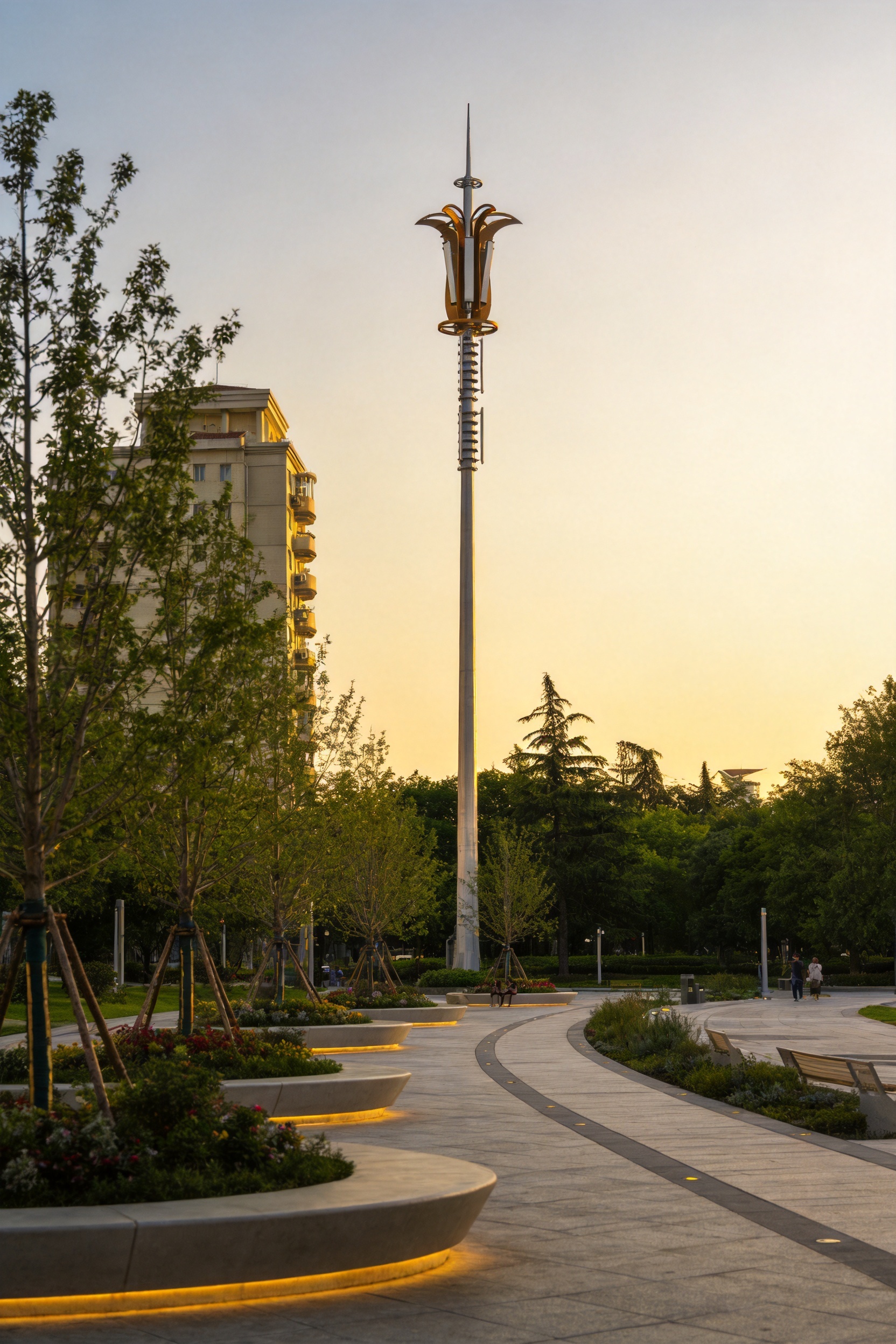
The strongest competitive advantage of the Flower-Style Landscape Ground-Mounted Communication Tower is that it treats appearance as a functional project requirement rather than an afterthought. A conventional lattice tower may provide efficient antenna support, but it can be visually unsuitable for a premium public location. A standard monopole may have a relatively clean profile, yet it may not provide the symbolic or decorative quality expected in a landmark environment.
The flower-style structure offers an alternative for projects in which the communication tower is highly visible. It can help reduce the perceived conflict between infrastructure construction and landscape preservation. Instead of attempting to hide the tower completely, designers can make it visually purposeful and integrate it into the identity of the site.
3.1 Stronger landscape compatibility
Scenic areas and public plazas often require careful visual planning. Visitors may be sensitive to industrial-looking elements that interrupt views, historic settings, or natural surroundings. A decorative tower can be coordinated with surrounding materials, colors, lighting, and landscape forms. Its crown-inspired design may complement formal gardens, cultural facilities, resort developments, and ceremonial spaces more effectively than an untreated steel tower.
In transportation areas, the tower may also serve as a visible landmark. A distinct silhouette can assist with orientation and help give a station, interchange, terminal, or roadside development a recognizable visual feature. The product does not replace signage or navigation systems, but its presence can contribute to the overall identity of the location.
3.2 Better integration of infrastructure and architecture
The tower can be considered as part of an architectural composition. Designers may coordinate its color with nearby buildings, use proportional relationships with public lighting columns, or place it in a landscape zone where its form supports the overall design. This approach is particularly valuable when the structure is installed at the entrance to a venue or in a central public space.
By contrast, a generic tower is typically selected primarily for cost and basic functionality. It may require additional screening, planting, or architectural treatment to reduce its visual impact. The flower-style design can reduce the need for such compensatory measures by incorporating decorative intent into the tower itself. The final result may offer better long-term value when the visual quality of the public space is a key project objective.
3.3 Flexible adaptation to different project scales
The product’s height and diameter ranges allow it to serve both medium-scale and large-scale applications. It can be developed as a relatively compact landmark for a landscaped public area or as a taller communication support structure for a major venue or transport corridor. This flexibility enables planners to maintain a consistent design concept across different project sites.
For organizations managing multiple developments, a customized flower-style tower family may also create visual consistency. Different heights, diameters, and colors can be developed while retaining recognizable design characteristics. This approach can strengthen the identity of a resort group, municipal development program, sports complex, or public infrastructure network.
3.4 More opportunities for value-added design
Because the tower is designed with landscape value in mind, it may be coordinated with other outdoor systems such as street lighting, plaza lighting, signage, decorative illumination, and smart-city infrastructure. The exact integration depends on engineering and local regulations, but the structure can be considered within a broader environmental design strategy.
For example, the tower’s surface color and lighting treatment may be selected to complement a venue’s identity. In suitable locations, carefully controlled decorative illumination can emphasize the crown or flower-style form at night. Such additions must be designed responsibly to avoid glare, excessive brightness, light pollution, or interference with nearby systems.
4. Applications in Public and Commercial Environments
4.1 Scenic areas and tourism developments
Scenic areas depend heavily on visual quality. Communication infrastructure is still necessary for visitor connectivity, staff coordination, emergency response, ticketing, digital guides, and operational management. However, standard industrial structures may not fit the visual character of a natural or cultural attraction.
The flower-style tower provides a way to place communication capacity in a visible area while maintaining a more refined appearance. Its form can be coordinated with gardens, visitor centers, observation zones, cultural facilities, or resort landscapes. In a large scenic area, multiple towers may be developed with consistent design features while varying in height according to terrain and coverage requirements.
Landscape compatibility should be assessed carefully. The tower’s location, color, height, and orientation should be selected to minimize obstruction of important views. Foundation construction should also be planned to limit disruption to existing vegetation, pathways, drainage systems, and visitor circulation.
4.2 Large sports venues
Sports venues require dependable communications for spectators, event organizers, security personnel, media teams, ticketing systems, and emergency services. The surrounding environment often has a strong visual identity, and every major structure contributes to the venue’s appearance.
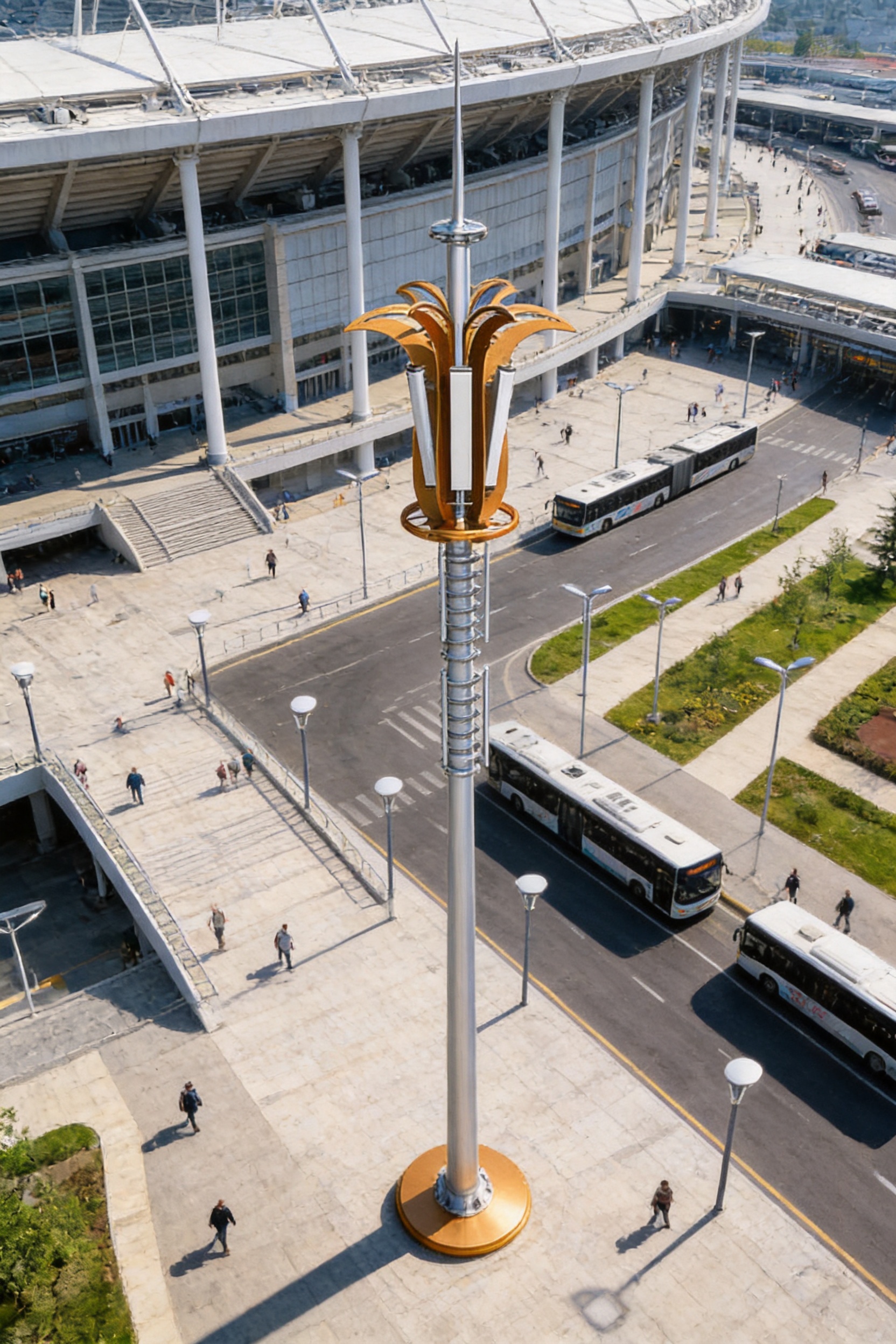
A crown-inspired communication tower can complement the ceremonial and energetic atmosphere of a stadium or sports complex. Its elevated form may be used near entrance plazas, parking areas, training grounds, or supporting facilities. The design can be customized to coordinate with the venue’s colors and architectural language, subject to suitable coating and project approvals.
Sports venues also experience large fluctuations in user density. A communication structure may need to support equipment arrangements that differ from those used in ordinary public spaces. The tower must therefore be evaluated by qualified technical professionals for antenna loads, wind loads, access, maintenance, and equipment installation.
4.3 City plazas and civic spaces
City plazas often function as gathering areas for festivals, public ceremonies, markets, cultural performances, and daily recreation. They require reliable connectivity and may include security, public information, smart-city, and event-management systems. At the same time, their central location means that infrastructure is highly visible.
The flower-style tower can serve as both a communication support structure and a civic design element. Its visual form can contribute to the plaza’s identity, especially when supported by coordinated paving, planting, lighting, and public furniture. The ability to customize dimensions and colors is important because civic spaces often have established design guidelines.
4.4 High-traffic transportation areas
Transportation environments such as terminals, interchanges, roadside service areas, ports, and large parking facilities depend on communications for operations, safety, passenger information, surveillance, and emergency coordination. These areas also benefit from clear visual landmarks that help users recognize entrances, zones, or facilities.
A distinctive tower can contribute to the visual organization of a transportation area while supporting telecommunications equipment. Its final location should be determined with attention to traffic safety, sightlines, clearance zones, maintenance access, aviation considerations where applicable, and the requirements of nearby electrical or communication systems.
4.5 Commercial and mixed-use developments
Large commercial districts, exhibition centers, resort towns, and mixed-use developments often seek infrastructure that supports a premium environment. A standard utility structure may conflict with the design expectations of the development. The flower-style tower can be incorporated into an entrance plaza, entertainment district, landscaped boulevard, or central public zone.
For private developers, the tower may provide an opportunity to make necessary communications infrastructure part of the property’s visual identity. For municipal projects, it may demonstrate that public infrastructure can be functional, durable, and visually considered at the same time.
5. Engineering and Design Development
A successful communication tower project begins with a clear engineering and design process. Although the product has a defined design concept, each installation must be evaluated according to its actual location and intended use. Important factors include the required overall height, anticipated equipment loads, local wind conditions, soil characteristics, foundation type, transport route, installation method, maintenance access, and applicable building or telecommunications standards.
5.1 CAD design and technical coordination
CAD design helps convert the initial concept into a detailed structure that can be manufactured and installed. Drawings may cover the tower body, crown or flower-style components, connection points, access features, base plate, anchor arrangement, equipment supports, and surface-treatment requirements.
Detailed CAD coordination also helps identify conflicts before production. For example, the design team can examine whether the proposed crown proportions are compatible with the tower body, whether equipment can be accessed safely, and whether transport dimensions are manageable. This process reduces the risk of late modifications and supports more predictable project execution.
5.2 Three-dimensional product simulation
Three-dimensional product simulation provides a visual and technical understanding of the proposed structure. Project stakeholders can review proportions, connection relationships, decorative elements, and equipment arrangements before fabrication. This is especially useful for a landmark product because visual balance is a major part of the project objective.
Three-dimensional review can also support communication among architects, engineers, owners, contractors, and telecommunications specialists. Instead of relying only on two-dimensional drawings, the project team can evaluate the tower as it may appear in its intended environment and identify design improvements earlier.
5.3 Three-dimensional scene simulation
Scene simulation places the product within a conceptual environment. It can help assess the relationship between the tower and nearby buildings, trees, lighting columns, roads, walkways, signage, and public facilities. For scenic and civic locations, this type of review is valuable because the visual effect of a tower depends heavily on its surroundings.
Scene simulation may also help compare different height, diameter, color, and placement options. A structure that looks well balanced in isolation may appear too dominant or too small when viewed beside a stadium, plaza, or transport facility. Early visual analysis supports more informed decisions and can improve approval discussions with project owners and local authorities.
5.4 Mechanical calculation for wind and foundation
Wind performance is a central consideration for any elevated outdoor structure. The tower must be evaluated according to the applicable local wind-speed data, exposure conditions, structural geometry, equipment loads, and safety factors. The foundation must also be designed for the site’s soil conditions, overturning forces, anchor requirements, and construction constraints.
The company provides mechanical calculation support for wind and foundation considerations. The final calculations should be reviewed and approved according to the standards and professional requirements applicable to the installation location. Product customization should never be based solely on appearance; structural safety and long-term service conditions must remain fundamental design priorities.
5.5 Installation planning and overseas guidance
Installation quality influences the stability, appearance, and service life of the completed tower. Correct foundation preparation, anchor positioning, section alignment, bolt tightening, welding inspection, lifting operations, and coating protection all require careful coordination.
For overseas projects, installation guidance can help local contractors understand the intended assembly sequence and technical requirements. On-site guidance may be available depending on the contract, project scale, location, and service arrangement. The purchaser should confirm the scope of support before ordering and ensure that local safety rules and lifting regulations are followed.
6. Materials and Structural Quality
Material selection is one of the foundations of tower quality. The manufacturing information identifies a range of material options, including Q235B, Q345B, S275JR, S355JR, Q460, A36, A572, GR56, and GR50, among others. The appropriate grade depends on structural calculations, regional standards, availability, welding requirements, corrosion conditions, and project specifications.
Different markets use different designation systems and technical standards. Therefore, material selection should be confirmed through approved technical documentation rather than assumed from a general product description. The final material must be compatible with the design calculations and the quality requirements of the purchasing project.
6.1 Material availability and production continuity
Maintaining an extensive material stock can help reduce delays caused by procurement shortages. This is particularly important for projects with fixed construction schedules, staged infrastructure programs, or multiple towers requiring coordinated delivery. Ready access to suitable steel materials can support faster production planning while allowing the factory to select materials that meet the approved specification.
Material availability must be accompanied by inspection and traceability. A reliable production system should connect material purchasing, cutting, forming, welding, surface treatment, inspection, and shipment records. This creates a stronger foundation for consistent quality and makes it easier to manage large orders.
6.2 Structural integrity and dimensional control
A decorative tower must be more than visually attractive. Its sections, joints, and support components must maintain structural integrity throughout manufacturing, transportation, installation, and service. Accurate forming and cutting help ensure that components fit correctly and that post-production adjustments are minimized.
Dimensional control is particularly important for a custom product with curved, angled, or crown-like components. Small discrepancies can become more apparent when multiple decorative elements are assembled together. Precise manufacturing supports a balanced appearance and helps installers achieve the intended geometry on site.
7. Advanced Manufacturing Processes
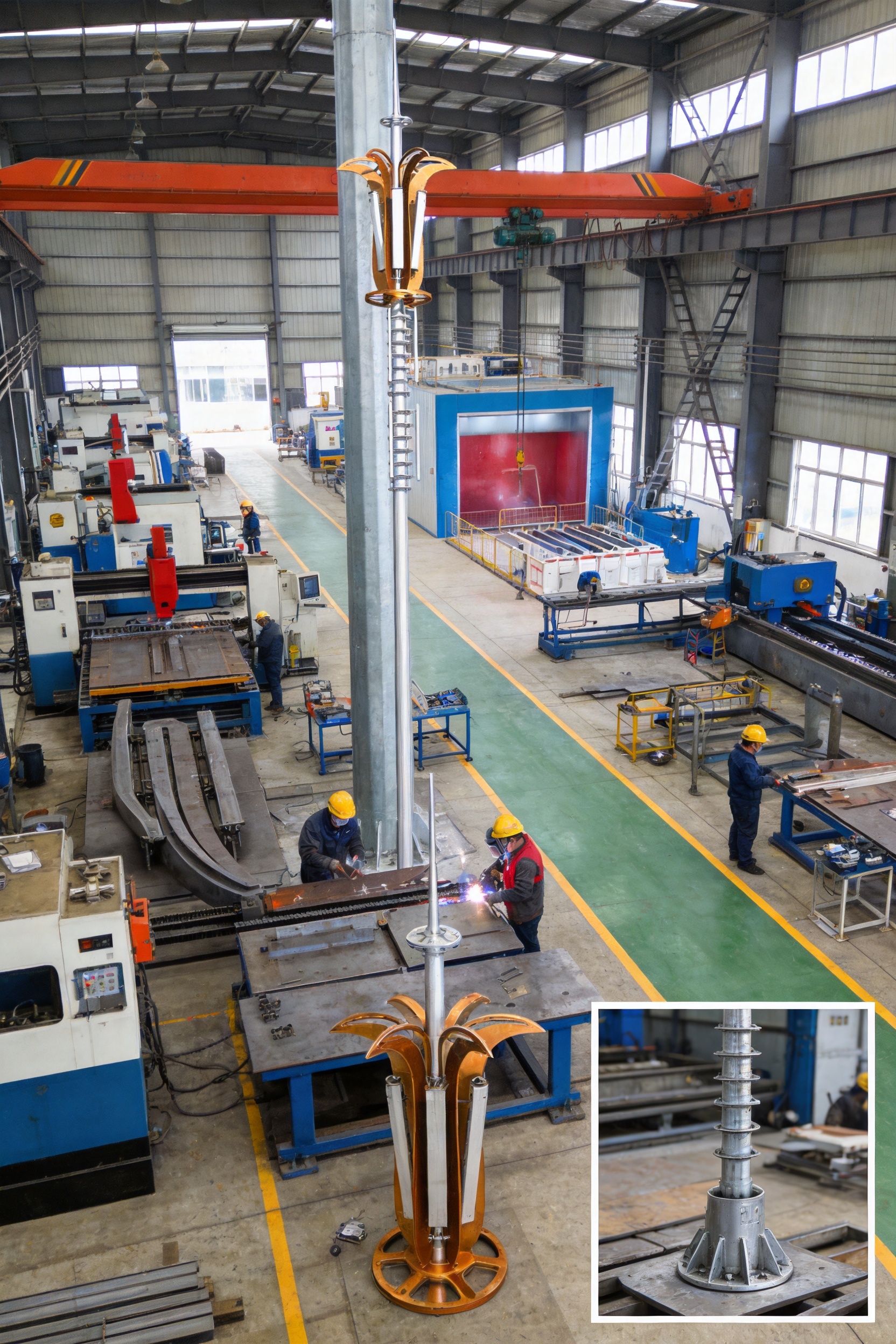
The company’s manufacturing strengths are supported by a combination of modern equipment, experienced personnel, and process control. The production system is designed to improve precision, consistency, efficiency, and surface durability while supporting customized structures.
7.1 CNC bending
Precise and consistent CNC bending helps produce structural components with repeatable geometry. This is valuable for tower sections and decorative elements that must maintain accurate angles, radii, and alignment. Consistent bending can enhance structural integrity and reduce the amount of manual correction required after forming.
For a flower-style tower, bending accuracy also influences visual symmetry. Crown components and supporting members must relate correctly to the central tower body. CNC equipment helps translate approved digital drawings into repeatable physical components, supporting both engineering quality and design appearance.
7.2 Precision cutting
The production information states a cutting accuracy of 0.01 millimeters. Such precision supports exact dimensions and clean edges during component preparation. In practical production, the achievable tolerance for a particular part depends on material thickness, equipment, process conditions, measurement methods, and the approved manufacturing standard. Nevertheless, precision cutting is an important advantage for producing components that require close dimensional control.
Clean and accurate edges can improve fit-up, welding preparation, assembly efficiency, and overall finish quality. They can also help reduce material waste and decrease the need for time-consuming correction work.
7.3 Automated welding and skilled welders
Welding quality is critical to the performance of a steel tower. Automated welding lines can improve repeatability and production speed for suitable components. At the same time, experienced certified welders are necessary for complex assemblies, customized joints, transitions, and areas that require skilled judgment.
The company reports a team of certified welders with many years of experience. This combination of automation and professional craftsmanship can support large-scale projects while maintaining attention to weld quality. Welding procedures should be selected according to material grade, thickness, joint design, inspection requirements, and relevant standards.
Quality control may include visual inspection, dimensional checks, weld inspection, correction of surface defects, and documentation of approved production stages. The exact inspection program should be determined by the project specification and applicable regulations.
7.4 Powder electrostatic painting and corrosion protection
Outdoor communication towers are exposed to rain, humidity, ultraviolet radiation, dust, temperature changes, and airborne pollutants. Surface treatment therefore has a direct influence on service life and appearance. The company operates powder electrostatic painting equipment and identifies improved anti-corrosion lifespan as one of the benefits of its production process.
Powder coating can provide an even surface finish and a broad range of color options when the substrate preparation, coating material, application parameters, and curing process are properly controlled. The selected coating system should correspond to the environmental conditions of the site. Coastal, industrial, highly humid, or chemically aggressive environments may require enhanced corrosion protection and additional technical review.
Surface preparation is as important as the final coating. Steel should be cleaned and treated according to the specified process so that the coating can bond effectively. Areas affected during transportation or installation should be inspected and repaired with an approved method. Long-term maintenance should also include periodic visual checks for damage, corrosion, water accumulation, and coating deterioration.
7.5 Automated production lines
Automated production lines can improve consistency and shorten production cycles for standardized operations. They may also help reduce production costs and support more efficient use of materials and energy. Automation is particularly useful when a project includes multiple towers or repeated decorative components.
However, automation must be supported by engineering control and inspection. A well-managed process combines digital design data, material verification, equipment calibration, operator supervision, in-process inspection, and final quality review. This approach allows the factory to benefit from automation without losing the flexibility required for customized products.
8. Quality Assurance and Project Reliability
Quality assurance is not limited to the final inspection before shipment. It begins with design review and material selection and continues through fabrication, coating, packaging, delivery, installation, and after-sales support. For a visible communication tower, reliability includes both structural performance and the ability to preserve its intended appearance over time.
8.1 Quality from design to production
Early design review helps identify potential problems before they become expensive manufacturing issues. The design team can assess material feasibility, connection details, forming requirements, welding access, coating limitations, transportation dimensions, and installation sequence. This reduces the chance that an attractive concept will encounter practical difficulties during production.
Production documentation should clearly identify approved drawings, material requirements, welding procedures, coating specifications, inspection points, and packaging instructions. Clear documentation improves communication among the factory, customer, designer, and installation team.
8.2 Inspection and consistency
Consistent quality is especially important when the product is manufactured in multiple units. Towers installed in one development should have consistent dimensions, colors, surface finishes, and decorative alignment. Controlled CNC processes, automated production, experienced welders, and inspection procedures all contribute to repeatability.
Customers may request quality documents, material certificates, inspection records, coating information, dimensional reports, and other project documentation according to the contract. The specific documentation package should be agreed upon before production begins.
8.3 International standards and company systems
Yangzhou Jinyuan Lamps Co., Ltd. identifies ISO9001, ISO14001, and OHSAS18001 among the international quality, environmental, and occupational health and safety standards associated with its operations. These systems indicate an organized approach to quality management, environmental responsibility, and workplace safety.
Certification or management-system compliance does not remove the need for product-specific inspection. Instead, it provides a framework for managing processes, responsibilities, records, and continual improvement. Purchasers should evaluate both the manufacturer’s management systems and the technical documentation of the specific tower order.
9. Service and Customer Support
A custom communication tower requires cooperation that extends beyond product shipment. The company describes a service process that includes consultation, CAD design, 3D product simulation, 3D scene simulation, specification and color customization, mechanical calculation for wind and foundation, and overseas on-site installation guidance.
| Service Stage | Purpose | Customer Benefit |
|---|---|---|
| Initial consultation | Understand site, appearance, communication, and schedule requirements | Creates a clear project brief |
| CAD design | Develop detailed manufacturable drawings | Improves technical coordination |
| 3D product simulation | Review the tower’s proportions and components | Supports design approval before fabrication |
| 3D scene simulation | Place the tower in its intended environment | Helps assess landscape compatibility |
| Specification and color customization | Adjust product details for the project | Supports architectural integration |
| Wind and foundation calculation | Evaluate mechanical and site-related requirements | Supports safer engineering decisions |
| Installation guidance | Assist with assembly and site coordination | Helps improve installation quality |
This service structure is valuable because the product combines structural engineering and visual design. Customers do not simply need a catalog item; they need a solution that can be adapted to a site, approved by project stakeholders, fabricated accurately, delivered efficiently, and installed correctly.
9.1 Consultation and design communication
During consultation, the project team should define the tower’s intended purpose, location, height, equipment requirements, visual objectives, surface finish, quantity, delivery conditions, and target schedule. Providing site photographs, drawings, terrain information, and surrounding architectural references can help the manufacturer prepare a more suitable proposal.
Clear communication at this stage can prevent misunderstandings about the difference between the decorative design height and the overall tower height. It can also clarify whether the project requires a complete communication support structure, a decorative tower shell, equipment mounting components, foundation design assistance, or installation services.
9.2 Custom color and finish selection
Color is a significant part of landscape integration. A neutral finish may help the tower blend with surrounding architecture, while a distinctive color may reinforce the identity of a venue or development. The selected finish should be evaluated for appearance, coating performance, maintenance requirements, and compatibility with the local environment.
Color samples and finish references should be approved before production. Differences in lighting, viewing distance, and surrounding materials can affect perceived color. A defined sample and documented specification help maintain consistency between the approved design and the delivered product.
9.3 Overseas project coordination
International projects involve additional considerations such as local standards, import documentation, shipping dimensions, customs procedures, site access, lifting equipment, local labor, and language coordination. Early planning is important when the tower includes large or irregular components that may affect container loading or transportation.
Installation guidance can help local teams understand the intended assembly sequence and quality requirements. Nevertheless, local contractors remain responsible for complying with local safety regulations, equipment certifications, lifting plans, and site controls. Responsibilities should be clearly stated in the project agreement.
10. Sustainability and Long-Term Value
Infrastructure sustainability includes material durability, service life, maintenance demand, manufacturing efficiency, environmental impact, and the ability to remain useful as project needs change. The flower-style tower can support long-term value by combining a durable steel structure with a design that remains relevant in a public environment.
A visually integrated tower may reduce the need for later screening, relocation, or replacement caused by dissatisfaction with its appearance. When infrastructure is designed correctly from the beginning, the project can avoid some of the costs associated with retrofitting or visual mitigation.
10.1 Efficient use of materials
Precision cutting and controlled fabrication can help reduce unnecessary material waste. Accurate digital design and CNC processing support better planning of components and may improve nesting efficiency. The actual environmental benefit depends on production methods, material utilization, transportation, coating systems, and the service life of the completed structure.
10.2 Durable surface treatment
Effective corrosion protection extends the service life of steel components and reduces the frequency of major repairs or replacement. A durable coating also helps preserve the tower’s visual quality, which is particularly important for a decorative structure installed in a prominent location.
Maintenance remains necessary even when a high-quality coating system is used. Periodic inspections should check for coating damage, corrosion, loose hardware, water accumulation, deformation, and unauthorized attachments. Prompt repair can prevent minor defects from becoming larger structural or aesthetic problems.
10.3 Adaptability over time
Communication technologies and equipment configurations may change during the life of a tower. A flexible structure that can accommodate approved equipment modifications may provide greater long-term value. Any future modification must be reviewed by qualified engineers because additional antennas, cables, platforms, or accessories can change wind loading and structural demand.
11. Recommended Project Workflow
A structured workflow helps ensure that the product meets both the visual and technical objectives of the project. The following sequence can be adapted according to the size and complexity of the installation.
Step 1: Define the project brief
Record the location, intended use, required height, expected equipment, landscape context, quantity, preferred color, delivery destination, schedule, and applicable standards. Identify whether the tower will be a single landmark or part of a larger group of structures.
Step 2: Collect site information
Provide site coordinates or drawings, photographs, soil information where available, local wind data, access restrictions, nearby structures, overhead lines, underground utilities, and proposed foundation location. Accurate site information improves the reliability of later design and cost planning.
Step 3: Develop the concept
Review the crown-inspired flower-style form and determine the preferred diameter, decorative proportion, overall height, equipment arrangement, and visual relationship with nearby elements. Use CAD and three-dimensional simulations to compare possible solutions.
Step 4: Complete engineering calculations
Evaluate wind loading, equipment loads, structural members, connection details, foundation requirements, access, and installation forces. Confirm that the design is suitable for the actual site and complies with relevant technical standards.
Step 5: Approve materials and finishes
Confirm the steel grade, coating system, color, surface preparation, hardware, and inspection requirements. Material and finish approvals should be recorded in the final technical documentation.
Step 6: Manufacture and inspect
Proceed with cutting, bending, welding, surface preparation, coating, assembly checks, and final inspection. Dimensional control should confirm that the fabricated components correspond to the approved design.
Step 7: Package and deliver
Prepare components for transport with suitable protection against impact, moisture, abrasion, and coating damage. Confirm loading plans, shipping documents, delivery sequence, and site unloading requirements.
Step 8: Install and review
Complete foundation preparation, lifting, assembly, alignment, connection tightening, equipment installation, coating touch-up, and final inspection. Review the finished structure from both technical and visual perspectives.
12. Frequently Asked Questions
Q1: What is the main purpose of the Flower-Style Landscape Ground-Mounted Communication Tower?
The main purpose is to provide a communication tower structure that combines telecommunications support with landscape and architectural value. It is designed for public and commercial environments where a conventional tower may appear too industrial or visually unsuitable.
Q2: What is the available tower height?
The stated overall tower height ranges from 10 to 50 meters. Special height requirements can be considered through customization, subject to structural calculations, local standards, equipment needs, transportation conditions, and site requirements.
Q3: What are the design diameter and decorative height ranges?
The design diameter ranges from 2.4 to 3.6 meters, and the design height specification is between 4 and 5 meters. The final dimensions should be confirmed through project drawings because the decorative section and overall tower height serve different design and engineering purposes.
Q4: Where can this tower be installed?
It is intended for scenic areas, large sports venues, city plazas, and high-traffic transportation areas. It may also be considered for commercial developments, resorts, civic facilities, cultural districts, and other locations where communication infrastructure must fit a carefully designed environment.
Q5: Can the tower be customized?
Yes. Customization can address height, diameter, structural configuration, color, surface finish, equipment support, decorative details, and other project-specific requirements. Final customization depends on engineering feasibility, manufacturing conditions, applicable standards, and the approved technical design.
Q6: What materials are available?
The manufacturing information identifies material options including Q235B, Q345B, S275JR, S355JR, Q460, A36, A572, GR56, and GR50, among others. The correct grade must be selected according to the approved structural design and the standards applicable to the project location.
Q7: How does the product compare with a conventional lattice tower?
The primary difference is the emphasis on landscape and architectural integration. A conventional lattice tower is usually selected mainly for functional and structural reasons. The flower-style tower is intended to provide communication support while also offering a decorative, recognizable, and more visually refined form for prominent public spaces.
Q8: Does the product require wind and foundation calculations?
Yes. Every installation requires appropriate structural and foundation evaluation. Wind conditions, tower geometry, equipment loads, soil properties, foundation design, and local regulations must be considered. The company provides mechanical calculation support for wind and foundation requirements as part of its engineering services.
Q9: What manufacturing processes support product quality?
The manufacturing capabilities include CNC bending, precision cutting, automated welding and cutting, powder electrostatic painting, automated production lines, and work performed by certified and experienced welders. These processes support dimensional consistency, structural quality, efficient production, and corrosion protection.
Q10: Is installation guidance available for overseas projects?
Overseas on-site installation guidance can be arranged depending on the project scope and agreement. The purchaser should confirm the exact service terms, responsibilities, travel arrangements, local labor requirements, and safety procedures before production and delivery.
Q11: What should customers provide before requesting a quotation?
Customers should ideally provide the project location, required tower height, expected communication equipment, quantity, site drawings or photographs, local wind information, preferred color, delivery destination, installation requirements, and target schedule. More complete information allows the manufacturer to prepare a more accurate technical and commercial proposal.
Q12: How should the finished tower be maintained?
Maintenance should include periodic inspection of the coating, steel surfaces, bolts, weld areas, foundation, drainage, access components, and equipment supports. Any corrosion, impact damage, loose hardware, deformation, or unauthorized modification should be assessed and corrected promptly by qualified personnel.
13. Why This Product Is a Strong Choice for Landmark Infrastructure
The Flower-Style Landscape Ground-Mounted Communication Tower offers a distinctive response to a growing infrastructure challenge: how to provide essential communication capacity without weakening the visual character of a public place. Its crown-inspired design and flower-style appearance give it a recognizable identity, while its adjustable height and diameter support a broad range of applications.
Its value is based on more than appearance. The product is supported by a manufacturing system that includes material options, CNC bending, precision cutting, automated production, skilled welding, powder electrostatic painting, engineering calculations, design simulation, and installation guidance. This combination helps connect creative design with practical production and structural requirements.
Compared with a basic communication tower, the product provides greater potential for landscape compatibility, architectural coordination, and landmark value. Compared with a purely decorative structure, it offers the practical purpose of telecommunications infrastructure. This dual role makes it suitable for scenic areas, sports venues, plazas, transportation zones, commercial developments, and other highly visible locations.
For purchasers, developers, municipalities, telecommunications providers, architects, and engineering contractors, the most important consideration is the complete project process. A successful result depends on an accurate brief, suitable site information, professional design, verified calculations, appropriate material selection, controlled fabrication, effective corrosion protection, careful transportation, and correct installation.
When these elements are coordinated from the beginning, the tower can become more than a support structure. It can serve as a durable public-space landmark that contributes to connectivity, safety, visual identity, and the quality of the built environment.
References
1. Product specification and application information for the Flower-Style Landscape Ground-Mounted Communication Tower, supplied in the project materials.
2. Manufacturing process information covering CNC bending, precision cutting, automated welding, powder electrostatic painting, and automated production lines, supplied in the project materials.
3. Company profile and production capability information for Yangzhou Jinyuan Lamps Co., Ltd., supplied in the project materials.
4. ISO 9001, Quality Management Systems, International Organization for Standardization.
5. ISO 14001, Environmental Management Systems, International Organization for Standardization.
6. Occupational health and safety management system principles associated with OHSAS 18001.
7. General principles of structural steel design, fabrication, corrosion protection, inspection, and installation for outdoor steel structures.
8. General engineering practice for communication tower wind-load assessment and reinforced-concrete foundation design.